Lifestyle
Cabernet is the most popular red wine in the U.S. Can it endure climate change?


Late-summer heat waves are threatening Napa Valley’s famed cabernet grapes, which produce some of the United States’ most expensive wines. To survive in a hotter climate, winemakers are realizing they’ll need to adapt.
Ryan Kellman/NPR
hide caption
toggle caption
Ryan Kellman/NPR
Climate change is affecting our food, and our food is affecting the climate. NPR is dedicating a week to stories and conversations about the search for solutions.
In California’s Napa Valley, cabernet sauvignon is king.
The bold red wine has made the region world famous, with some bottles retailing at hundreds of dollars. But increasingly severe heat waves are taking a toll on the grape variety, especially in late summer during ripening. As temperatures keep rising, the wine industry is slowly confronting a future where Napa may not be the prime cabernet region it once was.
In the face of climate change, wineries around the world are innovating. New technology is being installed to keep the grapes cool during heat spells. A handful of wineries are going a step further. They’re experimenting with new grapes, ripping out high-value cabernet vines to plant varieties from hotter climates.
The goal is to find heat-tolerant grapes that blend well with cabernet, potentially making up for the flavors that cabernet could lack when temperatures get even hotter. While many bottles labeled cabernet are already blended with other grapes in small amounts, winemakers may need more flexibility in the future.

“We know we have to adapt,” says Avery Heelan, a winemaker at Larkmead Vineyards in Calistoga, Calif. “We can’t just pretend that it’s going to go away, because all we see is each year it’s getting more and more extreme.”
Still, blending with other grapes comes with risks. For a U.S. wine to be labeled cabernet, a bottle must contain 75% cabernet grapes or more. Any less, and it’s considered a red blend. Blends typically don’t command the same prices on store shelves as cabernet, especially since consumers are accustomed to picking U.S. wines by the name of the grape. Moving away from cabernet would be a major financial gamble for Napa’s multibillion-dollar wine industry.
“It is a big shift,” says Elisabeth Forrestel, an assistant professor of viticulture and enology at the University of California, Davis. “Without the market changing or demands changing, you can’t convince someone to grow something that doesn’t sell or doesn’t garner the same price.”
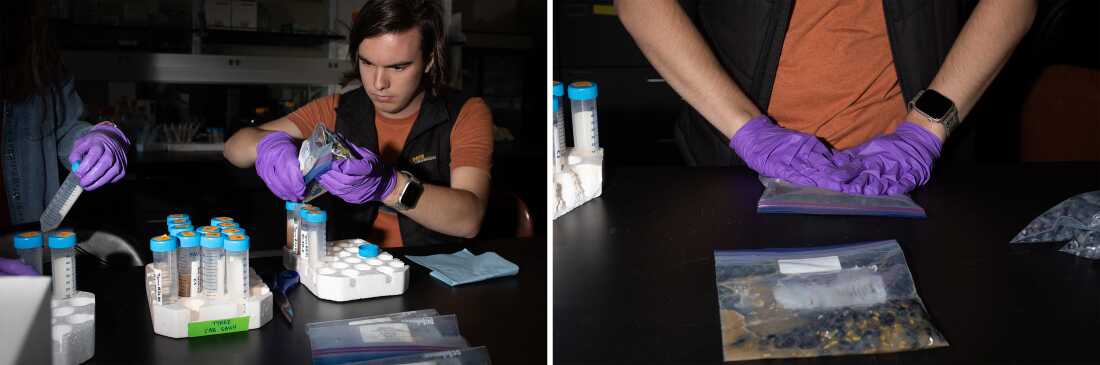
University of California, Davis research assistant Jacob Vito crushes cabernet sauvignon grapes from Napa Valley to analyze their chemical compounds. The lab is studying how heat is affecting the grapes.
Ryan Kellman/NPR
hide caption
toggle caption
Ryan Kellman/NPR
Charbono, anyone?
Some grapes growing at Larkmead Vineyards aren’t ones that many American wine drinkers would recognize. Long rows of vines are labeled: touriga nacional, aglianico, charbono and tempranillo.
“There’s not a huge market for a lot of these varieties,” says Heelan, walking among the vines on a hot summer afternoon. “We’re really choosing them not from popularity, but for their qualities.”
Established more than a century ago, the winery is known for its bottles of cabernet sauvignon. These lesser-known grapes were planted only a few years ago, part of a research vineyard that took the place of cabernet vines.
“Which most people would probably think is a little crazy, considering it’s 3 acres of perfect cabernet land,” Heelan says. “But certainly with the climate and how dramatically it’s changed over even the last 10 years, we really have to start adjusting.”
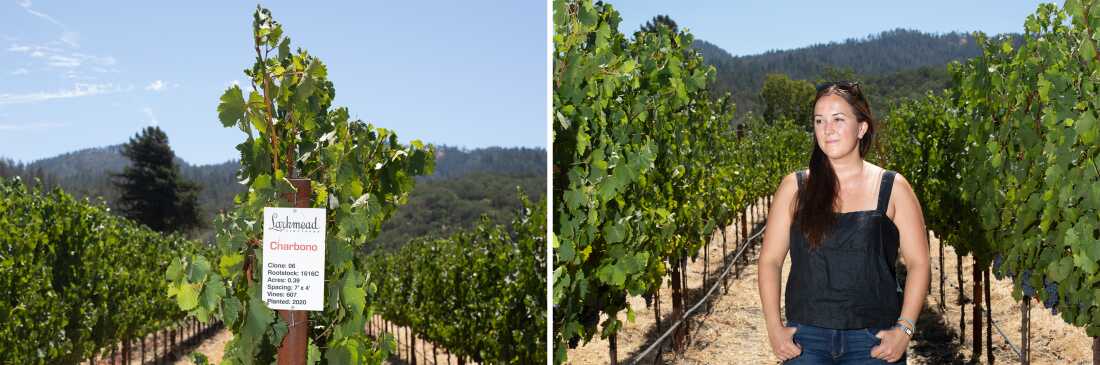
Winemaker Avery Heelan is growing several rare grape varieties at Larkmead Vineyards in Napa Valley, in the hope that they’ll blend well with cabernet grapes as temperatures get hotter.
Ryan Kellman/NPR
hide caption
toggle caption
Ryan Kellman/NPR
The vineyard is already at the hotter northern end of Napa Valley, but the extreme heat in recent years has been a wake-up call. A late-summer heat wave in 2022 hit temperatures just under 120 degrees at the vineyard, she says.
“When it gets that hot, the vines, they’re done,” she says. “They’re going to go dormant, and when that happens, they’re not ripening anymore.”
In extreme heat, cabernet grapes can lose their rich color. They also dehydrate, wrinkling like raisins, which produces wines that are sweeter and more alcoholic. Heelan says the grapes that the vineyard is testing could provide an added boost of color or acidity to cabernet, helping balance out the wine when temperatures take their toll.
The experiment has its cost. In addition to the lost revenue from removing cabernet, grapevines take up to five years to produce their first crop, plus several more years for the wines to ferment. Heelan says only then will they start to see how the new grapes are performing. But the goal is to prepare the winery for the future, knowing that heat will likely get worse.
“Honestly, the more we experiment and learn about how to adapt, I think the wines are just getting better and better,” she says.
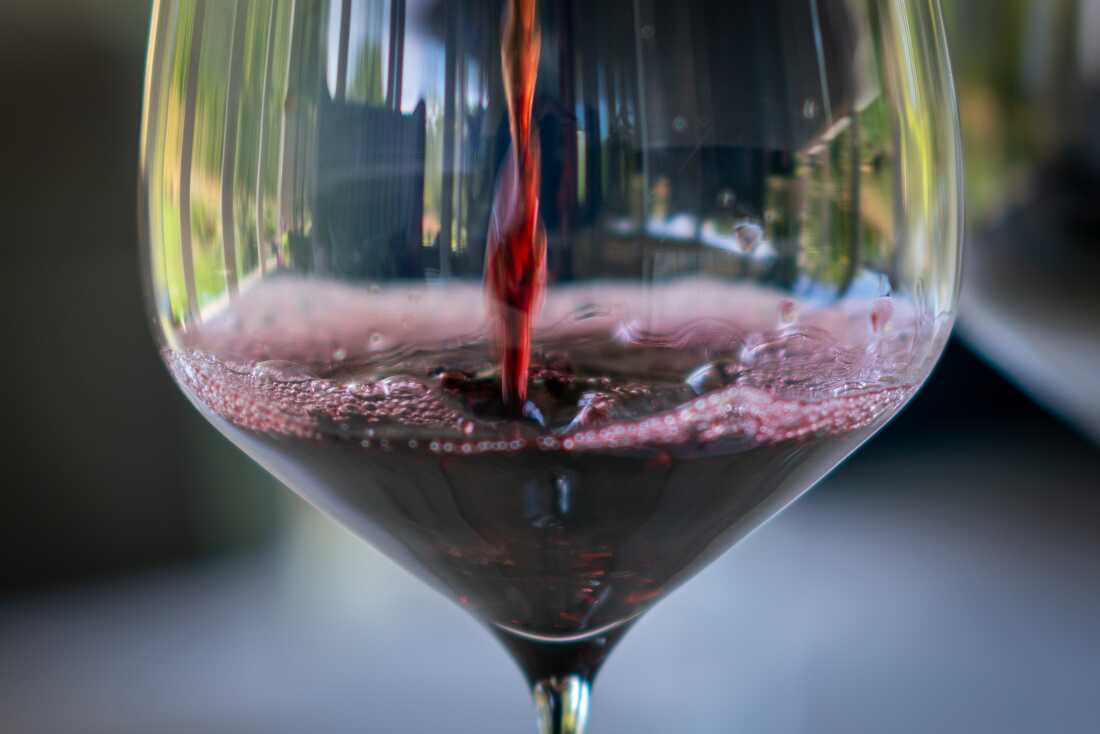
In hotter temperatures, cabernet grapes lose their rich red color and produce sweeter, more alcoholic wines.
Ryan Kellman/NPR
hide caption
toggle caption
Ryan Kellman/NPR
Where cabernet is king
Farther south, Shafer Vineyards sits in the heart of Stags Leap, a Napa wine region that’s known for high-end cabernets. Winemaker Elias Fernandez says the grapes benefit from a cool evening breeze that blows in from San Francisco Bay.
This summer, heat has already been a problem. July was the hottest July on record in California. Fernandez points to a grape cluster where small green grapes are nestled among larger purple ones.
“This is effects of the heat,” he says. “It’s not maturing, so this is where you lose some fruit.”
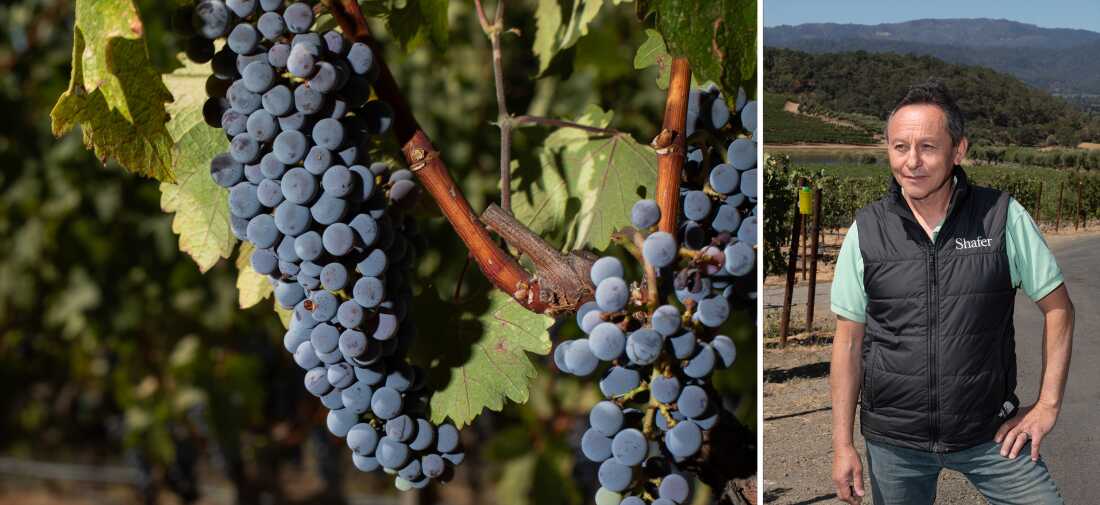
Winemaker Elias Fernandez is installing new technology at Shafer Vineyards in Napa Valley to combat heat waves.
Ryan Kellman/NPR
hide caption
toggle caption
Ryan Kellman/NPR
The damage isn’t too widespread this year, unlike in 2022. But with summers getting more intense, Fernandez says the winery is looking at technology to help the cabernet vines. They’re currently installing misters, which spray water into the air to cool the temperature.
“It’s a constant mist,” he says. “How many of you have been to a party where they have misters? Doesn’t that feel good? Well, that’s what the vines are feeling.”
Still, using extra water is a challenge in drought-prone California, he says. Plus, the water droplets can concentrate the light on the grapes and burn them, so misters must be run until the sun sets to keep the droplets from collecting. But Fernandez says he’s hoping the misting will keep the cabernet vines producing at the highest level.
“I think the first thing we’ll be doing is mitigation, hoping to keep it as the true varietal of Napa Valley,” he says. “That’s what we’re trying to do — is buy time and see what happens with this whole thing.”
For now, he’s not considering planting other grape varieties. With wines that are priced at $100 and up, cabernet is central to their business.
“For me, it’s hard to think that people are just going to throw cabernet out the door and plant something else,” he says. “I really do. It’s the king of the wines of the world.”
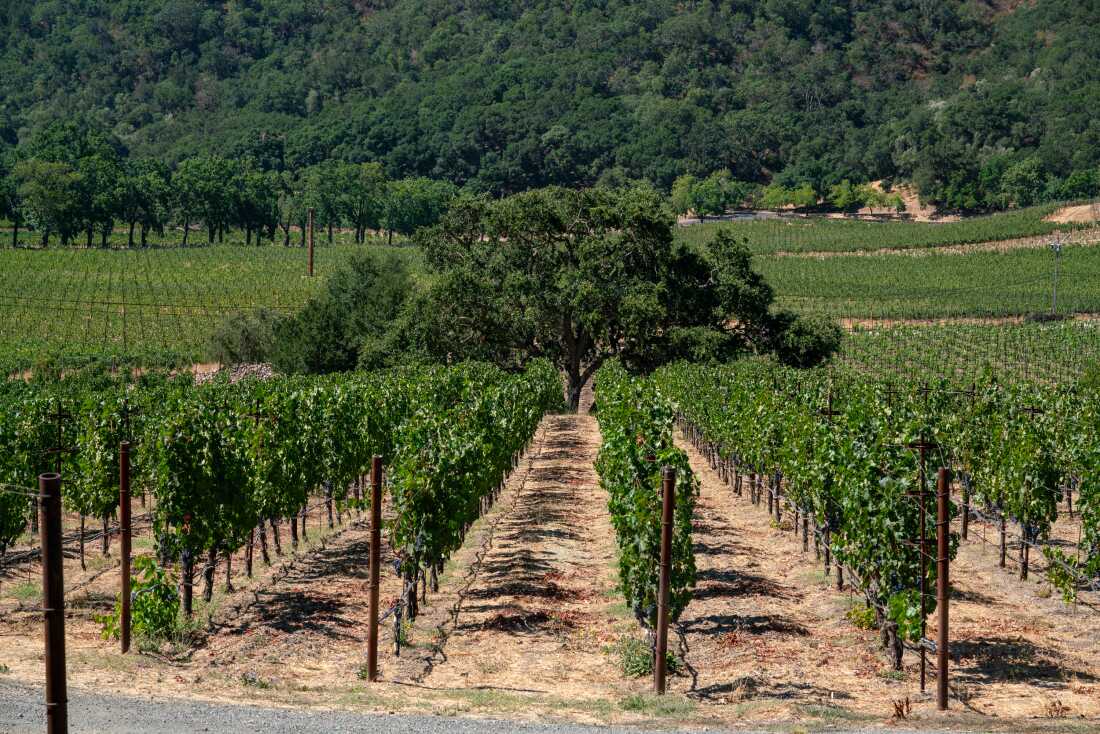
To keep producing high-quality cabernets, Napa Valley winemakers may need to blend them with other grapes to balance out the effects of heat. But wines labeled as blends, instead of cabernet, often sell at lower prices.
Ryan Kellman/NPR
hide caption
toggle caption
Ryan Kellman/NPR
Wine regions are shifting

Professor Elisabeth Forrestel is studying how Napa’s wine regions are shifting with climate change.
Ryan Kellman/NPR
hide caption
toggle caption
Ryan Kellman/NPR
Elisabeth Forrestel is one person trying to understand the big swings in the temperature. In her lab at UC Davis, her research team is smashing Napa Valley grapes inside plastic bags. They’ll be analyzed at the molecular level to see how they change during the summer.
Forrestel’s lab is gathering wine grapes from Napa Valley throughout the growing season, along with detailed temperature data, to see how the most crucial compounds for wine are affected by heat. Studies show the average temperature during the last 45 days of the growing season in Napa — when grapes ripen— has already warmed almost 3 degrees Fahrenheit from 1958 to 2016. But it’s the intense heat waves that do the most damage to molecules that produce a wine’s color and aroma.
“When you have these extreme heat events, you can have a lot of impact on the development of that flavor profile,” she says. “If it was just an average change, it would be a lot easier to manage.”
Forrestel is working on updating a central guide for winemaking, known as the Winkler Index. Developed in the 1940s, it shows the ideal locations to grow different varieties of wine grapes, based on how much heat they receive. Napa Valley was originally indexed for cabernet sauvignon, but this could shift as the climate gets hotter.
With cabernet being the world’s most widely grown wine grape, cabernet vines are resilient to different temperatures, Forrestel says. It’s a question of whether Napa winemakers may need new strategies to keep it producing at such a high-quality level. Since grapevines last 50 years or more, winemakers are faced with making planting decisions today that will need to withstand a hotter future.
“Some of the paradigms in what you would plant need to shift,” she says. “People need to have different approaches so there can be more resilience and you can have more options.”
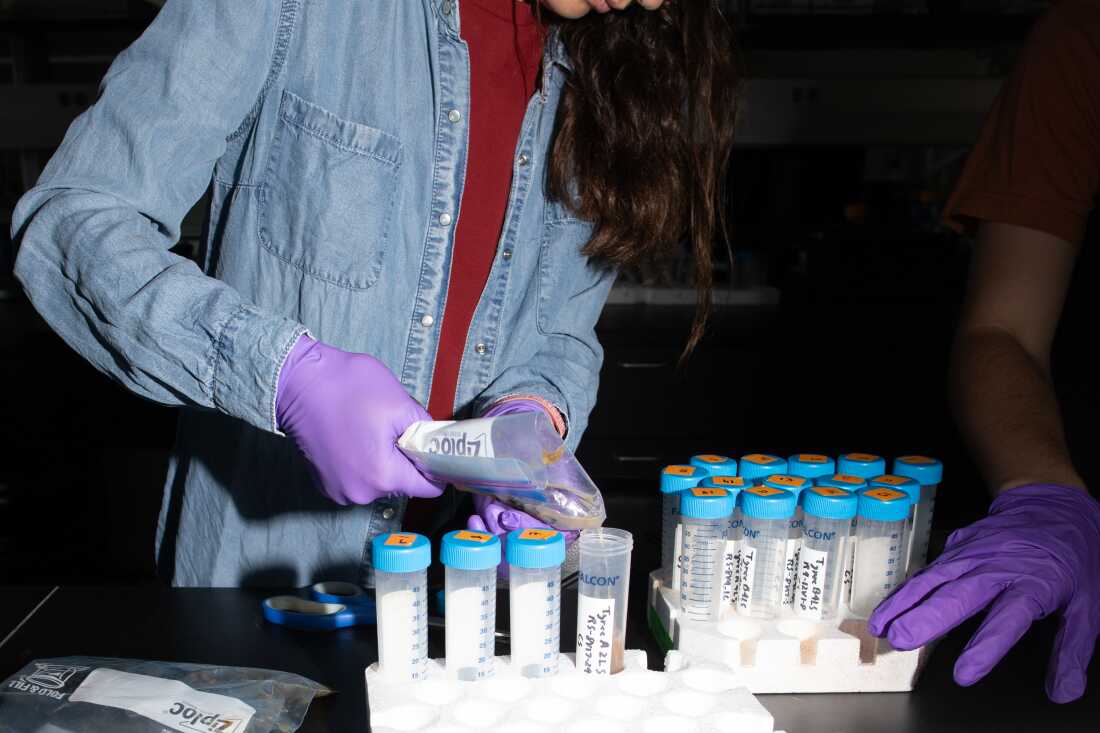
UC Davis research associate Martina Galeano prepares grape samples. Wine grapes need heat for ripening, but too much heat can break down some of the crucial compounds for wine flavor and color.
Ryan Kellman/NPR
hide caption
toggle caption
Ryan Kellman/NPR
Would you pay the same for a blend?
Blending cabernet with other red grapes could be one strategy. But since U.S. regulations require any bottle labeled cabernet to contain 75% cabernet, at some point wineries may be looking at changing their labels to say “red blend.”
“We have a perception that a blend is not as high quality as getting that high-quality cabernet, and they’re not on the same price point, so it is a big shift,” Forrestel says.
The challenge is particular to U.S. winemakers, since many other countries label their wines by region, instead of grape. The famed red wines from Bordeaux in France are already a mix of six grapes, including cabernet, so winemakers have more flexibility. Winemakers there have also struggled with heat, so French authorities recently approved four more red-grape varieties for blending. Since the wines are labeled with Bordeaux, wine drinkers may not even notice the shift.
Wines in the U.S. are generally labeled by the grape variety, a system that was promoted when the domestic wine industry was growing in prominence decades ago. In an effort to compete with wines from Europe, some thought focusing on the grape variety would demystify wines for consumers and show the quality of American wines.
Now, that system may work against them. Cabernet sauvignon is the most popular red wine in the U.S., according to NielsenIQ. So Forrestel says consumers are also part of the solution by creating demand for wines that are better suited for a hotter climate.
“Be open,” she says. “Because I think it’s really easy to walk in and buy what you’re used to. And also, trust what you like and not what you’re told to like.”


Sunday Puzzle
NPR
hide caption
toggle caption
NPR

On-air challenge
I’m going to give you two five-letter words. Add the same two letters at the end of the first one and the start of the second one, in each case to complete a familiar seven-letter word.
Ex. Later Ready –> LATERAL/ALREADY
1. Habit Tempt
2. Laten Press
3. Blank Ching
4. Since Venue
5. Shack Groom
6. Surge Stage
Last week’s challenge
Last week’s challenge came from Rawson Sheinberg. of Plymouth, Mich. Think of a U.S. city with a two-word name. Add a letter to the first word, without rearranging letters, to name a country. Then, without adding a letter, rearrange the letters of the second word to name another country. What places are these?
Answer: Los Angeles –> Laos, Senegal
Winner
Elaine Neel of Derby, Kansas.
This week’s challenge
Next weekend will be the 186th convention of the National Puzzler League, in Bloomington, Ind., which I’ll be attending as always. Two other people who will be there are Henri Picciotto and Joshua Kosman, who created this week’s challenge. Name two words that are opposites. They share a single letter. Remove that shared letter from each word, put a hyphen between the two starting words, and you’ll get a term you sometimes see in food ads. What are the two words?
If you know the answer to the challenge, submit it here by Thursday, July 9 at 3 p.m. ET. Listeners whose answers are selected win a chance to play the on-air puzzle. Important: include a phone number where we can reach you.
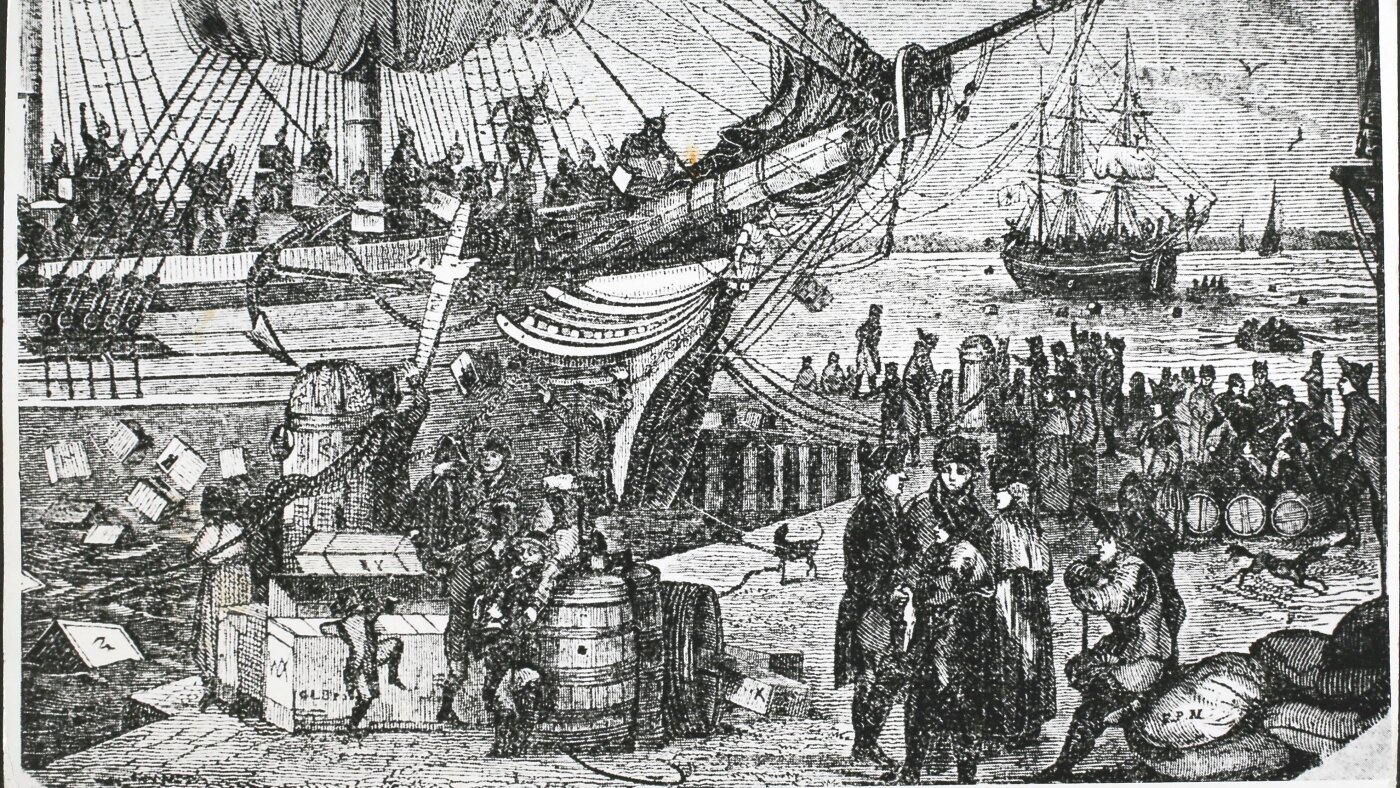
An illustration of the Boston Tea Party, when colonists dumped British East India Company tea into the harbor on Dec. 16, 1773. Some accounts say this marked a pivotal moment when Americans started loving coffee. But one historian says Americans were drinking lots of coffee before then.
Hulton Archive/Getty Images
hide caption
toggle caption
Hulton Archive/Getty Images
A consequential act of defiance secured tea’s place as perhaps the most iconic beverage of America’s colonial era.
The Boston Tea Party became an essential ingredient in the recipe for revolution in the following years.
But tea wasn’t the only hot beverage with a prominent role in America’s fight for independence.
Coffee was an important part of American culture from the start. And coffeehouses were essential, too — serving as hubs for brewing ideas of independence.
As the United States celebrates 250 years, here’s what to know about America’s early history of coffee.

Colonists were drinking coffee long before the United States existed
Europeans brought coffee with them when they came to America.
“The first documented example of a mortar and pestle used to grind coffee beans was on the Mayflower” in 1620, says historian Michelle Craig McDonald, the author of Coffee Nation: How One Commodity Transformed the Early United States.
“The fact that coffee was present so early is not surprising if you think about it,” McDonald says. “A number of those who were on the Mayflower came to North America from Amsterdam, which was a major coffee trading center in Western Europe by the 17th century.”
The first coffeehouse in the colonies opened in 1676 in Boston, a century before the U.S. declared independence, she says. Some taverns sold coffee even earlier.
The Boston Tea Party probably wasn’t the dramatic turning point toward coffee that some claim
On the night of Dec. 16, 1773, disgruntled colonists boarded three ships moored in Boston Harbor and threw overboard more than 92,000 pounds of tea owned by the British East India Company.
Tensions had been building between the Crown and the colonies over the previous decade, as Britain tried to levy taxes on its colonies to recoup war debts.
The Boston Tea Party protest was targeted at the British government’s passing of the Tea Act in 1773, which granted the East India Company a monopoly over tea sales in the colonies. While the British had removed some unpopular taxes in the preceding years, they left tea taxes in place. Colonial merchants were especially upset that the act allowed the East India Company to undercut their tea business.
To build solidarity for their cause of sovereignty, some patriots called on colonialists to swear off tea in favor of coffee. It’s why many histories point to the Boston Tea Party as a turning point when Americans switched from mostly drinking tea to mostly coffee. The anti-tea sentiment was immortalized in a founding father’s now-famous letter.
In July 1774, John Adams (before he became the second U.S. president) wrote to his wife Abigail, recounting an incident during his travels. After a long day, he asked the proprietor of the house where he was lodging for a cup of tea, provided it was smuggled and free of British taxes.
” ‘No sir, said she, we have renounced all Tea in this Place. I cant make Tea, but I’le make you Coffee.’ Accordingly I have drank Coffee every Afternoon since, and have borne it very well. Tea must be universally renounced. I must be weaned, and the sooner, the better,” Adams wrote.
Despite John Adams claiming a newfound patriotic duty to appreciate coffee, McDonald says colonists had been drinking lots of coffee all along.
She studied advertisements from the 1760s and ’70s to estimate how many shops sold coffee versus tea. Even before the Boston Tea Party, she says, “coffee is definitely more broadly available than tea is.”
A big reason? It was cheaper. “Its price again per pound is significantly less, which tells you about its availability, its accessibility to drinkers.”
Historians say it’s hard to definitively compare tea with coffee consumption, though, as official records from before America gained independence were inconsistent.
And smuggling was rampant, making official records even less reliable.
“There is a vast amount of smuggling,” says Joyce Chaplin, a professor of early American history at Harvard University. “So they’re not paying formal duties on tea that they get from the Dutch. They’re probably not paying formal duties on coffee from the French Caribbean.”
And Chaplin notes that people who loudly proclaimed a new appreciation for coffee over tea weren’t always doing what they said. It could have been political pandering. “I do not drink tea that comes via the East India Company,” she posits someone of the era saying. “But, you know, other sources are fine. Ditto for the coffee.”
Coffeehouses were a hub for revolutionary ideas
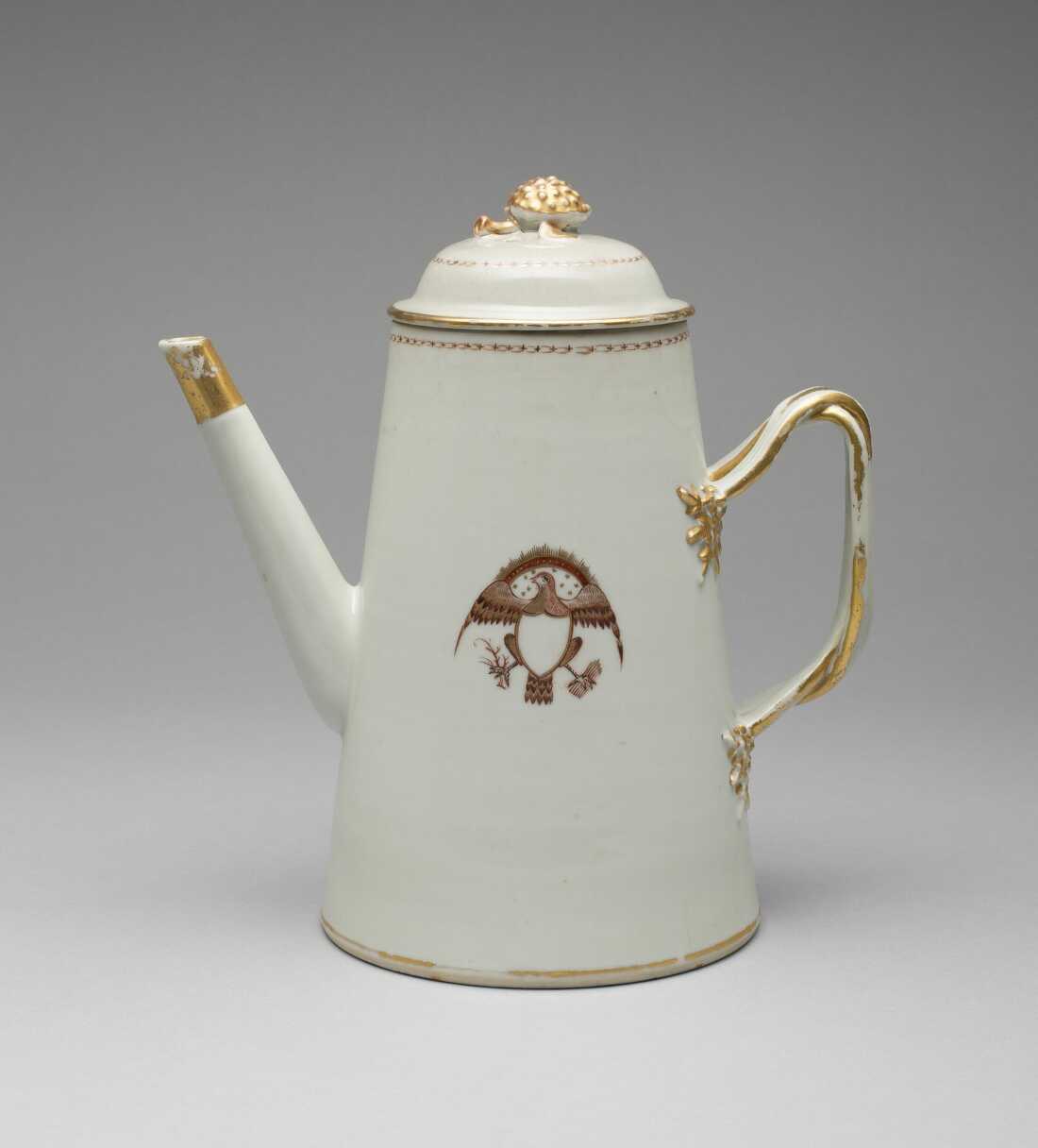
A coffeepot with cover, circa 1795. It has an American eagle motif, made in China for the American market. Coffee was part of a growing trend of globalization in the colonial era.
Heritage Art/Heritage Images via Getty Images
hide caption
toggle caption
Heritage Art/Heritage Images via Getty Images
In the colonial era, coffeehouses were hotbeds for seditious thought — where people planned acts of revolution.
“Coffeehouses are kind of famous for being places where people think and plot things,” says Mark Pendergrast, author of Uncommon Grounds: The History of Coffee and How It Transformed Our World.
A coffeehouse called the Green Dragon served as one of the locations for planning the Boston Tea Party. Years earlier, the Old London Coffeehouse in Philadelphia was a meeting place for strategizing responses to another British tax, the Stamp Act of 1765.
In Britain, coffeehouses were nicknamed “penny universities,” Pendergrast says: “because for a penny you could go and learn a whole lot by sitting around in a coffeehouse and discussing everything.” The same attitude traveled across the Atlantic.
Early American coffeehouses would commonly have city business directories, libraries of newspapers and currency exchange information. People could get maritime insurance there or buy things at auction.

“There’s a reason why coffeehouses become places of colonial protest … in the 1760s, in the 1770s, and it’s because it is the place where traders and merchants tended to gather,” historian McDonald says. “That’s where they heard about the economics of the day.”
Taverns were more likely than coffeehouses to have rooms for rent and stables for travelers’ horses. They were also more likely to have food.
Interestingly enough, coffeehouses could serve alcohol and taverns could serve coffee.
But the vibes at each were different. While women and men could “riotously drink together” in taverns, coffeehouses often didn’t allow women, according to Chaplin of Harvard.
“The sense was the coffeehouse was the place where you had a clear head — to argue about politics, to find out what was going on in the business world, to cut a business deal,” she says. “Whereas taverns were places where, in a sense, you refueled.”
Still, she says, the lines between the two “weren’t completely clear.”
The cost of America’s revolutionary drink
Coffee (and tea for that matter) was part of a growing globalization of trade around this time.
Much of the coffee in the colonies was grown in the Caribbean, while tea came from China.
Supply was up and coffee was easier than ever to drink. “Trade and frankly, imperialism, are making it possible for … colonial products to be produced and transferred to other parts of the world in greater and greater quantities,” says Chaplin.
As a result, by the time of the American Revolution, both coffee and tea were in reach for many common people. “They’re both becoming affordable luxuries,” Chaplin says.
Fancy coffee and tea paraphernalia were also part of this increasingly global market. Middle and upper-class people would have wanted special implements for drinking these beverages and a place to drink it. That meant they needed wood for coffee tables, silver for coffeepots, and porcelain for teapots.
“These two beverages are encouraging people to consume all kinds of new stuff,” says Chaplin. “The mahogany that comes out of the Caribbean, the china coming out of China, silver that is mined principally in South and Central America and processed in a lot of the parts of the world.”
There’s a dark side to coffee’s history, too. The plantations that supplied the crop ran on the labor of enslaved people. By 1790, half of the world’s coffee was being grown in the French colony of Saint-Domingue, in what is today Haiti, Pendergrast says, where slaves were routinely mistreated, raped and murdered.

The Declaration of Independence, signed in 1776, is infamous for a contradiction. It proclaimed that “all men are created equal,” but failed to acknowledge the hundreds of thousands of enslaved people living in America at the time.
Coffee carried a similar contradiction. The beverage that fueled conversations that inspired America’s fight for independence — centered on the ideals of life, liberty and the pursuit of happiness — depended on enslavement.
“Coffee had this paradoxical effect, that it did promote revolutionary thought,” Pendergrast says. “But it was also grown by slaves.”
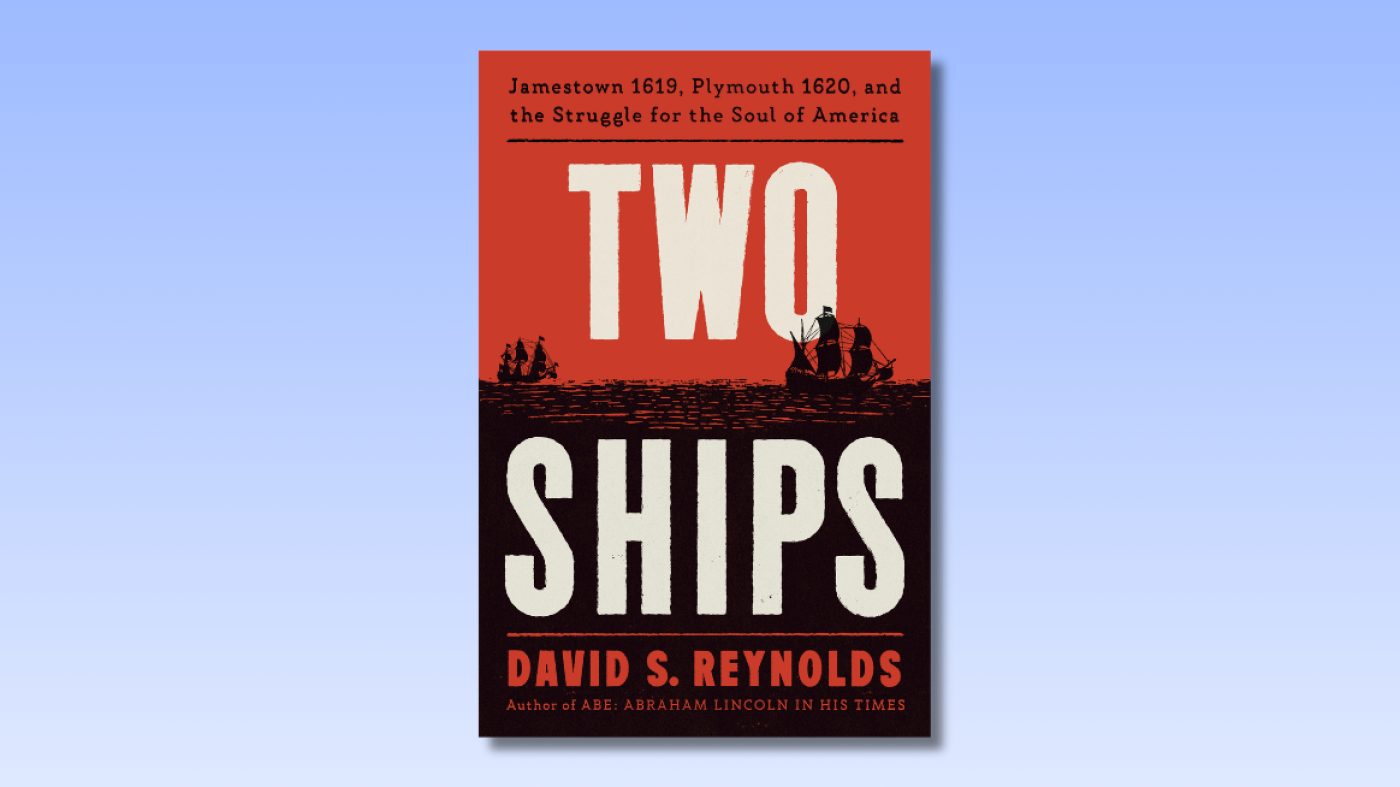
Just in time for a contentious 250th anniversary of the United States of America, historian David S. Reynolds’ latest book, Two Ships, helps us realize that any country that couldn’t agree on its own origin story is destined for divisive times.
Two Ships is about the complicated, conjoined legacy of the landings of the Mayflower, which carried the Pilgrims to Plymouth, Mass., in 1620, and the White Lion, which arrived in Jamestown a year earlier, bringing the first enslaved Africans to Virginia.
As Reynolds demonstrates, it’s not so much the facts of these two voyages, as it is the meanings ascribed to them, that made them such a powerful metaphor for two conflicting visions of American identity.
To simplify, the Mayflower’s passengers were separatist Puritans, dissenters to the reign of the English king, James I. As the United States developed, the Mayflower was credited with carrying the seeds of a radical democracy to the New World, one in which all men (in theory, at least) were equal before God.
In contrast, the European settlers of Jamestown were Royalists, also known as Cavaliers. Loyal to the monarchy, they believed in a strict hierarchy.
But the meaning of the images of the two ships shifted depended on who was invoking them and when. Not surprisingly, the metaphor was deployed most vigorously during the Civil War. In abolitionist speeches and writings, the White Lion or the “Slave-Ship,” as it was commonly called, was condemned for infecting America with the “plague-spot” of slavery.
Reynolds says that Frederick Douglass resorted to the “two ships” metaphor frequently, while Lincoln avoided it, hoping to preserve a unified ship of state. Meanwhile, Southern descendants of Cavaliers invoked the Mayflower to emphasize the intolerance and “cruel, persecuting” character of the Puritans. In a comment that resonates for our own times, Reynolds says:
It didn’t matter to the South that … by the mid-nineteenth century, the North had become a kaleidoscope of religious denominations, …, few of which resembled the faith of the Plymouth colonists. Distortion is intrinsic to cultural memory, especially when amplified by sectional or political bias. For Southerners, the Mayflower had brought Puritanism, which had yielded fanatical movements like abolitionism, now a dire threat to the Union.
In a brief-but-fascinating digression into the unpredictable power of literary fiction, Reynolds observes that the South’s fondness for Nathaniel Hawthorne’s anti-Puritan novel, The Scarlet Letter, and, even more, for the medieval historical romances of Sir Walter Scott, bolstered its nostalgia for a largely-imagined feudal society.

Reynolds quotes the always-quotable Mark Twain, no fan of Scott’s, as saying that Scott “did measureless harm; more real and lasting harm, perhaps, than any other individual that ever wrote …”
Two Ships is a dazzling survey of some three centuries of American history through a close reading of a metaphor. By the 1890s, Reynolds says, the interpretive tide had turned again: “Southern and Northern whites, feeling threatened by people of color and by an array of European immigrants, were retreating to a cocoon of racial solidarity that Mayflower celebrations helped reinforce.”
By the later-20th century, the image of the Mayflower was depoliticized and commercialized into Pilgrim hats and Black Friday sales. The powerful metaphor of the two ships receded into the mist.
Seven years ago, however, the 1619 Project piloted the White Lion — “The Slave-Ship” — back into view and anchored it at the center of debates about slavery’s place in the national story. The 1619 Project has been faulted for its historiography, and it does lie outside of the chronological boundaries of Reynolds’ book; still, it seems too momentous a reappearance of the White Lion not to at least acknowledge in this book.
That criticism noted, I think reading Two Ships would be an excellent way to observe this particular Fourth of July. It’s wise for all of us to have a more informed awareness of how Americans have understood, misunderstood and, often, flattened each other into stereotypes. Or, as Ernest Hemingway, one of the Mayflower Pilgrims’ more cynical descendants, might say in response to that sentiment: “Isn’t it pretty to think so?”

-
 New Mexico4 minutes ago
N.M. search and rescue teams face fewer missions despite increase in calls
-

 North Carolina6 minutes ago
Police: Man shot dead, juvenile injured in Fayetteville neighborhood
-

 North Dakota12 minutes ago
Cole Reschny, Carson Carels talk North Dakota at Flames camp
-

 Ohio19 minutes ago
Ohio State Buckeyes Present Tough Offensive Challenge for USC Trojans
-

 Oklahoma22 minutes ago
Will Oklahoma Be Able to Replicate Febechi Nwaiwu’s Leadership on Offensive Line?
-

 Oregon27 minutes ago
We’re burning daylight! Oregon will lose about 50 minute of daytime by the end of July
-

 Pennsylvania34 minutes ago
Pennsylvania’s Lush Pittsburgh Suburb Has Green Spaces, Local Restaurants, And Quaint Charm – Islands
-

 Rhode Island37 minutes ago
‘Taylor Swift tax’ goes into effect in Rhode Island

