Lifestyle
Barbara Walters forged a path for women in journalism, but not without paying a price


In 1976, Barbara Walters became the first woman to co-anchor a national news show on prime time television. She was only in that role for two years, but her arrival changed news media.
“She’s such a consequential figure for journalists, not just for women journalists,” biographer Susan Page says. “The path she cut is one that many of us have followed.”
Page is the Washington bureau chief at USA Today and the author of The Rulebreaker: The Life and Times of Barbara Walters. Though they never met, Page says speaking to hundreds of Walters’ friends and colleagues and watching hours of her interview tapes gave her a sense of her subject.
Page describes Walters as a fearless journalist who didn’t shy away from controversy or tough questions. She battled sexism throughout her career — especially from her first co-anchor, Harry Reasoner, who, Page says, scowled at Walters’ presence and tracked how many words she spoke on-air compared to him.
After leaving the nightly news post, Walters became known for her long-form interviews. Her conversations, which blended news and entertainment, featured a wide range of subjects, including Fidel Castro, Vladimir Putin, Richard Nixon, Monica Lewinsky, Michael Jackson and Charles Manson. In 1997, she created The View, a daily talk show with an all-women cast of co-hosts.
“One thing that I thought was interesting about Barbara Walters is that she thought all sorts of people were interesting and worth talking to,” Page says. “She really expanded the world of interviews that [national] journalists were doing to include not just presidents, but also notorious murderers.”
For Page, Walters’ success feels personal: “It never occurred to me when I was looking at a career in journalism that I couldn’t do big interviews with important people because Barbara Walters did. … Even though I’ve been in print journalism, not TV journalism, I benefited from the battles that Barbara Walters fought.”
Interview highlights
On her family life that drove her to work hard
Understanding the source of her drive was hard to understand and I think crucial. And I decided after doing all this reporting about her that, that there was a moment that ignited the drive in Barbara Walters, and that was when her mother called her and told her that her father had attempted suicide. Her mother didn’t call an ambulance. … [Barbara] called the ambulance. [Barbara] rode in the ambulance with her father to the hospital. And she realized almost in an instant that while she was going through her first divorce, she didn’t really have a career that as of that moment, she was going to be responsible for supporting her father, who had just tried to commit suicide, her mother, who was perpetually unhappy, and her special needs sister. And that that was going to require her to get serious, to make some money and to sustain that. She always had the sense that it could all disappear in an instant.
On news co-host Harry Reasoner’s hostility about working with Walters
He was so openly contemptuous of her on the air that the director stopped doing two shots. That is a shot where you could see Harry Reasoner watching Barbara Walters speak because he was always scowling. It was so bad that they got many letters from mostly women viewers complaining about how she was being treated. … It was really an untenable situation and one that took a while to unravel, and it was one that unnerved Barbara Walters. It was the one time in her career when she thought perhaps she had made an error so great that she would not recover. She said that she felt not only like she was drowning, but that there were people trying to hold her head under the water.
On a turning point in her career, when she interviewed Fidel Castro
So this was in 1977. She was still officially the anchor [of ABC Evening News], but things were not going well. And she landed this interview with Fidel Castro, who had been interviewed only infrequently by Western journalists. And … she got in a boat and crossed the Bay of Pigs with him. He drove his jeep across the mountains with her sitting next to him, holding aloft his gun to keep water from splashing on. It was a great interview. A very tough interview. She asked him about freedom of the press, which didn’t exist in Cuba. She pressed him on whether he was married. This was a question that he had refused to answer. … So he finally gave up and answered it and said formally, no. So it was a great interview and it was a comeback interview for her. It both showed what she could do in an interview, and it made her feel more confident again.
YouTube
On her interview with Richard Nixon when she asked him if he wished he burned the Watergate tapes
That was in a particularly difficult interview, because the only way the Nixon people agreed that she could do it was to do it live. There was no cutting out some extraneous matter to get that last question in, she had to be incredibly alert about controlling the interview so that she would have time to ask that question. And the other thing that we should know about that question is she always wanted to ask the question that everybody wanted to hear, even the toughest question possible, like would you have burned the tapes? She wanted to ask the one that people wanted to hear the answer to. That was one of [her] great gifts. And she figured out that by preparing for hours and hours and writing down proposed questions on small 3×5 cards and shuffling them and revising them, and finally having them typed on 5×7 cards to ask. She would let an interview go where it went. She didn’t always follow the cards, but she always had a plan in mind for how she wanted to get the interview started. What she wanted to do in the middle and the thing that she wanted to do at the close to give it a real kick.
On her friendship with Donald Trump
They were transactional friends. She went to his wedding. He went to the celebration of her third marriage. He was often a guest on The View when The View started in 1997. He was then a real estate developer in New York. And if they were short a guest, they could call up Donald Trump and he would come over and be on the show or even do a cameo skit. … And, in fact, one ABC executive told me, when Donald Trump got involved in politics, that there was a feeling, some discomfort, that she had given him a platform and a legitimacy that maybe he wouldn’t have had otherwise.
YouTube
On her preparation for her infamous Monica Lewinksy interview
Barbara Walters was working on asking the questions, but at the same time, Monica Lewinsky was working with her team on how to answer the questions. The question that gave the Monica Lewinsky team the most trouble was that question, “Do you still love him?” Because at the beginning of their practice sessions, she said yes. And then she said she couldn’t say no because she did love him. And she loved him some of the time. And, they warned that that was not an effective answer to have. So you hear her, in this interview giving the answer they had worked out, which was no. But then in her follow up, she does acknowledge that sometimes she does still have warm feelings for him. On the Barbara Walters side, they worked a long time on what the closing question would be, because that’s a powerful position in an interview like this, that last question. And they settled on, “What will you tell your children?”
YouTube
On Gilda Radner’s impression of her as “Baba Wawa,” mocking the way she spoke
She was wounded when she heard this. For one thing, even though there was this exaggerated lisp that Gilda Radner used, nobody had any doubt who she was parodying. And, Barbara Walters had this speech anomaly. She called it a bastard Boston accent. Other people called it a lisp. Whatever it was she had tried, she’d gone to voice coaches early in her career to try to fix it, and it failed. So her feelings were hurt when the skit was done on Saturday Night Live. Now, it also made her famous. She came to terms with it, but I think she always found it kind of hurtful. … When Gilda Radner died … Barbara Walters wrote a sympathy note to her widower, Gene Wilder, expressing sympathy on her death, and signed it, “Baba Wawa.”
On her reluctant retirement
She worked into her 80s. … When she was in her 70s, she was working at a time when most women had been involuntarily retired. So she worked as long as they would keep her on the air. But as she started to sometimes miss a step, there was concern that she would embarrass herself or undermine some of the professional work she had done. … The people at ABC convinced her it was time to retire. And then CNN came in with a secret offer to put her on the air at CNN, which she was considering when her friends came back and said, no, it’s time. … There was a grand finale on The View, where two dozen women prominent in journalism came and paid tribute to her. And on her last, big show on The View. And when she was backstage afterwards, one of them came up and said … “What do you want to do in your retirement?” And Barbara said, “I want more time.” Meaning I want more time on the air.
On if she was happy
I asked 100 people who knew her that question: Was she happy? And a few people said yes. Joy Behar of The View said “happy-ish,” which is not a bad answer, but most people said while she was proud of what she had done and that she loved the money and the prominence that she had won, that she paid this huge price on the personal side — she had three failed marriages. She was estranged for a time from her only daughter. She never lost that feeling that she was always competing and could never stop and be content. So she had the most successful possible professional life, but I think she had kind of a sad, personal one.
Thea Chaloner and Joel Wolfram produced and edited this interview for broadcast. Bridget Bentz, Molly Seavy-Nesper and Beth Novey adapted it for the web.



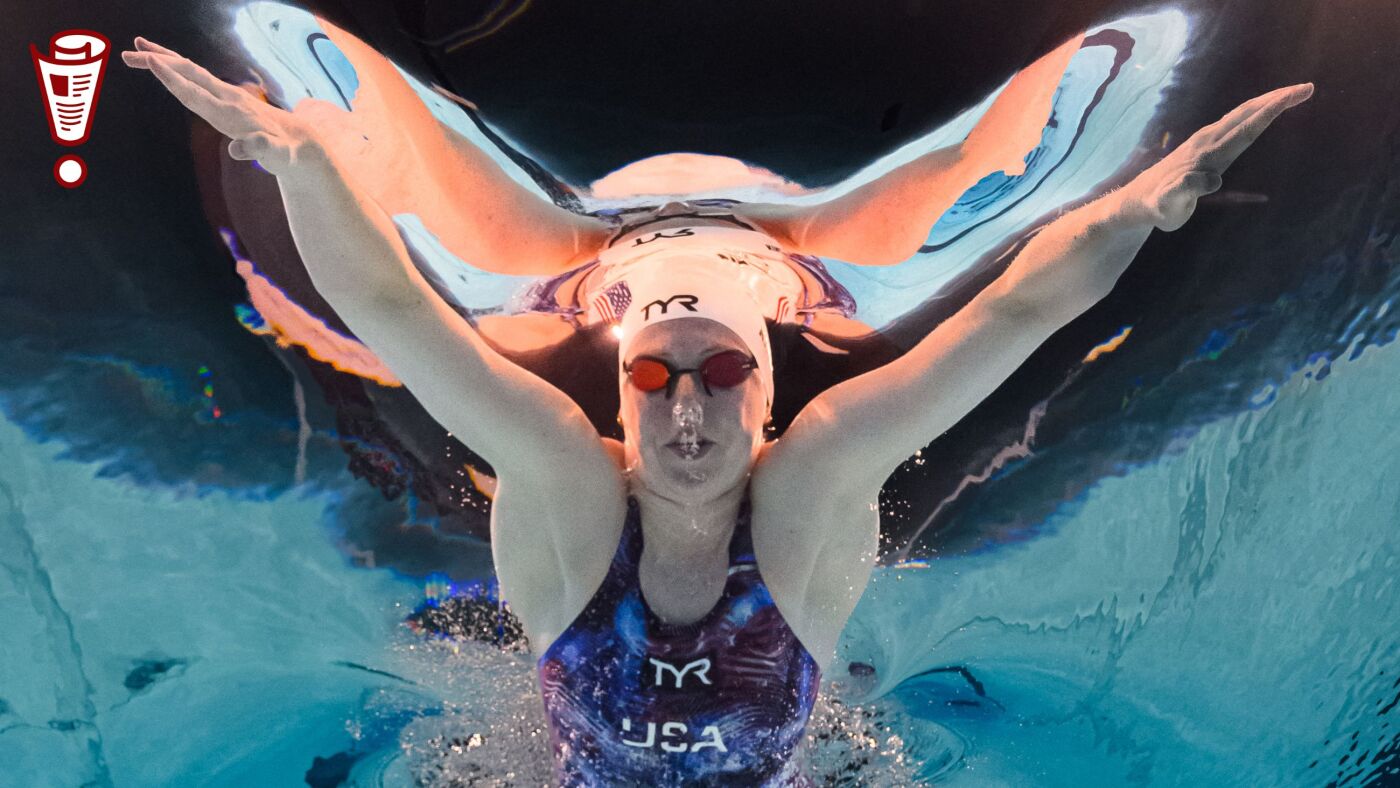
An underwater view shows US’ Lilly King competing in a heat of the women’s 200m breaststroke swimming event during the Paris 2024 Olympic Games at the Paris La Defense Arena in Nanterre, west of Paris, on July 31, 2024. (Photo by François-Xavier MARIT / AFP) (Photo by FRANCOIS-XAVIER MARIT/AFP via Getty Images)
François-Xavier Marit/Getty Images
hide caption
toggle caption
François-Xavier Marit/Getty Images
This week’s show was recorded in Bloomington, Indiana with host Peter Sagal, judge and scorekeeper Bill Kurtis, Not My Job guest Lilly King and panelists Alonzo Bodden, Josh Gondelman, and Faith Salie. Click the audio link above to hear the whole show.
Who’s Bill This Time
State of the Union is Hot; The Tribal Council Convenes Again; A Glow Up In the Doll Aisle
Panel Questions
The Toot Tracker
Bluff The Listener
Our panelists tell three stories about a travel hack in the news, only one of which is true.
Not My Job: Olympic Swimmer Lilly King answers our questions about Lil’ Kings
Olympic Swimmer Lilly King plays our game called, “Lilly King meet these Lil’ Kings” Three questions about short kings.
Panel Questions
Cleaning Out The Cabinet; Bedtime Stacking
Limericks
Bill Kurtis reads three news-related limericks: Getting Cozy With Cross Country Skiing; Pickleball’s New Competition; Bees Get Freaky
Lightning Fill In The Blank
All the news we couldn’t fit anywhere else
Predictions
Our panelists predict, after American Girls, what’ll be the next toy to get an update.

Law Roach
Zendaya and Tom’s Wedding Already Happened …
Y’all Missed It!!!
Published
Zendaya and Tom Holland are married … so claims her longtime stylist, Law Roach.
Here’s the deal … the celebrity stylist — who started styling Zendaya way back in 2011 — spoke to Access Hollywood on the Actors Awards red carpet where he sang out “The wedding has already happened, you missed it.”
Waiting for your permission to load the Instagram Media.
The AH reporter asks in shock if that’s true … and, Law responds by saying it’s “very true” before walking off.
This isn’t the first time Tom and Zendaya’s relationship status has made headlines on a red carpet … remember at the Golden Globes in 2025, Zendaya had a ring on that finger — and, the next day, we found out the two were engaged.
TMZ.com
Zendaya and Tom met on the set of “Spider-Man: Homecoming” in 2016, started dating a couple years later and went public with their relationship in 2021.
We’ve reached out to Tom and Zendaya’s teams … so far, no word back.

Online prediction market platforms allow people to place bets on wide-ranging subjects such as sports, finance, politics and currents events.
Photo Illustration by Scott Olson/Getty Images
hide caption
toggle caption
Photo Illustration by Scott Olson/Getty Images
The rise of prediction markets means you can now bet on just about anything, right from your phone. Apps like Kalshi and Polymarket have grown exponentially in President Trump’s second term, as his administration has rolled back regulations designed to keep the industry in check. Billions of dollars have flooded in, and users are placing bets on everything from whether it will rain in Seattle today to whether the US will take over control of Greenland. Who’s winning big on these apps? And who is losing? NPR correspondent Bobby Allyn joins The Sunday Story to explain how these markets came to be and where they are going.
This episode was produced by Andrew Mambo. It was edited by Liana Simstrom and Brett Neely. Fact-checking by Barclay Walsh and Susie Cummings. It was engineered by Robert Rodriguez.
We’d love to hear from you. Send us an email at TheSundayStory@npr.org.
Listen to Up First on Apple Podcasts and Spotify.

Police identify victim of Wilmington motorcycle crash

South Florida reacts: Mixed emotions after U.S. and Israeli strikes kill Iran’s Supreme Leader

South Georgia honors Officer Caleb Abney

Hawaii County Weather Forecast for March 02, 2026 | Big Island Now
Idaho Lottery results: See winning numbers for Pick 3, Pick 4 on March 1, 2026

Florida High School Football Rankings: Top 25 teams – Oct. 21

Cleary's 21 help Le Moyne down Central Connecticut State 69-64 in OT

How old is Bo Nix? What to know about Oregon quarterback ahead of 2024 NFL Draft

99th annual Pony Swim held in Virginia

Indiana Members Credit Union announced as new anchor tenant at Bottleworks District

House Republicans push Johnson to go to war with Senate over SAVE Act

Israel FM says Europe too divided, slams Spanish PM

Satellite images provide view inside Iran at war

Video: What the Texas Primary Battle Means for the Midterms

Dems’ potential 2028 hopefuls come out against US strikes on Iran
-

 World4 days ago
Exclusive: DeepSeek withholds latest AI model from US chipmakers including Nvidia, sources say
-

 Massachusetts5 days ago
Mother and daughter injured in Taunton house explosion
-

 Denver, CO4 days ago
10 acres charred, 5 injured in Thornton grass fire, evacuation orders lifted
-

 Louisiana1 week ago
Wildfire near Gum Swamp Road in Livingston Parish now under control; more than 200 acres burned
-

 Technology1 week ago
YouTube TV billing scam emails are hitting inboxes
-

 Politics1 week ago
OpenAI didn’t contact police despite employees flagging mass shooter’s concerning chatbot interactions: REPORT
-

 Technology1 week ago
Stellantis is in a crisis of its own making
-

 News1 week ago
World reacts as US top court limits Trump’s tariff powers