Lifestyle
At the Louvre, the Biggest Fashion Show in Paris


Sixteenth-century ornamental timepieces frame a crystal-studded metal bodysuit by Thierry Mugler. Gilded silver reliquaries with sculpted hands stand next to a pair of Hermès gloves. A ceramic hand warmer from Faenza, Italy, that looks like a book is twinned with a Chanel clutch that looks like a book.
This is “Louvre Couture,” the first fashion exhibition at the famed Paris museum in its 231-year history.
The last time haute couture caused so much excitement at the Louvre was in 1957, when, in the film “Funny Face,” Audrey Hepburn posed in front of the Winged Victory of Samothrace in a strapless red Givenchy gown and rushed down the Daru staircase, lifting a matching chiffon scarf over her head.
Forty-five fashion houses and designers — from Cristóbal Balenciaga to Iris van Herpen — have lent the museum 100 ensembles and accessories, dating from 1960 to 2025. They are arrayed not among the Louvre’s famous paintings and marble sculptures but throughout the nearly 100,000 square feet of its decorative arts department.
The department, whose unwieldy collection ranges from the Middle Ages to the early 19th century, is crammed with thousands of objects: medieval armor, Renaissance tapestries, carved ivories, bronzes, ceramics, imperial silverware and furniture.
“It is not easy to enter our museum, especially our collection,” said Olivier Gabet, the director of the decorative arts department. “Our objective is to make more people, different people, younger people, happy, free and relaxed when they come here. We say to them: ‘OK, you love fashion. Fashion is a bridge to us.’”
With this exhibition, which opens on Jan. 24, the Louvre joins the ranks of institutions that have discovered how to use the popular culture of dress as a gateway into the world of art. And, more than ever, fashion is seducing French museums and artistic spaces.
Two weeks before the Louvre opened its exhibition on Jan. 24, Dolce & Gabbana opened a fashion spectacle of its own: “From the Heart to the Hands,” in the newly renovated Grand Palais. First opening in Milan last spring, the traveling costume retrospective features more than 200 creations of the house within immersive video installations and elaborate sets.
But this is not a museum exhibition. “This is an experience that is primarily joyful,” said Florence Müller, the creative director of the exhibition. “It is secondarily intellectual. It is not meant to be in a museum.”
Next month, the Musée du Quai Branly, a collection of African, Oceanic, American and Asian works, will open “Golden Thread,” an exhibition focusing on the art of using gold to adorn clothing and jewelry. In May, the Petit Palais, which belongs to the city of Paris, will mount “Worth: The Birth of Haute Couture,” a retrospective on the life and work of the British designer Charles Frederick Worth (1825-1895).
Two fashion museums, one with collections belonging to the state (the Musée des Arts Décoratifs), the other to the city (Palais Galliera), have long featured dazzling permanent collections and temporary exhibitions. More recently, luxury groups like LVMH and Kering have opened their own art exhibition spaces. And Saint Laurent, Dior and Alaïa have all created permanent spaces to show their work.
“Museums and fashion have been dancing with each other for decades,” said Pamela Golbin, the former chief curator of fashion and textiles at the Musée des Arts Décoratifs. “Now there’s a real rapprochement. It is not always a successful pairing, but if it triggers an interest from the public — if it can see the art differently — it’s a great way to use the power of fashion.”
The defining example of this approach is, of course, the Metropolitan Museum of Art in New York, where the Costume Institute’s blockbuster shows are among the museum’s most visited every year. In acknowledgment of fashion’s ability to lure visitors, the Met is in the midst of a renovation that will relocate the fashion department from the basement, where it has historically been situated, to the former gift shop in the Great Hall, the majestic main entrance.
The Louvre, with 8.7 million visitors in 2024, doesn’t need fashion to boost attendance. On the contrary, it has capped its daily attendance to 30,000 to reduce overcrowding. Only 23 percent of visitors to the Louvre are French; the rest are foreigners. And 66 percent of its visitors are first-timers, almost all of whom line up to see the Mona Lisa.
Since Laurence des Cars became the museum’s director in 2021, she has struggled to woo returning visitors, a younger crowd and more Parisians into the Louvre. She has opened the museum on some evenings, organized concerts and theatrical performances and experimented with a dance-and-exercise circuit. The new fashion exhibition fits neatly into this strategy.
Indeed, Ms. des Cars expresses so much admiration for the Met’s initiatives that some of her curators complain that she is Met-obsessed.
It is no accident that the Louvre — perhaps in a faint echo of the Met Gala — is twinning the new fashion exhibition with a fund-raising gala, Le Grand Dîner du Louvre, during Paris Fashion Week in March. Dinner will be served among the marble sculptures in the glass-roofed Cour Marly and will be followed by dancing under the pyramid. More than 30 tables were put up for sale, and the fund-raising goal of a million euros has already been exceeded, the museum said.
This exhibition is the natural next step for the Louvre, which has already tiptoed into the world of fashion. In 2022, it was one of six prestigious French museums that commemorated the 60th anniversary of the house of Saint Laurent by exhibiting 50 of his creations among their permanent collections. The Louvre put four of his embroidered and jeweled jackets near the French crown jewels in its gilded Apollo Gallery.
Currently, the small Musée National Eugène-Delacroix, which belongs to the Louvre, has an exhibition called “States of (Un)dress: Delacroix and Clothing,” which explores how carefully the artist chose the clothing in his paintings. And in March, Louvre-Lens, the satellite Louvre museum in northern France, will open an exhibition called “The Art of Dressing: Dressing Like an Artist,” examining what artists chose to wear and why, from the Renaissance to the present day.
“Art historians often have to know the history of clothing in order to know the history of art,” said Bruno Racine, the former head of France’s National Library who now heads the Palazzo Grassi in Venice, which belongs to the French billionaire François Pinault, founder of the Kering luxury group. “This is nothing artificial.”
The Louvre can never match the Met when it comes to fashion. Unlike the Met, the Louvre is not a private museum but a hierarchical, state-run institution with a limited budget that takes its orders from the Culture Ministry and, ultimately, the French president.
And the Louvre has no clothes. The cruel irony is that France’s national textile collection does belong to the museum but to the Musée des Arts Décoratifs, which is housed inside the sprawling Louvre structure but is independent of the Louvre museum.
In a confidential memo to the culture minister Rachida Dati earlier this month, Ms. des Cars condemned the disastrous physical state of the museum, including water leaks and temperature variations that endanger artworks, overcrowding, insufficient toilet facilities and poor signage.
Even the glass pyramid showpiece designed by I.M. Pei and inaugurated in 1989 was “very inhospitable,” according to the memo, excerpted on Thursday in Le Parisien newspaper.
But for now, at least, the Louvre’s decorative arts department has one of the best stage sets for showing fashion — namely, the apartments of Emperor Napoleon III. The 40-foot-high Salon-Theatre oozes magnificent excess with crystal chandeliers, a fresco-filled ceiling and gold-leafed stucco ornamentation with vases of flowers and angels playing instruments.
A mannequin wearing an embroidered red silk and cut-velvet ball gown with a deep ermine hem designed by John Galliano for Christian Dior is set in the center of the Salon. The gown matches the Salon’s red cut-velvet upholstery and drapes perfectly. She looks right at home.
Elaine Sciolino , a contributing writer for The New York Times in Paris, is the author of “Adventures in the Louvre: How to Fall in Love with the World’s Greatest Museum,” to be published in April 2025.



Toxic
Confidence
Make way for a new attitude
Everywhere you look these days, the landscape is clogged with confidence men: People with limited experience landing high-ranking government roles. Networks helmed by leaders with scant broadcasting experience. Wellness empires built by entrepreneurs without medical training. An arrogant acquaintance whose presence you find thrilling, maybe.
Perhaps you, too, have noticed the decline in humble brags and performative apologies on social media? A concurrent rise in unshakable self-assurance, unsolicited advice and provocative hot takes? The overqualified don’t hesitate to remind you of their résumé; the underqualified declare themselves authorities; the appropriately qualified claim that their email job is “saving lives.”
If ChatGPT can replace us while insisting that there are only two Rs in the word “strawberry,” it’s no wonder some see the time for a spiky new affect.
“Everyone’s trying influencing; everyone’s paywalling their Substacks,” said Gutes Guterman, 29, a founder of the magazine Byline. “You have to seem like an expert for people to believe in you.”
Amelia Dimoldenberg, a comedian who has made a career out of charming celebrities in her YouTube video series “Chicken Shop Date,” was an early adopter. Deploying the attitude — perhaps the natural register of flirtation — to great effect, she reliably convinces her A-list guests that they are probably a little bit in love with her.
And it has a natural progenitor in drag and hip-hop culture, where reads, diss tracks and storied beefs are founded on inflated egos. It’s the inner voice that drives someone to put out a song titled “I Am a God” and set out to conquer other industries.
Still, it used to be that “impostor syndrome” dominated conversations, the anxious stance of millennials with adult responsibilities and women leading corporate workplaces trying not to rankle. Even if you felt deserving of accolades, the social graces of the time required the expression of modesty.
Now, in an era of aggressively handsome incels and macho political posturing, cultivated humility feels trite. A younger generation, coming out of high school and college in Covid lockdown, feels less beholden to dampening their light. Who has time for affected meekness when playing the braggart not only tickles the soul, but has the potential to convince others of one’s own greatness?
“You’re standing on the ledge, wondering, ‘Should I dive in?’” said the actor and comedian Ivy Wolk on an episode of the popular TikTok show “Subway Takes,” summing up the potential pitfalls of self-doubt. At the same time, she added, other people are coming up behind you “ready to jump.”
Maybe It’s Fun?
It’s partly a product of a new media environment. On platforms like Substack and TikTok, where success relies on convincing others to invest in your singular personality, showing vulnerability or doubt can be risky. Whether it’s posting about a reading series at your local bar or achieving internet notoriety by instructing young men on how to become “gigachads,” these ventures require being bullish on one’s own value.
At its least offensive, toxic confidence is low stakes and entertaining. It’s newsletter writers filling your inbox with unsolicited gift guides and dishy, unedited diary entries. It’s that mediocre actor you barely dated starting a podcast with a paywall and calling herself a political pundit. It is the author Lisa Taddeo directing a post on Instagram to the winners of a fellowship she had been not been granted: “I’ll be watching what you do. I hope it’s better than what I do. But I don’t think it will be. Because what I’m doing is going to be EXCEPTIONAL.”
It’s whatever drives the chaos agents in your orbit to become life coaches.
Perhaps a simple truth is that toxic confidence is charming if you like the person and intolerable if you don’t.
Consider Amanda Frances, a new cast member of “The Real Housewives of Beverly Hills” who has embraced the moniker of “Money Queen” and says she made her fortune selling money manifestation courses.
“I had no formal business experience,” she told her castmate Bozoma Saint John, the first Black C-suite executive at Netflix, over lunch. “I found out I had a gift around, like, the energetic part of money.”
Later, Ms. Saint John gossiped to another castmate, Rachel Zoe, about the interaction: “You’ve never had a job before, so how are you telling people how to get money?”
All of this bravado probably owes something to President Trump, who is known for — among other swaggering displays — using superlatives to boast of his intelligence.
“Nobody knows more about taxes than me, maybe in the history of the world,” he once claimed, for example.
Rarely does Mr. Trump shy from holding forth in speeches and free-associative monologues beyond those typical of presidents. It has become a modus operandi for his administration. Last September, for example, Secretary of Defense Pete Hegseth summoned hundreds of the U.S. military’s top officials to the Marine Corps base in Quantico, Va., for a widely broadcast, in-person meeting.
Highly decorated admirals and generals sat stone-faced as Mr. Hegseth delivered a nearly hourlong speech. He concluded the address by warning enemies abroad with the acronym “FAFO” — language more commonly found in online circles than in formal military settings, roughly translating to “mess around and find out.”
The proclamation was met with minimal audience response — a lonely woo from the crowd — and the assembly was later described as a “waste of time” by former Secretary of Defense Leon Panetta. Senate Democrats estimated the event’s cost at roughly $6 million in taxpayer funds.
Borrowed Ego
If we occasionally find ourselves in the thrall to confidence men, it may be because we desire a bit of what they have.
Looking up to someone bold and brash can give one “that feeling of borrowing ego strength,” said Rachel Easterly, a psychotherapist based in Brooklyn. She referred to narcissism in children, an otherwise normal phase of childhood development.
“It’s very frightening to be a small, helpless person — you’re in a world where you don’t have a lot of power, so you compensate with this defense,” Ms. Easterly said. “It can happen on a societal level.” When Freud, Donald Winnicott and others were developing their theories on why people were drawn to cults of personality, she said, it was “in the context of societal collapse and war.”
“We are feeling similar sorts of existential dread as adults now,” she added, “in terms of nihilism in our culture, climate change, income inequality.”
That may be why so many were drawn to “Marty Supreme,” last year’s blockbuster about a striving table tennis wunderkind, and captivated by Timothée Chalamet’s brashness in promoting it.
“This is probably my best performance, you know, and it’s been like seven, eight years that I feel like I’ve been handing in really, really committed, top-of-the-line performances,” Mr. Chalamet, the film’s lead, said in an interview last year.
“This is really some top-level stuff,” he added, using an expletive.
Mr. Chalamet collected a Golden Globe and a Critics Choice Award for his portrayal of Marty. But by the time the Academy Awards rolled around, he had gotten a bit too comfortable in the culture’s embrace of his toxic confidence, and it quickly turned Icarian.
In a sit-down with the actor Matthew McConaughey, Mr. Chalamet claimed that “no one cares about” opera and ballet. It didn’t seem to occur to him to backtrack or to try to reassure members of those communities of his admiration. Instead, he doubled down, taking aim at artists’ lack of income: “I just lost 14 cents in viewership.”
Punching down is one way to make these high levels of confidence less charming. Those who manage to pull it off tend to be those who are not enjoying their success at another’s expense. Light ribbing is passable.
At the Winter Olympics in Milan, the Chinese freestyle skier Eileen Gu exhibited a bubblier version of toxic confidence as she described what it was like to be inside her own head (“not a bad place to be”) and what she would tell her younger self (“I would love me, and that’s the biggest flex of all time”). She was also honest about the intensive routines she maintains so that she can compete in the Olympics, study quantum physics at Stanford and model with IMG — and the enormous pressure she puts on herself to keep it all up.
That makes it difficult to argue that moments like this are unearned: After winning gold in the women’s halfpipe and two additional silver medals this winter, a reporter asked if she considered her achievements “two silvers gained” or “two golds lost.”
She broke into laughter: “I am the most decorated female free skier in history.”
Don’t Be Coy
For those who aren’t multihyphenate Olympians, it’s possible that beneath the slick veneer of seemingly absolute assurance remains the same anxious, uncertain person merely following the new social dictates of the moment.
“I genuinely don’t know if everyone believes in themselves as much as they say they do, but I think it’s sort of the only option,” said Ms. Guterman, the magazine founder, who described herself as “appropriately” confident. “Because if you don’t really believe in yourself right now, you don’t really have anything going for you.”
The mentality seems to have helped Ms. Wolk. After being forced to delete her social media by a cable network as a teenager, she kept posting anyway, quickly gaining half a million followers. Last year, after a turn in the film “Anora,” Ms. Wolk, now 21, portrayed a brutally assertive, pigtailed motel clerk in the A24 mommy-horror flick “If I Had Legs I’d Kick You,” working alongside ASAP Rocky and Rose Byrne.
If you have a goal, it doesn’t serve you to be coy about it, Ms. Wolk said over the phone. “You can’t lie down and hope that opportunities just come up,” she said. “You have to go out and grab it and say yes.” •
Share this with someone who needs more toxic confidence.

Toxic
Confidence

On the way home, I stop by one of my watering holes for cocktails and a light meal. At this one, happy hour is frequented by local folks — a few of them salty dogs from the marina nearby. Once the bartender spots me, she starts preparing a margarita — with lots of love, as she likes to describe it.
Scanning the bar for a seat, I see a young woman engaging with the regulars. She is attractive: blond, blue eyes, soft facial features, petite and in good physical shape, and smartly dressed, a rarity at this Marina del Rey joint. She has a captivating smile and, as I soon find out, she’s funny and a good storyteller.
I sit next to her, and in between sips and bites, I learn a few things. She grew up in Los Angeles, and now lives abroad and is on a visit, checking up on her mom. She had plans for a ladies’ night out but that changed when her friend had to attend to a last-minute emergency.
“Well, how’s the ceviche?” she asks.
“So-so. The short rib tacos are tastier,” I say, taking a bite.
“How about the margarita?”
“Boozy. I make them better,” I say.
“Hmm.”
Observing her easy chat with the bartender about drinks is fun, as I appreciate people who are curious about options and details.
Soon a margarita arrives. “Boozy is good,” she says.
I laugh.
We continue chatting and slowly reach a moment where our stories are easy and playful. She is curious about my accent. I tell her about my formative years in Lima, Peru, and my family’s adventures relocating to the U.S. We also talk about places we’ve been and favorite destinations we’d like to explore.
After I finish my second drink, the check arrives.
“Well, it’s been fun, and now I’m taking the show on the road!” I tell her.
She looks at me flirtatiously and asks: “Can I come along?”
“I’m just going home.”
With a wink, she says, “I hear the margaritas are killers.”
Giggling, we get into our cars, and she follows me home.
In my loft, everything catches her eye: books, art, pictures, CDs, liquor cabinet, furniture, the colors of the walls. She is having fun, but the thought that perhaps she is scoping the place for robbery crosses my mind.
As I prepare our drinks, she asks about my life.
A fortunate man, I had a fulfilling and challenging career as an audio engineer. I traveled the world recording music, supported coverage of news events and various cultural and scientific expeditions. I learned along the way and contributed to a better understanding of the human experience with reports and stories aired on public radio.
These days I enjoy “full-time living” (my moniker for retirement): golfing, tennis, hiking, travel, reading, writing, cooking, music and happy hour.
With drinks at the ready, we toast to our chance meeting.
“Yummy. This is the tastiest margarita,” she says after her first sip.
We move to the living area, and looking over my eclectic CD collection, we talk about music we like. For fun, we start playing DJ, listening to handpicked selections on the couch. When Tina Turner’s “What’s Love Got to Do With It” plays, she holds my hand and asks: “Would you join me for a dance?”
We get up and sway to the groove, and as we get closer, our eyes meet. Then she says: “Be sweet to me.”
We kiss long and hard, and when my hand touches her back, I hear a sigh.
“Wakey wakey, sailor,” she says, caressing my tummy.
“Wow! You’re delicious trouble,” I say, half-awaken.
“I think we broke a record,” she tells me, smiling and playing with her hair.
Pulling her closer, we embrace, her head resting on my chest, and in silence, we breathe our scent and hear the beating of our hearts.
It’s the middle of the night, and she has to go. We get up, and I start on an omelet as she gets ready.
She joins me in the kitchen, and as we eat, she talks about her life: about her mom, work and a love relationship needing contemplation. “A work in progress,” she says about sorting through some difficulties with her partner.
Looking at her, I’m listening, loving the moment, thankful we are living it and confiding comfortably.
Now it’s time to go, and giggling over nothing, we walk to her car.
I ask her to text me when she gets to her mom’s. She gives me a thumbs up, and with a kiss and a warm hug, we say goodbye. Then I watch her drive up the exit ramp into the night.
I turn around and feel alive! So much so that I skip back to my place.
Now, sitting on the couch with eyes closed, my thoughts take me back 45 years when I was at Georgetown University and met the woman who became my wife.
How magical it all had been: the way we smiled at each other, the coquettish small talk, and the tender sound of our voices. It led to lovemaking, courtship, falling in love, marriage and many years of growing up and building a life together. Unfortunately, we grew apart, and after 16 years, it ended in divorce. And I have remained single since.
Tonight, out of the blue, that magic feeling from long ago returns with this enchanting woman! A gift: from my lucky stars and Father Time.
My cell dings: “Delicious Trouble checking in. Home safe.”
“So fun and special to have met you xo,” I reply.
The author is a retired audio engineer who lives in Los Angeles.
L.A. Affairs chronicles the search for romantic love in all its glorious expressions in the L.A. area, and we want to hear your true story. We pay $400 for a published essay. Email LAAffairs@latimes.com. You can find submission guidelines here. You can find past columns here.
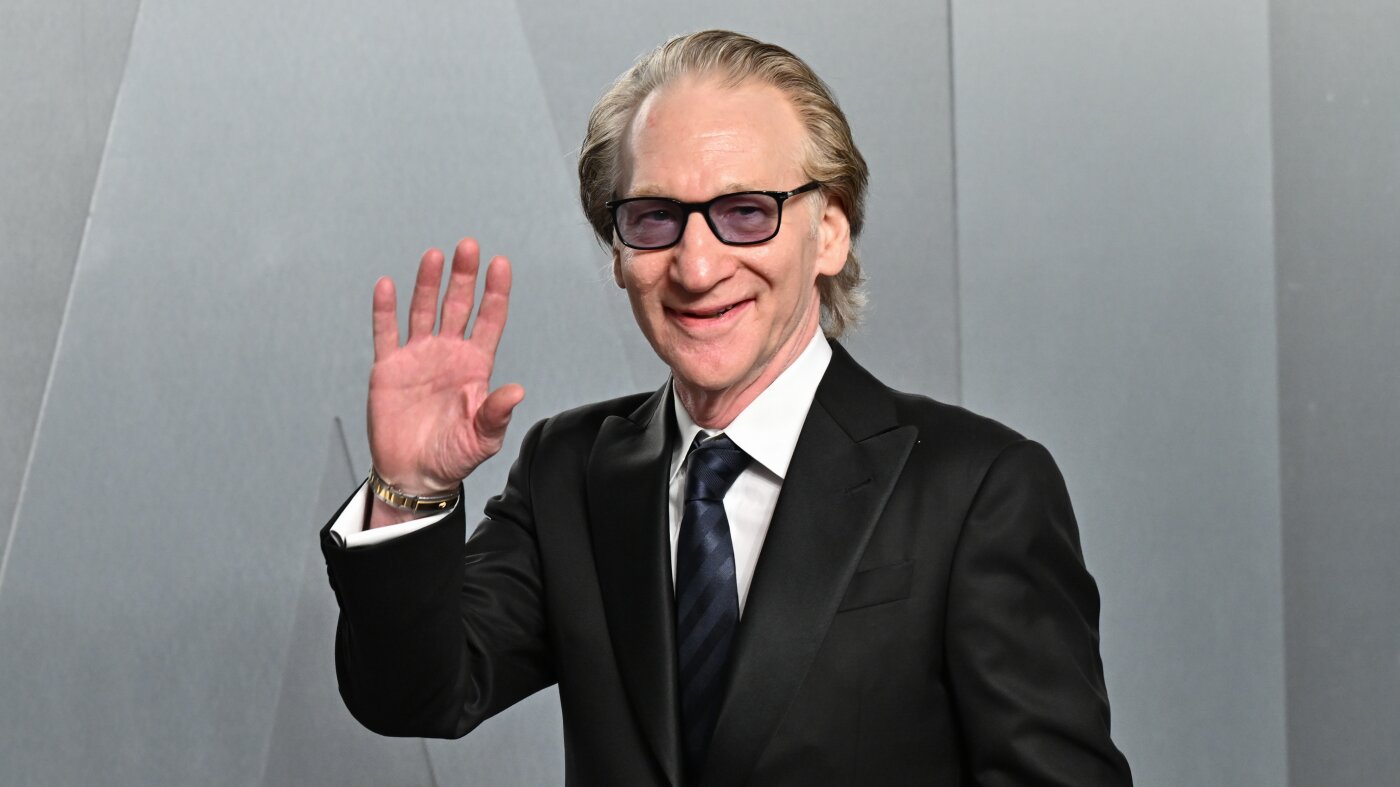
Satirist Bill Maher is this year’s recipient of the Mark Twain Prize for American Humor. Maher will receive the award at the Kennedy Center on June 28th. The show will stream on Netflix at a later date.
Evan Agostini/Invision/AP
hide caption
toggle caption
Evan Agostini/Invision/AP
Bill Maher will be receiving the Mark Twain Prize for American Humor after all.
There’s been some confusion about whether the comedian and longtime host of HBO’s Real Time with Bill Maher would, indeed, be getting the top humor award. After The Atlantic cited anonymous sources saying he was, White House press secretary Karoline Leavitt called it “fake news.” But today the Kennedy Center made it official.
“For nearly three decades, the Mark Twain Prize has celebrated some of the greatest minds in comedy,” said Roma Daravi, the Kennedy Center’s vice president of public relations in a statement. “For even longer, Bill has been influencing American discourse – one politically incorrect joke at a time.”
Is President Trump, chair of the Kennedy Center’s board, in on the joke?
Maher once visited Trump at the White House and he tends to be more conservative than many of his comedian peers but after their dinner Trump soured on Maher, calling him a “highly overrated LIGHTWEIGHT” on social media.
Maher’s acerbic wit has targeted both political parties and he’s been particularly hard on Trump recently, criticizing his decisions to wage a war with Iran and his personnel choices.
“Trump said, ‘when oil prices go up, we make a lot of money.’ Um, who’s ‘we?,’” Maher said in a recent monologue.
Past recipients of the Mark Twain Prize include Conan O’Brien, Dave Chappelle, Jon Stewart, Julia Louis-Dreyfus, Tina Fey, Eddie Murphy and Carol Burnett.
In a statement released through the Kennedy Center, Maher said, “It is indeed humbling to get anything named for a man who’s been thrown out of as many school libraries as Mark Twain.”
Maher will receive the Mark Twain Prize at the Kennedy Center on June 28. The show will stream on Netflix at a later date.

Video: We Analyzed the Deadly Crash at LaGuardia

PWHL players bond with women’s hockey pioneers at Detroit clinic | NHL.com

Fielder may resign from Board of Supervisors, possibly over illegal leak

Dallas Mayor Eric Johnson says he trusts latest City Hall repair estimates

As Ultra Music Festival kicks off, Miami residents living nearby are expressing concerns about traffic, noise

Florida High School Football Rankings: Top 25 teams – Oct. 21

How old is Bo Nix? What to know about Oregon quarterback ahead of 2024 NFL Draft

Cleary's 21 help Le Moyne down Central Connecticut State 69-64 in OT

99th annual Pony Swim held in Virginia

Indiana Members Credit Union announced as new anchor tenant at Bottleworks District

WATCH: Senate hearing goes silent after Angel Father confronts top Dem over daughter’s death

US diplomat Marco Rubio denounces settler violence, tolls in Hormuz strait

Iran-linked hackers have breached FBI Director Kash Patel’s personal emails | CNN Politics

Live: CPAC 2026 Day 2

Savannah Guthrie is returning to ‘Today’ show
-

 Detroit, MI1 week ago
Drummer Brian Pastoria, longtime Detroit music advocate, dies at 68
-

 Movie Reviews1 week ago
‘Youth’ Twitter review: Ken Karunaas impresses audiences; Suraj Venjaramoodu adds charm; music wins praise | – The Times of India
-

 Sports6 days ago
IOC addresses execution of 19-year-old Iranian wrestler Saleh Mohammadi
-

 New Mexico5 days ago
Clovis shooting leaves one dead, four injured
-
 Business1 week ago
Disney’s new CEO says his focus is on storytelling and creativity
-

 Technology5 days ago
YouTube job scam text: How to spot it fast
-

 Tennessee4 days ago
Tennessee Police Investigating Alleged Assault Involving ‘Reacher’ Star Alan Ritchson
-

 Texas1 week ago
How to buy Houston vs. Texas A&M 2026 March Madness tickets