Lifestyle
After 2 nominations, Angela Bassett wins an honorary Oscar


Angela Bassett poses with her honorary award during the Governors Awards on Tuesday, Jan. 9, 2024, at the Dolby Ballroom in Los Angeles.
Chris Pizzello/Chris Pizzello/Invision/AP
hide caption
toggle caption
Chris Pizzello/Chris Pizzello/Invision/AP

Angela Bassett poses with her honorary award during the Governors Awards on Tuesday, Jan. 9, 2024, at the Dolby Ballroom in Los Angeles.
Chris Pizzello/Chris Pizzello/Invision/AP
After nearly 40 years as an actress and two Oscar nominations, Angela Bassett has received an honorary Academy Award.
She was honored Tuesday at the 14th annual Governors Awards, a gathering of the board of governors of the Academy of Motion Picture Arts and Sciences, which gives out Oscars.
“Thank you, thank you to the Academy and the Board of Governors for this award,” Bassett said in her acceptance speech, which lasted 15 minutes. “I have considered acting my calling and not just my career. I do this work because I find it meaningful and I hope in some way that it makes a difference and has an impact. To be recognized in this way for what I love doing is truly wonderful and I am beyond grateful.”
She thanked her sister, D’nette, husband and fellow actor Courtney B. Vance and her children, Bronwyn and Slater, who she asked to stand.
She additionally expressed gratitude to her mother and aunt for allowing her to follow her dreams, despite their concerns that she was using her two Yale University degrees to pursue acting. (She has an undergraduate degree in African American studies, a graduate degree in drama and an honorary doctorate from Yale.)
YouTube
Bassett turned the spotlight to other Black actresses
Bassett used several moments of her speech to acknowledge other Black actresses she admires for their talents and sacrifices.
Of Regina King, who presented Bassett with the award, Bassett said, “working alongside you has been one of the highlights of my career.”
At another point, she called out King, Viola Davis, Octavia Spencer, Lupita Nyong’o and others.
“I call their names to acknowledge every one of them this evening for being beacons of possibility and hope for little Black and brown girls who aspire to one day pursue the dream of becoming an actor,” Bassett said.
She additionally paid her respects to Black actresses who have made Academy Award history, such as Hattie McDaniel, who was the first Black person to win an Oscar for her role in 1939’s Gone with the Wind; Halle Berry, whose role in 2001’s Monster’s Ball has made her the only Black woman to win for lead actress; Whoopi Goldberg, who is the only Black person to be nominated for both best actress and best supporting actress and her mentor Cicely Tyson, who is the only other Black woman awarded an honorary Oscar.
“I hope that [Tyson] is smiling from the heavens that I’m able to join her in this circle of recognition, knowing that she was so impactful to me as an actress and as a woman,” Bassett said.
Fans rejoice over Bassett’s win
Fans took to social media to voice their frustrations after Bassett lost best actress to Jamie Lee Curtis in 2022. Though, they rejoiced on Tuesday.
“Such a powerful speech from the LEGENDARY Angela Bassett as she received her long overdue Oscar last night. Congratulations, @ImAngelaBassett, and THANK YOU for your unwavering commitment to the craft, and knocking down doors for the rest of us. We wouldn’t be here without you paving the way !!!” EGOT winner Jennifer Hudson posted on X, formerly known as Twitter.
Such a powerful speech from the LEGENDARY Angela Bassett as she received her long overdue Oscar last night. Congratulations, @ImAngelaBassett, and THANK YOU for your unwavering commitment to the craft, and knocking down doors for the rest of us. We wouldn’t be here without you… pic.twitter.com/QZM4DacyWi
— Jennifer Hudson (@IAMJHUD) January 10, 2024
“Celebrating a historic moment as it took 38 years for an Angela Bassett to finally receive the well-deserved Oscar award. A reminder that progress is a journey, not a destination,” one X user said.
Celebrating a historic moment as it took 38 years for an Angela Bassett to finally receive the well-deserved Oscar award. A reminder that progress is a journey, not a destination #Oscars
1985. 2024 pic.twitter.com/Y3n3ephM8A
— DJ Skillz (@RnBMaster) January 10, 2024
“I’m glad angela bassett is finally going to win the oscar, but im sorry to say, that she should have had a collection in her house since [What’s Love Got to Do With It],” another user said.
A look at her decades-long career
Bassett made her first onscreen appearance in the television movie Doubletake in 1985. She had breakout roles in director John Singleton’s Boyz in the Hood (1991) and Spike Lee’s Malcolm X (1992).
Bassett has been nominated for an Oscar twice, first for her portrayal as rock and roller Tina Turner in 1993’s What’s Love Got to Do With It, and then in 2022 for her role as Queen Ramonda in Black Panther: Wakanda Forever. (Cq)
Some of her other notable movies include Waiting to Exhale, Olympus Has Fallen, Akeelah and the Bee, Chi-raq and Vampire in Brooklyn.
In television, she appeared in several iterations of American Horror Story and is the lead actress and executive producer in FOX’s procedural drama series, 9-1-1.
She has lent her voice to The Simpsons, the Disney movies Soul and Meet the Robinsons and Shatter, a villain in the Transformers movie franchise spinoff Bumblebee.
In addition to her new Oscar, Bassett has won two Golden Globes, a SAG Award, two Critics’ Choice awards and 16 NAACP Image Awards.
Her message for the entertainment industry
Bassett said despite the momentous occasion, she wants it to be an opportunity for the entertainment industry to reflect on what a rarity it is.
“What I hope this moment means is that we are taking the necessary steps toward a future in which it is the norm, not the exception, to see and embrace one another’s full humanity, stories and perspectives,” she said. “This must be our goal, and to always remember there is room for us all. When we stand together, we win together.”
She added later, “My prayer is that we leave this industry more enriched, forward-thinking and inclusive than we found it, a future where there won’t be a first or an only, or suspense around whether history will be made with a nomination or a win.”


Taylor Swift and Travis Kelce of the Kansas City Chiefs, pictured at a basketball game in May, announced their engagement in August 2025.
Gregory Shamus/Getty Images
hide caption
toggle caption
Gregory Shamus/Getty Images
NEW YORK — Taylor Swift and Travis Kelce are officially married.
After three years of dating, The pop icon and Super Bowl-winning football player, both 36, tied the knot in New York, according to a statement from Swift’s publicist, Tree Paine.
There were neither bridesmaids nor groomsmen. “Instead, her brother Austin Swift served as Taylor’s Man of Honor and Jason Kelce was Travis’ Best Man. The ceremony joined both families together,” Swift’s publicist said in the statement released Friday evening.
The ceremony was officiated by comedian and a friend of the couple, Adam Sandler, the statement added.
The singer’s rep said that the couple was dressed in Christian Dior Haute Couture.
“The bride and groom’s wedding ceremony looks have been created by Christian Dior Haute Couture. They are designed by Jonathan Anderson, Creative Director of Dior Women’s, Men’s and Haute Couture Collections, in close collaboration with the Bride and Groom,” the statement said. “This is the designer’s first couture wedding dress for a world-renowned celebrity. Their shoes were custom made by Christian Louboutin and the bride wore Cartier jewelry.”
Security around the event was intense, so it remains unclear if the wedding was charming, if a little gauche. But the night before the ceremony the 20,000-person stadium was bathed in a lavender haze.
Details gleaned from a city permit obtained by The Associated Press, showed details of a “special event at MSG” scheduled to begin Friday evening and running overnight Saturday.
As speculation built, fans began gathering in front of the stadium ahead of the expected wedding, despite the couple’s efforts to keep details of the celebration under wraps.
Superfans and sleuths appeared to have their hunches confirmed on Friday, as dozens of black cars dropped off elegantly dressed guests outside of Madison Square Garden in New York City.
Lisa Benham and her daughter, Zara, posed for selfies outside the Garden. They’re visiting from England and both told NPR they’re huge Swifties.
“I just remember always listening to her,” said Zara Benham, age 17. The women said they’ve followed all the ins and outs of Swift’s romance with Travis Kelce, a tight end with the Kansas City chiefs.
“I’m thrilled for her. I love it. I love the whole story,” gushed Lisa Benham, 47, who says she became a fan after her daughter dragged her to a Swift concert. “I’m pleased for them, really pleased for them.”

A woman wearing a white veil stands outside Madison Square Garden in New York City on July 3, 2026. Taylor Swift and Travis Kelce’s official wedding plans are tightly under wraps, but New York is bracing to host the celebrity marriage of the year.
CHARLY TRIBALLEAU/AFP
hide caption
toggle caption
CHARLY TRIBALLEAU/AFP
Swift has a massive global platform, and a tendency to pull back the curtain on her personal life in song lyrics and the occasional documentary. But the shared little about her wedding plans since she and Kelce announced their engagement last August.
“You would think that I had been the type of person who would have obsessed over the idea of a wedding my whole life, but I actually never thought about what I would ever do or what I would want until I met the person,” Swift told the U.K.’s Heart Radio in October, while promoting her last album The Life of a Showgirl.

In the months since, speculation mounted over where and when the wedding would take place. In recent weeks, the theories all pointed in the same direction: New York City’s Madison Square Garden on July Fourth weekend.
Swift loves a good Easter egg, and her fans have been known to crack at least some of them successfully. That appears to have been the case with her wedding, even as some wondered for days whether it was merely a high-profile ruse.

Swift and Kelce celebrate the Kansas City Chiefs’ Super Bowl victory in Feb. 2024.
John Locher/AP
hide caption
toggle caption
John Locher/AP
A recap of their romance
Swift and Kelce began dating in the summer of 2023, during the first year of her record-breaking Eras Tour.
The Kansas City Chiefs tight end admitted on a July 2023 episode of New Heights — the podcast he co-hosts with his brother, retired NFL player Jason Kelce — that he had tried to meet Swift after one of her shows in the area.

“I was a little butt-hurt I didn’t get to hand her one of the [friendship] bracelets I made for her,” Kelce said. “I wanted to give Taylor Swift one with my number on it.”
Swift later told Time she thought that call-out was “metal as hell.”
Within months, she was attending his games — most famously, the 2024 Super Bowl his team went on to win. He was spotted in the crowd — and even onstage — at many of her shows the next year.
Fans got a peek into their chemistry when Swift appeared on New Heights last August to announce her 12th studio album, The Life of a Showgirl (which she said was heavily influenced by their relationship). She said she and Kelce bonded in part over similarities in their careers, in which they both “entertain people for three-plus hours in NFL stadiums.”
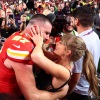
Less than two weeks later, Swift announced their engagement on Instagram, with photos of a flower-filled backyard proposal and a massive diamond ring. In an episode of The Graham Norton Show a few months later, Swift deflected questions about her wedding planning but joked about inviting “anyone I’ve ever talked to.”
Sleuths had been eyeing Madison Square Garden
Speculation about a July 3rd wedding at MSG reached new heights this month.
Part of that was through the process of elimination: Swifties descended on Watch Hill, R.I. — where Swift owns a seaside estate — on June 13, but tabloid reports of a ceremony there proved unfounded.
But there also seemed to be a paper trail leading to Manhattan.
New York City Mayor Zohran Mamdani seemed to drop a hint while talking to reporters in June.
“We are used to big events, and we are incredibly excited for this one,” Mamdani said, referring to the World Cup. “We know it coincides with the Knicks Finals run. We know it coincides with July Fourth, America 250, Taylor Swift’s wedding all happening at the same time.”

Forklifts and trucks were spotted outside Madison Square Garden in New York on Tuesday, as speculation about a weekend wedding grew.
Leonardo Munoz/AFP via Getty Images
hide caption
toggle caption
Leonardo Munoz/AFP via Getty Images
Then, The New York Times reported that an event company obtained permits for a gathering of up to 1,000 people at Madison Square Garden on July 3rd (and a smaller event the day before). It also cited unnamed sources with details about plans for street closures in the area, later confirmed by City Hall spokesperson Dora Pekec to Reuters.
CBS News shared video this week of trucks unloading “garden party” themed equipment outside the venue earlier this week. And the venue’s online event calendar is suspiciously empty until July 7.
Mamdani appeared to double down Tuesday, while speaking to reporters about the forthcoming heat wave.
“My recommendation to all New Yorkers is to stay inside and stay cool, and if you happen to be getting married at Madison Square Garden you will be staying inside and staying cool, and I think it’s a good example to set for the city at large,” he said with a smile.
This isn’t the first celebrity wedding celebration to take place at MSG. Sly Stone married actress Kathy Silva there in June 1974. As Stone wrote in his memoir, he was talking to his A&R liaison at Epic Records, Stephen Paley, about wanting to marry Silva, and one of them jokingly suggested he do so before an upcoming show.
“I could do a gig, get paid, and get married at the same time. ‘Go, go, go,’ I told him. He went and went fast,” Stone wrote, adding, “Steve wanted everyone to wear gold to keep the shine high.”
According to a New York Times report at the time, the two married in front of nearly 23,000 people, at a ceremony that turned into a full-fledged Sly and the Family Stone concert.

A closer look at Swift’s engagement ring from the 55th Annual Songwriters Hall of Fame Induction and Awards Gala in New York last month.
Kena Betancur/AFP via Getty Images
hide caption
toggle caption
Kena Betancur/AFP via Getty Images
Why New York, and why now?
Madison Square Garden, which can hold nearly 20,000 people, may seem like a surprising choice for a singer who prizes her privacy.
But Emma Fitzsimmons, one of the New York Times reporters covering the wedding, told NPR last week that it makes sense for privacy and security reasons.
“It’s sort of this locked box where paparazzi can’t get inside,” she said. “There’s not going to be helicopters overhead. She can release photos of the event and her dress, which we’re all very curious to see, on her own terms.”
Swift, who owns a sprawling Tribeca compound, is famously a fan of New York City. She even has a song about it: “Welcome To New York,” on the album 1989, inspired by her relocation to the city.

And she has a well-documented love of Fourth of July. Over the years, many photos have emerged — some on Swift’s own Instagram — of the star celebrating the holiday weekend in Rhode Island with friends and fireworks.
And it’s not lost on Swifties that she met Kelce shortly after the holiday in 2023, which she celebrated with girlfriends and shared photos of on Instagram.
“Happy belated Independence Day from your local neighborhood independent girlies,” she captioned the photo. “See you tonight Kansas Cityyy.”

Ken Marino loves living in L.A.
Living here has certainly been good for his acting career. Though he broke into the business as a member of NYC-turned-MTV sketch comedy group the State in 1994, he moved to L.A. in the fall of 1997 when he landed a role in the second season of “Men Behaving Badly,” an NBC sitcom. Marino shot just 13 episodes before the show was canceled. Still, he stayed in L.A., landing roles in much-loved shows like “Veronica Mars,” “Party Down,” “The Residence” and “Running Point.” He’s also co-written a few things, including “Role Models” and “Gail Daughtry and the Celebrity Sex Pass,” out July 10, which was filmed in and around Los Angeles.

In Sunday Funday, L.A. people give us a play-by-play of their ideal Sunday around town. Find ideas and inspiration on where to go, what to eat and how to enjoy life on the weekends.
“Working around L.A. and running around to jobs is how I got to understand L.A.,” Marino says. “It’s just a very comfortable city to live in. I just think it’s fun to be able to bounce around and do anything you feel like doing.”
Here’s how Marino would spend his perfect, carefree Sunday in Los Angeles.
This interview has been edited for length and clarity.

6 a.m.: Dog walking, coffee and flowers
We have two dogs. They need to go outside in the morning and eat, and they are very vocal about it. For a while, every morning at 5:58 my one dog, Dot, would start whining and moving around until I’d go “yeah, OK, let’s feed you.”
In our family, I’m the one who feeds the dogs and takes them out, because I’m a morning person. I enjoy it when it’s not fully light out, maybe making myself a coffee or taking a walk to this place called Project Bloom Coffee. It’s a little mom and pop kind of place and they have terrific coffee and breakfast sandwiches. They’re also a florist. Sometimes they even use this cool paper holder with a handle where, on one side you put the coffee and then on the other side you put your beautiful flower display. So then you get to walk home with your coffee and your flowers together and it’s something I’ve never seen anywhere else.
7:30 a.m.: Online chess
After I go get my coffee and walk the dogs, I’ll still be the only person up so I’ll get on my computer and get a couple of games of chess in. I play people from around the world online on Chess.com, and I usually either get frustrated or feel like I’m the best chess player in the world. Anyway, I’m getting my rating up on the app and I’m very excited about it. I’ve gone down the rabbit hole of chess tutorials on TikTok and YouTube that teach me how to play better.

9 a.m.: More coffee and “911”
If I go to Project Bloom, I’ll bring my wife a coffee and some flowers but if not, we have a little espresso and cappuccino maker so I’ll use that to make her a cappuccino, which I’ll bring to her in bed. She’s always very happy about that and then I’ll go try to wake my [16-year-old] daughter up, which usually takes about two or three tries until I take her phone, set the timer for five minutes, and then put it on the other side of her room so she has to get out of her bed to turn it off when it sounds.
She and I have been religiously watching “911” recently. We started with Season 1 and now we’re about six or seven seasons in so I’ll make her breakfast — maybe a Nutella crepe with some little cherry tomatoes on the side, which is weird but she likes it or maybe some oatmeal — and then we’ll watch “911” and talk about our favorite characters, like Buck, Chimney and Bobby.

Noon: Lunch on the Westside
We have a little apartment in Marina Del Rey that’s right by the beach so sometimes I’ll go out there with the dogs, just to sit for a while and enjoy. I usually walk between the Venice pier and Washington Street, but sometimes I’ll go further north and walk along Venice Beach if I want to hang out with some freaky deakies.
When I’m over on that side of town, there’s a couple of places that I might go for food, like this Italian restaurant called Ospi that’s in Venice. They’re incredible. They make their own homemade pasta and it’s delicious. There’s also this chain called Guisados, and I love their tacos so sometimes I’ll do that too. Venice Ramen is good too, and they do these things called jumbo gyoza that are absolutely delicious. They’re like 2.5 times bigger than a normal gyoza, like palm-sized, and I really like them.
2 p.m.: Play practice and a pint
My daughter is in two plays right now at this place called the Morgan-Wixson Theatre in Santa Monica, so it’s my responsibility to take her over there and drop her off for practice. When I do that, if it’s a Sunday, I might want to grab a Guinness somewhere and watch basketball. There’s a bar called Weary Livers down the street that has a lot of board games and it feels like you’re in somebody’s basement, which is good. It’s also right next to the Brixton, which is another nice bar that I’ll go to from time to time if I’m waiting for my daughter to finish rehearsal because it’s a lot of driving otherwise.

4 p.m.: Garage band practice
Typically on Sunday, we’ll also have a rehearsal for the Middle Aged Dad Jam Band. [Editor’s note: Marino co-founded the group with David Wain, whom he’s known since “The State” and who co-wrote “Wet Hot American Summer.”) We’ll play for a couple of hours in David’s garage, trying out new songs and working out what we’re going to do at our next live show.

6 p.m.: Guerilla promotion
Right now, David [Wain] and I are trying to figure out different promotional things we can do for our movie, “Gail Daughtry and the Celebrity Sex Pass,” so maybe we’d do some more of that. It’s a really funny movie and we sold it at Sundance.
Anyway, two Sundays ago we walked around with our friend Frank Barrera, who is also one of the camera operators on “Gail Daughtry.” We went to the Hollywood Walk of Fame and we shot promos for the movie where we were talking to different people and pretending that the Gail Daughtry cinematic universe is vast and has been around for decades, like we were asking people what their favorite Gail Daughtry movie is. It confused a lot of them, but every once in a while somebody would say something so we’re using those for promo spots.
I also spent some time just running up and down the street being very overly enthusiastic and screaming “the new Gail Daughtry movie is coming out!” and then we shot people’s reactions, which were typically “confusion” and “not caring.” Like, “Stop yelling at me, weirdo.”
7:30 p.m.: Thai takeout
On weekends, my wife and I like to order from a specific Thai place that’s won many awards. It’s called Luv 2 Eat Thai Bistro and it’s absolutely fantastic. The crab curry is so delicious and they do these street food sausages that we crave. They come with ginger and peanuts and garlic, plus a big slab of raw cabbage and some hot peppers and we’ll eat them like popcorn, just throwing them in our mouths while we catch up on “Survivor.” The flavor is just insane, and we think about how good they are all the time.

9:30 p.m.: Checkmate
After we watch “Survivor,” usually what happens next is that we’ll end up going, “Should we watch a movie?” Then we’ll look around for a movie for a while and then my daughter will be like, “Hey, Mom! Come in here and watch this YouTube show with me” so my wife will get pulled away, and I’ll immediately pick up my computer and start playing chess again. I like to bookend my day with a quiet chess game in the morning and another quiet game at night. It’s a nice way to wind down.
I’ll typically play a minimum of about three games before my eyes start to close because they’re trying to fall asleep. That’s when I’ll quit because I’ll be making stupid moves and it affects my rating, like “Oh, I just lost that game because I fell asleep while my computer was on,” so that’s how I know when I’m done.

People visit the Liberty Bell on the eve of Independence Day in Philadelphia on July 3, 2025. The crack in this symbol of U.S. freedom echoes the paradox between national pride and civic ignorance revealed in a new national poll.
Juan Mabromata/AFP/Getty Images
hide caption
toggle caption
Juan Mabromata/AFP/Getty Images
A new national poll reveals a striking paradox in public sentiment ahead of America’s 250th anniversary: a disconnect between Americans’ strong patriotic pride and their lack of civic knowledge.
According to a survey from the libertarian Cato Institute think tank of more than 2,000 U.S. adults conducted in late June, 86% of respondents said they are grateful to be American and 70% believe the nation’s founding principles remain relevant.
However, nearly half of Americans (46%) don’t know that America’s 250th anniversary commemorates the adoption of the Declaration of Independence.
This civic ignorance extends to basic governance: Nearly 60% do not know the main purpose of the U.S. Constitution is to limit government power, and do not know why the colonies declared independence from Great Britain.
Furthermore, the report highlights deep anxieties about the future of American liberty.
The majority of those surveyed believe the country has strayed from its founding principles, and more than half fear the U.S. could cease to be a free country within the next 50 years, citing corruption and the abuse of power as primary threats. The majority of both Republicans and Democrats share these fears.
The concerns are especially pronounced among Gen Z respondents, who exhibited both the lowest levels of civic knowledge and the least favorable views of the nation’s founders. The majority of Gen Z failed to cite the adoption of the Declaration of Independence as the source of the 250th anniversary.
“The lack of civic knowledge is a great disaster,” said Coe Professor of History and American Studies and Professor of Political Science Emeritus at Stanford University Jack Rakove. “Any democratic system of government to succeed requires having an informed electorate.”
The Pulitzer Prize-winning authority on the drafting of the Constitution and the Declaration of Independence blamed the problem on the fragmented media landscape and schools prioritizing STEM subjects over civics and history.
“Our educational system is highly decentralized. So the idea that you could have one clean, neat, sweeping educational reform that will cope with the problem is hard,” Rakove said. “And of course, and we do live in this disaggregated information environment where people pick the sources they like. If you assume that a Democratic society depends upon well-rounded deliberation of being exposed to the views of other people, the information environment itself is not conducive to the underlying foundation of Democratic debate.”
-

 Los Angeles, Ca44 minutes ago
Man hospitalized in critical condition from L.A. car fire
-

 Detroit, MI1 hour ago
Which Lions player has the most to prove in 2026?
-

 San Francisco, CA1 hour ago
Lettuce | SF Jazz | Music in San Francisco
-

 Dallas, TX1 hour ago
WATCH: Australia soccer fans take over Walmart near Dallas Stadium
-

 Miami, FL1 hour ago
MDSO: Man killed in hit-and-run in northwest Miami-Dade; driver sought
-

 Boston, MA2 hours ago
Where to watch Boston Red Sox vs Los Angeles Angels: TV channel, start time, streaming for July 4
-
 Denver, CO2 hours ago
Out-of-order elevator at Denver Housing Authority property leaves disabled tenants looking for answers
-
Seattle, WA2 hours ago
Where to watch Portland Fire vs Seattle Storm on July 4: TV channel, start time and streaming

