Lifestyle
A bill to protect performers from unauthorized AI heads to California governor


An aerial view of the California State Capitol on Feb. 1, 2023, in Sacramento.
Justin Sullivan/Getty Images
hide caption
toggle caption
Justin Sullivan/Getty Images
A new bill to protect performers from unauthorized AI is now headed to the California governor to consider signing into law.
The use of artificial intelligence to create digital replicas is a major concern in the entertainment industry, and AI use was a point of contention during last year’s Hollywood strike. Other national proposals offering AI protections to all Americans are also in the works.

California Assembly Bill 2602 would regulate the use of generative AI for performers — not only those on-screen in films and TV/streaming series but also those who use their voices and body movements in other media, such as audiobooks and video games. The measure would require informed consent and union or legal representation “where performers are asked to give up the right to their digital self,” according to the bill.
The bill was passed overwhelmingly by both parties in the California Senate and the Assembly this week. The legislation was also supported by the union SAG-AFTRA, whose chief negotiator, Duncan Crabtree-Ireland, points out that the bill had bipartisan support and was not opposed by industry groups such as the Motion Picture Association, which represents studios such as Netflix, Paramount Pictures, Sony, Warner Bros., and Disney. A representative for the MPA says the organization is neutral on the bill.
Crabtree-Ireland says the new law would mean performers could no longer be forced to relinquish their rights to their likeness. “Good riddance to that practice,” he said from the picket line outside of Warner Bros. Games on Wednesday, where striking video game performers are pushing for more AI protections.
“The concept that each of us should have the right to say yes or no to any kind of replication of our face, voice, body movement, etc., should be a no-brainer,” he said.
Some tech companies have opposed regulations of AI use. In a statement sent to NPR, a spokesperson for the video game companies wrote, “Under our AI proposal, if we want to use a digital replica of an actor to generate a new performance of them in a game, we have to seek consent and pay them fairly for its use.”
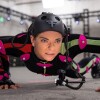
But unlike voice actors, performers whose body movements are used to animate video games argue the companies consider what they do as “motion capture” and not performances.
Last year, SAG-AFTRA members went on strike against the major studios and streamers for months. In the end, they claimed victory when language in their new contract offered performers the right of consent and fair compensation for the use of their digital doubles. Just before the final ratification contract vote, Crabtree-Ireland said he was a victim of an AI-fabricated social media post.
“Some unknown party created a deep fake video of me,” he recalled, saying the video manipulated his face and voice “to say a bunch of false things about our contract and was encouraging people to vote no on the contract.”
Crabtree-Ireland said Instagram voluntarily took down the deep fake video, but there was no legal requirement to do so. He said he’s hoping legislation will outlaw this kind of misinformation. “If that can happen to me,” he said, “it can happen to anybody.”
Other proposed guardrails
In addition to AB2602, the performer’s union is backing California bill AB 1836 to protect deceased performers’ intellectual property from digital replicas.
On a national level, entertainment industry stakeholders, from SAG-AFTRA to The Recording Academy and the MPA, and others are supporting The “NO FAKES Act” (the Nurture Originals, Foster Art, and Keep Entertainment Safe Act) introduced in the Senate. That law would make creating a digital replica of any American illegal.
Around the country, legislators have proposed hundreds of laws to regulate AI more generally. For example, California lawmakers recently passed the Safe and Secure Innovation for Frontier Artificial Intelligence Models Act (SB 1047), which regulates AI models such as ChatGPT.
“It’s vital and it’s incredibly urgent because legislation, as we know, takes time, but technology matures exponentially. So we’re going to be constantly fighting the battle to stay ahead of this,” said voice performer Zeke Alton, a member of SAG-AFTRA’s negotiating committee. “If we don’t get to know what’s real and what’s fake, that is starting to pick away at the foundations of democracy.”
Alton says in the fight for AI protections of digital doubles, Hollywood performers have been the canary in the coal mine. “We are having this open conversation in the public about generative AI and it and using it to replace the worker instead of having the worker use it as a tool for their own efficiency,” he said. “But it’s coming for every other industry, every other worker. That’s how big this sea change in technology is. So what happens here is going to reverberate.”
Editor’s Note: Many NPR employees are members of SAG-AFTRA but under a different contract than the performers.


People visit the Liberty Bell on the eve of Independence Day in Philadelphia on July 3, 2025. The crack in this symbol of U.S. freedom echoes the paradox between national pride and civic ignorance revealed in a new national poll.
Juan Mabromata/AFP/Getty Images
hide caption
toggle caption
Juan Mabromata/AFP/Getty Images
A new national poll reveals a striking paradox in public sentiment ahead of America’s 250th anniversary: a disconnect between Americans’ strong patriotic pride and their lack of civic knowledge.
According to a survey from the libertarian Cato Institute think tank of more than 2,000 U.S. adults conducted in late June, 86% of respondents said they are grateful to be American and 70% believe the nation’s founding principles remain relevant.
However, nearly half of Americans (46%) don’t know that America’s 250th anniversary commemorates the adoption of the Declaration of Independence.
This civic ignorance extends to basic governance: Nearly 60% do not know the main purpose of the U.S. Constitution is to limit government power, and do not know why the colonies declared independence from Great Britain.
Furthermore, the report highlights deep anxieties about the future of American liberty.
The majority of those surveyed believe the country has strayed from its founding principles, and more than half fear the U.S. could cease to be a free country within the next 50 years, citing corruption and the abuse of power as primary threats. The majority of both Republicans and Democrats share these fears.
The concerns are especially pronounced among Gen Z respondents, who exhibited both the lowest levels of civic knowledge and the least favorable views of the nation’s founders. The majority of Gen Z failed to cite the adoption of the Declaration of Independence as the source of the 250th anniversary.
“The lack of civic knowledge is a great disaster,” said Coe Professor of History and American Studies and Professor of Political Science Emeritus at Stanford University Jack Rakove. “Any democratic system of government to succeed requires having an informed electorate.”
The Pulitzer Prize-winning authority on the drafting of the Constitution and the Declaration of Independence blamed the problem on the fragmented media landscape and schools prioritizing STEM subjects over civics and history.
“Our educational system is highly decentralized. So the idea that you could have one clean, neat, sweeping educational reform that will cope with the problem is hard,” Rakove said. “And of course, and we do live in this disaggregated information environment where people pick the sources they like. If you assume that a Democratic society depends upon well-rounded deliberation of being exposed to the views of other people, the information environment itself is not conducive to the underlying foundation of Democratic debate.”

Unpacking my third suitcase in our new West Hollywood home, a sharp pain shot through my chest. I felt dizzy and short of breath before sprawling out on our mattress, which was still covered in plastic.
“What’s wrong?” David asked.
An hour later, on a gurney in the emergency room at Cedars-Sinai, I waited to be admitted overnight. What a great start to our new life — back in L.A. after seven years in New York City — David sleeping alone at our apartment while I was to keep close to the paddles and operating room in case what had just happened was a heart attack.
I was 33, practicing yoga and exercising almost daily. A few months earlier, my New York doctor noticed I had high blood pressure, and I was feeling terrible, so something clearly was going on. Was an artery blocked? Nope, the tests revealed; physically, I was fine. What had happened was a panic attack.
“Your health will be better in L.A.,” David had promised before returning to L.A.
Now I took no pleasure in his being wrong.
After growing up in Temple City (hardly L.A.), I went on a high school trip to the Big Apple and knew it was where I needed to be.
Exactly five years later, the time to escape California arrived after a miserable breakup from a three-year relationship with a guy that I hid entirely from my family. I was desperate and depressed, down 15 pounds from not eating much, my diet consisting largely of cigarettes and red wine. At the Archstone, my Studio City apartment, I did ecstasy alone on a Wednesday. One has to take a good look at himself when he’s in his bedroom, by himself, rolling, and so I decided it was time to start over in New York.
On the other side of the country, I thought it was normal to hook up with a new guy every third night. Which I suppose, for a gay man who’d spent the first 27 years of his life denying his sexuality to a family he feared wouldn’t understand, it was. My self-esteem was in the gutter, though you wouldn’t have known it from the outside.
After a three-digit number of hookups on Grindr, I met David, a guy who lived on the same Manhattan corner as I did. We did what people do on Grindr and hooked up a couple of times.
But one morning, we bumped into each other on 9th Avenue. I left our short chat feeling uplifted by how smiley and polite he was in daylight and while we were sober. That night, we went on our first date, and the rest is history. But I hid what I assumed wouldn’t be well-received.
“Let’s move back to L.A.,” he said after four years of life together in New York.
“I’m really not ready,” I said. I loved living in New York and never, ever expected to leave. He understood, but he wanted to return to “the coast.” I knew that in a healthy relationship, it couldn’t be just what I wanted. So eventually, we packed up and moved to an apartment on North Flores Street in West Hollywood.
And now, I was in the hospital.
After having to cancel the welcome home party our L.A. friends had planned for us, and being released from Cedars, my life fell apart. But being the one who kept everything together, I kept it together better than most would, at least in the presence of others.
I’m fine, I told myself, but I worried my heart was broken, and there was something medically wrong with it. To heal it, I’d need to accept truths that I didn’t want to.
Growing up was devastatingly hard for me. Being gay and misunderstood, with the unacknowledged pain of it kept inside, was quite literally eating me alive. Being back in L.A. meant being near my past. I told my mom I was gay before leaving for New York. She said she still loved and accepted me, but to this day, the struggle has never been discussed or acknowledged. I knew I was a disappointment to my family.
I went to Westwood what felt like 70 times, and after visiting a bunch of UCLA’s specialists, I found myself in the office of a neurosurgeon who took one look at me and said, “You don’t belong here. What you’re suffering from is plain old anxiety, and you’re going to have to work with your therapist on this.”
“I have been,” I said, “and it’s not helping.” But before I finished, he had walked out the door.
Before long, the panic attacks got so bad, I could hardly drive. David chauffeured me, under the palm trees and bright sun, around as much as his schedule allowed, and when he couldn’t, I made the best of it, lugging my laptop with me for the hour-long trek to yoga-teacher training at Equinox in the South Bay, using that extra time in the back of an Uber to write.
For almost my entire adult life, I’d been in therapy, but it was couples therapy with David where I felt supported enough to admit, first to myself, that I’d been terrified of being fully myself. I was afraid he’d leave me if he saw the real me. Secretly I had been keeping a lifetime of pain bottled up inside because of fear — I didn’t want to risk losing him by being too emotional or having too many feelings.
Three months after that therapy session, the pandemic arrived, and being together 100% of the time for the next year, I let him in fully. He didn’t run — instead, he proposed.
It’s been eight years since that neurologist, and six since I’ve been able to fully drive again. And here in L.A., in a city characterized by its distance, I have, with David, built a close chosen family that supports and fully understands me.
Now, I feel “at home” at our Spanish-style Hancock Park house, the one we bought because we wanted to start a family of our own, only after L.A. allowed me to heal and live peacefully, and now, anxiety free.
Had David not dragged me back, I wouldn’t have learned what I did about myself, my story of origin and living a life that’s so beautiful and that’s so true to me.
And certainly, we wouldn’t be bringing our baby daughter, Lucy, named after Lucille Ball (who’s more Hollywood?), home in mid-July by way of surrogacy.
The author is a writer and coach who helps established business owners build lives that feel as good as they look. He lives in Hancock Park. He’s on Instagram: @iammattgerlach.
L.A. Affairs chronicles the search for romantic love in all its glorious expressions in the L.A. area, and we want to hear your true story. We pay $400 for a published essay. Email LAAffairs@latimes.com. You can find submission guidelines here. You can find past columns here.

Could you see your life just as easily with children as without?
What if you’re not cut out for parenthood? What if you grow lonely in your old age? Or what if you have a loving partner, but you disagree on this choice? Deciding between parenthood and a child-free life requires clarity about your fears and deepest desires — no easy task. This episode, psychotherapist and author of the book, The Baby Decision, Merle Bombardieri, helps us get clear. She discusses minimizing regret, normalizing feeling ‘stuck’ and why waiting to have a baby at 38 may be best.
Want more about the decision to have kids?
Many women don’t want kids. And for good reason.
Why are people freaking out about the birth rate?
Support Public Media. Join NPR Plus.
Follow Brittany on Instagram: @bmluse
For handpicked podcast recommendations every week, subscribe to NPR’s Pod Club newsletter at npr.org/podclub.
Additional support for this episode came from Alexis Williams. It was edited by Neena Pathak. Our Supervising Producer is Cher Vincent. Our Executive Producer is Barton Girdwood. Our VP of Programming is Yolanda Sangweni.
-

 Cleveland, OH5 minutes ago
Woman found dead in backyard of Cleveland home
-

 Austin, TX12 minutes ago
July 4th: Austin celebration preview, safety tips
-

 Alabama15 minutes ago
Alabama unveils the Alabama Catfish Trail
-

 Alaska20 minutes ago
Some of the best America has to offer can be seen at its national parks
-

 Arizona27 minutes ago
Milwaukee Brewers vs Arizona Diamondbacks score, lineups, live updates
-

 Arkansas30 minutes ago
Arkansas Game and Fish ramps up lake patrols for busy Fourth of July weekend
-

 California42 minutes ago
Mother, daughter found ‘alive and well’ after going missing on Southern California hiking trail
-

 Colorado45 minutes ago
Thousands forced to evacuate in Colorado as wildfire spreads

