Lifestyle
8 L.A. happenings in May to get you ready for summer


Balenciaga’s Le City bag is bringing back the early aughts
Fashion is in love with the early 2000s right now, and Balenciaga, the Kering-owned brand, has brought back the signature Le City bag, which was introduced in 2001. The new bag, which comes in small and medium sizes with adjustable shoulder and crossbody straps, is available in black, yellow, green, light purple, metallic steel gray, metallic silver, white, blue and beige. The style and construction of the new versions of the bag — studs as well as leather-strung zipper pulls and rivets are included — were inspired by the archival bags. A small Le City bag is $2,350, while a medium bag goes for $2,850. (The small metallic silver Le City bag is $2,390 and the medium version is $2,900.) The bags are sold at balenciaga.com and in select stores. Also, as part of the reintroduction, a campaign featuring portraits of Kate Moss, Danish model Mona Tougaard, Chinese actress-singer Yang Chaoyue and Korean singer Juyeon was shot by fashion photographer Mario Sorrenti.
Kinn Studio and Almina Concept collaborate on first retail space

(Lauren Moore / Design Assembly; Kinn Studio)
Jewelry label Kinn Studio and womenswear brand Almina Concept have collaborated on a new six-month pop-up space at mini style mecca Platform in Culver City. It’s the first bricks-and-mortar space for each brand. AAPI founders Jennie Yoon of Kinn Studio and Angela Gahng of Almina Concept wanted to give shoppers a personalized experience while acknowledging L.A. and their Korean heritage. You’ll find fine jewelry and vintage watches from Kinn Studio along with Almina Concept’s contemporary fashion pieces, which are made in Seoul, South Korea. The look of the minimalist shop was created by L.A.-based interior designer Lauren Moore of the Design Assembly. 8850 Washington Blvd., Culver City, kinnstudio.com, almina-concept.com
‘Louis Vuitton: A Perfume Atlas’ explores the world of fragrance

Louis Vuitton is giving customers and readers a look at how its fragrances are made with the release of the book “Louis Vuitton: A Perfume Atlas” ($160, Thames & Hudson), which captures Louis Vuitton master perfumer Jacques Cavallier-Belletrud as he searches globally for ingredients used for the French brand’s fragrances. Through illustrations, photography and text, the 380-page book covers how flowers are cultivated, the seasons for growing and the techniques used at harvest. It also explores how essential oils are extracted and used to create fragrances. The book, which comes in three cover offerings (rose, lemon and jasmine), is by Cavallier-Belletrud and co-author Lionel Paillès, illustrator Aurore de la Morinerie and photographer Sébastien Zanella. Also, the limited-edition “A Perfume Atlas” box set ($5,000, in-store only) includes 45 vials with extractions of raw materials selected by Cavallier-Belletrud. The book is available at louisvuitton.com and book retailers.
Cartier renovates and reopens its South Coast Plaza store
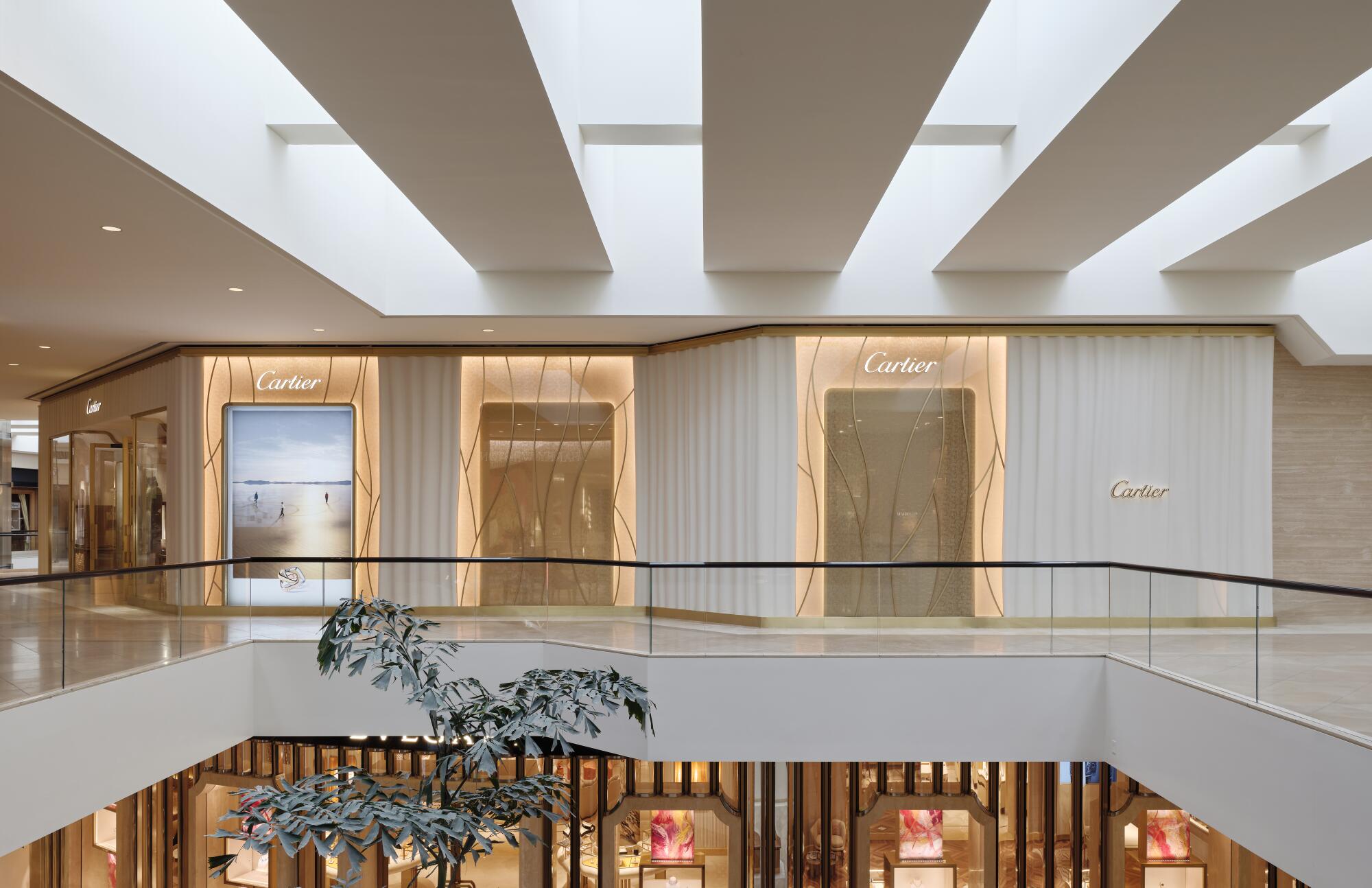
Luxury house Cartier’s renovated and expanded boutique at South Coast Plaza in Costa Mesa celebrates all things Orange County and Southern California. The Moinard Bétaille agency, which has collaborated with Cartier for decades including on the flagship store in Paris, took inspiration for the elegant revamped space from SoCal’s varied landscape and terrain. (Think Newport Beach and Laguna Beach meets Mojave Desert and Joshua Tree.) As you enter the store, which reopened in April, the first things you’ll likely notice are the three-dimensional facade as well as the large panel featuring a panther by François Mascarello. In the boutique’s mix of fine jewelry, watches, leather goods, fragrances and more, you’ll also find local flora, palm tree-inspired handcrafted staff columns and a hand-painted Moss & Lam mural. And don’t forget to spot the lacquer and mother-of-pearl panel by Atelier Midavaine in the bridal area, the dahlia-shaped custom chandeliers in the space and the Lasvit glass canopy light, which was inspired by the area’s skate parks. 3333 Bristol St., Costa Mesa, cartier.com
‘Mickalene Thomas: All About Love’ arrives at the Broad
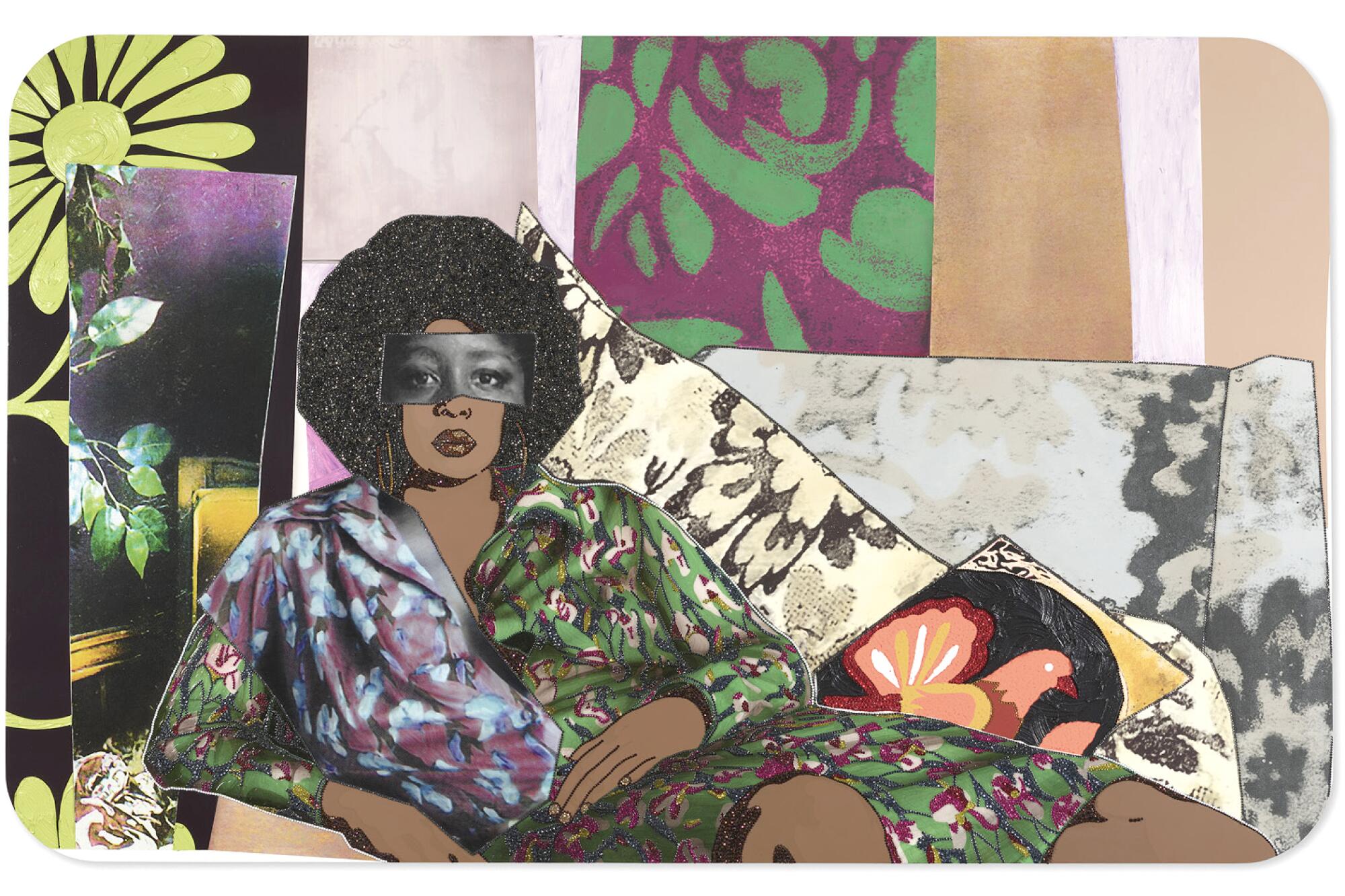
Mickalene Thomas, “Afro Goddess Looking Forward,” 2015, rhinestones, acrylic, and oil on wood panel, 60 x 96 x 2 in.
(Mickalene Thomas)
In these challenging times, the “Mickalene Thomas: All About Love” exhibition at the Broad could be the antidote we need for healing and redemption and truly being able to love others and ourselves. After all, the exhibition takes its name and several themes from the acclaimed bell hooks text centering around the question, “What is love?” As the first international tour of Thomas’ work, this showcase features more than 80 works from the last two decades and examines topics including beauty, politics, memory, erotica and sexuality, with a focus on the people who have been marginalized and excluded in art history. In the exhibition, you’ll discover mixed-media painting and collage, photography and more, including large-scale works, from the innovative Camden, N.J., native. The exhibition’s themes also are part of fresh programming in collaboration with Thomas, with a summer concert series in the works and in-gallery programs focused on women and Black and queer communities. “Mickalene Thomas: All About Love,” which was co-organized by the Hayward Gallery in London, the Broad and the Barnes Foundation in Philadelphia, runs from May 25 to Sept. 29. 221 S. Grand Ave., Los Angeles, thebroad.org
‘Simone Leigh’ exhibition comes to LACMA
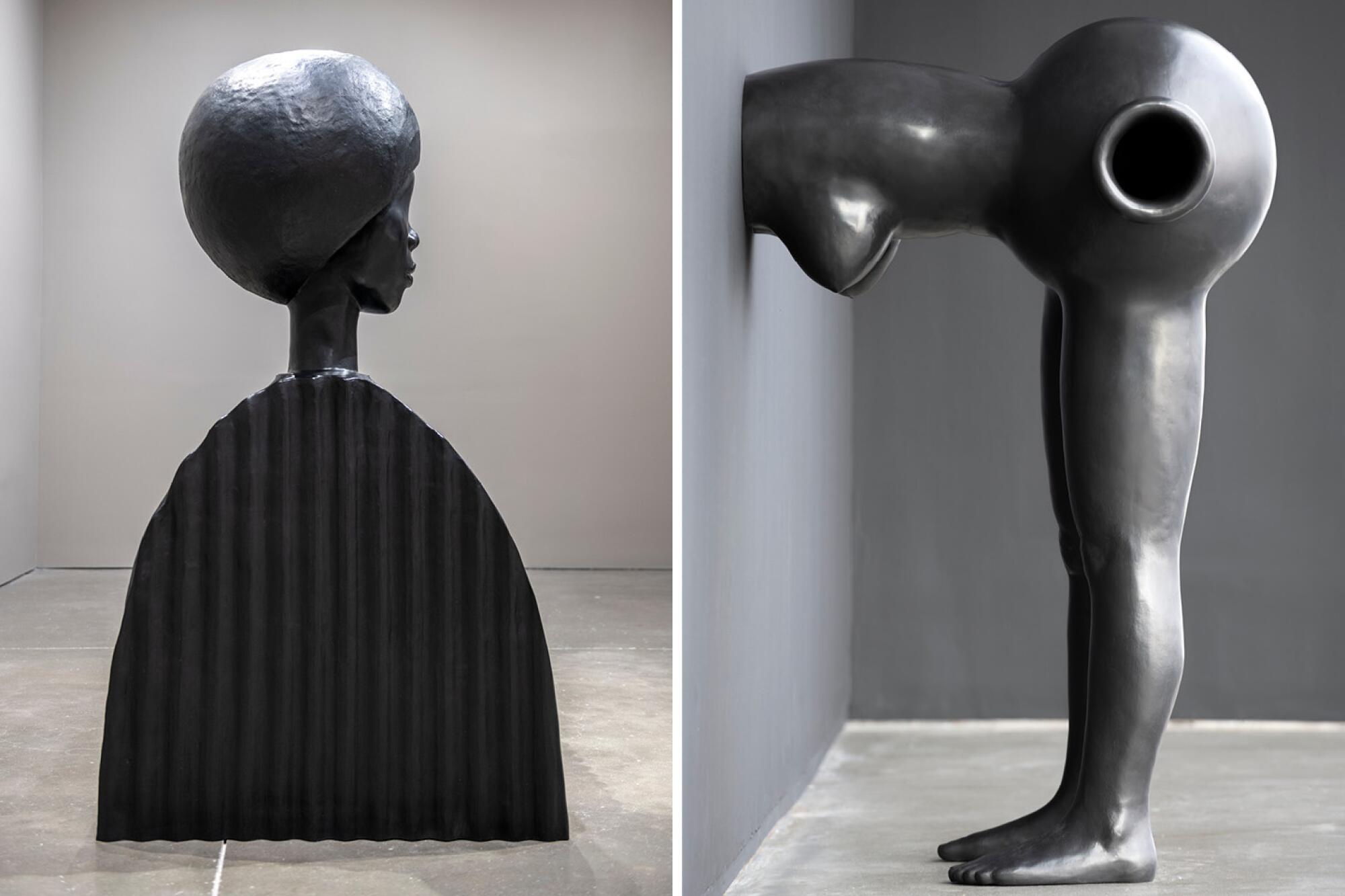
Simone Leigh, “Sentinel,” 2019. Right, “Dunham,” 2023, courtesy artist, Matthew Marks Gallery.
(Timothy Schenck)
The exhibition “Simone Leigh” is the first comprehensive look at the artist’s work, with the Los Angeles County Museum of Art showcase featuring about 20 years of the artist’s production in ceramic, bronze and video in addition to her powerful 2022 Venice Biennale presentation. According to a synopsis from LACMA, Leigh has continued to explore questions around “Black femme subjectivity and knowledge production” as well as addressed “historical periods, traditions and geographies with her art referencing vernacular and hand-made processes from across the African diaspora, as well as forms traditionally associated with African art and architecture.” “Simone Leigh,” a traveling exhibition that was organized by the ICA Boston and co-presented in SoCal by LACMA and the California African American Museum, runs from May 26 through Jan. 20. 5905 Wilshire Blvd., Los Angeles, lacma.org
Michael Kors Collection returns to Beverly Hills
(Michael Kors Collection)
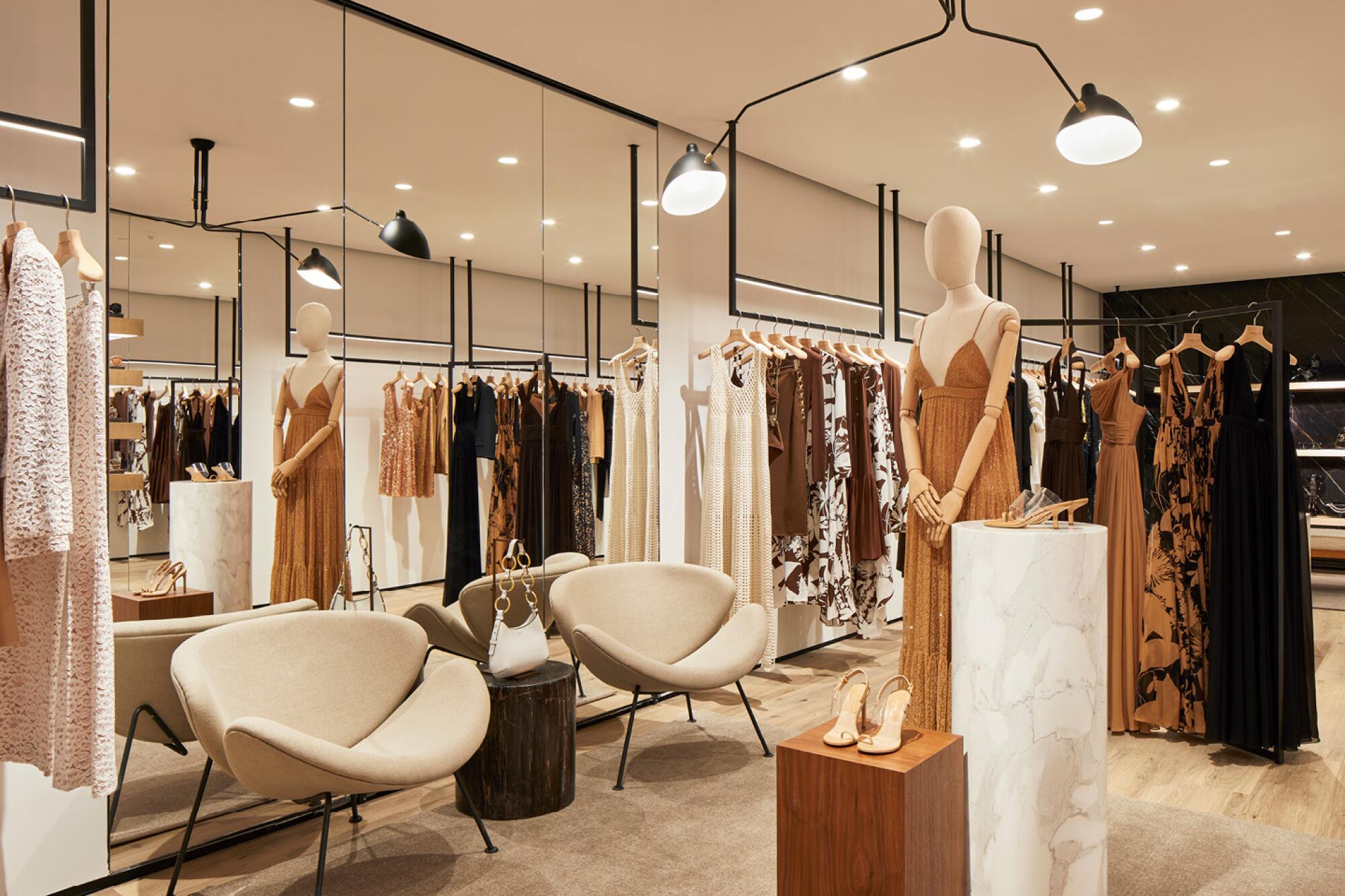
Designer Michael Kors is having a full-circle moment by bringing his Michael Kors Collection boutique back to Beverly Hills after a nearly four-year hiatus. The new two-level space, which recently opened at the European-inspired Two Rodeo Drive, has a spare yet luxe residential vibe thanks to a large video wall, blackened steel, raw concrete, antique brass, gold Calcutta marble, oxidized maple and natural light. (This is the North American debut of this new Collection store concept.) In the stylish mix, look for women’s pieces from the spring and summer collection and other goods at street level along with handbags and other accessories on the lower floor. 242 N. Rodeo Drive, Beverly Hills, michaelkors.com
Billy Reid opens a new Venice store
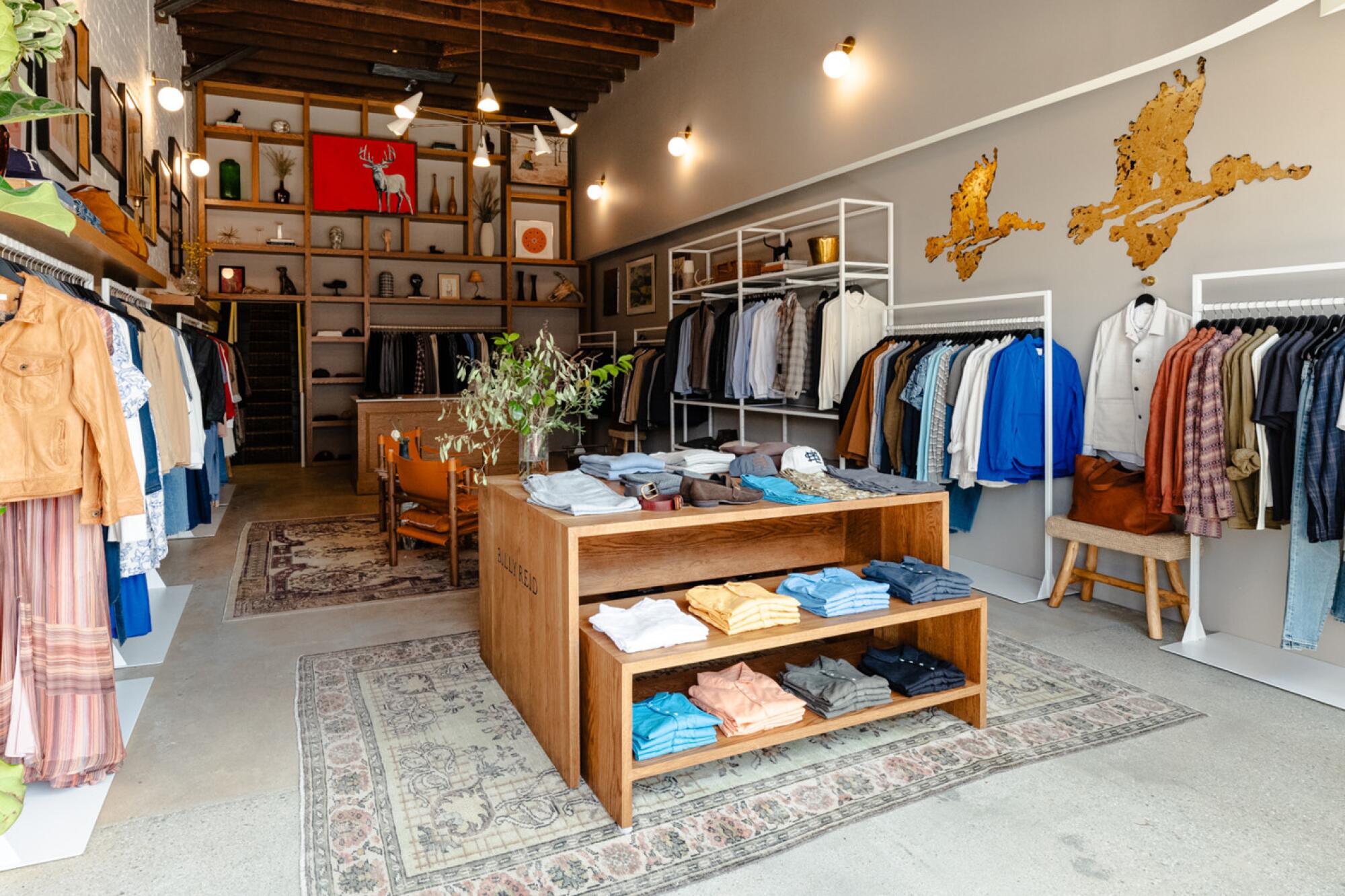
Designer Billy Reid is thrilled by his brand’s 12th store location — this one on Abbot Kinney Boulevard in Venice. That’s because, although he has Southern roots, Reid, a Council of Fashion Designers of America multiple award winner, spent four years living in Los Angeles. The new SoCal outpost also allows Reid’s luxe brand to connect with customers face-to-face, after having built L.A. into one of the brand’s biggest markets largely through e-commerce. The store will carry the men’s and women’s collections as well as accessories — all within a space that features Reid’s take on modern Southern decor along with tall ceilings, exposed trusses and brick, and a large glass storefront. The look of the space includes Turkish rugs, various artworks and a large bookshelf spanning the back wall. 1351 Abbot Kinney Blvd., Venice, billyreid.com


The Kennedy Center, the facade of which remains covered with a tarp, is seen in Washington, DC, on June 28, 2026. A US federal judge asked on June 24 for an explanation for why a tarpaulin continues to cover the facade of the Kennedy Center where President Donald Trump’s name was recently removed. District Judge Christopher Cooper gave the board of trustees of the performing arts venue until the end of July to explain “the purpose for and status of the tarp and scaffolding that Defendants have erected on the front portico of the Center.”
ALEX WROBLEWSKI/AFP via Getty Images
hide caption
toggle caption
ALEX WROBLEWSKI/AFP via Getty Images
More than two weeks ago, President Trump’s name was removed from the Kennedy Center facade though it is still covered by a tarp and the legal battle continues.
On Monday, a U.S. Department of Justice filing on behalf of the Kennedy Center included some surprises. The document was submitted in response to issues raised by lawyers for ex-officio board member Rep. Joyce Beatty of Ohio who is suing to remove President Trump’s name from the center and stop its closure for renovations.
Among the revelations, the Kennedy Center admitted that, during a board meeting on December 18, 2025, Beatty had been “muted and prevented from speaking.” It was at that meeting that the board voted to add President Trump’s name to the center. The filing later acknowledges the congresswoman was “prevented from voicing her opposition.”
The John F. Kennedy Center for the Performing Arts is a living memorial to its namesake. The guidelines for how the theatre complex spends federal dollars are very specific. Among other rules, it states that “no additional memorials or plaques shall be designated or installed.” Beatty argues adding Trump’s name runs afoul of those rules and that any change requires approval from Congress.
According to one of Beatty’s filings, “There was no advance notice in the agenda that the Board would be considering a name change,” a statement the Kennedy Center now does not deny. The center admits that, prior to voting, there was “no discussion about potential risks or downsides of the vote to adopt a secondary name for the Center.” Nor was there a board discussion “about any potential conflict of interest that might result from the vote.”
The center’s lawyers previously contended that if Trump’s name were to be removed, it would “lose money from donors who support” him and “impede the Center’s fundraising efforts.”
Closing for renovations
Earlier this year, Trump announced on social media that the Kennedy Center would close for two years for renovations. He wrote that he made the decision after “a one year review” with “Contractors, Musical Experts, Art Institutions, and other Advisors and Consultants.”
But, according to the center’s lawyers, Trump’s announcement “was made without presenting any plans, analyses, timelines, or funding information to his cotrustees and without any Board vote.”
The Kennedy Center has long denied reporting by The Washington Post that ticket sales plummeted after President Trump became the Center’s board chair. In Monday’s legal filing, the Center admits that, by October 2025, “nearly half of the Center’s tickets were going unsold.”


Paul Tremblay has made a career of pushing the horror genre – and the novel format – in strange and exciting new directions.
In his latest, Dead but Dreaming of Electric Sheep, the author offers an amalgamation of genre elements that can be best described as psychological-dystopian-science-fiction horror. It’s a mouthful, but the narrative does all of that and more in a way that defies categorization.
Julia Flang is a former semiprofessional gamer working two mediocre jobs she dislikes and living in a modest ranch house in a San Fernando Valley suburb with her retired uncle, whom she calls Uncle Fun. Julia likes movies and gaming but there’s little else going on in her life, so when her estranged mother, the CFO of a large tech company, contacts her with a possible job offer – a “once-in-a-lifetime thing” that pays handsomely just for doing the interview – she hesitantly agrees.

The job is relatively simple and perfect for someone with gaming skills: using a controller built into a phone to get a man, who is stuck in a vegetative state, from California to the East Coast. It will require her to learn how to control his body – walking, moving, sitting, standing, using his arms – so she can maneuver him out of the facility where he is located and into cars and planes and through crowded airports. A fan of movies, Julia decides to call the man Bernie – after the movie Weekend at Bernie’s. When the ethics of the job start to bother her, Julia realizes it’s too late and she must go through with it. However, she’s soon contacted by people interested in sabotaging the whole thing, people who, like her, don’t align with the shady interests of conglomerates and those set to make “gobs of money” from this new, somewhat inhuman technology.

As with every Tremblay novel, any synopsis barely scratches the surface. The novel’s chapters alternate between Julia and you (yes, you). Julia’s chapters are “normal” in the sense that they obey a chronological order and have action, basic descriptions of movement and places, and dialogue. The chapters in second person are like fever dreams from a shadow world; the desperate experiences of a man trapped inside his own body with no control of it, no clue what’s happening to him, and only a few fragmented memories of his life. Also, Tremblay uses a similarly fragmented style of storytelling (including words and sentences trapped in boxes and/or “moving” on the page) to keep things interesting but also confusing and creepy.
This novel operates on several different levels and – planes of existence? Bernie has a head full of AI that controls his body, but his consciousness is still there and struggling to regain control, struggling to remember things. There are monsters, leeches, mysterious rabbits, and eerie shadows in his world, but the true horror comes from the lack of control, from being moved around against his will and having no clue what comes next. Bernie is the embodiment of losing control to AI, and when taken together with the commentary of creativity and AI and the meta interludes in which the author takes a wrecking ball to the fourth wall and addresses readers, this is the best anti-Generative AI story horror has produced so far.
Despite the horror of it, this is a very funny novel. Julia is sarcastic and struggles to keep her comebacks in line, but the conversations she has and messages she writes are always entertaining. However, the humor is far from the crown jewel here. That title belongs to a plethora of big ideas Tremblay juggles. The nature of life, death, and consciousness, the evils of conglomerates, inhuman practices in the name of capitalism, and AI, and even what it means to be human are all explored here: “Is Bernie alive? Is he feeling pain? Is he experiencing everything as a prisoner looking through the bars of his body? Has his consciousness been winnowed to a metaphysical keyhole? Where does consciousness begin or end?” There are no definite answers here, but the way Tremblay infuses humanity, love, the importance of relationships, and humor throughout the narrative provides the kind of answers that can’t and don’t need to be spelled out.
A genre-bender full of big ideas that constantly switches between a world full of real or uncomfortably plausible nightmares and a bizarre hellscape in which loss of self, memory, and autonomy are only the tip of the proverbial iceberg, Dead but Dreaming of Electric Sheep is a horrific and terrifyingly disorienting novel that invites readers to consider a future that already started. Tremblay has always been an innovator, but this beautifully written collection of real and imagined grotesqueries cements him not only as one of the most original and exciting voices in horror but also as one of the smartest, most engaging authors in contemporary fiction.
Gabino Iglesias is an author, book reviewer and professor living in Austin, Texas. Find him on X, formerly Twitter, at @Gabino_Iglesias.

-
 Florida34 seconds ago
Kids with autism are prone to drowning. Florida is trying to prevent that
-

 Georgia3 minutes ago
Bradenton man wanted for murder is found hiding in Georgia
-

 Hawaii9 minutes ago
Few state bills this year face potential veto – West Hawaii Today
-

 Illinois19 minutes ago
West Suburban hospital sends permanent layoff notices to about 500 furloughed employees
-

 Indiana24 minutes ago
Extreme heat peaks before holiday weekend storms | July 1, 2026
-

 Iowa31 minutes ago
New York Times/Siena Polls in Alaska, Iowa, North Carolina, and Ohio – Siena Research Institute
-

 Kansas34 minutes ago
Kansas State Fair announces Rock Fest with three-band lineup
-

 Kentucky34 minutes ago
Looking for the best hot dog in Louisville? Try these 15 spots

