Fitness
Kristin Johns in Workout Gear is “Off to the Gym”


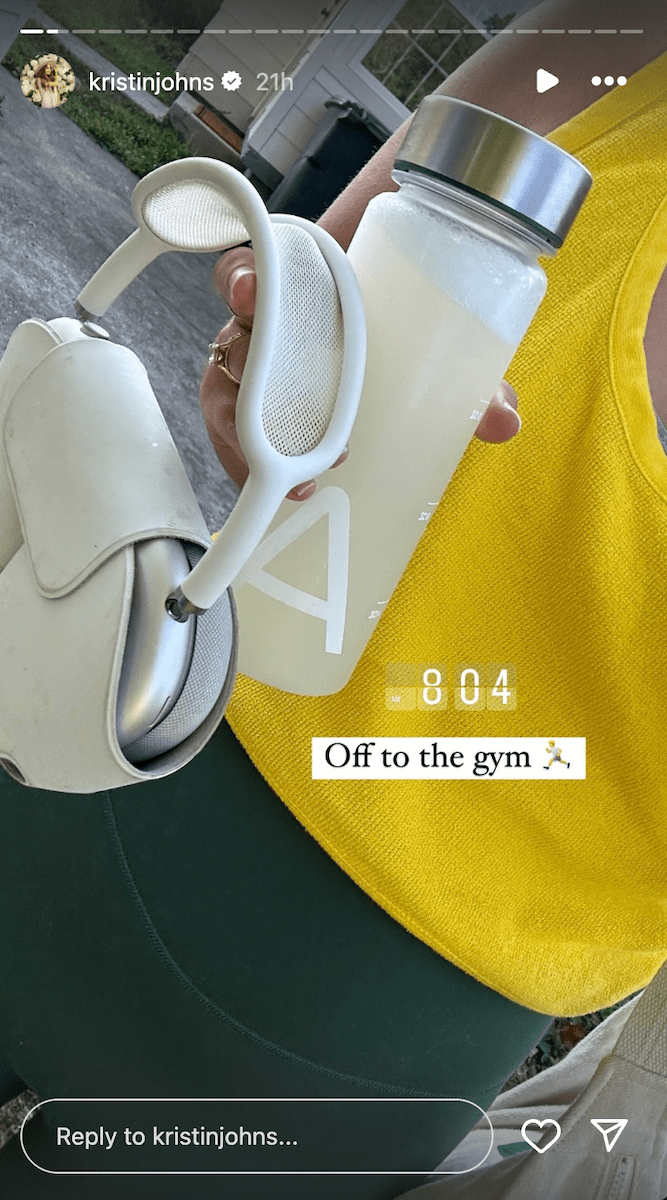
Kristin Johns is headed to the gym in her workout gear. In a new social media post the influencer shows off her incredible figure in a yellow workout top and green leggings prior to an exercise session. “Off to the gym,” she captioned the Instagram Stories image. How does she approach diet, fitness, and self-care? Here is everything you need to know about her lifestyle habits.
In a YouTube video about her diet and fitness habits, Kristin reveals what she eats in a day. For breakfast she starts with a Cliff Bar. “It’s kind of a sad breakfast,” she jokes. “It’s not like a full meal, but it’s good for when you’re in a rush. For lunch she opts for something “a little more hearty,” a sweet potato bowl with peanut butter, honey, some ground cinnamon, some plain Greek yogurt, some coconut flakes, chia seeds ,and also some granola. For dinner she has grilled shrimp, veggies and rice.
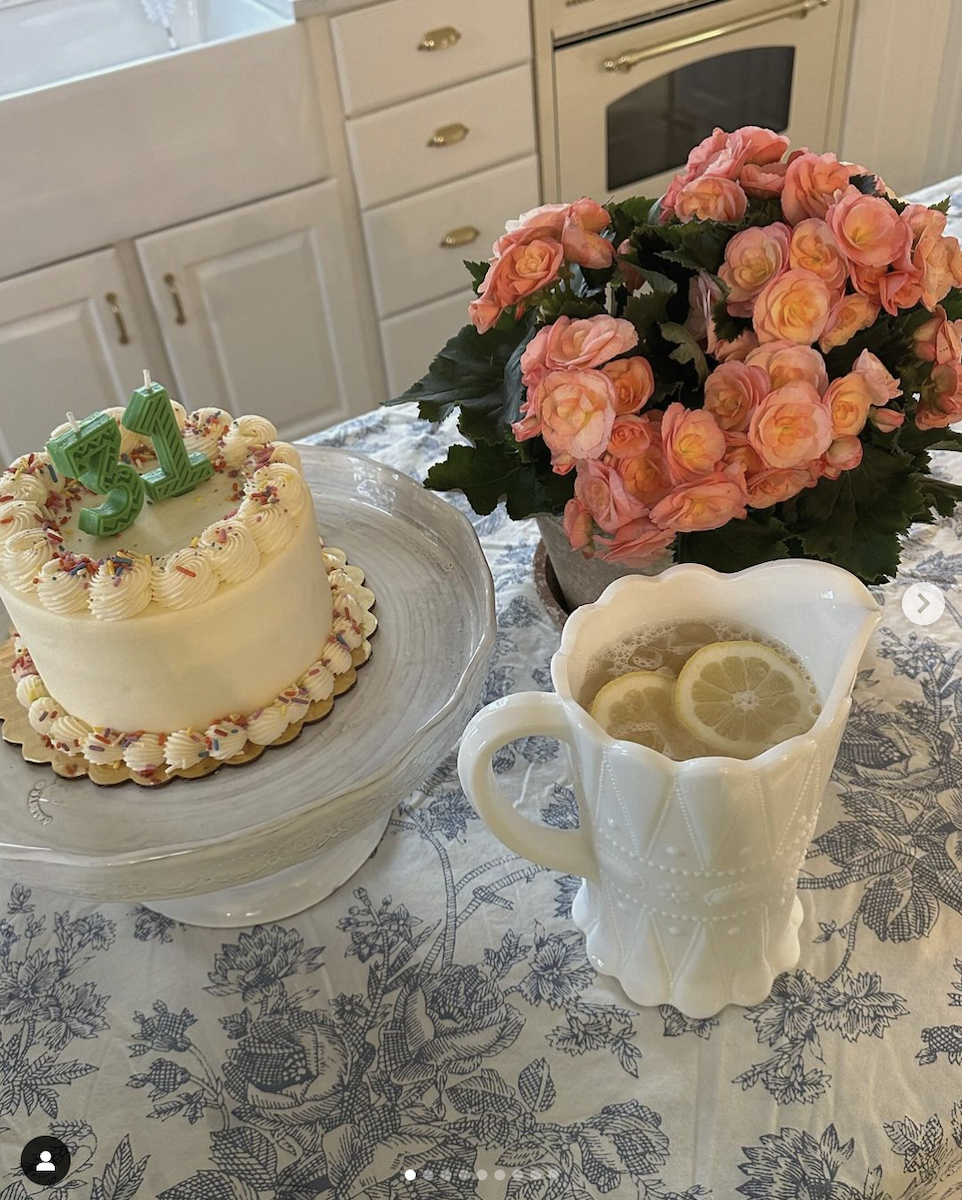
Kristin prioritizes hydration. She drinks multiple glasses of “lemon water” daily, she says. She adds that she tracks her water intake on an app, “which I love ’cause I’m so bad at drinking the right amount of water a day.” According to the Mayo Clinic, hydration is important for a variety of reasons. Water helps get rid of waste through urination, perspiration, and bowel movements, keeps your temperature normal, lubricates and cushions joints, and helps protect sensitive tissues.
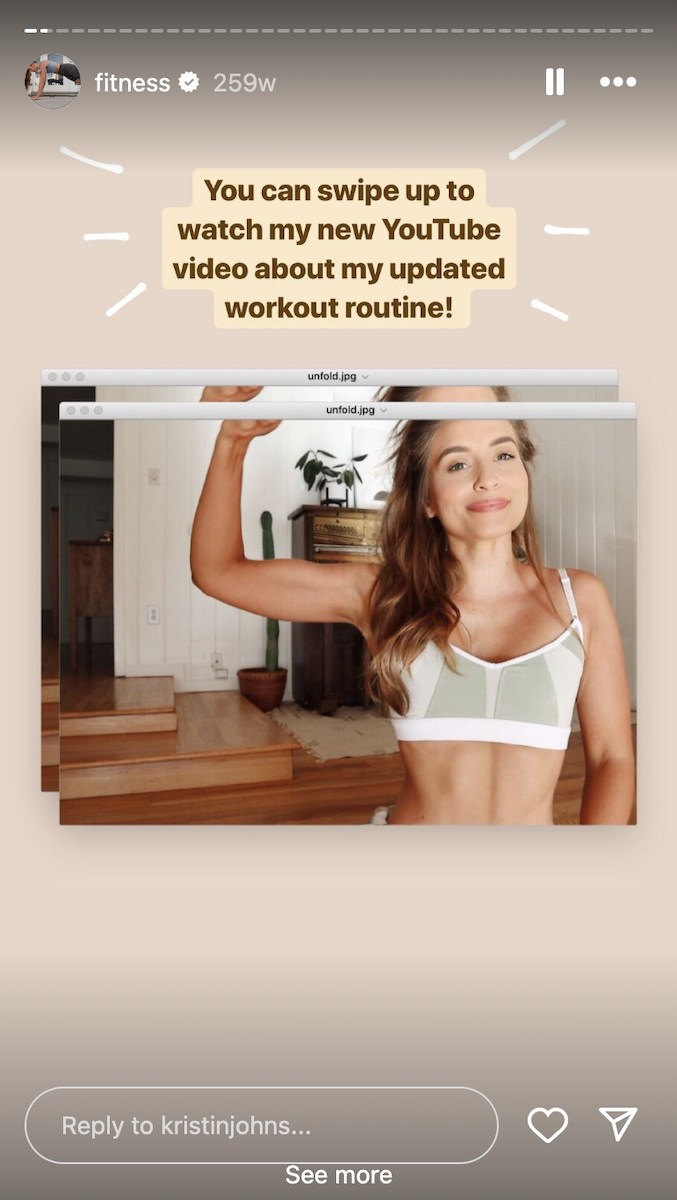
“Another thing that I have kind of discovered about myself and about working out and fitness and health is how important physical activity is not only for my physical health, I also think it’s equally as important for my mental health because I remember when I moved to LA, the first month, I didn’t really work out at all, or I was just doing something maybe like once every two weeks, just like a random workout,” she said in the same video. “And I was feeling so tired and sad and I was just feeling so blah, you know what I’m saying? And, once I started getting on a consistent workout routine, I just felt so much more energetic, so much happier, so much more driven to get things done. And I just think that that is the most important thing to remember about fitness is that yeah, it’s great to look good and strong and feel healthy, but also just getting out and being active just boosts your mental health so much.”
Kristin enjoys sweating al fresco. “My first favorite exercise is hiking. LA has amazing hiking trails and it’s a great workout. It really gets your heart rate up,” Kristin says.
- Building stronger muscles and bones
- Improving your sense of balance
- Improving your heart health
- Decreasing the risk of certain respiratory problems
Kristin is a big fan of using Class Plass, so she can mix up her workouts. “I usually like to go to spin classes, I go to Pilates, I do different circuit classes, boot camps, all these different things,” she says.



Sorry to break it to you: Lack of equipment isn’t a surefire excuse to skip your workout. When you’re on the road or too busy to make it to the gym, bodyweight exercises are the always-ready tool you can turn to—and they might even challenge you more than your typical weighted workouts.
“Don’t underestimate the impact of bodyweight workouts because you will be quickly humbled,” says Kim Perry, CPT, a certified personal trainer and pregnancy coach. Bodyweight exercises are typically compound movements, meaning they activate more than one muscle group at a time. As a result, a bodyweight workout can help improve your balance, core strength, cardio, mobility, and flexibility, Perry says.
Plus, bodyweight exercises are especially great for those who are just starting off their fitness journey, says Claudette Sariya, CPT, founding instructor of SOLE Fitness. Nailing an exercise with only your bodyweight first allows you to really understand the fundamentals of a movement before loading up the weight.
Meet the experts: Kim Perry, CPT, is a certified personal trainer and pregnancy coach. Claudette Sariya, CPT, is the founding instructor at SOLE Fitness and a coach at LifeTime.
Ready to break a sweat using only your bod? Here are the 50 best bodyweight exercises to build strength, muscle, and boost your heart health, according to Perry and Sariya.
Instructions: Choose five to six moves that target the area of the body you want to hit. For a full body experience, select two upper body exercises, two lower body exercises, and two core exercises. Perform each move for 40 seconds, then rest for 20 seconds. After one round, rest for 60 seconds, then repeat two or three more rounds.
1. Hollow Body Hold
Movement pattern: Core
Why it rocks: The hollow body hold is even more challenging than a plank (trust us), and requires full-body activation. Pro tip: Press your back into the floor and squeeze your core while doing this move. If you feel your lower back is rising off the floor, bend your knees to 90 degrees, says Sariya.
How to:
- Start lying on back with with arms extended overhead on floor and legs straight resting on mat.
- At the same time, and with control, lift arms, head, shoulder blades, and legs a few inches off the floor.
- Hold the elevated position, ensuring your low back is still glued to the ground.
2. Plank
Movement pattern: Core
Why it rocks: Planks are a great way to build total body strength. They’re a type of isometric hold, which takes a lot of effort and builds both stamina and endurance. Plus, they can easily be modified by planking on your knees or elevating your hands until you can do them all-out.
How to:
- Start on all fours with shins and palms flat on mat.
- Step back onto the on balls of your feet, creating a straight line from heels through the top of your head. Keep your gaze to the floor.
- Squeeze your glutes and abs to keep hips inline with your shoulders. Hold here as long as you can.
3. Bird Dog
Movement pattern: Core
Why it rocks: This is a great move to practice coordination, and builds core stability and balance.
How to:
- Start on all fours with wrists directly under shoulders and knees under hips. Keep back flat, core engaged, and a slight bend in elbows.
- Extend left arm out in front at shoulder height and right leg straight behind at hip height.
- Bend leg and arm and bring to midline under torso until elbow and knee touch. That’s 1 rep. Alternate sides.
4. Reverse Crunch
Movement pattern: Core
Why it rocks: This move builds strength and control through your core abs. Make sure you’re using your lower abs—and not momentum—to perform this movement. If you’re struggling, imagine you’re pushing your heels to the ceiling, Sariya says.
How to:
- Start lying on back with arms by sides and feet lifted off the ground, legs extended, and toes pointed.
- Squeeze your core to pull your hips off the ground. Do your best to push your toes up towards the ceiling instead of back towards your head.
- Slowly return to start. That’s 1 rep.
5. Russian Twist
Movement pattern: Core
Why it rocks: This move builds rotational strength. Make sure you have the proper form when doing this oblique-working move: Puff out your chest and keep a long line from your tailbone to your shoulder.
How to:
- Start seated with upper body leaned back until abs are engaged, legs lifted and bent, arms bent, hands clasped, and elbows wide. For an extra challenge, lift heels up off the floor.
- Rotate torso to right side so that right elbow is hovering off mat.
- Keeping lower body still throughout, rotate the upper body to the left side. That’s 1 rep.
6. Inchworm
Movement pattern: Core
Why it rocks: This move fires up both your core and upper body, making it a great warmup move for your upper body days.
How to:
- Start standing with feet hips-width apart.
- Hinge at hips and lower down until hands reach the ground, focusing on core activation and spine alignment, keeping legs as straight as possible.
- Crawl forward lifting one hand at a time with legs straight and hips lifted until in a high plank. Try to keep hips as square to the ground as you can throughout the move.
- Walk hands one by one back to feet.
- Reverse motion to return to standing tall. That’s 1 rep.
7. Superman Arm Extension
Movement pattern: Upper Body
Why it rocks: This is a great move for people who want to strengthen their posterior chain (or all the muscles on the back side of your body!). It can even help improve posture, says Sariya.
How to:
- Start lying facedown on a mat, legs extended, elbows tucked at sides.
- Squeeze glutes to lift legs and extend arms overhead simultaneously, pulling thighs and chest off the floor.
- Pause, then lower legs and bend arms to sides to return to starting position. That’s 1 rep.
8. Triceps Dip
Movement Pattern: Upper Body
Why it rocks: This move isolates the triceps. Pro tip: Make sure your hands are right outside your hips and your elbows are pointing behind you in order to really target the back of your arms. To make it more challenging, straighten out your legs.
How to:
- Sit in a chair (or on a box/step) and grip the front edges with hands.
- Scoot butt forward until it’s hovering just off the seat and legs form a 90-degree angle and straighten arms.
- Lower body down until biceps are parallel to floor.
- Engage triceps to press back to start. That’s 1 rep.
9. Superwoman Isometric Hold
Movement Pattern: Upper Body
Why it rocks: This move works the back muscles that stabilize and support your spine, making everyday movement easier, says Sariya.
How to:
- Lie facedown on the mat, with arms and legs stretched out.
- Squeeze glutes and lift torso and legs up as far as you can. Imagine reaching out with arms and legs.
- Pause at the top and hold.
10. Incline Pushup
Movement Pattern: Upper Body
Why it rocks: This is a great move for people working their way up to a flat pushup.
How to:
- Start in an incline plank position with hands on a chair, bench, or step and feet on floor with head to heels aligned.
- Lower down, with elbows pointing 45-degrees away from body, until arms bend to 90-degrees.
- Press back up keeping body in a straight line. That’s 1 rep.
11. Pushup To Plank Row
Movement Pattern: Upper Body
Why it rocks: This exercise targets your chest and back at the same time. Once you get comfortable with the move, add a resistance band around your hands for a little more back challenge. Or, you can also pop into a high plank position for a full pushup.
How to:
- Start in a modified plank position, knees on ground, wrists under shoulders. Maintain a long spine with knees to head aligned.
- Lower into a pushup so chest hovers just above the floor, and elbows are close to sides.
- Push up from ground to return to modified plank position, then drive right elbow toward sky, performing a row.
- Return right hand to ground.
- Repeat row with left arm.
- Return left hand to ground. That’s 1 rep.
12. Air Squat
Movement Pattern: Lower Body
Why it rocks: The squat is one of the gold standard lower body exercises, and doing it with just your bodyweight is a great way to prime the move before adding load. Plus, you can incorporate it into a dynamic warm up to wake up your quads and glutes.
How to:
- Start standing with feet shoulder-width apart and arms at sides.
- Bend knees, sit hips back, and lower butt down until thighs are parallel with the floor. Bring arms forward and keep the torso upright.
- Rise back up to start, squeezing glutes at the top until your hips are just under your shoulders. That’s 1 rep.
13. Forward Lunge
Movement Pattern: Lower Body
Why it rocks: This move is great for core stability, balance, and building quad and glute strength.
How to:
- Start standing at the back of the mat with feet under hips.
- Take a large step forward with right leg, and lower down until thigh is parallel with the floor and both legs bend to 90 degrees. (Bring left hand forward and right arm back for help with balance.)
- Stand up and step right foot back to meet left.
- Repeat with left leg. That’s 1 rep.
14. Alternating Lateral Lunge
Movement Pattern: Lower Body
Why it rocks: This move builds unilateral (single leg strength) in your glutes and quads—important for fixing strength discrepancies. Pro tip: Make sure your chest stays lifted, so you can drive all your weight into your heel for maximum effectiveness. Be sure to place your toes on the same line.
How to:
- Stand with feet wider than hip-width apart.
- Bend right knee and push hips back and lower as deep as you can, aiming for at least a 90-degree bend in the knee. The left leg should be extended.
- Drive through right heel to return back to start.
- Repeat on left side. That’s 1 rep.
15. Curtsy Lunge
Movement Pattern: Lower Body
Why it rocks: This move works your glutes, and Sariya loves to add it to a superset because it’s easy to transition to from either deadlifts or squats. Pro tip: Make sure your knees are tracking toward your toes and keep your torso upright and hips and shoulders as square as possible.
How to:
- Stand with feet hip-width apart and arms at sides.
- Take a step back with left leg, crossing it behind right. Bend knees and lower hips until right thigh is nearly parallel to the floor.
- Return to start.
- Take a step back with right leg, crossing it behind left. Bend knees and lower hips until left thigh is nearly parallel to the floor. That’s 1 rep.
16. Fire Hydrant
Movement Pattern: Lower Body
Why it rocks: This is a great move for strengthening your glutes. Pro tip: Once you’ve mastered this move, add a resistance band to up the ante.
How to:
- Start on all fours with wrists stacked directly under shoulders and knees over hips.
- Draw belly button to spine and, keeping back flat, lift the right knee out to the side so it is in line with the right hip.
- Lower with control. That’s 1 rep.
- After 20 seconds, switch to the other side and repeat.
17. Glute Bridge
Movement Pattern: Lower Body
Why it rocks: Glute bridges will give you a sculpted booty, says Sariya. They also work your hamstrings.
How to:
- Lie on back with feet flat against the floor and knees bent, arms at sides.
- Squeeze glutes and lift hips off the floor until your body forms a straight line from knees to shoulders.
- Pause at the top, then lower back down to starting position. That’s 1 rep.
18. Glute Kickback
Movement Pattern: Lower Body
Why it rocks: This move challenges both your core and your glutes. Pro tip: As you kick your leg back, make sure your hips are pointing down toward the floor, says Sariya.
How to:
- Start on hands and knees, with knees under hips and hands under shoulders.
- While keeping your abs tight, contract the glutes slowly, and kick the right leg back until it’s straight.
- At full extension, squeeze the glutes for an extra second. Carefully bring it back down. That’s 1 rep.
- Switch sides and repeat.
19. Jumping Jacks
Movement pattern: Cardio/Agility
Why it rocks: This move is great for getting the blood flowing and upping your heart rate. You can also use it as part of a warm up.
How to:
- Start standing with feet together and arms at sides.
- Then, simultaneously raise arms out and overhead while jumping feet out wide past shoulders.
- Without pausing, quickly reverse the movement jumping back to narrow stance and swinging arms to sides. That’s 1 rep.
20. Jump Squat
Movement pattern: Cardio/Agility
Why it rocks: Jump squats help you build power in your lower body, and they’re a great way to end a leg day with your heart rate up, says Sariya.
How to:
- Stand with feet hip-width apart, toes slightly turned out, and arms by sides.
- Bend knees and sink hips to lower into a squat, then press through feet to explosively jump as high as you can into the air.
- Land softly on the balls of feet and immediately lower into next squat. That’s 1 rep.
21. High Knees
Movement pattern: Cardio/Agility
Why it rocks: High knees are a great warm up for quads, hip flexors, and calves, especially before a run—or a great addition to a cardio day.
How to:
- Start standing on the mat with arms bent at 90-degrees, elbows close to sides, and hands at hip height in front of body.
- Bend right leg and lift right knee up to tap palm.
- Return the right knee to the floor and quickly repeat on the left side. Stay up on balls of feet throughout movement. That’s 1 rep.
22. Knee Drive
Movement pattern: Cardio/Agility
Why it rocks: A knee drive gets your heart rate up and is good for the core.
How to:
- Start standing with feet under hips.
- Step right foot a couple feet behind left foot.
- Bend back knee and drive it forward and up as high as you can. At the same time, swing arms with the opposite leg, like you’re running.
- That’s 1 rep. Complete on the opposite side.
Andi Breitowich is a freelance writer who covers health, fitness, relationships, beauty, and smart living. She is a graduate of Emory University and Northwestern University’s Medill School of Journalism. Her work has appeared in Women’s Health, POPSUGAR, Food & Wine, What To Expect, Cosmopolitan, Men’s Health, and elsewhere. As a former collegiate pole vaulter, she loves all things fitness and has yet to meet a group workout class she doesn’t like.

Olivia Luppino is an associate editor at Women’s Health. She spends most of her time interviewing expert sources about the latest fitness trends, nutrition tips, and practical advice for living a healthier life. Olivia previously wrote for New York Magazine’s The Cut, PS (formerly POPSUGAR), and Salon, where she also did on-camera interviews with celebrity guests. She recently ran the New York City Marathon.
Cori Ritchey, C.S.C.S., is the fitness editor at Women’s Health, as well as a certified strength and condition coach and group fitness instructor. She’s reported on topics regarding health, nutrition, mental health, fitness, sex, and relationships for several years. You can find more of her work in Men’s Health, HealthCentral, Livestrong, Self, and others.

Fitness
Alexandra Daddario, 40, relies on this underrated crunch upgrade for strong abs – here’s how to do it properly

From enduring some serious physical prep for Baywatch to working consistently with elite trainer Patrick Murphy, Alexanda Daddario’s dedication to fitness is well-documented. She often shares insights on social media, and in a recent Instagram post, the White Lotus star gave an insight into how she trains her core with one powerhouse movement: the reverse crunch into shoulder stand.
Why is it so good? Most traditional ab exercises require repetitive spinal flexion – the process of pulling your chest down toward your knees, like in a standard crunch. This isolates only the upper section of your abs, and for women who spend hours sitting at a desk, it can reinforce a slouched, rounded posture.
Daddario’s movement flips the mechanics entirely since you actively curl your pelvis up toward your chest. In doing so, you target not only your upper abs, but the lower portion and your obliques (the sides) simultaneously, all while keeping your chest open and your neck unstrained. This translates into a much stronger core, better posture and crucial lower back protection. Research also shows that a controlled posterior tilt – the lower-body curl that initiates Daddario’s move – recruits a significantly higher percentage of deep core muscle fibres than traditional crunches.

Daddario then drives her hips directly up into a vertical shoulder stand. This completely removes momentum from the equation (meaning you can’t “cheat”) and forces your abs – particularly your obliques – to balance your body and prevent you from tipping sideways.
She then takes it one step further into a Pilates plow position with her legs overhead, before reversing the movement and, again, using her abs to control the lowering of her entire lower body as she slowly unrolls her spine down onto the mat. The plow portion is optional (and super advanced); the slow, controlled, lowering phase, which happens whether you move into plow or not, is where the magic happens, challenging your core through both lifting and resisting gravity. Inspired? Here’s exactly how to do the move with good form, and how many reps and sets to aim for.
How to do a reverse crunch into shoulder stand
- Lie on your back (either on a mat, or on a reformer Pilates machine, like Daddario, with your arms anchored tightly to the floor.
- Engage your core to curl your knees toward your chest, then fluidly press your feet straight up toward the ceiling, lifting your hips and lower back off the floor.
- Slowly lower down, one vertebra at a time. Aim for 3 sets of 6-8 controlled reps.
Optional progression:
- As you reach shoulder stand with your legs extended to the ceiling, slowly start to lower your toes toward the floor over your head. Your weight should rest entirely on your shoulders and upper back – not your neck.
- Keeping your legs straight, use your core to extend them straight back up to the ceiling, then control the descent by rolling your spine down one vertebra at a time, with your legs remaining straight.

One of our most frequently asked questions here at Women’s Health? How to build muscle and burn fat at the same time. So, we asked superstar trainer Oyinda Okunowo exactly how to do it. In this 4-week plan – created exclusively for Women’s Health COLLECTIVE members – you’ll get the workouts and nutrition guidance needed to help you on your way to better body composition. Tap the link below to unlock 14 days of free access to Oyinda’s plan and start training today.
GET THE PLAN
As Women’s Health UK’s fitness director and a qualified Pilates and yoga instructor, Bridie Wilkins has been passionately reporting on exercise, health and nutrition since the start of her decade-long career in journalism.
After earning a first-class degree in journalism and NCTJ accreditation, she secured her first role at Look Magazine, where she launched the magazine’s health and fitness column, Look Fit, before going on to become Health and Fitness writer at HELLO!
Since, she has written for Stylist, Glamour, Cosmopolitan, Marie Claire, Elle, The Metro, Runner’s World and Red. Today, she oversees all fitness content across Women’s Health online and in print, spearheading leading cross-platform franchises, such as ‘Fit At Any Age’, which showcases the women proving that age is no barrier to exercise.
She has also represented the brand on BBC Radio London, plus various podcasts and Substacks – all with the aim to encourage more women to exercise and show them how. Outside of work, find her trying the latest Pilates studio, testing her VO2 max for fun (TY, Oura), or posting workouts on Instagram.
-

 Los Angeles, Ca57 minutes ago
Boyle Heights warehouse cleanup begins as crews face 85 million pounds of spoiled food
-

 Detroit, MI1 hour ago
Would Detroit Lions Salary Cap Be Wrecked If Terrion Arnold Gets Cut?
-

 San Francisco, CA1 hour ago
Two more Presidio Heights homes reach $10M range as luxury supply dwindles
-

 Dallas, TX2 hours ago
One Dallas Cowboys Contract That Will Age Poorly in 2026
-

 Miami, FL2 hours ago
Live updates: Today’s South Florida News
-
 Boston, MA2 hours ago
A federal judge in Boston has blocked parts of Trump’s order to limit voting by mail
-
 Denver, CO2 hours ago
Denver Transplant Games sets Guinness World Record for most living donors, recipients in one place at one time
-

 Seattle, WA2 hours ago
17-year-old boy shot in High Point, multiple suspects seen running from crashed car

