Fitness
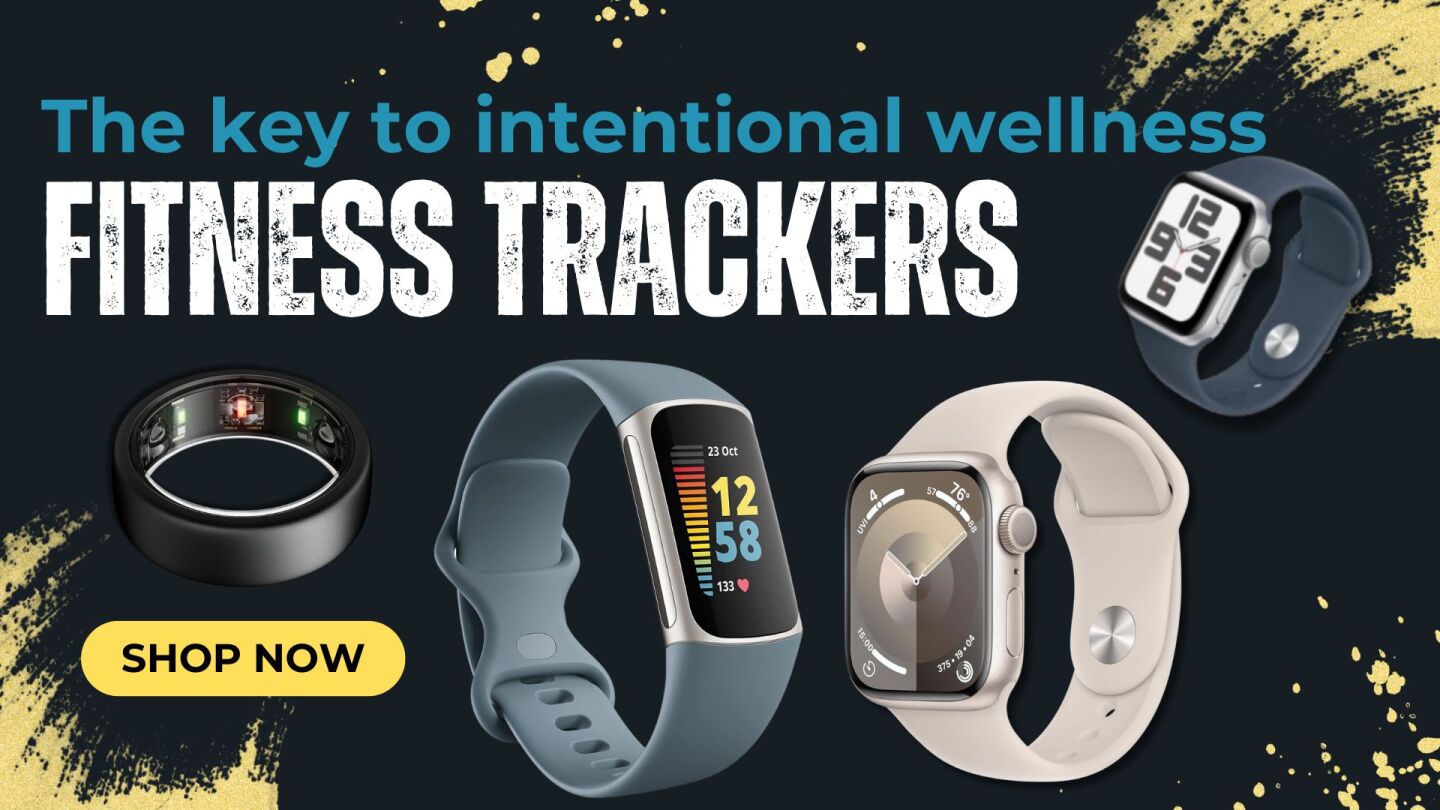
Fitness trackers and watches: The key to intentional wellness

By Police1 Staff
A consistent, intentional wellness strategy is crucial for first responders due to the physical and mental demands of the job.
Maintaining health and wellness helps you perform at your best, manage stress and reduce the risk of injury on or off the job.
Fitness trackers and watches can play a significant role in supporting wellness goals by providing real-time health data, tracking physical activity and promoting healthy habits.
Features to look for in fitness trackers and watches
- Heart rate monitoring. Continuous heart rate tracking helps monitor cardiovascular health and workout intensity
- Sleep tracking. With the prevalence of sleep disorders in first responders, the ability to analyze your sleep patterns and quality to ensure restful recovery periods is essential to any wellness plan
- GPS. Helpful for planning running, biking or hiking routes and making sure you can find your way back even in unfamiliar areas, GPS tracking can also help measure your distances
- Water resistance. Consider how you’ll be using your device and if water resistance (for all-weather activities) or waterproof durability (for swimming) is a must for usability in various conditions
- Battery life. With your demanding schedule, a long battery life will ensure your device can keep up with you all-shift long
- Compatibility. Ensuring your fitness device can sync easily with smartphones and other health apps will help with comprehensive data tracking
Top choices for fitness trackers and watches
Fitbit Charge 5
The Fitbit Charge 5 enhances workout routines with a daily readiness score, stress management through an EDA sensor and heart health tracking with ECG capabilities. It monitors vital health metrics like SpO2 and skin temperature, and has a built-in GPS for real-time pace and distance tracking. It offers up to 7 days of battery life, 24/7 heart rate monitoring and sleep quality insights.
Apple Watch Series 9
The Apple Watch Series 9 extends advanced health, safety and activity features, offering temperature sensing, ECGs on demand, irregular rhythm notifications, detailed sleep stage tracking with REM, core or deep sleep stages, and insights into both physical and emotional well being. It also delivers workout metrics and has safety features like fall detection and crash detection, connecting to emergency services when necessary.

WHOOP 4.0 with 12 Month Subscription
Professional golfer Nick Watney, the first player on the PGA Tour to be diagnosed with COVID-19, credits his WHOOP device with flagging his high respiratory rate – leading to him getting tested and despite his lack of symptoms very early in the pandemic.
WHOOP 4.0 is a comprehensive fitness and health monitoring device designed for first-time members. This package includes a 12-month WHOOP membership, 4.0 hardware, Onyx SuperKnit band and a wearable, waterproof battery pack. The WHOOP device continuously monitors various physiological data such as heart rate, respiratory rate, resting heart rate, heart rate variability, skin temperature, blood oxygen levels, daily activity and sleep.
The WHOOP system is personalized, offering insight-driven recommendations to improve overall health and optimize performance. Users can log daily behaviors in the WHOOP Journal, which helps identify habits that impact sleep and recovery. WHOOP is also FSA/HSA eligible.

Fitbit Inspire 3
The Fitbit Inspire 3 offers a suite of health and wellness features, including a daily readiness score to gauge your physical readiness, active zone minutes to monitor exercise intensity and 24/7 heart rate tracking. With over 20 exercise modes and automatic exercise recognition, it motivates you to stay active.
For stress management, it provides a daily stress management score, mindfulness and relaxation breathing sessions, along with notifications for irregular heart rhythms and SpO2 levels. It also offers automatic sleep tracking, a personalized sleep profile and a daily sleep score. It boasts up to a 10-day battery life.

Garmin Vivoactive 4
The Garmin Vivoactive 4 is designed for fitness enthusiasts who seek a comprehensive approach to monitoring their health and fitness. It offers a wide range of features including body energy monitoring, animated workouts directly on your wrist and Pulse Ox sensors. Its sensors are capable of tracking over 20 biometrics, ensuring personalized health data. The battery life? Up to 8 days in smartwatch mode and up to 6 hours in GPS and music mode.

Apple Watch SE (2nd Gen)
Need an Apple Watch on a budget? Look no further. The Apple Watch SE includes essential health and safety features like fall detection, crash detection, emergency SOS, and notifications for irregular heart rhythms and abnormal heart rates, but does not offer the more advanced features found in the Series 9, such as ECG and temperature sensing.

Fitbit Versa 3
The Fitbit Versa features sleep stage tracking, a daily readiness score for workout or recovery days, built-in GPS for phone-free activity tracking and active zone minutes for exercise effort recognition. It includes enhanced heart rate monitoring with PurePulse 2.0 and boasts over 6 days of battery life.

Oura Ring Gen3 Horizon – Smart Ring
If you’re looking for a different option, the Oura Ring is a discreet-yet-powerful tool for anyone looking to enhance their understanding of personal health and well being.
The smart ring offers a comprehensive look at your sleep, activity, stress and heart rate. It monitors over 20 biometrics and is compatible with both iOS and Android – allowing for integration with popular health apps. The ring has a battery life that can last up to 7 days on a single charge, providing a week of continuous health monitoring without the need for frequent recharging.

How fitness trackers and watches can improve wellness
Fitness trackers and watches offer several benefits:
- Monitoring vital signs. Track heart rate, sleep patterns and stress levels to stay aware of overall health
- Activity tracking. Keep tabs on steps, calories burned and exercise routines to ensure adequate physical activity
- Health alerts. Receive notifications for irregular heart rates or reminders to move, helping prevent prolonged inactivity
- Goal setting. Set and achieve fitness goals with personalized insights and progress tracking
Police1 is using generative AI to create some content that is edited and fact-checked by our editors.

Fitness
Home Gym Supplies Squat Rack Cage Package Released to Market for Exercise Lovers by Strongway Gym Supplies

Coventry, UK – March 02, 2026 – PRESSADVANTAGE –
Strongway Gym Supplies has released squat rack cage packages to the market for exercise enthusiasts across the United Kingdom. The packages combine squat cage frames with safety features suited to home-based strength training, now available through the company’s online platform.
The power cage design centres on four vertical posts connected by horizontal crossbeams. Adjustable safety bars mount between the posts at various heights, catching the barbell if a lift cannot be completed. This safety mechanism becomes relevant during heavy squats or bench presses performed without a training partner present to assist with failed attempts.
J-hooks secure the barbell at the proper beginning positions for various exercises by fastening to the posts at predetermined heights. Quick adjustments between squats, presses, and other barbell movements are made possible by the hooks’ ability to slide up or down the posts and lock into position using pin mechanisms. Depending on the exercise being done, pull-up bars that extend across the top of the frame provide grip positions that vary from wide to narrow.
Mandip Walia, Co-Director at Strongway Gym Supplies, said the cage addresses concerns people have about training alone at home. “Without someone there to spot, there’s always the question of what happens if the weight gets too heavy midway through a set,” he noted. “The safety bars remove that worry. Position them correctly and they’ll catch the bar before it pins someone. That makes a genuine difference in how hard someone can train when working solo, especially on exercises like squats where bail-out options are limited.”
Steel tubing forms the frame structure, with powder-coated finishes applied to resist corrosion in garage environments where humidity fluctuates. Bolt-together construction allows the cage to be disassembled if relocation becomes necessary, though the assembled weight often exceeds 100 kilograms once all components are secured together.
Weight storage pegs project from the rear posts on most models, keeping plates within reach whilst adding mass that stabilises the frame during use. The pegs typically accommodate enough plates to load a barbell for intermediate to advanced training sessions without running out of storage capacity.
The complete range of home fitness equipment, include squat racks, is available to be explored at: https://strongway.co.uk/collections/home-fitness.
The cages fit into garages, spare rooms, and basement areas commonly found in UK residential properties. Height clearance sits around 210 centimetres for most models, working under standard ceiling heights but potentially tight in older homes or loft conversions where ceilings run lower. Floor space requirements roughly match that of a small garden shed once the cage stands fully assembled.
The width of the frame includes the length of the Olympic barbell and the space needed to safely enter and exit during exercises. If the dimensions are too narrow, the posts get in the way of natural movement patterns. If they are too wide, they take up too much floor space. Most manufacturers try to find a balance between these factors, but the exact measurements vary from model to model.
Band pegs feature on some cages, providing anchor points at floor level for resistance bands. This allows accommodating resistance during squats and presses, where band tension increases as the bar rises through the movement. The technique has found followers among strength training practitioners, though it remains less widespread than traditional plate loading.
Full details about the squat rack power cage can be viewed at: https://strongway.co.uk/products/strongway-multi-gym-squat-rack-power-cage.
Randeep Walia, Co-Director at Strongway Gym Supplies, remarked that cage packages align with how people actually approach home training. “Training at home has proven effective for improving muscle strength, endurance, and power when maintained consistently,” he explained. “Frequency matters more than location. Training more than three times weekly produces better outcomes, and having a cage at home eliminates the travel time and scheduling constraints that often interrupt consistency. The cage becomes the foundation. Everything else—bench, bar, plates—gets arranged around it.”
Dispatch runs across mainland UK addresses with timelines confirmed during checkout. The cages arrive in multiple boxes given the size and weight of individual components. Instructions guide assembly, though managing the heavier frame sections works considerably better with two people rather than attempting solo construction.
Packages can be purchased as cage-only units or complete setups that include benches, barbells, and weight plates. Pricing reflects the total equipment included, with buyers selecting options based on what they already own versus what needs acquiring.
The release tracks with patterns observed in the UK home fitness market where demand for core strength training equipment holds steady. Power cages appeal to users seeking barbell training capabilities with built-in safety features, particularly relevant for individuals training without supervision or access to spotters during heavier lifting sessions.
Those interested in exploring the range of exercise equipment available at Strongway Gym Supplies can visit: https://strongway.co.uk/.
###
For more information about Strongway Gym Supplies, contact the company here:
Strongway Gym Supplies
Mandip Walia
+44-800-001-6093
sales@strongway.co.uk
Strongway Gym Supplies, 26 The Pavilion, Coventry CV3 1QP, United Kingdom
Information contained on this page is provided by an independent third-party content provider. XPRMedia and this Site make no warranties or representations in connection therewith. If you are affiliated with this page and would like it removed please contact pressreleases@xpr.media
Fitness
At 72, Oprah swears by this specific move for full-body strength – here’s why it’s so effective

Oprah Winfrey, 72, has been vocal about her weight loss journey in recent years, revealing that maintaining fitness, particularly through strength training, has been crucial while using GLP-1s. Such is her love for these newfound fitness habits that she even did a 72-minute workout to celebrate her 72nd birthday earlier this year.
Now, the talk show host has taken to Instagram to share with her followers a specific strength move that has quickly become a staple in her routine: kettlebell swings.
Why are kettlebell swings effective?
‘Kettlebell swings are one of the most efficient movements because they combine strength, power and cardiovascular conditioning in one exercise,’ says Alice Jordan, a women’s strength and hormone health coach. ‘They target the posterior chain – glutes, hamstrings and lower back – which is especially important for women as we age, helping to improve posture, reduce back pain and support metabolism.’
Jordan adds that kettlebell swings ‘also elevate the heart rate quickly, making them ideal for busy women who want maximum results in minimal time,’ and that when incorporated into your routine correctly, they ‘can improve fat loss, core stability and overall functional strength, which carries over into everyday movement and injury prevention.’
Another key benefit that makes kettlebell swings such an effective movement for women as they age? ‘They help build explosive strength and bone density – both crucial for women during and after menopause.’
How to do kettlebell swings
It’s important to take the time to properly learn the right technique – as Oprah said she did. Alongside the video she posted on Instagram of her performing the exercise, Oprah wrote ‘I first saw other people doing kettlebell swings so skillfully that I didn’t attempt them for at least a year! Now Trainer Peter is always right by my side to course correct me so I’m doing them right – and I think I finally got the swing of them.’
Explaining how to do kettlebell swings, Jordan says that ‘the movement should come from the hips, not the lower back or shoulders. Think about pushing your hips back, keeping your spine neutral, and then powerfully driving the hips forward. This helps target the glutes and reduces the risk of injury.’
When it comes to ensuring that you choose the right weight, Jordan adds that a ‘good starting point for most women is a kettlebell between 6-10kg – but the key is that it should feel challenging enough to drive the hips forward without using the arms.’
‘If you can easily lift it with your shoulders, it’s usually too light. Many beginners actually benefit from going slightly heavier so they learn proper hip hinge mechanics,’ she flags.
How often to do kettlebell swings
So, how often should you do the move per week? ‘For beginners, I’d typically recommend starting with 2-3 sets of 10-15 reps, focusing on good technique and plenty of rest between sets,’ says Jordan. ‘The priority early on is learning the hip hinge and building confidence with the movement, rather than pushing volume too quickly.’
Doing this 2-3 times per week works well for most beginners, she adds, as it ‘allows enough time to recover while still building strength, power and cardiovascular fitness.’ When your technique and fitness improve, you ‘can gradually increase either the number of sets or include swings as part of full-body workouts.’
‘It’s also helpful for beginners to keep sessions relatively short and stop before fatigue affects form, as this reduces the risk of injury and helps reinforce good movement patterns.’
Common mistakes to avoid
Jordan says common mistakes to avoid include:
- Turning the swing into a squat rather than a hinge
- Lifting the kettlebell with the arms instead of letting momentum and hip power do the work
- Rounding the back and going too heavy too quickly
It really is important to be patient and take some time to get your form exactly right – as it will mean you’ll get the most out of the exercise in the long run.

Hannah Bradfield is a Senior Health and Fitness Writer for Women’s Health UK. An NCTJ-accredited journalist, Hannah graduated from Loughborough University with a BA in English and Sport Science and an MA in Media and Cultural Analysis. She has been covering sports, health and fitness for the last five years and has created content for outlets including BBC Sport, BBC Sounds, Runner’s World and Stylist. She especially enjoys interviewing those working within the community to improve access to sport, exercise and wellness. Hannah is a 2024 John Schofield Trust Fellow and was also named a 2022 Rising Star in Journalism by The Printing Charity. A keen runner, Hannah was firmly a sprinter growing up (also dabbling in long jump) but has since transitioned to longer-distance running. While 10K is her favoured race distance, she loves running or volunteering at parkrun every Saturday, followed, of course, by pastries. She’s always looking for fun new runs and races to do and brunch spots to try.

If your day begins with a HIIT class and ends with the saintly glow of “I’ve been good,” you’re not alone. Regular movement can lighten stress, settle anxiety, and generally make the world feel a little less like a group chat on deadline. But for a small group of gym-goers, exercise addiction isn’t a punchline or a humblebrag — it’s a real behavioural pattern that can quietly bulldoze daily life.
Researchers in Budapest have suggested that for around 0.3 to 0.5% of gym-goers, working out and the quest for ultimate wellness can tip into unhealthy obsession. And a separate study from Anglia Ruskin University found the risk rises sharply for people with a history of eating disorders — with researchers reporting you’re nearly four times more likely to experience exercise addiction if you’ve previously had anorexia or bulimia.
It’s an uncomfortable twist, because exercise is supposed to be the good bit. The socially approved coping mechanism. The one that gets likes, not concerned phone calls.
Why “Healthy” Can Be a Convenient Disguise
Wellness culture has a curious magic trick: it can make rigid rules look like discipline. Eight hours’ sleep becomes a badge of honour. “Clean eating” becomes a personality. And a workout missed can feel, for some, less like a rest day and more like a moral failure.
That’s what makes compulsive exercise hard to spot — especially during or after recovery from disordered eating. To friends and family, it can look like someone has “sorted themselves out.” Under the surface, the engine can be the same: fear, control, anxiety — just with different gym kit.
As Eating Disorders Awareness Week begins (March 2–8), we spoke to experts about wellness, disordered exercise, and the additional risks for those with a history of eating disorders.
Can Eating Disorders Be Replaced by Exercise Addiction?
Kerrie Jones, a psychotherapist specialising in eating disorders and clinical director of treatment centre Orri, says eating disorders and exercise addiction often share the same roots — and the same function.
“Eating disorders, like exercise addiction, arise when we have lived through an experience – or lots of different experiences – that have taught us that we’re not safe in our day-to-day lives,” she says.
“Obsessing about food, weight or exercise is a behavioural mechanism that has developed as a means of keeping us feeling safe and in control when otherwise we’d feel overwhelmed with fear and anxiety.”
Jones explains that these behaviours can narrow a person’s focus to what feels measurable and manageable — calories, reps, weight, shape — while masking the deeper fear underneath.
“We call these ‘maladaptive’ coping mechanisms, as they develop through seemingly good intentions, but to the detriment of our longer-term physical and mental health.
“Sometimes, when people reach a point in their recovery where they are stable and functioning, they may move from an obsessive relationship to food, to an obsessive relationship to exercise.”
And because exercise is widely applauded — and often actively encouraged — the behaviour can stick around far longer than people realise.
“It’s a much more socially accepted and idolised means of maintaining obsessive behavioural patterns,” says Jones, which means it can linger for years before someone seeks help.
What Drives Exercise Addiction Psychologically?
There’s rarely one neat cause. It’s more often an overlap of biology, social pressure, past experiences, and psychology — with a particular role for trauma and learned patterns of control.
“There’s no one reason or cause why someone might develop an eating disorder or exercise addiction, however, it’s often a combination of social, genetic and psychological factors,” says Jones. “Commonly, we find a negative life experience or traumatic experience at the root.”
Chartered psychologist and Healthspan ambassador Dr Meg Aroll says more research is needed specifically on exercise addiction, but we already know a lot about how behavioural addictions operate — particularly the loop of compulsive thoughts and repeated behaviours.
“We know that it’s important to change patterns of ruminative and compulsive thoughts in people with behavioural addictions, which is why treatments such as cognitive behavioural therapy are likely to be of help.”
In plain terms: it’s not about willpower. It’s about patterns — and treating what’s driving them.
Signs to Watch For: When Training Turns Compulsive
There’s no single template for exercise addiction. People don’t present in one uniform way, and “looking fit” tells you precisely nothing about what’s happening mentally.
But there are common warning signs, especially when exercise becomes less about wellbeing and more about relief, guilt, or control.
Jones says a person might:
- Feel guilt and shame about missing exercise routines
- Keep secrecy around how much they’re exercising
- Continue to workout when ill, exhausted or injured
- Prioritise exercise repeatedly over family, friends, work, and recovery
That last point matters. Training that regularly trumps relationships, rest, or basic health isn’t “dedication.” It’s a red flag waving in fluorescent gym lighting.
Does Social Media Make It Worse?
Social media can be supportive — community can be a lifeline — but it can also validate compulsive habits. A life organised entirely around workouts can look, online, like “motivation,” when the reality might be anxiety management dressed up as routine.
“For people who are predisposed to eating disorders or behavioural addictions, wellness culture can appear to support and condone this type of maladaptive behaviour,” says Aroll.
“However, on its own, wellness and social media culture is not to blame – someone with such conditions will have a complex combination of factors in their life leading to their symptoms, which should be investigated fully and treated professionally.”
Jones adds that if you know you have an addictive personality, it’s worth curating your feed with intent — and unfollowing content that escalates guilt, restriction, body obsession, or punishment narratives.
What To Do If You’re Worried About Someone
The hardest part is saying something — and the most important part is saying it well. Jones recommends addressing it directly, but with care around timing, tone, and what you focus on.
“It’s important to broach the topic with them directly as their physical and mental health may be severely at risk,” says Jones. “Pick a time to talk when emotions aren’t running high, and where possible, try and avoid talking about exercise specifically or the more symptomatic aspects of exercise addiction or their eating disorder.
“Instead, focus your questions and concerns on how they’re feeling, underneath their day-to-day activities.
“Keep in mind that there are specialists out there who can help and the charity Beat has numerous resources on how to have a difficult conversation with someone.”
In other words: aim beneath the behaviour, toward the emotion.
Do We Need a Broader Conversation About “Healthy”?
Here’s the tricky bit. Health professionals rightly champion exercise for physical and mental health. But for people recovering from eating disorders — or with a vulnerability to compulsive behaviours — messaging can land differently. “More is better” can become a permission slip for harm.
“I think there needs to be a broader conversation about what it means to be ‘healthy’ and to live a ‘healthy lifestyle’,” says Jones. “What works for some, may not work for others, particularly if they’ve suffered with an eating disorder in the past and would have trouble maintaining a normal relationship to exercise and food.”
Jones says clinicians assessing physical health need to consider personal history and the intention behind the behaviour.
“If possible, we need to investigate the intention associated with exercise and unpick the feelings that arise before, during and after exercising.”
That’s the real measuring stick. Not calories burned, not streaks kept alive, not the smug serenity of a kale smoothie. If movement helps you live more freely, it’s doing its job. If it’s tightening the cage — especially in recovery — it’s time to call it what it may be: exercise addiction, and something that deserves proper support, not applause.

New Mexico Livestock Board accused of abuse of power in rancher, inspector feud

North Carolina primary could mean Roy Cooper vs Michael Whatley in pivotal fall Senate race

Gas prices rise slightly in North Dakota amid Iran conflict

Woman dies after saving grandchild playing in driveway from out-of-control car, Ohio officials say

Oklahoma City police are investigating after a man was shot near Yukon

Florida High School Football Rankings: Top 25 teams – Oct. 21

Cleary's 21 help Le Moyne down Central Connecticut State 69-64 in OT

How old is Bo Nix? What to know about Oregon quarterback ahead of 2024 NFL Draft

99th annual Pony Swim held in Virginia

Indiana Members Credit Union announced as new anchor tenant at Bottleworks District

Trump sends official notification to Congress on strikes against Iran

Unexpected birth brings hope to near-extinct Amazon tribe

Supreme Court blocks redrawing of New York congressional map, dealing a win for GOP

Map: Earthquake Shakes Central California

Gas prices could jump as Middle East tensions threaten global oil supply
-

 World5 days ago
Exclusive: DeepSeek withholds latest AI model from US chipmakers including Nvidia, sources say
-

 Massachusetts6 days ago
Mother and daughter injured in Taunton house explosion
-

 Denver, CO5 days ago
10 acres charred, 5 injured in Thornton grass fire, evacuation orders lifted
-

 Louisiana1 week ago
Wildfire near Gum Swamp Road in Livingston Parish now under control; more than 200 acres burned
-

 Technology1 week ago
YouTube TV billing scam emails are hitting inboxes
-

 Politics1 week ago
OpenAI didn’t contact police despite employees flagging mass shooter’s concerning chatbot interactions: REPORT
-

 Technology1 week ago
Stellantis is in a crisis of its own making
-

 Oregon4 days ago
2026 OSAA Oregon Wrestling State Championship Results And Brackets – FloWrestling