Connect with us

Fitness

Demi Moore’s fitness secrets for toned body at 62: Not ‘dieting and exercising in a very obsessive way’

Published

on

Demi Moore’s fitness secrets for toned body at 62: Not ‘dieting and exercising in a very obsessive way’

Demi Moore nabbed her first-ever Oscar nomination at 62. On January 23, the Hollywood actor was announced as one of the Best Actress nominees – for the first time in a career that has spanned five decades – for her film, The Substance. While promoting her film last year, Demi Moore had shared how her fitness routine has evolved over the years. Also read | Jennifer Aniston reveals secrets to stunning figure at 55 and the special drink she has ‘first thing in the morning’

Demi Moore attends an awards show in Los Angles in 2024. (File Photo/ REUTERS)

Demi Moore’s now approach to health and wellness focuses on self-acceptance and appreciation. She believes in loving and accepting her body.

From ‘crazy’ routine to ‘giving up hard exercise’

Reflecting on Hollywood’s unrealistic beauty standards, and how she found herself going to extreme measures in pursuit of perfection, like biking up to 60 miles (96.5 km) a day, Demi told CBS Sunday Morning in 2024, “I put so much pressure on myself. I did have experiences of being told to lose weight. And all of those, while they may have been embarrassing and humiliating, it’s what I did to myself because of that… Even just the idea of, like, what I did to my body, it’s, like, so crazy, so ridiculous.”

She had earlier shared in a 2020 interview with Westman Atelier how she made it a goal of hers to focus on herself rather than what she looks like, “[I was] dieting and exercising in a very obsessive-compulsive way… I changed my body over multiple times but wasn’t really myself… I added into my daily prayer a new mantra: to have the courage to be seen without padding or protection. I couldn’t go on fighting my body and my weight; I had to make peace, I started by giving up hard exercise. I never went back into the gym in the house. Never. The room it occupied is now my office.”

Advertisement

Diet secrets and sobriety

One of Demi Moore’s secrets to a fabulously toned and youthful body? She follows a raw vegan diet, which eliminates cooked foods and focuses on organic fruits, veggies, juices, smoothies, and soups, as per a 2023 Daily Mail report. Excluding all foods of animal origin, Healthline says the raw part of the diet means ‘foods should be eaten completely raw or heated at temperatures below 104 – 118°F (40 – 48°C)’.

Raw veganism has been popular in Hollywood, with celebs like Gwyneth Paltrow and Megan Fox also having been advocates of the diet in the past. But it’s a pretty intense one to follow, so it certainly isn’t for everyone. Moreover, 2023 study on the effects of raw veganism concluded that ‘a raw vegan diet with more than 90 percent raw food cannot be recommended for a long time due to micronutrient deficiencies as well as related complications’.

Moreover, demi decided to turn her back on alcohol, which also helps her stay healthy and fit. In her 2019 memoir, she revealed that she had been sober for 20 years, but briefly broke it with a beer.

When Demi turned to yoga

In her 40s, Demi decided to start slowing down and turned her attention to more low-impact workouts. She revealed in 2010 that she had taken up Bikram yoga, a type of hot yoga, as per the aforementioned Daily Mail report. Her then-trainer Gregory Joujon-Roche confirmed at the time that the actor was fully committed to the workout and had also added a mixture of strength training. Per the Daily Mail report from 2023, Demi also became a verified Kundalini yoga teacher a few years later.

Advertisement

Fitness

Strategic Exercise Techniques to Maximize Mood Elevation – The Boca Raton Tribune

Published

on

Strategic Exercise Techniques to Maximize Mood Elevation – The Boca Raton Tribune
A Shift in Scientific Understanding Reveals That the ‘Runner’s High’ Stems from a Complex Cocktail of Chemicals, Including Endocannabinoids, Which Can Be Triggered by Adjusting Duration and Social Context. The widely reported phenomenon of exercise-induced euphoria—often known as the “runner’s high”—is rooted in specific alterations to neurochemistry that generate feelings of hope, calmness, and social […]
Continue Reading

Fitness

Do you have sore hips? I asked a pain specialist why this happens and how to improve it

Published

on

Do you have sore hips? I asked a pain specialist why this happens and how to improve it

Hip soreness is a terribly common issue—it’s something that I certainly suffer with—so I’m always trying to get to the bottom of where this soreness originates from and what you can do about it.

According to Dr Shady Hassan, MD, an interventional pain and sports medicine physician and the founder of NefraHealth, immobility is the root cause of this discomfort.

Advertisement
Continue Reading

Fitness

“No Pain No Gain” May Be Wrong: Science Says Slow Eccentric Exercise Builds Stronger Muscles

Published

on

“No Pain No Gain” May Be Wrong: Science Says Slow Eccentric Exercise Builds Stronger Muscles

Modern exercise culture has spent years glorifying exhaustion. The harder a workout feels, the more effective people assume it must be. Sore muscles became badges of honor, while gentle movements were often dismissed as ‘not real exercise.’ 

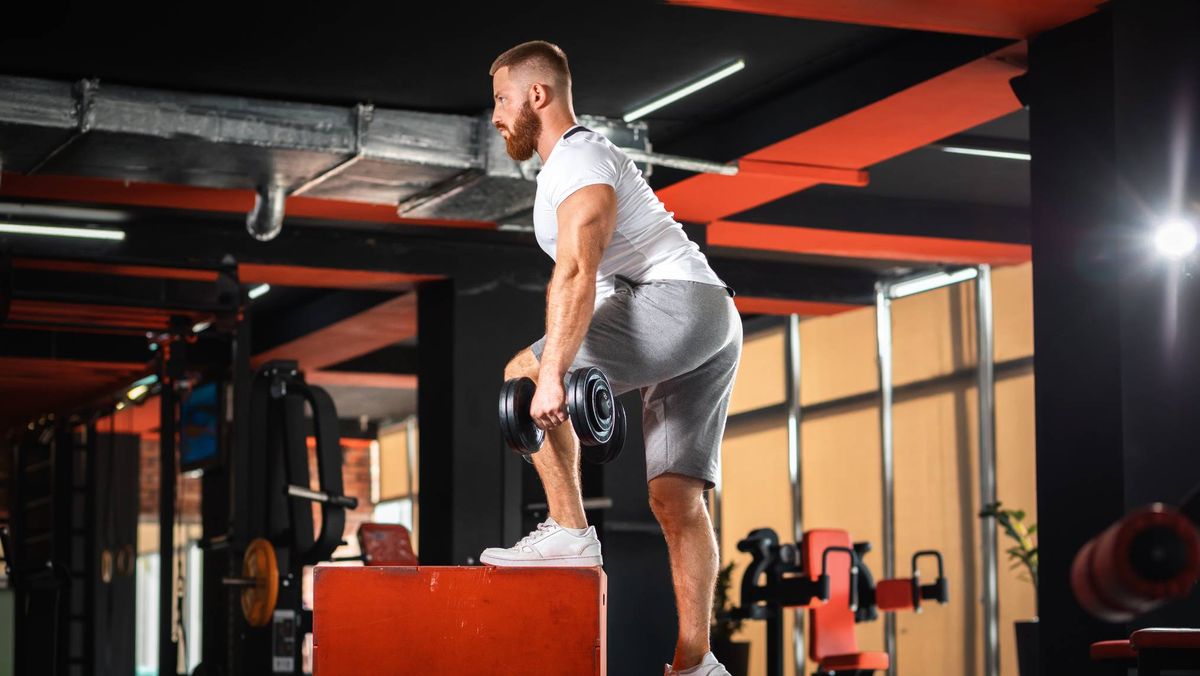
A man lifting a dumbbell. Image credits: Andres Ayrton/Pexels

However, according to a new study, some of the most efficient ways to build muscle strength may happen during the slow, controlled moments people usually ignore—walking downstairs, lowering weights, or carefully sitting into a chair. 

Study author Kazunori Nosaka, who is the director of exercise and sports science at Edith Cowan University, argues that eccentric exercise—a type of muscle action that occurs while muscles lengthen under tension, may offer a more practical alternative. Its opposite, concentric exercise, is the shortening (lifting) phase where muscles produce force to overcome resistance.

Instead of demanding maximum effort, these movements appear to train muscles while placing less stress on the body.  

“The idea that exercise must be exhausting or painful is holding people back. Instead, we should be focusing on eccentric exercises which can deliver stronger results with far less effort than traditional exercise – and you don’t even need a gym,” Nosaka said.

Muscles work differently on the way down

The study examines decades of earlier research on eccentric exercise rather than presenting a single laboratory experiment. It focuses on a simple but often overlooked detail of human movement, which is how muscles behave differently depending on whether they are shortening or lengthening.

Advertisement

When someone lifts a dumbbell, climbs stairs, or rises from a chair, muscles shorten as they generate force. Scientists call this a concentric contraction. Eccentric contractions happen during the opposite phase—when the muscle stays active while stretching. 

Examples include lowering the dumbbell back down, descending stairs, or slowly lowering the body into a seated position. According to the review, muscles can tolerate and produce greater force during eccentric actions while using comparatively less energy and oxygen. 

“Eccentric contractions are distinguished by their ability to generate greater force than concentric or isometric contractions, while requiring less metabolic cost,” Nosaka notes.

Researchers believe this happens because muscles act more like controlled braking systems during lengthening movements, resisting gravity rather than directly overpowering it. As a result, people may gain strength without putting the same level of demand on the cardiovascular system. 

This difference could make eccentric exercise especially useful for individuals who find traditional workouts physically overwhelming.

“Eccentric exercise training provides numerous benefits for physical fitness and overall health, making it suitable for a wide range of individuals from children to older adults, clinical populations to athletes, and sedentary to highly active people,” Nosaka added.

Gravity may be doing more training than we realized

To support this argument, the study brings together findings from several earlier research works. For instance, one study from 2017 tracked elderly women with obesity who repeatedly walked either upstairs or downstairs over a 12-week period. 

While climbing stairs is normally considered the tougher workout, the women assigned to walk downstairs showed stronger improvements in measures including blood pressure, heart rate, and physical fitness. The results suggested that resisting gravity during downward movement may provide a surprisingly powerful training effect.

YouTube videoYouTube video

The review also discusses eccentric cycling, where participants resist pedals driven backward by a motor instead of pushing them forward in the usual way. 

Although the movement feels unusual and requires concentration, earlier studies found it improved muscle power, balance, and cardiovascular health while feeling less exhausting than standard cycling workouts.

Another important part of the review addresses muscle soreness, one of the main reasons eccentric exercise never became widely popular outside rehabilitation settings. People often experience delayed onset muscle soreness, or DOMS, after unfamiliar eccentric workouts. 

Advertisement

“Unaccustomed eccentric exercise is often associated with muscle damage characterized by delayed onset muscle soreness (DOMS) and a reduction in muscle force-generating capacity lasting more than a day. However, this effect diminishes or at least is attenuated when the same eccentric exercise is repeated (known as the repeated bout effect),” Nosaka explained

Many eccentric exercises require little or no equipment. Slow squats into a chair, heel-lowering movements, controlled wall push-ups, or even maintaining posture against gravity can activate eccentric muscle work. 

Moreover, some studies referenced in Nosaka’s review suggest that just a few minutes of these exercises each day can still produce measurable improvements in health and strength.

The future of fitness may feel less punishing

The findings challenge the mindset surrounding fitness itself. Many people abandon exercise routines because they associate physical activity with pain, fatigue, or lack of time. Eccentric exercise suggests that effective movement does not always need to feel extreme. 

If future research continues to support these findings, eccentric exercise could influence far more than gym routines. It may reshape physical rehabilitation, elderly care, injury recovery programs, and public-health recommendations aimed at increasing physical activity among sedentary populations. 

These exercises also place lower demands on the heart and lungs while still strengthening muscles. They could help people who are unable or unwilling to follow intense training programs.

Advertisement

Nosaka suggests that “we should establish eccentric exercise as standard practice, and make it common, accessible, and widely accepted as the ‘new normal’ of exercise to improve life performance and high (athletic) performance.”

However, this does not mean eccentric exercise is a universal replacement for all forms of physical activity. The current paper is a review of previous studies, and its findings still need to be validated through experiments and large-scale clinical trials.

Nosaka also notes that “Future studies should investigate mechanisms underpinning the effects of eccentric exercises in comparison to other types of exercises (e.g., isometric exercises, concentric exercises, aerobic exercises),”  

This could help scientists design safer and more personalized exercise programs for different age groups and health conditions.

The study is published in the Journal of Sport and Health Science.

Advertisement
Continue Reading
Advertisement

Trending