Finance
Why doing everything right no longer protects Canadian families from financial triage


It’s 2026, and most Canadian households aren’t asking how to get ahead — they’re asking how to avoid falling further behind. Fuelled by a quiet frustration and the common refrain behind this anxiety: If I’m doing everything right, why does it still feel like I’m losing ground?
For Stacy Yanchuk Oleksy, CEO of Money Mentors, that sentiment shows up daily in conversations she and her colleagues have with Canadians. These aren’t people who spend wildly; these are Canadians who have already cut spending, already tightened their budget and already done all the tasks required for responsible money management.
As Yanchuk Oleksy pointed out during an interview with Money.ca, the anxiety illustrates a subtle shift in how Canadians are handling the ongoing pressure of higher living costs, where families once talked about budgeting, now the discussion is brinkmanship — deciding what can’t be paid this month, not what should be paid.
These are the households already living lean — and still slipping.
For years, personal finance advice centred on discipline: Track your spending, pay down debt, avoid lifestyle creep.
But many families have reached a point where discipline alone no longer moves the needle.
“For households already stretched, stability just means the pressure isn’t getting worse — not that it’s getting better,” explains Yanchuk Oleksy.
With interest rates staying elevated longer than expected and everyday costs still stubbornly high, the margin for error has disappeared. Even small disruptions — a car repair, dental bill or temporary loss of overtime — can tip a household from “managing” to “making trade-offs.”
That’s when budgeting turns into triage.
Read more: Canadians spent $183B on dining and clothes in 2024. Prioritize these 4 critical investments instead and watch your net worth skyrocket
In practice, financial triage means deciding which obligations get paid first — and which get deferred.
“Families cut out anything non-essential — less food in the grocery cart, no dining out, pulling kids from activities, postponing travel — while still relying on credit to cover basics like utilities, school costs, or transportation,” says Yanchuk Oleksy. “Further down the line,” she said, “it looks like parents deciding which credit card or line of credit gets paid — and which one doesn’t.”



TORONTO — Insurance provider Intact Financial Corp. says it had higher catastrophe losses and large losses in the second quarter than it initially expected.
Intact Financial reported that its combined catastrophe and large losses were $247 million above its expectations for the second quarter on a pre-tax and net of reinsurance basis.
The combined higher losses amount to $1.08 per diluted common share after tax.
Total catastrophe losses reached $416 million on a pre-tax basis during the second quarter and net of reinsurance.
The company says catastrophe losses in Canada were due to weather events, while commercial fires drove losses in the United Kingdom and Ireland.
Intact Financial says the increase in large losses included higher-frequency fire claims as well as other property losses across different geographies.
This report by The Canadian Press was first published July 8, 2026.
Companies in this story: (TSX: IFC)
The Canadian Press

For a company navigating one of the most consequential transformations in its history, financial clarity is not optional—it is essential. Natura &Co, the Brazilian personal care and cosmetics group behind iconic brands such as Natura and Avon, has long been committed to combining purpose-driven business with commercial performance. After a period of strategic portfolio reshaping, including the divestiture of its Aesop and The Body Shop holdings, the company is now sharpening its focus on profitability and operational excellence across Latin America and global markets.
At the center of that effort sits a deceptively complex challenge: understanding, in real time, which revenue and cost factors are driving or eroding gross margin across a highly diversified business. For years, answering that question meant manual reporting, delayed insights, and finance teams spending valuable time on data gathering rather than analysis.
That’s now changing, thanks to a co-innovation initiative developed together with SAP and Numen, a global SAP partner specializing in digital transformation and enterprise software implementation.
From manual reporting to proactive decision intelligence
The project’s goal was to replace a labor-intensive gross margin analysis process with a generative AI application embedded directly into Natura &Co’s financial workflows. Built on SAP Business AI Platform, SAP’s unified foundation integrating business technology, data, and AI capabilities, the application connects directly to data in SAP S/4HANA to provide finance teams with automated insights and narrative recommendations in real time, without the need for manual data pulls or offline reporting.
The application enables users to explore revenue, cost, and margin drivers interactively, identifying at a glance which elements are protecting or eroding margin performance across markets and product lines. Crucially, human oversight remains central to the design: the AI application generates insights, while finance professionals retain full control over interpretation and decisions.
“The implementation of gross margin analysis using AI in SAP S/4HANA marked an inflection point in the analytical capability of our finance area,” said Rogério Dias Garcia, tech manager, ERP Latam, Natura &Co. “We overcame delays and raised the standard of insights by integrating margin analysis from SAP S/4HANA with a large language model connected via the SAP AI Core layer. This architecture allowed us to provide, in an agile, secure, and completely anonymous manner, a stratified and precise view of gross margin offenders and protectors—discriminating exactly which revenue or cost elements were driving market performance.”
A collaborative architecture for scalable AI adoption
Natura &Co’s application derived from a prototype SAP partner Numen created in early 2024 at SAP’s global Hack2Build on business AI, leveraging the generative AI capabilities of SAP Business AI Platform. The solution was designed and developed through close collaboration between Natura &Co, Numen, and SAP. From the outset, the approach was to align AI adoption with concrete business priorities, ensuring the application would be scalable and production-ready rather than a standalone prototype.
Numen brought deep SAP implementation expertise to the project, combining knowledge of SAP S/4HANA architecture with hands-on experience in building solutions on SAP Business AI Platform. The technology stack—SAP S/4HANA, SAP AI Core, SAP Fiori, and SAP Business Technology Platform—provided the secure, integrated foundation needed to connect financial data with generative AI capabilities in an enterprise context.
“SAP enabled the transformation by providing the technological foundation and expert support,” said Carlos Aravechia, head of Data Design & Intelligence at Numen.
The success of the project has validated a broader conviction at Natura &Co: that generative AI, embedded directly in ERP workflows, can fundamentally reposition finance from a transactional function to a strategic business partner.
A blueprint for other businesses
The Natura &Co project demonstrates a pattern that other organizations can replicate, particularly those running SAP S/4HANA. The combination of structured ERP data with the contextual reasoning capabilities of large language models creates a foundation for decision intelligence that goes well beyond traditional business intelligence tools.
The project was built within a six-month co-innovation sprint and went live in August 2025. It is currently in use across Natura &Co’s Equador operations.
Looking ahead, Natura &Co is already planning the next phase: integrating Joule Agents to further automate the extraction of standard analytical content and deepen the AI-driven optimization of financial processes.
“The success of this initiative validates the transformative potential of embedded AI within our ERP,” Dias Garcia noted. “We are now ready to move forward—deepening these insights and integrating the capability of Joule Agents to maximize the extraction of standard content and further optimize our business decisions.”
For SAP customers evaluating how to move from AI experimentation to AI in production, the Natura &Co project offers a concrete, replicable model: start with a high-value, well-defined business process, embed AI directly into existing workflows, and build in human oversight from the start.

A girl from a disadvantaged rural family in central China topped this year’s gaokao, attracting numerous live-streamers eager to finance her education, which she declined.
The home of 18-year-old secondary school graduate Han Yaping in a Henan province village was recently bustling with live-streamers.
This attention came after Han achieved an impressive score of 699 out of 750 in the gaokao, China’s national college entrance exam.
She has received offers from China’s two leading universities, Tsinghua University and Peking University.
Han’s accomplishment is particularly remarkable given her family’s impoverished circumstances.
Her mother suffers from ankylosing spondylitis, an inflammatory arthritis affecting the spine, preventing her from working. Her father, who earns a living through farming and odd jobs, serves as the family’s sole provider. Han also has a younger sister.
-

 Washington, D.C3 minutes ago
Police search for suspect caught on camera slashing tires in Georgetown
-

 Cleveland, OH10 minutes ago
Ohio ICAC Task Force’s “Operation Guardians’ Watch” Results in 25 Individuals Arrested and Charged for Attempting to Meet with an Underage Child to Engage in Sexual Activity
-

 Austin, TX13 minutes ago
Texas’ Goosby hosts camp to benefit heart research
-

 Alabama18 minutes ago
Alabama teen charged with stabbing mom to death issued vile threat to dad — as new pic shows bloodbath left behind
-

 Alaska25 minutes ago
Outmigration, inflation, choice schools: Alaska school closures likely to continue without changes
-
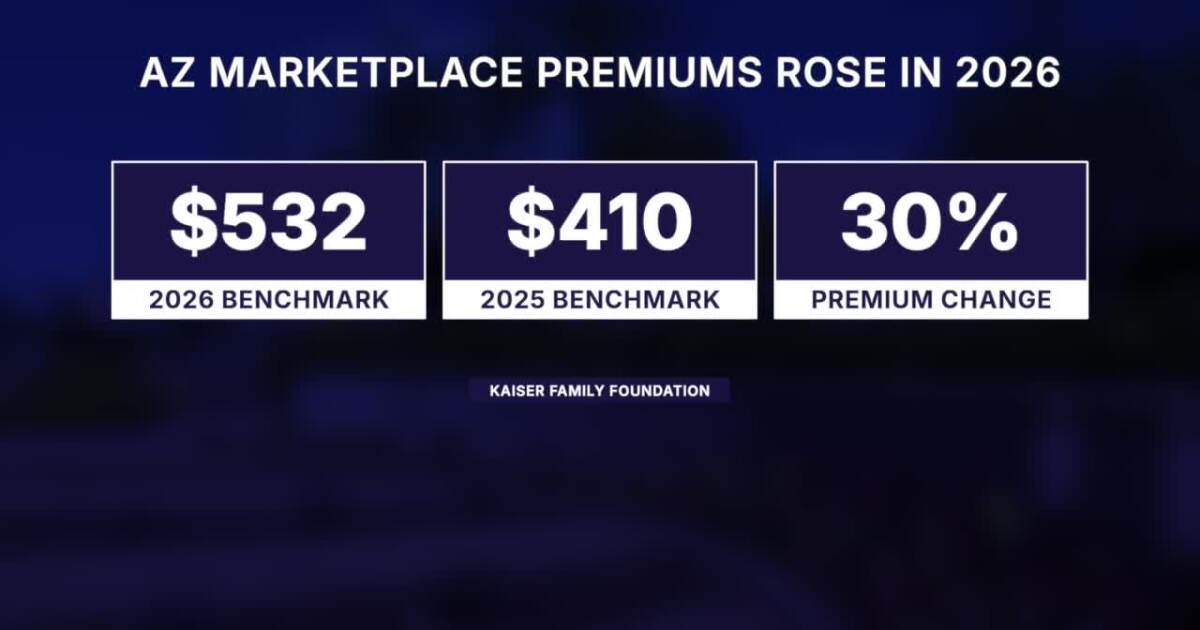 Arizona28 minutes ago
WATCH: Arizona’s health insurance marketplace is seeing dropping enrollment
-

 Arkansas33 minutes ago
ARKANSAS SIGHTSEEING: Randolph County can claim many firsts in Arkansas | Northwest Arkansas Democrat-Gazette
-

 California40 minutes ago
Toddler sustains brain injury in fall after California childcare worker threw him into the air, lawsuit says

