Finance
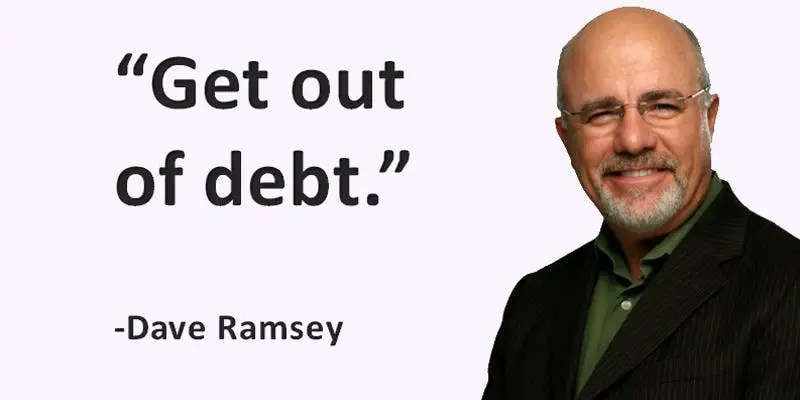
Gen Z rejects financial guru Dave Ramsey's advice to live debt-free: 'Self-care is extremely important.'

Our experts choose the best products and services to help make smart decisions with your money (here’s how). In some cases, we receive a commission from our partners; however, our opinions are our own. Terms apply to offers listed on this page.
- Young workers are pushing back against Dave Ramsey’s financial advice on TikTok.
- They say that Ramsey’s “debt-free” mantra is outdated and neglects the value of self-care.
- Others say his homebuying tips aren’t realistic amid skyrocketing prices.

Dave Ramsey lacks clout with Gen Z.
The 63-year-old host of the financial talk show, “The Dave Ramsey Show,” has attracted scores of followers over the years with a simple mantra — live debt-free.
But amid rising costs of living, skyrocketing home prices, and mounting student debt, young workers are bucking the advice of America’s favorite financial guru.
They’re calling his tips outdated and even a little depressing in videos on TikTok. The trend, first reported by The Wall Street Journal, has racked up millions of views on TikTok under the hashtag #daveramseywouldntapprove.
“I’d rather be caffeinated than depressed with $6.”
One of Ramsey’s maxims is to stop your “coffee habit.” He says that if you want to live debt-free, stop spending $4 on a latte every morning.
“You’ll spend $63 in a month. You’ll spend $766.50 in a year. You’ll spend $22,995 over the course of 30 years,” Ramsey’s financial advice company, Ramsey Solutions, writes in a post on its website.
But younger generations say that lattes (which average about $6 these days) are key to their mental and physical well-being.
“Self-care is extremely important and if that means buying a $6 coffee every day, do it,” Jarrod Benson, a 32-year-old comedian from Orlando told Business Insider over TikTok. “I’d rather be caffeinated than depressed with $6.”
Benson’s comments come as many young workers grow disillusioned with corporate America and adopt an attitude of working to live.
“This is particularly true in the West. They have seen the legacy of all these broken promises. In the old days and in many parts of the West, they would promise you if you worked for 30 years, you have this defined benefit pension, you have retiree medical care, etc. None of that exists today,” Ravin Jesuthasan, a future-of-work expert and global leader at consulting firm Mercer, previously told BI.
You can’t buy a house with “$50 and a pack of strawberries.”
Gen Z workers said Ramsey’s advice also doesn’t cut it when making long-term investments, like buying a house.
One of Ramsey’s top tips for buying a house is to pay for it upfront in cash and avoid taking out a mortgage. While Ramsey has acknowledged this is a daunting task, he outlines a game plan for how someone might save up to $100,000 in cash to buy a home on the Ramsey Solutions website.
“Divide $100,000 by the amount you can save each month to determine how long it will take to get there,” he writes, alongside a list of equations to help people figure out how they might get there between two to eight years.
But younger workers say buying a home in cash isn’t feasible when home prices are skyrocketing nationwide. The median home price in the United States is about $363,000 now and upwards of a million in some of the country’s priciest cities.
“It’s mind-boggling that the older generation that bought 4-bedroom homes for $50 and a pack of strawberries continues to lecture younger people on money management,” Josh Benson, a 28-year-old from Dallas working in the financial industry, told BI over TikTok.
Younger generations began questioning Ramsey’s advice on homebuying even before the anti-Ramsay rhetoric began trending on TikTok.
Sarah Martinez Shaw, who grew up on Ramsey’s advice, told BI his tips left her in a tough spot.
On the one hand, buying a house in cash only seemed feasible for the wealthy, she said. At the same time, by taking a hard line against credit card debt, she said Ramsey “stigmatizes legitimate paths forward.” She realized that a strong credit score from years of responsible credit use was one of the best ways to secure a mortgage loan.
Dave Ramsey did not immediately respond to BI’s request for comment.


The World Bank is ditching its commitment to steer 45 percent of its spending toward projects with climate benefits, after facing pressure from the Trump administration.
The move, announced Monday following a meeting of the bank’s board of directors last week, marks a victory in President Donald Trump’s effort to purge climate policies from U.S. foreign policy. His administration has described the target as “distortionary” and “nonsensical.”
The bank preserved its broader Climate Change Action Plan — of which the 45 percent target was a key metric — just days before it was set to expire at the end of June. In addition to directing money toward climate projects, the plan provides technical support for helping countries reduce their greenhouse gas pollution and adapt to rising temperatures.
“We will retire the 45% climate co-benefits target,” the World Bank Group said in a statement, noting that it had “done significant work in answering client demand and needs.”
The bank’s work on climate “is and will remain firmly client driven, supporting them in delivering on their own ambitions as set out in their national plans and NDCs,” the statement added, referring to the nationally determined contributions countries submit under the Paris Agreement.
The decision to drop the climate finance target follows months of pressure from the Trump administration. People with knowledge of the negotiations said the U.S. was firm that the target must go despite other countries indicating their support for the bank’s climate goal. The U.S. has sway over the bank’s decisions as its largest shareholder.
Beyond the finance target, the Climate Change Action Plan also provides diagnostic reports on countries’ climate and development goals and aims to align lending with the Paris Agreement, which calls for preventing temperature rise from surpassing 2 degrees Celsius since the Industrial Revolution.
The bank said it would honor a board request to undertake an independent evaluation of the climate plan to determine if it’s helping countries grapple with rising temperatures. The decision effectively extends the plan beyond its expiration at the end of June.
The climate target was supported by many of the bank’s shareholders. It’s also been a prominent signal of the bank’s support for climate action at a time when the impacts of rising temperatures are accelerating.
“This is way, way away from where we should be for a responsible financial architecture,” said one official from a developed country who was directly involved in the negotiations and was granted anonymity to describe internal discussions.
The bank will continue to track and report on the amount of money going to projects with climate co-benefits. It exceeded its own target last year by directing 48 percent of its financing to climate-related projects.
Other climate targets embedded in agreements that govern different arms of the bank will remain, including one for the International Development Association, the bank’s fund for the poorest countries.
Multilateral development banks play a key role in global climate negotiations, where wealthy countries have committed to helping provide $300 billion a year for poorer countries by 2035. That no longer includes the United States, which has left the Paris Agreement and will exit the underlying United Nations Framework Convention on Climate Change early next year.
“Targets send enormous signals about an institution’s direction of travel,” said Clemence Landers, a senior fellow at the Center for Global Development. “At the same time, it’s a sign of the times and the World Bank is doing its level best to not rankle its largest shareholder.”
She believes the bank will continue financing renewable energy projects in countries that want them, despite having dropped its climate target.
“I wouldn’t be shocked if the bank continued to have an extremely robust clean pipeline with or without this target,” said Landers.
The bank says retiring the 45 percent target is part of its shift from a focus on “inputs to outcomes.” It will continue to monitor and report net greenhouse gas emissions across its projects and countries’ ability to withstand climate risks.
“We will continue to report to the Board on progress, including on climate co-benefits, and to contribute to our related joint MDB efforts,” the statement said, referring to its role as a multilateral development bank. “We will explore and discuss ways to better structure our engagement on adaptation, nature and pollution.”

Shanghai has been urged to build itself into a hub serving the rising outbound investment needs of Chinese firms, potentially increasing rivalry with Hong Kong as both cities race to augment their status as financial centres.
The suggestion by Liu Xiaochun, vice-president of the Shanghai Finance Institute and a senior banker with three decades of experience, was made in mid-June at a closed-door meeting hosted by China Finance 40, a Beijing think tank comprising many top Chinese financial regulators, bankers and academics.
“Just as American multinationals expanded globally with New York as their financial anchor, China’s outbound firms face a phenomenon shaped by unique international circumstances, and cannot rely on financial centres in other countries,” said Liu, former head of Agricultural Bank of China’s Hong Kong branch and former president of Hangzhou-headquartered China Zheshang Bank, according to a transcript of his speech published last week.
“China has Hong Kong, a mature international financial centre with the flexibility to respond to market changes, but that is not enough to fully meet the special needs of Chinese companies’ outbound expansion. In this regard, Shanghai needs to play a role.”
“To boost its standing as an international financial centre, Shanghai must demonstrate that role through support for outbound Chinese firms,” Liu said.
Behind Liu’s proposals is Shanghai’s ambition to make itself a global business hub. The city has the Yangtze River Delta at its back, more regional headquarters of multinational companies than any other mainland city and policy support from the central government.
Finance
Palestinian Authority pushes electronic payments to combat financial crisis, Israeli restrictions | The Jerusalem Post

The Palestinian sector is set to rely increasingly on electronic payments, moving away from physical bank notes as a means to deal with the banking crisis, Deputy Governor of the Palestinian Monetary Authority (PMA) Mohammad Manasra told the PA-run WAFA on Sunday.
The move is part of a multi-track path to deal with the financial crisis partially attributed to Israeli restrictions on the transfer of surplus cash, he said. Under the current restrictions, Palestinian banks can only return physical currency through Bank Hapoalim and Israel Discount Bank with a cap of NIS 18 billion annually.
Palestinian economist Mohammed Samhouri has repeatedly published that such a ceiling barely reaches half the necessary levels, creating an economic crisis.
The exchange depends heavily on the banks receiving a letter of indemnity and immunity, which protects them should there be accusations of money laundering. The letters, issued by Israel’s Finance Ministry, have been repeatedly obstructed in recent years.
According to the research organization Arab Center Washington DC, the accumulation of shekels in Palestinian banks has reached unsustainable levels, which threatens the banking system’s capacity to finance trade with Israel. In 2024, more than half of Palestinian Authority imports and more than 80% of its exports were with Israel.
Such a ceiling, however, does not reflect the current size of the Palestinian economy. Consequently, the Palestinian banks are replete with surplus shekels cash that they cannot transfer to replenish their correspondent accounts with Israeli banks – accounts which are essential for conducting cross-border trade with Israel. Currently, the accumulation of shekels in Palestinian banks has reached unsustainable levels, threatening the banking system’s capacity to finance trade with Israel.
The consequence, according to the WAFA interview, is that banks have begun refusing to accept shekel deposits, which has created economic hardship for both individuals and businesses.
Manasra asserted that a new law introduced to reduce cash transactions is in place to build a stronger economy, not to burden civilians, and that comprehensive implementation of the law would follow a fully integrated electronic payments infrastructure. The implementation of the law is expected to be introduced over a two-year period.
The PMA official added that talks were being held with the Bank of Israel and an international partner to see the NIS 18 billion cap raised, though responsibility for the issue was transferred to the Israeli government in October 2023.
-

 San Francisco, CA11 minutes ago
Headlines, June 30 – Streetsblog San Francisco
-

 Dallas, TX14 minutes ago
LIVE | Ivory Coast, Norway meet for World Cup knockout match at Dallas Stadium
-

 Miami, FL19 minutes ago
Every Dolphins head coach’s start in Miami from worst to best
-

 Boston, MA26 minutes ago
Historian clears up one of the biggest myths about the Boston Tea Party
-
Denver, CO29 minutes ago
Nemanja Jokic, the older brother of\u00a0Denver …
-

 Seattle, WA34 minutes ago
3 Seahawks Rookies Who Must Step Up Right Away
-

 San Diego, CA41 minutes ago
Adobe Falls: The elusive waterfall that briefly returns after San Diego rains
-

 Milwaukee, WI44 minutes ago
Steve Czaban returns with new home in Milwaukee sports-talk radio

