Finance
Close call tipped as Reserve Bank mulls third rate hike


A repeat of the Reserve Bank board’s split decision to raise interest rates in March could be on the cards as the central bank frets over the dual threats of high inflation and a stalling economy.
Financial markets and most economists are tipping a third straight rate hike on Tuesday.
ANZ Bank head of Australian economics Adam Boyton is part of the chorus predicting the Reserve Bank will lift the official cash rate to 4.35 per cent – the same level as its post-COVID-19 pandemic peak.
But he thinks it won’t be a lay down misere, with several members likely to vote in favour of keeping rates on hold.
The combination of a tight labour market, above-target underlying inflation and concerns inflation expectations could become unanchored all point in favour of a hike.
At the same time, the US-Israeli war with Iran’s effects on the economy could convince some board members more time is needed to weigh the impact on economic growth.
In March, four of the board’s nine members voted unsuccessfully to keep rates on hold, arguing there was too much uncertainty around the domestic growth outlook and how the conflict in the Middle East would evolve.
Uncertainty around the path forward would be reflected in the bank’s post-meeting communications, Mr Boyton said, with no forward guidance expected.
“We expect, however, a tilt in the language in the post-meeting statement that will open the door to an extended pause,” he said.
Financial markets put the chance of a hike on Tuesday at about three-quarters and have fully priced in at least one more rate rise by November.
Westpac forecasts another two hikes after May, in June and August.
But economists at ANZ, NAB, Commonwealth Bank, Deutsche Bank and HSBC think the Reserve Bank will stand pat after Tuesday.

“Whether the RBA delivers further tightening beyond May will depend on how quickly the economy weakens,” HSBC’s local chief economist Paul Bloxham said.
“We see a recent sharp weakening in sentiment as a clear signal that a downturn is already under way.
“Our central case is that, beyond the May hike, the RBA remains on hold.”
Updated economic forecasts by Reserve Bank staff, released simultaneously to the monetary policy decision, will be closely scrutinised for hints about the path forward for rates.
Earlier on Tuesday, the Australian Bureau of Statistics will release household spending figures for March.
Economists predict a rise of 1.5 per cent, driven by higher fuel spending.
Building approvals figures for March will be published on Monday.



EL PASO, Texas (KTSM) — The City of Las Cruces’ finance director has received a national honor recognizing “exceptional contributions to public finance and local government service,” the City said.
Finance Director Lesley Doyle was selected by the Government Finance Officers Association (GFOA) to receive the organization’s “Recognition for Outstanding Public Service.”
The award recognizes Doyle’s leadership during a critical financial period for the City.
She stepped into the role of finance director as the City’s FY25 audit identified a projected beginning balance shortfall of more than $10 million in a community of nearly 120,000 residents, the City said.
Doyle led a coordinated effort to communicate the financial situation clearly to City departments, executive leadership, and the City Council, while working with the budget team to close the gap without reducing essential services.
Josie Trevino, assistant finance director, credited Doyle with building a culture of trust and collaboration between the Finance Department and other City departments from the beginning of her tenure.
Doyle came to municipal government after a career in public education, transitioning from a school district into City finance leadership.
“In her first year, she met the challenge with confidence, emphasizing open communication, transparency, and proactive problem-solving. Her leadership has helped strengthen relationships across the organization while fostering a positive and supportive workplace culture within the Finance Department,” the City of Las Cruces said.
“The balance of technical skill and genuine care for people is what makes Lesley’s leadership unique,” Trevino said.
The GFOA has published Doyle’s recognition on its website, and her story will also be highlighted during the upcoming GFOA newsletter and highlighted at the annual GFOA conference.

A former senior Treasury adviser to Gordon Brown has warned that HMRC is on the cusp of using artificial intelligence to track people’s and businesses income and expenditure without them knowing.
Dr Chris Wales, who was a member of Mr Brown’s Council of Economic Advisers for more than six years, has sounded the alarm while launching a chilling book on the conduct of the Spanish tax authority, Agencia Tributaria.
He is set to join former Labour Treasury minister Baroness Dawn Primarolo at an event next week flagging up how the Spanish model of dealing with tax evasion is about to arrive in the UK suggesting that the door is opening for a “surveillance state.”
In a preview of the future, Dr Wales has claimed that confidentiality in personal life – not just finances – “will simply go out of the window” and asks whether there are adequate safeguards in the UK to prevent HMRC from emulating its Spanish counterpart.
He said: “From 1 January, every single invoice will go through the tax agency in Spain. The Inspector can already obtain all your utility bills and will soon find out which clinic and pharmacy you use and what you buy there, which restaurants you eat at, where you purchase wine and groceries, what kind of car you have, how far you drive and where you park, what flights you take and which hotels you use. Information security? A thing of the past.”
He went on: “I am far from being a libertarian, but I see great danger in the direction in which tax authority powers are going, particularly because the process doesn’t seem to involve our active consent. There is little parliamentary debate about it. In Spain it is simply out of control. In the UK, let’s see.”
Highlighting the CONNECT AI program already used by HMRC in the UK, Dr Wales claimed that the UK is now close to following Spain’s lead.
He said: “HMRC has been using sophisticated information technology for years including an AI system called CONNECT which, as early as 2023, was said to contain more than 55 billion taxpayer-related data items.
“It will be much bigger today with these billions of pieces of information about taxpayers capable of being sorted quickly by AI.”
Dr Wales, who is now senior research adviser at International Centre for Tax and Development, added that HMRC also declines to say what algorithms it uses, under the pretext that if you publish them people will “game the system”, a claim that he suggests does not stand up to scrutiny.
“The system is understood to be used to target evasion. For tax authorities, everyone is a potential tax evader. This means that they believe they have a legitimate reason to collect data about all of us,” he said.

More than two weeks after a fire broke out inside the Lineage warehouse in Boyle Heights, many neighbors have received N95 masks and air purified while mobile health clinics are set up in their area.
But some neighbors said the massive fire that sent toxic fume into the air and created a horrendous stench of rotting food has cost them out of pocket.
Neighbors said they missed days of work while spending extra money on property cleanup. One woman said she spent hundreds of dollars on air purified before they became more widely distributed.
Lineage, the company that operates the burned warehouse, donated $2 million to the California Community Foundation (CCF) so the money can be distributed to the community. The organization said it’s split the money between different organizations.
At least 10 of them are listed as providing financial assistance.
The Boyle Heights Chamber of Commerce said it’s offering small business grants funded, in part, by the group, Inclusive Action for the City.
“We’re hoping that for brick and mortars: it would be up to $3,000. And then for our vendors, it would be up to $1,000,” Miriam Rodriguez with the Boyle Heights Chamber of Commerce said, adding the application is “very straightforward.” “It’s intentionally made that way so that there’s not a lot of requirements. We’re not asking for legal status. We’re not asking for pages of documentation.”
-
Sports1 second ago
Toronto Maple Leafs top pick Gavin McKenna reveals that he’s changing his jersey number
-

 Technology5 minutes ago
China’s robot-run hotel opens to public in 2027
-
 Business12 minutes ago
China-backed AI tool behind fake Brad Pitt fight making Hollywood inroads
-
 Entertainment15 minutes ago
Don Was produced the Rolling Stones, Bob Dylan and Ozzy. At 73, he found his voice in Detroit — and the Dead
-
 Politics27 minutes ago
Commentary: Happy Birthday, America! You’ve weathered another rough year
-
 Sports35 minutes ago
Dodgers’ Eliezer Alfonzo praying his sister and stepmother will be found in Venezuela
-

 World45 minutes ago
Reform UK’s Farage failed to disclose funds from convicted criminal: Report
-
 News1 hour ago
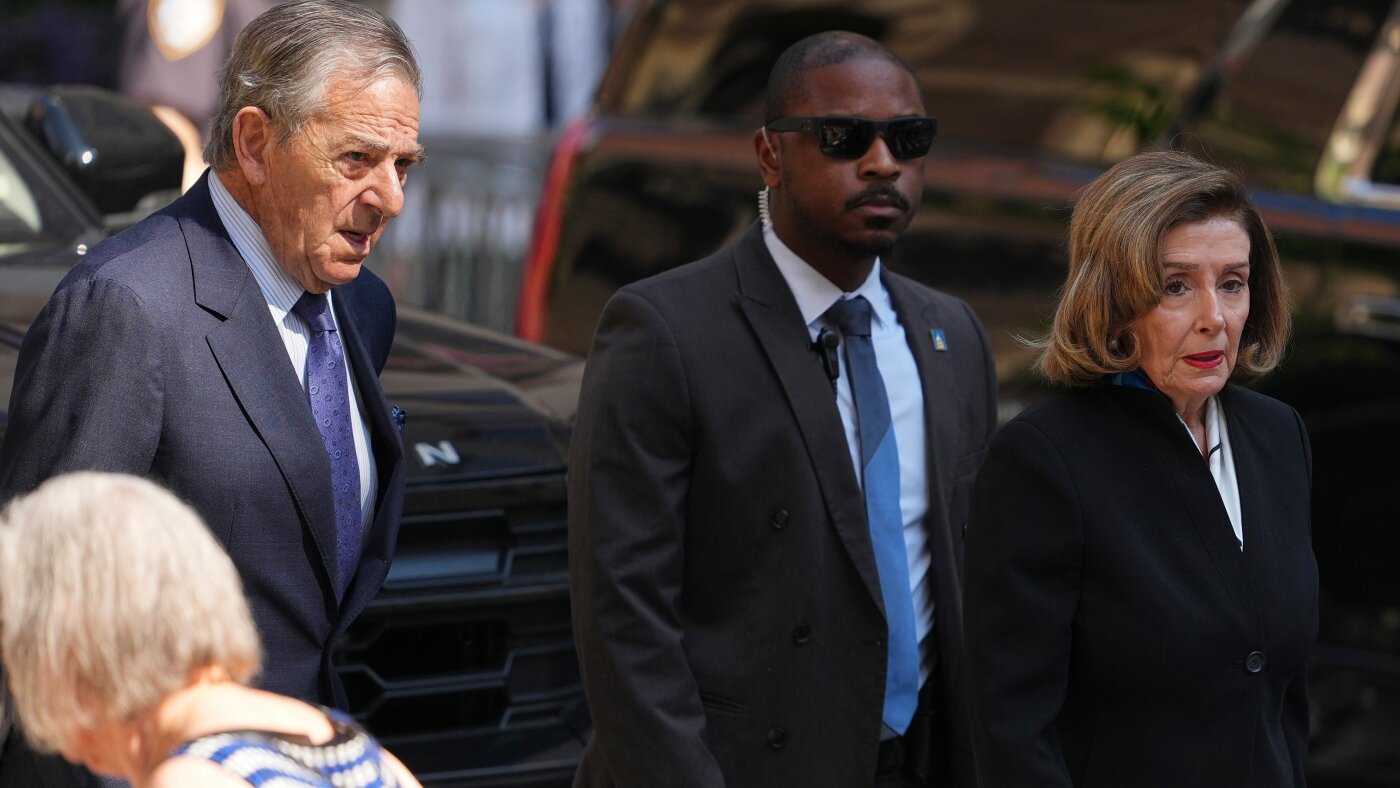
Paul Pelosi in hit-and-run in California, car left with major damage, authorities say

