Entertainment
Ryan Sickler transforms near-death experience into unlikely comedy mission

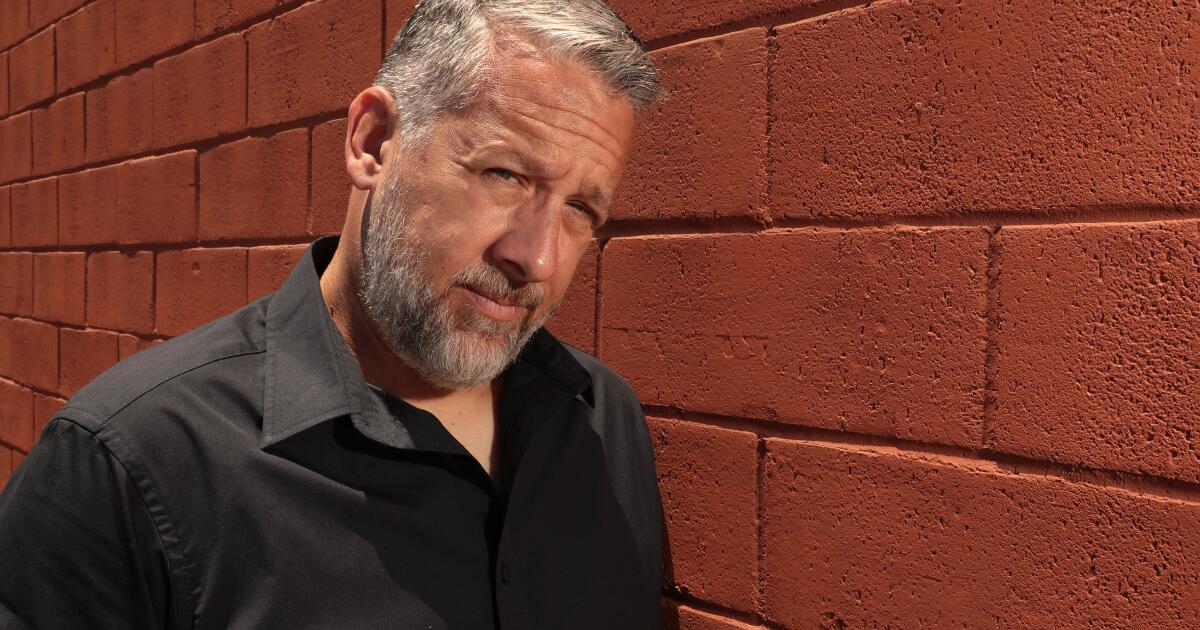
Ryan Sickler is used to asking the question that people are afraid to ask: “Is there anyone here who has ever actually died and come back and would be comfortable talking about it in front of all of us?”
It’s not your typical comedy show crowd work but it has profound results. During his special “Ryan Sickler: Live & Alive” released on YouTube in October, a woman in the audience talked about a near-death experience as a child where she rode her bicycle in front of a neighbor’s station wagon. But Sickler pointed out that this remarkable level of candor in the audience is something he continues to marvel about. In fact, he said they did two shows the night they taped his special and during the second show two people in the crowd said they had near-death experiences.
“When I ask the question, I know there’s someone in the crowd that’s like, ‘There’s nobody in here that’s died and come back,’” Sickler said. “So now they’re all very excited to listen too. Like, what happened to this lady, or what happened to this guy? You know, there’s been some wild ones, some real funny ones out there too.”
Given how many comedy specials are being released on various streaming platforms, he says that “we have lost the specialness of the special.” But Sickler said since coming so close to death and being able to talk about it with candor and relatability, he is still calling his latest self-produced YouTube special, special. It now has more than 1 million views on YouTube. Sickler has been on the comedy scene for more than 30 years and released his comedy special “Lefty’s Son” in 2023. He also hosts the “HoneyDew Podcast.” His comedy career has often incorporated his lived experience with a rare blood-clotting disease called Factor V Leiden that almost killed him.
But these days, he’s grateful to be alive, to have been able to wake up when it looked like he might not, to watch his daughter continue to grow up and the laughs along the way. Sickler has long been candid about his chronic health issues with his comedy but he has found particular meaning in doing crowd work when he performs, that talks about death and what it means to live.
The Times recently spoke with Sickler about his special and how he thinks about his sense of health, humor and mortality.
Ryan Sickler in the studio where he films the “HoneyDew Podcast.”
(Al Seib / For The Times)
What did you want to say this time around in your new special?
My first special was something that was a bit of a hybrid of stuff that had been out there and around, but I didn’t own it. It was out there on people’s platforms. They’re making the money off of it. And so I did a bit of, “Let me get this stuff on my channel where I can control it.” And then the other part of that special was becoming a new single dad, all those things this time, specifically, I really just wanted to talk about what had happened and the results after that. I follow these comedy accounts and in October, there were 31 stand-up specials that hit between Netflix, Hulu, YouTube. November was 30. This month was a little slow because the holidays, but it was still at 18 the last time I checked. So I don’t think there’s anything special about stand-up specials anymore. You’re in an environment now where there’s a stand-up special a day, people are doing that with podcasts. There’s so much content going on out there, and I feel like a lot of it is the same. So I this time wanted to just take something that happened very personal to me, this incident, and then tell the story, not only behind it, but what happened after and I was really proud of being able to just focus on that and make that into this special instead of just my observations on this or my thoughts on that. I’m a storyteller and I really think that’s what art is.
When did you realize you had the courage to write about this near–death experience?
I know I had the courage to write about it a long time ago. When I’m making people laugh at my father’s funeral and things like that, I knew I was comfortable being able to take on the material. But what I didn’t know was, could I make it funny? Could I make it relatable? Could I make this one thing that happened to this one person on this rock in outer space matter to anybody and make them care? Because it’s not like we all had this happen to us. This is just one thing that happened to this one dude. So that was really what I was more worried about, is like, can I get this message across and make it relatable, funny and entertaining at the same time? Which is why I threw in those really expensive light cues.
It can be very challenging to hear about these traumatic [near–death] experiences that people have had. How do you absorb that and not absorb it too much?
I’ve been doing this show for so long that it does start to wear on you a little bit hearing a lot of the trauma. So I created a new podcast a couple years ago called the Wayback, which is just fun, funny, nostalgia. So that also for me, was like, let’s not dig into the tears and let’s just laugh about growing up. So that was one way where I could still keep it in my lane and do my job, where I alleviate that a little bit. But the other thing, and I make fun of myself a little, is I’m like the paramedic at the party now. I’m the guy that’s like “You think that’s bad, wait until you hear this.” “This one guy …” “This one lady …” You know what I mean? So I’ve almost become sort of their voice, and I have absorbed it in a way that isn’t so negative, where I carry it home with me. I always forget the quote how it’s worded, but it’s something to the tune of, if we all stood in a circle and threw our problems in the middle, we’d all take our shit right back. It’s like you know what, that’s what you’re dealing with? I’m gonna go ahead and take mine.
How is hearing all these stories and connecting with the crowd and fans in this way [about near–death experiences] changed how you think about your own sense of mortality?
Even with my close call, like, that one angered me, because you start to think about things. You never know how you’re really going to go. You might have an idea if you’re getting older and cancer runs in your family, whatever, but the fact that you could go to a hospital for a simple surgery, they don’t listen to you, everything’s there in your paperwork. You’re your own advocate. You’re doing all the right stuff by yourself, and you’re among professionals, medical professionals, not Yahoos, and you can still have someone else make a mistake and your life is gone. That started me thinking a lot like, “Oh man, for no fault of my own, I could also be gone.” So I go day by day, and I try to be happy day by day. And I’m not going to lie, I also like to know I got a little something tomorrow too.

Do you think that incorporating death and near–death in your comedy helps people work through their own feelings about death and grief?
I only say yes to that because the amount of emails I get, the amount of feedback we get, the amount of guests that still continue to show up [to support] the Patreon. I’ve definitely found, I would say, a purpose in my people. If you’re someone saying you’re a jerk for laughing at this lady talking about cancer, we’re not laughing at her cancer. We’re laughing at something, some light that she found in the darkness of this and trying to have a moment here together, all about, “Hey, there’s some positive ways to look at things at your lowest.” So I know it’s helped people. I mean, we have, over the years, probably thousands of emails now. We have people telling us how much it’s helped. And I mean just through podcasting, I found out I have this blood disease. I was 42 at the time, and already been podcasting. There’s a lady I went to high school with. She’s like “Ryan, my son is 17. He started clotting.” I said, “Go ahead and check for this.” He listens to the podcast. This kid has it. I said, “Well, bad news. It’s genetic.” Now the whole family’s got to get tested. And if you have it from one parent, it’s not great, but having it from two is bad. The whole family gets tested. The parents have it. She’s got it from both her parents. So I can’t get over the fact that a woman I knew when we were children, 35 years later is like, “Hey, that thing you’re talking about on your podcast, my kids, my family, we all have it.” And then I’ve talked about another disease I also have, called Charcot-Marie-Tooth disease, which is CMT. And from bringing that up, people hit me up on that like “I have it, no one ever talks about that.”
What have you found to be one of the positives — besides surviving — of your near–death experience?
Gosh, so many. I have a child, so getting to see her grow and really taking care of my health and things. Not that I wasn’t before, but just I dove in even deeper. I went and got what’s called a gallery test for prescreening for cancer. I started doing all these blood works and like, “Let’s go find out everything you know, because I didn’t find out that I had this blood disease until I was 42 when I clotted.” I’m living my whole life, not even knowing I have this thing and and if I don’t clot, there are plenty of people out there that live to 100 years old and have it. It’s really made me appreciate life and trying to take things day by day. I also was living in a little single-dad pad at the time. We had no central air. We had tandem parking. We were above dumpsters. Our laundry was outside in a room with quarters. And when I got home — I’m still on a walker — and I was like, “What are we doing? We’re going to die without central air? Are we going to die with a bucket of quarters on the fridge? No more.” And so I moved my home, I moved my studio, I did all these things that are, like, the biggest thing you can do in life. We’re going to roll the dice, scared money don’t win, and we’re just going to go for it. Also, as a comedian and anybody in entertainment will tell you, a lot of times you work scared, you hold that money and you wait until the next thing comes. And also, as a single parent, you know we got to budget. And I was like, no more. We’re not going to go out and buy 10 Porsches. We’re going to be responsible. But I was on point with let’s go get a living will and trust. Let’s make sure we have that life insurance policy. Let’s make sure we have all the proper paperwork and stuff done before we do anything like go on a vacation, you know, let’s get this done now and get it done proper.
What do those conversations look like, if you have them at all, about encouraging your male friends to go to the doctor or encouraging them to take care of themselves, physically and emotionally?
I would say the conversations go something like this. My younger brother is like, “Hey, man, I just went in for a test, and they’re telling me I got to have an old school triple bypass,” and then that’s what we all get tested. “Hey guys, I found I got a blood disease.” “Oh man, we all better look into it now.” That’s usually how it goes. I don’t know many men who are proactive. There are a few of us these days. But it’s usually something horrible happens and then we’ll be proactive about everything else.
Do you have male fans who also say “I [saw] your special … I went to your show, and it made me go [to the doctor]”?
Yeah, but I’m saying, though, it still took them to come see a professional clown to get them to go to the damn doctor. I actually have been very good about going, because everyone in my family died. So I’ve been proactive in the sense that I go get two physicals a year. I’ve been doing that since my 20s. I always tell my doctor, if I can go buy expensive sushi, if I go buy weed, if I go buy all these things, I can put money into myself here and come see you a second time and pay for all that. So I do two physicals a year, and I’ve been doing that forever. But I’ve never done any sort of like gallery test. And now we’re in our 50s, so we got to go get the prostate and all that. That’s when you start hearing about that stuff. There’s a lot of ignorance that goes into it as well. I just had a guest here on the “HoneyDew” and said he didn’t go to a doctor or anything for over 20 years because he was just scared of what they were going to tell him. He was scared to get the bad news. You can kind of get the bad news and you could turn that into good news. It doesn’t need to be deadly news.
How do you know when you’ve been too open?
It usually tends to be a personal thing where someone’s like, “I don’t really appreciate you bringing that up.” So I don’t anymore. I’m always cognizant of [saying] like, “Hey, would it be cool if I talked about this or whatever?” I feel like the question you’re asking me would have been great for me just before I started, like, the “HoneyDew” and stuff because this is what I really want to talk about. Everyone wants to talk about the best and bring their best and I just really do want to hear about, you know, the trauma bond. I want to hear about the worst times in your life. I want to know because, honestly, that tells me so much more about you than you verbally talking about you. You know who you were in those moments, how you reacted, how you behaved, how you’ve adjusted. Those things really end up defining who you are, and that’s more what I want to know about. I don’t want to know your best polished version of yourself.



Film
Project Hail Mary
Director: Phil Lord, Christopher Miller
Pascal Pictures, General Admission, Lord Miller Productions
In Theaters 03.20.2026
The Oscars for the films of 2025 are this Sunday, and many of the races are tight. If I’m being honest, I’m struggling to care, in part because awards are a poor way to measure art. But mostly because Project Hail Mary is the first major studio release that’s a solid contender for Best Picture of 2026, and I’m far more stoked to see it again than I am to watch a three-hour ceremony.
Science teacher Ryland Grace (Ryan Gosling, Drive, Barbie) awakens alone aboard a spacecraft light-years from Earth with no memory of who he is or how he got there. As fragments of his past slowly return, he realizes he’s the sole survivor of a desperate mission to the Tau Ceti system, sent to find a way to stop a mysterious organism draining energy from the sun and threatening to wipe out life on Earth. Armed only with his scientific know-how, stubborn ingenuity and a growing understanding of the stakes, Grace races to solve an interstellar puzzle that could save humanity. Along the way, he discovers he isn’t quite as alone as he thought — forming an unlikely partnership with an alien visitor he nicknames Rocky (voiced and puppeteered by James Ortiz), whose own world is facing the same cosmic catastrophe. Together, the two forge an extraordinary friendship while tackling a problem that neither species could solve alone.
Project Hail Mary is an adaptation of the bestselling novel by Andy Weir, the author of The Martian, and it’s adapted by the same screenwriter for that film, Drew Goddard. As with The Martian, the script here stays remarkably faithful to the beloved source material, bringing a perfect mix of science, humor and heart. The shadow-drained cinematography by Greig Fraser (Dune, The Batman) is luminous and atmospheric. The Lego Movie directors Phil Lord and Christopher Miller, who were fired from their gig piloting Solo: A Star Wars Story, finally get the chance to prove that not only can they do live action just as well as animation, they belong among the stars. For a story that is so dependent on making hard science accessible and is predicated on the imminent destruction of the planet and the human race, Project Hail Mary manages to be a joyous crowd-pleaser that should find itself scoring with all audiences. It’s as if the cerebral majesty of 2001: A Space Odyssey were mixed with the warmth of a road trip buddy movie, and they sync together perfectly. Daniel Pemberton’s ethereal musical score is filled with such majesty that it would be worth the price of an IMAX ticket just to hear it on a great sound system, and even at 156 minutes, the pacing never lags.
Gosling is becoming one of Hollywood’s most consistently great actors, and he balances the comic and dramatic elements with equal aplomb. The presence of a practical effect for Rocky gives Gosling a stellar performer to play off of, and I’ll be very surprised if we see a more engaging character relationship all year. Sandra Hüller (Anatomy of a Fall, The Zone of Interest) brings both an icy aloofness and piercing sense of humanity to the role of Eva Stratt, a Dutch scientist who is in charge of the project, and she continues to blow me away with the depth that she brings to each performance.
Project Hail Mary isn’t just a great movie; it’s a cosmic journey of epic proportions, and it’s nothing short of a cinematic masterpiece. These may be lofty words, and I know that I run the risk of being told “you built it up too high for me,” but when a movie comes along that causes me to lose myself in an all encompassing experience – and I look at the silver through the eyes of a kid who is filled with wonder and has traveled to edges of existence and back again – I’m willing to take that risk. —Patrick Gibbs
Read more film reviews:
Good Luck, Have Fun, Don’t Die is a Timely Warning
Film Review: How to Make a Killing
Entertainment
Oscars host Conan O’Brien says ‘we will find the right tone’ for ceremony amid Iran war

The big question surrounding last year’s Academy Awards was whether the show would address the L.A. wildfires, which had rattled the city mere months prior.
This year, the elephant in the room is the ongoing Iran war, which like last year’s wildfires, puts a celebration like the Oscars in sharp relief. But for Conan O’Brien, balancing gravity and levity is part of his job description as host.
“My job is to always try and hit this very, very thin line between entertaining people and also acknowledging some of the realities,” O’Brien said during a Wednesday news conference with the Oscars creative team.
“It’s a dance that goes on up until the show begins,” the former talk show host said, adding that he and his team of writers are still revising material ahead of the show to ensure their content is as relevant as possible.
“Between us,” he said, referencing Oscars telecast executive producers Katy Mullan and Raj Kapoor, “we will find the right tone.”
O’Brien also during the news conference recalled Johnny Carson’s turn hosting the Oscars during the Iran hostage crisis, when 52 Americans, including diplomats and other personnel, were held hostage at the U.S. embassy in Tehran from 1979 to 1981. The comedian remembered the television host parodying ABC’s “Nightline” with his joke, “It’s day 444 of the Oscars.”
“It was such a funny, topical joke that touched on something everyone was thinking about, and at the same time, got a big laugh and was unifying,” O’Brien said. “That was meaningful to me.”
Kapoor said during the news conference that the production team is putting systems in place to alleviate attendees’ safety concerns amid the tense global situation and reported threats to California.
“Every year, we monitor what’s going on in the world,” the showrunner said, adding that the ceremony has the support of the FBI and LAPD. “This show has to run like clockwork.”
He added, “Everybody that is coming to this show, that is witnessing this show, that is even a fan of the show when they’re standing outside the barricades — we want everybody to feel safe and protected and welcome.”
As for the telecast’s creative direction, the team cited “human touch” as a unifying theme — a not-so-subtle slight to AI.
“We’re celebrating human touch, human connection and what I like to call actual intelligence, as opposed to artificial,” said music director Michael Bearden. “We want to get back to the communal … and so the music will reflect that.”
That spirit of celebration will be especially tangible in the “KPop Demon Hunters” performance, Kapoor said. That performance will be complemented by a “Sinners” moment featuring Miles Caton and Raphael Saadiq as well as guests Misty Copeland, Eric Gales, Buddy Guy, Brittany Howard, Christone “Kingfish” Ingram, Jayme Lawson, Li Jun Li, Bobby Rush, Shaboozey and Alice Smith.
“We have this lovely story celebrating Korean culture with authentic Korean drummers and singers and even choreography,” the producer said. “So again, we’ve expanded our reach, and we’re telling these global stories, celebrating international films that have had a global impact and doing things in a really different way.”
Mullan and Kapoor closed the news conference by teasing a pair of reunions featuring cast members from “Bridesmaids” and the Marvel Cinematic Universe. “Bridesmaids” alum Rose Byrne is nominated for a lead actress Oscar for her role in “If I Had Legs I’d Kick You,” which marked O’Brien’s dramatic acting debut. (If Byrne wins, he said, “half that Oscar’s mine.”)
“We’re gonna have superstars, superheroes, and there is also going to be an extraterrestrial on the stage, so you can figure that one out,” Mullan said.
The 2026 Oscars will air live Sunday on ABC, with streaming available on Hulu, YouTube TV, AT&T TV and FuboTV.

Reminders of Him, 2026.
Directed by Vanessa Caswill.
Starring Maika Monroe, Tyriq Withers, Rudy Pankow, Lainey Wilson, Lauren Graham, Jennifer Robertson, Zoe Kosovic, Monika Myers, Sindhyar Baloch, Bradley Whitford, Nicholas Duvernay, Jillian Walchuck, Hilary Jardine, Skye MacDonald, Rick Koy, Susan Serrao, Anne Hawthorne, Laird Reghenas, and Kevin Corey.
SYNOPSIS:
After prison, a woman attempts to reconnect with her young daughter but faces resistance from everyone except a bar owner with ties to her child. As they grow closer, she must confront her past mistakes to build a hopeful future.

Given that Maika Monroe’s just-released-from-incarceration Kenna immediately desecrates the gravesite of her love Scotty (which is unintentionally hilariously on the side of the road where a tragic car accident took his life) by stealing the wooden cross (with an inner voice muttering that he hated memorials anyway), tells another character she doesn’t like cats, and complains to someone else that all music is sad and that she doesn’t like it, it’s reasonable to get the impression that the latest adaptation from Colleen Hoover, Reminders of Him, is intentionally aiming for an unlikable lead. Nothing says “get the audience on the side of our protagonist” like all of the above.
The reality is that Maika Monroe is capable enough to inject a modicum of emotion and grounded sincerity even into a Colleen Hoover character, but that, directed by Vanessa Caswill (with Lauren Levine writing the screenplay alongside the author), these are all characters stuck reaching for depth far out of grasp in a hollow romance that is less about someone with a criminal record ingratiating themselves back into society after a seven-year vehicular manslaughter sentence and earning the trust of her dead boyfriend’s parents (Bradley Whitford and Lauren Graham), now the legal guardians of her five-year-old daughter, for visitation rights or anything that would force the novelist (this is her third book translated to screen in as many years) to write an actual character, and more a dull push-pull possible relationship with the former NFL star best friend picking up the pieces, living next door to those grandparents, and assisting taking care of the young girl.

Asking the question “what would it be like to fuck your dead boyfriend’s best friend” should be a hell of a lot more morally thorny and emotionally charged than this. Rather than engage with that, the filmmakers need to dedicate 70 minutes to an outrageously contrived setup in which Kenna and that best friend, Ledger (Tyriq Withers, also visibly trying to express some personality and humanity, but is left hanging by the script), have never met before. Yes, you read that right (and yes, those are the real ridiculous names of these characters, although the latter is presumably intended to honor the late great Heath Ledger, who once starred in romantic dramas and made them a hell of a lot more watchable).
Despite being best friends, Ledger not only never met his best friend’s girlfriend, but he apparently had never even seen a picture of her until her mugshot (which he conveniently forgets, never mind that Maika Monroe looks mostly the same seven years removed) following the car accident on Scotty’s (Rudy Pankow) birthday, which he bailed on for fitness exams in preparation for the NFL draft. In the present, he no longer plays, having “blown out a shoulder”, yet appears physically fine and in no pain during the numerous shirtless scenes and a couple of sexual ones. Before the film gets there, he is skeptical of going anywhere near Kenna once he discovers her identity. Of course, that doesn’t last long because these two hot leads are gravitating toward spending time together.

Much of this is, to put it bluntly, airless and lifeless despite an ensemble trying their best to elevate the proceedings, with what feels like significant chunks of the novel cut out; there is a single flashback to Kenna’s time in prison – being taken under the wing of a mentor of sorts on how to survive – and Scotty is allocated such a minimal screen time that he hardly feels like a character and is never allowed to feel like a presence looming over the story and the choices these characters make. For some reason, there is also a friend Kenna makes here with Down syndrome (Monika Myers) who seems to exist as a vessel for comedic relief, which might have sat better if, once again, there were actually a damn character behind that.
One waits and waits for the inevitable moment where, after snowcone dates and playful arguments about music, there is a release of sexual tension. However, the drama resulting from this is childish, dumb, and resolved about three scenes later. You won’t need a reminder that Reminders of Him, like all Colleen Hoover adaptations thus far, is bad, once again searching for a romantic pulse and eroticism at the expense of characters who feel like actual people or anything that gives weight to the attempts at thorniness.
Flickering Myth Rating – Film: ★ ★ / Movie: ★ ★
Robert Kojder
https://www.youtube.com/watch?v=embed/playlist

Metro Detroit’s whirlwind weather this week continues with sun on Thursday, snow chances Friday

The Navy Jet Generations of San Francisco Kids Played on | KQED

Dallas Police Shooting: Armed man killed after barricading himself at Children’s Health hospital

Miami Springs police crack down on those illegally parking in disabled spots

Boston firefighter, National Guard member reportedly injured in strike that killed 6 US soldiers – The Boston Globe

Florida High School Football Rankings: Top 25 teams – Oct. 21

Cleary's 21 help Le Moyne down Central Connecticut State 69-64 in OT

How old is Bo Nix? What to know about Oregon quarterback ahead of 2024 NFL Draft

99th annual Pony Swim held in Virginia

Indiana Members Credit Union announced as new anchor tenant at Bottleworks District
ICE Lawyer Who Told Judge She Was Overwhelmed Is Running for Congress

Dr Oz helps older woman who collapsed during Trump’s speech at Kentucky event

The Ring: Is the EU a spectator or player as war grips Middle East?

The government is investigating new claims that DOGE misused Social Security data

Reporter’s Notebook: Trump’s SAVE Act ultimatum runs into Senate reality
-

 Massachusetts1 week ago
Massachusetts man awaits word from family in Iran after attacks
-

 Detroit, MI6 days ago
U.S. Postal Service could run out of money within a year
-

 Miami, FL1 week ago
City of Miami celebrates reopening of Flagler Street as part of beautification project
-

 Pennsylvania7 days ago
Pa. man found guilty of raping teen girl who he took to Mexico
-

 Sports1 week ago
Keith Olbermann under fire for calling Lou Holtz a ‘scumbag’ after legendary coach’s death
-

 Michigan3 days ago
Operation BBQ Relief helping with Southwest Michigan tornado recovery
-

 Culture1 week ago
Try This Quiz on the Real Locations in These Magical and Mysterious Novels
-

 Virginia1 week ago
Giants will hold 2026 training camp in West Virginia