
Connect with us

Entertainment

Review: All 15 of the Oscar-nominated short films, reviewed

Published

on

Review: All 15 of the Oscar-nominated short films, reviewed

The nominated Oscar shorts come in three categories — and a lot of subjects, styles and temperaments. It’s further proof that an award dictated by length needn’t be bound by anything else.

In the live-action category, a mixed bag of approaches — some inspired by classic literature — are burnished by inspired performances. Lee Knight’s “A Friend of Dorothy” may be a tad on the nose about the cultural and emotional impact of a lonely London widow on a closeted teenaged boy. But leads Miriam Margolyes and Alistair Nwachukwu practically shimmer with humor and warmth. “Jane Austen’s Period Drama,” a loving tweak of the writer’s oeuvre from Steve Pinder and Julia Aks (who also stars), is essentially a one-joke calling card to make feature comedies and it should do the job. Its cast is exactly the sprightly ensemble needed to land its what-if laughs.

Two others just miss the mark in terms of bringing their tensions to powerful resolutions yet benefit from who the camera adores. Meyer Levinson-Blount’s “Butcher’s Stain,” centered on a flimsy accusation against a friendly Palestinian butcher in an Israeli market, undercuts its gripping story with lackadaisical filmmaking and an unnecessary subplot, but lead Omar Sameer is commanding. The black-and-white future shock “Two People Exchanging Saliva,” directed by Natalie Musteata and Alexandre Singh, is an uneven Euro-art bath of unrealized intimacy and casual violence — kissing is punishable by death, slapping is currency — but is given exquisite tautness by the elegant, unrequited swooniness of stars Zar Amir and Luana Bajrami.

A scene from “Jane Austen’s Period Drama,” nominated in the live-action short category.

(Roadside Attractions)

Advertisement

Then there’s my favorite, Sam A. Davis’ likely winner “The Singers,” from Ivan Turgenev’s short story, which pays off handsomely in bites of soulful warbling that briefly turn a barroom’s den of anesthesia into a temple of feeling.

Most of this year’s documentary nominees deal with the grimmest of tragedies, as in “All the Empty Rooms” and “Children No More: Were and Are Gone,” which address the remembrance of children brutally killed. The former film, from Joshua Seftel, follows CBS correspondent Steve Hartman and photographer Lou Bopp on an essay project into the bedrooms of kids gunned down in school shootings, their private worlds heartbreakingly preserved by their families. The latter short, directed by Hilla Medalia, witnesses Tel Aviv’s silent vigils for Gaza’s children, protests marked by posters with beaming faces, and sometimes met with open scorn. These are dutiful, sobering acts of mourning — Seftel’s is the probable awardee. You may wish they were more than that, however, considering the issues (guns, war, political intransigence) that created the devastation.

Combat is what drove award-winning photojournalist Brent Renaud, killed in Ukraine in 2022. But his brother Craig’s memorializing of him, “Armed Only With a Camera,” is oddly uninvolving, more an excerpted flipbook of Brent’s far-flung assignments than a meaningful portrait of excelling at a dangerous job. A more affecting real-world dispatch (and my pick, if I could vote) is “The Devil Is Busy,” directed by Christalyn Hampton and dual nominee Geeta Gandbhir, also up for the feature “The Perfect Neighbor.” It observes a day in the operation of a carefully guarded, female-run Georgia abortion clinic as if it were a newly medieval world’s last chance healthcare outpost, getting by on grit, compassion and prayer. You certainly won’t forget security head Tracii, the clinic’s heavyhearted knight and guide.

Three donkeys stand with an observatory in the distance.

A scene from “Perfectly a Strangeness,” nominated in the documentary short category.

(Roadside Attractions)

Advertisement

Your chaser is Alison McAlpine’s appealing, aptly titled “Perfectly a Strangeness,” sans humans, but starring three donkeys in an unnamed desert happening upon a cluster of hilltop observatories. The whir of science meets the wonder of nature and this charming, gorgeously shot ode to discovery (both on Earth and out there) makes one hope the motion picture academy sees fit to recognize more imaginative nonfiction works going forward.

Animation, of course, thrives on the thrill of conjured worlds, like the one in Konstantin Bronzit’s wordless (but not soundless) desert island farce “The Three Sisters.” It owes nothing to Chekhov — though there are seagulls — but much to a classically Russian sense of humor and a Chaplinesque ingenuity. Elsewhere, you can watch the overly cute Christian homily “Forevergreen,” from Nathan Engelhardt and Jeremy Spears, about a nurturing tree, a restless bear and the dangerous allure of potato chips. The message gets muddled but this eco-conscious journey is charming.

It’s tough to predict a winner when the entrants are this strong, but John Kelly’s “Retirement Plan” feasts on wry relatability, as Domhnall Gleeson narrates a paunchy middle-aged man’s ambitious post-career goals, while the cascade of deadpan funny, thickly-lined and mundanely hued images stress a more poignant, finite reality. In its all-too-human view of life, this is, entertainingly, whatever the opposite of a cloying graduation speech is.

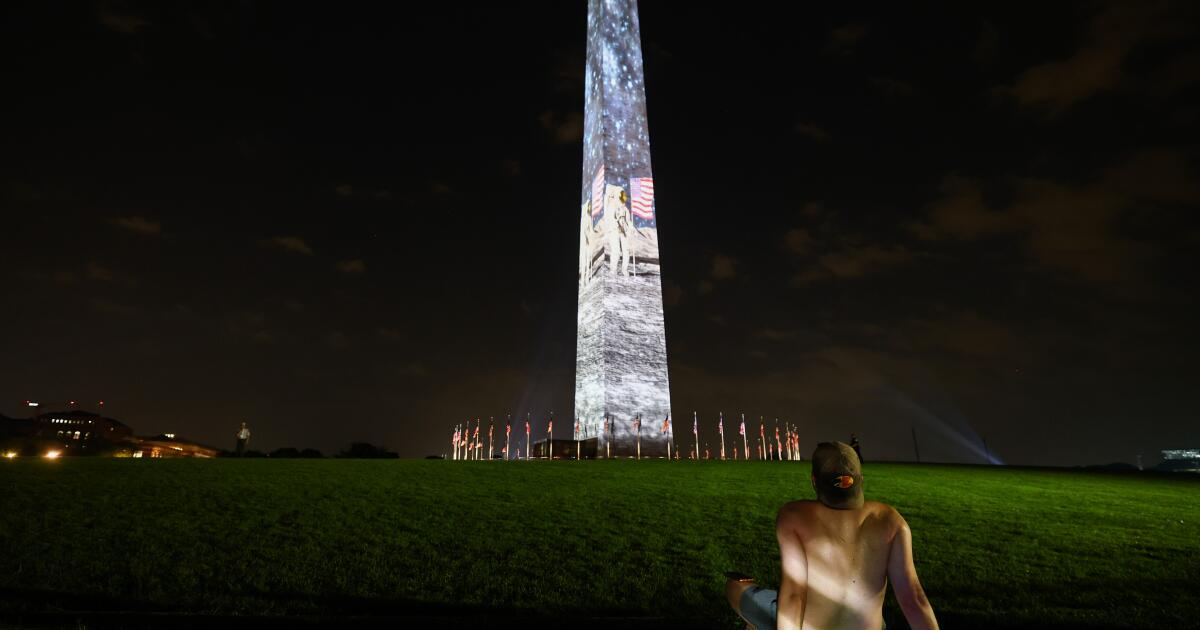
An older man lays shirtless on grass.

A scene from “Retirement Plan,” nominated in the animated short category.

(Roadside Attractions)

Advertisement

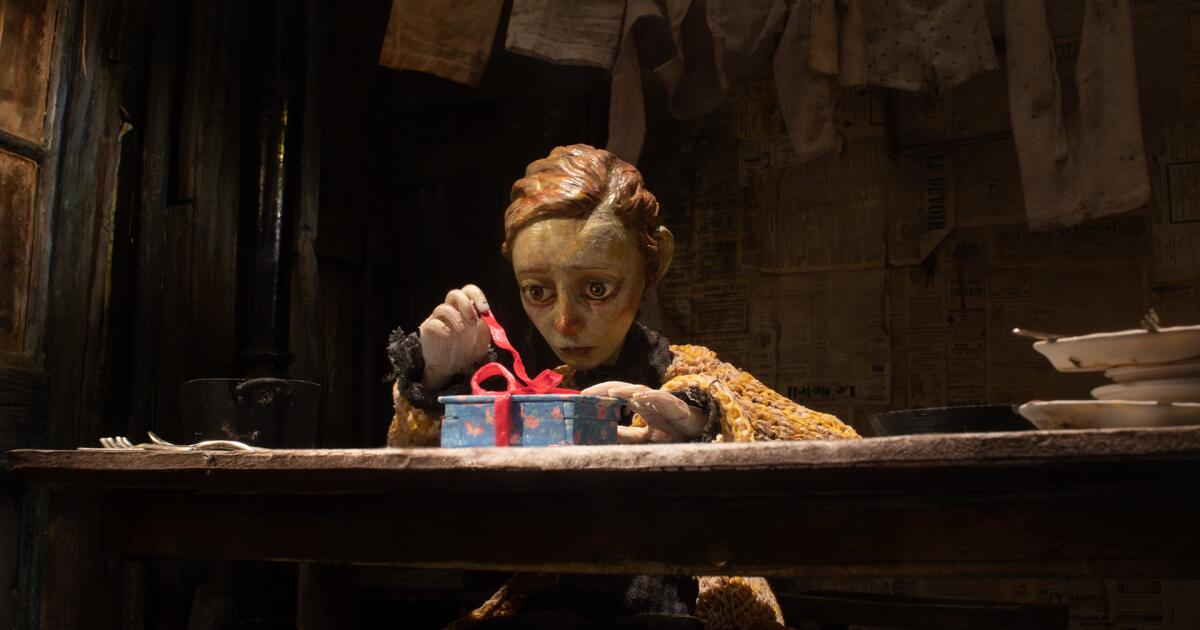
The spindly aged-doll puppetry in the stop-motion gem “The Girl Who Cried Pearls” marks a sly fable of need, greed and destiny, centered on a wealthy grandfather’s Dickensian fashioning of his poverty-stricken childhood in early 19th century Montreal. Filmmakers Chris Lavis and Maciek Szczerbowski find an enchanting balance between storybook allure and adult trickery. Maybe this one steals it?

Whichever the case, the animation that moved me the most is “Butterfly,” from Florence Miailhe, imagining the last, memory-laden swim of Jewish French-Algerian athlete Alfred Nakache, who competed in the Olympics before and after the Holocaust. In the cocooning fluidity of an ocean-borne day, rendered with thick-brushed painterliness and splashes of sound, we travel across flashes of community, injustice, achievement, love and despair. The visual, thematic constant, though, is water as a haven and a poetic life force that feeds renewal.

‘2026 Oscar Nominated Short Films’

Not rated

Advertisement

Running time: Animation program: 1 hour, 19 minutes; live-action program: 1 hour, 53 minutes; documentary program: 2 hours, 33 minutes

Playing: Opens Friday, Feb. 20 in limited release

Advertisement

Entertainment

Who is on Elle Woods’ playlist? ’90s bands like No Doubt and Sleater-Kinney

Published

on

Who is on Elle Woods’ playlist? ’90s bands like No Doubt and Sleater-Kinney
p]:text-cms-story-body-color-text clearfix”>

“I’ve talked about rain on this show more than I have in my entire life,” Kittrell says.

It was a constant consideration, both on set and in the writers room. Weather became a way to distinguish Elle from those around her in Seattle. The locals never carry umbrellas; Elle shows up with a pink one.

“We had a writer from Seattle who always said the city gets a bad rap because of the rain,” Kittrell says. “But the rain is what makes it beautiful — it makes Seattle green.”

Advertisement

Elle entering the halls of Rainier West High School with her pink umbrella.

(Kimberley French / Prime Video)

That philosophy stayed with the writers, later showing up in a line Miles (Jacob Moskovitz), Elle’s crush, says to her, and ultimately leading them to Garbage’s “Only Happy When It Rains” as the show’s theme. “We were like, of course,” says Kittrell. “This is what we’ve been talking about the entire time.”

The song was originally meant to end the pilot. “Then we decided we should just be hearing it in every single episode,” says Neustadter. (The pilot instead uses Radiohead’s “Creep,” which also bookends the series.) The main title sequence, an animated “saga sell” from the studio Shine, tells the story of Elle’s move from Bel-Air to Seattle.

Advertisement

“We’re constantly reminding the audience of the contrast between Elle’s essence and the world she’s now in,” Neustadter adds. “There’s an optimism to ‘Only Happy When It Rains’ that feels very Elle Woods. And the irony of it is so delightful.”

Continue Reading

Movie Reviews

‘Baby Do Die Do’ movie review: In the mood for Mumbai

Published

on

‘Baby Do Die Do’ movie review: In the mood for Mumbai

Monsoon sets in Mumbai with a bang. Rain drops ram the streets in desperation. The relief easily drifts into panic. Sea of umbrellas everywhere but one amongst them at a local station stands out. Wading through the downpour, its red colour drips with a warning. The person holding it exhibits a stone-cold demeanour, as she looks for an old man in the bustling chaos of the train at rush hour. She moves through the crowd inconspicuously and readies her umbrella, which secretly hides a gun as a trigger appears on its handle. She takes a muffled shot and disappears into the ensuing chaos.

The opening scene in Huma Qureshi’s Baby Do Die Do bears an uncanny resemblance to the real horrific killing of a young man in the local train recently, which laid bare the brutality that some people in the city carry within. An argument can escalate soon into homicide and there would be no one coming to rescue. Baby Karmarkar (Qureshi) carries a similar violence in her heart, that rises from the clutches of a city that failed her when she witnessed the death of her twin sister as a child. The city has turned her into a sociopath

The film however, doesn’t always treat the violence with gravity. Its tone is not always sharp and cynical even as it aims to critique the cornerstones of wealth and power on occasions by establishing the link between the builder lobby and mafia. Director Nachiket Samant largely uses the noir as part of the design element, lending a pulpy, comic-bookish layer to the narrative while the thematic undercurrents don’t really get time to marinate. As a result, the rainy undercurrents, moody lighting and dark humour gets dissolved just into style rather than adding complexity to the narrative.

Baby Do Die Do (Hindi)

Director: Nachiket Samant

Duration: 125 minutes

Advertisement

Cast: Huma Qureshi, Chunky Panday, Sikandar Kher, Seema Pahwa, Rachit Singh, Marudhar Shekhawat, Arun Kushwah

Synopsis: A deaf and mute assassin gets softened by love as she vows to take revenge from the man who murdered her twin sister

That being said, there’s more heart in Baby Do Die Do than the combined range of some of the other monotonous films that have come out in recent times. Its disregard for template is quite reassuring as it also aims to subvert genre cliches with a touch of quirk. The film doesn’t forget to have fun while juggling along with the grimness, as seen in an inventive item song which is inserted when Manu (a brilliant Marudhar Shekhawat), an associate of Baby, is tasked with an assassination that takes him to a gay pub in Andheri East. Saqib Saleem (also producer) makes a guest appearance as a sexy, ripped dancer, grooving seductively to a song with the hook line ‘Alpha Q’ repeated all along, creating an edgy innuendo. The gaze is empowering, building a sense of liberation to Saqib’s character, who controls his body and its movements. Rather than being an object of desire, he becomes its subject, withholding the capacity to flirt with anyone he wants, without crossing a boundary. Even the onlookers carry a sense of respect in their eyes as the camera doesn’t become a medium to represent lecherous gazes.

A still from the film

A still from the film
| Photo Credit:
Saleem Siblings/Youtube

All of this inherent loudness compliments the muted worries of Baby, who cannot hear and speak. It is delightful to see her first tryst with love unfold like a silent film as Siddhu (Rachit Singh), a likeable Sikh music teacher is smitten by her beauty. Their love story starts in a bus and later blooms in a cramped apartment, as there’s again a gender reversal at play, with Baby incorporating toughness as Siddhu stays dipped in vulnerabilities. There’s still a lot more to them that remains unexplored as the film has to fixate on the central conflict of Baby’s vengeance, which remains its weakest and most predictable link.

It is only when it digresses from the way that the film shows beguiling promise. Whether it is in smaller sketchy moments like when a character with vitiligo is called black and white in a humourous scene or the dwarf gangster Lucky (Arun Kushwah) immortalised by his brother, Zafar Katkar (Sikandar Kher) by putting his name on the tallest building in the city. The film also allows these dreaded gangster’s tiny moments to breathe, reflecting a common link between all the characters, born and raised on the same soil of Mumbai. Zafar gets into reverie during a violent hold up in a shanty when the distinct smell in the air takes him back to his childhood. He sniffs a blanket and talks of living in the underbellies and wanting to escape that netherworld as others seem to sympathise to his sentiments. All of them become Mumbaikars in that one moment before mayhem, disarmed of other identities when put in a space of mutual co-existence, rooting for the common concerns of roti, kapda and makaan. It is also short-lived for time has shaped each of them differently and they must react to the version that the city has forced them to be in the present.

Huma Qureshi and Chunky Panday in the film

Huma Qureshi and Chunky Panday in the film
| Photo Credit:
Saleem Siblings/Youtube

Kher inhabits this dichotomy with urgency, lending an astounding tragic-comic quality to his screen presence. He is a treat to watch but the screenplay just stops short of taking him to murkier territories while resorting to familiar, convenient turns to reach the resolution. Even Huma remains impressive as she stays silent for the most part and uses her face to translate Baby’s emotional turmoil. The real surprise in the mix comes from the restrained act put on by Chunky Panday, who represents the helpless middle-class Mumbaikar with remarkable honesty.

Advertisement

These are all characters that become much more superior than the immediate storyline which Baby Do Die Do struggles to run along with. Their dreams feel palpable, their anger unresolvable and their beauty merging with the soul of the city. On occasions, their collective aspirations represent the charms of Bombay films of the 70s and 80s by Sai Paranjpye and Basu Chatterjee. Even the twin sisters retribution tale seems to be a reworked ode to older Hindi movies. It is an aesthetic that is hurriedly disappearing from other contemporary city films.

So, although Baby Do Die Do imagines Mumbai as a cyberpunk landscape, it actually prospers while recollecting the unassuming everyday pulse of the metropolis, whether it is in the tale of a shoe polisher, who suffocated to his death on an overcrowded bridge, a peon in the High Court, who got killed by mistake and the mother whose sanity was taken away by the city’s violence. Then, in the compounding mess created by the bigger folks Murjhani and Bhambhani, it is important, like Baby, to be zara hatke, zara bachke. It is after all, Bambai meri jaan.

Baby Do Die Do is currently running in theatres

Published – July 03, 2026 03:10 pm IST

Advertisement
Continue Reading

Entertainment

California designates Bruce Lee Day, first such honor for a Chinese American

Published

on

California designates Bruce Lee Day, first such honor for a Chinese American

Cut to a seedy alley behind a Chinese restaurant in Rome: A dozen mobsters menace a slight young man who suddenly pulls out a pair of nunchucks. He swings the traditional stick-and-chain weapons and makes quick work of his enemies, who fall one by one, groaning in pain.

The comedic, legendary action scene is from the 1972 film “The Way of the Dragon,” written, directed and starring Bruce Lee. The martial arts star was a trailblazer, allowing Asian Americans to see themselves represented in a strong, positive light on-screen.

And now he has secured a place in California history, becoming the first Chinese American in state history to have a day designated in his honor.

Lee was born in 1940 in San Francisco. His mother was of European descent and his father was a Cantonese opera star who was on tour in the city, affording his son birthright citizenship.

Lee grew up in Hong Kong, where he followed his father’s path as a performer, acting in more than a dozen films as a child and studying the close-quarters southern Chinese martial art Wing Chun.

Advertisement

On May 17, 1959, an 18-year-old Lee returned to San Francisco and eventually made his way to Hollywood. He went on to influence an industry that was at the time bereft of Asian American talent, and helped to popularize the genre of martial arts films and ignite Western interest in Hong Kong action cinema.

In recognition of his contributions, state Assemblymember Matt Haney (D-San Francisco) introduced a bill designating May 17 as “Bruce Lee Day” in California. The bill, signed into law Tuesday by Gov. Gavin Newsom, encourages schools and communities to honor Lee’s life and cultural impact.

Haney has described Lee as a “symbol of pride, resilience and possibility for generations who rarely saw themselves reflected with strength and dignity.”

Lee, who saw himself not only as an actor but also as a poet and philosopher, encountered repeated barriers. Up for the main role in the 1970s television series “Kung Fu,” for example, he was rejected in favor of white actor David Carradine.

In 2020, filmmaker Bao Nguyen sought to show how Lee dispelled anti-Asian sentiment and long-held stereotypes of emasculated Asian men in his ESPN documentary “Be Water.”

Advertisement

“The Asian male was the face of the enemy to many Americans,” Nguyen told The Times in 2020. “It was this vicious cycle of society reflecting media and culture, and media and culture reflecting society. There had to be some kind of intervention there and Bruce, in a way, was that intervention. He was the hero that we hadn’t seen before.”

Lee learned much about the systemic oppression that Black Americans faced from his first student, Jesse Glover, who had been a victim of police brutality.

And scholars have pointed out that, although his films had far-from-perfect politics, they touched on themes of fighting oppression. The 1971 movie “The Big Boss” showed Lee battling alongside laborers. “Fist of Fury” saw him opposing Japanese colonialism and discrimination.

Lee died young in 1973, at age 32 — before he was able to witness the full extent of his stardom. He died just one month before the release of “Enter the Dragon,” which was a box-office sensation and is considered a masterpiece of martial arts filmmaking.

Advertisement
Continue Reading
Advertisement

Trending
