


Sign up for the Today newsletter
Get everything you need to know to start your day, delivered right to your inbox every morning.


KTLA-owner Nexstar Media Group said it has closed its deal to acquire rival Tegna’s TV stations, despite opposition from eight state attorneys general who filed a lawsuit to block the merger.
The acquisition was approved by the Federal Communications Commission’s Media Bureau and the Justice Department, Irving, Texas-based Nexstar said Thursday.
“This transaction is essential to sustaining strong local journalism in the communities we serve,” Nexstar founder and Chief Executive Perry Sook said in a statement. “By bringing these two outstanding companies together, Nexstar will be a stronger, more dynamic enterprise — better positioned to deliver exceptional journalism and local programming with enhanced assets, capabilities and talent.”
Sook also mentioned President Trump and FCC Chairman Brendan Carr by name in the statement, saying the company was “grateful” they recognized the “dynamic forces shaping the media landscape” and allowed the transaction to move forward. Trump had supported the deal.
The surprise announcement came only a day after eight state attorneys general, including California’s Rob Bonta, sued to stop the deal, arguing it would give Nexstar too much control of local TV stations. At the time, Bonta said the combination would cause “irreparable harm to local news and consumers who rely on their reporting as a critical source of information.”
Nexstar is the largest TV station owner in the U.S., with 164 outlets including KTLA in Los Angeles. If the merger with Tegna succeeds, Nexstar would have 265 TV stations reaching 80% of the U.S. and multiple outlets in a number of markets.
The suit also claimed it would give the combined company too much leverage in negotiating fees from pay-TV providers that carry their stations, which could raise costs for consumers.
The plaintiffs in the suit also include state attorneys general in Colorado, Connecticut, Illinois, New York, North Carolina, Oregon and Virginia.
FCC Commissioner Anna Gomez said the merger violates the existing national ownership cap of 39% under federal law and said the acquisition did not receive a vote before the entire commission. The FCC approved this deal with waivers, meaning the company can operate in violation of that ownership cap.
“A transaction of this magnitude, which includes new and novel issues before the FCC, demands open deliberation before the full Commission, not a quiet sign-off meant to avoid public scrutiny,” Gomez said in a statement. “Given the increasingly alarming pace of reckless media consolidation, the American public deserves to know how and why this decision was made.”
The FCC did not respond to an immediate request for comment.
Times staff writers Stephen Battaglio and Meg James contributed to this report.


Seven-time Oscar nominee Richard Burton continues to have an intriguing afterlife, four decades following his death. At this year’s BAFTA awards, a movie about his early life, Mr. Burton, earned a nomination for best British Film. Mr. Burton, directed by Marc Evans, was also one of the audience favorite films at January’s Palm Springs International Film Festival. It opens in theaters this week and, aided by a strong cast, should appeal even to audiences who have fuzzy recollections of the once notorious actor.
The film begins with a quotation from Elizabeth Taylor (who married Burton twice after a scandalous, heavily publicized affair that began during the shooting of Cleopatra in 1962). In it, Taylor states that Richard never would have found fame and fortune without the efforts of his adoptive father, Philip Burton (superbly played by Toby Jones in the film). Richard (Harry Lawtey of Industry) was actually born Richard Jenkins, the son of a Welsh miner who abandoned the family after the death of Richard’s mother. Richard was then raised by his older sister and her husband, but his talent was spotted by his teacher, Philip Burton, who recognized the young man’s appreciation of literature and drama.
Mr. Burton
The Bottom Line An incisive origin story.
Philip Burton was himself an aspiring writer who penned some dramas for the BBC and had a number of contacts in the theater. But the film suggests that he felt disappointed by his progress and may have compensated in part by playing a mentorship role to Richard. Whether he also felt a physical attraction to young Richard is treated subtly and never definitively answered in the film.
Opening scenes contrast the comfortable but modest living conditions of Philip, who resides in a boarding house owned and overseen by a sympathetic landlady (trenchantly played by Lesley Manville), and the tension in Richard’s household. His brother-in-law demands that Richard drop out of school to contribute to the family finances; the boy resists following his father into the mines but gets a job at a clothing store instead.
Eventually Burton comes up with the idea that Richard can move into the boarding house and return to school, but this may require Burton adopting Richard as his son. Richard is comfortable with this arrangement, and Philip suggests that Richard may have an opportunity for a fellowship to study acting at Oxford. But when Richard’s father and fellow students suggest that Philip may have something more than a paternal interest in the handsome young aspiring actor, Richard flees in terror.
It is to the film’s credit that it refuses to come to any definitive conclusion about Philip’s interest in Richard. There was never anything overtly untoward about their close bond, and until the end of his life, Richard continued to express gratitude for Philip Burton’s mentorship. Yet it may be significant that we never see any hint of Philip’s romantic or sexual interest in women. Richard did leave Burton’s household for several years, but when he had his breakthrough role in Stratford in 1951, portraying Prince Hal in Shakespeare’s Henry IV plays, Philip returned and (at least in this telling) helped Richard to a triumphant opening night.
Richard Burton quickly moved on from there. He earned his first Oscar nomination in 1952 for My Cousin Rachel, and in 1954, he starred in the first Cinemascope epic, The Robe. (Other memorable roles included Becket and Who’s Afraid of Virginia Woolf?, his finest collaboration with Taylor.) Burton also continued acting in theater, and the 1964 production of Hamlet, in which he starred under the direction of John Gielgud, remains perhaps the most phenomenally successful production of the play in modern theatrical history.
Since unknown backstories behind startling successes always compel, Mr. Burton has a lot going for it. Lawtey doesn’t quite match Burton’s thrilling vocal delivery (who could?), but he convinces us of the young actor’s talent and potential instability. But it is really Jones, in one of the finest performances of his long career, who holds our attention throughout the movie. The subject of mentorship is not treated frequently onscreen, but Mr. Burton may be remembered as one of the definitive explorations of the theme. All the technical credits help to ground the film — cinematography by Stuart Biddlecombe is especially striking — but it is the performances that truly mesmerize.

Movie Reviews
At the start of “Project Hail Mary,” Ryan Gosling wakes up aboard a spaceship bound for parts unknown, with no memory of how he got there. After discerning that he’s traveled beyond the confines of our solar system and all his shipmates are dead, he breaks into the ship’s ample supply of vodka and drinks himself into a stupor.
Sounds like a laugh riot, right?
In the hands of co-directors Phil Lord and Christopher Miller, it is. “Project Hail Mary” is the type of movie that theaters have been lacking for quite some time: A heady sci-fi saga and an irreverent buddy comedy, stuffed with hijinks that keep the film moving at the speed of light. (Until it doesn’t, anyway. More on that later.)
Through a series of flashbacks, we learn that Gosling’s amnesiac astronaut is a middle school science teacher named Ryland Grace, who stepped away from being a top-level biologist after publishing a paper that made him a laughingstock in the scientific community. His paper’s assertions suddenly seem more credible, however, when microscopic alien organisms known as Astrophage are discovered feeding (and breeding) off the sun’s energy, plunging the Earth into an extinction-level crisis.
The full scope of how Grace ended up alone in deep space is slowly revealed throughout the film, but the why is that Astrophage has begun dimming every nearby star except for one: Tau Ceti, a real star approximately 12 light years away from Earth.
Lord and Miller adapted “Project Hail Mary” from the novel of the same name by “The Martian” author Andy Weir, and it shows. Much like Matt Damon’s stranded astronaut Mark Watney, Gosling’s Grace keeps us entertained via self-shot video updates being sent to no one, wryly narrating both his occasional moments of brilliance and his near-constant self-doubt in being chosen as humanity’s last hope.

“Project Hail Mary” really takes off when Grace discovers he’s not the only scientist orbiting Tau Ceti in search of answers. Also on a mission to save his planet is a pint-sized, faceless alien who resembles a many-legged, anthropomorphic Stonehenge. After making contact and rigging up a crude translation device, Grace and the alien (dubbed “Rocky”) settle into a buddy comedy rhythm as they work together to save their respective species.
Rocky is, in a word, adorable. A mix of practical and digital effects, the creature, voiced by puppeteer James Ortiz, would fit right in with Jim Henson’s creations. When Rocky decides to move into Grace’s ship — a feat made possible by what is effectively a temperature-controlled hamster ball — he crashes around the ship like E.T. hunting for Reese’s Pieces. (An earlier homage to “Close Encounters of the Third Kind” reinforces Spielberg’s influence on the story.)
Lord and Miller — the duo behind “The Lego Movie,” “Spider-Man: Into the Spider-Verse,” and the “21 Jump Street” remake — are some of the most naturally funny filmmakers currently working. Where Ridley Scott’s “The Martian” is a sci-fi drama with occasional moments of levity, “Project Hail Mary” is more like an intergalactic “The Odd Couple,” or “Planes, Trains and Automobiles” on a cosmic scale.
That tone is perfect for Gosling, who cements his status here as one of Hollywood’s most versatile leading men. Even with his movie-star looks, he’s believable as a scientist who refuses to believe in himself. It’s a twitchy, scream-filled performance that calls to mind his role in “The Nice Guys,” one of the most undersung comedies of the past decade.

Rocky isn’t Grace’s only comic foil, either. Back on flashback Earth, the stone-faced Eva Stratt (Sandra Hüller, “Anatomy of a Fall”), who recruits Grace for the Hail Mary project, stoically deals with his low self-esteem and regular freakouts, as does Carl (Lionel Boyce, “The Bear”), a security guard assigned to keep Grace on task.
All told, The first 70 percent of “Project Hail Mary” ranks among the most broadly entertaining blockbusters in recent memory. That’s why it’s so disappointing when the film loses its way when trying to land the proverbial ship. Lord and Miller are frustratingly faithful to Weir’s source material, which means slogging through a series of false endings and saccharine, emotionally manipulative scenes. The better choice would have been lopping a half hour off the film’s 156-minute runtime.
Nevertheless, if you can mentally prepare yourself for a dramatic downshift in tone, “Project Hail Mary” is well worth a trip to the theaters. It’s a rollicking adventure that offers something for moviegoers of almost any age, anchored by a star turn from Gosling and a puppet that is out of this world.
Rating: *** (out of 4)
“Project Hail Mary” will be released in theaters March 20.

Get everything you need to know to start your day, delivered right to your inbox every morning.

Stop me if you’ve heard this before: There’s a new music festival coming to the desert.
Unlike other festivals that set up shop in a hot, scenic locale to showcase performers from other places around the world, Mojave Experience has a more authentic vibe.
Consider some of the artists who are playing this weekend at Mojave Gold in Yucca Valley on Friday at 7 p.m. and at Joshua Tree Lake & Campground on Sunday starting at 12:30 p.m.: Mario Lalli, Sean Wheeler, John Garcia, and Nick Oliveri.
These legendary musicians helped establish the desert rock scene and put it on the map with bands like Kyuss and Queens of the Stone Age. This festival didn’t come to the desert; it emerged from it.
The Mojave Experience is the brainchild of Patrick Brink, singer and songwriter for the band Volume, who was born and raised in Twentynine Palms. Initially, Brink conceived of the festival as a way to showcase his band, but once he saw the festival had the potential to be something special, he decided not to play.
“I wanted to come out swinging and focus on people really enjoying themselves,” Brink said. “From the attendees and the bands to the vendors and volunteers, I wanted to make sure everything goes smoothly.”
To ensure that happens, Brink enlisted the help of Mario Lalli, the godfather of desert rock, who gave the festival instant credibility.
As a young musician, Lalli played with a lot of bands who were part of SST Records, an independent label that originated in L.A.’s South Bay and featured bands like Black Flag, Minutemen, and Saccharine Trust. Lalli got to know Dave Travis who had a generator and would set up his equipment so his friends could play at the beach, in the mountains, or all the way out in the desert.
Lalli bought his own generator and started throwing shows in his back yard. “We would take that thing out to the desert,” Lalli said. “We liked to get stoned and just go jam and make noise.”
These generator shows attracted the attention of local kids like Sean Wheeler, a fourth-generation native of Palm Springs whose great grandparents were among the town’s founders.
Wheeler caught the bug after going to an all-ages Black Flag show at Rumors in Palm Springs and started playing in bands. “They were arresting me for disturbing the peace,” Wheeler said about the noise complaints he received while playing in his garage. “It just made sense to get out in the desert. You usually wouldn’t get busted out there.”
John Garcia, the former vocalist for Kyuss, jumped at the chance to perform with his band.
(Kevin Estrada)
What started out as private sessions for friends who needed a place where they could blow off steam and express themselves eventually grew in size and scope. “We put some great bands together,” Lalli said, “and made flyers and tried to explain to people how to get into the middle of nowhere. And we got in trouble doing it.”
The last generator show Lalli threw was called Splattering of the Tribes and drew over 1,200 people from all over California, some of whom had never been to the desert before. “It was a beautiful, chaotic night.”
As a result of a post-COVID population boom, there are now more places to play in the desert than ever before. Lalli estimates that along the stretch of highway between Yucca Valley and Twentynine Palms there are at least six venues with stages and sound systems.
That also means more restaurants and more things to do for visiting festivalgoers. In fact, Mojave Experience isn’t the only festival in town this weekend. The Hi Desert Lo-Fi Lit Fest is hosting free panels, workshops, and readings all weekend along. [Full disclosure: I’m a participant.] The literary festival also features a performance by Mike Watt & the Missingmen at Mojave Gold in Yucca Valley on Saturday night.
It’s a far cry from when Kyuss ruled the generator scene with a reputation for unforgettable shows that pulled from the many genres and sub-genres of heavy rock to create something epic. When Kyuss broke up, Queens of the Stone Age rose from the ashes. As they gained prominence across the country and around the world, the legend of Kyuss grew.
Mojave Experience is a chance for those who went to those shows to relive some of the magic and for those who weren’t to hear what they missed. John Garcia, the former vocalist for Kyuss, jumped at the chance to perform with his band. “Once I heard that Mario was involved,” Garcia said, “I knew it was legitimate. Everybody knows that Mario gives the seal of approval.”
Garcia, who lives just 20 minutes from Joshua Tree Lake, is looking forward to sharing the stage with old friends and former bandmates. “I have an all new appreciation for this type of stuff, because I have been lucky in regards to some of the things that I’ve done in the past.”
It hasn’t always gone smoothly. In 2012 Garcia was involved in a legal dispute with former members of Kyuss over use of the band’s name. Now Garcia is focused on his family and making music with his friends. “I’m not looking to change the face of rock and roll,” Garcia said, “but maybe we’ll put a couple stitches in, give it a black eye, so to speak.”
Nick Oliveri, ex-Kyuss and Queens of the Stone Age bassist who is now playing in multiple bands, including the Dwarves and Bl’ast, is perhaps the most surprising addition. Not because of his desert pedigree, but because he’ll be playing acoustic.
“I play loud,” Oliveri said. “I sing hard and I sweat and bleed like I would with my band. I call it death acoustic. There’s death punk, there’s death metal, and there’s death acoustic, and that’s my jam.”
Earthless, who is co-headlining the festival with Dead Meadow, also has deep desert connections. In 2021, the instrumental psychedelic band from San Diego recorded a stunning live album and video called “Live in the Mojave Desert Vol. 1.”
Earthless drummer and former pro skater Mario Rubalcaba skated the infamous Nude Bowl outside Desert Hot Springs while still a teenager and saw Kyuss play. “At the time,” Rubalcaba said, “there weren’t any bands that sounded like that.”
Lori S. of Acid King has played Pappy & Harriett’s in Pioneertown numerous times and also saw Kyuss play in her hometown of San Francisco, but is just as grateful to share the stage with newer bands.
“It’s nice to have a mix of bands like ours that have been around and younger bands that were influenced by that kind of music,” Lori said. “I love that. You gotta pass the torch and keep the music going.”
Jim Ruland is the author of “Corporate Rock Sucks: The Rise & Fall of SST Records” and writes the weekly Substack Message from the Underground. His new novel, “Mightier than the Sword,” will be published by Rare Bird in the fall.








Family rallies around Oklahoma father after head-on crash


Drummer Brian Pastoria, longtime Detroit music advocate, dies at 68


Wildfire forces immediate evacuation order for Farnam residents


How ICE plans for a detention warehouse pushed a Georgia town to fight back | CNN Politics


Massachusetts community colleges to launch apprenticeship degree programs – The Boston Globe


Police looking for man considered ‘armed and dangerous’


‘It’s Not a Penalty’: Bednar Rips Officials For MacKinnon Ejection | Colorado Hockey Now
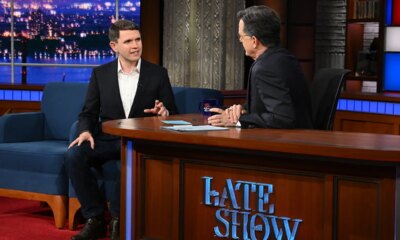

Talarico reportedly knew Colbert interview wouldn’t air on TV before he left to film it