Entertainment
Naomi Watts on why her acting career 'went quiet': It's 'not for lack of trying'

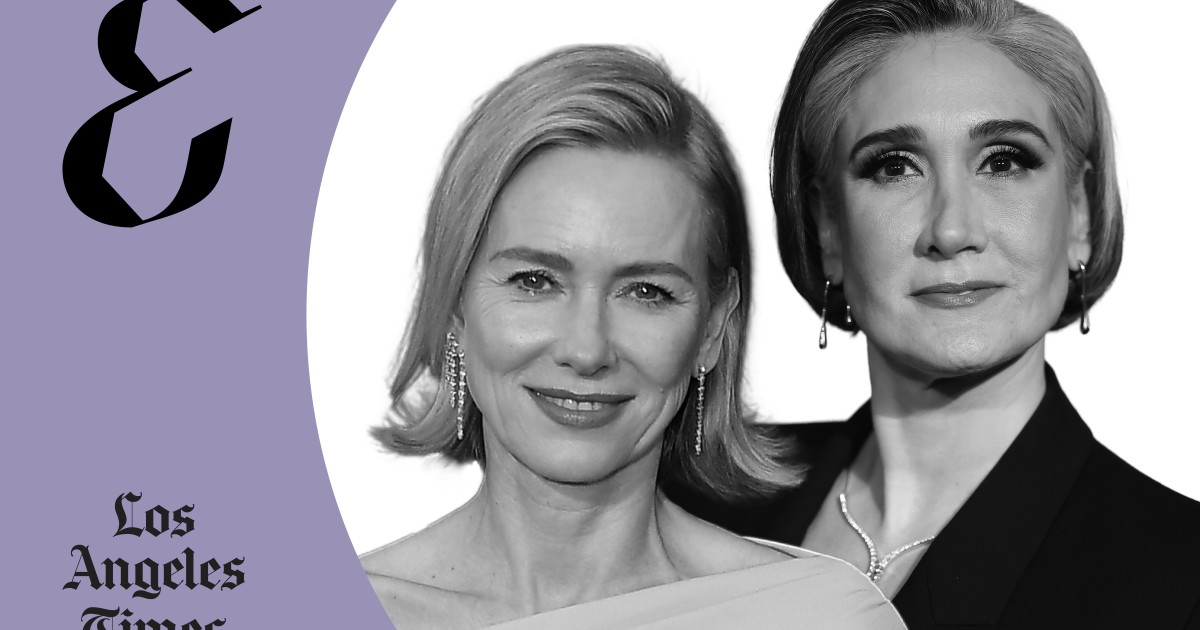
In this week’s episode of The Envelope video podcast, we sit down with Naomi Watts to discuss paying Babe Paley in “Feud: Capote vs. the Swans” and talk to showrunner Issa López about reviving the “True Detective” brand with “Night Country.”
Yvonne Villarreal: Welcome back. We’re here with another episode of The Envelope podcast. My name is Yvonne Villarreal.
Mark Olsen: I’m Mark Olsen.
Shawn Finnie: And my name is Shawn Finnie. You all had two great conversations today. Mark, go first.
Olsen: I talked to you, Naomi Watts, for the show “Feud: Capote vs. the Swans.” Naomi Watts is getting incredible reviews for her performance as Babe Paley. The show is about the fallout from the publication of Truman Capote’s short story “La Côte Basque, 1965,” which was a thinly veiled portrait of this group of New York City socialites, including Paley. And the show kind of gets into her backstory, her life with her husband. She’s dealing with cancer. And so really it’s just a sort of fascinating look at society and this very specific kind of moment in time. And yes, Yvonne, I did ask Naomi if she thinks that Truman Capote’s Swans compare to “The Real Housewives.”
Villarreal: Capote is our Andy Cohen, you know? Come on. And thank you for your service, Mark. I really appreciate it.
Finnie: Yvonne, who did you speak to?
Villarreal: I spoke with Issa Lopez, who conceived this season of “True Detective,” which was titled “Night Country.” I mean, you both remember “True Detective.” It premiered 10 years ago to critical and cultural acclaim with Woody Harrelson and Matthew McConaughey. All right, all right, all right. Through the seasons, we’ve had other folks shuffle in like Rachel McAdams, Taylor Kitsch, Mahershala Ali, Vince Vaughn. This is the first season that isn’t helmed by series creator Nic Pizzolatto, and it stars Jodie Foster as chief of police and Kali Reis as a state trooper. And it’s set in Alaska just before darkness descends on the area. It’s a decidedly more female perspective than past seasons and Issa and I discussed that a little bit.
Olsen: Issa was such an interesting choice to come into this. I mean, she’d made like some genre films in Mexico, but [was] really little known to a broader audience in America, and so I think it was so bold for the producers of the show to bring her on for such a big part of the series.
Villarreal: And she’ll be back to helm the next season, which she sort of teased a little bit in our conversation.
Finnie: And I think her perspective is going to be interesting too, with Nic gone. It makes it exciting and gets the people going.
Villarreal: Don’t tell him that!
Finnie: When we come back, we’ll have Mark’s interview with Naomi Watts.
Naomi Watts as in “Feud: Capote vs. the Swans.”
(Pari Dukovic / FX)
Mark Olsen: For the Los Angeles Times and The Envelope, I’m Mark Olsen, and I’m here today with Naomi Watts, star and executive producer on “Feud: Capote vs. the Swans.” Thank you so much for being here.
Naomi Watts: Thanks for having me.
Olsen: As we’re recording this, it was just announced a couple of days ago that you’re going to be presenting at the American Film Institute’s Lifetime Achievement Award for Ms. Nicole Kidman. When you were just two young actresses in Australia, could you ever have imagined the paths that your careers would take?
Watts: 100% no. Nic was already a standout and had done a little bit of work when I first met her, and was definitely on covers of magazines and stuff, so I believed it more possible for her. But for me, no, not at all. Far too of an outrageous dream. But once she came over to America and started working, certainly it piqued my interest. I thought, oh, wow. From the same place, the same age, with similar friends. We share a dream. Like maybe it is just a little bit possible. It did maybe make me feel a certain sense of inspiration and possibility.
Olsen: And now to start talking about “Feud,” the group of women that the show is about — Babe Paley, who you play, but also C.Z. Guest, Lee Radziwill, Slim Keith — these women were described as socialites, they were influential in their own way. Is there like a good contemporary version? Like is it fair to compare them to like, “The Real Housewives” or reality stars?
Watts: Gosh, that’s a great question. I think they were one of a kind, unique set. No, I can’t see it. I can see the temptation to jump to that. But, and to be fair, I don’t know. I’ve never watched that show, so I’m probably the one person on the planet that has never watched it, truly. Although I know enough about it because it’s so in the zeitgeist. But these women were actually doing their best to stay out of the press. And that was considered part of their superpower, their elegance, even though they probably enjoyed being the envy of many of their contemporaries. When I was starting to study Babe Paley, there was no footage available, no interviews. I didn’t know the sound of her voice. I didn’t know how she moved. I just saw beautiful photographs that were sort of caught in between or some very posed, orchestrated pictures by high-level photographers. But that just sort of speaks to how much work it took to stay out of the pages of newspapers and stuff.
Olsen: And so what do you do with that? How do you go about sort of constructing your version of Babe?
Watts: Well, I read as much as I could. And there’s mercifully a whole lot available on not just the internet, but lots of books. And the Laurence Leamer [book] was our source material, which was fantastic. And read about Bill Paley and all around her life and it was quite a gargantuan life, with two sets of children and a career, two husbands, and then no career. And then being on the arm of Bill for such a long time. There was a lot to learn about her in all kinds of formats. But really, what was on the page there that Jon Robin Baitz did so beautifully with Ryan [Murphy] and the world they created, we really just stuck to those scripts.
Olsen: The show catches her at this moment in her life where she’s grappling with illness at what will be the end of her life, and she seems to be in this really reflective mood, in this “What has this all amounted to?” kind of way. Does that cause like that same kind of reflection for for you? How do you engage with a character that’s in a moment like that?
Watts: We all start to get more like that when we see the larger amount of years behind us, that sort of naturally comes with mortality. And then facing it in a more direct way with her cancer diagnosis, I think probably created a more extreme version of that. And then at the end of her life, having to deal with so much betrayal. Firstly from her husband, with the infidelities, I think she created such a thick skin over time. But then having that exposed by her best friend was just her undoing.
Olsen: How do you see the the friendship, the relationship between Truman Capote and Babe before he published “Le Côte Basque, 1965.” What was the appeal for her in the friendship with him?
Watts: There was something about it that felt a little bit transactional, but also perhaps that was there in the beginning, like, what can you do? This fabulously artistic, clever, entertaining man who’s written gorgeous books before and is kind of in his heyday. And so them coming together like that, at that point in time, was fantastic. It was wonderful. And having his attention. Writers are the most wonderful conversationalists because they’re always curious. They’re always looking for stories. And so to be put in that kind of proximity where someone’s just truly interested, is tantalizing. It was fun for them.
And then they really did fall into this quite soulful, deep relationship. And there’s something about the construct of a gay man and a straight woman that feels limitless in terms of creating a closeness. There’s no sexual tension. There’s no sibling rivalry. There’s no female, like, “Oh, what have you done? And have you done this? And have you got that?” No comparative kind of jealousy or competitiveness. And they just got closer and closer and had a very successful friendship for nearly two decades. And so to have the rug pulled was just so upsetting for her to lose that. And again, the timing of it, at that point in her life where she was really quite vulnerable.
Olsen: Because audiences coming to the show expect Truman’s story, but especially the way the story is framed to also tell so much of Babe’s story, I think has been a real surprise for audiences.
Watts: Babe, we know enough about her if you do a deep dive, but I didn’t know much about her. I wasn’t brought up in America, but once I lived in New York, I heard more about her and read things. Fascinating that these women are so powerful and the envy of so many, just by being on the arms of their husbands and by how they looked, how they presented, how they behaved. That was an interesting reveal.
Olsen: Babe is at such a difficult moment in her life in the story, and the past few years for you have seemed like a really joyful time in your own life. You’ve been so public talking about your health journey, and you recently were married. What do you think it has meant for you to encounter this role at this time in your life?
Watts: It means so much. I have immense gratitude. I can’t believe that I’m here talking to you and others at this time. It’s been a while that I’ve been invited to that group again. I certainly had a great start with “Mulholland Drive” and then leading into box office hits with “The Ring” and “King Kong” and nominations from “21 Grams” and “The Impossible.” But then it sort of went quiet, and not for lack of trying. Lots of effort, lots of hope and real consideration for how you pick material and everything. But my trajectory has not been like that. [Gestures straight up.] It’s not even been like that. [Indicates a plateau] It’s been sort of like this. [Gestures up and down.]
And, so to answer your question, how does it feel right now, in this moment, at this point in my life? You know, I’m 55. It means a lot. I take it very seriously. And it’s wonderful that Ryan Murphy took a chance on me and really believing in the female story. And it does speak to a time. And you mentioned my health journey. We can call it menopause, don’t worry. I think the more the word is out there, the more it’s normalized. Half the population will go into it and we’re living longer so we need to investigate how to live and optimize our health. So Ryan Murphy is exploring these characters and women at a certain age without fear or concern. And it’s wonderful.
Olsen: And it’s one of the most exciting things to me about your career, from when you first emerged with “Mulholland Drive,” was the fact that you had been working for a few years before that and you emerged after seemingly sort of toiling for a while. And to hear you say that you feel like there have been some ups and downs and some sort of quiet moments —
Watts: That’s not a feeling. That’s a fact. I mean, there’s some things that work into those factors, which is that I’ve really tried to shoot only in New York City because I have children. And my childhood was such that I moved around different schools a lot as a kid. The kids are also living in two different homes, so it’s important that they have consistency as much as possible. And so I’ve made choices to not travel or take my kids with me and not leave them. Except for during the summer, of course, which I can do, or for very short periods of time, like 10 days or something like I’m doing — oh, actually, I’m not even allowed to say that. I have something next week for just five days in London, but that’s manageable.
Olsen: And what sort of keeps you going like during those sort of like more —
Watts: Quiet. I created a company, just before COVID hit, we started working on that for menopausal women, skincare and simple solutions, we offer an arm of education and community drivers so that a woman can feel well supported during that time. So that’s been no easy task. That took a lot of time. And on top of which I’ve been just trying to stay in a good mood. I love to work. And I think it’s important people know how hard it is to make a successful piece of work. I’ve been doing it for decades now. I’ve done a large volume of work, and really only five, six or maybe eight of them have been really successful projects. And that just goes to show how hard it is to achieve something where everything lines up. And again, back to your earlier question, this is why I feel so grateful because it’s so rare. And Ryan created something where everything is synchronized: the level of writing, the level of filmmaking, the level of performances and the reception of the audience. Sometimes it can be a well-executed piece, but the audience feels like either ahead of it or behind it. It just isn’t the right time. So many things make for that perfect recipe. And so this feels good.
Olsen: And you were an executive producer on “Feud: Capote vs. the Swans.” You’ve produced a number of things through your career. What makes you decide, “This is something that I want to take that extra step and be more involved.”
Watts: In this case, in Ryan’s world, it speaks more to the act of generosity. I would say he’s very inclusive, and we’d done “The Watcher” before. His world is such a well-oiled machine. He works with many of the same people across the board. So it’s not like I’m there going, “I think we should hire this person or that person.” He certainly has consulted with me. But it’s usually the decision-making is really, you can trust that it’s in great hands with him. But there are other times where I’ve been an EP, where I’m there from the buying of the material and developing it and all of that. So it’s different every time.
Olsen: Television, of course, is so much of a writers’ or showrunners’ medium. But one of the things that I think really makes “Capote vs.” one stand out is that so many of the episodes are directed by Gus Van Sant. I know you’ve worked with him before. What was that like returning to working with Gus and what was his contribution to this project? Because it does just have a feel to it that you can tell that it’s his touch.
Watts: Particularly, the cinema verité episode, where it’s all about the black and white ball. I loved when Ryan called to say it’s going to be Gus directing it. I had had a lovely, lovely experience working with him, though that film didn’t necessarily reach audiences in the right way. But I had such a great experience. He’s a very quiet, gentle man and not super verbose, but then suddenly he’ll come up with a lot to say. And when he does say a lot, you know it’s rooted in something very specific and important. In fact, the very beginning scene of that third episode, I remember he just was wanting to get it exactly right. It’s that scene where we’re in the art gallery and we’re talking about Monet versus Manet, and I think I was doing it in a performative way because we were being filmed by the documentary cameras. So I was thinking of it in a different way, like, “Who is this woman when there’s a camera on her? And does it get extra special for the camera.” And he just wanted to keep bringing me down, because to speak to the seriousness of how studied these women were, particularly Babe, in the subjects that they were meant to know about. And art was one of them. And so taking away the performative side of it and actually connecting with the truth of what one artist means versus another.
Olsen: Babe Paley herself was in a car crash when she was young, so she wore false teeth throughout her life. And as I understand it, you had these false teeth made for the performance, and that changes the shape of your face, it changes how words feel in your mouth. For someone who’s not an actor, that sounds like a relatively small decision. But as a performer, I’d imagine it changes everything that you’re doing. So how do you grapple with that?
Watts: Well, a lot of practice and a lot of convincing as well, because Ryan wasn’t really sure about prosthetics. And they can be an additional thing to just be in the way of an audience member. People get caught up on that and lose the story. You never want something to be distracting. But I was looking to try and make some kind of a transformation because I really look nothing like Babe Paley. And so I went and tried them on and I felt silly in them. They didn’t feel comfortable. I couldn’t speak well in them and they felt too clunky in my mouth and aesthetically didn’t look right. And so then we had them pull them back, and I think we pulled them back twice before, and I really did fight for them. I said, I think this will help convince us, because I’ve got crooked teeth and they’re different sizes. And they were just perfect. But I just had to learn how to speak. And even my dialect coach was really anti- the idea for a while because it was creating lisps in my mouth, which wasn’t right. And then that’s when people start getting stuck on that story rather than the actual story. But we got there, and what I didn’t do in the end is wear the lower ones until the very end of her life when she got sicker and it helped create, the shape of the face in a more extreme, kind of gaunt way. So while she was dying, it felt right.
Olsen: Throughout the series, we often see Babe just getting ready, we get this sense of how much work went into her hair and her makeup and her clothes, just every single day, just to pop down to Bergdorf’s or to go to lunch with her friends. What did those scenes come to mean to you? It comes up again and again through the series and it provides these really reflective moments for the character.
Watts: It’s so much effort, right? So much discipline. I can relate in that when I come here to go on camera, I spent some time putting myself together, with the hands of experts as well. In my own life, I never do that. I’m five minutes out the door. I can’t imagine. But it just speaks to the level of perfection that she was constantly aiming for, and she had to have not a hair out of place, not ever say the wrong words. Everything was always about being a good member of society and pleasing everyone. But I think that’s, going back to Truman, why he was such a breath of fresh air, that irreverence and the silliness, the games, the outrageousness of him. She was quite caught up by that sort of tightly wound aim for perfection and really into his lack of that, his freedom, his lust for life. That was fascinating to her.
Olsen: It says so much about her that she planned her own funeral, and I can’t quite decide for myself if I think that’s a great idea or if that seems sort of psychotic.
Watts: Kind of both, maybe. She wanted it to be exactly right. Who was going to be there, how things would look. And quite sad, though.
Olsen: Throughout the series, there are these lunch scenes where the women sort of gather and just you as a group of actresses, yourself, Chloë Sevigny, Diane Lane, Calista Flockhart, what was it like shooting those scenes? They are literally the ladies who lunch. And they’re sort of both their best and their worst in those scenes.
Watts: Yeah. And sort of pushing around tiny bits of food and drinking until it’s dark outside almost, smoking, tons of smoking, gossiping and telling each other how they should behave and what’s what and who is who. And just speaking very much to that era. There’s things that still live on today in circles of friendships that I see. But not to that level. But the way Gus filmed them — we had endless scenes in La Côte Basque, and it was such that we all were in the same scene, possibly at the same time, so the camera would just move around us. Which is a great way to work, actually. So you’re not just sort of like relaxing and sitting on your own and taking off the tight clothing or whatever. It’s always possible that the camera will land on you at a certain time. It kept us all in character all day long, basically, which was great, which is how it should be.
Olsen: And then one sad note with the series is that your husband on the show, the character of Bill Paley, was played by Treat Williams, who died unfortunately before the series began to air. The later episodes of the series especially are so tender between Babe and Bill. Is it difficult for you to watch those scenes now?
Watts: Very. We got very close during the filmmaking, and [he was] another one who hadn’t had such great material for a long time. And he was commenting on that all the way through the film process. He was just like, “Look at this writing. It’s so great. I just love these words.” And just adding to the tragedy that he didn’t get to share this moment because of this senseless, tragic, sudden ending to his life. He talked about his family all the time, always wanting to go back up to Vermont, which is where he lived on the weekends. Truly, truly tragic because his work is — I mean, tragic for so many reasons — but his work in this is wonderful. And for him not to see the accolades, it’s very sad.
Mark Olsen: One last thing, you are also appearing in Audrey Diwan’s upcoming remake of “Emmanuelle.” I loved her film “Happening” so much.
Watts: Such a great film.
Olsen: And this seems like such a really bold and sort of unusual choice for her as a follow-up. Is there anything that you can say about your role in the movie or about the film as well? People are very excited to know what’s going on with that movie.
Watts: I know there’s a lot of intrigue. I signed on because of Audrey and that brilliant piece of filmmaking. And Noémie (Merlant], a wonderful actress as well. It was like, wow, I remember this movie, and this is a bold idea, like you said. And, I think for me, I’ve always felt like filmmaking is really a director’s medium. They’re our teachers. I want to find myself in the room with someone who’s going to grow me as an artist. And that’s why I wanted to do it. When I tell people that I’m in this movie, they go, [shocked] “Emmanuelle?” I’m not the lead. It’s not me. I have a small storyline, but, like I said, I just wanted to work with a brilliant artist. And so, we’ll see. I haven’t seen the film yet.
Olsen: Naomi Watts, thank you so much for joining us today.
Watts: Thank you for having me.
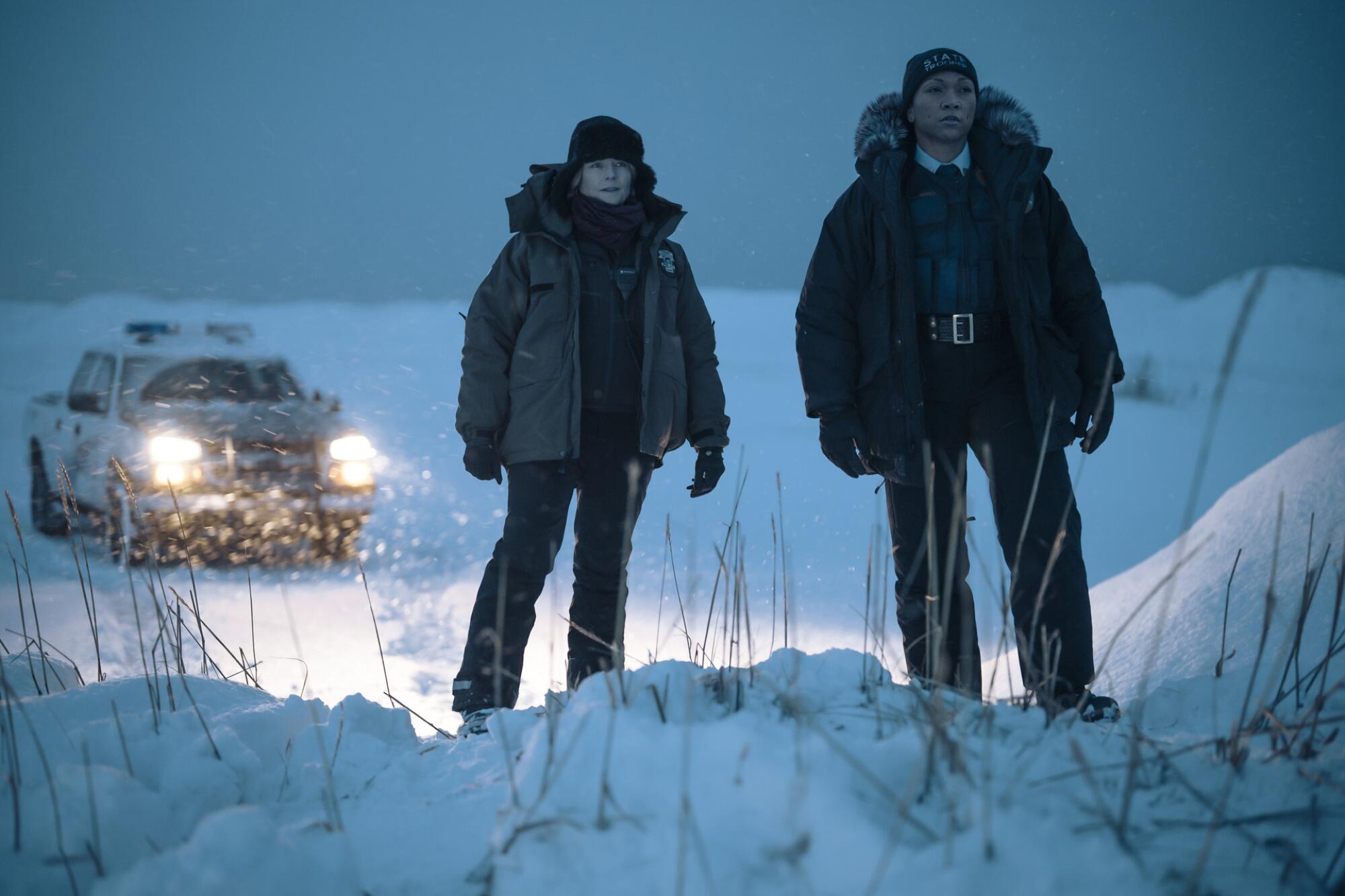
Jodie Foster, left, and Kali Reis in “True Detective: Night Country.”
(Michele K. Short / HBO)
Villarreal: “True Detective: Night Country” is maybe your biggest, most high-profile project in the U.S. With some hindsight, what strikes you about the whirlwind that that entailed, both personally and professionally?
López: You know, once it started, it never stopped. It was a train. And the thing is — and I think every filmmaker will understand this — for every project you do make, there’s eight, nine that you don’t make, and some of them move pretty far along. So I was doing “Night Country” the way I’ve done many. I have developed many [projects] for the U.S. in English. You try to prevent yourself from pain. It still hurts like a motherf— . You just have to pretend that this is the one that is going to be made. Because, in the small, off chance that it gets made, it needs all the nutrients, which is why it hurts so much when it’s not [made]. Because you have to act and believe that this is the one that is going to be made.
This was one that was made, but I didn’t know that. So I went into it with the same passion and the same fear underneath that it was also going to fall through the cracks, as so many projects do. I think that’s part of why I fearlessly wrote it in the Arctic, because a little part of my brain didn’t fully understand that I was going to actually shoot it, which was going to be very tough. So I just wrote it in the Arctic because it was cool, because it would be amazing. But, you know, it never stopped. And then we were waiting, doing nothing much. I had written it. I was done, waiting for the premiere and the show to drop. That’s when [I] had a moment to go, “Oh, we are going to get this on air. And all of us crazy dreamers and everybody [who] came on the project dreaming of it, are going to see how the world likes it or not.” So, that’s when the fear comes. This is the first time that you can truly allow yourself to think about ratings, or think about audiences, or even think about reviews, because before, you can’t let that noise change the way you’re telling a story. You can’t allow yourself to panic. And then the reviews started to fall and were great, and the ratings were great. And I think I still don’t completely believe it, but it was beautiful.
Villarreal: What’s the night before like, when the first [episode] drops? Is it a sleepless night or a calm night?
López: No, it’s a very calm night. Because at that point there’s — yes, of course there’s trepidation — but there’s nothing else you can do. There’s nothing else you can do. It doesn’t matter. I mean, other than lighting candles as we do in Latino culture, and talking to your ancestors. But then you go to bed. That’s it.
Villarreal: Well, this season highlights the land back movement, the missing and murdering of Indigenous people crisis and the high suicide rates for Native youth. Was that always the goal for you?
López: No. It’s so interesting that, once I decided it was Alaska because it was an Arctic and there were scientists — and it had to be America because it’s “True Detective.” So, it was Alaska. But I knew very little, as I think most of us do. So, I took a deep dive and the communities … I wanted it to be during the long night, which means that this happens north of the Arctic Circle and those communities in northwest Alaska, are 60, 70, 80%, in some cases, made up of Inuit, Inupiaq in particular, communities. And then these communities — specifically one of these cities, is very much affected by its relationship with the biggest mine in the northern Americas. And at the same time, the mine is what sustains the community. And it’s a whole support system for education, for medicine, for everything. But it’s a problem and it’s creating irreversible damage. So specifically for the Native community that has little access to a lot of the benefits of other parts of the world, but at the same time, depends and culturally understands themselves by their relationship with nature and with hunting and with animals — it’s a tremendous conundrum. And it’s rich, rich soil to grow a story.
So, I needed to learn more. And I realized that my initial intention of having two detectives, one white, one Latina, was perhaps not the smartest thing because that would mean that two outsiders come to solve the mystery. And we’ve seen that story told so many times. I’m done with it. And I think that the Native community is done with it, certainly Alaskans are done with it. And the Missing and Murdered Indigenous Women movement, I think, desperately needed Indigenous women to be the ones bringing an answer to that horrendous question.
Villarreal: Because this [idea] was happening during the pandemic and there’s tighter restrictions on travel at this time, your initial way of researching the region entailed you having to rely on TikTok and YouTube videos, local radio stations, and even reality shows like “Below Zero.” Talk to me about how that helped you build the world?
López: Well, you know, I was trapped, as we were all. And I was trapped in Los Angeles, in a tiny, tiny rental in Venice. And it was hard to imagine the long night of the Arctic at the same time that it was the summer of a disaster here. And I couldn’t travel to to Alaska. What I did in the meantime — because I knew that I had to be there and eat the food, and know the people, and that was sine qua non. I wish I could have written the entire series while being there. But what I did in the meantime is, yes, I went on TikTok, I went on YouTube, and there’s endless hours of videos that these people that inhabit these places make, I think, in part because they’re very bored during the winter. But they would record themselves hunting and they would record themselves going on their snowmobiles into the tundra and fishing, but also going to the supermarket and going to the post office. And they would tape themselves going to the airport. So that it was perhaps even more interesting. So I started to incorporate all that. I was, while writing, listening to the local stations of Nome, Kotzebue, Utqiagvik, which is Barrow, and watching a fabulous show that I discovered called “Alaska Troopers.” Not all of the episodes take place in the northwest, but it was so interesting. There is particularly one trooper that is Native and a woman, as she was a massive inspiration for the show. But then the moment that I could jump on a plane, I went to Alaska and I went into the police stations. But I also jumped myself on the snowmobiles to go on the ocean. I went to their kitchens when they were making seal and they would drizzle salads with seal oil.
Villarreal: And you don’t eat meat.
López: I don’t eat meat.
Villarreal: So talk about the decision to go that extra step.
López: If you want to understand a culture, you need to eat their food with them. And it’s like me, as a Mexican, it would be like, “Dude, you’re not going to understand who we are if you don’t eat some pastors, if you don’t eat some dulce de leche, if you don’t eat some pastel de tres leches. And so as a sign of respect … and they would have caribou, too, and seal meat. I find very lovely both caribou and seals. But I also have masses of respect for a culture that for millennia have had this respectful relationship with animals, in their interaction and the way they consume them is very different than the industrial way that we do. So yes, I ate with them; and I enjoyed caribou more than seal, I will say. But it was so, so much fun and so much joy to talk to them about how they understand their relationship with the West, because it’s by far the latest Native culture to make contact. That only happened fully in the ‘60s. Well, so they’re the closest, I think still, to their own roots.
Villarreal: How did they receive you? Were they skeptical?
López: They were so loving and they were so excited about this story. And they not only received me, but they worked with me in the episodes — in reading every line of dialogue and saying, “We would do this” or “This is not what we would say.” “If she says this, this is how we would answer.” “This is a subject matter that [it’d be] better that you don’t mess with it” or “You need to talk about this.” But then they wanted to be in the show, so I brought them in the show. The very same family that fed me, the patriarch of the family is a pastor. And he came and he played Oliver Tagaq in the show. And the clothes are the clothes of his ancestors. They would cook the food. In the funeral scene, that’s their food, their ingredients, their cooking. And the music is their music and their voices are their voices. So they were so full of joy. And perhaps my greatest fear when making the show was that community was not going to receive it and recognize themselves and have fun with it. They loved it. And the series was beloved by the pan-Inuit community. And when I say pan-Inuit, this is a word that I took from Tanya Tagaq, who is a massive rock star of that world, but also by the Native community around the U.S.
Villarreal: This is also a deeply personal project. You’ve talked before about losing your mother when you were 8. You know the trauma from that, but also the goodness or the beauty that comes from a tragic circumstance like that, is expressed in a lot of your work, not only “Night Country,” but [your film] “Tigers are Not Afraid.” And I know you’ve talked about when you were younger, horror films like “Alien” or “The Shining” being ways for you to escape what you were feeling at the time. And I’m curious what it’s like now, as an adult, to lean into that genre, to process or unpack the things that you were maybe escaping when you were younger.
López: It’s such a joy, and a payoff that the things that separated me from the other kids — and I think this is something that every geek in the world understands — the things that made me a different kid, the things that protected me from feeling lonely, the idea that there’s more to reality than what we can see and measure, allowed for me to try to pretend that maybe my mother wasn’t gone gone, or maybe, if she was gone, [it] was because something greater was at work. And for some people that’s religion. For me it was art, and it was geekdom, and it was horror and it was science fiction and it was other versions of the world. It was an escape. And because it was an escape, and my reality was harsh and I was bullied, of course, the more harsh the environment, the more lonely, the more I would lose myself into these other worlds. That thing that seemed, at the time, like an escape was eventually the very thing that allowed me to connect with the world.
Villarreal: And it also is a way to connect with your mother, right? Because this was a genre that she loved, even though she maybe didn’t allow you to watch it as a young age. Do you think about how maybe she would engage with your work if she were still here?
López: She would love this. She would absolutely love it. She loved to consume this [horror] and I’m giving anyone that is here to take it — it turned out that it was a lot of people, beautifully — the gift that I would have loved to have given my mother.
Villarreal: I know you’re also a self-described “Silence of the Lambs” fan, and as we talked about earlier, you got Jodie Foster to play in your show. But she [initially] had worries, “I don’t know if this is the right fit for me.” She thought the character maybe should not [be] as vulnerable at this stage in her life, having lost a child. Talk to me about what you felt about her suggestions, and how do you know when it’s something you want to implement into your work?
López: Well, it was so interesting because Jodie was saying, “Why is it that women often are offered roles that deal with the loss of the child?” Because, you know, men get different options with their characters. They can come from different places. And she’s absolutely right. That said, I went away — because I really needed to talk about loss in the show because it’s my personal theme — and I came back and I was like, “Jodie, this first season of “True Detective,’ guy lost his daughter.’” I went through the list, an endless list that went from “True Detective” to “John Wick.” It is a trope. It is a trope because it works. Because nobody can deny the power of that. That said, this is not what makes a character and you’re right about it. So, she was suggesting that this is a woman that has been hardened by this event, and instead of being hurt, she’s angry and she’s hard and she’s horrible.
López: [I said to Jodie], “You want me to make her into an a—.” And she laughed out loud; she said, “Yeah.” And I was like, “I would love to do that, I would love to do that, No. 1, because I can’t wait to see you play an absolute, absolute mess. Messy. Because Jodie is so perfect and so disciplined, but a messy a—? I want to see that! No. 2, because I also feel that a lot of great, great TV [has been] done around the idea of men being horrendous people, and it has really created a tradition, these central characters that are hideous in their souls or they become monsters. And I wanted to to talk about a woman who has become a little bit of a monster because of who she is and what she went through. A very important thing for the both of us is she started [as] an a—, and then this happened. So here we are.
Villarreal: What about Kali Reis? What intrigued you or struck you about what she was able to unpack with Navarro? Because she’s also going through loss much differently. What did you enjoy about what she brought to that role?
López: What was amazing with Kali is a combination, and it’s so unique, of power and presence. Just in the moment you see her, she just inhabits the screen, right? I was looking for a Native woman and my casting director sent me one photograph of her and I was like, “That’s it. That’s Navarro.”
López: So [Reis] brings, automatically, this power because she owns it. And this is who she is. But at the drop of a hat— and I knew this on the first tape, we did a test together — if you help her, she could reach a profound emotion in a second and connect with grief in a second. So because I had the power and I had the emotion, all I had to construct was what was in the middle. And that was scary, because those are the small textural scenes that make the life of a character. So, I told her, “This is going to take work. It’s going to take rehearsal time. It’s going to take takes. And oftentimes, because you’re working with Jodie Foster, Jodie’s going to get it before I say ‘Action!’ And with you, we’re going to be in take 15 and take 16 and it’s going to be night and it’s going to be ice and everybody’s going to be staring at you.” And she was like, “I can do it.” She’s an athlete. They have this capacity of “Go again, go again.” And she could do it. And I was amazed of the truth that she brought to this character. Kali, like Navarro, is half-Native, half Cape Verdean. So identity has always been a struggle. And she knew that. It was beautiful to watch.
Villarreal: Typically, there are a group of writers working on a show from its inception. “True Detective” has had one writer and one director for a season. In your case, with this season, you wrote and directed every episode, which is a rarity for a woman storyteller. Talk to me about why you took that approach.
López: It’s unfair to say that I wrote it alone. I did write on every episode, no doubt. But the truth of the matter is, I conceived this story, as I told you. I knew who had done it — and I didn’t know how we were going to get there. I invented the two characters, the first episode, and then what me and my producers did is we found four incredible writers from very different backgrounds. And we got together, because this was a lockdown, in a virtual room for 10 weeks only, just to map the series. And then, just to say, “in Episode 2, ba ba ba ba ba,” Episode 3 … and all of the other five episodes. And then I gave and each one of them — in one case, two — an episode to do the first draft. They did. With that, I wrote [Episodes] 1 and 2, and then the others [Episodes 3, 4, 5] they wrote, and [Episodes 6], I wrote. And then I did a second pass to all the episodes. At a certain point, HBO suggested to bring someone just to spitball the final draft of the series. And they offered to bring Chris Mundy, who is a writer of “Ozark,” and he’s brilliant and fun to work with and very generous. So he came and with the written episodes and the notes from the studio, we together spitballed how to turn it into the final version that you saw. Chris did a pass on some of the episodes and then I did the final ones and all the rewrites on set that were final. So, yes, I wrote every episode, but I had a lot of help.
Villarreal: We talked, at the beginning, about, once you put it out there, you’re sort of listening or hearing how people are receiving your work. And I wonder, for you, because you did engage with the conversation, were you always planning to do that or did you feel at a certain point, “I need to weigh in here, I need to talk about my perspective”?
López: I’ve always been very impressed with the people I admire the most as storytellers of genre, some of them are really, really good at interacting on social media. One of them is Neil Gaiman, who’s also a dear friend. And the other one is Guillermo del Toro. So, I’ve always found it beautiful how patient and how, as long as you can answer a question that makes sense and is respectfully placed, you can answer a question. You’re not going to tell them who the killer is, because they have to watch that. But if they go like, “Why is there no breath in every scene?” And you would go like, “Listen, I was in the Arctic for 10 months. There’s times that you see your breath and there’s many, many times you don’t. It depends on the amount of humidity in the air. So that’s the truth and the reality. Sometimes there is breath and sometimes there’s not. And sometimes we are shooting outside and there is no breath. We’re not going to put breath where there is no breath.” So you answer those questions. Or when they were like, “Why did Annie …?” And then you go like, “This, I can tell you.”
But it’s so much fun because people are watching and they’re loving it and they’re enjoying it. There was so much satisfaction in the fact that people cared that much. The internet is the internet and there’s always trolls. And there is a strong section of the core, core, core hardcore fans of the first season — most people love the series and it hit really nicely. Then there’s people that didn’t like the series. And that’s OK. It’s TV, just don’t watch it. And there’s some people that hated the series for the wrong reasons. I wouldn’t engage with that discourse because I feel those attacks were not even meant for me, really. What was happening is, their lives were changing. “Barbie’s” the most successful movie in in cinema, very recently, when the show dropped; Taylor Swift is taking over the Super Bowl. They were not even in the know that March Madness was going to change so deeply and that Beyoncé Knowles was going to release an album that was going to completely take over country music. The world is changing for that core audience. “True Detective” is sacred to them because TV for them is “Sopranos” and “Breaking Bad” and “True Detective.” And it’s three very, very good shows. Very, very male shows. And I took one of them, me a woman, and I made it female, and I made it multi-color and I made it about things that they don’t want to hear. And they were mad. And I was not going to engage with that.
Villarreal: Well, we all know that one of those people that was mad was Nic Pizzolatto, who is the creator of the [“True Detective”] series. And I know you’ve talked about it and you’ve shared that you understand as a writer being possessive of your work. But I’m curious, when a fellow writer is making comments in such a public way, especially as you’re preparing to work on the new season, how do you keep that from infiltrating you in terms of self-doubt? Or how do you not let it affect you?
López: If someone gives me self-doubt, that’s me. I think we all have that covered. I found it saddening because I wouldn’t have liked anything more than him being excited and celebrating it. The truth of the matter is, I can’t imagine something as wonderful as having created, a story, a tone, so powerful that after creating more than 30 episodes of it, it’s still alive and people want more. And then another filmmaker with a completely different vision and a different voice, but that loves that flavor, does their version — that’s nirvana. You made it, man. That’s the next level. And me, myself, I’m so, so proud to have been able to revive it and to make that season the most successful of all the seasons before, which opens the possibility of having a fifth one and receiving the fifth one, and I’m loving the fifth one. And then after that it will be the turn of another filmmaker, and I can’t wait to see what a very, very different person and a different artist is going to bring into it. How exciting. I can’t wait for that. So, hard to understand.
Villarreal: Well, as you said, the show will be coming back for a fifth season with you at the helm. Do you feel like you’re off to the races with this story?
López: I am writing like a crazy person.
Villarreal: Is it connected in any way?
López: It happens in the same universe because that’s the whole point. That’s why I put the the spiral because it’s the same world. There’s elements, let’s just say that. It is the same world, though it’s a very different story, in a very different place with very different characters.
Villarreal: Are you close to finishing or where are you at in the process?
López: I’m not at the beginning, I’ll tell you that. I’m not in the beginning, that’s all I can say.
Villarreal: Are you already thinking of who you want to play these characters?
López: I am thinking about it. I mean.
Villarreal: OK, I know you won’t tell me more, Issa.
López: I won’t. [laughs]
Villarreal: But I am very excited. Congratulations on the season and the success of the season. It was great speaking with you.
López: Same. What a beautiful conversation. Thank you so much.
Finnie: Thank you all for watching and listening. Guys, this is our last episode. We somehow have made it again. This is our last episode until nominations in July. Well, it’s all year long here.
Villarreal: Did you bring your blanket? Because we’re sleeping here until then.
Finnie: Brought my blanket, brought my food, snacks. I’m looking forward to it.
Villarreal: We hope you stick around and come back and join us. In the meantime, please subscribe wherever you watch or listen to your podcasts.


Earnest, preachy and melodramatic to a fault, “Mississippi Scholar” is exactly the sort of movie that the independent cinema was born to create.
Director and co-writer Marcus Bleecker’s film may traffic in tropes and cliches. But it has a vivid sense of place and a clear notion of the message it wants to send, and that message’s relevence.
Set in an unnamed small Mississippi city — it was filmed in Baldwyn, Saltillo and Fulton — the film is “a mind is a terrible thing to waste” in cinematic form. Our “Scholar” was born into a world of substance abuse, the racist legal traps of the country’s remaining marijuana laws and has a baby-mama-in-waiting and a drunken parent whom our teen hero is responsible for as his burdens.
But he has a world of promise that one dedicated teacher, his dead father (whom he still converses with) and even he himself can see if he can just “stay focused” and keep his eyes on this very personal prize — college and a better life beyond Ole Miss.
Shannon Brown is James, a kid with great grades and an ill-tempered mother (Gisla Stringer) who crawled into the bottle a long time ago and has no interest in crawling out.
But he’s got an ad hoc support system helping him through his senior year. His aunt (GiGi Marie Gaines) feeds him and keeps him advised of his mother’s latest tumbles. His dead dad (co-writer Obba Babatundé) passes on wisdom about his mother in fortune cookie-sized bites when father and son chat — at the cemetary or elsewhere.
“Hurt people hurt people.”
His English teacher, Mr. Keating (Sonny Marinelli) has high hopes for him, hopes he’s willing to nag the kid to achieve — “It takes only five seconds to get in trouble, and 25 years to get out of it!”
His school principal (Lance E. Nichols) expects greatness, but has learned to never get his hopes up over any Black boy at his integrated high school.
Even Ray-Ray (Jeremy Isaiah Earl), the ex-con drug dealer, takes a brotherly interest in the kid who is his “best distributor.” That money is what keeps a roof over James’ and his mother’s heads, and pays for his Jordans.
His white boy bestie (Dominic Arvielo) may act “Black,” but will he have James’ back when things get real?
And girlfriend Tammy (Aysa Branch) may be far and away the prettiest girl in school. But she’s taking the easy route, relying on her looks to achieve the limited goals the script sketches out for her.
“We’re gonna have ourselves a baby as soon as we graduate!”
Bleecker’s film covers all of the bases, all of the tropes and most of the cliches as James faces Big Choices with perils to his plan at every turn. Maybe taking him to visit the football-mad University of Mississippi isn’t the deal-maker his teacher hopes it is, as James doesn’t “see anybody who looks like me.”
Only a real civil rights hero (Dr. Donald Cole) can set him straight, relating the story of what James Meredith and generations before him did to give James this chance. Or can he?
“Mississippi Scholar” is well-crafted and an easy film to like, with relatable if “stock” characters and decent performances from all but the most amateurish (James’ classmates) cast members. But it’s entirely too predictable to surprise and too pre-digested to have an edge.
Worthy subject and novel setting aside, we’ve seen this story on the big screen and the small one too many times to count, seen this kid’s hand played out in every variation the cards have to offer.
But it makes a fine calling card for its cinematographer turned director, and let’s hope we see Bleecker’s name and hear his voice in another Deep South indie film, and soon.

Rating: TV-14, violence, profanity
Cast: Shannon Brown, Gisla Stringer, Sonny Marinelli, Jeremy Isiaah Earl, Aysa Branch and
Obba Babatundé
Credits: Directed by Marcus Bleecker, scripted by
Obba Babatundé, Marcus Bleecker and P.J. Leonard. A Narrative Distribution release on Amazon Prime.
Running time: 1:24

Entertainment
Dan Finnerty profaned Bonnie Tyler’s hit in ‘Old School.’ He regrets the f-bombs at her shows

For a certain swath of millennials, Dan Finnerty’s rendition of Bonnie Tyler’s “Total Eclipse of The Heart” in the frat comedy “Old School” is its definitive performance.
In the 2003 film, the Dan Band’s sweaty, inappropriately exuberant version of the ’80s power ballad upstages Will Ferrell’s wedding. The scene forever changed the lyrics of Tyler’s hit to something much more profane, but no less yearning.
After Tyler’s death at 75, Finnerty (who played a similar role in “The Hangover,” among many other comedies) reflected on his sideways journey into Tyler’s career, and how one quick scene on a two-decade-old comedy still endures.
You’ve had a pretty unique relationship to Bonnie Tyler’s music, how are you feeling after she passed?
It’s definitely sad. Everybody is texting me. I never met her, but what an impact she had on me. I grew up right when “Total Eclipse” came out in the ’80s, and it was such a huge song at the time. It had never left my head. I was always just belting that song out because it’s so epic, from Jim Steinman’s writing to Bonnie’s performance.
Why does that moment from “Old School” still endure? It arrived at the last cusp of the DVD era before culture transitioned into the internet and streaming video.
Without YouTube and the internet, you really had to grab pop culture moments from your memory. That’s definitely one of the reasons why pulling it out seemed obscure when we did “Old School.” People were like, “Oh my God, yes, I love this f— song.” Which is so different now because everything’s at your fingertips, so you can’t really rely on like pulling back some nostalgia moment because it’s always around anyway now with the internet. But people were reacting as much to me dropping the f-bombs as the nostalgia of the song, and rediscovering it and realizing that the song kicks ass and never stops kicking it.
Was the song already in your repertoire when you filmed “Old School?”
I was doing my show with the Dan Band in Los Angeles, and [director] Todd Phillips ended up coming to one of the performances. I met him afterwards, and he was like, “There’s actually a wedding scene in this movie. What song would you sing at a wedding?” I had just started working on a medley of “Total Eclipse,” and I think at the time I was going to do “Holding Out for a Hero,” but then I just merged it with “Private Dancer,” and he was like, “Oh my God, I love it.” The following Monday, he called and he’s like, “Can you put that together?”
The bit works because you totally commit to the song’s hugeness, and the profanity slips by like it’s spontaneous. You can tell you love the song on the merits.
I had never done it before. But Todd had seen my show, and when we went to do the first take, I didn’t think I was allowed to swear. But I obviously was swearing during my live show in all my little medleys. He came running up and he’s like, “Are you gonna swear like you do in the show?” I’m like, “Am I allowed to?” And he’s like, “Yeah.” So I’m like, “Buckle the f— up.”
But basically, what I was doing was honestly trying to match Bonnie’s commitment at the level she did with her voice, which is what I loved about all of her performances and Jim Steinman’s music. It’s just over-the-top commitment and drama. The swearing was just me being like, “How can I bump this up one notch when they’ve already just nailed it?”
Did you ever hear from either of them about what they thought about the film?
I’d tried to get Bonnie to do a duet of “Total Eclipse,” and I reached her management. He was like, “Well, Bonnie’s willing to do the song as long as there’s no profanity because she’s not a profane person.” I was like, “Well, neither the f— am I. I was an altar boy.” It didn’t end up working out, because I knew if I did the song without the swearing, people would be like, “What the f—?” But later, met Jim Steinman. I mentioned it to Steinman, and he was like, “Oh, I wish they called me because I can make Bonnie do anything, she’d love the swearing,” which killed me.
You did kind of alter her song forever for a certain generation.
I was just picturing them both hating how I bastardized their song. So when I finally met Steinman, he was like, “No, no, no! I f—ing loved it. In fact, I’ve always thought of all those epic booms, the Kurzweil, all the big hits in ‘Total Eclipse,’ those were musical f—s.”
Mostly I wanted to just find Bonnie and apologize to her for all the drunk guys I have pictured over the years at her concert screaming “F—” ever since that movie.
That song became your biggest hit as a comedian. How’d it change your life?
It got funnier the older we got. When I would do “Total Eclipse” right after “Old School” came out, it would get the biggest reaction. There was one set early on at the Playboy Mansion, we were hired to play some party there. There were just a bunch of drunk guys at the mansion and a couple Playboy bunnies that were contractually hired to walk around and wave. They’re like, “Play ‘Total Eclipse,’” and so I did. Then they’re like, “Play it again.” I’m like, “OK.” Then “Play it again.” I was like, “Here we go, give them what they want.” It was the least amount of work I had to do for a song that was pre-loved from a moment in a movie.
God, I hope she knew how much I loved her and apologize for all the drunk guys that had probably f-bombed the hell out of her concerts.
Before that song, people were like, “Do you have a flier for your next show?” I’m like, “For what?” But once “Old School” happened, suddenly a record label was like, “We want to do a live album.” I’m like, “Who’s gonna buy it?” But my manager is like, “Don’t say s— like that. There’s a record label that wants to make an album with you, dumbass.”
The whole thing has just been a surprise, but it’s been a good one. We’re playing this festival in Canada next weekend, and God, that song’s going to be such a big moment.

By ABBIE BERNSTEIN / Staff Writer
Posted: July 11th, 2026 / 10:07 PM
EVIL DEAD BURN movie poster | ©2026 New Line Cinemas / Screen Gems
Rating: R
Stars: Soheila Yacoub, Tandi Wright, Hunter Doohan, Luciane Buchanan, Errol Shand, Maude Davey, George Pullar, Greta van den Brink
Writers: Sébastien Vaniček & Florent Bernard, based on characters created by Sam Raimi
Director: Sébastien Vaniček
Distributor: New Line Cinema/Screen Gems
Release Date: July 12, 2026
The first THE EVIL DEAD was released in 1982, launching the careers of (among others) filmmaker Sam Raimi and actor Bruce Campbell. The film had two direct sequels, 1987’s EVIL DEAD II and 1992’s ARMY OF DARKNESS, both also directed by Raimi and starring Campbell. A three-season TV series, ASH VS EVIL DEAD (2015-2018), executive-produced by Raimi and again starring Campbell, continued the narrative.
The franchise was resurrected for the big screen with a quasi-remake, 2013’s EVIL DEAD, followed by 2023’s EVIL DEAD RISE, and now EVIL DEAD BURN. The latter three have Raimi and Campbell among the producers, but not as immediate creative participants.
The Raimi-directed EVIL DEAD movies centered on Campbell’s Ash, who found himself battling relentless Deadites (think chatty, sadistic rotting undead) summoned by the (fictional) forbidden text THE NECRONOMICON (originally invented by writer H.P. Lovecraft in the 1920s for his Cthulhu Mythos). The Deadites delight in transforming luckless humans into, well, the evil dead.
The first three films and the TV series were splat-stick comedy, with jokes cheek and jowl with the gore.
The subsequent films have flashes of humor, but they are much more focused on straight horror, as well as family drama.
This is absolutely the case with EVIL DEAD BURN, written by Sébastien Vaniček & Florent Bernard and directed by Vaniček.
Here, the family at the center of events is on the verge of imploding, even without demonic intervention.
EVIL DEAD BURN is tangentially related to EVIL DEAD RISE, insofar as the earlier film’s wraparound deposited Deadite Jessica (Anna-Maree Thomas) in a lake. At the start of BURN, two unfortunate fishermen snag a Deadite played by Greta van den Brink, who was Thomas’s stunt double on RISE, so this may be the same character.
Meanwhile, Joseph (Hunter Doohan) is in a dusty upstairs room, curiously perusing clippings, writings, reel-to-reel tape recordings and more amassed by his grandfather. We’ll learn that Grandpa is considered the family flake because he declined to spend time with his wife and daughters in favor of traveling the world investigating the occult.
A recording Joseph’s grandfather left behind conveniently provides us with what we (and Joseph) need in terms of exposition. This includes a bit about the Kandarian dagger, which the Deadites want to obtain and destroy, as it’s the only item that can permanently kill them. Grandad has left it somewhere on the premises.
It’s Joseph’s birthday, and there’s a celebration for him at the party club owned by his older brother Will (George Pullar) and Will’s French wife Alice (Soheila Yacoub). Joseph’s supportive girlfriend Thya (Luciane Buchanan) tries to mediate as Will first condescends to his little brother, then gets into an aggressive fight with Alice.
The argument spills into the club parking lot, where we see further evidence of Will’s controlling, contemptuous and violent personality before he gets into his car and drives away at top speed.
Meanwhile, our lake Deadite has taken to the road, where she easily causes Will to crash. The car erupts in flames.
At the sparse funeral held at a crematorium, Alice is wearing running shoes, to the great displeasure of her grieving in-laws Susan (Tandi Wright) and Edgar (Errol Shand). Susan’s elderly mother Polly (Maude Davey) is in a wheelchair and keeps confusing Susan with Susan’s deceased sibling Bonnie.
Susan and Edgar generally resent Alice and blame her for Will’s death. They also disapprove of Joseph, who they view as a slacker. He hasn’t done a good job of maintaining the isolated two-story family home he’s been given by his parents, and Susan takes a very dim view of Joseph’s investigation into his grandfather’s interests.
So, this is a toxic setup even before Edgar decides he must take one last look at Will in his coffin before the cremation. Then everybody heads back – Edgar is infected, but not “showing” yet – to the house.
From here, EVIL DEAD BURN goes pretty much where we anticipate, and where the subgenre demands, with almost nonstop violence, excellent practical effects, lots of gore, and admirable acting of that encompasses unhappiness, terror, and taunting Deadite glee.
Director Vaniček makes sure to incorporate some of the EVIL DEAD touchstones, including the racing low-to-the-ground shots (using one for a nice in-joke), chainsaws, and some catchphrases. At the same time, there are plenty of new set pieces and types of physical altercations.
With no forcing at all, EVIL DEAD BURN serves as a solid metaphor for both spousal abuse and what happens when parents turn a willful blind eye to the nature of a favored child, to the detriment of everyone and everything in the vicinity.
For those who care about these things (does this really even count as a spoiler?), the dog dies, albeit there’s at least a plot logistics reason here.
There are a couple inconsistencies, like why some people become infected so fast while others take much more time and still others seem immune. Mostly, though, EVIL DEAD BURN does what it’s supposed to do as a horror movie overall and as part of its specific lineage.
Related: Movie Review: CORPORATE RETREAT
Related: Movie Review: TIME OF DEATH
Related: Movie Review: CHAPTER 51
Related: Movie Review: MINIONS & MONSTERS
Related: Movie Review: LOCKBOX
Related: Movie Review: SUPERGIRL
Related: Movie Review: THE GET OUT
Related: Movie Review: CAMP
Related: Movie Review: LEVITICUS
Related: Movie Review: DISCLOSURE DAY
Related: Movie Review: KRAKEN
Related: Movie Review: FIND YOUR FRIENDS
Related: Movie Review: CHUM
Related: Movie Review: CAROLINA CAROLINE
Related: Movie Review: THE SUMMONING
Related: Movie Review: BACKROOMS
Related: Movie Review: SPEED DEMON
Related: Movie Review: PRESSURE
Related: Movie Review: PASSENGER
Related: Movie Review: I LOVE BOOSTERS
Related: TV Review: GREAT PERFORMANCES: STAGEBOUND
Related: Movie Review: OBSESSION
Related: Movie Review: LIFEHACK
Related: Movie Review: IS GOD IS
Related: Movie Review: AFFECTION
Related: Movie Review: ITCH!
Related: Movie Review: HOKUM
Related: Movie Review: ANIMAL FARM
Related: Movie Review: OVER YOUR DEAD BODY
Related: Movie Review: LEE CRONIN’S THE MUMMY
Related: Movie Review: HAPPY HALLOWEEN
Related: Movie Review: NORMAL
Related: Movie Review: FACES OF DEATH
Related: Movie Review: EXIT 8
Related: Movie Review: READY OR NOT 2: HERE I COME
Follow us on Twitter at ASSIGNMENT X
Like us on Facebook at ASSIGNMENT X
Article Source: Assignment X
Article: Movie Review: EVIL DEAD BURN
Related
Related Posts:
-

 Los Angeles, Ca12 minutes ago
Rare, corpse flower double bloom underway at Huntington Library
-

 Detroit, MI36 minutes ago
Around 400 pairs of shoes intended for charity giveaway stolen from Detroit nonprofit, organization says
-

 San Francisco, CA48 minutes ago
How to watch San Francisco Giants vs. Colorado Rockies
-

 Dallas, TX54 minutes ago
3 unanswered questions before training camp: Dallas Cowboys edition
-

 Miami, FL1 hour ago
“Love & Hip Hop: Atlanta” star Tommie Lee among 6 arrested during World Cup match in Miami, sheriff says
-

 Boston, MA1 hour ago
‘More than just a cyclist’: Hundreds mourn Boston transit planner killed while biking – The Boston Globe
-

 Denver, CO1 hour ago
Nuggets sign former Denver West basketball player Alpha Diallo out of EuroLeague
-

 Seattle, WA1 hour ago
Portland aims to top Seattle’s 405 e-bikes with 2-mile Guinness record ride and party

