Movie Reviews
‘Are We Good?’ Review: In Introspective Doc, Marc Maron Navigates the Painful Realities of Grief


Toward the end of his 2023 HBO comedy special From Bleak to Dark, Marc Maron tells the audience a high-wire joke he’s been working on since his partner, the director Lynn Shelton, died in 2020 from a rare blood disease.
It starts with Maron on the way to the hospital to say goodbye to Shelton after a doctor arranges for the comedian to see her body. When Maron gets there, he takes his time saying goodbye. As he’s walking out of the ICU, he stops to consider a thought: “Selfie?” he asks himself. “No,” he finally decides. Most of the audience laughs immediately, but a few gasp before succumbing to their chuckles. It’s the kind of blunt and slightly scandalous humor Maron has built his career on, but it’s also textured with something rare for the comedian: a tender emotional awareness.
Are We Good?
The Bottom Line A scrappy portrait of grief.
Venue: SXSW Film Festival (Documentary Spotlight)
Director: Steven Feinartz
1 hour 35 minutes
There are scenes of Maron workshopping this joke in Are We Good?, a new documentary about the comedian that premiered at SXSW. The film, directed by Steven Feinartz, chronicles the years in Maron’s life succeeding Shelton’s death. It follows the comedian as he returns to stand-up and uses his craft to navigate this painful experience. Unlike most recent celebrity docs, Are We Good, which is still seeking distribution, is a little more than a hagiographic tribute. It’s an introspective portrait of how grief forces Maron, who spent a career metabolizing his feelings into cantankerous jokes, to finally confront his emotions.
While anyone navigating loss can identify with parts of the comedian’s journey, Are We Good? seems best suited for those familiar with Maron. The film complements the HBO special, offering a kind of behind-the-scenes look at the efforts that brought Maron in front of that audience at New York City’s Town Hall.
Feinartz, who also directed From Bleak to Dark, takes an unfussy approach to shaping Are We Good?. He uses home videos, recent footage of Maron living his life or testing new routines, as well as interviews with friends and colleagues like John Mulaney and Michaela Watkins, to tell the comedian’s story. The director occasionally indulges in some aesthetic flourishes — animation by Michael Lloyd, for example — but he mostly sticks to a spare style. This approach gives the doc a scrappiness that not only reflects Maron’s disposition, but also captures grief’s wayward turns.
The doc opens with a brief overview of Shelton’s relationship to Maron and her unexpected death. Feinartz relies on the comedian’s own telling of the romance, but he also pulls in clips from Maron’s show. They encountered each other in the 2010s and Maron invited the director onto his show, WTF With Marc Maron, in 2015. Excerpts from that episode capture the beginnings of their friendship. Shelton was married at the time and Maron was in another relationship, but the two artists stayed in touch. Shelton directed a couple of Maron’s specials as well as episodes of GLOW. She even cast Maron in her 2019 comedy Sword of Trust, which premiered at Sundance. When they finally got together, their relationship seemed as much an intellectual match as a romantic one.
“I was better in Lynn Shelton’s gaze,” Maron says at one point in Are We Good? Her death broke his heart and upended his world. Not only did the comedian lose his best friend, but he also couldn’t grieve her with his community. Shelton passed during the early days of the COVID lockdown. Maron frequently jokes about feeling like an exhibition when his neighbors, making an effort he appreciated, tried to comfort him from six feet away.
It’s no wonder Maron made use of Instagram Live. The comic started using the app’s feature while Shelton was alive (you can hear and see her in the background of some videos), but her death changed his approach. The livestreams, many of which Feinartz includes in the doc, became a way for Maron to connect with others and process his feelings.
In fact, Maron used almost everything in his life to confront this loss. The Instagram videos, his stand-up routines once he got back on stage, his podcast and even his relationship with his two cats all became avenues through which the comedian processed grief. The experience, though a universal one, felt singular and overwhelming, and Maron needed to talk about it. At first the conversations and jokes were a bit stilted — awkward even — but he eventually got more comfortable, loosening up and letting the emotions wash over him like a wave.
Are We Good? traces the evolution of Maron as a person and artist trying to make space for loss in his life. The process unearths other repressed emotions, especially about his early years. Feinartz uses Maron’s biography — the emotionally absent father, the youthful years in Albuquerque, his early interest in comedy and his substance abuse — as a lens through which to understand his present pain. This framing lets Feinartz cover most of Maron’s life and early career, but it’s by no means comprehensive.
As with many of us, Maron’s emotional issues can be traced back to childhood. The comedian talks a lot about his dad’s emotional inaccessibility. In one telling anecdote, Maron remembers how he was often tasked by his mother with telling a joke whenever his father was in a mood. “You’re the only one who can make him laugh,” she would say.
When Barry Maron appears in the doc, Maron reveals that his father has dementia. The condition complicates their relationship as Maron spends more time with a person he hasn’t really forgiven. The senior Maron is also more to the political right than his son, and sometimes the junior Maron references his father’s conspiratorial thinking. Here’s where I wish Feinartz had dug a bit deeper. It seems like Maron’s relationship with his father, changing so much in the face of the latter’s disease, has added another layer to his grief. But the doc doesn’t dwell. Instead, Feinartz splits his attention between this painful thread and one concerning Maron’s career ambitions.
When HBO taps the comedian for a special, it boosts Maron’s confidence. His excitement is palpable. He’s been a working comic for decades and hasn’t always felt as recognized as his peers. The special makes him feel like he’s arrived, and it becomes a place where his emotional and artistic lives meet honestly.



Photo: Universal/Everett Collection
Like being asphyxiated in a ball pit filled with candy, the experience of watching The Super Mario Galaxy Movie is at once kaleidoscopic and nerve-wracking. It pantomimes the hallmarks of a good time, with a fast, forced cheeriness; the flashing lights, bright colors, sparkly design, and subplot-happy narrative are there to hold our attention and charm us, but they accomplish the opposite, instead making us worry about what we’re missing. At one point there’s a throwaway bit involving a roller coaster that dives into a pit of lava, eventually emerging with all its passengers transformed into happy skeletons; maybe we are supposed to be those happy skeletons, drained of life and loving it. The good news (or is it the bad news?) is that this is a kids’ movie and nobody cares what “we” think. Its predecessor, 2023’s Super Mario Bros. Movie, made more than $1.3 billion worldwide, and no one should be surprised if this one does something similar.
That first movie wasn’t particularly accomplished either, but it had a slick simplicity that one could sort of lose oneself in and some clever bits involving our heroes, Brooklyn plumber brothers Mario (Chris Pratt) and Luigi (Charlie Day), as well as a lively turn by Jack Black as the bloviating turtle-demon Bowser. The sequel, by contrast, is turbo-loaded with character, incident, themes, never pausing to let us appreciate anything. Though directors Aaron Horvath and Michael Jelenic do apparently want us to care: The Super Mario Galaxy Movie centers around families destroyed and reclaimed, a sentence I can’t believe I just typed. The film’s chief villain, the spasmodic Bowser Jr. (voiced by Benny Safdie), seeks to save his father, the now-docile Bowser, from neutered captivity. As part of his devious plan (I think?), Junior kidnaps Princess Rosalina (Brie Larson) from her space-faring observatory dominion, where she plays mother to a race of puffy, colorful star children known as Lumas. Rosalina loves to read her kids heroic stories about Princess Peach (Anya Taylor-Joy), her long-lost sister, ruler of the Mushroom Kingdom and Mario’s main object of desire. Such attempts to infuse depth into the film’s carnivalesque cacophony could have been something, but corporate flatness consumes all. The ideas about family aren’t explored or developed, merely repeated.
But like I said, it’s a kids’ film, and younger children will be distracted by the aforementioned cute little star-baby things, by the cute little mushroom-head guys, by the frantic speed at which everything comes at us, and by the film’s vision of the universe as a series of amusement parks, with each world in this galaxy seemingly its own funfair. If only all this chaos didn’t feel so strained, so polished and programmed, so, so … unchaotic. The movie is also filled with Easter eggs from many decades’ worth of Mario video games, which will surely reassure devoted fans of those games that all is right with the world and someone loves them. (Full disclosure: I haven’t played any of them. Back when I was a kid and had to cold turkey myself from video games entirely, I’m pretty sure Donkey Kong was as far as I got in the incipient Mario universe.) The best of these aforementioned callouts is the appearance of the Han Solo–like Star Fox (voiced by Glen Powell), a character from a different set of Nintendo games, who arrives accompanied by his own hand-animated, hyper credit sequence. More of that, please.
Of the rest of the star-laden voice cast, Safdie and Black are the only others who make an impression. As before, Bowser has been realized with an eye (and an ear) for Black’s own grandiose, mock-operatic mannerisms, and Safdie seems to have appropriated them for the character’s offspring. Black, of course, was also the star of last year’s entertaining hit A Minecraft Movie, which got a ton of mileage out of the actor’s unique mix of irony and roaring sincerity, using him to hold together its ramshackle, faux-DIY vibe. That film was a good example of this type of material handled with something resembling charm. We could also point to something older like The LEGO Movie as a model of a brand-management enterprise that managed to be irreverent and thoughtful (and, indeed, brilliant) at the same time. All The Super Mario Galaxy Movie has, unfortunately, is the messianic fervor with which it throws everything at us. Well, that, and the mountains of money it will surely make. Me, I’ll take my travel stipend and go home.

At the success meet of Band Melam last night, several actors and the director voiced strong complaints about film reviews. Some said reviews are damaging films badly, while other actor even questioned producer satirically why reviewers were not “managed.” One speaker even suggested that critics should wait a few days before sharing their opinions.
However, the bigger issue seems to be something else. The team successfully brought back the hit “Court” pair, expecting that their previous popularity would automatically pull audiences to theatres. While the chemistry between the lead pair still works to an extent, that alone cannot guarantee success. Audiences today expect a strong story and engaging narration, not just familiar faces.
This argument about reviews also misses a basic point. Reviews, whether positive or negative, are usually based on how the film actually feels to the viewer. Audiences along with reviews, They also check trailers, songs, and public talk before making a decision.
If a film truly connects with people, no amount of negative reviews can stop it. Social media quickly reflects genuine audience reactions, and strong content always finds support.
When a film fails to create that impact, blaming reviews becomes an easy excuse. Instead of targeting critics, filmmakers need to focus on delivering better content.
At the same event, producer Bekkem Venugopal made a sensible point that everyone should do their own job. Filmmakers should focus on making good films, and critics should share honest opinions.
Related
Tags Band melam

Mario, Luigi, Princess Peach, Toad, Bowser, and more Nintendo favorites are back in The Super Mario Galaxy Movie, which opens in theaters this week. The first reviews of the animated video game adaptation are now online and mixed. Some say it’s even better than the previous feature, 2023’s The Super Mario Bros. Movie, while others say it’s so much worse. Of course, either way, the fans will still eat it up, and it’s made specifically for them.
Here’s what critics are saying about The Super Mario Galaxy Movie:
Does it live up to expectations?
If the first film got you on the train, just know this sequel isn’t losing any passengers anytime soon; it’s simply picking up speed.
— David Gonzalez, The Cinematic Reel
I was surprised, like anyone, to enjoy The Super Mario Galaxy Movie…The sequel levels up.
— M.N. Miller, InSession Film
It never stops feeling like the product of someone mashing lifeless action figures together.
— Wilson Chapman, IndieWire
It’s more a loud, overstuffed reel of loosely connected comedy and action beats presented in mind-boggling onslaughts of color and detail.
— Eli Friedberg, Slant Magazine
How does it compare to the first movie?
It’s a far superior sequel to The Super Mario Bros. Movie.
— M.N. Miller, InSession Film
The operative word for this sequel to 2023’s smash hit The Super Mario Bros. Movie is “more,” as in more action, more characters, more Easter eggs, more everything.
— Frank Scheck, The Hollywood Reporter
The Super Mario Galaxy Movie offers a similar mind-numbing experience.
— Wilson Chapman, IndieWire
The first movie… was one of the best animated films in years. The Super Mario Galaxy Movie is one of the worst.
— Owen Gleiberman, Variety
Is it mostly for the fans?
The sequel hits the sweet spot in terms of what its target audience wants.
— Frank Scheck, The Hollywood Reporter
It may feel like more of the same to some, but anything that takes me back to a CRT TV and SNES is a feeling I’ll take 100 out of 100 times.
— David Gonzalez, The Cinematic Reel
While the film leans into “newer” character tendencies to attract younger viewers, it honors the original enough to embrace both the old and the new with enjoyable results.
— M.N. Miller, InSession Film
Will anyone else enjoy it?
Adult non-aficionados will find little of interest other than the starry vocal cast.
— Frank Scheck, The Hollywood Reporter
This isn’t a film that’s going to win over its skeptics.
— David Gonzalez, The Cinematic Reel
How is the animation and world-building?
This may be one of the studio’s best-looking efforts yet, with The Super Mario Galaxy Movie feeling even more visually alive than its already stunning predecessor.
— Frank Scheck, The Hollywood Reporter
Featuring some of the most beautiful and dazzling animation you will ever see, it is, at times, truly jaw-dropping.
— M.N. Miller, InSession Film
There’s no sense of discovery when it comes to these planets, meticulously created to resemble the games without nary a wrinkle of surprise to be found.
— Wilson Chapman, IndieWire
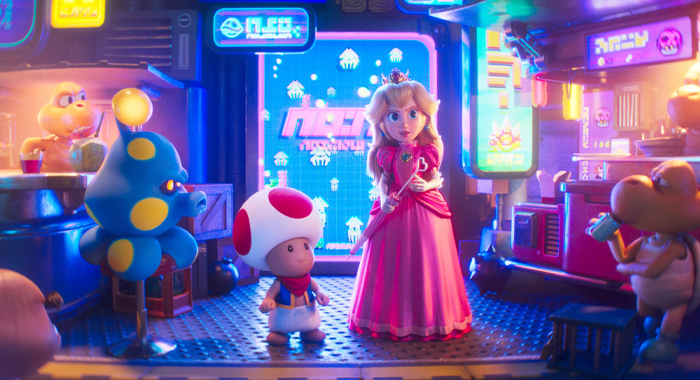
Are there plenty of Easter eggs?
Even though the Star Fox character is nothing more than a way to introduce a sequel, the other supporting characters and easter eggs throughout are richly rewarding.
— M.N. Miller, InSession Film
It’s as if it exists only for us to pick out the game-referencing background details in panoramic action shots… and to threaten us with us with a Super Smash Bros. cinematic universe, given the multiversal cameos by non-Super Mario Nintendo characters.
— Eli Friedberg, Slant Magazine
The film keeps throwing things at you. It’s an orgy of video-game Easter eggs.
— Owen Gleiberman, Variety
Is the action worthy of the source material?
The action is exciting and inventive.
— M.N. Miller, InSession Film
The film’s surplus of action and chase scenes follows the same rigid formula of swooping camera movements and game power-up deus ex machinas that no sequence ever proves particularly exciting.
— Wilson Chapman, IndieWire
Does the movie’s pace seem to have gotten a mushroom boost?
The Super Mario Galaxy Movie doesn’t leave you time to catch your breath.
— Frank Scheck, The Hollywood Reporter
Most of the time, the film exists to speed-shuttle audiences to the next visually overwhelming set piece.
— Eli Friedberg, Slant Magazine
If anything, the film only loses energy as it goes on, with the final confrontation proving particularly anemic and rushed, as if the film is hurrying along to avoid having to delve into its storylines with more than a surface skim.
— Wilson Chapman, IndieWire
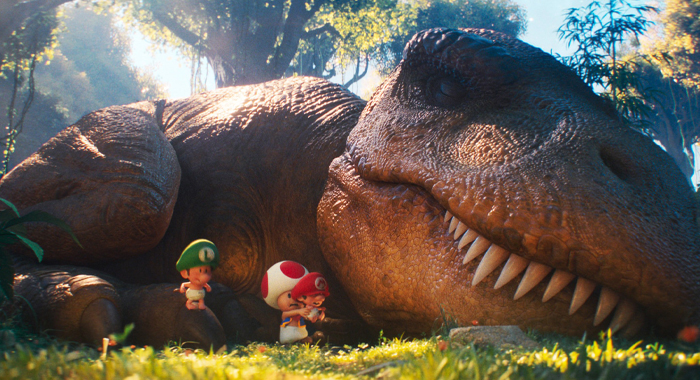
How is the script?
Matthew Fogel’s screenplay, which mostly pays lavish fan service to its inspiration, also weaves in a few emotional elements.
— Frank Scheck, The Hollywood Reporter
It isn’t aiming to be a grand, life-affirming story, but pure escapism. That approach doesn’t always land, but when it does, it delivers a charming, whimsical ride.
— David Gonzalez, The Cinematic Reel
The sequel’s plot is unusually heartfelt, with the villains being three-dimensional, which is welcome.
— M.N. Miller, InSession Film
The Super Mario Galaxy Movie doesn’t have a story to tell or themes to express so much as stick to a mandate of audience boxes to check.
— Eli Friedberg, Slant Magazine
Does it do a good job adapting the game?
It has a story that embraces the simplicity of the original game.
— David Gonzalez, The Cinematic Reel
While [it’s] all clearly designed to appeal to young gamers, I don’t mean that the film replicates the experience of playing one of the Super Mario Bros. games. The first movie actually did.
— Owen Gleiberman, Variety
Somehow on screen, it all registers as flat, imagination packaged into the most cleanly corporate and focus-group approved form possible.
— Wilson Chapman, IndieWire
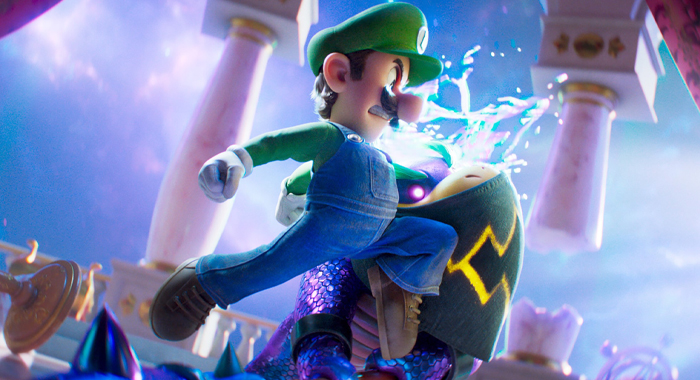
Is it funny?
Most of the jokes land, ranging from cute to amusing to downright funny.
— M.N. Miller, InSession Film
There’s a funny visual gag revolving around Mario’s inability to draw. And there are some amusing lines that seem designed to make us feel like we’re in on the jokes.
— Frank Scheck, The Hollywood Reporter
One of the most successful gags in the movie is essentially a reskin of the famous Sloth DMV bit in Zootopia.
— Wilson Chapman, IndieWire
How’s the voice cast?
The voice cast delivers across the board.
— David Gonzalez, The Cinematic Reel
It’s an embarrassment of vocal riches… Many of the stars’ contributions here, especially those of Black and Glover, are outstanding.
— Frank Scheck, The Hollywood Reporter
Is Yoshi a great addition?
Donald Glover taps into a Groot-like tone for Yoshi, and it works surprisingly well.
— David Gonzalez, The Cinematic Reel
Don’t expect him to get that much to do, though: he’s here because he’s an iconic character rather than as a part of the story.
— Wilson Chapman, IndieWire
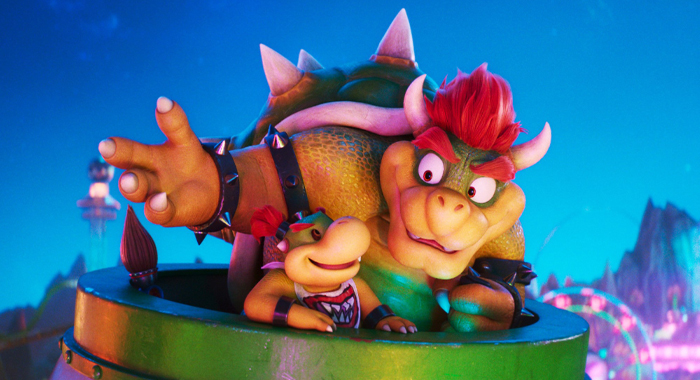
Are the villains still the best characters?
I found myself relating to the bratty Bowser Jr. way more than the lead heroes.
— Wilson Chapman, IndieWire
The real standout is Jack Black and Bennie Safdie as Bowser and Bowser Jr.
— David Gonzalez, The Cinematic Reel
Somehow, two Bowsers add up to less of a wowser than one.
— Owen Gleiberman, Variety
Does it have any other major problems?
The Super Mario Galaxy Movie doesn’t necessarily fix the frustrations that held the first film back. The story still leans thin, certain characters feel underutilized, and those looking for something deeper won’t suddenly find it here.
— David Gonzalez, The Cinematic Reel
Charlie Day offers nothing to the Luigi character other than, to put it politely, a distinct voice that brings a beloved character down, which is grating.
— M.N. Miller, InSession Film
Will it leave us wanting more?
There’s a distinct romantic vibe between Mario and Princess Peach (which I can’t wait to be explored in the next installment).
— Frank Scheck, The Hollywood Reporter
The Super Mario Galaxy Movie is a fun placeholder while we wait for a Super Mario Bros. film worthy of the titular characters that fans deserve.
— M.N. Miller, InSession Film
The Super Mario Galaxy Movie opens in theaters on April 1, 2026.
Thumbnail image by ©Amazon MGM Studios
Find Something Fresh! Discover What to Watch, Read Reviews, Leave Ratings and Build Watchlists. Download the Rotten Tomatoes App.

Video: Shimmying American Woodcocks Cause a Birding Frenzy in N.Y.C.

‘Outpouring of love’: Hundreds gather for vigil at park in remembrance of man found in Detroit River

Driver led San Francisco police onto Bay Bridge causing partial closure

Lake Dallas residents demand accountability after house explosion injures woman

Celtics score a franchise-record 53 points in first quarter in rout against Heat – The Boston Globe

Florida High School Football Rankings: Top 25 teams – Oct. 21

How old is Bo Nix? What to know about Oregon quarterback ahead of 2024 NFL Draft

Cleary's 21 help Le Moyne down Central Connecticut State 69-64 in OT

99th annual Pony Swim held in Virginia

Indiana Members Credit Union announced as new anchor tenant at Bottleworks District

GOP leaders endorse Trump’s shutdown-proof move to end DHS funding lapse

Palestinians in West Bank protest, strike against Israeli death penalty law

Judge delays Luigi Mangione’s federal trial by about a month but won’t push it to next year | CNN

Video: Trump Says U.S. to Leave Iran ‘Very Soon’

April showdowns: 4 key races to watch this month that will test Trump, GOP grip on power
-

 South-Carolina4 days ago
South Carolina vs TCU predictions for Elite Eight game in March Madness
-

 Miami, FL7 days ago
Jannik Sinner’s Girlfriend Laila Hasanovic Stuns in Ab-Revealing Post Amid Miami Open
-

 Culture1 week ago
Do You Know the Comics That Inspired These TV Adventures?
-

 Education1 week ago
Video: Trader Joe’s Dip Head-to-Head Taste Test
-

 Minneapolis, MN7 days ago
Boy who shielded classmate during school shooting receives Medal of Honor
-

 Culture1 week ago
Wil Wheaton Discusses ‘Stand By Me’ and Narrating ‘The Body’ Audiobook
-

 Tennessee1 week ago
Tennessee Police Investigating Alleged Assault Involving ‘Reacher’ Star Alan Ritchson
-

 Vermont4 days ago
Skier dies after fall at Sugarbush Resort