
Connect with us

Movie Reviews

1986 Movie Reviews – About Last Night, Big Trouble in Little China, The Great Mouse Detective, Howling II, Psycho III, Under the Cherry Moon | The Nerdy

Published

on

1986 Movie Reviews – About Last Night, Big Trouble in Little China, The Great Mouse Detective, Howling II, Psycho III, Under the Cherry Moon | The Nerdy
by Sean P. Aune | July 4, 2026July 4, 2026 10:30 am EDT

Welcome to an exciting year-long project here at The Nerdy. 1986 was an exciting year for films giving us a lot of films that would go on to be beloved favorites and cult classics. It was also the start to a major shift in cultural and societal norms, and some of those still reverberate to this day.

We’re going to pick and choose which movies we hit, but right now the list stands at nearly four dozen.

Yes, we’re insane, but 1986 was that great of a year for film.

The articles will come out – in most cases – on the same day the films hit theaters in 1986 so that it is their true 40th anniversary. All films are also watched again for the purposes of these reviews and are not being done from memory. In some cases, it truly will be the first time we’ve seen them.

Advertisement

This time around, it’s July 4, 1986, and we’re off to seeAbout Last Night, Big Trouble in Little China, The Great Mouse Detective, Howling II, Psycho III, and Under the Cherry Moon.


About Last Night

St. Elmo’s Fire was awful. This feels like a make-good for two of the actors.

Advertisement

Danny Martin (Rob Lowe) meets Debbie Sullivan (Demi Moore) and their chemistry is electric and immediate. They waste no time becoming serious, and moving in together, despite neither of them having ever had a serious relationship. They quickly discover it’s not quite as easy as just sharing an apartment like you do with a roommate.

I didn’t love the movie (mainly due to Jim Belushi’s Bernie character), but I did enjoy it far more than I anticipated.Moore and Lowe’s on-screen chemistry really clicked far more than most on-screen couples.

It’s a good character study, and keeps you engaged. Is it essential viewing? That’s up to you.

Where to watch: Available to stream.

1986 Movie Project - Big Trouble in Little China - 01


Advertisement

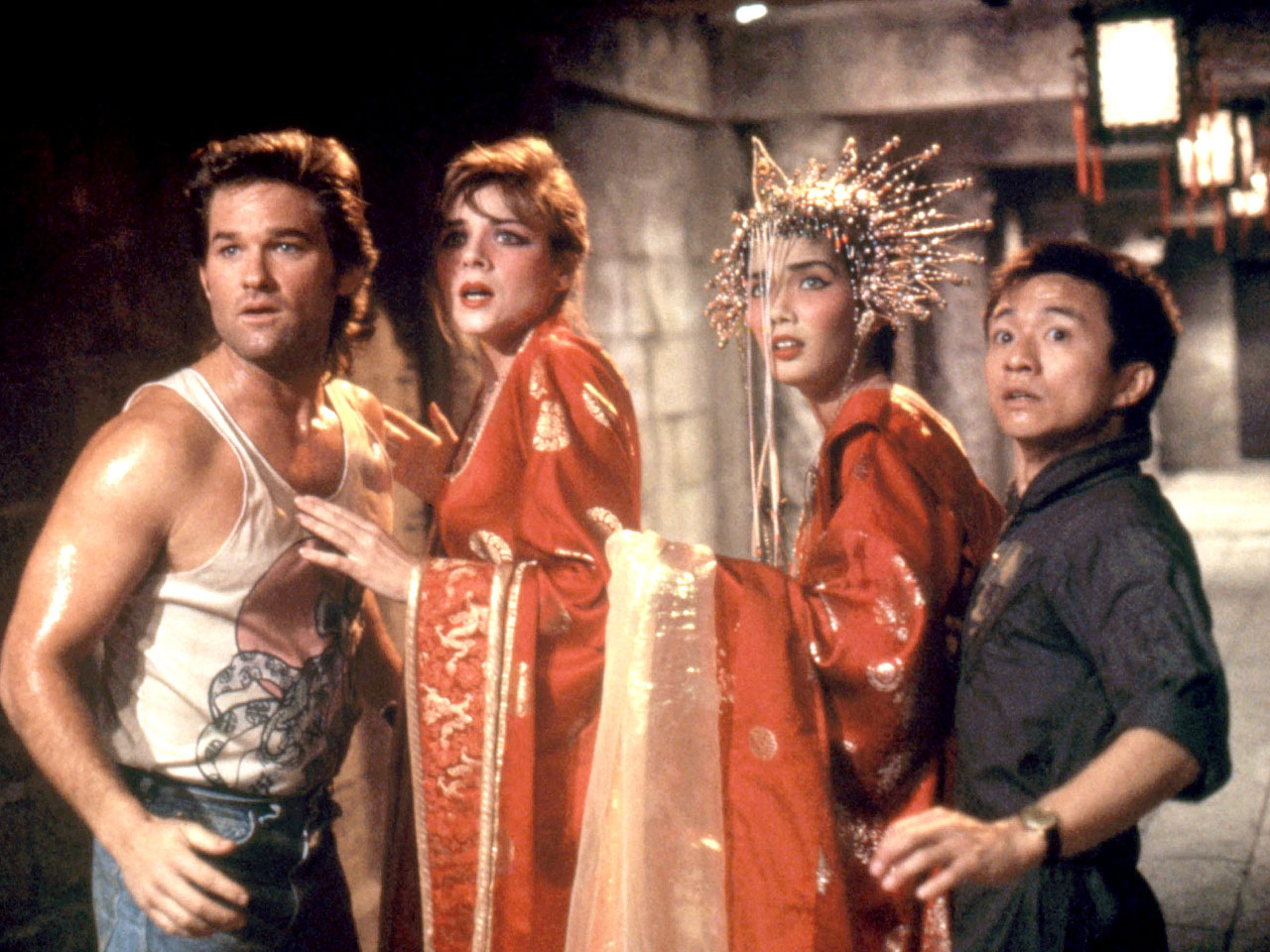
Big Trouble in Little China

If there was ever a poster child for a movie that found a second life in rentals and on cable, this is it.

Jack Burton (Kurt Russell) is a over-the-road trucker with a lot of thoughts on life and how important reflexes are. While making a delivery in Chinatown, he gets sucked into a situation with an ancient Chinese evil trying to regain its humanity, and all Jack really wants is to get his truck back.

John Carpenter wasn’t quite a household name, but with films such as Halloween, The Thing and Escape From New York to his name, people were taking notice. Teaming with Russell for another outing seemed like it would be another win, but this one proved just a little too odd for mainstream audiences. Once it got into our homes, however, everyone fell in love with it.

As Jack Burton always says, it’s a must-see for any 80s journey.

Advertisement

Where to watch: Available to stream.

The Great Mouse Detective

I had never seen it, and as Disney films go, I would have been fine keeping it that way.

Set in Longon in 1897, a young mouse named Olivia Flaversham witnesses her toymaker father get kidnapped. She seeks out Basil of Baket Street, also known as the Great Mouse Detective. Along with David Q. Dawson, recently returned from serving in the military in Afghanistan, the three of them try to stop Professor Ratigan from replacing the Queen.

It’s just a Sherlock Holmes story, but with mice. I didn’t find anything that compelling about it. It was pretty enough to look at, but the story just left me fairly empty.

Advertisement

Where to watch: Available to stream.

Howling II

I… have a lot of thoughts.

Following up on the end of the The Howling, Ben White (Reb Brown) buries his sister Karen White, and quickly learns she was a werewolf. He teams up with werewolf hunter Stedan Crosscoe (Christopher Lee) to take down Stirba (Sybil Danning), the queen of the werewolves who is about to celebrate her 1,000th birthday, and stop the spread of the werewolf curse.

On paper it sounds fine, in execution it is just… horrible. Poorly lit, horrible acting, low-grade effects, and costuming that leaves you more confused than anything else.

Advertisement

Avoid at all costs.

Where to watch: Available to stream.

Psycho III

I have to admit, so far these sequels haven’t been horrible.

Following up shortly after the vents of Psycho II, Norman (Anthony Perkins) is still hiding the body of Emma Spool, and having issues again with seeing “Mother.” He hires drifter Duane Duke (Jeff Fahey) to run the motel. He also meets Maureen (Diana Scarwid), a nun on the run after she accidentally kills one of her sisters. With a new woman in his life, Mother has some thoughts on what Norman should be doing.

Advertisement

In general I actually enjoyed this new outing in the franchise, although it feels it missed some opportunities at the end of the story of Norman and Maureen working together. What if Maureen had actually been the one manipulating Norman this time? There was another movie lurking in the background that sadly never gets broached.

What we did end up with, however, was entertaining.

Where to watch: Available to stream.

Under the Cherry Moon

This film was unfairly maligned.

Advertisement

Christopher Tracy (Prince) and Tricky (Jerome Benton) as wooing women in France in hopes of getting enough money to head back to Miami one day. When Christopher hears about Mary Sharon (Kristin Scott Thomas) inherting a trust fund of $50 million for her 21st birthday, she becomes his next mark, but little does he know how it will end for him.

Following Purple Rain, Prince could do no wrong in Hollywood and was given a blank check for his next film. Audiences and critics did not warm to this film as it wasn’t Purple Rain 2 and it lived with a bad reputation for years.

I hadn’t seen it in 35 years or more when I watched it for this report, and… I really enjoyed it. It’s over-the-top, but in the right way. Prince was clearly paying homage to the silent movie romance films, and it works for what it is. Is he a great actor? No. Does it work for this film? Yes.

Honestly, this may be one of the most enjoyable films I’ve had in this project in several weeks. It’s worth a reassessment.

Where to watch: Available to stream.

Advertisement

1986 Movie Reviews will continue on July 11, 2026, with Club Paradise.


Continue Reading
Click to comment

Leave a Reply

Your email address will not be published. Required fields are marked *

This site uses Akismet to reduce spam. Learn how your comment data is processed.

Movie Reviews

Movie Review: ‘Minions & Monsters’ is a very yellow mash note to Hollywood – Sentinel Colorado

Published

on

Movie Review: ‘Minions & Monsters’ is a very yellow mash note to Hollywood – Sentinel Colorado

Every once in a while, Hollywood gets high on its own supply and makes a love letter to moviemaking. It happened recently with Steven Spielberg’s “The Fabelmans” and George Clooney’s “Jay Kelly.” Now it’s time for the unlikeliest of love-letter writers: canary-yellow, gibberish-speaking, overall-wearing mini-monsters.

“Minions & Monsters” — the third chapter in the ongoing standalone adventures of the “Despicable Me” pint-sized enablers — is about the sheer greatness of moviemaking, and it’s a navel-gazing misfire. Few industries — maybe journalism, sure — is as enamored at making its profession seem heroic.

The Minions this time find themselves at the dawn of both the movie business in Hollywood and the last push by suffragists to get the vote. It’s a weird confluence that writers Brian Lynch and Pierre Coffin fumble.

The movie has playful references to old screen gods — Harold Lloyd dangling from the hands of a clock and Charlie Chaplin swallowed by the gears of a mechanical system — along Hollywood nods to “Casablanca” and the punny title “The Good, the Bad and the Stupid” — but the kids in the audience won’t get them and their parents are just too tired. Harold Lloyd jokes don’t hit as hard in 2026.

Two of the legion of faceless Minions step forward this time — best friends James and Henry, creative misfits amid a smear of yellow drones — to unite and make a movie. (Who knew there was a Minion counterculture?)

Advertisement

Things go very well at first — turns out adding a Minion or two to a cowboy or a heist movie makes them instant kings of the box office — and they soon move into a Beverly Hills mansion and become insufferable. James dreams of winning an Oscar, which in this case is a statuette of a gold banana, a Minion obsession.

But they hit a wall when silent movies turn to talkies. And since they spout nothing but nonsense — “Fantastico” “miso soup” and “vamos” — can’t make the transition. They’re dumped out of the studio system.

That’s when James and Henry finally get the plot going: Make their own killer monster movie by conjuring up real monsters. The first one they try turns out a little weird: The gigantic, fearsome octopus-dragon they request turns out to be a cute green Funko Pop-like critter called Goomi, voiced by Trey Parker. Goomi promises to find them some real monsters. But should we trust him?

Coffin, making his first solo directing effort after co-helming all three “Despicable Me” films and the first “Minions,” voices all the Minions — he must be fun to have at parties — and is an assured hand. The violence levels are a little high for PG, including a beheading and various impalings, plus the usual senseless mayhem.

The screenwriters have included a romantic subplot involving a suffragette voiced by Zoey Deutch who falls for a robot-alien (standout work by Jesse Eisenberg) in a storyline that makes less and less sense. And the framing device — a museum tour guide explaining how Minions shaped Hollywood — sags awkwardly.

Advertisement

Adults can keep awake looking for the Easter eggs Coffin has left for serious cinephiles: “20,000 Leagues Under the Sea,” “Steamboat Bill, Jr.,” “A Trip to the Moon,” “Metropolis,” “Citizen Kane” and “The Blob.” Maybe the best moment in the movie is almost a throwaway: Director George Lucas, appearing as himself.

“Hooray for Hollywood” is on the soundtrack and that might have been the subtitle for the movie itself. There are some people whose eyes get moist thinking about picking up a film camera and following their muse, having their work play in a dark theater to cheers. And then there are others who just want to get on with it already. “Vamos!”

“Minions & Monsters,” a Universal Pictures release that opens in theaters July 1, is rated PG by the Motion Picture Association for “violence/action, language, and rude/macabre humor.” Running time: 90 minutes. One and a half stars out of four.

Advertisement
Continue Reading

Movie Reviews

The Kernel: Freshly popped film reviews — Batch #6 – Excalibur

Published

on

The Kernel: Freshly popped film reviews — Batch #6 – Excalibur

Obsession, dir. Curry Barker

Obsession is the debut feature from director Curry Barker, which follows Bear (Michael Johnston), an awkward teenager desperately in love with his friend Nikki (Inde Navarrette). When he is given a mystical chance to make one wish come true, he decides to make Nikki fall head-over-heels in love with him, unaware of the horrific consequences that will arise. A twisted tale of entitlement and regret, Obsession is eager to let audiences sit with the discomfort it offers.

The film’s cast is mostly made up of unknown actors (Andy Richter not included) who bring life and levity to an, at times, very heavy script. Michael Johnston’s puppy dog eyes and tender demeanour make him apt for this tortured lead, especially as we watch him descend deeper into the hell of his own making. However, Inde Navarrette’s gutting portrayal of Nikki is Obsession’s standout performance, as she carries the weight of the film on her shoulders with seeming ease. Navarrette captures the vacancy and lifelessness that this character requires, with moments of lucidity and terror that will undoubtedly make this a horror performance discussed for years to come.

Obsession is a mean film at its heart — one that does not let the audience feel comfortable at any moment, and that thrives in its grime and dimness. The “hero” of the story is hateable and places every character around him into terrible scenarios, leaving the audience to squirm as he tries to make things right. Barker’s direction provides palpable suspense for moments of sudden intensity and horror, yet the film remains comedic in its efforts to relieve tension. I, however, left this screening with a pit in my stomach. Highly recommend!

Photo courtesy of Featured Creatures.

Dead Lover, dir. Grace Glowicki

Advertisement

Presented at my screening in sickly “Stink-O-Vision,” Dead Lover is the sophomore feature of writer, director, and actress Grace Glowicki. Inspired by works of Gothic horror like Frankenstein and The Cabinet of Dr. Caligari, Dead Lover is a gloriously grotesque, goofy, and grody romantic horror-comedy that centres a smelly gravedigger (Glowicki) who goes to monstrous and comedic extremes to reanimate her one true love (Ben Petrie) after he perishes at sea.

Though the film is co-written by her partner and frequent collaborator, Ben Petrie, Dead Lover feels like Glowicki’s brain-child, harnessing her aptitude for the cartoonish and the outrageous. This is best exemplified through its use of Stink-O-Vision, a scratch-and-sniff technology seen previously in John Waters’ “Odorama” for Polyester, placing these filmmakers in conversation for their vulgarity, comedic stylings, and embracement of camp.

Dead Lover, shot entirely on black-box stages over the course of two weeks, uses only four actors playing multiple parts in heightened makeup and costumes, evoking the feeling of a filmed stage show. The film employs over-the-top performances, handcrafted sets, stage props, and colourful, high-contrast lighting reminiscent of German expressionism. Indeed, Glowicki’s directorial vision seems to be heavily inspired by the handmade aesthetics and experimentalism of independent theatre and silent-era filmmaking, akin to the work of fellow Canadian, Guy Maddin.

Dead Lover’s plot is more of a contrivance to get to the next excellent set piece, disgusting smell, or gonzo performance, though still remaining full of twists and tenderness. While the film may grate at times and the sickly scents conjured by the scratch-and-sniff cards were certainly gag-inducing, Dead Lover carries an infectious sense of fun and delight that keeps audiences laughing. Recommend!

Advertisement
Continue Reading

Movie Reviews

‘Baby Do Die Do’ movie review: In the mood for Mumbai

Published

on

‘Baby Do Die Do’ movie review: In the mood for Mumbai

Monsoon sets in Mumbai with a bang. Rain drops ram the streets in desperation. The relief easily drifts into panic. Sea of umbrellas everywhere but one amongst them at a local station stands out. Wading through the downpour, its red colour drips with a warning. The person holding it exhibits a stone-cold demeanour, as she looks for an old man in the bustling chaos of the train at rush hour. She moves through the crowd inconspicuously and readies her umbrella, which secretly hides a gun as a trigger appears on its handle. She takes a muffled shot and disappears into the ensuing chaos.

The opening scene in Huma Qureshi’s Baby Do Die Do bears an uncanny resemblance to the real horrific killing of a young man in the local train recently, which laid bare the brutality that some people in the city carry within. An argument can escalate soon into homicide and there would be no one coming to rescue. Baby Karmarkar (Qureshi) carries a similar violence in her heart, that rises from the clutches of a city that failed her when she witnessed the death of her twin sister as a child. The city has turned her into a sociopath

The film however, doesn’t always treat the violence with gravity. Its tone is not always sharp and cynical even as it aims to critique the cornerstones of wealth and power on occasions by establishing the link between the builder lobby and mafia. Director Nachiket Samant largely uses the noir as part of the design element, lending a pulpy, comic-bookish layer to the narrative while the thematic undercurrents don’t really get time to marinate. As a result, the rainy undercurrents, moody lighting and dark humour gets dissolved just into style rather than adding complexity to the narrative.

Baby Do Die Do (Hindi)

Director: Nachiket Samant

Duration: 125 minutes

Advertisement

Cast: Huma Qureshi, Chunky Panday, Sikandar Kher, Seema Pahwa, Rachit Singh, Marudhar Shekhawat, Arun Kushwah

Synopsis: A deaf and mute assassin gets softened by love as she vows to take revenge from the man who murdered her twin sister

That being said, there’s more heart in Baby Do Die Do than the combined range of some of the other monotonous films that have come out in recent times. Its disregard for template is quite reassuring as it also aims to subvert genre cliches with a touch of quirk. The film doesn’t forget to have fun while juggling along with the grimness, as seen in an inventive item song which is inserted when Manu (a brilliant Marudhar Shekhawat), an associate of Baby, is tasked with an assassination that takes him to a gay pub in Andheri East. Saqib Saleem (also producer) makes a guest appearance as a sexy, ripped dancer, grooving seductively to a song with the hook line ‘Alpha Q’ repeated all along, creating an edgy innuendo. The gaze is empowering, building a sense of liberation to Saqib’s character, who controls his body and its movements. Rather than being an object of desire, he becomes its subject, withholding the capacity to flirt with anyone he wants, without crossing a boundary. Even the onlookers carry a sense of respect in their eyes as the camera doesn’t become a medium to represent lecherous gazes.

A still from the film

A still from the film
| Photo Credit:
Saleem Siblings/Youtube

All of this inherent loudness compliments the muted worries of Baby, who cannot hear and speak. It is delightful to see her first tryst with love unfold like a silent film as Siddhu (Rachit Singh), a likeable Sikh music teacher is smitten by her beauty. Their love story starts in a bus and later blooms in a cramped apartment, as there’s again a gender reversal at play, with Baby incorporating toughness as Siddhu stays dipped in vulnerabilities. There’s still a lot more to them that remains unexplored as the film has to fixate on the central conflict of Baby’s vengeance, which remains its weakest and most predictable link.

It is only when it digresses from the way that the film shows beguiling promise. Whether it is in smaller sketchy moments like when a character with vitiligo is called black and white in a humourous scene or the dwarf gangster Lucky (Arun Kushwah) immortalised by his brother, Zafar Katkar (Sikandar Kher) by putting his name on the tallest building in the city. The film also allows these dreaded gangster’s tiny moments to breathe, reflecting a common link between all the characters, born and raised on the same soil of Mumbai. Zafar gets into reverie during a violent hold up in a shanty when the distinct smell in the air takes him back to his childhood. He sniffs a blanket and talks of living in the underbellies and wanting to escape that netherworld as others seem to sympathise to his sentiments. All of them become Mumbaikars in that one moment before mayhem, disarmed of other identities when put in a space of mutual co-existence, rooting for the common concerns of roti, kapda and makaan. It is also short-lived for time has shaped each of them differently and they must react to the version that the city has forced them to be in the present.

Huma Qureshi and Chunky Panday in the film

Huma Qureshi and Chunky Panday in the film
| Photo Credit:
Saleem Siblings/Youtube

Kher inhabits this dichotomy with urgency, lending an astounding tragic-comic quality to his screen presence. He is a treat to watch but the screenplay just stops short of taking him to murkier territories while resorting to familiar, convenient turns to reach the resolution. Even Huma remains impressive as she stays silent for the most part and uses her face to translate Baby’s emotional turmoil. The real surprise in the mix comes from the restrained act put on by Chunky Panday, who represents the helpless middle-class Mumbaikar with remarkable honesty.

Advertisement

These are all characters that become much more superior than the immediate storyline which Baby Do Die Do struggles to run along with. Their dreams feel palpable, their anger unresolvable and their beauty merging with the soul of the city. On occasions, their collective aspirations represent the charms of Bombay films of the 70s and 80s by Sai Paranjpye and Basu Chatterjee. Even the twin sisters retribution tale seems to be a reworked ode to older Hindi movies. It is an aesthetic that is hurriedly disappearing from other contemporary city films.

So, although Baby Do Die Do imagines Mumbai as a cyberpunk landscape, it actually prospers while recollecting the unassuming everyday pulse of the metropolis, whether it is in the tale of a shoe polisher, who suffocated to his death on an overcrowded bridge, a peon in the High Court, who got killed by mistake and the mother whose sanity was taken away by the city’s violence. Then, in the compounding mess created by the bigger folks Murjhani and Bhambhani, it is important, like Baby, to be zara hatke, zara bachke. It is after all, Bambai meri jaan.

Baby Do Die Do is currently running in theatres

Published – July 03, 2026 03:10 pm IST

Advertisement
Continue Reading
Advertisement

Trending
