Entertainment
Liza Colón-Zayas has put in the work. In 'The Bear,' she makes every second count

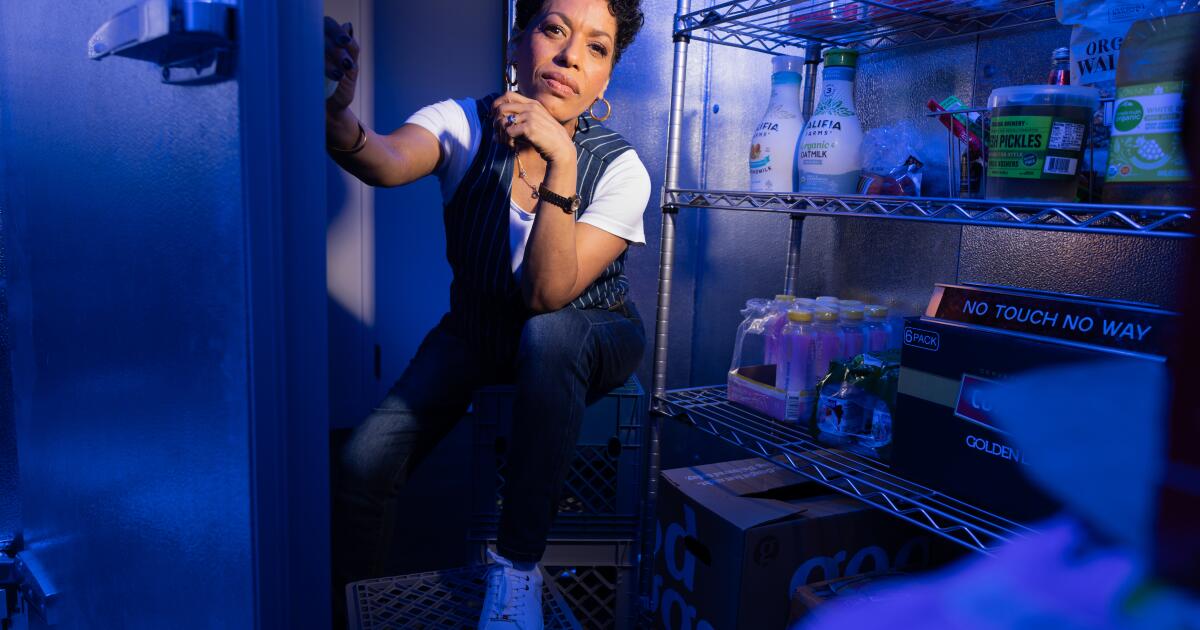
There is no nail-biting stress for Liza Colón-Zayas in this restaurant. On a balmy June afternoon, she enters the homey, brightly colored space of Mofongos, a family-run North Hollywood Puerto Rican eatery, and instinctively begins moving her hips to the beat of Ángel Canales’ ”Sabor, los Rumberos Nuevos,” which slaps the eardrums upon entering.
In scheduling our meet-up, she had one request: shining a light on a small business akin to the one featured on “The Bear,” the hit FX series about the people working in the chaotic kitchen of a Chicago sandwich shop turned fine-dining restaurant. It’s less than a week before the third season of the series drops — it’s now streaming on Hulu — and the Nuyorican actress, who plays no-nonsense cook Tina Marrero, has never been to this establishment yet quickly offers guidance on the dishes to the rookie in front of her.
“You like pork?” she begins. “There’s also arroz con gandules, which is yellow rice, with the sofrito and pigeon peas. Mofongo, as the name suggests, are fried plantains mashed together with crispy pork skin and they fill it in the pilon with whatever you want — shrimp, chicken or pork — and a sauce around it.”
At just over 5 feet tall, Colón-Zayas seems smaller seated at this tabletop that’s glossed with a photo of Puerto Rican baseball icon Roberto Clemente. Unlike her character, she isn’t stingy or curt with her words and is more likely to insist you sample her order of mofongo de carne guisada than try to sabotage the cooking of your stock by turning up the flame to high heat. But much like her character, Colón-Zayas knows what it’s like to be in plain sight, putting in the work for years, hoping for the nexus of potential and opportunity.
With a nearly 30-year career, Colón-Zayas is an Off Broadway veteran. She’s performed on a string of television shows and films over the years, often in day-player roles but also in roles that tapped her range. Then came “The Bear,” FX’s critical and audience darling, which has nabbed a slew of awards to back up the hype.
For two seasons, her character has simmered on the back burner — active and essential but not at a full boil just yet. As a new regime takes over at the Original Beef of Chicagoland following the death of its owner, Michael “Mikey” Berzatto (Jon Bernthal), Tina’s guard is up, resistant to the orders being slung at her by new, younger bosses. In time, she relaxes enough to see that change could be for the better — last season, she enrolled in culinary school and was promoted to sous chef.
“I get her,” Colón-Zayas says. “She’s on guard, like, ‘You’re walking into my territory.’ This is not just a job. This is a made family. Restaurants, old-school traditional ones, are shutting down all around us. She doesn’t know what the changes Carmy is trying to make will mean. And we’ve just lost a family member, Mikey.”
In the third season, Tina comes into focus. And so does Colón-Zayas.
Jeremy Allen White as Carmen “Carmy” Berzatto and Liza Colon-Zayas as Tina in “The Bear.”
(Matt Dinerstein / FX)
Episode 6, titled “Napkins,” rewinds back five years before the petite and sharp-tongued working mom was stretching her culinary potential. Already stressed about finances after a rent increase, Tina loses her job managing payroll at a confectionery company. Her husband, played by Colón-Zayas’ real-life spouse, David Zayas (“Dexter”), is a doorman waiting for a promotion that will never come. With bruised pride, financial anxiety and ample copies of her résumé in hand, Tina pounds the pavement each day — smile locked in — seeking work but being met with indifference or outright rejection.
“I am glad to know that she was far more respectable than I thought she’d be,” says Colón-Zayas, who didn’t create a backstory for the character beyond deciding she was a transplant from New York. “When we’re introduced to Tina, she’s pretty hardcore, but we know she’s a mom. I didn’t realize that she had a 9-to-5, and they were working poor, they were stable, and [she and her husband] are in love. There was this whole other peaceful, kind of normal side of her life.”
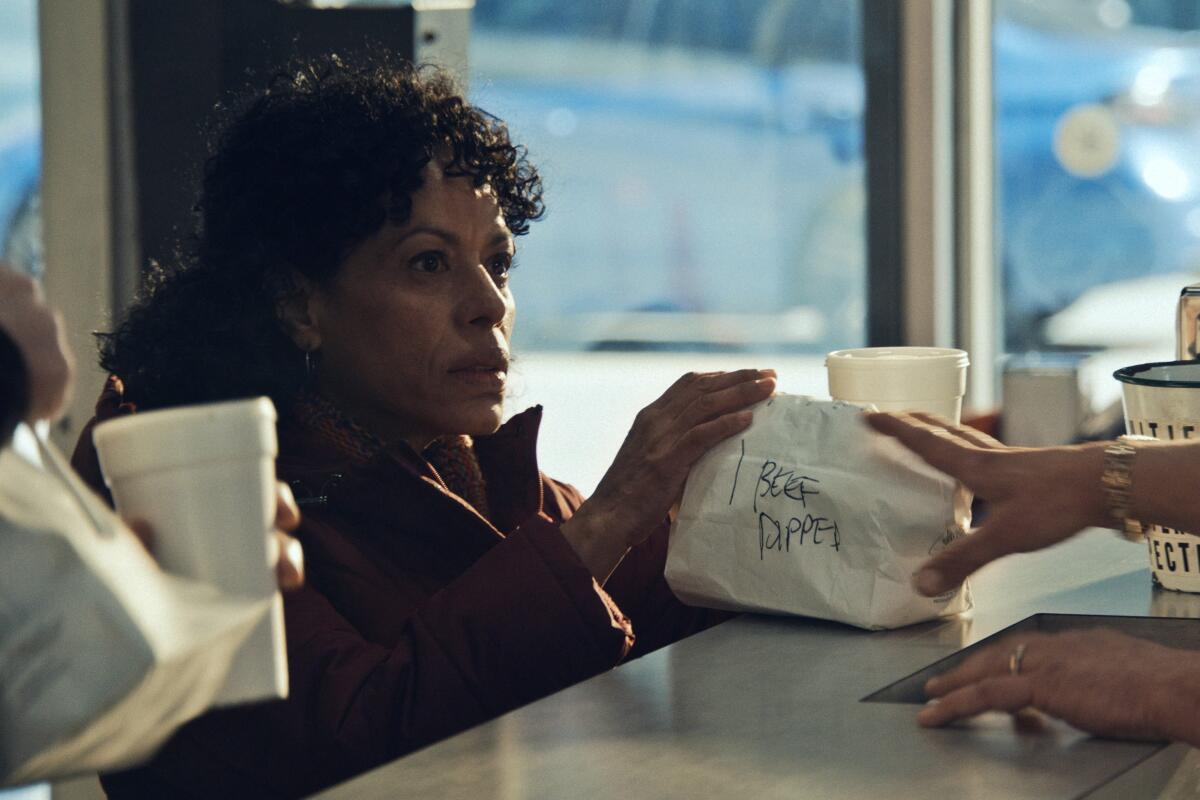
A pivotal moment in the episode, which was directed by Ayo Edebiri (who plays Sydney Adamu in the series), arrives when Tina, after one particularly disappointing day on the job search, steps foot in the show’s central sandwich shop. The volume gets turned up, both in sound and grace. She orders only a coffee but is given a free Italian beef sandwich by the boisterous but kind staff.
1
2
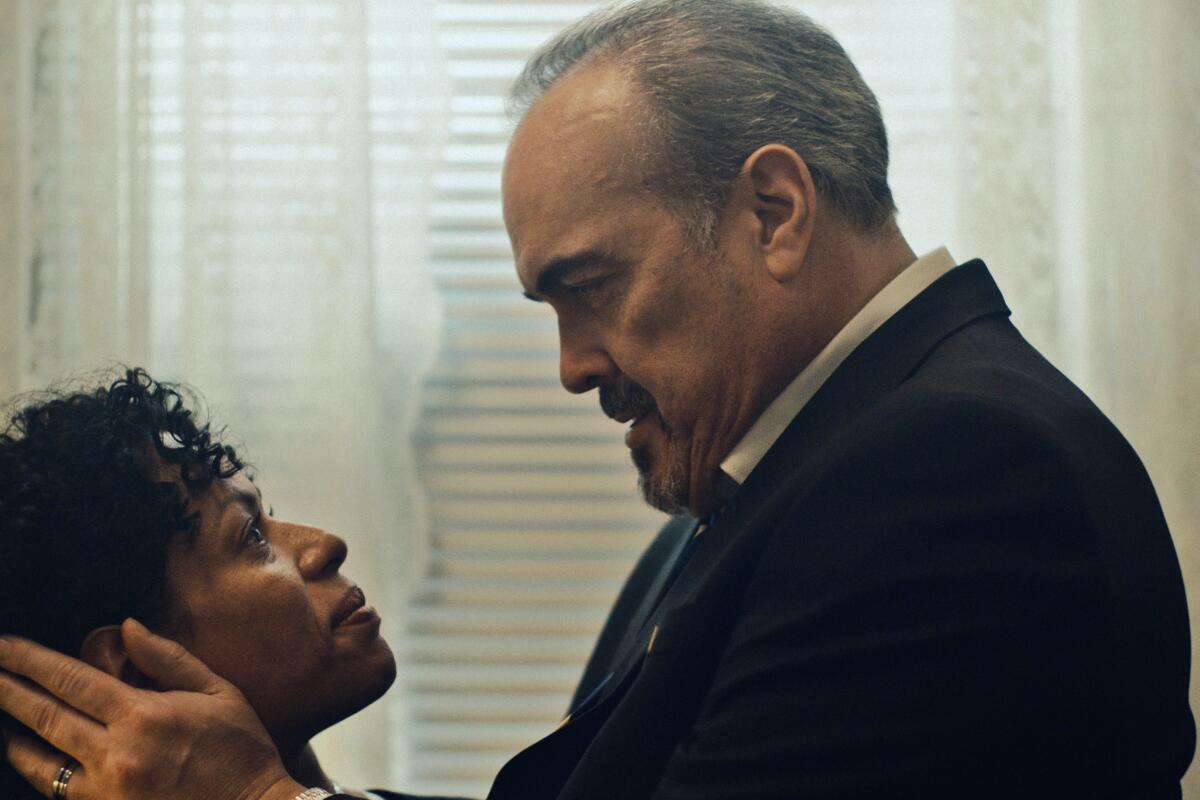
1. Tina (Liza Colón-Zayas) at the Beef. (FX) 2. Liza Colon-Zayas as Tina with her husband, David Zayas. (FX)
As she finds a table away from the chaos, she’s overcome by the reality of her situation, crying into her food. When Mikey checks on her, it leads to a heartfelt conversation between them — in part, about people who get to live out their dreams and the people who are just trying to survive — that ends with him offering her a job. The scene was shot over two days.
Edebiri says she wanted that moment to feel like viewers were stepping back to Season 1, recalling the noise and frenetic energy, while showcasing Colón-Zayas’ prowess as an actor.
“One of the many amazing things about Liza is she’s so petite, and so you’re about to use this sense of wonder,” Edebiri says. “She does a lot of that with just her face and her openness, but Tina’s coming from also this really arduous journey of rejection — shocking and demoralizing rejection — and then in this really chaotic and unexpected place she finds warmth.”
The scene is also a window into Mikey, whom we’ve seen glimpses of throughout the series, but his connection to the staff and what his loss meant comes further into focus.
“Mikey is such a complicated character; we see so many different facets of him,” Edebiri says. “He’s a tough, damaged guy, but he has a lot of love, and invoked a lot of love in people. I think Tina is such an important person to that story.”
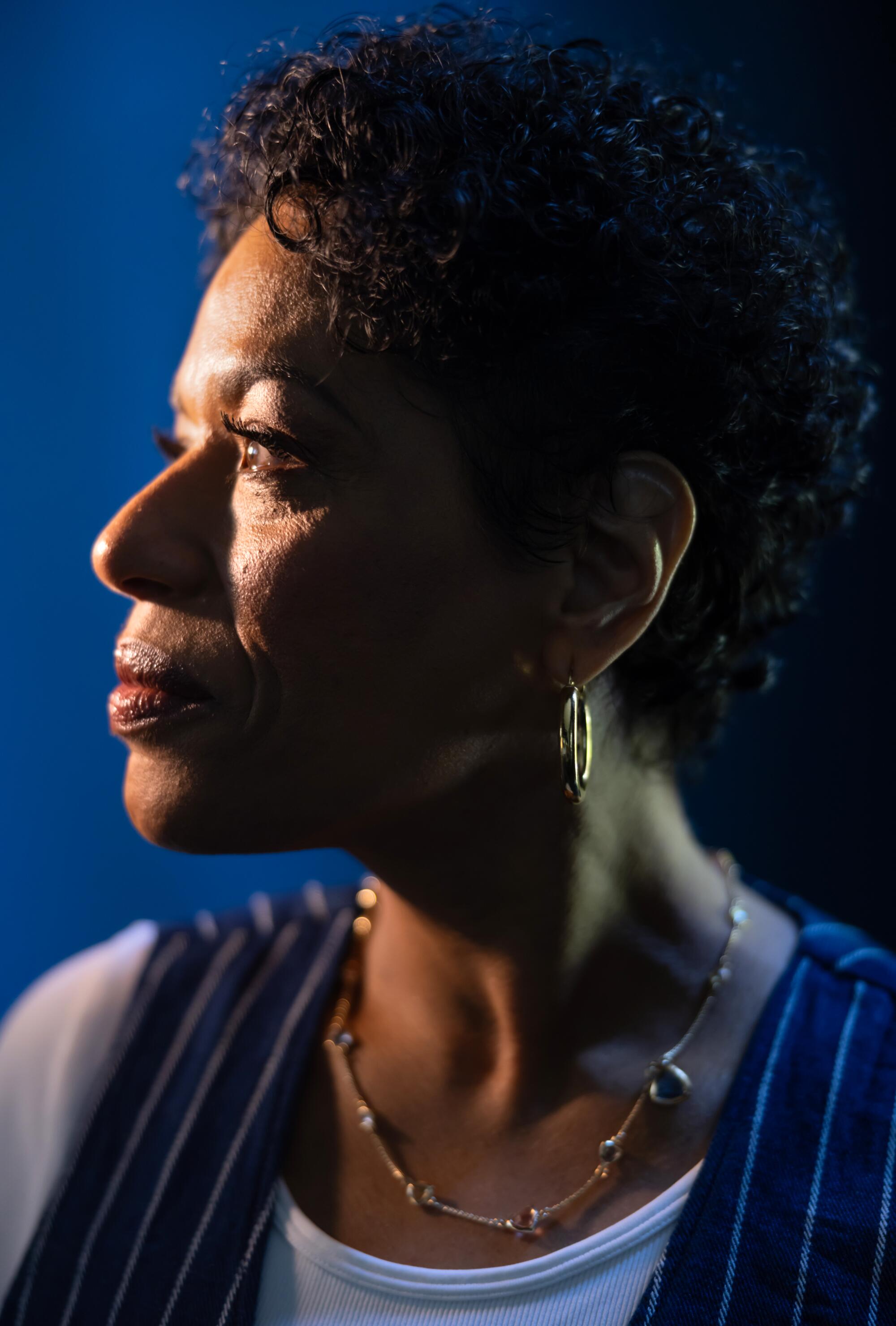
Liza Colón-Zayas says she didn’t create a backstory for Tina, but in Season 3 we learn more. “There was this whole other peaceful, kind of normal side of her life.”
(Christina House / Los Angeles Times)
It gets Colón-Zayas thinking of her own journey to this point in her career.
The youngest of five children, she lived in subsidized housing in the South Bronx with her mother. (Her parents split when she was young, but her father was in her life.) Her gumption revealed itself at an early age. When she was 7, she wrote a letter to the producers of “The Partridge Family” to consider her as a replacement for red-haired, tambourine-playing Tracy Partridge: “I was gonna run away. I was gonna take a taxi, and I was gonna take over because I could play the tambourine much better. Then my brother saw the letter and opened it and read it out loud and made fun of me, and I was mortified. It never got sent.” But she found other ways to hone her craft: impersonating Erica Kane, Susan Lucci’s character on the ABC soap “All My Children,” for guests at her mother’s repeated request.
Talking about her early dreams evokes other emotions. At 16, she joined the Church of Bible Understanding, a controversial religious group. When she was approached by members of the congregation on Fordham Road in the Bronx, her family situation was tough. “They seemed very caring,” she says.
Describing the group as a cult, she said it encouraged isolation from and distrust of nonmembers. She left home at 18 and was taken to Philadelphia, near where the group was founded. There, she took a training course with the church and recruited for it while also working a full-time job at a bakery. The church kept the money she earned and wouldn’t deliver messages or mail from her family.
“I got in deep,” Colón-Zayas says, her eyes turning glassy. “There was no sexual abuse or physical violence to me. And I never witnessed that. It was mind control.”
She eventually returned to New York and, after some vacillating, broke ties with the church. She attended SUNY Albany and her world opened up after she saw a play by Native American women. “I remember thinking, ‘This is what I want to do.’”
She has been a part of the LAByrinth Theater Company since its founding in 1992 and began her acting career off-Broadway, appearing in productions of Quiara Alegría Hudes‘ “Water by the Spoonful” and originating numerous roles in Stephen Adly Guirgis’ works including “In Arabia We’d All Be Kings,” “Our Lady of 121st Street” and “Between Riverside and Crazy.” (She reprised her role in “Between Riverside and Crazy” for a third time in 2022, making her Broadway debut in the process.) She also wrote, produced and starred in “Sistah Supreme,” a semiautobiographical solo show about growing up Latina in New York in the 1970s and ’80s.
“LAByrinth became my artistic community,” says Colón-Zayas, who felt frustrated by both the scarcity of roles for Latinx actors and the stereotypical tones roles often had. “That’s always my advice to young people: Find your artistic community. Find the people who hold you up. It could be just two or three of you, but if they hold you up and you have the same interest and you want to meet in your house and do writing exercises and read scenes or whatever, it helps you stand taller.”
According to Guirgis, a longtime friend who directed “Sistah Supreme,” what makes Colón-Zayas so compelling as a performer is her push for truth and that she draws from a deep well of lived experience.
“She’s always going to give you 100% of her heart, and that is going to end up being something onstage that’s going to be painful, funny, truthful, outrageous but real. Her acting doesn’t seem like acting,” he said.
After years of small roles in shows like “Law & Order,” “Sex and the City” and “Nurse Jackie,” Colón-Zayas got her first recurring role in 2019 on the short-lived OWN drama “David Makes Man.” In 2021, she booked another recurring role in HBO’s revival of “In Treatment.” Then came the role of Tina on “The Bear.”
Her husband commended her perseverance as an actor, maneuvering through disappointment and frustration but eventually finding mainstream visibility.
“The way she dealt with the reality at the time, which was there weren’t many opportunities for someone like Liza, and her struggles with it, yet finding ways to get through it,” Zayas says of his wife. “She’s got a great reputation in theater, she’s done amazing work in theater. So just watching her continuing to move forward is inspiring.”

In her youth, Colón-Zayas got some experience working in restaurants. She worked at a doughnut shop and the counter at a deli, and waited tables at a family-owned Italian restaurant in Albany. “I was always spilling something or getting orders wrong,” she says.
And while she enjoys cooking, she’s modest about her skills. In order to prepare for Season 2 and Tina’s new role as sous-chef, Colón-Zayas did intense training for a week with James Beard Award-winning chef David Waltuck of Chanterelle and with Courtney Storer — the sister of “The Bear” creator Christopher Storer — who is a culinary producer on the show and previously held senior roles at Animal and Jon & Vinny’s in Los Angeles.
“I learned all of the basics, even how to properly hold the knife,” Colón-Zayas says. “I had no idea how sharp those knives were. Day 1, I must have had maybe four or five bandages on my finger because the blades are so sharp you don’t feel it. I’m no pro at home, but I’m better.”

“She’s always going to give you 100% of her heart,” says playwright Stephen Adly Guirgis, who has worked closely with Liza Colón-Zayas over the years.
(Christina House / Los Angeles Times)
It’s quite the turn for the actress who said she once failed to return a copy of a James Beard cookbook when she was a teenager. Not that she ever dared to make a recipe from it: “I had intentions, but it’s a lot of scary ingredients for a poor kid.”
For what it’s worth, Guirgis says Colón-Zayas makes the best roast chicken, which he describes as “out of this world, juicy and absolute perfection.” Asked about her technique, she says her trick is marinating it for a few hours in white vinegar, a ton of garlic, oregano and pepper. “When you put it in to roast, soak a paper towel in oil, so that when you cover it with the foil, it will not rip the skin. And brush the top skin with a little more seasoning and oil so it crisps up real cute, to the point where, when you take it out, it should be falling off the bone.”
Knowing the ins and outs of cooking is one thing. Navigating how surreal it feels to be on one of TV’s buzziest shows is something Colón-Zayas is still getting used to.
“I realize, in hindsight, there are things the universe protected me from myself because I wasn’t ready then,” she says. “It’s hard to take in the good things when you’re always used to scarcity, when your friends and loved ones are struggling. I don’t want to be perceived as being insensitive to that. To have this episode, that is Ayo’s directorial debut, and it’s all me, I cried every time I read the script. It validated that I had a gift.”
Determined not to let the tears welling in her eyes cascade down, she pivots.
“Anyway,” she says, as she moves the food on her plate around as the restaurant’s lively soundtrack overwhelms the moment. By the time we make our way out, she’s let the rhythm find her again.


Last year’s “Superman” ended with Iggy Pop singing “Because I’m a punk rocker, yes I am” — an ironic coda for a superlatively square hero. But it rings straightforwardly true for Superman’s cousin.
Milly Alcock’s Kara Zor-El, or Supergirl, sports not a spandex suit but a Blondie T-shirt. When we meet her in Craig Gillespie’s “Supergirl,” she’s been on an interstellar bender for days. She’s more Courtney Love than Clark Kent.
Nonchalant and sarcastic, Kara is also a little Han Solo-ish, you might say, given that she moves capriciously through the galaxy in her junky spaceship while getting in fights in extraterrestrial bars. She’s a welcome, jagged riff on more buttoned-up superheroes, and Alcock is terrific in the role. If only “Supergirl” was as good as she is.
While the latest DC release, and second under James Gunn’s stewardship, has its moments, “Supergirl” struggles to match Kara’s punk-rock energy with an equally spirited supporting cast and story.
Skepticism seems to have gathered for “Supergirl” ahead of its release. Many fans have argued it wasn’t the right next step for DC Universe. But I’m not so sure. Alcock’s breezy cameo in “Superman” was one of that movie’s highlights. Handing the follow-up to her, and her faithful floating dog Krypto, strikes me as an extremely natural next step. When in doubt, follow the dog.
And much of “Supergirl” is winning. It resides almost entirely in space, touching down only momentarily on Earth. In its consistently creative production design, clever needle drops and underdog story arc, “Supergirl” resides a little closer to Gunn’s “Guardians of the Galaxy” movies than other DC entries. Its outer space is filled with cosmic detritus, mean characters and cute critters. Seth Rogen as the voice of a tiny alien co-piloting a space bus is an inspired concoction, as is a shabbier sci-fi realm with rest stops along the intergalactic highway.
Entertainment
Justin Baldoni and wife break silence after ‘It Ends With Us’ legal battle with Blake Lively

Justin Baldoni has broken his silence after reaching a settlement in a lengthy and highly publicized legal dispute with Blake Lively.
Baldoni and his wife, Emily Baldoni, presented a united front in an Instagram video the couple shared Wednesday that began, “So we have not spoken publicly for the better part of the last two years, and it’s not because we haven’t had anything to say, because Lord knows we have.”
The “It Ends With Us” actor and director said that although they’d wanted to address the debacle that involved dueling lawsuits with Lively, nearly two years of tit-for-tat fodder and culminated in a confidential settlement, “something was telling us not to.”
The couple said they prayed about when to make a public statement. “This feels like the moment,” Emily said.
“What does feel important,” she continued, “is that we can genuinely say that we are sitting here today feeling immense gratitude for so many things and so many people and so many things that have happened to us.”
“Gratitude has saved us,” Justin added.
“I also feel that it’s important as we say that — in that gratitude — it doesn’t negate the injustice and the pain that we have also felt in the last few years, and we’ve had to wrestle with so many things and try to understand so many things,” Emily said. “How could something like this even happen? Let alone disguised as a fight for women. So much to unpack. And the truth is, reality is, is that there’s been a lot of trauma for us to move through as a family, which also makes it hard to speak.”
“We don’t even know this is the right thing to say, but we just know we need to share something,” Justin said. “What I will say is that there have been so many painful things that have been spoken into existence — “
“Untruthful,” Emily broke in.
“We didn’t want to add to the noise, so we just wanted to let the justice system run its course,” he said.
“And the truth and the facts have spoken for themselves,” Emily said.
The couple’s statement comes a year and a half after Lively filed a bombshell lawsuit against Baldoni alleging sexual harassment, retaliation and several other charges on the heels of a messy “It Ends With Us” summer release and press tour that fueled rumors of on-set turmoil.
Less than a month after the allegations against Baldoni rallied Hollywood against him, he countersued Lively, her publicist Leslie Sloane and her husband, Ryan Reynolds, for $400 million in damages, claiming they’d smeared his name in the press and wrestled away his control of the film. His suit was later dismissed.
In May, two weeks ahead of the trial, Lively and Baldoni reached an agreement to resolve their legal dispute, bringing an abrupt end to the contentious battle.
“The parties in the Blake Lively and Wayfarer Studios litigation have reached an agreement to resolve the matters,” lawyers for both sides said in a joint statement.
“The end product — the movie ‘It Ends With Us’ — is a source of pride to all of us who worked to bring it to life. Raising awareness, and making a meaningful impact in the lives of domestic violence survivors — and all survivors — is a goal that we stand behind. We acknowledge the process presented challenges and recognize concerns raised by Ms. Lively deserved to be heard. We remain firmly committed to workplaces free of improprieties and unproductive environments. It is our sincere hope that this brings closure and allows all involved to move forward constructively and in peace, including a respectful environment online.”
In June, a federal judge ordered Baldoni and his production company to pay Lively’s attorney fees related to his unsuccessful defamation lawsuit against her, but rejected her bid for additional damages.
“So, how are we doing?” the filmmaker said in the Instagram video. “We are healing, and if you’ve ever been through something traumatic, you know that healing isn’t linear. It lives different every day, and we have had to rethink for ourselves what is real. What matters, and it’s this. It’s our family. It’s our friends. It’s our community. It’s our faith.”
Times staff writer Josh Rottenberg contributed to this report.
Movie Reviews
‘The Guest’ Review: Trine Dyrholm Gives a Scorcher of a Performance in a Gutsy Danish Party-Gone-Wrong Drama

A family and friends gather for a naming-day ceremony at a Danish seaside hotel, but an unexpected appearance by one uninvited attendee (Trine Dyrholm) ruptures the veil of bland, happy-clappy familial unity in director Mads Mengel’s gutsy, well-wrought debut feature, The Guest.
The most audacious move here may be Mengel and co-screenwriter Christian Bengtson’s choice to write something that will inevitably invite comparisons with Festen (The Celebration), arguably the most notorious Danish-language film of the last 30 years, which similarly revolved around a bougie gathering disrupted by angry revelations. But there’s a savvy 2026 vibe about the way the film refuses to create florid melodrama out of quotidian crisis, and instead observes with generosity as the characters grope awkwardly toward emotional détente and mutual forgiveness.
The Guest
The Bottom Line When wetting the baby’s head goes too far.
Venue: Karlovy Vary Film Festival
Cast: Simon Bennebjerg, Trine Dyrholm, Josephine Park, Peter Gantzler, Petrine Agger, Mette Klakstein Wiberg, Kristine Kujath Thorp, Buster Lund Luscher
Director: Mads Mengel
Screenwriter: Christian Bengtson, Mads Mengel
1 hour 40 minutes
Festen-alumnus Dyrholm, having a bit of a career moment with outstanding performances both here and in the recent The Girl With the Needle among others, leads a uniformly excellent cast in a work that deserves celebration on the festival circuit and beyond.
Dyrholm’s Vibeke is technically the first person we meet, although she’s seen only in shadow at first as she smokes and drives while her unattached seatbelt, caught outside by a closed door, clatters on the road. This is the kind of unsafe driving her son Karl (Simon Bennebjerg) so deplores, a point of contention later on in the story when he will steal her car keys in interest of her own safety and that of others.
But well before we get to that flashpoint, the film introduces Karl, effectively the film’s protagonist, as he arrives at the swanky resort with his wife Emilie (Mette Klakstein Wiberg) and their infant son Elliot (Buster Lund Luscher). The young family, who’ve chosen this new, secular tradition instead of a christening to welcome their child to the world, are there a day before the ceremony to meet up with core family members.
As this advance party settles down for dinner, a table that includes Karl’s sister Rikke (Josephine Park) and Emilie’s parents Frank (Peter Gantzler) and Kirsten (Petrine Agger), there’s a surprise: Vibeke is coming, courtesy of Rikke’s invitation. Karl is quietly furious and seems determined to turn her away, even when she shows up minutes later. Poor Frank and Kirsten look on confused, determinedly polite in their insistence that all family members should be welcome.
Bengtson and Mengel’s economical script carefully dripfeeds backstory as the film unfolds to explain that Karl hasn’t spoken to his mother in years, that Rikke has taken over all the daily mom management and that she’s very worn out by it. Even so, she insists Vibeke is regularly taking her medication and isn’t a problem these days, although to Karl every weird anecdote and moment of emotional intensity is an augur of impending chaos. Rikke counters that their mother is just “big, that’s her personality not her condition.”
Interestingly, that specific condition is never named throughout, although armchair diagnosticians might spot many of the signs of bipolar disorder. But the film’s emotional focus on the person and her actions rather than the label is also very contemporary, reflecting a more holistic, inclusive mindset and approach to dealing with mental health issues.
Which is all fine and dandy, until Vibeke duly does skip a dosage and starts getting manic. One of the first signs of chemical imbalance arrives during the ceremony on the beach, when Vibeke carries little Elliot much further away from the shore than anyone wants, creating a panic. From there it just gets worse as Vibeke picks up on the censorious feeling emerging from the other party guests, who had found her so charming the night before when she’d led everyone to the casino to play roulette and diverted a bunch of partying teenagers from the room next to Karl and Emilie so they could get some sleep. When the toasts at the formal dinner begin, Vibeke’s mood darkens much further, and if we’ve all learned one thing from Festen, it’s be very afraid when a Dane gets up to make a toast.
Cinematographer David Bauer’s nimble-footed lensing and use of natural light does indeed hark back considerably to the look of those Dogme 95 movies back in the day, as does the naturalistic editing style deployed by Louis Emil Ramm Seeberg. But there are plenty of sins against the rules of cinematic chastity that marked that movement, such as the ample space made for Lasse Aagaard’s affecting, low-key score that amps up the anxiety as Vibeke starts to spiral.
That said, Mengel keeps things simple in sonic terms when it really counts, letting the musicality of Dyrholm’s deep, sonorous voice ring out on its own in the big monologue scenes. She is, as ever, utterly mesmerizing but the performance is made even more powerful by the muted, expressive reactions of the rest of the cast as they look on, frozen like deer in the headlights of the car crash of pseudo-christening. Moments of levity puncture the gloom, but the final feeling is one of numbed sorrow and pity for all these kind, fallible people, just trying to do their best.
-

 Crypto2 minutes ago
Binance maintains commitment to EU, seeking more licences in Asia
-

 Finance8 minutes ago
How Banreservas mobilised diaspora capital
-

 Fitness15 minutes ago
I’d Fallen Into an Exercise Rut—Until Trail Running Reminded Me How Joyful Movement Could Be
-

 Movie Reviews23 minutes ago
Movie review: Supergirl is a blast
-

 World28 minutes ago
Trump Says He Thinks He Will Remove Syria From US Terrorism Sponsor List
-
 Lifestyle1 hour ago
Appeals court denies Trump’s request to halt removal of his name from the Kennedy Center
-

 Technology1 hour ago
Meta is reportedly working on smart glasses that would be recording all the time
-

 World1 hour ago
Trump says ‘Iran lies and cheats’ as IRGC emerges as dominant force in negotiations with US

