Entertainment
Granderson: Soul singer Frankie Beverly's legacy of healing

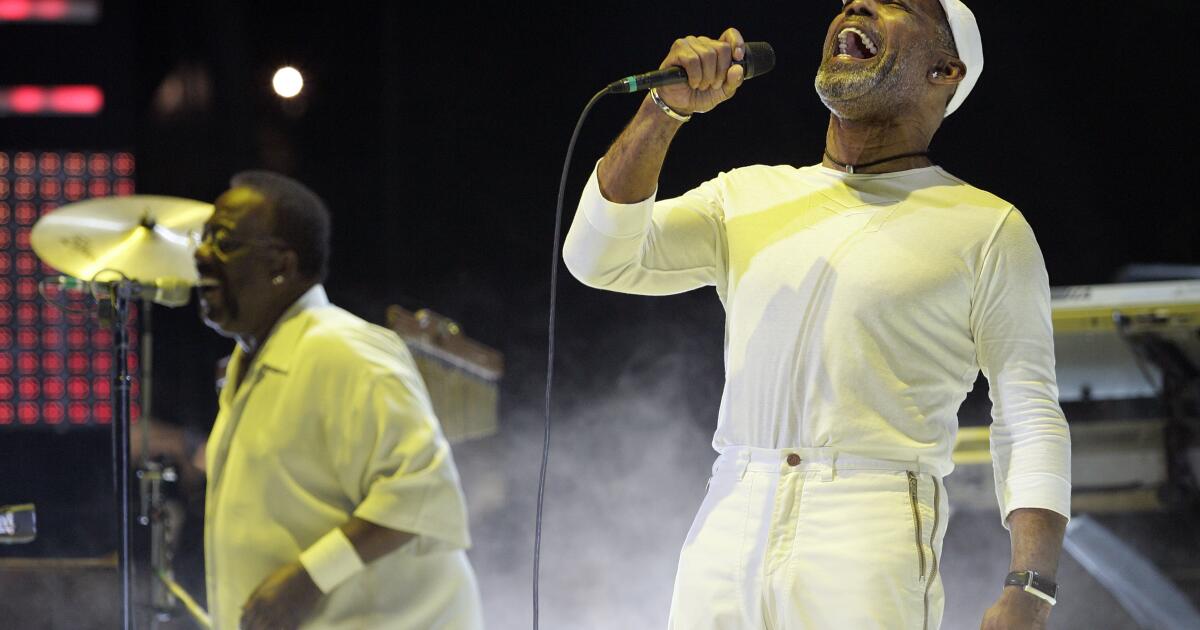
When Frankie Beverly, lead singer of the soul band Maze, passed away this week, I thought of the audience on his recordings from one November night in 1980 at Saenger Theater. His album “Live in New Orleans” captured more than a concert. It captured a turning point in history.
Opinion Columnist
LZ Granderson
LZ Granderson writes about culture, politics, sports and navigating life in America.
President Carter had lost his reelection bid barely a week earlier. Nearly 60% of Orleans Parish, where Beverly was recording, voted for Carter. The GDP grew a stunning 4.6% during Carter’s only term, but inflation was 13%, as was the poverty rate. His opponent, Ronald Reagan, blamed social programs and welfare recipients for the economic woes. When Reagan first workshopped that rhetoric, in his 1966 campaign for governor of California, the “war on poverty” had just begun; the overall poverty rate was 17%, but for Black America in 1965 it was more than 40%.
By 1980, Reagan and his party had a clear record of dislike for the war on poverty and those it intended to help. He cut more than $22 billion from social programs within his first two years. And when Reagan left the White House, the county’s poverty rate was back up to its highest since — wait for it — 1965.
Listening now, I know that in New Orleans in 1980, Beverly singing “we’ll get through these changing times” was about all of this and the road ahead. His music was both the calm before the storm and the tool needed to find peace in the middle of it. That is why “Joy and Pain” — the fourth track on the live album — sounds less like an R&B concert and more like a revival.
“Sometimes we go through life and things don’t work out the way you want all the time,” he begins. “As you grow older, you kind of learn to live with the joys and pain of life, y’all .… Can I get a witness to that?”
As a child, I thought I understood what Beverly was talking about in “Joy and Pain.” And then, as Beverly said, you grow older. And with wiser eyes you are more able to see just how painful it must’ve been for parents to not be able to feed their children or keep the lights on.
By the time “Live in New Orleans” was released in 1981, nearly 1 in 7 Americans had plunged into poverty, crack was appearing in major cities and the U.S. divorce rate was at its peak. Beverly’s music kept the Black community’s spirits lifted — much in the way Bruce Springsteen and John Mellencamp became voices for the white working class during this same era.
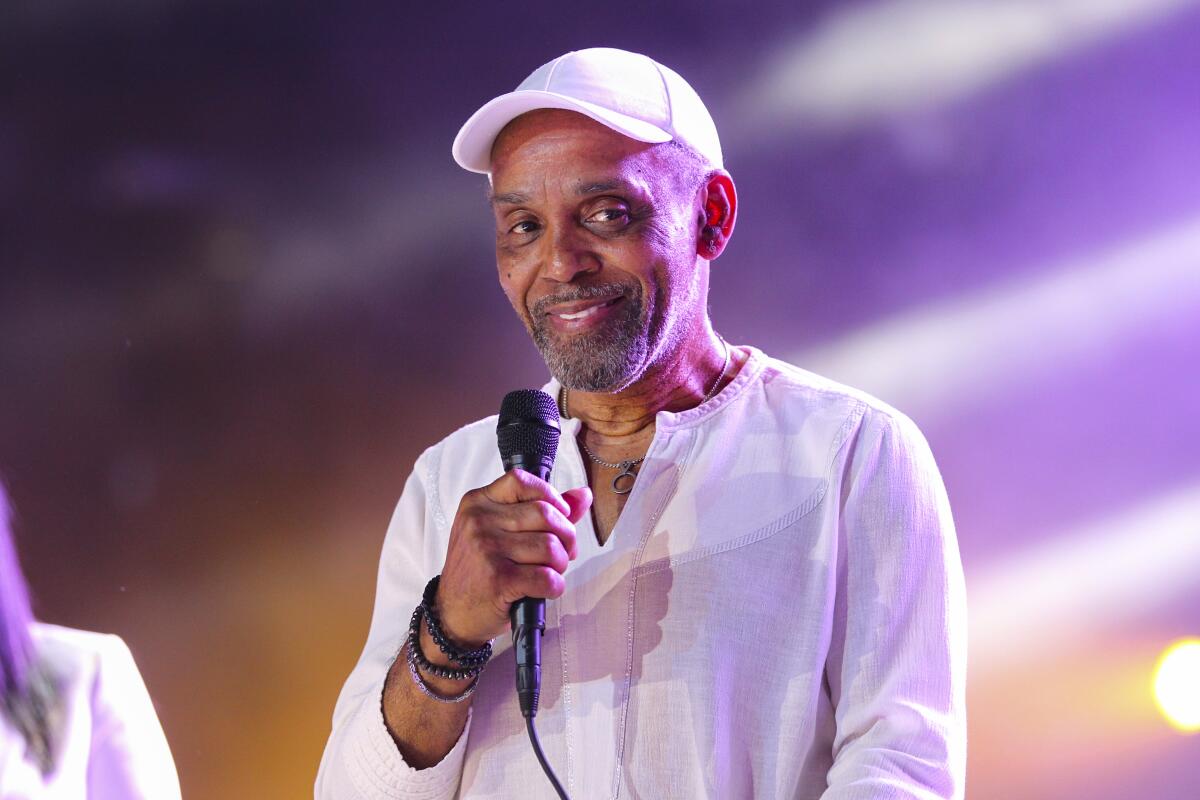
Frankie Beverly performs at the 2019 Essence Festival at the Mercedes-Benz Superdome on Sunday, July 7, 2019, in New Orleans.
(Donald Traill / Associated Press)
Over and over you can be sure
There will be sorrow but you will endure.
Where there’s a flower there’s the sun and the rain —
Oh, but it’s wonderful, they’re both one and the same.
At one point during the recording, Beverly recalls a story in which someone asked why he chose New Orleans to record a live album. His answer was perfect in its simplicity: “Well, why not, ya dig?” Through the long lens of time, we can now see Beverly’s choice of city was the perfect backdrop.
After enslavement came the New Orleans massacre of 1866, the Race Riot of 1900 and other terrorist attacks that left countless dead and destroyed Black businesses and homes. When construction of Saenger began in 1924, there was prosperity in New Orleans, but Jim Crow laws kept Black people disenfranchised.
And then just two months after the theater opened, the Great Mississippi Flood of 1927 devastated the region, causing more than $1 billion in damages — equal to a third of the federal budget at the time.
The flood killed more than 1,000 people and displaced 700,000 others. Many of the victims were descendants of the enslaved who had been forced into sharecropping. About a mile from Saenger is the restaurant where civil rights figures such as Thurgood Marshall and Martin Luther King Jr. would pray and eat as they met with local leaders, strategizing on how to dismantle oppressive laws.
This rich and textured history — each turning point — all contributed to the shaping of the New Orleans community and is reflected in the audience voice heard on that 1980 recording. The hits were established before Saenger. What made the album transformative was confirmation of a shared experience and shared resilience, expressed by those who attended.
The summer “Before I Let Go” first hit the airwaves, the death of Ernest R. Lacy would spark months of protest in the streets of Milwaukee.
Lacy, a 22-year-old Black man, was helping his cousin paint his apartment when he decided to walk to a store to grab a bite to eat. Police confronted him, claiming he fit the description of a rape suspect. Lacy died while in their custody. The woman who had been raped later identified her attacker, and he was convicted. Lacy was innocent.
During times in which it was easier to give in to hate and despair, Beverly advocated for love and resolve with a string of timeless classics that can be heard at any cookout worth fighting 405 traffic to get to. A soothing balm full of wisdom and warmth, Maze concerts were part family reunion, part community therapy.
Beverly received lifetime achievement awards from both BET and the NAACP. His career stretched across eras, his voice led to nine gold records, and his music influenced generations.
But, to the shame of the Recording Academy, he never received a Grammy. The Grammys could still correct that oversight and honor Beverly as he should be. Because it wasn’t talent that limited Beverly’s reach; it was the industry.
Black people had created the blues long before Mamie Smith walked into the studio in 1920 to record what’s considered the first blues record. The success of Smith’s recording led to “race records,” which led to Billboard having a list of the “most popular records in Harlem” in the 1940s.
Motown was ignored during award season for decades. By 1985, the American Music Awards had landed on a “Favorite Black Single” category as a way to keep everyone happy. It was decades after decades of trying to contain something as organic as music, like forcing an amoeba to hold a shape.
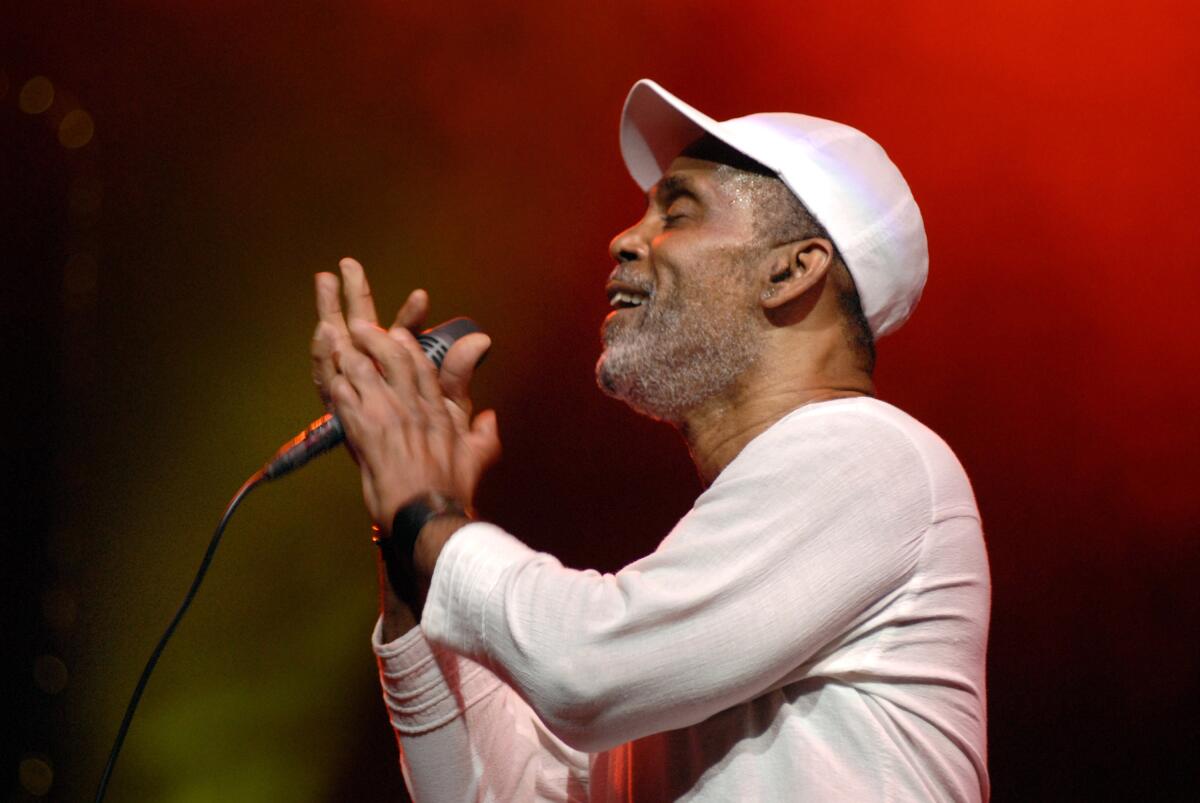
R&B legend Frankie Beverly is retiring from his post as the lead singer of ‘Maze’ after a farewell tour kicking off in March.
(Frank Mullen / Associated Press)
It’s still a struggle for the industry — so much so that the nation was riveted early this year when Tracy Chapman took the stage with Luke Combs and together, with the help of a story about poverty in America, they reminded us all that music was never meant to keep us apart.
It’s there to hold us together.
Beverly understood that as well as anyone.
@LZGranderson


The Fetus, 2025.
Directed by Joe Lam.
Starring Bill Moseley, Lauren LaVera, Julian Curtis, Evan Towell, and Ariel Yasmine.
SYNOPSIS:
A couple become pregnant with a half-human, half-demonic fetus with a thirst for blood-and must uncover its terrifying origins before it’s too late.

In The Fetus, Alessa (Lauren LaVera) discovers she has accidentally gotten pregnant by her boyfriend Chris (Julian Curtis), but instead of this being a cause for celebration Alessa tells Chris that they must visit her father Maddox (Bill Moseley) instead of going to a hospital as Maddox insisted she do that if she ever got pregnant. Chris has his own reasons for not wanting a baby and goes along with her, but Maddox is not an easy man to get to know as he is blind and suffering from PTSD as a result of being in Vietnam.
However, there are bigger stakes here than just trying to impress your girlfriend’s father as it is revealed that Alessa’s baby is the result of a pact Maddox made with a demon decades before, and that his blindness was due to him not sacrificing Alessa to that demon. Now he has a second chance to appease the demon with the vampiric tentacle monster that keeps appearing to suck the blood of anyone who isn’t kin, and Chris has to step up and decide whether he wants to be a father or not.

Or something like that, as The Fetus is a little confused by its own mythology. Taking its cue from Larry Cohen’s It’s Alive!, The Fetus is a low-budget indie affair that has its star names to thank for lifting it up and out of the bin marked ‘utter nonsense’ and into the realms of watchable nonsense. What’s the difference? Well, there is no way to try and sell it as a serious horror movie as the premise is totally daft, the visuals give it the look of a Megadeth music video from the 1990s and it ties itself up in knots trying to tell us who needs to be sacrificed and why (although neither become very clear by the end of it), but Bill Moseley has made enough of these types of schlocky horror movies to know exactly what he’s doing and how to pitch it, plus Lauren LaVera has enough clout with modern horror audiences to give it some appeal and she proves once again why she is one of the best scream queens of recent times (although she is better than this movie), and so the combination of these two actors gives The Fetus more weight than it would have had if two lesser-known actors were in the roles.
Julian Curtis as Chris also lends an air of comic relief, although when the plot is as silly as it is you cannot help but deliver your lines with that sort of sarcastic smirk on your face (”You can’t get pregnant overnight” – well, she did and no one questions it). He plays off against Bill Moseley very well and, if nothing else, his character is the one that has the biggest arc, and if you wanted to dig deeper and salvage some sort of message about nature versus nurture, what it means to be a father, telling your girlfriend when the condom splits and that type of thing then it is there, but don’t stress too much if you just want to watch vampiric tentacles coming out from between Lauren LaVera’s legs because that is really what everyone is here for rather than social commentary.

The Fetus works because everyone involved knows exactly what kind of movie they are making, and that movie is a low-budget black comedy about a demonic baby with naff-but-passable effects and three lead performers who bounce off each other very well. Going into it expecting The Exorcist or The Omen levels of filmmaking quality is only going to lead to anger and disappointment, and you can’t really be angry at a movie that has a man sticking his you-know-what into a fiery hole in the floor to conceive a baby. Temper your expectations and go into The Fetus prepared to enjoy 84 minutes of diabolical baby B-movie hilarity and you’ll have a good time… maybe.
Flickering Myth Rating – Film: ★ / Movie: ★ ★ ★
Chris Ward
https://www.youtube.com/watch?v=embed/playlist
In New York, the Brooklyn Bridge went up in flames briefly during a fireworks display. In Washington D.C., stormy weather delayed a grievance-filled speech by President Trump.
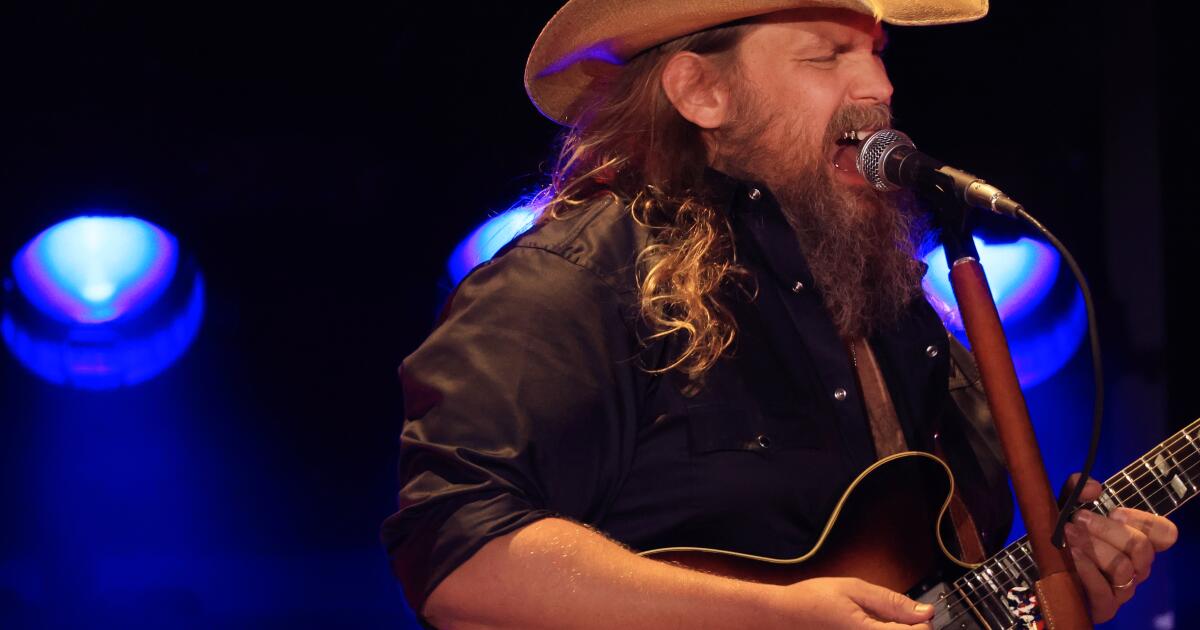
And here in Los Angeles? On Saturday night, tens of thousands of Angelenos joined voices peacefully at the L.A. Memorial Coliseum to sing along with Chris Stapleton as the country star compared a lover to Tennessee whiskey.
A unifying cultural figure beloved by both liberals and conservatives, Stapleton was the headlining act at a Fourth of July benefit concert that also featured Smashing Pumpkins, Chaka Khan, Maren Morris and Queen Latifah. (I’d be surprised if those five names had previously appeared together in the same sentence.) The show, with tickets priced at $17.76, was presented by America250, a bipartisan commission that Congress created in 2016 to plan celebrations for the country’s 250th birthday; proceeds went to Feeding America, which calls itself the largest domestic hunger-relief organization in the United States.
-
Share via
“No politics — just purpose” is how America250 Chair Rosie Rios described the night in remarks from the stage, and it wasn’t hard to interpret the distinction she was seeking to draw between her group and Freedom 250, Trump’s rival semiquincentennial initiative that organized Saturday’s windblown event on the National Mall (not to mention an earlier concert by Vanilla Ice that was called off due to the threat of rain).
But here’s the thing: Compared with the president’s celebration, where he complained about his treatment by the justice system and suggested we should refer to his current term as his third, the show at the Coliseum really did feel like a politics-free zone — the somewhat rare occasion these days when folks from different walks of life come together just to listen to music and drink overpriced micheladas.
Said Stapleton not long into his set: “I won’t waste time talking.”
America250’s success was hardly a sure thing. Despite the relatively low price, tickets moved slowly in the weeks before the concert; one guy I talked to Saturday told me he’d paid six bucks for a discounted pass. Yet to my eyes the Coliseum was close to full by the time Stapleton came on.
The country singer was as solid and soulful as always, snarling gently through “Bad as I Used to Be,” then trading loving harmonies with his wife, Morgane, in “Millionaire.” He closed with “Tennessee Whiskey,” of course — a trusty yet somehow un-shopworn piece of Americana that’s earned a place on the shelf next to Ray Charles’ “Georgia on My Mind” and Willie Nelson’s “Angel Flying Too Close to the Ground.”
Smashing Pumpkins was perhaps a stranger fit for an explicitly patriotic event — “The world is a vampire,” frontman Billy Corgan sneered in “Bullet With Butterfly Wings” — yet the band sounded sharp and punchy in the ’90s alt-rock hits that have brought zoomers and even Gen Alpha kids into its audience.
Billed not inaccurately on the concert’s poster as “the legendary Chaka Khan,” the 73-year-old funk doyenne flexed her vocal chops in jammy renditions of “Ain’t Nobody” and “Tell Me Something Good” and got people hoisting their drinks for “I’m Every Woman.” Morris, who’d flown in from New York after attending her pal Taylor Swift’s wedding on Friday night, made an improbably smooth segue between her and Zedd’s synthed-up “The Middle” and the rustic “My Church.”
As the show’s host, Queen Latifah dispensed uplifting thoughts about American idealism throughout the evening but also got a slot of her own to do her classic “U.N.I.T.Y.” with help from a rambunctious drum line. It’s an unapologetic message song about demanding respect, and what was moving about hearing it here is that nobody seemed put off by that idea.
I’ll wave a flag for that.
Here are more photos from Saturday’s concert:
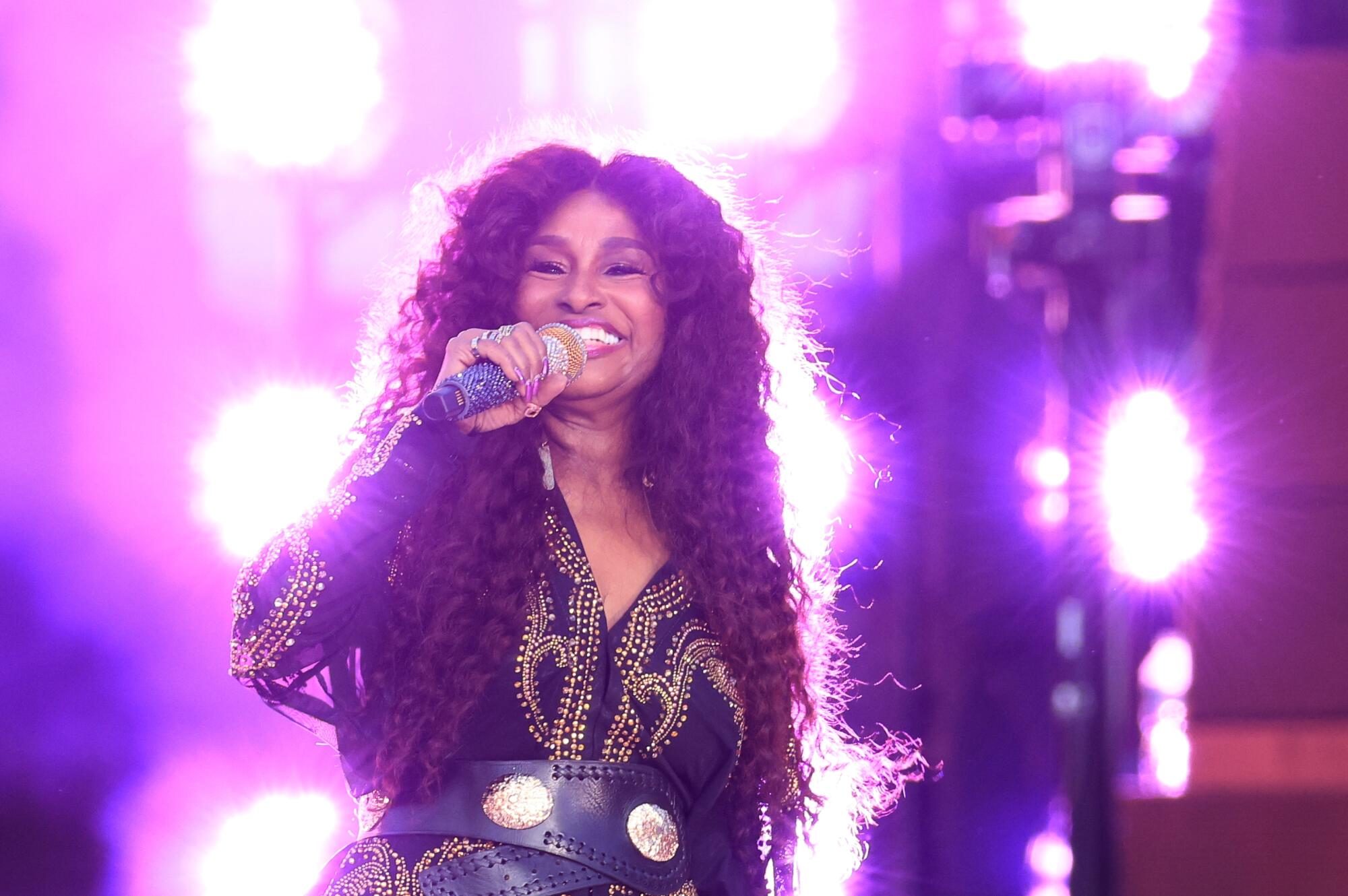
Chaka Khan performs.
(Myung J. Chun / Los Angeles Times)

Queen Latifah hosted the show.
(Myung J. Chun / Los Angeles Times)
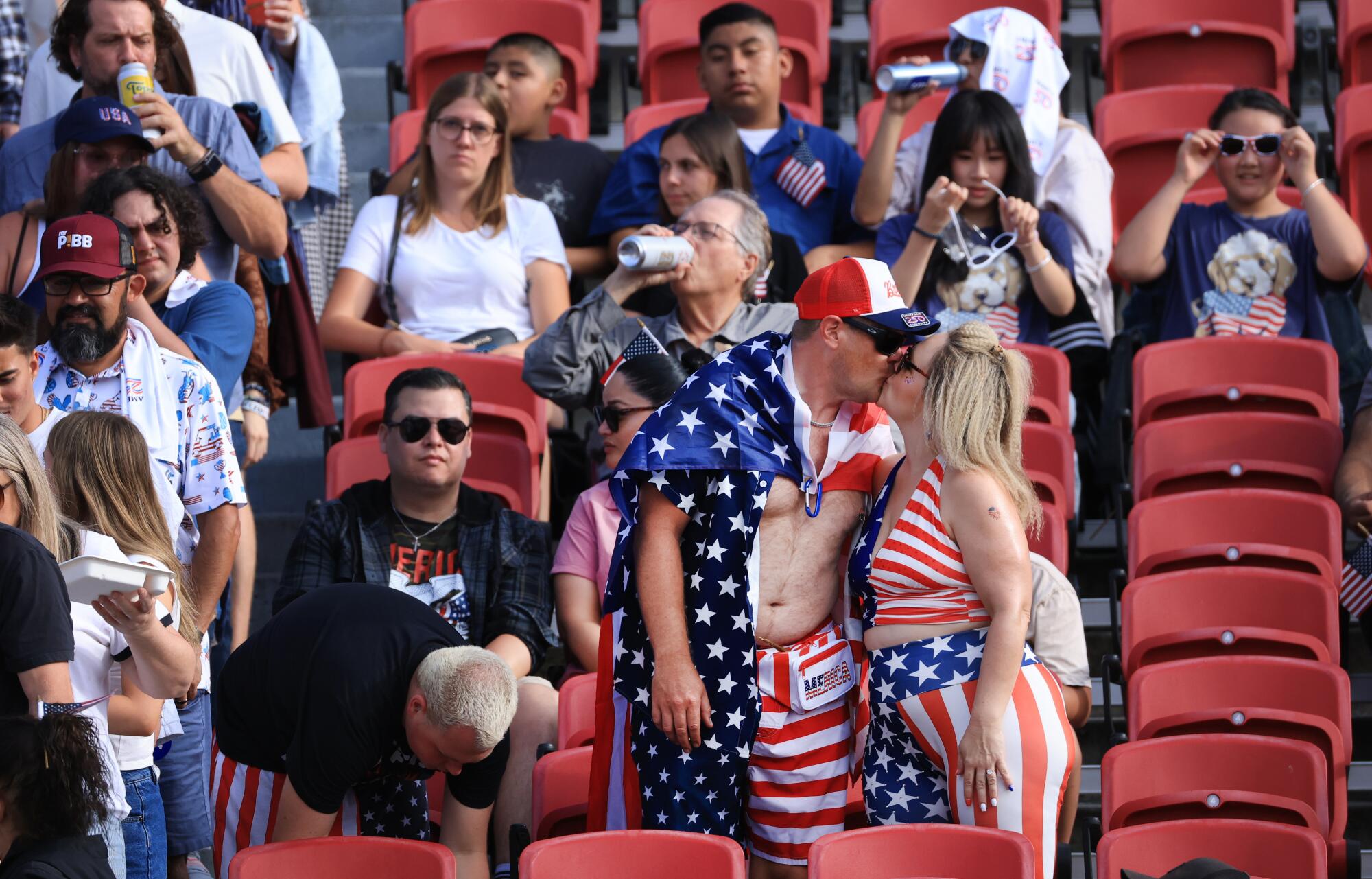
A couple in patriotic garb share a kiss.
(Myung J. Chun / Los Angeles Times)

Smashing Pumpkins performs.
(Myung J. Chun / Los Angeles Times)

A concertgoer enjoys confetti.
(Myung J. Chun / Los Angeles Times)

Maren Morris performs.
(Myung J. Chun / Los Angeles Times)

It’s a good year when we get movies like Remarkably Bright Creatures and The Sheep Detectives at the same time. If there’s one type of emotional draw we’ll never say no to when it comes to the fiction we consume, it’s wholesome. The kind of movies and TV shows that leave you with a bit more hope than you expected. The kind of stories that make you believe that humanity isn’t as broken as it really is.
The Sheep Detectives is essentially tailor-made for anyone who loves a good whodunnit that’s rich with nuance and humor. The clever decision to shift the genre into something both kids and adults could appreciate together is no small feat, and that’s largely where its mass appeal lies. Murder is a heavy subject to deal with—as is grief—yet this story makes sitting with the weight of both a little easier. It could kickstart a number of thoughtful conversations while it simultaneously delivers plenty of laughs along the way.
For adults, there’s also a huge appeal in the casting—the voice actors especially. Anyone who knows me knows that Ted Lasso is the kind of show I’ll always put first, so hearing Brett Goldstein voice a sheep is the kind of A+ decision that’s effortless to appreciate. Hugh Jackman, Nicholas Galitzine, Molly Gordon, Nicholas Braun, Emma Thompson, Julia Louis-Dreyfus, Bryan Cranston, Bella Ramsey, Regina Hall, Rhys Darby, Patrick Stewart, Hong Chau, and the whole cast do an exceptional job as well, making every moment of The Sheep Detectives thoroughly entertaining.

It’s hard to imagine anyone coming out of the movie not thinking it’s one of the best things we’ll watch all year, and that’s a high compliment considering 2026 is full of gems like Project Hail Mary and the upcoming The Odyssey. It’s the exact kind of movie we could all use, but more than anything, the kind of story we could use more of. If there’s any sort of sequel, sign me up. Let’s make it a trilogy. Give us more of the sheep.
The cinematography is gorgeous, the writing is sharp, the performances are thrilling, and the message is a gem worth holding onto. The Sheep Detectives is the kind of feel-good treasure that does an excellent job of reminding us why movies like this will always matter. There’s a thoughtful message about how grief is meant to be shared and why it’s so important to carry those who’ve passed with us. Yes, it’d be convenient to forget our pain by sheer mental willpower, but we aren’t meant to do that. As humans and as animals, I imagine that the good, bad, and ugly are all part of what makes life beautiful, and that’s a comforting message to sit with.
The concept of a whodunnit featuring sheep solving a murder sounds so wild on paper, yet everything about it results in the kind of movie that should signal to Hollywood we want more creative approaches to what’s familiar. There’s a reason The Muppets are so popular, and we shouldn’t be afraid of making things that sound a bit too whimsical on paper. In other words, The Sheep Detectives embraces the whimsy, and it’s exactly what makes it so delightful.
The Sheep Detectives is now streaming on Prime Video.
First Featured Image Credit: ©Amazon MGM Studios
Related
-

 New York1 hour ago
How a Museum Security Guard and Artist Lives on $51,000 in Parkchester
-

 Los Angeles, Ca1 hour ago
Heat advisory issued as Southern California temps near triple digits this week
-

 Detroit, MI2 hours ago
Detroit Battery Safety Provider Reaches to the Skies with Med Hawk
-

 San Francisco, CA2 hours ago
A Locals-Approved Modern Guide to Fisherman’s Wharf: Seafood, Beer Gardens + Iconic Bay Views
-

 Dallas, TX2 hours ago
New glitzy Houston steakhouse Juliet opens next to Delilah this summer
-

 Miami, FL2 hours ago
Allapattah man faces charges over armed robbery after crash in Miami’s Liberty City
-

 Boston, MA2 hours ago
Somehow, This is a Fitting, Confusing End to Jaylen Brown’s Boston Celtics Career
-

 Denver, CO2 hours ago
Denver Broncos 2026 schedule

