

Connect with us

Entertainment

Commentary: My travel nightmare made me realize that self-service culture is capitalism’s greatest con

Published

on

Commentary: My travel nightmare made me realize that self-service culture is capitalism’s greatest con

The sun is shining, the fire threat is low and for the first time in 25 years, no part of California is experiencing drought. Except of course in the hope and joy department.

It’s the middle of January, which means the holidays are well and truly over and whatever fanciful shine the prospect of a “new” year held as it approached has already dimmed into grim reality.

Of course I want to face this year determined to be a happier, kinder, more empathetic and more just person. But just as it’s tough to honorably pay one’s taxes knowing millionaires and billionaires are weaseling out of theirs, it’s hard to gin up personal-improvement energy when every news cycle brings proof that an alarming number of people are perfectly willing to believe that black is white, science is fake, we should all be cooking with beef tallow and failure to stop when an unidentified ICE agent tells you to is, apparently, punishable by death.

Also all that water everyone has been telling us to drink may be full of microplastics.

Advertisement

See, now I’m just getting upset again. Which is just too 2025 to bear. Mercifully, I have just discovered a cache of surviving holiday mint M&M’s (which may or may not contain beef tallow) and, equally important, I have a plan to make life better for everyone.

(At least until the midterms, when we will discover once and for all if this democratic experiment has any hope of lasting another year.)

It’s very simple, really: We need to demand the resurrection of customer service and put large numbers of well-paid and trained employees back in charge.

Seriously. I know it’s fun, and purportedly “convenient,” to be able to accomplish our banking/shopping/travel/bill paying/ticket buying/food ordering/health monitoring/everything else through a series of apps, websites and self-checkout kiosks.

But the lack of trained and helpful humans is getting out of control.

Advertisement

How many of us have stood, casting wild-eyed glances for help, when the grocery checkout sensors failed to register a carton of eggs that is clearly in the bagging area and there is only one store attendant tasked with aiding 20 or more finicky machines?

Or searched, panic-stricken, for the payment confirmation email that we may or may not have received because we forgot to screenshot an online transaction that is now being called into question via some upsetting email with a DO NOT RESPOND return address?

A friend of mine recently went to her doctor for ongoing treatment of her arthritic hands only to be told that she needed to fill out all her personal information, including her medical history, again because the office had switched systems. Apparently, the job of transferring file information was too difficult (read: expensive) to be accomplished by software, so it was being handed to … the patients. “Don’t worry,” said the guy sitting directly in front of the office computer. “You can just do it now on your phone.”

Yeah, that won’t take time and effort, and did I mention she was there for treatment of her arthritic hands?

The abandonment of any notion of customer service — now often called “customer assistance” or, even better, “customer support” (as in we will supportively assist you by directing you to our website or app, which may or may not be helpful/functioning) — is never clearer than when one travels.

Advertisement

Hideous delays and last-minute cancellations of flights have become so commonplace that airlines now advise building in a cushion of an extra day or two on each end of one’s journey. In other words, in addition to the cost of your actual flight, you should be prepared to pay even more in time or money because the airlines certainly are not.

On a long-planned holiday trip to London and Antwerp, Belgium, in December, our flight from LAX was abruptly moved to the next day — no warning, no explanation, no American Airlines personnel at the gate. Just a series of alerts that those who had the AA app received, along with the reassurance that those who qualified would be issued vouchers via email for lodging and food. Since we lived in the L.A. area (albeit a 90-minute drive from LAX at that time of day), we were out of luck — we could either pay hundreds of dollars for back and forth cab fare or book our own hotel near the airport.

(Other family members, leaving via Charlotte, N.C., had it even worse — a malfunction trapped a plane full of people, including my son and his girlfriend, on the runway for five hours before they were released, after midnight. When they finally tracked down an actual staff member, they were given vouchers to a motel that appeared, as Melissa McCarthy’s character says in “Spy,” “so murdery” that they decided to book their own.)

As if that were not enough to prevent us from ever traveling again, we were victims of the great Dec. 30 Eurostar shutdown, during which all trains into, and out of, the U.K. were abruptly canceled for more than 24 hours due to a power-grid failure in the English Channel Tunnel.

We had just been assured that we would soon be boarding our train from Brussels when the news came down over a loudspeaker, in four languages.

Advertisement

Picture, if you will, hundreds of now-stranded travelers, clamoring in panic-stricken English, French, Dutch and German as they streamed into the Brussels-Midi station where one Eurostar agent, one, stood, not suggesting alternate means of reaching our destination but handing out Xeroxed pages directing everyone to the Eurostar app and website.

Where no tickets were available for days and the process of claiming a refund or compensation for lodging and other expenses was an endless maze of questions that needed to be answered when all anyone wanted to know was how in the hell do we get to London now.

With no flights available until Jan. 3, days after we were scheduled to fly out of Heathrow Airport, we finally rented a car, at hideous cost, and fled Europe, with some historical poignancy, via midnight-landing ferry from Dunkirk. (If it sounds fun, I am not telling it right.)

My point is not that travel should always go smoothly — things break, weather turns, accidents happen. My point is that if you are a company that is paid to get people from one place to another, you should have enough personnel to help those people reach their destinations as quickly and seamlessly as possible should things go wrong.

Instead of, you know, casting them literally onto the street and forcing them to conjure up their own imperfect, and very expensive, DIY solutions.

Advertisement

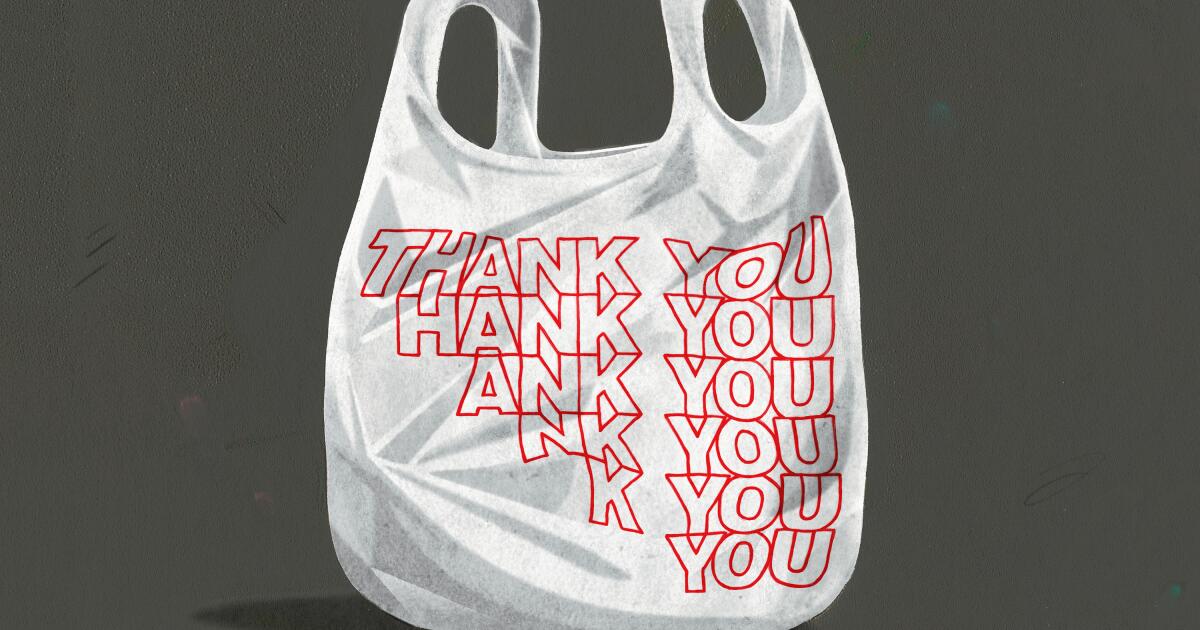
Because that’s what the digital age has made us — a DIY economy in which millions of jobs no longer exist not because computers do the work, but because the work has been shifted, via computers, directly onto the consumer.

Who increasingly has little or no choice in the matter. Try to get a car at an auto rental agency without booking it online first; you might as well attempt to barter your watch and three chickens as payment.

It would be one thing if, by scheduling your own appointments, keeping track of your own medical tests, bagging your own groceries and filling out all the information needed to book your own reservations for planes, trains and automobiles, you got a discount.

But no; half the time, corporations have the audacity to charge a service fee on top of the money they have saved by not hiring someone to do the work you, the consumer, just did.

Is it any wonder why people are so testy these days?

Advertisement

Especially when, having done all the work only to be informed by alert that it was all in vain; they have to wait in line for the one teller/manager/gate agent available to explain to them that they “just” need to manage their booking/transaction online.

How much better it would be if there were actual people, trained and experienced, in numbers large enough to prevent endless queues, to make customers feel like customers again, instead of isolated pioneers quietly losing their minds in an effort to buy whatever goods and services companies are selling.

I’m not saying it would solve all of our problems, but it would go a long way to lowering the national temperature. It is amazing what a genial, helpful interaction can do to lift everyone’s spirits and make people feel like they are respected and valued, as individuals with reasonable needs, and not just faceless bundles of credit card information and regrettable meltdown moments.

Not to mention all the jobs, and career paths, at all levels, restoring customer service could provide.

Because being unemployed tends to make people quite aggravated and unhappy too.

Advertisement

Movie Reviews

Review | Hoppers: Pixar’s new animation is a hilarious, heartfelt animal Avatar

Published

on

Review | Hoppers: Pixar’s new animation is a hilarious, heartfelt animal Avatar

4/5 stars

Bounding into cinemas just in time for spring, the latest Pixar animation is a pleasingly charming tale of man vs nature, with a bit of crazy robot tech thrown in.

The star of Hoppers is Mabel Tanaka (voiced by Piper Curda), a young animal-lover leading a one-girl protest over a freeway being built through the tranquil countryside near her hometown of Beaverton.

Because the freeway is the pet project of the town’s popular mayor, Jerry (Jon Hamm), who is vying for re-election, Mabel’s protests fall on deaf ears.

Everything changes when she stumbles upon top-secret research by her biology professor, Dr Sam Fairfax (Kathy Najimy), that allows for the human consciousness to be linked to robotic animals. This lets users get up close and personal with other species.

Advertisement
“This is like Avatar,” Mabel coos, and, in truth, it is. Plugged into a headset, Mabel is reborn inside a robotic beaver. She plans to recruit a real beaver to help populate the glade, which is set to be destroyed by Jerry’s proposed road.
Continue Reading

Entertainment

Kurt Cobain’s Fender, Beatles drum head among $1-billion collection going to auction

Published

on

Kurt Cobain’s Fender, Beatles drum head among -billion collection going to auction

In the summer of 1991, Nirvana filmed the music video for “Smells Like Teen Spirit” on a Culver City sound stage. Kurt Cobain strummed the grunge anthem’s iconic four-chord opening riff on a 1969 Fender Mustang, Lake Placid Blue with a signature racing stripe.

Nearly 35 years later, the six-string relic hung on a gallery wall at Christie’s in Beverly Hills as part of a display of late billionaire businessman Jim Irsay’s world-renowned guitar collection, which heads to auction at Christie’s, New York, beginning Tuesday. Each piece in the Beverly Hills gallery, illuminated by an arched spotlight and flanked by a label chronicling its history, carried the aura of a Renaissance painting.

  • Share via

    Advertisement

Advertisement

Irsay’s billion-dollar guitar arsenal, crowned “The Greatest Guitar Collection on Earth” by Guitar World magazine, is the focal point of the Christie’s auction, which has split approximately 400 objects — about half of which are guitars — into four segments: the “Hall of Fame” group of anchor items, the “Icons of Pop Culture” class of miscellaneous memorabilia, the “Icons of Music” mixed batch of electric and acoustic guitars and an online segment that compiles the remainder of Irsay’s collection. The online sale, featuring various autographed items, smaller instruments and historical documents, features the items at the lowest price points.

A portion of auction proceeds will be donated to charities that Irsay supported during his lifetime.

The instruments of famous musicians have long been coveted collector’s items. But in the case of the Jim Irsay Collection, the handcrafted six-strings have acquired a more ephemeral quality in the eyes of their admirers.

Amelia Walker, the specialist head of private and iconic collections at Christie’s, said at the recent highlight exhibition in L.A. that the auction represents “a real moment where these [objects] are being elevated beyond what we traditionally call memorabilia” into artistic masterpieces.

“They deserve the kind of the pedestal that we give to art as well,” Walker said. “Because they are not only works of art in terms of their creation, but what they have created, what their owners have created with them — it’s the purest form of art.”

Advertisement

Cobain’s Fender was only one of the music history treasures nestled in Christie’s gallery. A few paces away, Jerry Garcia’s “Budman” amplifier, once part of the Grateful Dead’s three-story high “Wall of Sound,” perched atop a podium. Just past it lay the Beatles logo drum head (estimated between $1 million and $2 million) used for the band’s debut appearance on “The Ed Sullivan Show,” which garnered a historic 73 million viewers and catalyzed the British Invasion. Pencil lines were still visible beneath the logo’s signature “drop T.”

A drum head.

Pencil lines are still visible on the drum head Ringo Starr played during the Beatles’ debut appearance on “The Ed Sullivan Show.”

(Christie’s Images LTD, 2026)

It is exceptionally rare for even one such artifact to go to market, let alone a billion-dollar group of them at once, Walker said. But a public sale enabling many to participate and demonstrate the “true market value” of these objects is what Irsay would have wanted, she added.

Dropping tens of millions of dollars on pop culture memorabilia may seem an odd hobby for an NFL general manager, yet Irsay viewed collecting much like he viewed leading the Indianapolis Colts.

Advertisement

Irsay, the youngest NFL general manager in history, said in a 2014 Colts Media interview that watching and emulating the legendary NFL owners who came before him “really taught me to be a steward.”

“Ownership is a great responsibility. You can’t buy respect,” he said. “Respect only comes from you being a steward.”

The first major acquisition in Irsay’s collection came in 2001, with his $2.4-million purchase of the original 120-foot scroll for Jack Kerouac’s 1957 novel, “On the Road.” He loved the book and wanted to preserve it, Walker said. But he also frequently lent it out, just like he regularly toured his guitar collection beginning 20 years later.

A scroll of writing.

Jim Irsay purchased the original 120-foot scroll manuscript of Jack Kerouac’s “On the Road” for $2.4 million in 2001.

(Christie’s Images)

Advertisement

“He said publicly, ‘I’m not the owner of these things. I’m just that current custodian looking after them for future generations,’ ” Walker said. “And I think that’s what true collectors always say.”

At its L.A. highlight exhibition, Irsay’s collection held an air of synchronicity. Paul McCartney’s handwritten lyrics for “Hey Jude” hung just a few steps from a promotional poster — the only one in existence — for the 1959 concert Buddy Holly, Ritchie Valens and J.P. “The Big Bopper” Richardson were en route to perform when their plane crashed. The tragedy spurred Don McLean to write “American Pie,” about “the day the music died.”

Holly was McCartney’s “great inspiration,” Christie’s specialist Zita Gibson said. “So everything connects.”

Later, the Beatles’ 1966 song “Paperback Writer” played over the speakers near-parallel to the guitars the song was written on.

Irsay’s collection also contains a bit of whimsy, with gems like a prop golden ticket from 1971’s “Willy Wonka & the Chocolate Factory” — estimated between $60,000 and $120,000 — and reading, “In your wildest dreams you could not imagine the marvelous surprises that await you!”

Advertisement

Another fan-favorite is the “Wilson” volleyball from 2000’s “Cast Away,” starring Tom Hanks, estimated between $60,000 and $80,000, Gibson said.

Historically, such objects were often preserved by accident. But as the memorabilia market has ballooned over the last decade or so, Gibson said, “a lot of artists are much more careful about making sure that things don’t get into the wrong hands. After rehearsals, they tidy up after themselves.”

If anything proves the market value of seemingly worthless ephemera, Walker added, it’s fans clawing for printed set lists at the end of a concert.

“They’re desperate for that connection. This is what it’s all about,” the specialist said. It’s what drove Irsay as well, she said: “He wanted to have a connection with these great artists of his generation and also the generation above him. And he wanted to share them with people.”

In Irsay’s home, his favorite guitars weren’t hung like classic paintings. Instead, they were strewn about the rooms he frequented, available for him to play whenever the urge struck him.

Advertisement

Thanks to tune-up efforts from Walker, many of the guitars headed to auction are fully operational in the hopes that their buyers can do the same.

“They’re working instruments. They need to be looked after, to be played,” Walker said. And even though they make for great gallery art, “they’re not just for hanging on the wall.”

Continue Reading

Movie Reviews

Film reviews: ‘How to Make a Killing,’ ‘Pillion,’ and ‘Midwinter Break’

Published

on

Film reviews: ‘How to Make a Killing,’ ‘Pillion,’ and ‘Midwinter Break’

‘How to Make a Killing’

Directed by John Patton Ford (R)

★★

Continue Reading

Trending
