Entertainment
'Bridgerton’ boss on Julie Andrews' fate, Polin's heir and Season 4

This article contains spoilers for Season 3 of Netflix’s “Bridgerton.”
The call from Shonda Rhimes came on a Saturday.
It was spring 2021 and Jess Brownell — a writer on “Bridgerton” who was living in London’s Notting Hill as filming got underway on the second season — was preparing some tapas from the local grocery store alongside her wife as they readied for guests. Brownell assumed something was wrong. Rhimes, the prolific producer behind Netflix’s smash hit, whose TV oeuvre includes hit series “Grey’s Anatomy” and “Scandal,” doesn’t often make work calls on the weekends.
“The first thing she said was, ‘What would you think about stepping into the showrunner role going forward?’” Brownell recalled. “It was very surreal.”
“Bridgerton” creator Chris Van Dusen, who had developed Julia Quinn’s bestselling historical romance novels for television and overseen the first two seasons, was set to depart ahead of the third installment. Brownell, who had been a writer on the series since its first season, didn’t let self-doubt crash that fateful phone call with Rhimes — instead, as she tells it, she was quick to say she was ready.
“And then panic came the next day,” she said.
Harnessing the momentum of a globally popular franchise, after all, is as high-stakes as maintaining the anonymity of the ton‘s gossip columnist, Lady Whistledown. “Bridgerton” was an instant success when it was released in 2020, aided by the passionate romance between Daphne Bridgerton (Phoebe Dynevor) and Simon Bassett, the Duke of Hastings (Regé-Jean Page). (According to viewership data released by Netflix, 82 million households watched the first season in its first month of release.) Its sophomore outing — focused on another Bridgerton offspring, Anthony (Jonathan Bailey), and his angsty relationship with Kate Sharma (Simone Ashley) — was also a triumph. And “Queen Charlotte,” the prequel spinoff that tells the monarch’s backstory as she falls in love with King George III, continued the insatiable fandom.
When word spread that Season 3 would chronicle the friends-to-lovers dynamic between Colin Bridgerton (Luke Newton) and Penelope Featherington (Nicola Coughlan) — a fan favorite to many of the books’ readers — the pressure was intense to rise to the occasion.
Still, Brownell knows all too well the value of a little drama.
Like Van Dusen, she is a veteran of Shondaland, Rhimes’ production company. Three months after graduating from USC’s film school, Brownell landed a job as a second assistant to Betsy Beers, Rhimes’ producing partner, following a stint in a pilot program for aspiring Hollywood assistants coordinated by the Writers Guild of America. She’s been at Shondaland since, working her way up on “Scandal,” starting as a researcher — “I was very, very unqualified for it, but I’m good at Google, so it worked out” — until she got the opportunity to write a couple of freelance scripts and eventually was hired on.
“‘Scandal’ was a really interesting experience,” she said, explaining that she loved the show but the subject matter wasn’t in her wheelhouse. “I remember sitting in the writers room, sometimes with people around me pitching ideas, not having as many ideas as everyone else, and just going, ‘Oh, maybe I’m not that good at this.’” It wasn’t until she arrived in the “Bridgerton” writers room, her first job after “Scandal” ended, that she realized, “‘Oh, I was in the wrong sandbox. Now I’m in my happy place.’”
In a recent video call from London, while taking a break from the “Bridgerton” writers room, Brownell talked about the debate with Rhimes over Colin’s virginity, Julie Andrews’ fate as narrator on the series and the visual changes coming to Season 4. This interview has been edited and condensed for clarity.
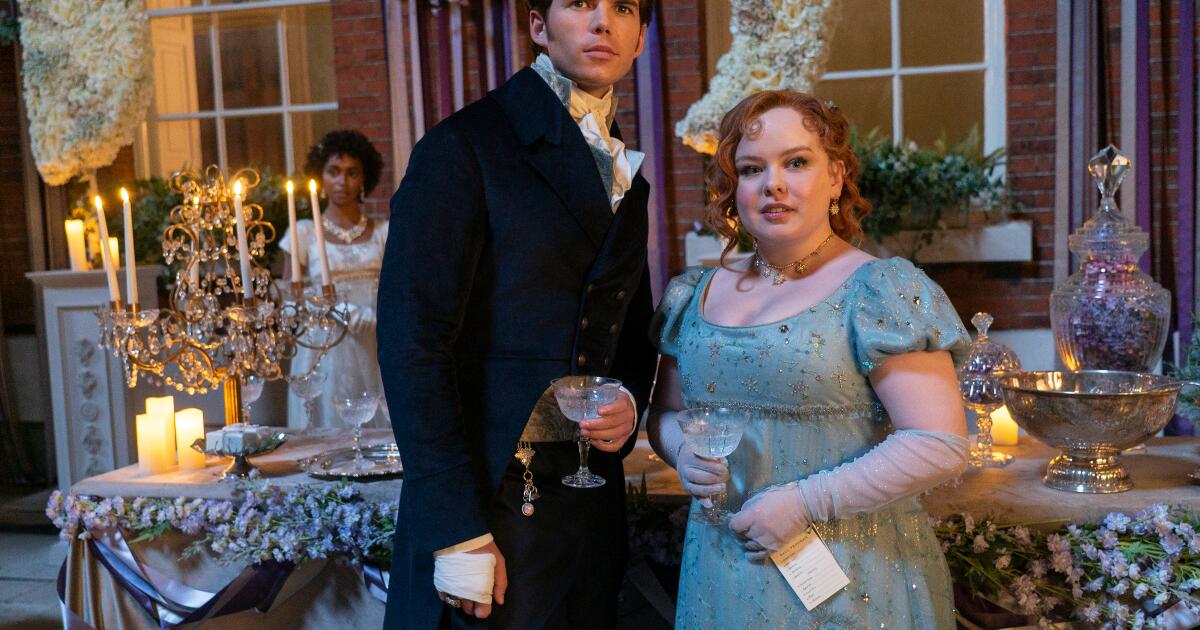
Luke Newton as Colin Bridgerton and Nicola Coughlan as Penelope Featherington in an episode from the third season of “Bridgerton.”
(Liam Daniel / Netflix)
The show has been an incredible success since it launched. How would you describe what it was like, taking over as showrunner?
The pressure was immense. I knew that if there was a drastic decline in the numbers or in the reception that I was the most obvious thing that changed, the thing to blame. It’s been a huge relief and really joyful to see people responding the way they have. I have been with the show from Season 1 and I am proud of my contributions to the show. That was the thing that I kept reminding myself: This isn’t my first time doing this. And I had an amazing writing staff who I really relied on.
The first half of the season generated a lot of chatter. Are you someone who reads comments and tweets?
I was really good the entire time we were writing and in production — I was nowhere near “Bridgerton” internet. But I have allowed myself to dip a little pinkie toe in since the [first half of the season] aired. I have a really sweet algorithm going on TikTok right now that’s basically just live carriage reactions. It’s the best thing ever. I spent three years working over Zoom, partly during the end of the pandemic, and to finally have it out there and to see people in their living rooms, reacting the way they are and going, “Oh my gosh, Pitbull!” — that was the coolest thing ever. The reaction to Pitbull has been a great surprise. That’s one of the few songs that I picked early on; it was in my showrunner’s cut. I was a little worried because I knew it was a slightly irregular choice, but the song just slaps so hard.
This was the first season of “Bridgerton” split into two parts. How did you feel about that decision?
We had actually already written and produced the entire season thinking it was going to all drop at once when Netflix approached us about splitting it. We did already have that midpoint with the carriage scene and so it worked pretty perfectly. I had concerns because I know, as a viewer, I’m someone who also wants to mainline TV shows that I love. But I was hopeful that it was going to be a good chance for people to pause and get to chat in their circles about the first half. What happens when you drop it all at once is that people are mostly just reacting to the end because that’s where usually all of the biggest “OMG” moments are. It’s been really gratifying as a writer to see people react to some of the earlier beats that we’re also really proud of.
Something that’s been tricky is people reacting before they’ve gotten to see the entire picture of what we’ve intended. I know there’s been some chatter about Colin being a whole other character. I’m like, “Yeah, that’s the point. Give us a minute!” I know that once people see the back half, they’re going to understand, but, of course, there are moments where I’ve felt frustrated with that.
I’m assuming the same release strategy will apply for next season. Is that shaping how you’re thinking about things?
I don’t know for sure that we’re going to be doing that, but it does seem to be something that Netflix wants to do. It seems to have helped the numbers. I would guess they would want to do it again. It doesn’t really change the way we approach story because we do always build to a major moment in the middle of the [season] that turns the action on its head.

Jess Brownell on taking over “Bridgerton”: “I knew that if there was a drastic decline in the numbers or in the reception that I was the most obvious thing that changed, the thing to blame, so it’s been a huge relief, and really joyful to see people responding the way they have.”
(Evelyn Freja / For The Times)
My TikTok algorithm likely looks a lot like yours — there’s no shortage of “Bridgerton” videos of declarations of love, like Anthony proclaiming to Kate: “You are the bane of my existence and the object of all my desires.” How did you and the writers want Colin or Penelope to express their love for each other?
After “I burn for you” became such a thing in Season 1, there was a moment in Season 2 where we got a little in our heads about trying to think what the moment was going to be, and it was not the one that we expected. We thought it was going to be “You vexed me.” And instead, obviously, it was Anthony’s wonderful line.
I’ve given up on trying to craft something for the sole purpose of it popping off. Also, if people have seen the entire season, they will know Colin is such a lover boy. He has so many different love confessions this season and so many big speeches about his adoration for his wife that it’s just impossible to predict which one is going to hit the hardest.
Unlike previous couples, Penelope and Colin have a backstory; there’s history there. How did that inform your approach?
It’s extra pressure because people love them so much. But it’s also a bonus that they’ve been established for two seasons, and that people have already invested in them. The challenge was making sense of everything we’ve already seen from them in Seasons 1 and 2, and building that into their arcs leading toward each other.
Of course, all writers on Season 1 have read all the [“Bridgerton”] books multiple times, but you have to take characters through some zigs and zags over the course of the season — especially with Colin, there was a lot of talk about how to reconcile the different actions we’ve seen from him, including proposing to Marina and saying he would have stayed with her even if she had told him about the baby. It’s not in the book for Colin’s character, but we were like, “Right, he’s got white knight syndrome.” He is a guy who wants everybody to like him. It’s very different from Anthony’s sense of duty and obligation. Colin’s need to be liked comes from a much more insecure place where he doesn’t really know what he has to offer, and doesn’t feel worthy.
The romance whirlwind that Penelope and Colin find themselves in is brief because Penelope’s secret — that she’s Lady Whistledown — sends things into a tailspin. What was the challenge of making so much fit in the eight episodes?
The Whistledown secret hanging over everything was a really helpful narrative device that we had this season, because it’s like Chekhov’s gun — you know that it’s going to go off at some point, and that provides the central tension in the back half of the season. Because we had that gun waiting to go off, we knew that we were going to be able to spend more time in the love bubble between Colin and Penelope in the back half. Whereas I think in previous seasons we had to build a ton of conflict directly between the main couple.
In the front half — I feel like Colin has been in love with Penelope all along. I think he’s just been too much of a dunderhead, as they would say in Regency times, to figure it out. It’s the way it is in the book. I do think that one kiss is really all that he needed to open up the door and go, “Oh, my God.” I understand that it is a little bit quick, but he’s known her forever.
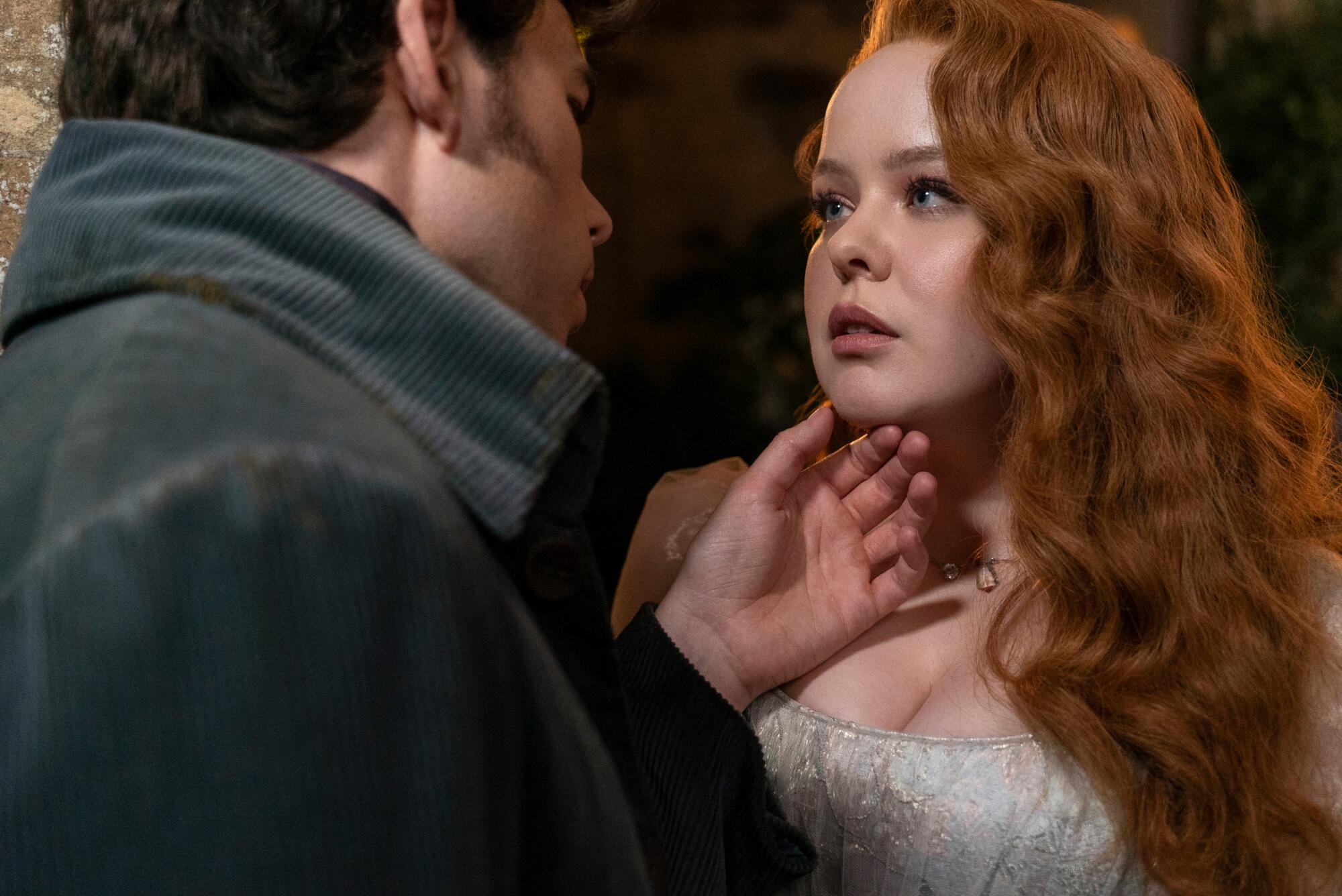
Colin Bridgerton (Luke Newton) and Penelope Featherington (Nicola Coughlan) in Season 3 of “Bridgerton.” Jess Brownell on their romance: “I wanted to get the dynamic right because there is such depth between those characters.”
(Liam Daniel / Netflix)
What was the most difficult scene or episode to execute? The carriage ride scene? The mirror scene?
The carriage scene and the mirror scene — those were just fun. We knew exactly what we wanted to do with those. I will say that the mirror scene, we really wanted to get right because it means a lot to me for the intimacy scenes to come from a storytelling place. I wanted to get the dynamic right because there is such depth between those characters and such a long-standing friendship that I wanted it to feel like a different kind of sex than we’ve seen. Finding those moments of laughter was really the key there.
Episodes 5 and 6 are always the hardest episodes to write in every season; that tends to be where the main drama has come to a peak, at the midpoint of the season. And then you’re waiting to get to the bigger stuff that is going to happen at the end of the season. Thankfully, the charades party with the ticking clock and Cressida deciding to come out as Whistledown provided us nice, new obstacles in the back half.
There’s an interesting thing that happens with this show, which is the tallying of intimate moments. Is that something you and the writers think about?
It feels like that maybe started happening after Season 2 had a different approach to intimacy than Season 1. I think people started getting very granular with the way they were talking about how “Bridgerton” does intimacy, But it’s so funny to me — I think of Season 2 as one of the sexiest seasons. This is a show, hopefully, for everyone, but I think when we’re talking about women and intimacy scenes, to me, the longing and the yearning and the pinkies grazing each other and the furtive looks from across a room — that is intimacy.
What is your approach to adaptation and assessing where you want to stay faithful to the book or when it’s appropriate to make tweaks for TV ?
Julia Quinn has been really lovely and understanding about some of the changes that we’ve made. A lot of romance novels, specifically, it’s a lot of internal monologue. But I think on television, you do have to find ways to externalize that. The charm-school plot, for example, and Colin being Penelope’s tutor, that is not in the book, but it’s really just a way of externalizing certain conversations they have about confidence and popularity. I really tried to honor the spirit of the book, the emotional journey of the book. In the writers room, on the first day, we talk about our favorite moments from the book that absolutely have to be there. Some of the scenes we’ve lost, it’s just been a calculation about figuring out how to weave in the ensemble stories — like the Whistledown hunt in the book comes from Lady Danbury, she’s the one who issues a reward. But we had been watching the queen hunt for Lady Whistledown for two seasons. … Sometimes it’s just a practical reason like that.
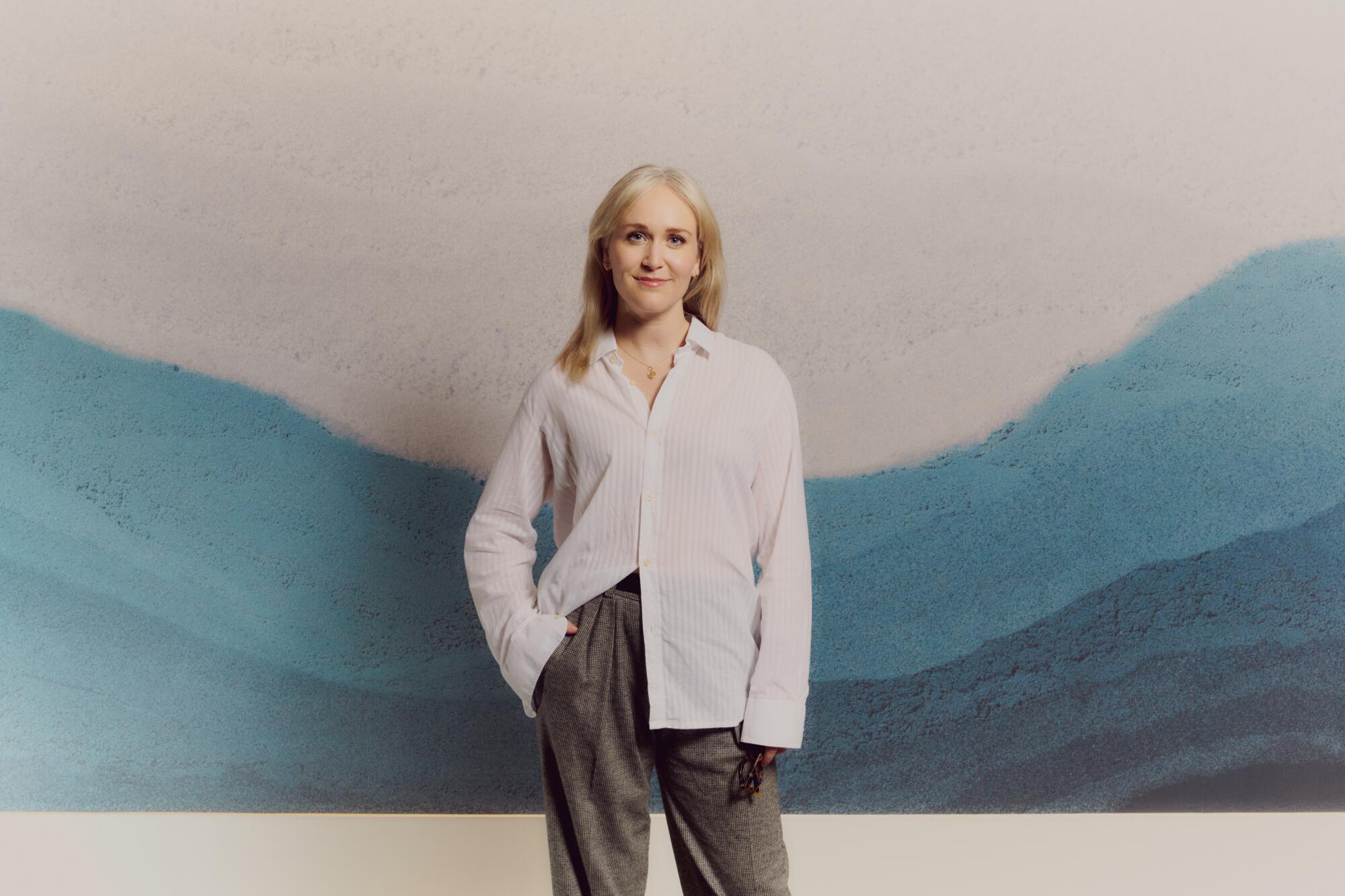
“Bridgerton” showrunner Jess Brownell on steamy moments: “This is a show, hopefully, for everyone, but I think when we’re talking about women and intimacy scenes, to me, the longing and the yearning and the pinkies grazing each other and the furtive looks from across a room — that is intimacy.”
(Evelyn Freja / For The Times)
In the book, Colin discovers that Penelope is Lady Whistledown before the carriage scene. Why change that?
When we were talking about it in the room, if you’re looking at Colin and Penelope as the leads of the season, that is the major dramatic moment between them. I’m really strict about structure. If you’re thinking about the season as a three-act structure, the way you would look at it with a movie, the end of Episode 6 is meant to be the low point or the end of Act Two in traditional storytelling structure. That’s the moment where you want to have the biggest fight or the biggest loss between your main couple. What could possibly be bigger than him finding out that she’s Whistledown and that she’s been lying to him this whole time? It also felt like if Colin finds out she’s Whistledown in the front half, it’s really all falling action from there. It would be difficult to keep the intrigue moving up and up to carry people through to Episode 8.
By the end of the season, the ton knows Penelope is Lady Whistledown and the narration changes to Penelope’s voice. Does this mean Julie Andrews is done as narrator?
It’s really a tough question because dramatically it would make sense to switch over to Nicola’s voice from now on because she’s owning her own voice. But it’s also freaking Julie Andrews. Her voice is so key to the feeling of the show. We’re playing around with it in Season 4. To be honest, we don’t know exactly what we’re going to do, but I think there’s a way to square that.
There is a friendship between Lady Danbury and Penelope that’s explored in the book that fans were interested in. We get a hint of it near the end.
I love the Lady Danbury friendship with Penelope in the book, it’s such a powerful one. But in the room, we talked a lot about the fact that Lady Danbury — she’s always been involved in other people’s stories. I think you run into somewhat problematic tropes with that, occasionally, when she’s there as an adult black woman, always helping the younger couples.
We wanted to center her own narrative, and build up her friendship with Violet, and show that her importance doesn’t rest squarely in her meddling in the lives of the young people, but that she can stand on her own two feet, story-wise. Now that we’ve built the friendship between Violet and Agatha so much, I’m excited about where we can go with it further in future seasons.
How do you see the storyline with Violet (Ruth Gemmell) and Lady Danbury’s brother Marcus (Daniel Francis) developing?
It’s a tricky trope to only have mothers act in service of their children. While we really want to honor the fact that her connection with Edmond is one for the ages, it felt appropriate for Violet to get to focus on herself a little bit in the same way we wanted to focus on Lady Danbury. Marcus Anderson is the exact right kind of character to help her very slowly dip her toes in the waters of dating. He’s very respectful, doesn’t look her directly in the eyes, knows that she needs to come to him and not the other way around. It’s a nice slow burn that that we’re going to take our time with going forward.
The season delves into the limitations of being a woman of that time and how it shapes some of their actions and behaviors —
Obviously “Bridgerton” has somewhat of a modernized feel to it, but I think the driving force of the show is still the gender roles that existed in the early 1800s and do still, to a certain extent, exist today, which is why I think people can relate to the stories. I’ll take Cressida, for example, and Lady Featherington this season. They are two characters who people have frequently talked about as villains. I was really interested this season in exploring the systemic factors that are going on. It misses the point entirely to villainize a woman in the Regency period because they were stripped of such little power and I think every action — it’s not to say that Cressida or Lady Featherington shouldn’t be held accountable for some of the things they’ve done, but there was a lot going on that was holding them back. And even if they still are playing as villains of a sort, at least now we understand why and we understand where they’re coming from.
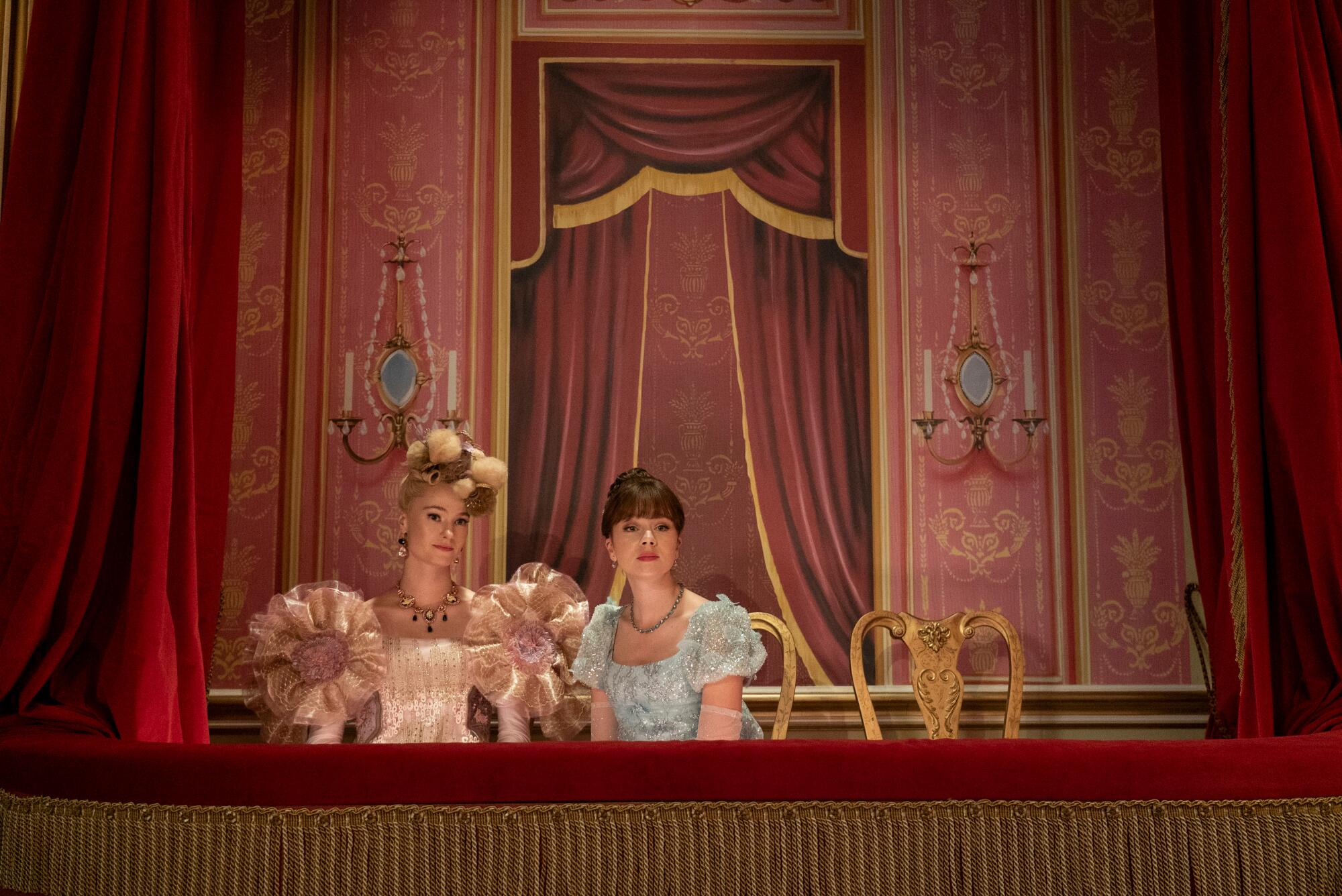
Cressida Cowper (Jessica Madsen) and Eloise Bridgerton (Claudia Jessie) in a scene from the show. “We’re not done with Cressida,” says “Bridgerton” showrunner Jess Brownell.
(Liam Daniel / Netflix)
We saw that in the end Cressida is sent off to live with her aunt — she appears in only two of the “Bridgerton” novels. Where does that character go from here?
We’re not done with Cressida, if I have my druthers. I have a storyline for her that I think gives a nice resolution to her journey. Initially, when we shot Cressida’s departure, we had it scripted that her mother, at the last minute, joins her in the carriage. She chooses her daughter, and it was really, really nice, but when I was talking about it with Shonda, we landed on the fact that we do want to do more with Cressida. If her mother had chosen her at the end, that’s an ending in a way. The fact that she hasn’t gotten her happy ending yet means that her story is not over.
Now I want to know if there was a Shonda note on Penelope and Colin.
That creative collaboration is so sacred. I will say Shonda and I debated Colin’s virginity. I was pro Colin being a virgin because it tracked with his character. In my mind, him coming back at the start of the season acting like he was this Regency F-boy was surely an act. But Shonda made a really good point, which was that if he is really trying to convince himself, he’s doing it [being a womanizer]. I think some of those scenes in the brothel, for example, which I know are very controversial, when Shonda and I were talking about it, these represent him trying to lean into this toxic masculinity and trying to prove to himself that he can be just like his older brothers. As you can see in the second [brothel scene], he can’t even convince himself for longer than a week or whatever that this is what he wants. I ultimately really agreed with her. She’s a genius at — I mean, she often gives notes that I know are going to be controversial, but they’re also going to be the thing that gets people excited about the storyline, and talking about it, and debating it. I’m glad that Shonda pushes me into a space where we’re making stronger creative choices.
The season ends with Penelope and Colin welcoming a son, a tweak from the book. What do you see for their future?
Colin and Penelope, in the book, initially had a daughter, and they named her after Lady Danbury, they named her Agatha. For us, because of the heir race, we felt like it was poetic justice for Penelope to be the one who pulls ahead of her two sisters who have dumped on her for so long. It made sense to give her the boy.
Just like with Anthony and Kate, Penelope and Colin will fall back. We’ll keep our focus on the main couple in Season 4, but I do think more than with other couples, there’s a bit more to tell because Penelope is Lady Whistledown. I’m really curious to see what it’s like for Penelope being a public gossip columnist, seeing whether she’s going to be able to be accountable in a way she hasn’t been in the past, if she’s going to use her pen for more righteous means going forward.
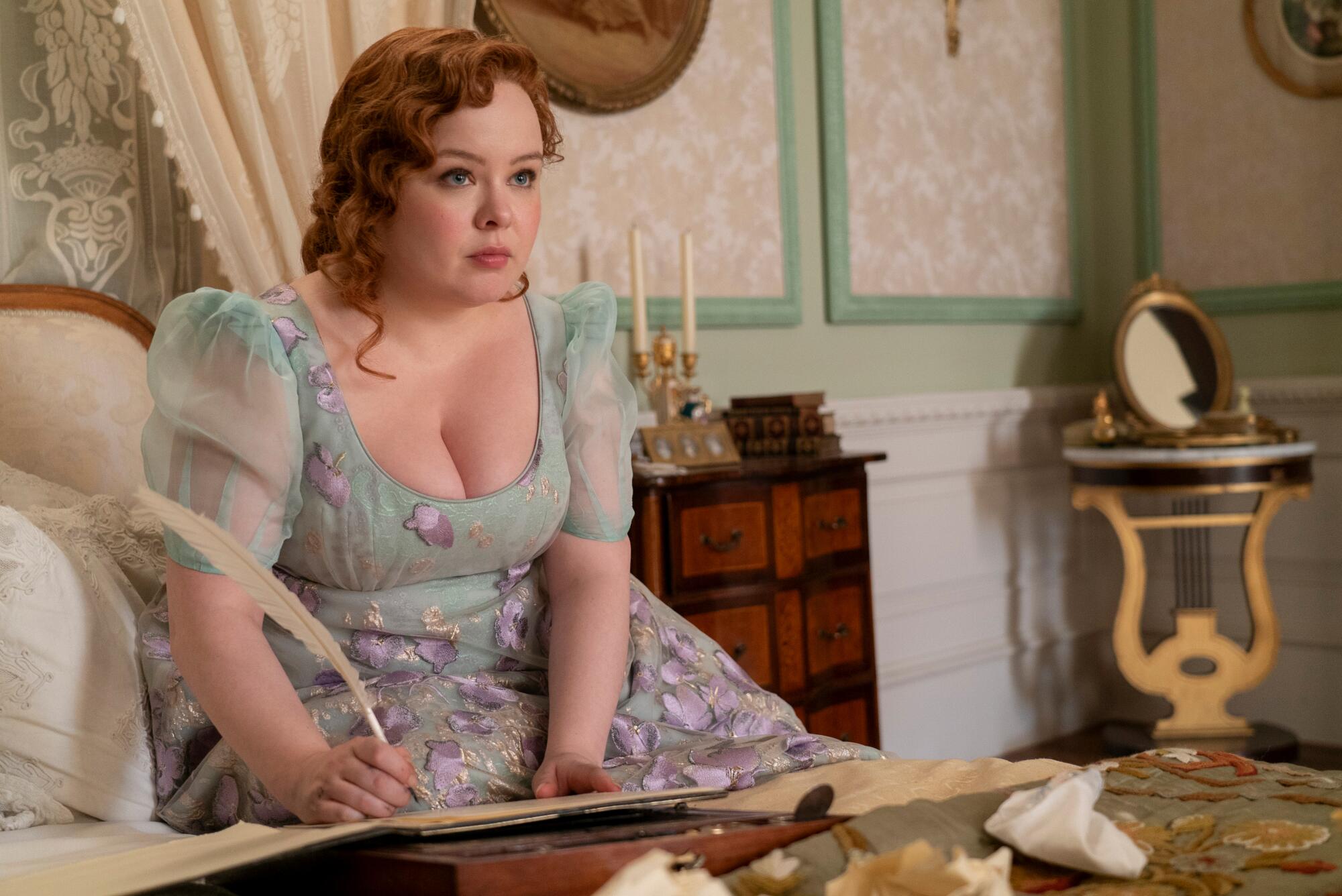
Now that Penelope Featherington’s (Nicola Coughlan) secret identity as Lady Whistledown has been revealed, “Bridgerton” showrunner Jess Brownwell says she’s “curious to see what it’s like for Penelope being a public gossip columnist.”
(Liam Daniel / Netflix)
This season explored a queer romance through Benedict Bridgerton (Luke Thompson). What are you setting up for next season?
Benedict’s fluidity is something we’ve been talking about from Season 1, which is why I think viewers have picked up on it. We wanted to do that storyline justice, and it felt like Season 3 was a good place to do that to make sense of some of the threads we’ve seen with him before. That storyline speaks in a bigger way to Benedict’s overall character arc, which has a lot to do with being someone who is learning how to exist between society and and being unconventional. Benedict [is] trying to figure out what his place is in the world and how to circumvent certain rules, which is something Tilley Arnold (Hannah New) is teaching him this season. I think we will continue telling the story of his fluidity going forward.
A character that caught people by surprise was John Stirling (Victor Alli ) and his relationship with Francesca Bridgerton (Hannah Dodd). You kept it under wraps.
The moment we cast Victor Alli, we knew he was going to be so beloved. He’s such an incredible actor, but we did want to sit on it just so that it could be a surprise when John Stirling shows up because book readers obviously know when they hear that name that he’s important to Francesca. Francesca and John are one of my favorite couples in the series. They have a kind of love that I would advise my girlfriends to seek. I think it feels really radical, or I hope it feels radical in a romance show, to focus on a love that is quiet and a love that is based on companionship and friendship and common interests and respect. I think there is also attraction there, but obviously, we are introducing Michaela at the end of the season, so there will be a second chapter for Francesca. But I want to emphasize that that doesn’t mean that we are disavowing what Fran and John have. I personally don’t believe in a hierarchy of love. I think there are lots of different ways to love and be loved.
Francesca is unlike the rest of the boisterous Bridgertons. John seemed to match her idiosyncrasies. Some fans felt it was a neurodivergent love story.
I actually think Fran and John’s relationship looks like so many more of the relationships I know than any of the romances on “Bridgerton.” We’re just not used to seeing that kind of relationship on television. I thought that the conversation around neurodivergence was really interesting and it was actually something we talked about in the room, but we didn’t necessarily set out to write a neurodivergent character with Francesca. As we were adapting her from the book, many of us thought maybe she is neurodivergent because she does share certain characteristics, and it’s just been beautiful to see people relating to that.
Is there a scene from this season that you’re excited fans finally get to see after sitting on it for so long?
It’s probably the the butterfly ball, as we called it internally. It has Penelope’s big monologue as she comes out as Lady Whistledown and then Philippa [Featherington, played by Harriet Cains] running across the ballroom shouting, “The bugs, Varley!” and then there are butterflies coming out. In Episode 6, when the Mondriches are throwing their first ball and they’re wanting to impress the Queen, in the writers room, we had come up with the idea of, “Oh, maybe they should do a butterfly release because that would surely titillate the queen.” Then one day I had this frying-pan-on-the-head cartoon moment of, “You, dodo. Butterflies! Hello, the Featheringtons. Like, hello, this is Penelope’s journey. She’s in a chrysalis. She’s a caterpillar, she’s becoming a butterfly.” Last minute, I had to tell our production designer, “You have to think of something else,” and she pitched that mechanical flower box so that we could save [the butterflies] for the final moment. I’m so glad and grateful to our crew for allowing me that last-minute change because it’s the perfect moment to underscore Penelope’s journey.
Let’s get into the music. How much of it is spitballing in the room, how much of it is being pitched by an artist’s team? And what led to the decision to feature the show’s first-ever original song?
Justin Camps, who is our music supervisor, gave me a playlist of maybe 100 or 200 orchestral versions of pop songs when we were starting production. We’re not really thinking about it when we’re writing. There are a few different ways [picking a song] happens. The process in postproduction is that an editor does a cut, then the director, then me and then Shonda. Then me, Shonda, Shondaland and Netflix give notes on the final cut.
Two songs in my cut that I was gunning for were Pitbull and a Demi Lovato song [“Confident”] in Episode 6 when Cressida has her big moment. I really tried to get [No Doubt’s] “Don’t Speak” in when Debling and Pen first have their dance, but it was just too melancholy, and [Billie Eilish’s] “Happier Than Ever” is actually perfect. Nicola suggested “Happier Than Ever.” A couple of the songs that the editors chose made it in there. Jack Murphy, our choreographer, does a choreographed dance with a set of dancers at every ball. Oftentimes, he would pick a song to choreograph a dance to and sometimes we would use the song that he picked. [Coldplay’s] “Yellow” being the song over the wedding was something that we all collaborated on and knew that the fans would love to see in that moment. It’s hitting that balance between something that’s not going to be so instantly recognizable that it’s going to take you out, but it has to be recognizable enough that after 10 seconds, you hit your knee, and you’re like, “Oh, it’s that one!”
With Tori Kelly, [behind this season’s “All I Want”] — that was the first time we’ve done an original song. I got the chance to see her perform the song live at the premiere in New York. I think it is such a beautiful song that speaks to so many themes of the seasons.
I know you’re a rom-com enthusiast. Were there films that you took inspiration from as you crafted this season?
I came of age in the ’90s and early 2000s. There’s a lot of nostalgia for movies from that period of time. The makeover moment for Penelope is, in some ways, an homage to “She’s All That” and Rachael Leigh Cook walking the stairwell. I had even, on one pass of my cut, put an orchestral version of “Kiss Me” in there, but it was just too on-the-nose. I’m really curious to see [the reaction] when the back half airs. There is a pretty obvious homage to a scene from “Notting Hill,” the Richard Curtis movie. The brownie scene. It’s one of the greatest scenes in modern rom-coms. There weren’t other really specific scenes, but I’ve been so influenced and informed by the banter in so many of the movies I grew up watching, whether it’s Nora Ephron or older classics. I just love good, awkward banter.
Is there anything you can tease about Season 4 that will make no sense now but will when it comes out?
I’ll tease this: You might be getting a different season from “Bridgerton.” We always live in this perpetual spring in “Bridgerton,” but we’re playing around with the idea of fall … for the first time. Some of that is about story and some of it is, honestly, just for practical reasons because we’re shooting in the fall. It’s still going to be just as lush and colorful, but just more in those warm fall colors instead of the pastels. There will still be some pastels, so it won’t look like a totally different show. I’ll give you that.


New Year’s Absolution, 2024
Directed by Nick Leisure.
Starring Michael Copon, Joel Brady, Josh Gilmer, Rafael Siegel, Shala White, Victoria Brandart, Siddalee Diaz and Lamondo Hill II.
SYNOPSIS:
Four longtime friends reunite for their traditional New Year’s Eve party. But things start to go awry with the arrival of a mysterious resolution: Kill Someone.

The amateur production values of New Year’s Absolution leak off the screen from the opening frame, as a cheap-looking title card appears over stock drone footage, followed by the actors’ names in a bold yellow font, dancing on and off the screen with only the flashiest of iMovie transitions. It’s effective, in letting you know exactly what kind of ride you’re in for.
We get the first sense of this film’s ‘humour’ as we meet Stuart and Travis, a couple played by Rafael Siegel and Lamondo Hill II. As Travis drives toward the home of Damon (Joel Brady), who’s hosting this year’s annual New Years’ Eve party, director Nick Leisure attempts to shock us with a rude joke, as Stuart bends down towards Travis’ crotch, a visual that would almost work if Travis didn’t have a small dog sitting on his lap. Turns out Stuart was just reaching down to pick up his phone. Hilarious.

Stuart and Damon are both members of ‘the five of ’99’, a friend group who met in 1999, of which only four remain (watch for the shocking revelation to this mystery). Damon is more concerned with arranging the coasters, and bickering with his wife Clare (Shala White) over the canapés, than making sure his friends have a good time. Don’t worry, Damon, we’re not having any fun either.
As everyone starts trickling in, the lack of chemistry between the cast members becomes increasingly apparent. ‘Lifelong friends’ Stuart and Damon interact like coworkers at an after-hours event, while ‘best friends’ Travis and Clare stand around rehearsing dialogue. This involves a lot of bitching about the others, especially the next arrivals Jacob (Josh Gilmer), an off-duty cop, and his wife Misty (Victoria Brandart). They are both vain and image-obsessed, showing off their bodies while the others snigger behind their backs about how fat they used to be.

The last to arrive are narcissistic surgeon Roy (Michael Copon), and his new girlfriend Kira (Siddalee Diaz), a shallow parody of Gen Z shallowness, whose entire character is constructed around her social media presence, and who physically cannot stand being separated from her phone. That’s the caliber of subtle social satire you can expect here.
What with the vanity, body shaming, and some casual racism and homophobia, it becomes clear that these are not nice people. There’s an obscenity to their wealth; Stuart blew 50k on a vintage car that can’t drive in the rain, and Damon forked out for a pool that he’s never swam in. Yet Leisure fails to make any kind of satirical point about the superficiality on display, because his approach to filmmaking lacks any depth of its own.

Damon’s hesitancy to get into his own pool is a key point, as his friends jokingly threaten to throw him in, and Stuart later threatens to drown him if he harms his dog Cookie, whom Damon fears will crap on his precious floors. It’s not much, but it’s nice to get some foreshadowing in a plot that’s mostly lacking in structure or craft.
Said plot eventually coughs and sputters to life when Jacob picks his new year’s resolution out of a ceremonial hat, and reads – kill someone. You might expect the group to laugh this off, but Jacob flips out, and deeper, sinister connotations are revealed. Jacob, who has been doing coke with Roy all night, then draws a loaded firearm in his drug-fueled haze, which he accidentally fires, injuring a member of the party.

This leads to some impromptu bathtub surgery from the coked-up doctor, that further highlights the film’s disconnection from reality. None of the characters react in a normal way to this development, continuing the party as if there isn’t a dude with a gunshot wound in the tub.This could’ve been an interesting satirical point about the hollowness of the upper class, except so little has been established about these characters and their relationships, that it just comes across as lazy writing.
However, it’s after this point that the film finally begins to find some (admittedly ironic) entertainment value, as the plot descends into a chain reaction of over-the-top carnage, with each character blaming another for the night’s misfortunes, and perpetuating them in grisly fashion. It’s in this last half hour that Nick Leisure’s vision of a bloody dark comedy begins to come through, and the kills are as exaggerated as they are unexpected, sparing no amount of fake blood. That said, it’s too little too late, as we’ve already wasted an hour watching these unbearable characters exchange dialogue that’s in turn laughable and dull.

New Year’s Absolution is a tonally confused, poorly put-together piece of work that is unclear in its goals, and fails to achieve them. Director Nick Leisure seems to be going for a broad black comedy, but the only laughs I found were from the piss-poor acting, ridiculous deaths, dumb editing gimmicks, and the autogenerated subtitles while rewatching the surgery scene – “It’s bleeding!” “Boobs tend to do that.”
It’s supposedly a horror/thriller, but it’s not scary or thrilling, because there’s no singular antagonistic force, and the deaths are too random, while the characters are so flat and unlikable that we neither feel nor fear for them. Though it’s possible Leisure is going for some kind of ‘eat the rich’ social satire, his approach is too bland for this to come through, and we don’t get any grounded perspective outside of these awful characters.
One question remains, however – who wrote the resolution? Don’t know. Don’t care.
Flickering Myth Rating – Film: ★ / Movie: ★
Dan Carville
https://www.youtube.com/watch?v=embed/playlist
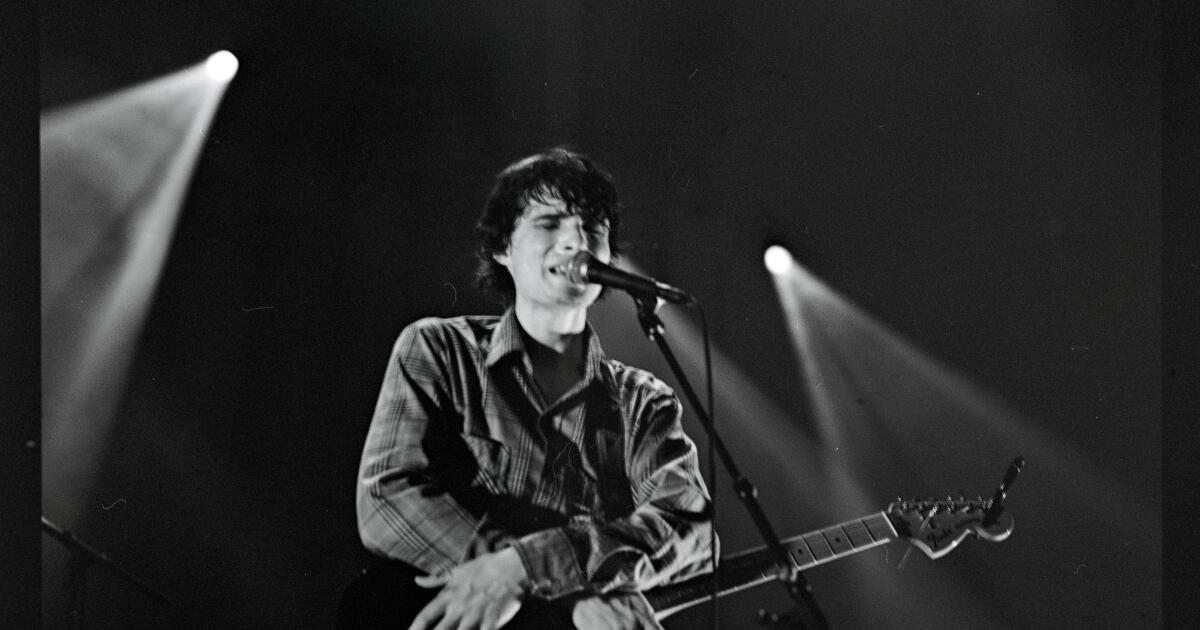
Thinking back on the last two years of his life full of album releases, filming schedules and tour dates, Finn Wolfhard requires squint-inducing concentration to keep it all straight.
“Jesus, a lot has happened,” he says, looking surprised. That’s an understatement.
In that time, the 23-year-old not only finished filming the Netflix hit show “Stranger Things,” which catapulted him to global stardom, and promoted the final season upon its premiere. He also released his feature film directorial debut (“Hell of a Summer,” co-directed with Billy Bryk, which hit theaters in April 2025). Then, he starred in another movie (A24’s creature feature “The Legend of Ochi”), directed a posthumous George Harrison stop-motion music video, wrote, recorded and put out his first solo album (“Happy Birthday”), and embarked on a 22-date tour before recording a new album.
On a video call from his family home in Vancouver, Canada, where he lives with his parents and older brother, he’s chatting about the release of that record, the eclectic, guitar-driven “Fire From the Hip,” which dropped Friday.
“I think it’s a nice day?” he offers when I ask what’s happening in Vancouver. “I don’t know. I’ve been in my basement studio all day, so I don’t … I think it’s nice.”
He’s been down in the basement doing press calls like this, he explains, undoubtedly a familiar routine after so many years in the limelight. He wears a baseball cap and an oversize brown sweater, tugging on the sleeves while he ponders.
Even if Wolfhard is exhausted by the press marathon, he doesn’t show it. He’s excited for the chance to be known on his own terms. He never fails to express gratitude for the projects that afforded him recognition and opportunity, but he’s ready to “take control of the narrative.”
“I spent my whole childhood standing on marks that other people told me to stand on and saying lines that other people told me to say,” he says. “Why wouldn’t I want to make my own stuff?”
Being in control also means being the face of the operation. Before “Happy Birthday” and “Fire From the Hip,” Wolfhard released a total of two records and an EP, plus a whole bunch of singles, with his previous bands, Calpurnia and the Aubreys. Being in a band was a natural fit for Wolfhard, who thrives in an ensemble where he can “hide behind the band name.”
Touring last year was his first time seeing his own name on the marquee.
“It’s just straight up me, and if I suck, I suck,” he laughs. “It’s not like I can be like, ‘Oh, man, we’re having disagreements in the band.’ It’s like, no, that’s you. So there was a little more pressure early on.”
Finn Wolfhard released “Fire From the Hip” on Friday.
(Victoria Stevens)
Stepping into the spotlight required Wolfhard, who admits he shies away from conflict, to own both the pressure and the power of being the one audiences came to hear.
When he got sick and had to cancel a show in Portland, Ore., he remembers feeling crushingly sad “letting down” his fans and bandmates — who, of course, assured him it was outside of his control and urged him not to be so hard on himself.
Wolfhard introduced many of the songs that ended up becoming “Fire From the Hip” to his bandmates while they were still on tour, and he says playing them live “cultivated the spirit” of the eventual recordings. Despite his collaborative ethos, there was a moment during the process where he had to learn how to put his foot down in real time.
“I remember suggesting something and people being like, ‘Ah, I don’t know if I want to do that.’ And I was like, ‘No, you don’t get to do that to me. It’s my record,’” he remembers. “It was very innocent — I don’t think there was much ego on either side. But I think I maybe set up too collaborative of an experience that day.”
“I think I sometimes make it feel like a democracy, which it is in a lot of ways,” he adds. “But also, in the end, it is up to me.”
That thought is echoed in the album’s cover art, an image of two miniature Finn Wolfhards facing off, donning colonial garb and brandishing weapons. It’s meant to represent dueling impulses inside of him, he explains.
Wolfhard, a true-blue music nerd, has been described online as an archetypical example of the “child of a Gen X cool dad,” in the same vein as Olivia Rodrigo. (His dad, a former screenwriter turned lawyer and Indigenous rights researcher, does sound cool, but it was his mom who first introduced him to the Beatles. His parents apparently met over a Stone Roses record.)
That sensibility is evident in his musical influences — “I wanted everything [on drums] to sound like the first two Wilco records,” he says — and in his approach to recording. “Happy Birthday” was recorded almost entirely on four-track cassette tapes, while “Fire From the Hip” uses 24-track reel-to-reel.
The album runs the gamut from its cheeky, surf-rock opener “I’ll Let You Finish” (yes, that is a reference to Kanye West’s infamous speech at the 2009 VMAs) to more ’90s alt-inspired tunes to a surprising dose of straightforward country-folk.

Lyrically, Wolfhard divides his songs into two categories: the “very personal” and the story songs written around books he was reading (“Knockemstiff” by Donald Ray Pollock) or quotes that made him laugh. The personal themes he explores are exactly what you would expect from an early-20s rocker raised in the public eye — namely, relationship expectations and existential fears about the future.
On the nostalgic piano ballad “Good Morning,” he imagines what it might be like to settle down somewhere “with a dog and a wife.”
“I haven’t lived that part of my life yet,” he says now. “So I can really easily get lost in thinking about what that looks like.”
When it comes to sharing his music, especially the more vulnerable tracks, Wolfhard knows his “Stranger Things” fame is the elephant in the room. Anything he sings can and might be used against him in the court of public opinion.
“I could either kind of say nothing and be totally private, because it is scary knowing that everything I say, at least one person will take it a certain way that I wouldn’t want them to. But I just don’t have the control,” he says.
“So if I don’t have the control, then there’s nothing really that I can do, other than try to be as truthful and passionate and well-meaning as I possibly can, you know?”
The double-edged sword of fandom hasn’t stopped Wolfhard or his musically-inclined “Stranger Things” co-stars from pursuing this path. Fellow Hawkins alums Joe Keery (who releases music under the moniker Djo) and Maya Hawke are indie darlings in their own right, and Wolfhard has previously referred to Keery as a mentor. None of them face the unique challenge of relatability in quite the same way, however.
“I’m aware that my specific problems are maybe not as relatable because of how specific of a life I have,” he said. “The only thing I can hope for is that some other person out there listens to it and relates to the same things that I do.”
Sometimes an air of wistfulness accompanies these admissions. When asked about how he feels about Los Angeles, he tells me that it’s complicated: “I think if I wasn’t a young actor, it would be a very different situation.” His favorite parts of the city are its repertory cinemas and lush neighborhoods like Mount Washington, where his godfather resides, because they look the most like Vancouver.
That said, he’s not through with Hollywood. He’ll be back in L.A. for an Oct. 13 show at the Fonda Theatre, and acting and directing are still on the agenda. He would like his next film project — other than the Matt Johnson and Bong Joon Ho projects he’s already committed to, of course — to be something more “personal.”
For now, though, the focus is music. Wolfhard launches a new tour this month, and he’s most looking forward to “doing dumb s—” with his friends.
He tells a quick story to illustrate: When he and the band last toured in Glasgow, Scotland, he was trying to leave the venue without being noticed. (“I have a hard time dealing with fan interaction,” he says.)
“We kind of made it into this joke thing, knowing it wouldn’t work, where me and Rand, my guitarist, were like, ‘let’s switch clothes.’ Rand pretended to be me and I pretended to be Rand,” he says. Miraculously, it worked up until the “very last second” before they stepped on the bus.
“I couldn’t help myself,” he says: He instinctively made eye contact with someone in the crowd. “They did a double take, like, ‘Wait, what?’”
It sounds like a scene straight out of “A Hard Day’s Night” — or maybe inspiration for his next film.
“I’m pretty in my head about things and want them to be a certain way,” he says. “The thing that I have to remind myself all the time is that, like, dude, you’re with your friends, you’re playing music — it’s the best.”
Movie Reviews
‘Fruit Gathering’ Review: A Factory Worker Falls for Her Female Colleague in a Delicate Burmese Debut

Caught between rural roots and urban opportunities, familial duty, friendship and forbidden carnal desire, young San Kyi (Nandar Myat Aung) struggles to find her place in Fruit Gathering, a sensitive Myanmar-Czechia-France co-production that just won Karlovy Vary’s top prize.
That’s an impressive achievement for Burmese writer-director Aung Phyoe, making his feature debut after several shorts. His flair for blending realist drama with more poetic, painterly imagery makes for a dreamy, hypnotic viewing experience, eased along by a confident, open-hearted performance from Nandar Myat Aung in the lead role. Fruit Gathering will be ripe for picking at further festivals, especially ones specializing in Asian and/or LGBTQ+ fare, possibly followed by niche distribution.
Fruit Gathering
The Bottom Line Juicy but not too sweet.
Venue: Karlovy Vary Film Festival
Cast: Nandar Myat Aung, Nandar Myint Lwin, Tin Tin Ei, Thida Soe Khant, Wutt Yeet Kyaw, Htet Aung Lynn, Khet Suu Myat, Min Nyo, Zun Pwint Phyu
Director/screenwriter: Aung Phyoe
1 hour 37 minutes
Self-transplanted with her mother (Tin Tin Ei) and grandmother from the countryside to industry-rich Yangon, San Kyi has so far managed to resist the pressure from her mom to get married or pursue a career in something upmarket like tech. Instead, eager for a job that doesn’t demand too much thinking, San Kyi works in a massive clothing factory, sewing seams all day in a ferociously noisy, scrap-strewn environment where the supervisor gets snotty if she takes a bathroom break without seeking permission first.
Incidentally, while the factory hardly looks inviting, the conditions don’t seem to be too bad compared to those seen in older documentaries about East and South Asian sweatshops. They’re comparable to what’s on display in, say, Chinese director Wang Bing’s doc Youth but without the company-owned residential housing. At least the workers are allowed to submit petitions circulated by labor organizers requesting better pay and more safety measures, although tellingly San Kyi refuses to sign lest she might get fired for it. A union leader (Wutt Yee Kyaw) pours scorn on her for not showing more solidarity with her colleagues.
Later, after she’s injured herself by a sewing accident, San Kyi will rethink her position on workers’ rights, but industrial relations in the textile industry are not the film’s main focus. It’s all background color, as much a part of the vivid landscape as the interludes where we see San Kyi back home visiting the mango farms and spirit-dance ceremonies of her agrarian childhood.
At least it’s at this factory that San Kyi meets Theint Theint Oo (Nandar Myint Lwin), a young co-worker around the same age as San Kyi with a radiant smile and street sense to burn. The two young women start out just hanging together during their lunch breaks but soon grow inseparable. The script suggests early on that Theint Theint may be the kind of pal who always forgets to bring enough cash for dinner. A darker interpretation might posit that she sees San Kyi as little more than a mark, but the truth probably falls somewhere in a grayer area.
Either way, by the time San Kyi is buying nearly identical blouses for the two of them to wear on strolls around town, it’s pretty clear that she’s smitten with Theint Theint. The latter is ambiguously flirtatious and keen to have languid girls’ night sleepovers in the same bed, but also open about the fact that she’s got a man in the background, who is conveniently always away working in another country. Afraid of losing her new limerent object of desire, San Kyi entertains the thought of going abroad with Theint Theint to work as housekeepers or factory workers in somewhere affluent like Singapore or Malaysia.
Clearly, things are heading for a smash up when San Kyi lends Theint Theint a substantial amount of money. Somehow the tension is heightened by the fact that Theint Theint gets closer to San Kyi’s family, even accepting a job offer that comes through the local guy whom San Kyi’s mom was trying to set San Kyi up with as a potential husband. It all serves to underscore how narrowly female relationships are usually defined in highly traditional, painfully patriarchal Myanmar society. The intense feeling between these two young women could never be openly romantic, although no one bats an eye when they walk hand and hand through the streets, much the way Queen Victoria is said to have refused to sign legislation banning lesbianism because she wouldn’t acknowledge such a thing even existed.
Aung Phyoe suggests the messy, uncontrollable nature of desire via some slightly heavy-handed imagery of flooded apartments and generally juicy, watery, somewhat soluble imagery. But the story surprisingly shifts tack halfway through and becomes less interested in the two women’s relationship and more in San Kyi’s personal development, especially after some hard knocks change how she sees the world.
Every so often, the camera will linger on a tiny detail like a vase that has some emotional significance, or the light coming in a window. There’s a tiny hint that these cinematic still life pictures are being seen through San Kyi’s eyes, like scenes in a book told through limited third-person point of view. Indeed, there’s a faintly literary quality to the filmmaking, as if inspired by romance and high-brow fiction, but Aung Phyoe’s touch is feathery soft, as gentle as the soft thud of a mango falling from a tree.
-

 Maine56 seconds ago
Communities in Maine demand justice after ICE officer shoots, kills 25-year-old
-

 Maryland7 minutes ago
Dog turns on toaster, sparking Maryland house fire that kills 3 pets
-

 Michigan13 minutes ago
Michigan AD Warde Manuel says he’s been fired by social media 3 times in 10 years
-

 Massachusetts19 minutes ago
Marlborough Ice Cream Shop Lands On MA Ice Cream Trail
-

 Minnesota25 minutes ago
Cyclospora is in Minnesota. How to avoid severe diarrhea from parasite
-

 Mississippi31 minutes ago
Mississippi Legislature to hold special session for youth court laws
-

 Missouri37 minutes ago
Route 66 in Springfield, Illinois and St. Louis: Chasing Midwest food innovations on the Mother Road
-

 Montana43 minutes ago
Get Smitten With a Kitten at Humane Society of Western Montana

