

Connect with us

Entertainment

Beastie Boys sue Chili's owner over 'Sabotage' parody ad

Published

on

Beastie Boys sue Chili's owner over 'Sabotage' parody ad

The Beastie Boys have sued Brinker International, the owner of 30 Chili’s Grill & Bar locations in New York, for alleged copyright infringement and trademark rights violations.

The suit comes after a Chili’s ad was released parodying the rap group’s 1994 hit “Sabotage” and its ’70s themed, Spike Jonze-directed video.

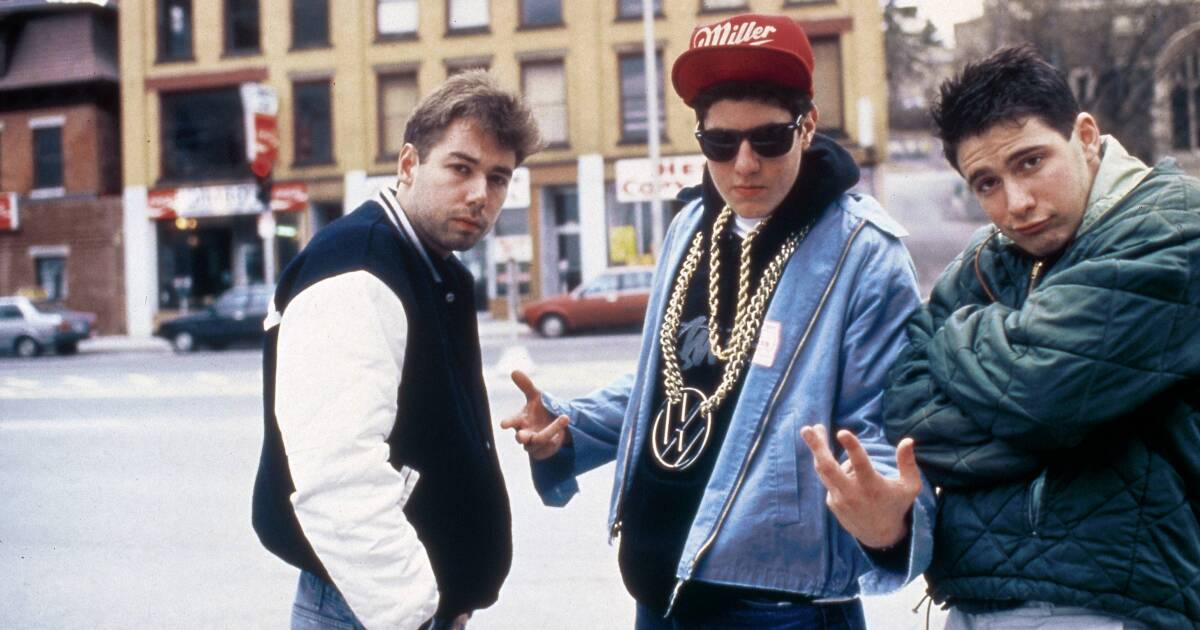
The suit alleges that the ad, featuring “three characters wearing obvious 70s-style wigs, fake mustaches, and sunglasses,” was clearly “intended to evoke the three members of Beastie Boys — Adam “Ad-Rock” Horovitz, Michael “Mike D” Diamond and the late Adam “MCA” Yauch.

“Use of the ‘Sabotage’ sound recording, music composition and video was all without permission,” according to the suit. In the legal action, the group says it does “not license ‘Sabotage’ or any of their other intellectual property for third-party product advertising purposes” and alleges that the ad creates a false impression that the act allowed it.

Advertisement

The suit seeks $150,000 in damages in each case of copyright violation, attorney fees and three times the profits from any false representations. The group also demanded that Brinker pull the ad from circulation and never use its music or likenesses again.

The Beastie Boys are famously averse to commercial licensing. Yauch’s will forbids the use of his image, music and art he created in any form of advertising for products.

If successful, this would be the third time in recent years that the Beastie Boys have triumphed over a company over unlicensed use of their music. In 2013, they won a settlement from toy company GoldieBlox after the firm parodied the group’s 1987 song “Girls” in an ad. The company apologized and donated to charity.

In 2014, the Beastie Boys won a $1.7-million settlement against the makers of Monster Energy Drink for using clips of songs like “Sabotage,” “So What’cha Want,” “Make Some Noise” and “Looking Down the Barrel of a Gun” in a promotional video and a free download without permission from the band.

Advertisement

Movie Reviews

Film Review: “Primate”

Published

on

Film Review: “Primate”

Hello, dear reader! Do you like what you read here at Omnivorous? Do you like reading fun but insightful takes on all things pop culture? Do you like supporting indie writers? If so, then please consider becoming a subscriber and get the newsletter delivered straight to your inbox. There are a number of paid options, but you can also sign up for free! Every little bit helps. Thanks for reading and now, on with the show!

Warning: Full spoilers for the film follow.

I am a sucker for a good ape movie. I’ve been obsessed with Planet of the Apes for literally decades, and I continue to find apes both fascinating and more than slightly terrifying, particularly chimps. Of course, the news has been filled with stories of pet chimps (and their own owners) going amuck, as the recent series Chimp Crazy makes clear. Indeed chimps in particular are eternally coming up in our popular culture. In addition to Planet of the Apes, Jordan Peele’s Nope featured a chimp attack as a key part of its story, suggesting that our dear simian relatives are an enduring source of fear and fascination for us. They seem so understandable and yet so utterly alien, and what better way to make sense of, or at least experience, this contradiction through the vernacular of horror?

This brings us to Primate, the new slasher film from director Johannes Roberts (who co-wrote the script with Ernest Riera). Arguably the emotional center of the story is Lucy (Johnny Sequoyah), who returns home to her family’s isolated cliffside mansion in Hawaii, where she’s reunited with her father, sister, and the family’s friendly chimp companion Ben, along with some other equally bland personalities. It soon turns out that poor Ben has been infected with rabies and, sans treatment, he soon goes on a rampage, quickly turning from cuddly and affectionate to sadistic and murderous. It’s all Lucy and her sister and the rest of the gang can do to stay alive (spoiler alert: almost none of them make it out alive).

Primate is undeniably gripping. Roberts is a skilled visual stylist, and he has a keen command of space, lighting, and sound. A number of wide shots show us just how isolated the family home is from anywhere around, situated on a bluff that offers no easy escape once Ben becomes murderous, while dim lighting effectively creates a nightmare landscape from one which our protagonists cannot escape. Of equal note is an unsettling scene in which Ben presses his face up against some distorting glass, creating a nightmarish image that will stick with you as his murderous rage grows. Even props have their part to play, from the speech device that Ben uses to convey his feelings–which becomes ironic later in the film–to a broken chair that becomes key to his demise. Adrian Johnston’s soundtrack, likewise, helps to keep your nerves constantly jangled as you wait for the next bout of slaughter to unfold, and I appreciated a scene in which Lucy’s deaf father, played by Troy Kotsur, returns home, even as the film muffles sounds so we inhabit his deafness. The juxtaposition of silence with Ben’s renewed attacks on Lucy is quite effective.

Advertisement

In my opinion, every horror movie worth its salt has one kill that’s both exceptionally gnarly and also deeply disturbing, and in this regard Primate does not disappoint. The unfortunate victim in this case is Drew, one of the dude-bros from the airplane that Lucy and her friends meet right at the beginning who, upon encountering Ben in the bedroom, has his jaw ripped right off. There’s something almost poignant about the way his eyes continue to dart around, filled with an anguished knowledge that death is imminent as he chokes on his own blood. It’s also bleakly funny, as Ben, seeming to sense his victim’s dismay and to find humor in it, uses the detached jaw to mock his anguished gurgling and then, as if that weren’t enough, almost seeming to try to reattach the torn-off jaw (the resulting sound of teeth clacking against bone is viscerally unsettling). It’s a brilliantly-executed piece of horror cinema and this scene alone was worth the price of admission, though I did find myself wishing we had more scenes like this, as perverse as that sounds.

As other critics have noted, the script is at times a bit too lean, particularly when it comes to giving these characters or even providing much insight into Ben as a character prior to his infection. It’s not that this is necessarily a requirement, but as a fan of both chimps and Planet of the Apes, I kept hoping for at least some gesture toward helping us to feel the barest bit of sympathy for Ben, a creature brought into the human world and then turned into a monster by a force he has no control over. Fortunately, there are at least a few moments when we see the anguish he’s in, and there are even some signs he knows something is wrong, even if he can’t quite comprehend why he’s now filled with such murderous rage.

When it comes down to it, there’s just something uniquely terrifying and appealing about chimps, which helps to explain why we keep returning to them again and again in popular culture. As one of our closest living relatives–and as some of the most intelligent nonhuman animals–they hover in a strange liminal space, both eerily like and unlike us. This is particularly true in a film like Primate, which relies on practical effects and puppetry rather than CGI (except for some moments). Miguel Torres Umba does a fantastic job inhabiting Ben, and the practical effects may not make Ben into as realistic an ape as, say, Caesar from Planet of the Apes, but he’s definitely more terrifying. For all that he’s a killing machine, there are glimmers of a not-quite-human intelligence lurking behind those eyes, which is precisely what makes him such a dangerous enemy once the rabies-induced madness starts to take over.

And that, ultimately, is the irony of Ben going mad. As the tragic case of Charla Nash made clear back in 2009, even the tamest and most human-acculturated chimps are only one mild disturbance or moment from tearing a person apart. Even though the film doesn’t go too deeply into Ben’s backstory, there’s enough there to glean that he was, for all intents and purposes, raised as a human, and there are just enough glimpses of who he was to make us feel the pangs of sympathy for this creature forced to live in a human world for which is so manifestly ill-suited. Just like Travis, he’s a bit of the untamed wild just waiting to destroy the fragile human family and the civilization built atop it.

Primate is one of those genre-horror flicks that wears its influences on its sleeve, and one can see strands of everything from Cujo to “The Murders of the Rue Morgue”in its plot, themes, and execution. Its success owes much to Roberts’ skills as a filmmaker, his ability to take tried and true elements of the genre and use them in ways that hold us rapt and make us grip the arms of our chairs in terror. This film burrows deep in your brain and doesn’t let go, and I can’t wait to see what Roberts has in store for us next.

Advertisement
Continue Reading

Entertainment

Paramount sues Warner Bros. Discovery over its deal with Netflix

Published

on

Paramount sues Warner Bros. Discovery over its deal with Netflix

David Ellison’s Paramount has sued Warner Bros. Discovery — the smaller firm’s latest move to block Warner’s $72-billion sale to Netflix.

The lawsuit, filed Monday morning in Delaware court, asks Warner and its chief executive David Zaslav to produce more information about Warner’s deliberations and decision to select Netflix, ending the hotly contested auction on Dec. 4.

Last week, Warner’s board unanimously rejected Paramount’s $30-a-share proposal that included a personal guarantee by Ellison’s father, the tech billionaire Larry Ellison, to cover the equity portion of Paramount’s deal. Paramount is waging a hostile takeover, asking Warner investors to sell their shares to Paramount.

Paramount Skydance’s lawsuit contends that Warner’s board breached its disclosure duties “by failing to provide full, accurate, and truthful information” to investors. Paramount, however, stopped short of asking the court to block the Netflix deal.

Advertisement

Instead, Paramount said it was simply seeking access to information to allow shareholders to evaluate the competing offers — Paramount’s or Netflix’s — “while reserving the right to seek further relief as appropriate.”

Separately, David Ellison said Paramount was preparing a proxy fight and would nominate its own slate to serve as Warner’s board.

The move came the morning after the Golden Globes ceremony in Beverly Hills, in which Zaslav’s warm relations with Ted Sarandos, Netflix’s co-chief executive, were on display. Both Warner Bros. Discovery and Netflix had a strong night at the award show, which was televised by Paramount’s CBS network.

Paramount has asked for an expedited hearing.

In its lawsuit, Paramount accused Warner board members of misleading shareholders and concealing its financial analysis on how much Warner’s basic cable channels, including CNN, HGTV, Food Network and TNT, are worth.

Advertisement

Netflix’s $27.75 a share offer does not include Warner’s cable channels. Netflix is only interested in HBO, HBO Max streaming service and the venerable Warner Bros. television and movie studios.

In contrast, Paramount’s $78-billion offer is to take over all of Warner, including the TV channels. Warner last summer announced plans to spin off its cable channels into a new company, Discovery Global. Its investors will get stock in the new company.

However, the new shares have not been priced and Paramount has argued they won’t be worth much. “We have analyzed [the Discovery Global channels] as having zero equity value,” Ellison wrote to shareholders. That makes Paramount’s $30 a share offer higher, Paramount argues.

A Warner Bros. representative did not provide immediate comment. Netflix declined to comment.

Neither Netflix nor Paramount has raised its bid since the submitted formal proposals on Dec. 4. Paramount, in its lawsuit, alleged that Warner board members acted hastily, approving Netflix’s deal — its total enterprise value would be $82.7-billion — even though Paramount told Zaslav and Warner’s top banker on Dec. 4 that it hadn’t submitted its “ ‘best and final’ offer.”

Advertisement

Paramount has submitted eight proposals to Warner since Sept. 14.

In a Monday letter to shareholders, David Ellison wrote that Warner has “provided increasingly novel reasons for avoiding a transaction with Paramount.”

“Paramount started this process about four months ago with a private offer at a significant premium to WBD’s $12.54 share price, and our pursuit culminated in the $30 per share all-cash, fully financed proposal we made before WBD entered into the Netflix transaction,” Ellison wrote.

“We are committed to seeing our tender offer through,” Ellison said. “We understand, however, that unless the WBD board of directors decides to exercise its right to engage with us under the Netflix merger agreement … this will likely come down to your vote at a shareholder meeting.”

Paramount has set a Jan. 21 deadline for Warner investors to tender their shares, although that deadline could be extended.

Advertisement
Continue Reading

Movie Reviews

Film reviews: ‘No Other Choice,’ ‘Dead Man’s Wire,’ and ‘Father Mother Sister Brother’

Published

on

Film reviews: ‘No Other Choice,’ ‘Dead Man’s Wire,’ and ‘Father Mother Sister Brother’

‘No Other Choice’

Directed by Park Chan-wook (R)

★★★★

Continue Reading

Trending
