Education
Trump’s Battles With Colleges Could Change American Culture for a Generation


In October 2023, three days before Hamas fighters attacked Israel, Columbia University’s new president stood outside Low Library and posed a foundational question.
“What,” she asked, “does the world need from a great university in the 21st century?”
The president, Nemat Shafik, argued that the world required much. Rigorous thinkers who were grounded in the age’s great debates. Researchers whose breakthroughs could transform societies. Universities that extended their missions far beyond their gates.
Seventeen months later, Dr. Shafik is gone and the Trump administration is offering a far different answer. The ideal Dr. Shafik described, much of it historically bankrolled by American taxpayers, is under siege, as President Trump ties public money to his government’s vision for higher education.
That vision is a narrower one. Teach what you must, defend “the American tradition and Western civilization,” prepare people for the work force, and limit protests and research.
“I have not experienced, across 46 years of higher education, a period where there’s been this much distance” between the agendas of university leaders and Washington, said Robert J. Jones, the chancellor of the University of Illinois Urbana-Champaign.
The outcome of this clash over the purpose of higher education stands to shape American culture for a generation or more. If the president realizes his ambitions, many American universities — public and private, in conservative states and liberal ones — could be hollowed out, imperiling the backbone of the nation’s research endeavors.
Two months into Mr. Trump’s term, universities are laying off workers, imposing hiring freezes, shutting down laboratories and facing federal investigations. After the administration sent Columbia a list of demands and canceled $400 million in grants and contracts, university leaders across the country fear how the government might wield its financial might to influence curriculums, staffing and admissions.
“Colleges have gotten hundreds of billions of dollars from hard-working taxpayers,” Mr. Trump said in a campaign video. “And now we are going to get this anti-American insanity out of our institutions once and for all. We are going to have real education in America.” The goal, Mr. Trump declared, is to reclaim “our once-great educational institutions from the radical left.”
Other Republicans have spoken, often in more measured language, about their own frustrations with higher education. Senator Bill Cassidy, the Louisiana Republican who chairs the Senate Committee on Health, Education, Labor and Pensions, bluntly complained during a hearing last month that colleges were “not preparing students to succeed in the modern work force.”
With presidential power magnified by a largely genuflecting Congress, Mr. Trump’s challenges to academic freedom and First Amendment protections have not provoked broad and visible public outrage. The sobering reality for university leaders is that Mr. Trump has the administrative upper hand, and academia has startlingly few vocal allies.
The fusillade against higher education led by Mr. Trump and Vice President JD Vance — men with Ivy League degrees — is more furious than past conservative crusades against the country’s elite academic institutions. The administration, though, is capitalizing on imperfections that have been tearing at the system’s stature for years.
“His genius was in understanding and then exploiting the resentments, the anxieties, and the vulnerabilities of” voters who already had “critical sentiments” toward higher education, Ronald J. Daniels, the president of Johns Hopkins University, wrote of Mr. Trump in his 2021 book, “What Universities Owe Democracy.”
Private polling conducted for universities shows that many people believe that these nonprofit institutions are anything but — one consequence of high tuition costs. Even though a college education almost always provides graduates with higher lifetime incomes, rising debt has made the value of a degree a matter of debate. Politicians have eagerly caricatured colleges as sanctuaries of intolerance and “wokeism” where admissions processes have sometimes considered race or favored the well-connected.
For all of their grand talk — “For Humanity” is the name of Yale University’s $7 billion fund-raising campaign — administrators and professors often acknowledge that they have not mustered easy-to-digest responses against even routine criticisms.
Universities strained to be more accessible, building up more diverse classes and handing out more financial aid. But Chancellor Jones, who will become the University of Washington’s president this summer, nevertheless described higher education’s public relations strategy as “a work in progress.”
Many leaders concede that while the role of the university in American life is clear to them, it has grown muddled to many.
“Higher education has always been able to stand up and invoke its moral authority,” said Roger L. Geiger, a distinguished professor emeritus at Pennsylvania State University and a leading authority on the history of American colleges. “What’s happened is they’ve simply lost that moral authority.”
The Pew Research Center found in 2012 that 26 percent of Americans believed that colleges and universities were negatively affecting the United States. Last year, even before the campus demonstrations that led to thousands of arrests, Pew reported that figure had increased to 45 percent.
Much of Mr. Trump’s higher education agenda during his first term empowered for-profit colleges. Now, though, Mr. Trump is taking clearer aim at the cultures and missions of major nonprofit universities. His tactics, university officials and researchers believe, could throw American higher education toward an earlier time — closer to when, as Dr. Shafik put it, universities “were kept separate from the world around them.”
American higher education predates the republic itself. Harvard, for example, was established in the colonial period to educate clergymen. George Washington’s idea for a national university was never realized, but Abraham Lincoln found more success pursuing the idea that higher education was entwined with American ambition when he signed the measure that led to publicly funded land-grant institutions.
Research became a focus of universities late in the 19th century. The nation’s reliance on universities greatly accelerated during and after World War II, as the United States began to lean on academia more than most other countries.
Essential to the system was Washington’s new willingness to underwrite overhead costs of expensive research projects. By 1995, the National Academy of Sciences concluded that universities were “the core strength” of the American research-and-development apparatus. Universities also assumed part of the United States’ soft-power strategy, working on foreign aid projects that spanned the globe.
That symbiotic arrangement is now in jeopardy. The administration has framed its proposed cuts to overhead expenses, for instance, as a way “to ensure that as many funds as possible go toward direct scientific research costs.” But administration officials have also depicted the longstanding framework in harsh terms, including the assertion that it created a “slush fund” for liberal university administrators.
As Dr. Geiger put it, the Trump administration’s approach represented “a new era.” Besides upending individual studies, cuts to federal money could unleash dramatic consequences for the structures and objectives of universities.
“No one can assume, for example, that biochemistry is going to have a sustained future of generous funding,” said John Thelin, a professor emeritus at the University of Kentucky and a former president of the Association for the Study of Higher Education.
He could think of no president, provost or medical school dean who had, in recent years, appeared particularly nervous about an evaporation of funding. These days, it is hard to find a president, provost or medical school dean who is not anxious about something.
At Illinois, the federally funded Soybean Innovation Lab will close next month. Dr. Jones fears that research on everything from insulin production to artificial intelligence could ultimately wither, undermining the university’s ability to advance what he called “the public good.”
“Before, we were just trying to tell our story to improve the value proposition in the eyes of the public, but now it becomes a bigger, much larger issue than that,” said Dr. Jones, one of the few top university chiefs who have been willing to be interviewed on the record since Mr. Trump’s inauguration.
The threat is also acute at private institutions, even those with the biggest war chests. Johns Hopkins said last week that it would eliminate more than 2,000 jobs in the United States and overseas, the largest round of layoffs in its history. The University of Pennsylvania, Mr. Trump’s alma mater, is among the universities with new hiring freezes. (It announced that step before the Trump administration said on Wednesday that it would pause about $175 million in funding for Penn because it had allowed a transgender woman to compete on its women’s swim team.)
In recent weeks, presidents at public and private universities alike have weighed how long any institutional lifelines could last. But professors doubt that a major university can meet its modern ambitions without a relatively open spigot of federal support.
“Ultimately, the university cannot exist without research,” said Brent R. Stockwell, the chair of biological sciences at Columbia. “It would be really, really more akin to a high school or a local community college where you’re just teaching some classes without world-class researchers bringing the frontier of knowledge into the classroom.”
So far, Mr. Trump has not signaled any interest in retreat. That has left academic leaders searching urgently for how to save an ideal they insist is imperative.
Asked whether he feared a wholesale remaking of the American university, Dr. Jones replied that he did not like to use the word “fear.” But, he added, “it is a concern — I can’t say that it is not one of those things that a lot of us are concerned about.”
Sharon Otterman contributed reporting.



In our national memory, George Washington is a mythic figure, cast in metal, carved in stone. His leadership, first as general, then as president, is so intertwined with the roots of this country that it is sometimes hard to separate the man from the idea of America. How does one imagine the living presence of such an icon, much less embody him?
There is a small fraternity of men bold enough to try. At historical parks and commemorations from Virginia to Seattle, these interpreters (their preferred term) transform themselves into Washington. Each has his own approach, but what all their representations seek to capture is a legacy that has endured from his time to ours. If America, at least in part, is an idea, then our national project becomes, like theirs, an act of interpretation, an imperfect attempt to translate some idealized vision into the messy reality of our own time.
— Ezekiel Kweku
“By some strange quirk
of genetics, I have
Washington’s exact
dimensions. Where my
sleeves fall on my wrist,
the size of my chest, the
size of my thighs, where
the breeches fall to my
knees, are all identical.”
John Koopman, 67, often performs
while riding his horse, Bear. He
has portrayed Washington for 20 years.
James Fryer, 70, wears a replica of a general’s uniform that Washington designed himself. He recently completed training to portray Washington for the nonprofit Historic Philadelphia.
“Some people portray George as a marble statue. I don’t do a marble George. I am interested in talking to everyone, even those who yell at me because George was a slave owner. I want to respect them, try to educate them, or maybe even inspire them.”
Vern Frykholm, 77, was moved to bring his interpretation of Washington to Washington State, where he lives, after seeing a 2011 performance in Pennsylvania.
Dean Malissa, 73, signs his personal
correspondence, including emails,
as Washington did: “Your Most Humble
and Obedient Servant.” He became
the Official George Washington
at Mount Vernon in 2004, and held
that role for nearly 20 years.
“I describe him sometimes as just a dude. I look at him and think, I could see myself in the same world, making similar bad decisions or similar good decisions.”
Daniel Cross, 39, portrayed a young Washington at Virginia’s Colonial Williamsburg until last year. He now works with organizations around the country.
Curt Radabaugh, 62, has 13,000 history books in his personal library, including several hundred about Washington. He is a veteran of the U.S. Marines and a retired police officer.
“He’s a mentor, a father
figure, and not only in the
sense that he’s a patriarch
of the country. Because
I grew up without a
father, he kind of became
my surrogate father.”
Brian Hilton, 58, says he researches
Washington’s era every morning before
his children get up and at night after
they go to bed. He is a high school history
teacher near Richmond, Va.
Daniel Shippey, 57, partners on interpretations with his wife, Kelly, who portrays Martha Washington. Kelly researched 18th-century hair techniques to create her husband’s costume hairstyle. They live in Virginia.
“You’re playing the myth of George Washington as well as the historical figure. I make his voice a little firmer and deeper than it probably was in real life. I play him a little funnier than he probably was. In reality, if you came to see him, he probably wouldn’t talk to you as much as I do.”
Doug Thomas, 53, is Washington’s second cousin nine times removed.
John Godzieba, 67, has reenacted
the crossing of the Delaware as
Washington every Christmas for the
past 16 years at Pennsylvania’s
Washington Crossing Historic Park.
“In many ways I don’t look like him. My eye color is wrong. My nose is wrong. My hair color is wrong. I wouldn’t have cast myself in this role.”
Ron Carnegie, 64, has portrayed Washington at Colonial Williamsburg for 20 years.
Ryan Williams, 37, is a veteran who specializes in playing a young Washington during the French and Indian War. He lives in Virginia.
“Some people portray
Washington almost
like a superhero.
I like to bring out that
he has faults. He’s a
person like you or me.”
Michael Grillo, 64, is a historical
tailor who hand-sews his own clothes
for reenactments. He also makes
period props, including two American
battle flags and pewter mugs
engraved with Washington’s crest.
Martin Schoeller is a photographer and director known for his close-up portraits of everyone from world leaders and celebrities to female bodybuilders. For this project, he used a large format camera to photograph 13 historical interpreters of George Washington — many of whom arrived in full uniform — over three days in Virginia and New York City.
Additional reporting by Tenzin D. Tsagong. Interviews have been edited and condensed for length and clarity. Top quotes from Brian Hilton, Daniel Shippey and Daniel Cross.
Produced by Sara Barrett, Danny DeBelius and Sam Whitney. Additional production by Olivia James.
One task the robots can take from us? Cleaning. Especially hard-to-access windows. So when writers Caroline Mullen and Evan Dent found this little guy — whose government name is “EcoVacs Winbot Mini” — they were intrigued. Could he clean the uncleanable? Caroline and Evan put their robot friend to the test at both the Wirecutter office and a high-rise apartment. Is a robo-window cleaner more effective than scrubbing yourself?

new video loaded: School Year Cut Short and Aid Delivery Slowed Amid Fuel Crisis in Cuba

By McKinnon de Kuyper
June 22, 2026
-

 Lifestyle32 minutes ago
Sunday Puzzle: Five plus two, two plus five
-

 Technology44 minutes ago
Xbox is a disaster
-

 World47 minutes ago
World leaders, dignitaries pay tribute to America on historic 250th birthday
-

 Politics52 minutes ago
Expert who fled Cuba warns of ‘vicious cycle’ that will lead to ‘communists in double digits’ in Congress
-

 Health59 minutes ago
July 4 heat delays America 250 celebration as State Fair guests share love of USA
-

 Sports1 hour ago
Toronto Maple Leafs top pick Gavin McKenna reveals that he’s changing his jersey number
-

 Technology1 hour ago
China’s robot-run hotel opens to public in 2027
-
 Business1 hour ago
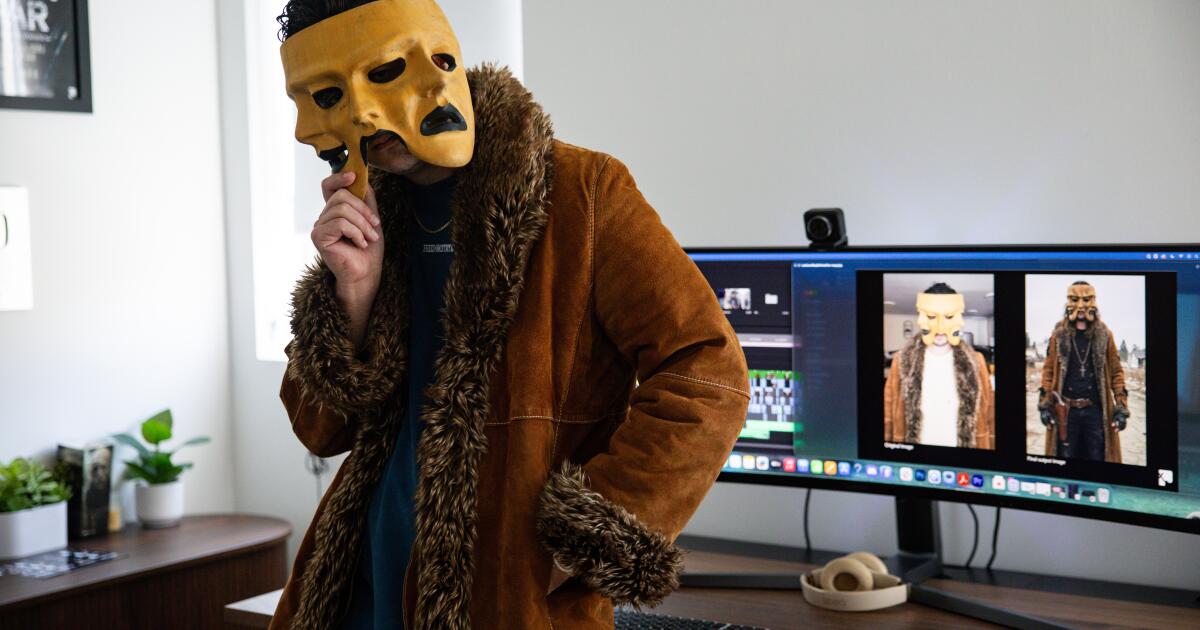
China-backed AI tool behind fake Brad Pitt fight making Hollywood inroads

