Education
Opinion | A Playbook for Law Firms and Colleges to Stand Up to President Trump


In his attacks on law firms, universities and other American institutions, President Trump is relying on an illusion. The illusion is that the institutions are powerless to fight back and that they face a choice between principle and survival.
These institutions do not have to capitulate to Mr. Trump. They have a realistic path to defeating his intimidation. Some law firms and others have begun to fight. In doing so, they have provided the beginnings of a playbook for standing up to his attempts to weaken core tenets of American democracy, including due process, free speech and the constitutional system of checks and balances.
For anybody who is skeptical of this idea and sees Mr. Trump as all-powerful, it is worth recognizing that law firms have already won court rulings that block Mr. Trump’s executive orders against them. Many legal analysts believe that higher courts will likewise reject the orders as illegal. It is also worth remembering the many legal defeats of Mr. Trump’s first term. Courts, including the Supreme Court, rejected his efforts to overturn the 2020 presidential election result; prevented him from adding a citizenship question to the census; and blocked his family-separation policy at the southern border. A grass-roots political movement helped defeat his effort to repeal Obamacare even though Republicans controlled both the House and Senate.
Yes, Mr. Trump has adopted a more extreme approach to executive power in his second term. He has won some early policy victories, and he will win more. Nonetheless, he faces real constraints on his power. Indeed, the most likely path to American autocracy depends on not only a power-hungry president but also the voluntary capitulation of a cowed civil society. It depends on the mistaken belief that a president is invincible. Anybody who has dealt with a schoolyard bully should recognize this principle: The illusion of invincibility is often his greatest asset.
We understand why the leaders of major institutions are nervous. Taking on the president of the United States requires courage. This is a moment for courage.
The playbook begins with a recognition that capitulation is doomed. Some law firms and corporations, as well as Columbia University, have made a different bet, obviously. But the example of law firms demonstrates the problems with capitulation.
Mr. Trump has signed executive orders punishing several firms that have done nothing wrong. They have merely employed lawyers who represented Democrats, defended liberal causes or participated in investigations into Mr. Trump. The orders lack any meaningful legal argument and yet contain severe punishments. They seek to bar the firms’ lawyers from entering federal buildings and meeting with federal officials, provisions that would prevent the firms from representing many clients.
One firm that was subject to an executive order — Paul, Weiss — surrendered and promised concessions, including $40 million in pro bono work for Trump-friendly causes. Three other firms — Milbank; Skadden, Arps; and Willkie Farr & Gallagher — proactively agreed to deals with the White House and made their own concessions.
A crucial fact about these agreements is that they include no binding promises from the White House. Mr. Trump can threaten the firms again whenever he chooses and demand further concessions. These firms are in virtual receivership to Mr. Trump. So is Columbia, which yielded to Mr. Trump after he threatened its federal funding. The university did not even win the restoration of that funding when it agreed to his demands; it won merely permission to begin negotiating with the administration.
Mr. Trump’s influence over the compliant law firms should be especially chilling to their clients. The firms have just signaled their willingness to abandon clients that have fallen into disfavor with the federal government. That does not seem like a quality one would want in an attorney. “Once you make concessions once, it’s hard not to make them again,” Christopher Eisgruber, the president of Princeton University and a legal scholar by training, said when discussing the attacks on higher education.
The second item in the playbook is an insistence on due process. The American legal system has procedures to deal with Mr. Trump’s various allegations against these institutions. If law firms are behaving inappropriately, courts can punish them. If a university is violating students’ civil rights — by tolerating antisemitism, for instance — the Justice Department can file charges. These processes allow each side to present evidence. They prevent abuse of power and establish ground rules that other organizations can follow.
Mr. Trump may well win some cases that follow due process, and that is OK. Some universities have indeed allowed their Jewish students to be menaced. But the appropriate remedy is not the arbitrary cancellation of unrelated research funding, potentially slowing cures for cancer, heart disease, childhood illnesses and more. Columbia managed to adopt the wrong strategy in both directions. It was too slow to fix its problems and then prostrated itself to Mr. Trump. Other universities should both get their houses in order and stand ready to sue the administration.
The three law firms that have filed suits to block Mr. Trump’s executive orders — Jenner & Block, Perkins Coie and WilmerHale — provide a model. So far, they are winning in court. Importantly, they have won the backing of many conservatives. As our counterparts on The Wall Street Journal’s editorial board wrote, Mr. Trump’s campaign against law firms “breaks a cornerstone principle of American justice.”
Paul Clement, perhaps the most successful living Republican advocate at the Supreme Court, represents WilmerHale and wrote a thundering brief on its behalf. “It is thus a core principle of our legal system that ‘one should not be penalized for merely defending or prosecuting a lawsuit,’” Mr. Clement wrote, quoting a 1974 Supreme Court ruling. He described Mr. Trump’s orders as “an unprecedented assault on that bedrock principle.” Judge Richard Leon, a George W. Bush appointee, granted Mr. Clement’s request for a temporary restraining order.
This pattern should give law firms confidence that they will continue to prevail, so long as they fight. The Supreme Court is deeply conservative on many issues and favors an expansive definition of executive power. But it has defied Mr. Trump before, and conservative legal experts who share the court’s outlook are aghast at his assault on the legal system.
Any institution that stands up to Mr. Trump should be prepared to make sacrifices. Universities may have to spend more of their endowments, as they do during economic downturns. Law-firm partners may lose some income. But they can afford it; partners at Paul, Weiss made $6.6 million on average in 2023. One mistake that the submissive law firms made was imagining they had any chance of emerging unscathed once Mr. Trump targeted them. Fighting him has costs, and surrendering has costs. Already, some students at top law schools say they will no longer interview with firms like Skadden. “We’re not looking to sacrifice our moral values,” one student at Georgetown University said.
Finally, the playbook calls for solidarity, especially for institutions that Mr. Trump has not (yet) targeted. The initial response to his executive orders from many other law firms has been the opposite of solidarity. They reportedly tried to steal clients and hire lawyers from the threatened firms. Most big firms also refused to sign a legal brief in defense of their industry. Their meekness is ultimately self-defeating. The campaign to subdue law firms will either be defeated or it will expand.
We are glad to see that other firms have spoken up. Even better, a few firms — Williams & Connolly, Cooley and Clement & Murphy — are representing the three fighting the executive orders. Corporate executives can also make a difference by making clear, even privately, that they will not abandon any law firm that Mr. Trump attacks. The business world has much at stake. The United States is home to an outsize share of financial and corporate activity partly because investors have confidence that the rule of law prevails here. If political power instead supersedes signed contracts and the rule of law, American business will suffer.
Standing up to the abuse of power is inherently difficult. It can also be inspiring. People who do so often look back proudly on their actions and are justly celebrated for it after a crisis has passed. But crises usually do not end on their own. Resolving them requires courage and action.



In our national memory, George Washington is a mythic figure, cast in metal, carved in stone. His leadership, first as general, then as president, is so intertwined with the roots of this country that it is sometimes hard to separate the man from the idea of America. How does one imagine the living presence of such an icon, much less embody him?
There is a small fraternity of men bold enough to try. At historical parks and commemorations from Virginia to Seattle, these interpreters (their preferred term) transform themselves into Washington. Each has his own approach, but what all their representations seek to capture is a legacy that has endured from his time to ours. If America, at least in part, is an idea, then our national project becomes, like theirs, an act of interpretation, an imperfect attempt to translate some idealized vision into the messy reality of our own time.
— Ezekiel Kweku
“By some strange quirk
of genetics, I have
Washington’s exact
dimensions. Where my
sleeves fall on my wrist,
the size of my chest, the
size of my thighs, where
the breeches fall to my
knees, are all identical.”
John Koopman, 67, often performs
while riding his horse, Bear. He
has portrayed Washington for 20 years.
James Fryer, 70, wears a replica of a general’s uniform that Washington designed himself. He recently completed training to portray Washington for the nonprofit Historic Philadelphia.
“Some people portray George as a marble statue. I don’t do a marble George. I am interested in talking to everyone, even those who yell at me because George was a slave owner. I want to respect them, try to educate them, or maybe even inspire them.”
Vern Frykholm, 77, was moved to bring his interpretation of Washington to Washington State, where he lives, after seeing a 2011 performance in Pennsylvania.
Dean Malissa, 73, signs his personal
correspondence, including emails,
as Washington did: “Your Most Humble
and Obedient Servant.” He became
the Official George Washington
at Mount Vernon in 2004, and held
that role for nearly 20 years.
“I describe him sometimes as just a dude. I look at him and think, I could see myself in the same world, making similar bad decisions or similar good decisions.”
Daniel Cross, 39, portrayed a young Washington at Virginia’s Colonial Williamsburg until last year. He now works with organizations around the country.
Curt Radabaugh, 62, has 13,000 history books in his personal library, including several hundred about Washington. He is a veteran of the U.S. Marines and a retired police officer.
“He’s a mentor, a father
figure, and not only in the
sense that he’s a patriarch
of the country. Because
I grew up without a
father, he kind of became
my surrogate father.”
Brian Hilton, 58, says he researches
Washington’s era every morning before
his children get up and at night after
they go to bed. He is a high school history
teacher near Richmond, Va.
Daniel Shippey, 57, partners on interpretations with his wife, Kelly, who portrays Martha Washington. Kelly researched 18th-century hair techniques to create her husband’s costume hairstyle. They live in Virginia.
“You’re playing the myth of George Washington as well as the historical figure. I make his voice a little firmer and deeper than it probably was in real life. I play him a little funnier than he probably was. In reality, if you came to see him, he probably wouldn’t talk to you as much as I do.”
Doug Thomas, 53, is Washington’s second cousin nine times removed.
John Godzieba, 67, has reenacted
the crossing of the Delaware as
Washington every Christmas for the
past 16 years at Pennsylvania’s
Washington Crossing Historic Park.
“In many ways I don’t look like him. My eye color is wrong. My nose is wrong. My hair color is wrong. I wouldn’t have cast myself in this role.”
Ron Carnegie, 64, has portrayed Washington at Colonial Williamsburg for 20 years.
Ryan Williams, 37, is a veteran who specializes in playing a young Washington during the French and Indian War. He lives in Virginia.
“Some people portray
Washington almost
like a superhero.
I like to bring out that
he has faults. He’s a
person like you or me.”
Michael Grillo, 64, is a historical
tailor who hand-sews his own clothes
for reenactments. He also makes
period props, including two American
battle flags and pewter mugs
engraved with Washington’s crest.
Martin Schoeller is a photographer and director known for his close-up portraits of everyone from world leaders and celebrities to female bodybuilders. For this project, he used a large format camera to photograph 13 historical interpreters of George Washington — many of whom arrived in full uniform — over three days in Virginia and New York City.
Additional reporting by Tenzin D. Tsagong. Interviews have been edited and condensed for length and clarity. Top quotes from Brian Hilton, Daniel Shippey and Daniel Cross.
Produced by Sara Barrett, Danny DeBelius and Sam Whitney. Additional production by Olivia James.
One task the robots can take from us? Cleaning. Especially hard-to-access windows. So when writers Caroline Mullen and Evan Dent found this little guy — whose government name is “EcoVacs Winbot Mini” — they were intrigued. Could he clean the uncleanable? Caroline and Evan put their robot friend to the test at both the Wirecutter office and a high-rise apartment. Is a robo-window cleaner more effective than scrubbing yourself?

new video loaded: School Year Cut Short and Aid Delivery Slowed Amid Fuel Crisis in Cuba

By McKinnon de Kuyper
June 22, 2026
-

 World5 minutes ago
Belgium to introduce new road tax in 2027, even for transiting drivers
-
 News30 minutes ago
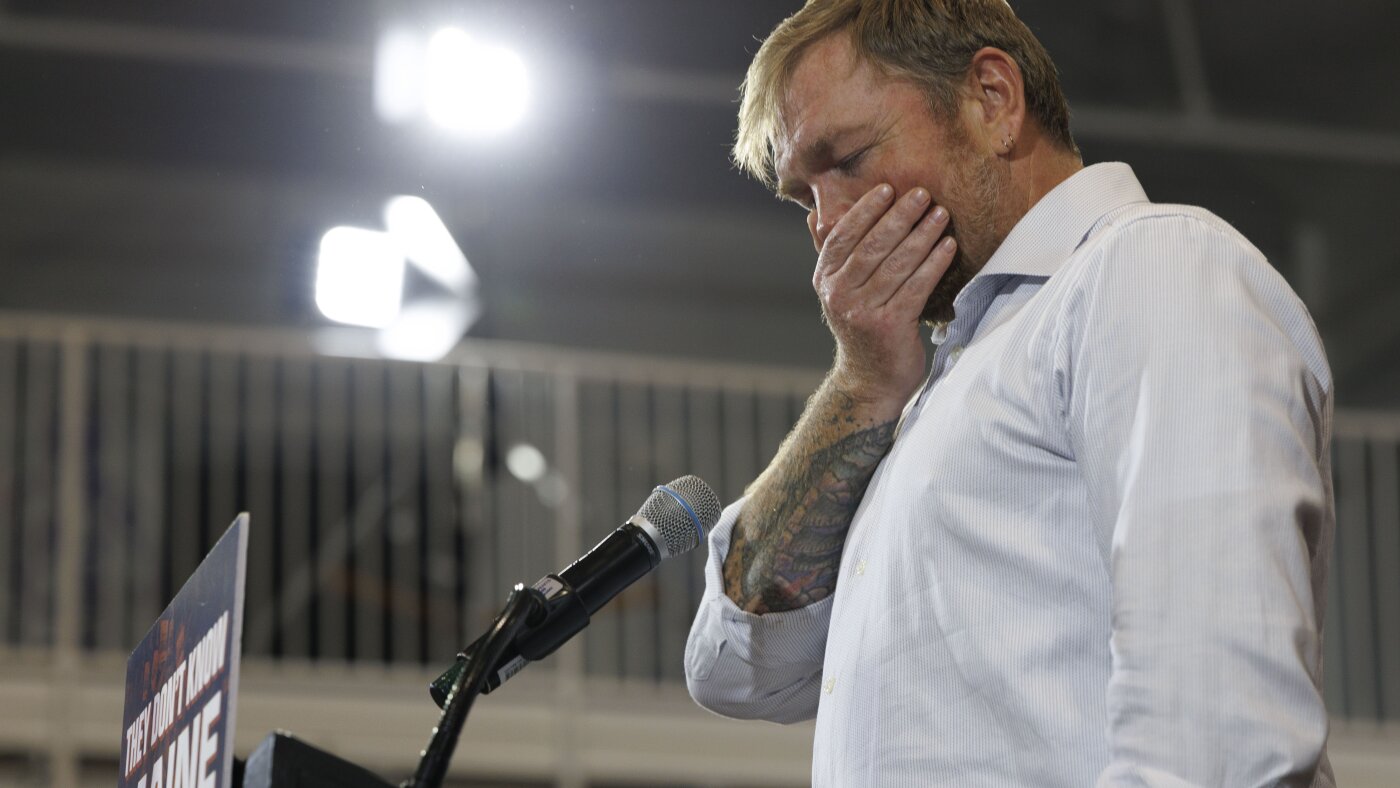
Graham Platner makes it official in Maine, submitting paperwork to leave Senate race
-

 Los Angeles, Ca2 hours ago
Knee irritation forces Shohei Ohtani out of Friday start, All‑Star game
-

 Detroit, MI2 hours ago
Detroit Evening Report: Waymo cars blocking first responders – WDET 101.9 FM
-

 San Francisco, CA2 hours ago
San Francisco Mayor Daniel Lurie Blocks Vacant Grocery Store Tax Proposal | KQED
-

 Miami, FL2 hours ago
Oregon Battling Miami, Mario Cristobal for Four-Star EDGE Recruit
-

 Dallas, TX2 hours ago
FC Dallas Forward Logan Farrington Inks Contract Extension
-

 Boston, MA3 hours ago
Red Sox face lengthy travel issues ahead of series vs. Mets

