Education
In Alabama Commencement Speech, Trump Mixes In the Political


He urged the audience of college students not to think they were too young to accomplish great things, before waxing on about tariffs. “Don’t try to be someone else,” he implored them, after attacking due process for unauthorized immigrants. And he told them not to think of themselves as victims, before diverting into how the 2020 election was “rigged” against him.
On Thursday night, President Trump addressed the 2025 graduates of the University of Alabama, vacillating between campaign rally material and a commencement speech as he used his past political grievances to encourage students to fight for their futures.
Addressing the students at Coleman Coliseum in Tuscaloosa, flanked by signs that read “The American Dream Is Back,” Mr. Trump told students they were “the first graduating class of the golden age of America,” and used his comeback story to encourage the students to trust their instincts and be ambitious as they navigate the world.
“In recent years, too many of our young people have really been taught to think of themselves as victims, and blame people, and be angry,” he said. “But in America, we reject that idea that anyone is born a victim. Our heroes are the ones who take charge of their own destiny, make their own luck and determine their own fate, despite the odds.”
At points in the address, the president rattled off familiar advice for college graduates. But Mr. Trump — who acknowledged that he did not use his teleprompter for much of the speech — veered off into various rants that echoed the blitz of political appearances he has put in this week to celebrate his 100th day in office. The largely receptive crowd often cheered at the scattershot injection of issues from the price of eggs to transgender rights, a microcosm of an era when even the pablum of a graduation speech cannot escape the politics of the moment.
Some of Mr. Trump’s stories focused on how he himself had been victimized throughout his political career, from being counted out by other politicians who never thought he could become president to potentially facing down another impeachment.
He also reveled in his victories, recounting his election results, including his commanding victory in Alabama, which he said felt like “home” when he was starting out as a candidate in 2015. A big rally he held in the state was among the first signs that Mr. Trump might have something beyond coastal appeal.
“So never let anyone tell you that something is impossible,” he said. “Ever, ever, ever. In America, the impossible is what we all do best. There’s nothing you cannot do if you’re willing to fight for it.”
“Fight, fight, fight,” he added, invoking a slogan spurred by a failed assassination attempt on him on the campaign trail last year.
Mr. Trump told the graduates that they had to “break the system a little bit and follow your own instincts,” seemingly describing his breakneck, flood-the zone strategy that has plunged the federal government into chaos and the country to the brink of a constitutional crisis.
“Change is never easy, and the closer you get to success, the more ferociously those who have a vested interest in the past will resist you,” he said.
Mr. Trump also gloated about how he faced far less resistance in his second term, citing “internet people” and others who now bow down to him. “They all hated me in my first term,” he said, adding with an expletive that they were now kissing up to him.
Even in a college town, Mr. Trump was in relatively friendly territory in the heavily Republican state, which he carried easily in all three of his presidential bids. But there were protests, and a petition from the University of Alabama Democrats and the local chapter of the N.A.A.C.P. against Mr. Trump’s appearance drew more than 26,000 signatures.
“Americans are once again waking up to the fact that this wannabe monarch wants to rule over us like a king,” Braden Vick, the president of the University of Alabama Democrats, said in a statement announcing the protest.
About two miles from Coleman Coliseum, the university’s Democrats held a protest joined by former Representative Beto O’Rourke of Texas and former Senator Doug Jones of Alabama.
“We’ve got to show up to where the fight is, and that includes places like Alabama, which has just been written off by the Democratic Party for far too long,” Mr. O’Rourke said in an interview after the protest. “And the message was: The people have the power. And when folks show up, as they did at the protest today or the marches or these no-show town halls, it really begins to move the rest of the country.”
Benard Simelton, the president of Alabama’s N.A.A.C.P., compared Mr. Trump to the state’s former governor, George Wallace, who built his political career as a populist and segregationist.
“He is the president of all people, and yet he has failed every citizen miserably with his divisive, destructive policies, while inflicting horror on our Hispanic, Latino and other communities,” he said in a statement opposing his visit. “Wallace’s infamous words can still be heard today, ‘Segregation today, segregation tomorrow, and segregation forever.’”
But Mr. Trump was enthusiastically received by the thousands of attendees at Coleman Coliseum. Mr. Trump’s address was part of a “special ceremony” before 6,000 students begin attending formal graduation ceremonies on Friday. The pre-commencement ceremony was optional for students, and tickets were opened to guests.
Despite Mr. Trump’s falling approval ratings, the commencement offered a window into the resilience of much of his support outside Washington, and a gauge on the culture shift in the country that got him elected.
There were at least as many red “Make America Great Again” hats in the crowd as there were special red graduation hats signifying a graduate’s 4.0 grade point average. The crowd broke into chants of “U.S.A.,” reveled in Mr. Trump’s extensive praise of its sports teams and roared when he talked about the “clean shores of the Gulf of America.” They cheered when he talked about keeping transgender women from playing on women’s sports teams, and some laughed when Mr. Trump spent several minutes mocking matchups that involve transgender players.
Mr. Trump’s warm reception came as he is waging an assault on the higher education system. While the administration so far has taken aim largely at the nation’s most elite colleges, the University of Alabama has not been spared.
Last month, a doctoral student at the University of Alabama was detained by federal immigration authorities, amid the administration’s campaign to deport noncitizen college students for engaging in forms of protest. Alireza Doroudi, an Iranian citizen, was legally in the United States and detained in Louisiana.
Mr. Trump used the address to take shots at Harvard, which has stood up to him in the administration’s effort to overhaul institutions it sees as too liberal and powerful. Mr. Trump bragged that his administration is withholding billions from Harvard, and pitted the two universities against each other — as if forecasting a battle.
“It is clear to see the next chapter of the American story will not be written by the Harvard Crimson,” he said. “It will be written by you, the Crimson Tide.”



In our national memory, George Washington is a mythic figure, cast in metal, carved in stone. His leadership, first as general, then as president, is so intertwined with the roots of this country that it is sometimes hard to separate the man from the idea of America. How does one imagine the living presence of such an icon, much less embody him?
There is a small fraternity of men bold enough to try. At historical parks and commemorations from Virginia to Seattle, these interpreters (their preferred term) transform themselves into Washington. Each has his own approach, but what all their representations seek to capture is a legacy that has endured from his time to ours. If America, at least in part, is an idea, then our national project becomes, like theirs, an act of interpretation, an imperfect attempt to translate some idealized vision into the messy reality of our own time.
— Ezekiel Kweku
“By some strange quirk
of genetics, I have
Washington’s exact
dimensions. Where my
sleeves fall on my wrist,
the size of my chest, the
size of my thighs, where
the breeches fall to my
knees, are all identical.”
John Koopman, 67, often performs
while riding his horse, Bear. He
has portrayed Washington for 20 years.
James Fryer, 70, wears a replica of a general’s uniform that Washington designed himself. He recently completed training to portray Washington for the nonprofit Historic Philadelphia.
“Some people portray George as a marble statue. I don’t do a marble George. I am interested in talking to everyone, even those who yell at me because George was a slave owner. I want to respect them, try to educate them, or maybe even inspire them.”
Vern Frykholm, 77, was moved to bring his interpretation of Washington to Washington State, where he lives, after seeing a 2011 performance in Pennsylvania.
Dean Malissa, 73, signs his personal
correspondence, including emails,
as Washington did: “Your Most Humble
and Obedient Servant.” He became
the Official George Washington
at Mount Vernon in 2004, and held
that role for nearly 20 years.
“I describe him sometimes as just a dude. I look at him and think, I could see myself in the same world, making similar bad decisions or similar good decisions.”
Daniel Cross, 39, portrayed a young Washington at Virginia’s Colonial Williamsburg until last year. He now works with organizations around the country.
Curt Radabaugh, 62, has 13,000 history books in his personal library, including several hundred about Washington. He is a veteran of the U.S. Marines and a retired police officer.
“He’s a mentor, a father
figure, and not only in the
sense that he’s a patriarch
of the country. Because
I grew up without a
father, he kind of became
my surrogate father.”
Brian Hilton, 58, says he researches
Washington’s era every morning before
his children get up and at night after
they go to bed. He is a high school history
teacher near Richmond, Va.
Daniel Shippey, 57, partners on interpretations with his wife, Kelly, who portrays Martha Washington. Kelly researched 18th-century hair techniques to create her husband’s costume hairstyle. They live in Virginia.
“You’re playing the myth of George Washington as well as the historical figure. I make his voice a little firmer and deeper than it probably was in real life. I play him a little funnier than he probably was. In reality, if you came to see him, he probably wouldn’t talk to you as much as I do.”
Doug Thomas, 53, is Washington’s second cousin nine times removed.
John Godzieba, 67, has reenacted
the crossing of the Delaware as
Washington every Christmas for the
past 16 years at Pennsylvania’s
Washington Crossing Historic Park.
“In many ways I don’t look like him. My eye color is wrong. My nose is wrong. My hair color is wrong. I wouldn’t have cast myself in this role.”
Ron Carnegie, 64, has portrayed Washington at Colonial Williamsburg for 20 years.
Ryan Williams, 37, is a veteran who specializes in playing a young Washington during the French and Indian War. He lives in Virginia.
“Some people portray
Washington almost
like a superhero.
I like to bring out that
he has faults. He’s a
person like you or me.”
Michael Grillo, 64, is a historical
tailor who hand-sews his own clothes
for reenactments. He also makes
period props, including two American
battle flags and pewter mugs
engraved with Washington’s crest.
Martin Schoeller is a photographer and director known for his close-up portraits of everyone from world leaders and celebrities to female bodybuilders. For this project, he used a large format camera to photograph 13 historical interpreters of George Washington — many of whom arrived in full uniform — over three days in Virginia and New York City.
Additional reporting by Tenzin D. Tsagong. Interviews have been edited and condensed for length and clarity. Top quotes from Brian Hilton, Daniel Shippey and Daniel Cross.
Produced by Sara Barrett, Danny DeBelius and Sam Whitney. Additional production by Olivia James.
One task the robots can take from us? Cleaning. Especially hard-to-access windows. So when writers Caroline Mullen and Evan Dent found this little guy — whose government name is “EcoVacs Winbot Mini” — they were intrigued. Could he clean the uncleanable? Caroline and Evan put their robot friend to the test at both the Wirecutter office and a high-rise apartment. Is a robo-window cleaner more effective than scrubbing yourself?

new video loaded: School Year Cut Short and Aid Delivery Slowed Amid Fuel Crisis in Cuba

By McKinnon de Kuyper
June 22, 2026
-

 Florida3 minutes ago
Florida top-ranked signee selected in Round 4 of MLB draft
-

 Georgia10 minutes ago
3 Georgia baseball players taken in MLB Draft opening day
-

 Hawaii13 minutes ago
Hiker airlifted from Diamond Head Crater Trail
-

 Idaho18 minutes ago
Idaho Falls fire causes damage to homes and multiple vehicles
-

 Illinois25 minutes ago
Woman in custody after breaking into home in Aurora, Illinois, police say
-

 Indiana28 minutes ago
Maximum Offer Relishes Stakes in Indiana Oaks
-

 Iowa33 minutes ago
Iowa State Football Predicted for Tough First Season Under Jimmy Rogers
-
 Kansas40 minutes ago
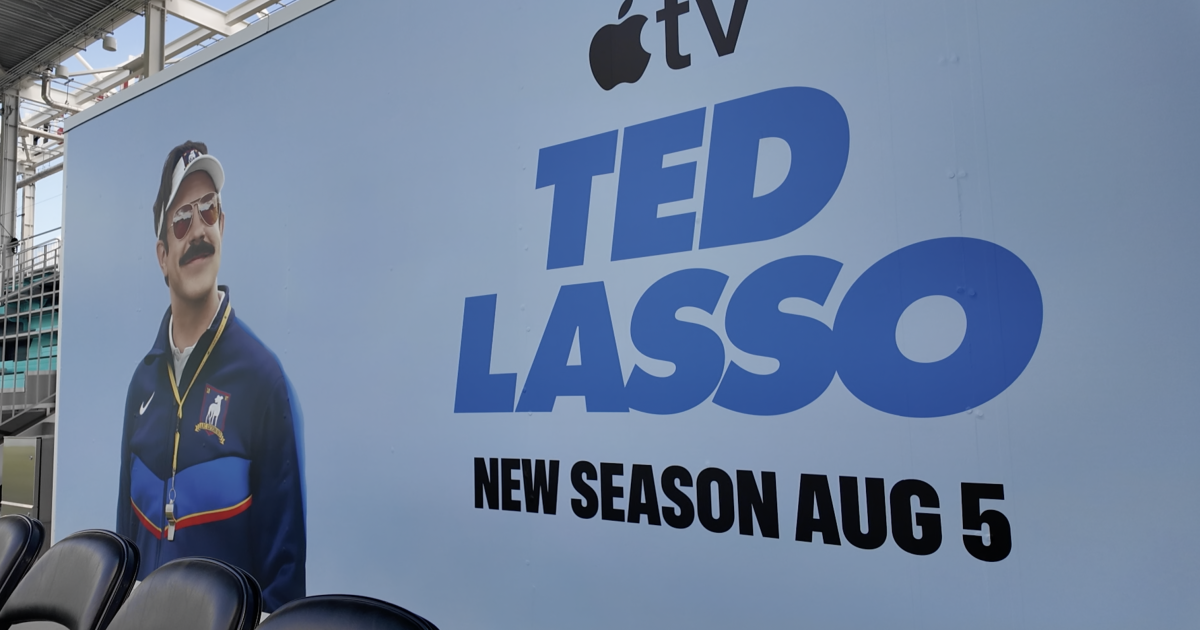
New season of ‘Ted Lasso’ brings Kansas City back into global spotlight

