Culture
Mikaela Shiffrin is back and hunting for the next milestone as a new season begins


For Mikaela Shiffrin, the goalposts keep moving.
All that chatter about her setting the record for the most World Cup wins and becoming the greatest skier ever is so 2023. Now, with Shiffrin getting back to racing as the alpine season begins this weekend in Soelden, Austria, the talk has shifted to when she will get her 100th win, a rather silly number that few would have contemplated not long ago, before Shiffrin started collecting wins and crystal globes for season-long championships like they were Christmas ornaments.
She has 97 wins as the season begins, as well as three Olympic medals, two of them gold, five overall titles, 11 discipline titles, and 14 World Championship medals. That is all seriously silly.
To hear the 29-year-old Shiffrin talk about her career so far and what lies ahead is to understand how her work involves meeting a different set of standards than everyone else.
She will compete in slalom, giant slalom and super-G this season but has put downhill on the back burner for now. So of course she gets asked about why she isn’t also competing in the downhill.
She’s been at this since she was in her mid-teens, and yet the idea that she might be into the backside of her career remains hard to contemplate. She knows better than anyone how physically difficult it is to compete week after week so that she can get in the hunt for the season-long overall title and also peak in February for the Alpine World Championships in Austria, or next season, for the Olympics in Italy. Of course, she’s expected to do both, and win … obviously.
“It’s never obvious, it’s never easy,” Shiffrin said during a preseason conference call this week.
After six weeks sidelined by injury, Mikaela Shiffrin returned in March and won the slalom title at the 2024 World Cup season final. (Christophe Pallot / Agence Zoom / Getty Images)
Shiffrin had a revelatory moment this summer at the Paris Olympics. Her seats in the Olympic stadium for the 400-meter hurdles happened to be right next to those occupied by the family of Sydney McLaughlin-Levrone, who is basically the Mikaela Shiffrin of her sport, or vice-versa, if you are track person rather than a skiing person.
Everyone in the Shiffrin camp was sure McLaughlin-Levrone would win — by a lot. She was as close to a guarantee as there was in Paris.
And yet, McLaughlin-Levrone’s family was on pins and needles.
They knew how hard this was, how anything could happen until she was over the final hurdle and floating to the finish. Shiffrin knows that, too. She and her team have been dealing with that every week for nearly a decade, along with all the stressors of being one of the more famous athletes in the world.
Now, strange as it may seem, Shiffrin will begin to find some calm where others might not necessarily think she might. After months of getting pulled in every direction, of balancing summer ski camps in South America and training blocks with sponsor obligations with promotional opportunities, and philanthropy, the racing begins. Once more, she can laser focus on dancing through the gates on a snow-covered mountain.
“It’s hard, it’s stressful, but it’s also peaceful, and that’s what I love about it,” she said.
She knows she is on the backside of her career but has no definite plans for how much longer after the 2026 Olympics she will compete.
After an injury-riddled season last year — somehow she still won the World Cup slalom title — Shiffrin is hoping for a smoother ride this year.
Shiffrin sprained the MCL and tibiofibular ligament in her knee in January. The injuries sidelined her for six weeks. She won two more races when she returned, easing doubts that still plague her whenever she is hurt or doesn’t ski for a chunk of time and it feels like the ski world is moving on without her.
“You feel pain or weakness and you’re like, ‘I don’t think I can do that,’ she said. ‘Logically I know I have done that, but I don’t think I can do it again.”
Even during a healthy season, she can experience those doubts when she doesn’t ski one discipline for a couple weeks and then has to return to it.

“It’s never obvious, it’s never easy,” Mikaela Shiffrin says of her expectations. The new alpine season begins this weekend in Austria. (Jonas Ericsson / Agence Zoom / Getty Images)
Will she be able to move her feet quickly enough to get around the tight slalom gates, she wonders?
It probably all sounds a bit silly to her competitors. Even if she isn’t competing in downhill for now — no word yet on her plans for the 2026 Olympics — Shiffrin is as good an all-around skier as there is. She has won 60 slalom races, 22 giant slalom, five super-G and four downhill.
To some extent, her offseason has been an exercise in easing those doubts as this opening weekend in Soelden approaches. Last summer she was plagued with tough luck with weather, which limited her time on the snow. Then she packed her racing schedule and began to feel like she was running on fumes. Then came the crash and the injury.
When this offseason started, she sat down with her mother, Eileen, who is her longest-serving coach, and tried to map out a plan so she could feel truly prepared at the start of the season. They came up with a mix of short camps and indoor skiing and a trip to South America to make sure she got the necessary time on the snow.
Every day, she would push herself slightly further. Even for the best skiers in the world, the sport is an exercise in risk tolerance. How fast can your mind allow your body to take a turn? How far will it allow you to fly on a jump?
“Every day, I stretch the rubber band a little bit,” Shiffrin said.
In Soelden this weekend, she plans to stretch it as far as she has in a long while, and even, maybe, find some peace as she does it.
(Top photo of Mikaela Shiffrin celebrating her slalom title at the 2024 World Cup season final in Austria in March: Franz Kirchmayr / SEPA.Media / Getty Images)



Whatever you do, don’t think of a bird.
Now: What kind of bird are you not thinking about? A pigeon? A bald eagle? Something more poetic, like a skylark or a nightingale? In any case, would you say that this bird you aren’t thinking about is real?
Before you answer, read this poem, which is quite literally about not thinking of a bird.
Human consciousness is full of riddles. Neuroscientists, philosophers and dorm-room stoners argue continually about what it is and whether it even exists. For Wallace Stevens, the experience of having a mind was a perpetual source of wonder, puzzlement and delight — perfectly ordinary and utterly transcendent at the same time. He explored the mysteries and pleasures of consciousness in countless poems over the course of his long poetic career. It was arguably his great theme.
Stevens was born in 1879 and published his first book, “Harmonium,” in 1923, making him something of a late bloomer among American modernists. For much of his adult life, he worked as an executive for the Hartford Accident and Indemnity Company, rising to the rank of vice president. He viewed insurance less as a day job to support his poetry than as a parallel vocation. He pursued both activities with quiet diligence, spending his days at the office and composing poems in his head as he walked to and from work.
As a young man, Stevens dreamed of traveling to Europe, though he never crossed the Atlantic. In middle age he made regular trips to Florida, and his poems are frequently infused with ideas of Paris and Rome and memories of Key West. Others partake of the stringent beauty of New England. But the landscapes he explores, wintry or tropical, provincial or cosmopolitan, are above all mental landscapes, created by and in the imagination.
Are those worlds real?
Let’s return to the palm tree and its avian inhabitant, in that tranquil Key West sunset of the mind.
Until then, we find consolation in fangles.

When the director Rob Reiner cast his leads in the 1986 film “Stand by Me,” he looked for young actors who were as close as possible to the personalities of the four children they’d be playing. There was the wise beyond his years kid from a rough family (River Phoenix), the slightly dim worrywart (Jerry O’Connell), the cutup with a temper (Corey Feldman) and the sensitive, bookish boy.
Wil Wheaton was perfect for that last one, Gordie Lachance, a doe-eyed child who is ignored by his family in favor of his late older brother. Now, 40 years later, he’s traveling the country to attend anniversary screenings of the film, alongside O’Connell and Feldman, which has thrown him back into the turmoil that he felt as an adolescent.
Wheaton has channeled those emotions and his on-set memories into his latest project: narrating a new audiobook version of “The Body,” the 1982 Stephen King novella on which the film was based.
A few years ago, Wheaton started to float the idea of returning to the story that gave him his big break — that of a quartet of boys in 1959 Oregon, in their last days before high school, setting out to find a classmate’s dead body. “I’ve been telling the story of ‘Stand By Me’ since I was 12 years old,” he said.
But this time was different. Wheaton, who has narrated dozens of audiobooks, including Andy Weir’s “The Martian” and Ernest Cline’s “Ready Player One,” says he has come to enjoy narration more than screen acting. “I’m safe, I’m in the booth, nobody’s looking at me and I can just tell you a story.”
The fact that he, an older man looking back on his younger years, is narrating a story about an older man looking back on his younger years, is not lost on Wheaton. King’s original story is bathed in nostalgia. Coming to terms with death and loss is one of its primary themes.
Two days after appearing on stage at the Academy Awards as part of a tribute to Reiner — who was murdered in 2025 alongside his wife, Michele — Wheaton got on the phone to talk about recording the audiobook, reliving his favorite scenes from the film and reexamining a quintessential story of childhood loss through the lens of his own.
This interview has been edited and condensed.
“I felt really close to him, and my memory of him.”
Wheaton on channeling a co-star’s performance.
There’s this wonderful scene in “Stand By Me.” Gordie and Chris are walking down the tracks talking about junior high. Chris is telling Gordie, “I wish to hell I was your dad, because I care about you, and he obviously doesn’t.”
It’s just so honest and direct, in a way that kids talk to each other that adults don’t. And I think that one of the reasons that really sticks with people, and that piece really lands on a lot of audiences, and has for 40 years, is, just too many people have been Gordie in that scene.
That scene is virtually word for word taken from the text of the book. And when I was narrating that, I made a deliberate choice to do my best to recreate what River did in that scene.
“You’re just a kid,
Gordie–”
“I wish to fuck
I was your father!”
he said angrily.
“You wouldn’t go around
talking about takin those stupid shop courses if I was!
It’s like
God gave you something,
all those stories
you can make up, and He said:
This is what we got for you, kid.
Try not to lose it.
But kids lose everything
unless somebody looks out for them and if your folks
are too fucked up to do it
then maybe I ought to.”
I watched that scene a couple of times because I really wanted — I don’t know why it was so important to me to — well, I know: because I loved him, and I miss him. And I wanted to bring him into this as best as I could, right?
So I was reading that scene, and the words are identical to the script. And I had this very powerful flashback to being on the train tracks that day in Cottage Grove, Oregon. And I could see River standing next to them. They’re shooting my side of the scene and there’s River, right next to the camera, doing his off-camera dialogue, and there’s the sound guy, and there’s the boom operator. There’s my key light.
I could hear and feel it. It was the weirdest thing. It’s like I was right back there.
I was able to really take in the emotional memory of being Gordie in all of those scenes. So when I was narrating him and I’m me and I’m old with all of this experience, I just drew on what I remembered from being that little boy and what I remember of those friendships and what they meant to me and what they mean to me today.
“Rob gave me a gift. Rob gave me a career.”
Wheaton recalls the “Stand By Me” director’s way with kids on set, as well as his recent Oscars tribute.
Rob really encouraged us to be kids.
Jerry tells the most amazing story about that scene, where we were all sitting around, and doing our bit, and he improvised. He was just goofing around — we were just playing — and he said something about spitting water at the fat kid.
We get to the end of the scene, and he hears Rob. Rob comes around from behind the thing, and he goes, “Jerry!” And Jerry thinks, “Oh no, I’m in trouble. I’m in trouble because I improvised, and I’m not supposed to improvise.”
The context for Jerry is that he had been told by the adults in his life, “Sit on your hands and shut up. Stop trying to be a cutup. Stop trying to be funny. Stop disrupting people. Just be quiet.” And Jerry thinks, “Oh my God. I didn’t shut up. I’m in trouble. I’m gonna get fired.”
Rob leans in to all of us, and Rob says, “Hey, guys, do you see that? More of that. Do that!”
The whole time when you’re a kid actor, you’re just around all these adults who are constantly telling you to grow up. They’re mad that you’re being a kid. Rob just created an environment where not only was it supported that we would be kids — and have fun, and follow those kid instincts and do what was natural — it was expected. It was encouraged. We were supposed to do it.
They chanted together:
“I don’t shut up,
I grow up.
And when I look at you I throw up.”
“Then your mother goes around the corner
and licks it up,”
I said, and hauled ass out of there,
giving them the finger over my shoulder as I went.
I never had any friends later on
like the ones I had when I was twelve.
Jesus, did you?
When we were at the Oscars, I looked at Jerry. And we looked at this remarkable assemblage of the most amazingly talented, beautiful artists and storytellers. We looked around, and Jerry leans down, and he said, “We all got our start with Rob Reiner. He trusted every single one of us.”
And to stand there for him, when I really thought that I would be standing with him to talk about this stuff — it was a lot.
“I was really really really excited — like jumping up and down.”
The scene Wheaton was most looking forward to narrating: the tale of Lard Ass Hogan.
I was so excited to narrate it. It’s a great story! It’s a funny story. It’s such a lovely break — it’s an emotional and tonal shift from what’s happening in the movie.
I know this as a writer: You work to increase and release tension throughout a narrative, and Stephen King uses humor really effectively to release that tension. But it also raises the stakes, because we have these moments of joy and these moments of things being very silly in the midst of a lot of intensity.
That’s why the story of Lard Ass Hogan is so fun for me to tell. Because in the middle of that, we stop to do something that’s very, very fun, and very silly and very celebratory.
“Will you shut up and let him tell it?”
Teddy hollered.
Vern blinked.
“Sure. Yeah.
Okay.”
“Go on, Gordie,”
Chris said. “It’s not really much—”
“Naw,
we don’t expect much from a wet end like you,”
Teddy said,
“but tell it anyway.”
I cleared my throat. “So anyway.
It’s Pioneer Days,
and on the last night
they have these three big events.
There’s an egg-roll for the little kids and a sack-race for kids that are like eight or nine,
and then there’s the pie-eating contest.
And the main guy of the story
is this fat kid nobody likes
named Davie Hogan.”
When I narrate this story — whenever there is a moment of levity or humor, whenever there are those brief little moments that are the seasoning of the meal that makes it all so real and relatable — yes, it was very important to me to capture those moments.
I’m shifting in my chair, so I can feel each of those characters. It’s something that doesn’t exist in live action. It doesn’t exist in any other media.
“I feel the loss.”
Wheaton remembers River Phoenix.
The novella “The Body” is very much about Gordie remembering Chris. It’s darker, and it’s more painful, than the movie is.
I’ve been watching the movie on this tour and seeing River a lot. I remember him as a 14- and 15-year-old kid who just seemed so much older, and so much more experienced and so much wiser than me, and I’m only a year younger than him.
What hurts me now, and what I really felt when I was narrating this, is knowing what River was going through then. We didn’t know. I still don’t know the extent of how he was mistreated, but I know that he was. I know that adults failed him. That he should have been protected in every way that matters. And he just wasn’t.
And I, like Gordie, remember a boy who was loving. So loving, and generous and cared deeply about everyone around him, all the time. Who deserved to live a full life. Who had so much to offer the world. And it’s so unfair that he’s gone and taken from us. I had to go through a decades-long grieving process to come to terms with him dying.
Near the end
of 1971,
Chris
went into a Chicken Delight in Portland
to get a three-piece Snack Bucket.
Just ahead of him,
two men started arguing
about which one had been first in line. One of them pulled a knife.
Chris,
who had always been the best of us
at making peace,
stepped between them and was stabbed in the throat.
The man with the knife had spent time in four different institutions;
he had been released from Shawshank State Prison
only the week before.
Chris died almost instantly.
It is a privilege that I was allowed to tell this story. I get to tell Gordie Lachance’s story as originally imagined by Stephen King, with all of the experience of having lived my whole adult life with the memory of spending three months in Gordie Lachance’s skin.

Welcome to Great Adaptations, the Book Review’s regular multiple-choice quiz about printed works that have gone on to find new life as movies, television shows, theatrical productions and more. This week’s challenge highlights offbeat television shows that began as comic books. Just tap or click your answers to the five questions below. And scroll down after you finish the last question for links to the comics and their screen versions.

DHS attorney said agents in Los Angeles should have ‘started hitting’ protesters, emails show
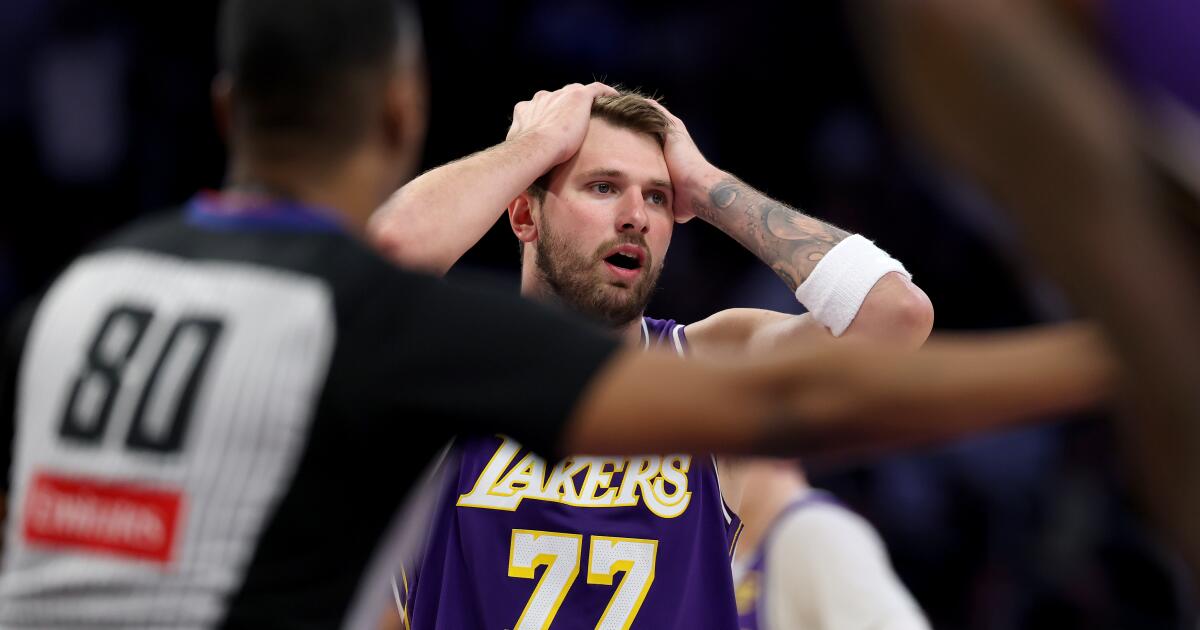
Lakers beat Nets, but Luka Doncic is facing suspension again after 16th technical

EU Parliament unblocks key political hurdle in digital euro talks

Man arrested in plot to firebomb Palestinian activist’s home after undercover op

Video: We Analyzed the Deadly Crash at LaGuardia

Florida High School Football Rankings: Top 25 teams – Oct. 21

How old is Bo Nix? What to know about Oregon quarterback ahead of 2024 NFL Draft

Cleary's 21 help Le Moyne down Central Connecticut State 69-64 in OT

99th annual Pony Swim held in Virginia

Indiana Members Credit Union announced as new anchor tenant at Bottleworks District
EU Parliament unblocks key political hurdle in digital euro talks
Man arrested in plot to firebomb Palestinian activist’s home after undercover op

WATCH: Senate hearing goes silent after Angel Father confronts top Dem over daughter’s death

US diplomat Marco Rubio denounces settler violence, tolls in Hormuz strait

Iran-linked hackers have breached FBI Director Kash Patel’s personal emails | CNN Politics
-

 Detroit, MI1 week ago
Drummer Brian Pastoria, longtime Detroit music advocate, dies at 68
-

 Movie Reviews1 week ago
‘Youth’ Twitter review: Ken Karunaas impresses audiences; Suraj Venjaramoodu adds charm; music wins praise | – The Times of India
-

 Sports7 days ago
IOC addresses execution of 19-year-old Iranian wrestler Saleh Mohammadi
-

 New Mexico5 days ago
Clovis shooting leaves one dead, four injured
-
 Business1 week ago
Disney’s new CEO says his focus is on storytelling and creativity
-

 Technology6 days ago
YouTube job scam text: How to spot it fast
-

 Tennessee4 days ago
Tennessee Police Investigating Alleged Assault Involving ‘Reacher’ Star Alan Ritchson
-

 Texas1 week ago
How to buy Houston vs. Texas A&M 2026 March Madness tickets