Business
Paul Oreffice, a Combative Chief of Dow Chemical, Dies at 97


Paul F. Oreffice, who as the pugnacious head of Dow Chemical grew and diversified the company at the same time that he rebuffed Vietnam veterans over Agent Orange, argued that the chemical dioxin was harmless and oversaw the manufacturing of silicone breast implants that were known to leak, died on Dec. 26 at his home in Paradise Valley, Ariz. He was 97.
His family confirmed his death.
Mr. Oreffice (pronounced like orifice) spoke in staccato, fast-paced sentences, and they were often deployed in pushing back against environmentalists, politicians and journalists during an era, the 1970s and ’80s, when the environmental movement was gaining force by focusing on toxic chemicals in the air and water.
Under his 17-year leadership, which included the titles of president, chief executive and chairman, Mr. Oreffice weathered intense controversies.
His public relations instinct was for confrontation, not conciliation. He had an intense dislike for what he perceived as government meddling in business, which he traced to his having grown up in Italy under Mussolini. “I’ve seen what overgoverning can do,” he told The New York Times in 1987. “I was born under a Fascist dictatorship, and my father was jailed by it.”
Mr. Oreffice took the reins of the Dow USA division in 1975, when its public image was tainted from campus protests of the 1960s that had vilified the company as a maker of the incendiary agent napalm, which was widely used in Vietnam.
When Dow pulled out of apartheid South Africa in 1987 under pressure from shareholders, Mr. Oreffice said: “I’m not proud of it. I think we should have stayed and fought.”
In 1977, when Jane Fonda lacerated Dow in a speech at Central Michigan University, not far from Dow headquarters, in Midland, Mich., Mr. Oreffice canceled the company’s donations to the school, writing its president that he could not support Ms. Fonda’s “venom against free enterprise.”
Instead, Mr. Oreffice financed the campaigns of anti-regulation politicians. And he sued the Environmental Protection Agency for surveilling Dow’s sprawling Midland plants from the air when the company refused an on-site inspection.
The case made its way to the United States Supreme Court, which in 1986 ruled against the company, at the time the No. 2 American chemical maker after DuPont. (The companies merged in 2017, then split into three companies.)
In 1983, Rep. James H. Scheuer, Democrat of New York, disclosed that Dow had been allowed to edit an E.P.A. report on the leakage of dioxin, one of the most toxic substances ever manufactured, from the Midland plants into the Tittabawassee and Saginaw Rivers and Saginaw Bay.
E.P.A. regional officials told Congress that their superiors in the Reagan administration ordered the changes to comply with demands made by Dow. Mr. Oreffice, appearing on NBC’s “Today” show, offered a sweeping dismissal.
“There is absolutely no evidence of dioxin doing any damage to humans except for causing something called chloracne,” he said. “It’s a rash.”
His statement brushed aside evidence that dioxin was extremely hazardous to laboratory animals and had been shown in some research to be linked with a rare soft-tissue cancer in humans.
One former Dow president, Herbert Dow Doan, a grandson of the company founder, told a public relations publication, Provoke Media, in 1990 that Mr. Oreffice’s style was not one fine-tuned to mollify critics. “The reason is part ego, part pride,” he said. “Paul is inclined to push his line to the point where some people say he is arrogant.”
There is no question that Mr. Oreffice’s strength of will also uplifted Dow’s businesses, which through the 1970s were overly dependent on basic chemicals like chlorine. When a glut of low-priced petrochemicals flooded the global market in the early 80s, he aggressively reshaped Dow by diversifying into consumer products, such as shampoos and the cleaning fluid Fantastik, and by moving into foreign markets. By 1987, Dow posted a record profit of $1.3 billion (about $3.5 billion in today’s currency).
At the same time, a class-action lawsuit on behalf of 20,000 Vietnam veterans and their families against Dow and other makers of Agent Orange was further tarnishing the company’s image. The suit, filed in 1979, charged that dioxin in Agent Orange led to cancer in combat veterans and genetic defects in their children.
Dow argued that it had made Agent Orange at the request of the government and was not responsible for how it was used. But in 1984, the company and other makers of Agent Orange, without admitting liability, settled the lawsuit for $180 million, with the proceeds going to veterans and their families.
In another controversy, Dow Corning, a joint venture between Dow Chemical and Corning Inc., released documents in February 1992 showing that it had known since 1971 that silicone gel could leak from breast implants it made.
Tens of thousands of women had sued the company, claiming their implants had given them breast cancer and autoimmune diseases. Dow Corning agreed to a $3.2 billion settlement after the company had been driven to file for bankruptcy protection.
In 1999, an independent review by an arm of the National Academy of Sciences concluded that silicone implants do not cause major diseases.
Paul Fausto Orrefice was born Nov. 29, 1927, in Venice. His parents, Max and Elena (Friedenberg) Oreffice, moved the family to Ecuador in 1940 as Mussolini declared war on Britain and France. Paul came to the U.S. in 1945, entering Purdue University with fewer than 50 words of English at his command.
He graduated with a B.S. in chemical engineering in 1949, became a naturalized citizen, and after two years in the Army went to work for Dow in 1953.
“When I walked into Midland, Mich., this was ‘WASP’ country, and I was a ‘W’ but I wasn’t an ‘ASP,’” he told The Washington Post in 1986. “I spoke with an accent and combed my hair straight back, which just wasn’t done.”
Mr. Oreffice represented Dow in Switzerland, Italy, Brazil and Spain before being called back to the Midland headquarters in 1969 and appointed the company’s financial vice president. He became president of Dow Chemical U.S.A. in 1975 and was then promoted to president and chief executive of the parent Dow Chemical Company in 1978. In 1986, he added the title of chairman.
To the astonishment of many observers, Dow poured millions of dollars in the mid-1980s into a public-relations campaign to improve its image, including a new slogan, “Dow let’s you do great things.”
Under company rules, when he reached age 60, Mr. Oreffice stepped down as president and chief executive in 1987. He retired as chairman in 1992.
He is survived by his wife of 29 years, Jo Ann Pepper Oreffice, his children Laura Jennison and Andy Oreffice, six grandchildren and one great-granddaughter.
In retirement, Mr. Oreffice pursued a passion for thoroughbred racehorses, investing in Kentucky Derby starters and spending summers at a home in Saratoga Springs, N.Y. He was a partner in a Preakness Stakes winner, Summer Squall, and a Belmont Stakes winner, Palace Malice.
In 2006, he published a memoir about rising from an immigrant with little English to a corporate titan, titling it “Only in America.”




OpenAI plans to shut down its Sora text-to-video tool, a stunning move that comes three months after Walt Disney Co. pledged to invest $1 billion in the artificial intelligence company and allow the use of dozens of beloved characters.
The San Francisco-based company did not disclose why it was shutting down the tool or the timeline for its phaseout. In a post Tuesday on the Sora account on X, the company said it knew the news was “disappointing.”
“To everyone who created with Sora, shared it, and built community around it: thank you,” the post said.
Open AI’s pivot comes as the company was engaged in discussions with Disney to formalize their arrangement — but no deal had been reached, according to a source familiar with the matter who was not authorized to comment.
Although Disney had pledged to make the huge investment, the company had not yet made any payments to OpenAI, this person said. OpenAI had not paid any fees to license Disney characters.
A Disney spokesperson said in a statement that the company respected OpenAI’s decision to shift its priorities away from video generation.
“We appreciate the constructive collaboration between our teams and what we learned from it, and we will continue to engage with AI platforms to find new ways to meet fans where they are while responsibly embracing new technologies that respect IP and the rights of creators,” the spokesperson said.
The emergence of Sora had roiled Hollywood, particularly as AI and compensation for actors’ likeness and voice became a central issue in the 2023 strike.
Performers guild SAG-AFTRA had said at the time of the Disney-OpenAI announcement that it would “closely monitor the deal and its implementation to ensure compliance with our contracts and with applicable laws protecting image, voice, and likeness.”
OpenAI first previewed Sora in 2024, and the realism of the tool’s AI-generated videos grabbed audiences at a time when competing video generation apps struggled.
The text-to-video platform enabled users to create short videos with different styles, voices and dedicated features such as “storyboard,” which enabled users to weave together prompts to make longer videos with consistent characters — something that wasn’t possible before.
In September, OpenAI launched Sora as a dedicated app to create and share AI-generated videos with friends, which many viewed as a social networking app modeled after TikTok.
The app’s remix feature enabled users to superimpose the likeness of their friends or celebrities into existing AI-generated video or create new ones. Sam Altman, the chief executive of OpenAI, encouraged users to slap his likeness onto AI-generated scenes and other pop-culture videos.
The lax approach to copyright allowed the re-creation of dead celebrities and copyrighted characters from titles including WWE and South Park, which OpenAI said it would allow on its platform unless the celebrities opt out.
Despite hitting 1 million downloads in a week, the app lost its sheen, as regular users found little everyday use for a dedicated AI video app. As legal challenges mounted, Sora also strengthened its copyright guardrails and “content violation” warnings became a routine part of denying user requests.
But the AI space has become increasingly crowded. OpenAI’s smaller rival Anthropic has gained ground by offering its AI coding services to enterprises rather than just to consumers. Its Claude tool has become especially popular for coding tasks.
Since Sora’s release, competitors such as Google Veo and Bytedance’s Seedance also have rushed into the AI video generation market.
Times staff writer Meg James contributed to this report.

San Francisco Bay Area residents who want food, groceries or other small items sent to their homes will soon have another option: drone delivery.
Wing, a California startup owned by Google’s parent company Alphabet, said it is expanding its service to that area in the coming months. The company’s yellow-and-white drones can deliver small packages in under 30 minutes. Its fastest delivery time has been under three minutes.
“Customers can get their last-minute ingredients, small household items, and meals without sitting in traffic,” the company said in an announcement on Monday.
Teaming up with retailers such as Walmart and the delivery platform DoorDash, Wing started offering its service in cities such as Atlanta, Charlotte, Dallas-Fort Worth, and Houston. But the company also plans to expand delivery to other major areas including Los Angeles, Miami and more.
Wing has completed more than 750,000 deliveries to homes. Its service area covers more than 2 million customers.
Customers access drone delivery through the Wing app or its partners, such as Walmart and DoorDash. Wing didn’t say i which retailers or partners will be involved in the Bay Area expansion or what neighborhoods it will serve.
The company’s service expansion in the Bay Area is the latest example of how tech companies and retailers are competing head-to-head to speed up delivery and rope in more customers.
Earlier this year, Wing said it planned to bring drone delivery to more than 40 million Americans. Working with Walmart, the company said it plans to establish a network of more than 270 drone delivery locations in 2027, which includes Los Angeles.
Walmart offers drone delivery for free for a limited time to members of its subscription service or $19.99 per delivery for nonmembers.
Last week, Amazon said it would start providing one-hour deliveries to parts of the Los Angeles metropolitan area. It’s also been experimenting with drone delivery for packages up to five pounds.
Wing started in 2012 in Google’s moonshot factory, whose ambitious projects have included self-driving cars, smartglasses and stratospheric balloons to beam internet. Wing then emerged as an independent Alphabet business in 2018, according to its website.
The company started piloting drone delivery at Google’s Mountain View campus to deliver supplies.
Business
Data centers under scrutiny by California lawmakers as fears rise about health and energy impacts

IMPERIAL — Whenever the weather changes suddenly, or the skyline becomes shrouded in a windy haze, Fernanda Camarillo braces herself for an asthma attack.
Her condition has become more manageable, but the 27-year-old said it’s still scary when her chest tightens and she starts to wheeze. It was one of her first thoughts when she heard about plans to develop a massive data center next to her home in Imperial County, a farming community near the border of Mexico that struggles with poor air quality.
“A lot of people in the county are asthmatic,” she said, explaining that she worries the new center would add more pollution. “I’ve been anxious — so many of us are voicing our concerns.”
Data centers have existed for decades but are rapidly changing and expanding due to the worldwide boom in artificial intelligence, or AI as it’s known. States and communities nationwide have started pushing back, citing concerns that the projects could strain power grids, increase utility bills and have negative health and environmental impacts.
In California, state legislators are debating how to protect residents and natural resources without creating so much red tape that developers go elsewhere, taking their jobs and taxable earnings with them.
No Data Center signs are posted in the front yard of a home that is right behind the proposed site.
“We can be supportive of innovation and a technology that is needed but also protect our communities and our health and our environment,” said state Sen. Steve Padilla (D-San Diego). “We can do both at the same time.”
The California Legislature is considering bills to prohibit the projects from being exempted from the state’s stringent environmental law and to impose new tariffs on new major energy users that strain power supplies. Lawmakers also have proposed restrictions on new data centers, requiring companies to provide verifiable estimates on expected water and energy usage before they can be granted a business permit.
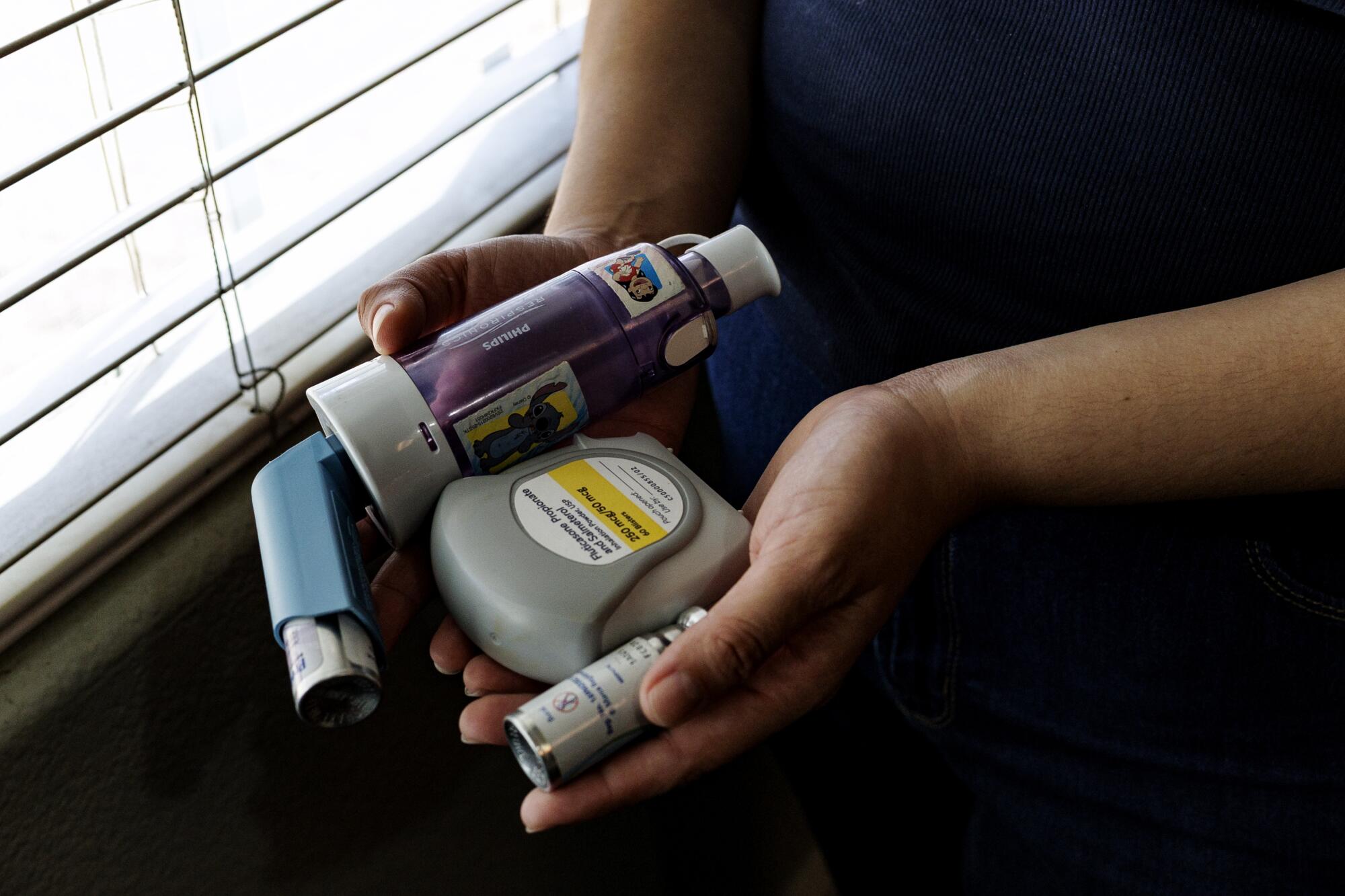
Imperial resident Fernanda Camarillo, who is an asthmatic, holds some of her medications.
Members of Congress also expressed concerns. Rep. Ro Khanna, speaking at a town hall about AI last month at Stanford University, said legislators must ensure data centers serve the communities that power them.
“We live in a new gilded age,” said Khanna (D-Fremont). “What kind of future are we going to build?”
::
Eric Masanet, a professor at UC Santa Barbara specializing in sustainability science for emerging technologies, described the facilities as the “brains” of the internet. The sprawling centers are filled with banks of specialized computers that process online shopping orders, stream movies, host websites, encode Zoom and other videoconferencing apps, store data and serve as switching stations for the digital world that’s now woven into daily life.
Data centers, particularly those that power AI, use significant amounts of water and energy. The facilities accounted for about 4.4% of the nation’s total electricity consumption in 2023, up from 1.9% in 2018, according to a report provided to Congress from the Lawrence Berkeley National Laboratory. The researchers projected that figure will reach 6.7% to 12% by 2028.
Many companies, including big tech giants like Meta, Google and Amazon, are making major investments in AI.
“We are building a lot more data centers faster than we ever did — and a new AI data center is 10 to 20, maybe 30 times, the size of the largest data centers we had before,” Masanet said.
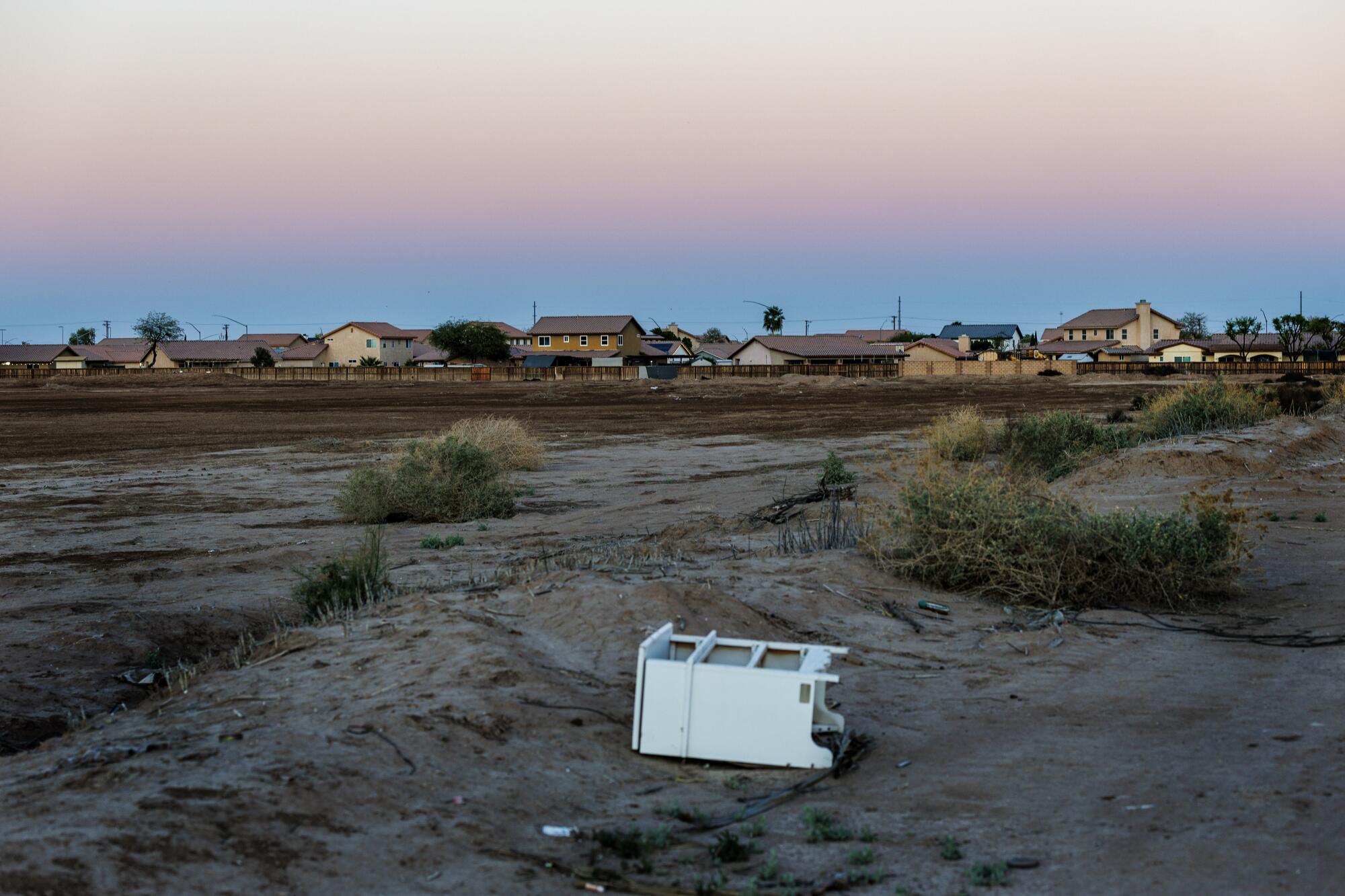
The proposed site of the 950,000-square-foot data center is on a dusty parcel that is next to the Victoria Ranch housing community and adjacent to farmland in Imperial, Calif.
It’s unclear how many data centers are in the state. A California Energy Commission spokesperson told the Los Angeles Times it does not track this information. Data Center Map, a nongovernmental website that tracks data centers across the world, lists 289 facilities in California, with more than 4,000 nationwide.
The federal government has, so far, largely left it to states or localities to regulate data centers.
The facilities can generate significant revenue for local governments due to sales and property taxes.
But some new proposals are sparking a backlash. More than 200 community and environmental organizations, including a dozen from California, sent an open letter to Congress in December calling for a national moratorium on new data centers.
Robert Gould, a pathologist with San Francisco Bay Physicians for Social Responsibility, one of the organizations that signed the letter, explained data centers are causing a shift away from renewable energy and back toward fossil fuels because the facilities need a reliable and constant stream of power.
Cornell University researchers last year estimated that AI growth could add 24 to 44 million metric tons of carbon dioxide to the atmosphere annually by 2030, unless steps are taken to change course.
Gould said fossil fuel emissions are associated with various cancers, an increase in hospitalizations for older adults due to respiratory conditions, and asthma attacks or stunted lung growth in children. Particulate matter from fossil fuel emissions is also linked to cardiovascular events and negative effects on maternal fetal health.
Gould’s organization has noticed an alarming trend.
“These are generally placed in communities that are the least able to defend themselves,” he said.
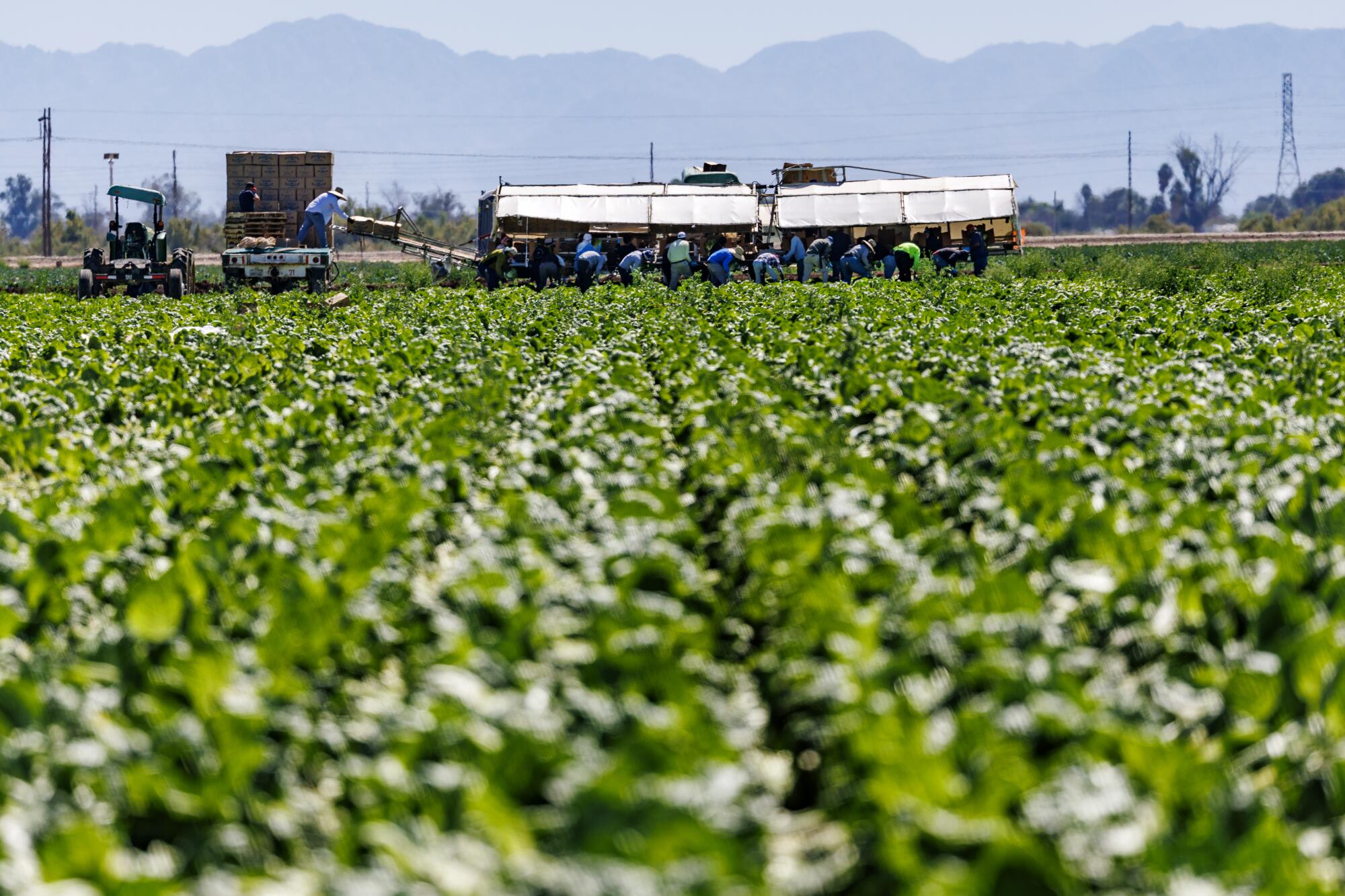
Farmworkers toil in the noon heat to pick vegetables in Imperial. Agriculture is an important part of the Imperial Valley economy.
::
The debate over data centers is heating up in the Imperial Valley, a rural desert region in southeastern California where a proposed center faces fierce opposition from residents.
The county in 2025 granted the project an exemption for the California Environmental Quality Act, known as CEQA. The landmark 56-year-old state law has been credited with helping to preserve California’s natural beauty and protecting communities from hazardous impacts of construction projects — but also blamed for stymieing construction.
Imperial Valley Computer Manufacturing, a California-based limited liability company that started two years ago, plans to develop a 950,000-square-foot facility in the county that’s designed for advanced artificial intelligence and machine learning operations. The company says it will use reclaimed wastewater and EPA-certified natural gas generators, and create 2,500 to 3,500 construction jobs and 100 to 200 permanent positions.
“We are committed to Imperial County and to creating lasting economic opportunity,” the company website states. “The project will generate $28.75 million in annual property tax revenue for local schools, fire departments, libraries, and essential services.”
The Imperial County Board of Supervisors is moving toward finalizing the proposal.

Farmland spreads out in front of the Imperial Valley Fair near a proposed data center in Imperial.
Sebastian Rucci, an attorney and chief executive officer of Imperial Valley Computer Manufacturing, said he commissioned multiple studies assessing the proposed center’s potential effect on issues like traffic or the environment that found no or minimal harms. He threatened to pull his proposal if a CEQA review was required.
“CEQA leaves you in an unknown territory — some of the environmental groups have used it for extortion, they sue, they have no basis for the suit but they delay you, and then they can squeeze money out of you for settling the lawsuit,” said Rucci.
The exemption, however, has alarmed residents, who have spoken up at county board meetings and launched a community organization, Not in My Backyard Imperial, to protest the data center and demand a CEQA review.
“It feels like it’s us against the county,” said Camarillo, adding that many feel the board has dismissed their questions and concerns.
None of the Imperial County Board of Supervisors responded to requests for comment.
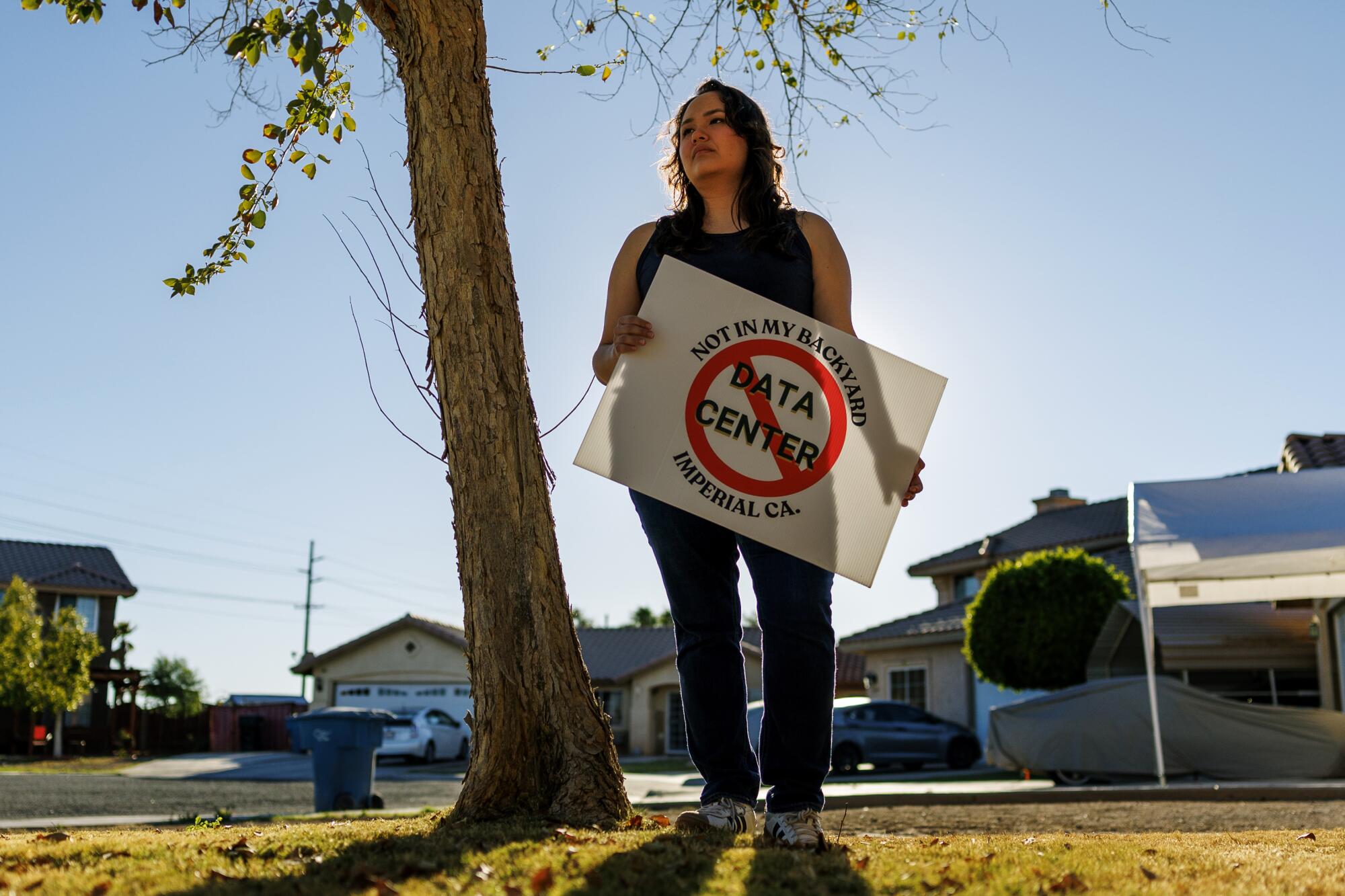
Resident Fernanda Camarillo’s home is right behind the proposed site of the data center in Imperial.
The center would be a neighbor to Camarillo’s house in Victoria Ranch, a family-friendly area with beige stucco homes topped with terracotta tile roofs. She worries about noise, pollution and spiking utility bills. Power companies that have to upgrade grids to meet data centers’ energy demands sometimes seek to recoup that cost by hiking up rates for all consumers.
Camarillo, a substitute teacher, is also scared for her students. The air quality in Imperial Valley is already so poor that schools use a system of color-coded flags to signal whether it’s safe for children to go outside during gym or recess, she said.
“I think they see [the valley] as easy pickings because we are a low-income community and we have such a large population of Latinos here,” Camarillo said.
A quick drive around the neighborhood shows others share her concerns. Signs protesting the data center pop up throughout the community, displayed on front lawns or nestled into rocky garden beds.
Victoria Ranch was quiet and peaceful on a sunny Sunday in late February. Francisco Leal, a resident and lead organizer for NIMBY Imperial, said that’s a major part of its appeal.
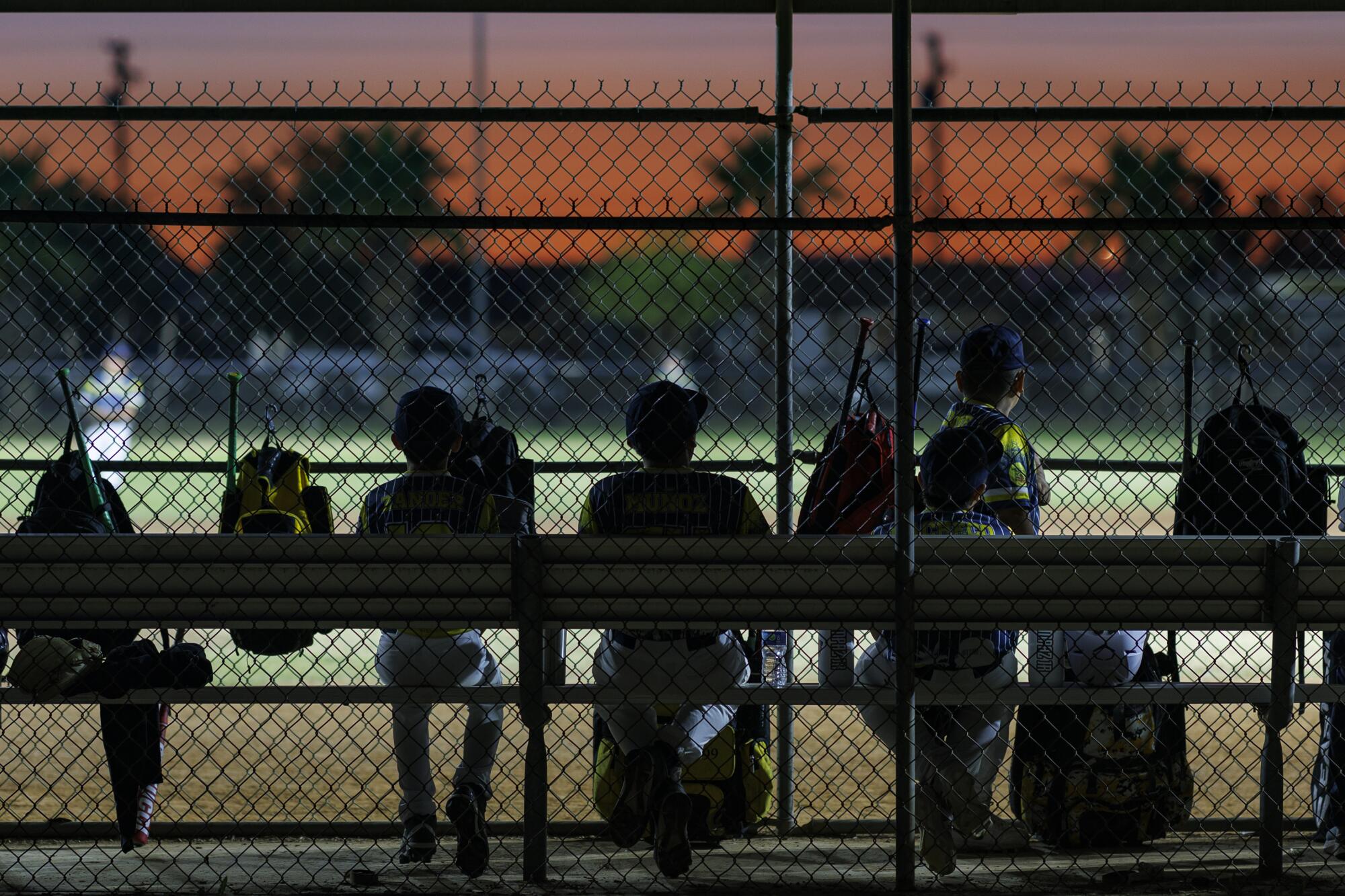
The colorful dusk sky hovers over a Little League baseball game at Freddie White Park in Imperial. The debate over data centers is heating up in the Imperial Valley, a rural desert region in southeastern California.
Leal wants answers about everything from potential health hazards and impacts on the local water supply to whether the fire department is equipped to handle a large-scale electrical blaze. But without a CEQA review, he says residents are left to trust assurances from the developer or privately hired consultants.
Leal plans to sell his property if the project goes forward, but the thought makes him emotional.
“It’s not just a house; it’s a home,” he said. “This is the only home my kids have ever known and all of our family memories are here.”
Gina Snow, another resident, isn’t necessarily against bringing a data center to the county. But she wants the proposal to undergo a CEQA review.
“Clearly we understand that there is economic development and the potential for that to be positive for the county, but at what cost?” she said.
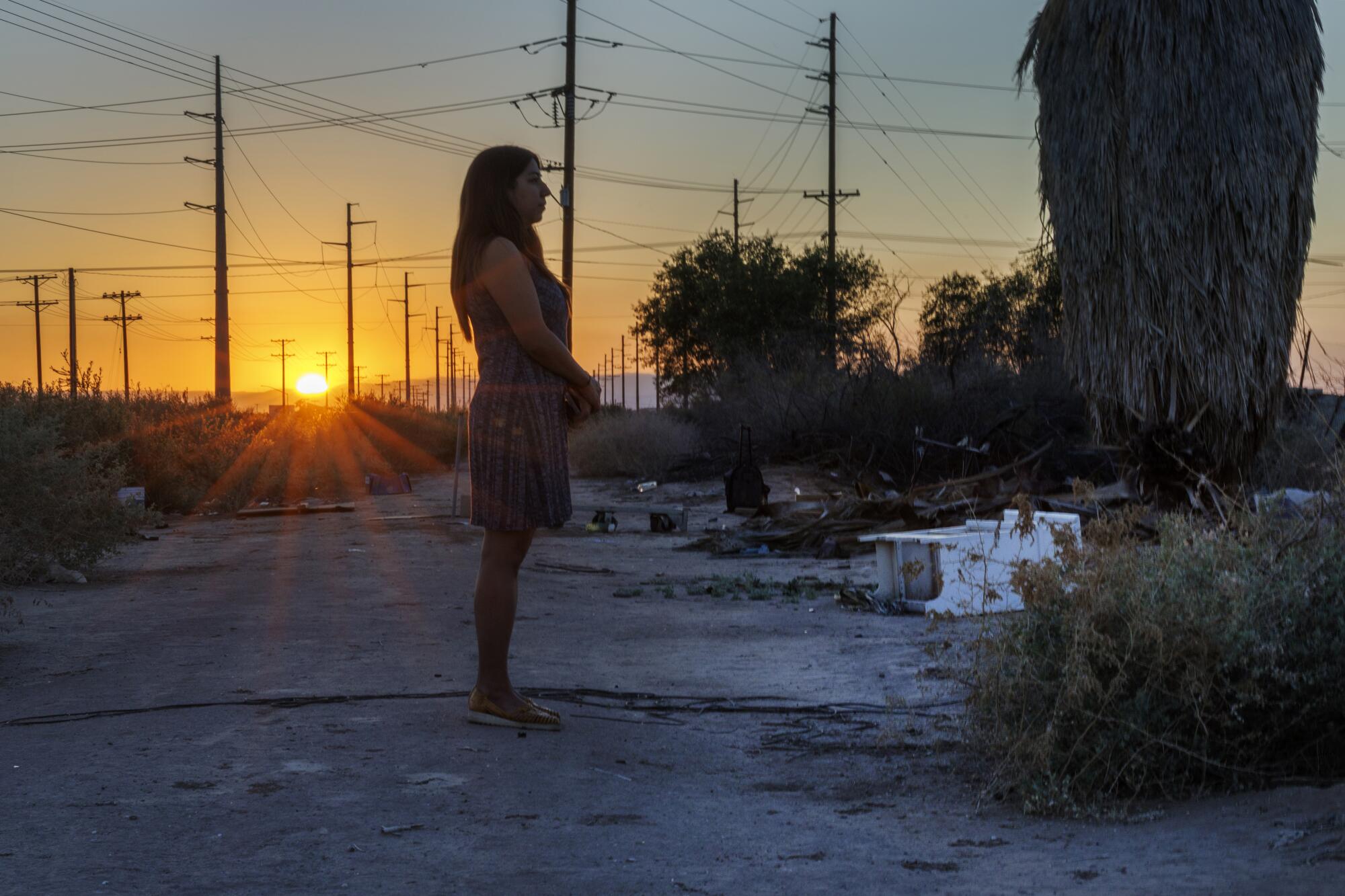
Daniela Flores, executive director of Imperial Valley Equity and Justice, a nonprofit that works for social and environmental equality, stands on the site of the proposed data center.
::
Daniela Flores, executive director of Imperial Valley Equity and Justice, a nonprofit that works for social and environmental equality, said the community has good reason to be wary. Various industries have come into the region over the years and made grand promises that never panned out.
“We became a sacrifice zone,” she said, adding industries use the area’s resources while ultimately doing little to permanently improve the lives of most residents.
Flores said the community continues to struggle with a range of problems, including poor air quality, high poverty rates, weak worker protections and crumbling infrastructure. She believes a data center could add new and potentially dangerous challenges.
The valley has long, brutal summers with temperatures that swell to 120 degrees. If the data center strains the grid and causes a lengthy blackout, or low-income residents have their power shut off because they can’t afford the rising bills, Flores fears the situation could quickly turn deadly.
The city of Imperial also has concerns. The city has filed a lawsuit calling on the county to halt the project, arguing it should not have received a CEQA exemption.
The controversy has drawn attention from Padilla, whose district includes Imperial Valley. Padilla has echoed residents’ calls for more transparency from the county and introduced Senate Bill 887, which would ban data centers from receiving exemptions from CEQA.
“I am not anti-data center or anti-artificial intelligence,” Padilla said. But, he added, we need to “find a way to do this right and make sure there is adequate review and understanding.”
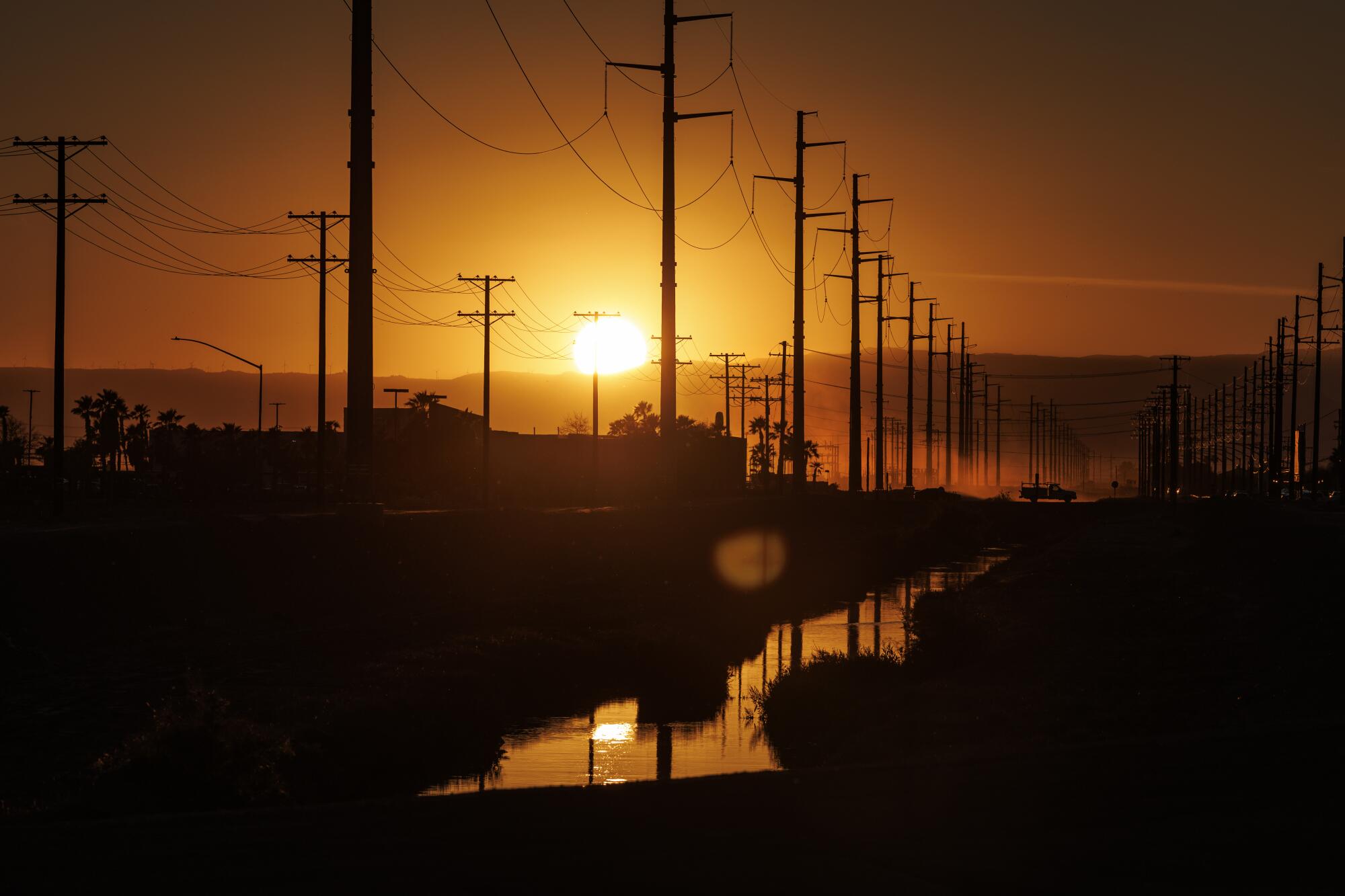
A dusty haze settles over the city of Imperial at dusk near the site of a proposed data center.
Another measure from Padilla, Senate Bill 886, would direct the Public Utilities Commission to create an electrical corporation tariff to cover the cost of data center-related grid upgrades.
Other related legislation this year includes Assembly Bill 2619 from Assemblymember Diane Papan (D-San Mateo) that would require data center owners to provide an estimate about expected water usage and sources before applying for a business license, and Assembly Bill 1577, by Assemblymember Rebecca Bauer-Kahan (D-Orinda), which would require data center owners to submit monthly information to a state commission about water and fuel consumption and energy efficiency.
While lawmakers weigh new policies at the statehouse, Camarillo said she hopes the priority will be protecting communities.
“Innovation is important, but innovation for the sake of innovation has never really been something that hasn’t had negative impacts,” she said. “Think about human lives.”

Kansas firefighters rescue chubby cat trapped in massive recliner while trying to hide from the vet

Will Louisiana’s U.S. Senate candidates debate? Bill Cassidy says no to Moon Griffon.

Maine Senate advances ‘right to repair’ electronics bill

‘Mattresses all over the place’: Maryland begins yearly operation to clean state highways – WTOP News

Showers, thunderstorms expected to hit SE Michigan Thursday — What to know

Florida High School Football Rankings: Top 25 teams – Oct. 21

How old is Bo Nix? What to know about Oregon quarterback ahead of 2024 NFL Draft

Cleary's 21 help Le Moyne down Central Connecticut State 69-64 in OT

99th annual Pony Swim held in Virginia

Indiana Members Credit Union announced as new anchor tenant at Bottleworks District

LaGuardia Crash Timeline: Moments Before Air Canada Plane Collided With Fire Truck

Chicago alderwoman apologizes for ‘wrong place at the wrong time’ comment on slain student

Fake Euronews website targets Hungary election with false claims

An air traffic controller was juggling extra roles during the LaGuardia plane crash

Iran War: Pentagon set to send thousands of elite 82nd Airborne troops to region | BBC News
-

 Detroit, MI6 days ago
Drummer Brian Pastoria, longtime Detroit music advocate, dies at 68
-

 Georgia1 week ago
How ICE plans for a detention warehouse pushed a Georgia town to fight back | CNN Politics
-

 Movie Reviews6 days ago
‘Youth’ Twitter review: Ken Karunaas impresses audiences; Suraj Venjaramoodu adds charm; music wins praise | – The Times of India
-

 Education1 week ago
Video: Turning Point USA Clubs Expand to High Schools Across America
-

 Sports4 days ago
IOC addresses execution of 19-year-old Iranian wrestler Saleh Mohammadi
-
 Science1 week ago
Industrial chemicals have reached the middle of the oceans, new study shows
-

 Science1 week ago
How a Melting Glacier in Antarctica Could Affect Tens of Millions Around the Globe
-

 Culture1 week ago
Test Your Memory of Great Lines From Classic Irish Poems