Business
How the NFL Moved the Vikings-Rams Playoff Game Away From the L.A. Fires


Matthew Giachelli got the call he anticipated on Thursday morning: The N.F.L. was moving the Rams’ playoff game to Arizona because of the wildfires raging in Los Angeles, and the league needed 200 gallons of paint pronto.
The game on Monday between the Rams and the Minnesota Vikings would now be held at State Farm Stadium outside Phoenix, and it had to look and feel as if it were being played in the Rams’ usual home, SoFi Stadium. That included painting the field with the team’s and league’s logos and colors. The hometown Cardinals, though, did not have some of the needed hues on hand, including the Rams’ blue and yellow.
Giachelli’s company, World Class Athletic Surfaces in tiny Leland, Miss., provides paint to most N.F.L. and top college teams. Within hours, he and his co-workers had loaded five-gallon buckets of nine custom paint colors, as well as stencils for the N.F.L. playoff logos, onto a truck that left Thursday afternoon on a 1,500-mile journey to Arizona.
“I definitely regret what’s going on in California, but I’m glad we could meet their needs,” said Giachelli, the vice president of production and distribution.
Getting the right paint was just one of hundreds of details that the league, the Rams, the Vikings, the host Arizona Cardinals and ASM Global, which operates State Farm Stadium, have juggled since the N.F.L. decided to move the wild-card round game.
The N.F.L. has canceled preseason games and postponed and moved regular-season games over the years because of hurricanes, snowstorms and other calamities. But it had not moved a winner-take-all playoff showdown since 1936, when the site of its championship game was changed from Boston to New York to drum up ticket sales.
A battalion of people — from the front-office workers to the training staffs to the thousands of game-day workers — have been mobilized on short notice. Each game, particularly in the playoffs, generates tens of millions of dollars for television networks, advertisers and stadium operators, and with the season coming down to its last few weeks, there was little margin for error.
“If it can be played, they play it, and in this case, it can be played in Glendale,” said Joe Buck, who will call the game for ESPN on Monday. “We’re in the playoffs now, and you’ve got all this pressure to get this first round finished before Kansas City and Detroit,” which had first-round byes, “get back in.”
A big reason the N.F.L. is the world’s most valuable league is scarcity. There are just 272 regular-season games and 13 playoff games, so each one is of critical importance to the 32 teams. (By contrast, there are about 400 Major League Baseball games every month during the season.) They are also critical to the owners of those teams and the league, as well as broadcast networks, sponsors and other companies that spend billions of dollars a year to attach their businesses and brands to the N.F.L.
It has not escaped notice that one of those businesses, State Farm, will have its name attached to Monday night’s broadcast less than a year after it announced that it would not renew 30,000 homeowner policies and 42,000 policies for commercial apartments in California. (The N.F.L. has donated $5 million to Los Angeles relief efforts.)
With so much riding on each contest, the N.F.L. does everything it can to play every game every year. When the league creates its season schedule each spring, it prepares contingency plans including an alternate site for each game. In 2022, when a massive snowstorm hit western New York, the Buffalo Bills played a home game at Ford Field in Detroit.
During the pandemic, outbreaks in locker rooms forced the league to postpone several games, though none were canceled. When pandemic conditions in Santa Clara County, Calif., deteriorated, the San Francisco 49ers moved to Arizona for a month, playing three home games in State Farm Stadium. Arizona was also a backstop in 2003 when the Chargers moved their home game against the Miami Dolphins because of fires in San Diego.
This time, the fires spread so quickly, the league decided to move the game five days before kickoff. Kevin Demoff, the president of the Rams, said the team had been in constant contact with officials in Los Angeles, who initially thought the game could be held at SoFi Stadium in Inglewood, which was unaffected by the fires.
But that changed midweek, when fires broke out close to the team’s training facility in Woodland Hills, forcing some players and staff to evacuate their homes and for one practice to be cut short. Demoff said he did not want the players and staff to be distracted, nor did he want city and county resources to be diverted for the game when they could be used to help others in need.
Moving the game is “just a recognition that there’s some things bigger than football and we owe this to our community to make sure that this game can be played safely and not be a distraction,” Demoff said Friday.
ESPN was on hold as well. Four of its production trucks were en route to Los Angeles from Pittsburgh when the league told the network on Wednesday night that the game could be moved to Glendale. The crews spent the night in Kingman, Ariz. On Thursday, the plan was to set up in both stadiums in case the league waited until Saturday to decide where to play. So the trucks continued on to Los Angeles while another set of trucks left for Glendale. When the N.F.L. said Thursday that the game had been moved, the first set of trucks, which had reached Ontario, Calif., turned around and arrived in Glendale with time to spare.
The Cardinals also helped out the Rams in ways beyond just lending their stadium. The team’s owner, Michael Bidwill, sent two team planes to Los Angeles to help the Rams get their entourage and equipment to Arizona.



Warner Bros. Discovery shareholders will soon render a verdict on Hollywood’s biggest merger in nearly a decade.
Warner has set an April 23 special meeting of stockholders to vote on the company’s proposed sale, for $31-a-share, to the Larry Ellison family’s Paramount Skydance.
The $111-billion deal is expected to reshape the entertainment industry by combining two historic film studios, dozens of prominent TV networks, including CBS, HBO, HGTV and Comedy Central, streaming services and two news organizations, CNN and CBS News. The tie-up would give Paramount such beloved characters as Batman, Wile E. Coyote, and Harry Potter, television shows including “Hacks,” and “The Pitt,” and a rich vault of movies that includes “Casablanca,” and “One Battle After Another.”
The $31-a-share offer represents a 63% increase over Paramount Chairman David Ellison’s initial $19-a-share proposal for the company in mid-September, and a 147% premium over Warner’s stock’s trading levels prior to news of Ellison’s interest.
“This transaction is the culmination of the Board’s robust process to unlock the full value of our world-class portfolio,” Warner Bros. Discovery Chief Executive David Zaslav said Thursday in a statement. “We are working closely with Paramount to close the transaction and deliver its benefits to all stakeholders.”
Paramount hopes to finalize the takeover by September. It has been working to secure the blessing of government regulators in the U.S. and abroad.
Should those regulatory deliberations stretch beyond September, Paramount will pay shareholders a so-called “ticking fee” — an extra 25 cents a share for every 90-day-period until the deal closes.
The transaction will leave the combined company with nearly $80-billion in debt, a sum that experts say will lead to significant cost cuts.
Paramount Skydance Chairman and CEO David Ellison attends President Trump’s State of the Union address three days before clinching his hard-fought Warner Bros. Discovery deal.
(Mark Schiefelbein / Associated Press)
For weeks it appeared that Netflix would scoop up Warner Bros.
Netflix initially won the bidding war in early December with a $27.75 offer for the studios and streaming services, including HBO Max. But Ellison refused to throw in the towel. He and his team continued to lobby shareholders, politicians and Warner board members, insisting their deal for the entire company, including the cable channels, was superior and they had a more certain path to win regulatory approval.
The Ellison family is close to President Trump. This week, Trump named Larry Ellison to a proposed White House council on technology issues, including artificial intelligence.
Warner’s board, under pressure, reopened the bidding in late February to allow Paramount to make its case. Warner board members ultimately concluded that Paramount’s bid topped the one from Netflix and the streamer bowed out. Paramount paid a $2.8-billion termination fee to Netflix and signed the merger agreement on Feb. 27.
Warner’s board is advising its shareholders to approve the Paramount deal. Failure to cast a vote will be the same as a no-vote, according to the company’s proxy.
Warner’s largest shareholders include the Vanguard Group, BlackRock, Inc. and State Street Corp.
Zaslav has significant stock and options holdings, worth about $517 million at the deal’s close, according to the proxy.
The regulatory filing also disclosed that a mysterious bidder had surfaced at the auction’s 11th hour.
A firm called Nobelis Capital, Pte., reportedly based in Singapore, alerted Warner on Feb. 18 that it was willing to pay $32.50 a share in cash.
The firm said it had placed $7.5 billion into an escrow account. However, Warner’s bankers “could not find the purported deposit at J.P. Morgan,” according to the proxy. And there was no evidence that Nobelis had any assets or any “equity or debt financing” lined up, Warner said, adding that it “took no further action with respect to the Nobelis proposal.”

new video loaded: How Kharg Island May Change the Trajectory of the Iran War
By Peter Eavis, Gilad Thaler, Edward Vega, Lauren Pruitt and Joey Sendaydiego
March 25, 2026
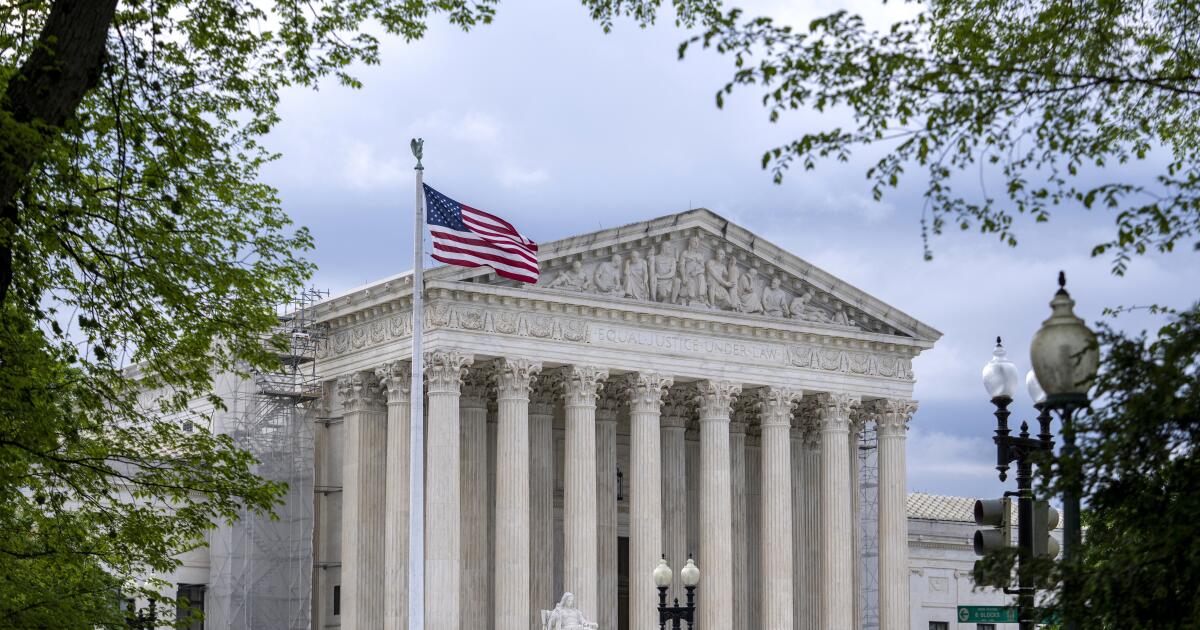
WASHINGTON — The Supreme Court on Wednesday made it harder for music and movie makers to sue for online piracy, ruling that internet providers are usually not liable for copyright infringement even if they know their users are downloading copyrighted works.
In a 9-0 decision, the justices threw out Sony’s lawsuit and a $1-billion jury verdict against Cox Communications for copyright infringement.
Lower courts upheld the lawsuit against Cox’s internet service for contributing to music piracy, which the company did little to stop.
Sony’s lawyers pointed to hundreds of thousands of instances of Cox customers sharing copyrighted works. Put on notice, Cox did little to stop it, they said.
But the high court said that is not enough to establish liability for copyright infringement, which remains a hot button issue in the music and film industries with the advent of AI tools that have spread the misuse of copyrighted content and sparked lawsuits between studios and AI companies.
“Under our precedents, a company is not liable as a copyright infringer for merely providing a service to the general public with knowledge that it will be used by some to infringe copyrights,” Justice Clarence Thomas wrote for the court.
Two decades ago, the court sided with the music and motion picture producers and ruled against Grokster and Napster on the grounds their software was intended to share copyrighted music and movies.
But on Wednesday, the court said “contributory” copyright infringement did not extend to internet service providers based on the actions of some of their users.
“Cox provided Internet service to its subscribers, but it did not intend for that service to be used to commit copyright infringement,” Thomas said. “Cox neither induced its users’ infringement nor provided a service tailored to infringement.”
Mitch Glazier, the chairman of the Recording Industry Assn. of America, said he was “disappointed” in the court’s ruling, as the case was “based on overwhelming evidence that the company knowingly facilitated theft.”
“To be effective, copyright law must protect creators and markets from harmful infringement and policymakers should look closely at the impact of this ruling,” Glazier said in a statement. “The Court’s decision is narrow, applying only to ‘contributory infringement’ cases involving defendants like Cox that do not themselves copy, host, distribute, or publish infringing material or control or induce such activity.”
Karyn Temple, senior executive vice president for the Motion Picture Assn., said in a statement that the decision “upends the critical legal doctrine of contributory infringement for copyright.” She added: “Unfortunately, the Court’s opinion today ignores this well-established rule and congressional intent, which is particularly disappointing amidst a growing consensus about the need for more accountability for facilitating harmful online conduct, not less.”
In its defense, Cox argued that internet service providers could be bankrupted by huge lawsuits for copyright infringement, which they said they did not cause and could not prevent.
“The decision means that the Supreme Court isn’t coming to the entertainment industry’s rescue,” said attorney Michael K. Friedland. “The copyright infringement problem is a technological problem. The modern internet makes infringement really easy. The decision means that the industry is going to have to solve the problem itself — by developing its own better technology to protect its intellectual property.”
Rachel Landy, who teaches copyright law at Cardozo Law School in New York, said the music industry has no good options and may need to go to Congress.
“The record industry could go after the individual users who share works online without authorization, but that led to suboptimal outcomes in the past: bad publicity and judgment-proof defendants,” Landy said. “And now, the court has narrowed the contributory liability doctrine such that they are also unlikely to get recourse from the deeper pockets. It may be that their best recourse is to go to Congress for a fix.”
The American Civil Liberties Union and the Center for Democracy and Technology joined the case in support of Cox and welcomed the decision.
It is “a win for freedom of speech,” said Samir Jain, a CDT attorney. “If the court hadn’t decided in favor of Cox, it would have turned internet service providers into censorship machines acting on behalf of powerful rights-holders.”
Times staff writer Cerys Davies in Los Angeles contributed to this report.
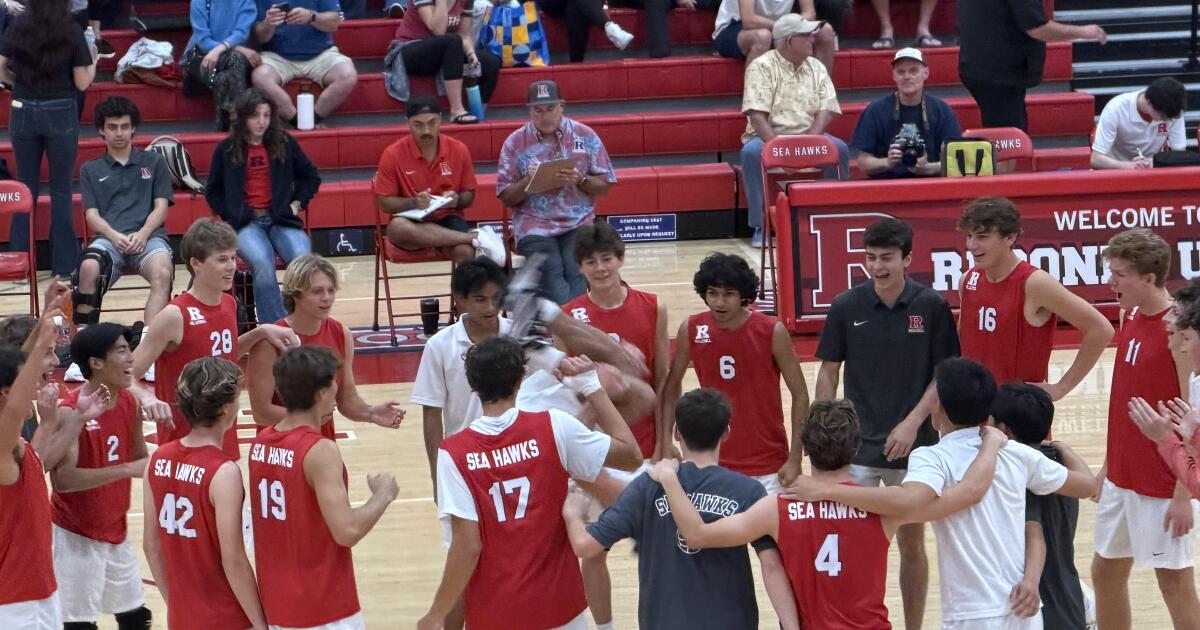
Prep sports roundup: Redondo Union takes down No. 1 Mira Costa in boys volleyball

Rubio joins crucial G7 talks as Iran war set to dominate second day

A surprise resignation could open the door for an independent to win a Montana Senate seat

Metro Detroit weather forecast, March 26, 2026 — 11 p.m. Update

Man convicted in the deadly 2021 assault of a Thai grandfather in San Francisco avoids prison

Florida High School Football Rankings: Top 25 teams – Oct. 21

How old is Bo Nix? What to know about Oregon quarterback ahead of 2024 NFL Draft

Cleary's 21 help Le Moyne down Central Connecticut State 69-64 in OT

99th annual Pony Swim held in Virginia

Indiana Members Credit Union announced as new anchor tenant at Bottleworks District
Rubio joins crucial G7 talks as Iran war set to dominate second day
A surprise resignation could open the door for an independent to win a Montana Senate seat

Video: Savannah Guthrie Says She Believes Her Mother Was Taken for Ransom

Stefanik grills University of Michigan leader on lack of audit after string of Chinese national arrests

Photos: More than one million displaced by Israel’s evacuations in Lebanon
-

 Detroit, MI1 week ago
Drummer Brian Pastoria, longtime Detroit music advocate, dies at 68
-

 Science1 week ago
How a Melting Glacier in Antarctica Could Affect Tens of Millions Around the Globe
-

 Movie Reviews1 week ago
‘Youth’ Twitter review: Ken Karunaas impresses audiences; Suraj Venjaramoodu adds charm; music wins praise | – The Times of India
-
 Science1 week ago
I had to man up and get a mammogram
-

 Sports6 days ago
IOC addresses execution of 19-year-old Iranian wrestler Saleh Mohammadi
-

 New Mexico4 days ago
Clovis shooting leaves one dead, four injured
-

 Texas7 days ago
How to buy Houston vs. Texas A&M 2026 March Madness tickets
-

 Tennessee3 days ago
Tennessee Police Investigating Alleged Assault Involving ‘Reacher’ Star Alan Ritchson