Business
How cryptocurrency executives helped decide the California Senate primary

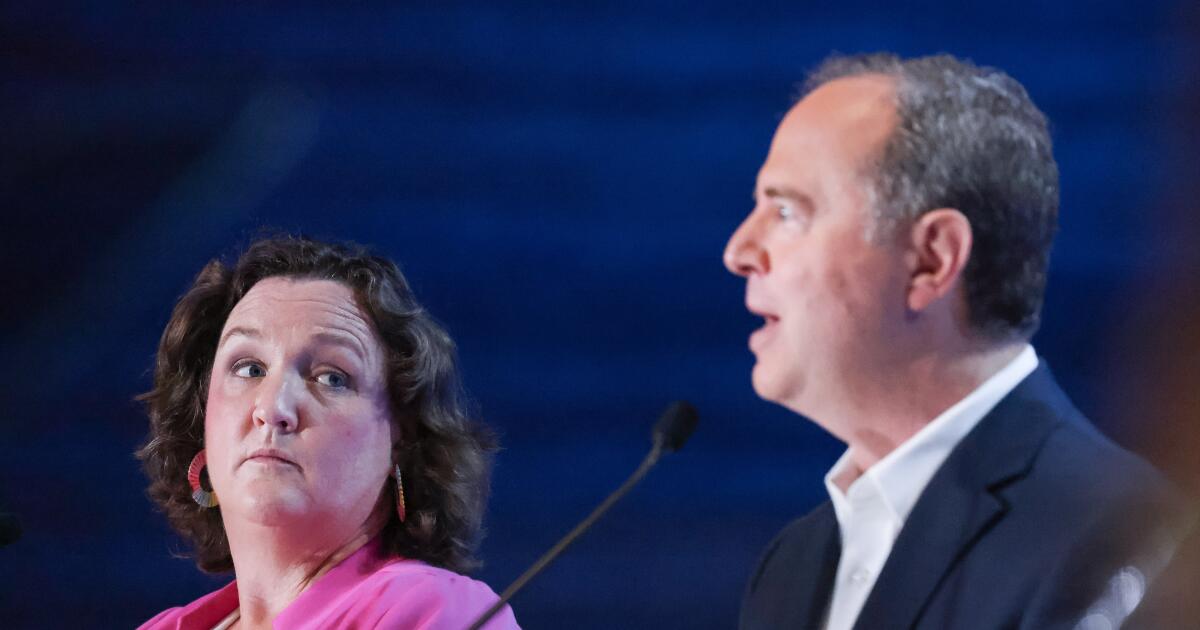
In the days before the California Senate primary, political ads calling Rep. Katie Porter (D-Irvine) a fake, an actor and a hypocrite inundated social media platforms and television programs.
The $10-million bill for the advertisements, which were designed to bump Porter out of the race for a rare open Senate seat, was footed by a super PAC called Fairshake that is funded by cryptocurrency companies and their executives.
As primary results rolled in that showed Porter a distant third behind Rep. Adam B. Schiff of Burbank and Republican Steve Garvey, Fairshake boasted that the Orange County lawmaker’s alliance with mentor Sen. Elizabeth Warren (D-Mass.), a vocal skeptic of cryptocurrency, had “ended her career in Congress.”
Porter later blamed her loss on “an onslaught of billionaires spending millions to rig this election,” a not-too-subtle allusion to the crypto group’s major donors.
After two years of bad headlines, including the conviction of FTX founder Sam Bankman-Fried on fraud charges, the cryptocurrency industry is back in the political arena, flexing its significant cash reserves in the 2024 election cycle. The California Senate race is one of many in which the industry has signaled that it will boost candidates who support more favorable crypto laws in Washington, and oust those who don’t.
“That amount of money buys you a seat at the political table in Washington, D.C., and that’s their goal,” said Dennis Kelleher, chief executive and co-founder of Better Markets, a financial watchdog group that has been a frequent opponent of the crypto industry in Washington.
The Securities and Exchange Commission has asserted in court that cryptocurrency should be regulated like stocks and bonds, which would require trading firms to follow a wide range of disclosure and investor protection laws. The industry has lobbied for more favorable regulations, including allowing the markets to be regulated by the smaller Commodity Futures Trading Commission.
Fairshake was the largest outside spender in the Senate primary, but to what extent it moved the needle is a matter of debate. Schiff and his allies spent prodigiously to boost Garvey among Republican voters, blanketing the state with ads that described the retired baseball star as a two-time Trump voter who was “too conservative for California.”
Under California’s unusual primary system, the two candidates who receive the most votes in the primary advance to the November election, regardless of their political affiliation. Schiff’s team gambled that in a deep-blue state, his path to victory would be easier if he faced a Republican.
“When you look at everything else going on in that race, I’m extremely skeptical that they had any impact,” Kelleher said of the cryptocurrency ads. He cited Schiff’s campaign strategy of boosting Garvey and the major support from leaders in the Democratic Party, including Speaker Emerita Nancy Pelosi (D-San Francisco), as well as Schiff’s long resume and Porter’s status as a relative newcomer in Democratic politics.
Polling from the week before the election found Garvey and Schiff in a fight for first, although Porter received a lower share of votes than polls predicted. Who will fill the remainder of the late Dianne Feinstein’s term in the Senate, as well as a six-year term that starts in 2025, will be decided on the November ballot.
Sawyer Hackett, a spokesman for the Progressive Change Campaign Committee, which backed Porter, said the $10-million ad buy “probably contributed a significant amount” to Porter’s loss. In California’s costly media markets, he said, $10 million doesn’t win or lose a race, but “it’s certainly a major factor, especially when you’re talking about the final weeks of the election when Democratic voters are considering the options in front of them.”
He said he wasn’t surprised to see the crypto industry spending against Porter, who has a “somewhat minor” track record on crypto issues but has proved herself willing to take on major industries to defend consumers. The crypto industry, he said, is “targeting candidates with an overall brand that seems to be focused on antitrust and pro-consumer policy.”
Fairshake’s major donors include venture capital giants Marc Andreessen and Ben Horowitz, who have invested in dozens of crypto companies; crypto investors Cameron and Tyler Winklevoss; and Brian Armstrong, the chief executive of Coinbase, which is listed on the Nasdaq market.
Coinbase, which has the highest trading volume of any crypto exchange in the U.S., is working this year to make sure that “candidates and incumbents continue to think about crypto as an opportunity to really make a difference to change, to protect jobs, to protect national security,” said Kara Calvert, the company’s head of U.S. policy.
Coinbase will be working to “educate” members of Congress through November, she said, so that “when they get asked about crypto at a town hall, or when they get asked about crypto by Fairshake, or by any of the rest of these organizations, that they know what they’re talking about.”
On the afternoon before election day, a group called Stand With Crypto hosted a get-out-the-vote rally for crypto owners in Los Angeles. A line stretched around the block on Hollywood’s Walk of Fame outside the Bourbon Room bar for an event headlined by the rapper Nas, who was an early investor in Coinbase.
Inside, as guests ate sliders and drank Sofia Coppola wine, Armstrong told the crowd that they needed to vote to send a “very clear message” for the November election that “you’ve got to understand innovation, you’ve got to be pro-tech, pro-innovation, pro-crypto, to get elected and be representing our values in California.”
Armstrong didn’t name any California Senate candidates, instead directing voters to a guide prepared by Stand With Crypto, which, as a political 501(c)4 nonprofit organization, is not required to disclose its donors. The guide described Schiff as “strongly supportive” of crypto and Porter as “strongly against.” Garvey and Rep. Barbara Lee of Oakland, the other candidates in the race, are listed as “pending,” with a question mark icon.
Porter’s “F” rating cited three references, including a post on X, formerly Twitter, in which she called Fairshake’s backers “shadowy crypto billionaires” because of their ad campaign against her, as well as her signature on a 2022 letter that Warren sent to the Texas power grid authority, questioning its practice of paying crypto mining businesses to shut off power during peak periods. Some companies reported earning more from the payments than from their mining operations, Warren wrote.
Stand With Crypto also said Porter voted “nay” last summer in the House finance committee markup of a cryptocurrency bill favored by the industry. But Porter isn’t a member of that committee and her name does not appear on the vote sheet. Porter did not vote on the legislation, her spokeswoman said.
Schiff’s “A” rating on crypto issues was attributed to a single statement on his campaign website that said the U.S. needs to “develop comprehensive regulatory frameworks” to ensure that cryptocurrency and blockchain companies “stay here and grow here, and that the United States remains the global leader in these important new technologies.”
Schiff told reporters during a campaign stop in San Francisco last week that he supports “clear rules of the road” and “sound regulation” for cryptocurrency companies that protect consumers but keep the firms in the U.S.



Gavin McNamara has abandoned his keyboard and spends all day talking rather than typing.
He speaks for hours with his computer and phone, sending emails, writing presentations, posting on LinkedIn and even coding through conversations using an AI dictation app from San Francisco startup, Wispr Flow.
The AI punctuates, formats and adapts his rambling into coherent copy. McNamara averages 125 words per minute, which is twice the average typing speed.
“At this point, anything that could be done by typing, I do by speaking,” said the 32-year-old, founder of software agency Why Not Us. “I just talk.”
Across 77 apps, he has dictated nearly 300,000 words in the past five months — that’s equivalent to writing three novels.
California’s tech titans and startups are at the forefront of a movement to use AI and the large language models they are based on to push people to interact with technology using their voices rather than their fingers.
“AI and LLMs have changed the dynamic,” said CJ Pais, the San Diego-based creator of free voice-to-text dictation app Handy. “Using your voice is much faster than typing.”
A mix of independent developers and startups, including Handy, San Francisco’s Wispr Flow and Willow and others, have sprung up to offer accurate voice interaction with artificial intelligence.
The biggest names in tech are also creating new ways for people to partner with AI. Meta’s latest smart glasses rely on voice. OpenAI and Meta have designed distinct personalities for their bots’ voice chats. Even Amazon’s Alexa and Apple’s Siri are undergoing AI upgrades, which the companies anticipate will have everyone talking to their tech much more.
These free and paid methods for using spoken words with computers have attracted millions of users, including coders, executive assistants, lawyers, content creators, and medical practitioners. Some optimists think the keyboard could become obsolete.
“I’m excited to announce that we’ve removed keyboards from the most prestigious television awards in the world,” Allan Guo, the founder of Willow, said in a post on LinkedIn, noting that the Emmy Awards team used Willow’s voice dictation for sending Slack messages and clearing inboxes faster in preparation for the 2026 awards.
Over the years, big tech companies have adapted many of their products with voice-first features — for convenience. Today’s pivot away from voice as an accessibility feature to a productivity tool.
In late 2022, the maker of ChatGPT started giving away unfettered acccess to its automatic speech recognition model called Whisper, trained on 680,000 hours of multilingual data. OpenAI shared the tech for accurate audio transcription, once a closely guarded big tech secret. Anyone could now download and run high-quality AI transcription for free on their laptop.
The new wave of AI dictation apps uses Whisper as the foundation and builds on top to offer live dictation. While there are free alternatives, paid subscription costs between $8 and $12 a month.
AI-powered dictation is now gaining a toehold among programmers and regular users — and getting people to talk to their laptops. Be it writing emails, sending SMS, designing a website, or giving AIs tasks, early adopters say dictation allow them to work faster, think more clearly, and be more productive.
“The people who’ve adopted voice heavily aren’t going back. Once you’re talking 20 hours a week to your laptop, typing feels like friction,” said Naveen Naidu, the general manager of New York-based voice dictation app Monologue. “Where I think it’s heading: Voice becomes the delegation layer. You speak your intent, and things happen.”
These new AI dictation apps leverage Apple’s advanced chips on iPhones and Macs to run private on-device dictation.
Geoffrey Huntley, an independent software developer, switched almost completely to voice for work in June.
He often starts projects by opening a voice prompt and asking the AI to interview him about his concerns and project requirements before any code is generated.
“I speak to it, like I’m riffing in a jazz band, backwards, forwards, backwards, forwards,” Huntley said. This vocal dance helps refine the specifications, then the AI takes the wheel, and builds software.
Beyond coding, Huntley uses voice to “let it rip” when capturing blog post ideas or messaging, using apps like Superwhisper or Wispr Flow to get a “first dump” of thoughts before moving to a keyboard for final editing.
A growing number of software developers in Silicon Valley are dictating coding instructions for hours at a time instead of typing. The combination of rapidly advancing AI agents that can code for hours, with voice inputs capturing thoughts faster than typing, has boosted their productivity.
Self-described “vibe coder” McNamara built over 25 web apps in a few months, a speed of development that would be impossible without voice instructions.
“I don’t think that [typing], by any means, would be even efficient or effective to get there as fast as I did with talking,” McNamara said.
He used a meandering conversation and a few hours to get AI to build Sprout Gifts, a gifting registry for kids, and an app to appraise any items via photos.
To be sure, AI can make mistakes, and its work needs to be checked.
Meanwhile, wide adoption has brought new inconveniences, as even power users feel awkward talking to their laptops. Crowded open offices are not designed for many people to be conversing with their computers at the same time.
“Love voice, but not in an office setting,” said one user on X. “I dislike talking around other people. I would do it in a closed-door office, or go work in my car.”
McNamara uses headphones so people assume he is on a call.
“It’s like the social hack that I have,” he said.
While it is too early to call whether and when the Qwerty keyboard might follow the ticker tape and fax machines into obsolescence, the velocity toward voice is accelerating, said Dylan Fox, founder of San Francisco-based AssemblyAI, which offers audio models to companies.
“We’re definitely in the beginning of what we think of as like this 10 to 100x increase in demand for voice, AI applications and interfaces,” he said.
For the coder, McNamara, talking more to chatbots has made him a better buddy.
He used to be bad at responding to texts. Now he gets back to friends right away.
“I am so quick to respond, they are like ‘Who’s this guy?’” he said.

Shaking off its defeat in the Warner Bros. bidding war, Comcast is focusing on its big sports bet.
NBCUniversal will broadcast the Winter Olympics, Super Bowl, NBA, Major League Baseball and the World Cup this year.
The Philadelphia giant released its fourth-quarter earnings Thursday and its sports-heavy strategy is revealing both the benefits and costs. NBCUniversal’s new NBA deal has had the hoped-for effect of boosting subscribers to its Peacock streaming service.
Peacock now has 44 million customers and streaming revenue grew 23% to $1.6 billion. But Peacock’s losses swelled to $552 million in the fourth quarter as the streaming service absorbed the expense of NBC’s NBA TV rights agreement and an exclusive NFL game.
Comcast executives said during an earnings call that Peacock reduced its full-year losses by $700 million compared to 2024. Last year, the service lost $1.1 billion and profitability is still a ways off.
Comcast Chairman Brian Roberts noted that the entertainment industry is in the throes of a major transformation and that NBCUniversal has laid the groundwork for its own metamorphosis. His company has made a sharp pivot away from NBC’s 1990s glory days of “Must-See TV” comedies, water-cooler dramas like “ER” and “West Wing,” as well as a fleet of formidable cable channels, including USA and CNBC.
This month, the cable channels were spun off into a new company called Versant.
Comcast entered last fall’s high-stakes Warner auction with hopes of combining NBCUniversal with Warner Bros. to create a new Hollywood behemoth. But Netflix swooped in with a $82.7-billion deal and David Ellison’s Paramount Skydance also made an all-cash bid. Paramount has refused to accept defeat, launching a hostile takeover to attempt to claim its rival — a pursuit that Warner board members are fighting.
“In terms of Warner Bros., what can you say?” Roberts said. “It’s still underway, obviously.”
Marrying NBCUniversal and Warner Bros. would have made a compelling company, Roberts said. But as soon as its competitors turned to all-cash offers, “We were just not interested in these values, stretching our balance sheet to do something like that,” he said.
NBCUniversal’s Peacock grew to 44 million subscribers.
(Peacock)
The longtime cable chief pointed to the silver lining.
Preparing its bid for Warner Bros. “forced us on the journey to really take a good look at what we have and what we’re building,” Roberts said. “We have a wonderful studios business … 2026 should be a great year for the film business. … We have two studios in the television business, which is feeding Peacock.”
NBCUniversal is moving closer to its goal of becoming “an integrated media business that is profitable and [has] got a lot of sports,” a streaming service and Universal theme parks, Roberts said, adding the Warner auction has prompted other firms to discuss possible combinations.
NBC, which turns 100 this year, has long carried live sports.
But it has doubled down and February will be packed with the Winter Olympics in Italy, the Super Bowl near San Francisco and the NBA All-Star game in Inglewood.
In March, NBC and Peacock will begin broadcasting MLB games, including the Dodgers hosting the Arizona Diamondbacks on opening day.
The company’s Spanish-language network Telemundo will broadcast the World Cup this summer, including a stop in Los Angeles.
“We’re very confident and comfortable that we’re in the right part of the industry,” Roberts said. “We hope the Olympic Games can offer a moment of connection for our country and for people everywhere” during such divisive times, he said.
Comcast has been struggling in its core broadband business as cellphone carriers with 5G service have cut into its former dominance. Millions of customers have ditched their cable TV packages.
The company switched up management in Philadelphia in October, installing Steve Croney as chief executive of its connectivity and platforms business. And Comcast has trimmed some of its internet package prices to better compete.
In the fourth quarter, Comcast lost 181,000 domestic broadband customers — more than what analysts had forecast. The company said some of the losses were offset by gaining international customers.
Comcast generated quarterly revenue of $32.3 billion, a slight increase that was in-line with expectations. Adjusted earnings a share decreased 12% to 84 cents, higher than expected.
Net income attributed to Comcast came in at $2.2 billion, which was more than 50% lower than the year-earlier period. The decline reflected a tough comparison to the prior year period, which included a $1.9 billion income tax benefit attributed to an internal corporate reorganization.
NBCUniversal produced $12.7 billion in revenue, a 5.4% increase.
The media unit, which includes television and streaming, contributed $7.6 billion in revenue, a 5.5% gain. (The numbers included results from the profitable cable channels, which became a separate entity on Jan. 2.) Higher advertising sales and Peacock, which began carrying the NBA, helped deliver the gains. Peacock recently raised its monthly fee.
But media earnings before interest, taxes, depreciation and amortization tumbled 141% to a loss of $122 million to account for the NBA contract.
Theme parks, which now boast Universal’s Epic Universe near Orlando, produced $2.9 billion in revenue — a 22% increase. It generated $1 billion in profit.
NBCUniversal’s studio business generated $3 billion in revenue, a decline of 7.4%. It notched $351 million in earnings, a decline of 38%.
Although shut out of the Oscar nominations, Universal Pictures’ “Wicked: For Good” roared at the box office. The two-part “Wicked” franchise has fetched $1.3 billion in global ticket sales.
Comcast shares were up 2.9% to $29.24 on Thursday.
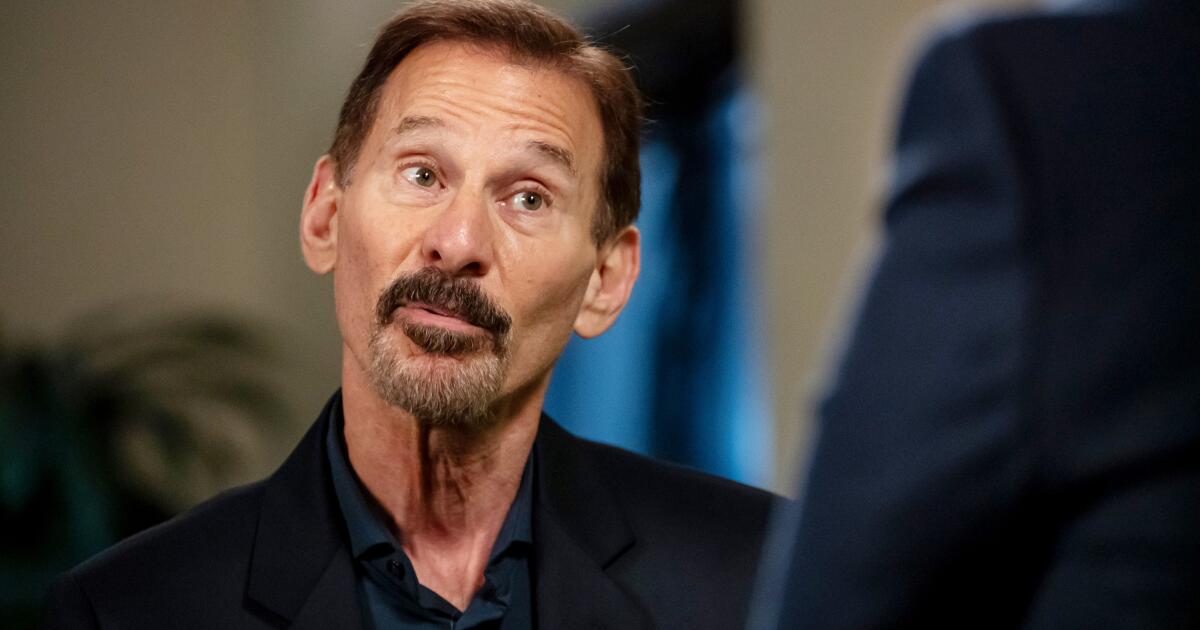
California quantum computing company D-Wave is moving its headquarters to Boca Raton, Fla., and opening a new research and development facility.
In an announcement this week, the Palo Alto company said its new office will be housed in the Boca Raton Innovation Campus before the end of this year. The 1.7-million-square-foot office facility, previously used by tech company IBM, is the birthplace of the personal computer, according to the campus’ website.
“The state offers a rich scientific and educational environment, a growing pool of highly skilled tech talent, and a vibrant spirit of innovation that made it attractive to D-Wave,” Chief Executive Alan Baratz said in a statement.
The company is among businesses that have recently opened new offices or moved out of California, underscoring the competition the state faces to attract more jobs.
California, home to companies such as Google, Apple and Meta, is known for being a major hub for the technology industry. California cryptocurrency startup BitGo recently said that it was moving to South Dakota.
The announcement comes after business leaders criticize a proposed ballot measure to tax billionaires to mainly fund healthcare. Under the Billionaire Tax Act, Californians worth more than $1 billion would pay a one-time 5% tax on their total wealth. The initiative still needs enough signatures to make it on the November ballot, but it’s already prompting criticism from some of California’s wealthiest residents who have urged companies to move.
D-Wave, founded in 1999, describes itself the world’s first commercial supplier of quantum computers. It also provides quantum computing systems, software, and services. Quantum computers are able to solve complex problems more quickly than a classical computer.
A company spokesperson said its decision to move its headquarters to Florida wasn’t related to the proposed billionaires tax and its executives haven’t publicly commented on the idea. D-Wave will still have a Palo Alto office and it also has a presence in Marina del Rey.
Cities try to lure companies to relocate their operations by offering tax breaks.
In January, the Boca Raton City Council approved a resolution that would allow a tech company — referred as Project Vernon — to be a “qualified applicant” for economic development incentives.
The resolution said that once the company, which turned out to be D-Wave, revealed its identity the city would move forward with completing an economic development agreement.
D-Wave would receive up to $500,000 as part of a relocation incentive. The new headquarters would result in the creation of 100 new jobs over the next five years in Boca Raton. The average annual salary for the jobs shouldn’t be less than $125,000, according to the resolution.
The company also considered relocating its headquarters and R&D facility to Tennessee and North Carolina along with staying in California, the resolution said.
The new Florida site will provide D-Wave a “bicoastal presence for system redundancy in the case of disaster recovery,” according to the news release about the new headquarters.
The company said it will install a quantum computer at Florida Atlantic University’s Boca Raton campus as part of a $20-million agreement.
D-Wave has more than 200 employees, according to its website.
The quantum market is projected to grow. It could reach roughly $100 billion by 2035 with most of the revenue growth coming from quantum computing, according to a 2025 report from McKinsey & Company.

Rockets’ Kevin Durant ruled out for Monday’s game vs. Pacers in Indy

School closings and delays for the Pittsburgh area on Monday, Feb. 2

Dead body found near railroad tracks at Walton Way

Foot traffic down at DC bar during snow slump, says icy street entrance doesn’t help

Under-the-Radar Cleveland Cavaliers Trade Targets That Would Matter in the Playoffs

Florida High School Football Rankings: Top 25 teams – Oct. 21

Cleary's 21 help Le Moyne down Central Connecticut State 69-64 in OT

How old is Bo Nix? What to know about Oregon quarterback ahead of 2024 NFL Draft

99th annual Pony Swim held in Virginia

Indiana Members Credit Union announced as new anchor tenant at Bottleworks District

Government shutdowns may be fewer, but they’re increasingly disruptive

These European airports have scrapped the 100ml limit
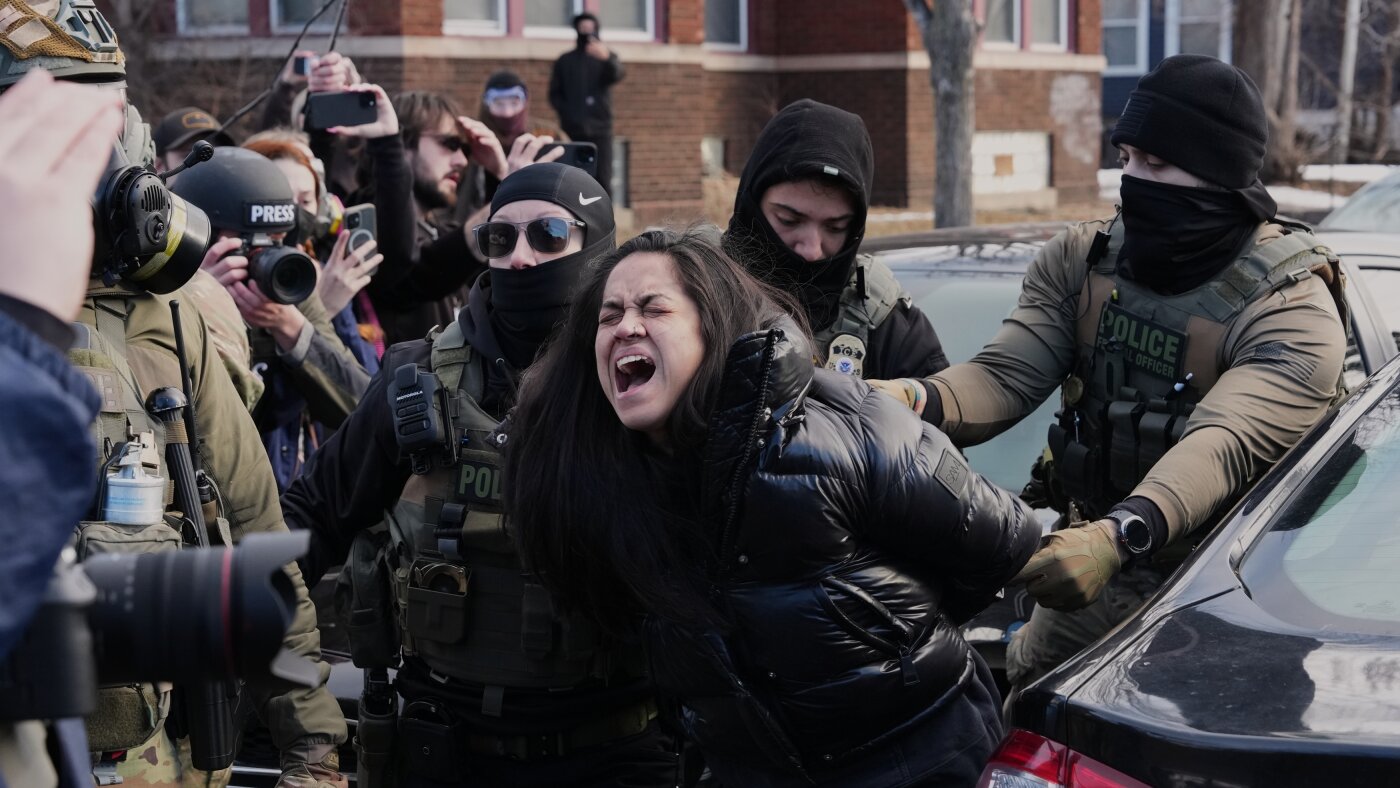
Minnesota citizens detained by ICE are left rattled, even weeks later

Trump says Iran ‘seriously talking to us’ as military ships head to Middle East

Campaign to boycott Israel looks to future after Gaza ‘ceasefire’
-

 Massachusetts1 day ago
TV star fisherman, crew all presumed dead after boat sinks off Massachusetts coast
-

 Pennsylvania7 days ago
Rare ‘avalanche’ blocks Pennsylvania road during major snowstorm
-

 Tennessee2 days ago
UPDATE: Ohio woman charged in shooting death of West TN deputy
-

 Movie Reviews6 days ago
Vikram Prabhu’s Sirai Telugu Dubbed OTT Movie Review and Rating
-

 News1 week ago
Video: Jack Smith Defends His Trump Indictments During House Hearing
-

 Health1 week ago
Common vitamin in everyday foods may control speed of digestion, study says
-

 World1 week ago
Why is South Africa upset about Iran joining BRICS naval drills?
-

 Politics1 week ago
Trump says US should have tested NATO by invoking Article 5 over border security