Business
Grindr targeted nascent union with return-to-office ultimatum, labor board alleges


When the LGBTQ+ dating app Grindr told its staff last year that the days of fully remote work were over, more than 80 employees — nearly half off the company — said they wouldn’t report to the company’s West Hollywood headquarters or other newly established offices around the country. As a result, they were let go.
Now, federal labor regulators say the company’s back-to-office order was an unlawful ploy to retaliate against the workers’ union organizing efforts.
In a recent complaint, the National Labor Relations Board’s regional office in Los Angeles accused Grindr of interfering with employees’ right to organize and refusing to recognize the union workers had elected to join, calling the company’s actions “serious and substantial unfair labor practice conduct.”
About the 120 of the company’s roughly 180 employees were poised to form a union bargaining unit represented by Communications Workers of America, according the complaint. All 80 of the terminated employees were part of that group.
The popular app, which uses a location-based model that allows users to browse potential dates in their area, has gone through several ownership changes in recent years, but has continued to post solid profits from a dedicated user base in the tens of millions.
“We hope this NLRB filing sends a clear message to Grindr that, with a union, we are committed to negotiating fair working conditions in good faith,” the union, Grindr United-CWA, said in a statement Monday.
Grindr called the allegations “meritless,” arguing it had alerted employees it would do away with its remote work culture before they went public with their union drive.
“Grindr team members work from one of our offices just two days per week under our hybrid work model, and our decision to transition from fully remote to hybrid work in 2023 predated the union election petition. It was only after it was known that the transition back to in-office work was underway that some employees began signing union cards,” Grindr spokesperson Emily Wright said in statement. “Our focus continues to be on ensuring Grindr remains an exceptional place for our team to work, and an invaluable resource for the global LGBTQ+ community.”
The complaint is the NLRB’s first step in litigating the case after investigating an unfair labor practice claim submitted by employees and finding merit to the allegations. If a settlement with Grindr is not reached, the case will be reviewed by an administrative law judge, who could order the company to take steps to address the issues in the complaint.
In interviews, two former employees said employees began the union effort in late 2022. They pointed to employees who they said had been laid off without clear reasons and unsettling remarks by their then-incoming chief executive George Arison in support of conservative figures who had made bigoted remarks about transgender people.
Workers went public with their campaign to join CWA in July 2023, and two weeks later the company delivered its return-to-office policy in an all-hands meeting conducted on a Zoom video call on Aug. 3, according to the NLRB complaint. Under the new rules, workers who had been living elsewhere were required to move to either the Los Angeles area, Chicago or San Francisco in order to be close to the Grindr office where their job was based. The company offered up to $15,000 to cover relocation expenses, or six months of severance pay for those who chose not to move.
One of the former employees, who asked not to be identified for fear of reprisals as he continues to search for a new job, said that although his contract designated him as having a remote assignment, he was nonetheless included in the back-to-office mandate.
The employee, who was a member of Grindr’s customer experience team, said the company was slow to provide information about the terms of the back-to-office order and that he was forced to decide in less than a day whether to agree to move. He and many others ultimately signed a severance agreement because they were unable to decide so quickly whether to uproot their lives, he said.
The second former employee, Leo Feldman, said he was not given an opportunity to commit to the hybrid work plan and alleges his involvement with the union was behind the decision to fire him from his job as product manager.
The company’s actions seemed intended to disrupt the union drive, he said, noting that some engineers living near the West Hollywood office, for example, were told they had to move to Chicago.
Despite the turmoil, Grindr appears to have satisfied investors with strong growth even as the broader dating app industry has slowed.
As one of three publicly traded dating app companies, Grindr dominates the dating app market along with Bumble and Match Group, which owns Tinder and Hinge. Bumble has seen its stock fall 46% so far this year after missing revenue estimates, but Grindr shares have risen nearly 70% this year, closing at $15.10 on Monday.
The company recently reported $89 million in revenue in the third quarter, up 27% from the same period last year. Net income during the same period grew to $25 million, compared to a loss of $437,000 a year ago. Grindr also saw a 15% year-over-year increase in the number of average paying users, reaching 1.1 million.
“Our product work starts with our users, their needs, their behaviors and their preferences,” Arison said in a recent earnings call. “We are setting Grindr up for another great year of growth in 2025.”
The company, however, continues to face criticism about its privacy practices: earlier this year, it was sued by hundreds of users in the United Kingdom for allegedly sharing personal information — including HIV status and test dates, ethnicity and sexual orientation — with advertising companies without users’ consent. Grindr has denied the claims.
Nick Jones, an equity research analyst at Citizens JMP, said Grindr is outpacing investor expectations and is not alone in requiring employees to return to in-person work.
“A lot of companies believe they can keep their employees more focused if they’re in office,” Jones said. “The market is indicating that this is not a problem for the company,” he added of the NLRB complaint.
Grindr Chief Product Officer AJ Balance said the app has set itself apart from others in the crowded online dating market and is working on new features.
Grindr’s unique user interface known as the grid allows for quick and abundant connections and avoids the swiping model that some users have grown tired of, he said.
“This was built by the community, for the community, which is part of why it really meets the needs of its users in a unique way and why it’s been differentiated as a product over time,” Balance said.






Many in Hollywood fear Warner Bros. Discovery’s sale will trigger steep job losses — at a time when the industry already has been ravaged by dramatic downsizing and the flight of productions from Los Angeles.
David Ellison‘s Paramount Skydance is seeking to allay some of those concerns by detailing its plans to save $6 billion, including job cuts, should Paramount succeed in its bid to buy the larger Warner Bros. Discovery.
Leaders of the combined company would search for savings by focusing on “duplicative operations across all aspects of the business — specifically back office, finance, corporate, legal, technology, infrastructure and real estate,” Paramount said in documents filed with the Securities & Exchange Commission.
Paramount is locked in an uphill battle to buy the storied studio behind Batman, Harry Potter, Scooby-Doo and “The Big Bang Theory.” The firm’s proposed $108.4-billion deal would include swallowing HBO, HBO Max, CNN, TBS, Food Network and other Warner cable channels.
Warner’s board prefers Netflix’s proposed $82.7-billion deal, and has repeatedly rebuffed the Ellison family’s proposals. That prompted Paramount to turn hostile last month and make its case directly to Warner investors on its website and in regulatory filings.
Shareholders may ultimately decide the winner.
Paramount previously disclosed that it would target $6 billion in synergies. And it has stressed the proposed merger would make Hollywood stronger — not weaker. The firm, however, recently acknowledged that it would shave about 10% from program spending should it succeed in combining Paramount and Warner Bros.
Paramount said the cuts would come from areas other than film and television studio operations.
A film enthusiast and longtime producer, David Ellison has long expressed a desire to grow the combined Paramount Pictures and Warner Bros. slate to more than 30 movies a year. His goal is to keep Paramount Pictures and Warner Bros. stand-alone studios.
This year, Warner Bros. plans to release 17 films. Paramount has said it wants to nearly double its output to 15 movies, which would bring the two-studio total to 32.
“We are very focused on maintaining the creative engines of the combined company,” Paramount said in its marketing materials for investors, which were submitted to the SEC on Monday.
“Our priority is to build a vibrant, healthy business and industry — one that supports Hollywood and creative, benefits consumers, encourages competition, and strengthens the overall job market,” Paramount said.
If the deal goes through, Paramount said that it would become Hollywood’s biggest spender — shelling out about $30 billion a year on programming.
In comparison, Walt Disney Co. has said it plans to spend $24 billion in the current fiscal year.
Paramount also added a dig at Warner management, saying: “We expect to make smarter decisions about licensing across linear networks and streaming.”
Some analysts have wondered whether Paramount would sell one of its most valuable assets — the historic Melrose Avenue movie lot — to raise money to pay down debt that a Warner acquisition would bring.
Paramount is the only major studio to be physically located in Hollywood and its studio lot is one of the company’s crown jewels. That’s where “Sunset Boulevard,” several “Star Trek” movies and parts of “Chinatown” were filmed.
A Paramount spokesperson declined to comment.
Sources close to the company said Paramount would scrutinize the numerous real estate leases in an effort to bring together far-flung teams into a more centralized space.
For example, CBS has much of its administrative offices on Gower in Hollywood, blocks away from the Paramount lot. And HBO maintains its operations in Culver City — miles from Warner’s Burbank lot.
Paramount pushed its deadline to Feb. 20 for Warner investors to tender their shares at $30 a piece.
The tender offer was set to expire last week, but Paramount extended the window after failing to solicit sufficient interest among Warner shareholders.
Some analysts believe Paramount may have to raise its bid to closer to $34 a share to turn heads. Paramount last raised its bid Dec. 4 — hours before the auction closed and Netflix was declared the winner.
Paramount also has filed proxy materials to ask Warner shareholders to reject the Netflix deal at an upcoming stockholder meeting.
Earlier this month, Netflix amended its bid, converting its $27.75-a-share offer to all-cash to defuse some of Paramount’s arguments that it had a stronger bid.
Should Paramount win Warner Bros., it would need to line up $94.65 billion in debt and equity.
Billionaire Larry Ellison has pledged to backstop $40.4 billion for the equity required. Paramount’s proposed financing relies on $24 billion from royal families in Saudi Arabia, Qatar and Abu Dhabi.
The deal would saddle Paramount with more than $60 billion of debt — which Warner board members have argued may be untenable.
“The extraordinary amount of debt financing as well as other terms of the PSKY offer heighten the risk of failure to close,” Warner board members said in a filing earlier this month.
Paramount would also have to absorb Warner’s debt load, which currently tops $30 billion.
Netflix is seeking to buy the Warner Bros. television and movie studios, HBO and HBO Max. It is not interested in Warner’s cable channels, including CNN. Warner wants to spin off its basic cable channels to facilitate the Netflix deal.
Analysts say both deals could face regulatory hurdles.
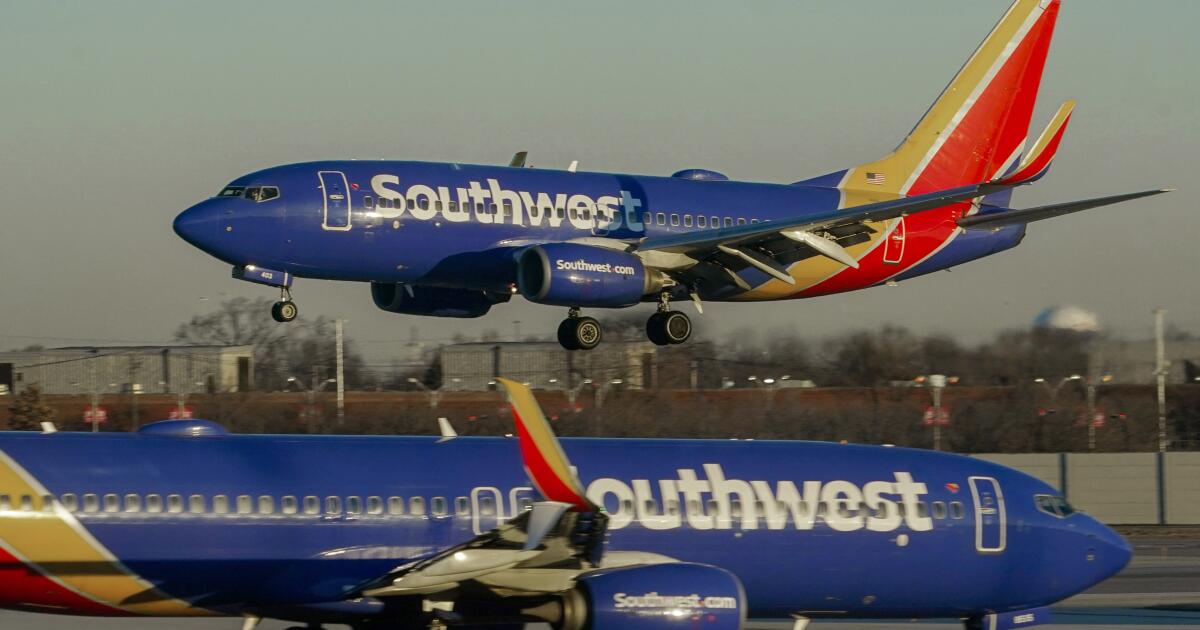
After nearly 60 years of its unique and popular open-seating policy, Southwest Airlines flew its last flight with unassigned seats Monday night.
Customers on flights going forward will choose where they sit and whether they want to pay more for a preferred location or extra leg room. The change represents a significant shift for Southwest’s brand, which has been known as a no-frills, easygoing option compared to competing airlines.
While many loyal customers lament the loss of open seating, Southwest has been under pressure from investors to boost profitability. Last year, the airline also stopped offering free checked bags and began charging $35 for one bag and $80 for two.
Under the defunct open-seating policy, customers could choose their seats on a first-come, first-served basis. On social media, customers said the policy made boarding faster and fairer. The airline is now offering four new fare bundles that include tiered perks such as priority boarding, preferred seats, and premium drinks.
“We continue to make substantial progress as we execute the most significant transformation in Southwest Airlines’ history,” said chief executive Bob Jordan in a statement with the company’s third-quarter revenue report. “We quickly implemented many new product attributes and enhancements [and] we remain committed to meeting the evolving needs of our current and future customers.”
Eighty percent of Southwest customers and 86% of potential customers prefer an assigned seat, the airline said in 2024.
Experts said the change is a smart move as the airline tries to stabilize its finances.
In the third quarter of 2025, the company reported passenger revenues of $6.3 billion, a 1% increase from the year prior. Southwest’s shares have remained mostly stable this year and were trading at around $41.50 on Tuesday.
“You’re going to hear nostalgia about this, but I think it’s very logical and probably something the company should have done years ago,” said Duane Pfennigwerth, a global airlines analyst at Evercore, when the company announced the seating change in 2024.
Budget airlines are offering more premium options in an attempt to increase revenue, including Spirit, which introduced new fare bundles in 2024 with priority check-in and their take on a first-class experience.
With the end of open seating and its “bags fly free” policy, customers said Southwest has lost much of its appeal and flexibility. The airline used to stand out in an industry often associated with rigidity and high prices, customers said.
“Open seating and the easier boarding process is why I fly Southwest,” wrote one Reddit user. “I may start flying another airline in protest. After all, there will be nothing differentiating Southwest anymore.”
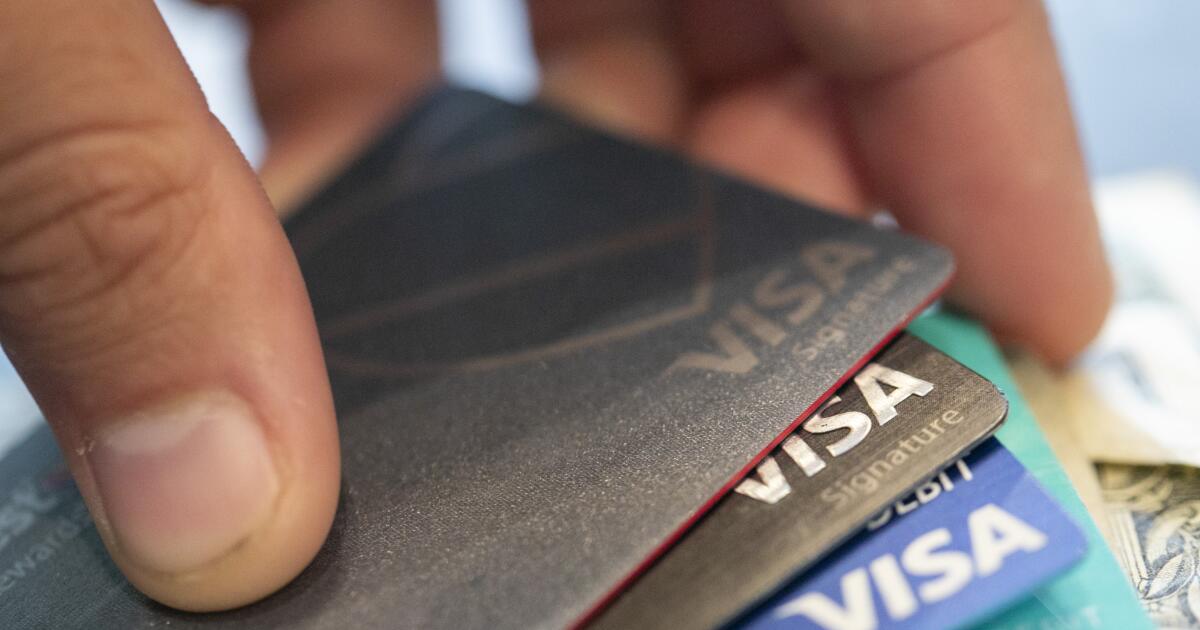
Behind the credit card, ubiquitous in American economic life now for decades, stand a very few gigantic financial institutions that exert nearly unlimited power over how much consumers and businesses pay for the use of a small piece of plastic. American consumers and small businesses alike are spitting fire these days about the cost of credit cards, while the companies profiting from them are making money hand over fist.
We are now having a national conversation about what the federal government can do to lower the cost of credit cards. Sens. Bernie Sanders (I-Vt.) and Josh Hawley (R-Mo.), truly strange political bedfellows, have proposed a 10% cap. Now President Trump has too. But we risk spinning our wheels if we do not face facts about the underlying structure of this market.
We should dispense with the notion that the credit card business in the United States is a free market with robust competition. Instead, we have an oligopoly of dominant banks that issue them: JPMorgan Chase, Bank of America, American Express, Citigroup and Capital One, which together account for about 70% of all transactions. And we have a duopoly of networks: Visa and Mastercard, who process more than 80% of those transactions.
The results are higher prices for consumers who use the cards and businesses that accept them. Possibly the most telling statistic tracks the difference between borrowing benchmarks, such as the prime rate, and what you pay on your credit card. That markup has been rising steadily over the last 10 years and now stands at 16.4%. A Federal Reserve study found the problem in every card category, from your super-duper-triple-platinum card to subprime cardholders. Make no mistake, your bank is cranking up credit card rates faster than any overall increase.
If you are a small business owner, the situation is equally grim. Credit cards are a major source of credit for small businesses, at an increasingly dear cost. Also, businesses suffer from the fees Visa and Mastercard charge merchants on customer payments; those have climbed steadily as well because the two dominant processors use a variety of techniques to keep their grip on that market. Those fees nearly doubled in five years, to $111 billion in 2024. Largely passed on to consumers in the form of higher prices, these charges often rank as the second- or third-highest merchant cost, after real estate and labor.
There is nothing divinely ordained here. In other industrialized countries, the simple task of moving money — the basic function of Visa and Mastercard — is much, much less expensive. Consumer credit is likewise less expensive elsewhere in the world because of greater competition, tougher regulation and long-standing norms.
Now some American politicians want caps on card interest rates, a tool that absolutely has its place in consumer protection. A handful of states already have strict limits on interest rates, a proud legacy of an ethos of protecting the most vulnerable people against the biblical sin of usury. Texas imposes a 10% cap for lending to people in that state. Congress in 2006 chose to protect military service members via a 36% limit on interest they can be charged. In 2009, it banned an array of sneaky fees designed to extract more money from card users. Federal credit unions cannot charge more than 18% interest, including on credit cards. Brian Shearer from Vanderbilt University’s Policy Accelerator for Political Economy and Regulation has made a persuasive case for capping credit card rates for the rest of us too.
At the very least, there is every reason to ignore the stale serenade of the bank lobby that any regulation will only hurt the people we are trying to help. Credit still flows to soldiers and sailors. Credit unions still issue cards. States with usury caps still have functioning financial systems. And the 2009 law Congress passed convinced even skeptical economists that the result was a better market for consumers.
If consumers receive such commonsense protections, what’s at stake? Profit margins for banks and card networks, and there is no compelling public policy reason to protect those. Major banks have profit margins that exceed 30%, a level that is modest only compared with Visa and Mastercard, which average a margin of 45%. Meanwhile, consumers face $1. 3 trillion in debt. And retailers squeeze by with a margin around 3%; grocers make do with half that.
The market won’t fix what’s wrong with credit card fees, because the handful of businesses that control it are feasting at everyone else’s expense. We must liberate the market from the grip of the major banks and card processors and restore vibrant competition. Harnessing market forces to get better outcomes for consumers, in addition to smart regulation, is as American as apple pie.
Fortunately, Trump has endorsed — via social media — bipartisan legislation, the Credit Card Competition Act, that would crack open the Visa-Mastercard duopoly by allowing merchants to route transactions over competing networks. Here’s hoping he follows through by getting enough congressional Republicans on board.
That change would leave us with the megabanks still controlling the credit card market. One approach would be consumer-friendly regulation of other means of credit, such as buy-now-pay-later tools or innovative payment applications, by including protections that credit cards enjoy. Ideally, Congress would cap the size of banks, something it declined to do after the 2008 financial crisis, to the enduring frustration of reformers who sought structural change. Trump entered the presidency in 2017 calling for a new Glass-Steagall, the Depression-era law that broke up big banks, but he never pursued it.
Fast forward nine years, and we find rising negative sentiment among American voters, groaning under the weight of credit card debt and a cascade of junk fees from other industries. Populist ire at corporate power is rising. The race between the two major parties to ride that feeling to victory in the November midterm elections and beyond has begun. A movement to limit the power of big banks could be but a tweet away.
Carter Dougherty is the senior fellow for anti–monopoly and finance at Demand Progress, an advocacy group and think tank.
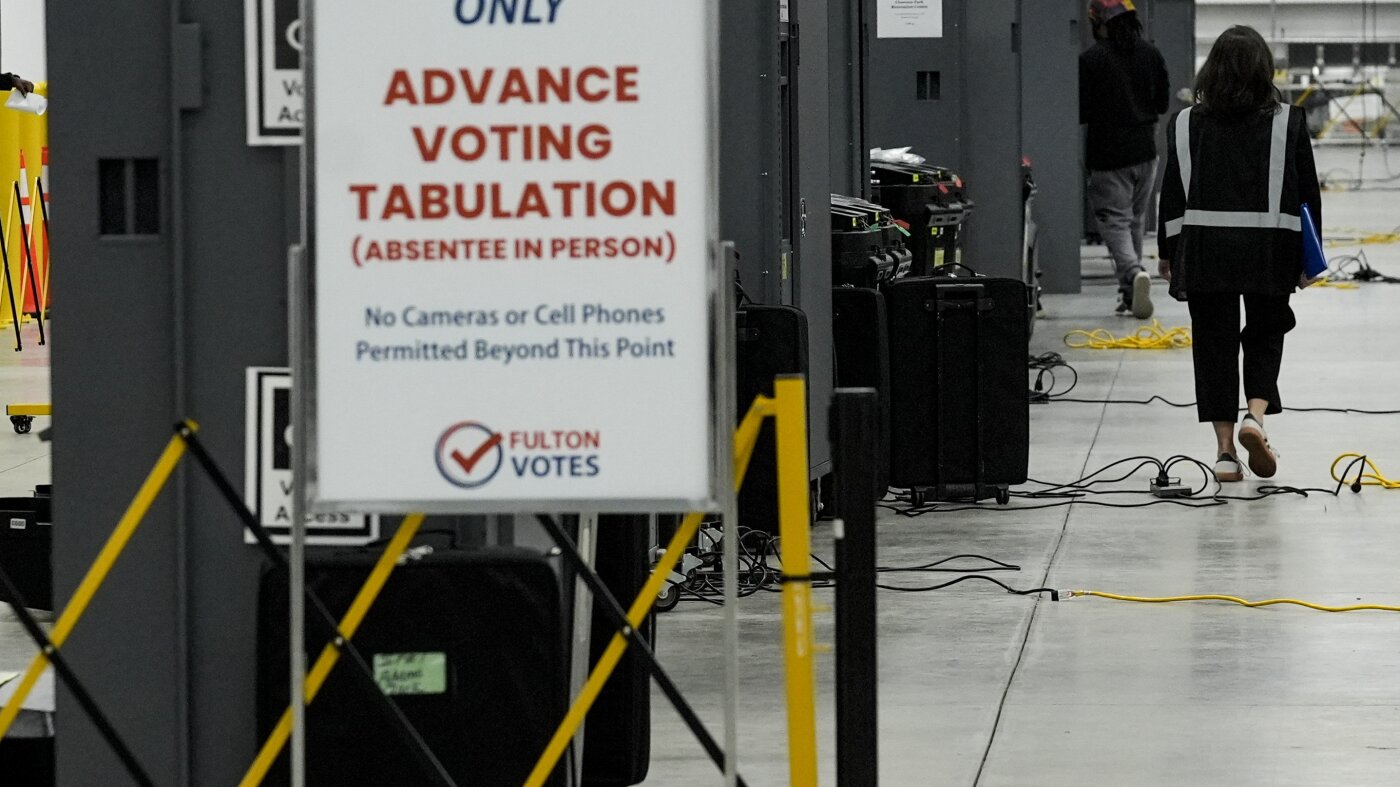
The FBI conducts a search at the Fulton County election office in Georgia

Knife-wielding nut allegedly asked Christian his religion – then stabbed him and dog before police shot him

House Republicans blast Noem impeachment resolution as ‘partisan stunt,’ as Dems fail to reach across aisle

Brother killed after teen becomes ‘enraged’ over video game, stabs sibling: police

Rep Maxwell Frost allegedly assaulted at Sundance Film Festival in racially charged incident

Florida High School Football Rankings: Top 25 teams – Oct. 21

Cleary's 21 help Le Moyne down Central Connecticut State 69-64 in OT

How old is Bo Nix? What to know about Oregon quarterback ahead of 2024 NFL Draft

99th annual Pony Swim held in Virginia

Indiana Members Credit Union announced as new anchor tenant at Bottleworks District
The FBI conducts a search at the Fulton County election office in Georgia

Graham pushes back on Tillis’ criticism of Noem, Miller for labeling man killed by Border Patrol a ‘terrorist’

North Korea’s Kim to outline plans to boost nuclear arsenal

Rep. Ilhan Omar rushed by man on stage and sprayed with liquid at town hall event

Video: F.A.A. Ignored Safety Concerns Prior to Collision Over Potomac, N.T.S.B. Says
-

 Illinois6 days ago
Illinois school closings tomorrow: How to check if your school is closed due to extreme cold
-

 Pittsburg, PA1 week ago
Sean McDermott Should Be Steelers Next Head Coach
-

 Pennsylvania2 days ago
Rare ‘avalanche’ blocks Pennsylvania road during major snowstorm
-

 Lifestyle1 week ago
Nick Fuentes & Andrew Tate Party to Kanye’s Banned ‘Heil Hitler’
-

 Sports1 week ago
Miami star throws punch at Indiana player after national championship loss
-

 Cleveland, OH1 week ago
Northeast Ohio cities dealing with rock salt shortage during peak of winter season
-

 Technology6 days ago
Ring claims it’s not giving ICE access to its cameras
-
 Science1 week ago
Contributor: New food pyramid is a recipe for health disasters