Business
Column: The AI industry has a battle-tested plan to keep using our content without paying for it


This time in 2023, the world was in thrall to the rise of OpenAI’s dazzling chatbot. ChatGPT was metastasizing like a fungal infection, amassing tens of millions of users a month. Multibillion-dollar partnerships materialized, and investments poured in. Big Tech joined the party. AI image generators like Midjourney took flight.
Just a year later, the mood has darkened. The surprise sacking and rapid reinstatement of OpenAI Chief Executive Sam Altman gave the company an embarrassing emperor-has-no-clothes moment. Profits are scarce across the sector, and computing costs are sky high. But one issue looms large above all and threatens to bring the fledgling industry back to earth: Copyright.
The legal complaints that cropped up throughout last year have grown into a thundering chorus, and the tech companies say they now present an existential threat to generative AI (the kind that can produce writing, pictures, music and so on). If 2023 was the year the world marveled at AI content generators, 2024 may be the year that the humans who created the raw materials that made that content possible get their revenge — and maybe even claw back some of the value built on their work.
In the last days of December, the New York Times filed a bombshell lawsuit against Microsoft and OpenAI, alleging that “millions of its articles were used to train automated chatbots that now compete with the news outlet as a source of reliable information.” The Times’ lawsuit joins a host of others — class-action lawsuits filed by illustrators, by the photo service Getty Images, by George R.R. Martin and the Author’s Guild, by anonymous social media users, to name a few — all alleging that companies that stand to profit from generative AI used the work of writers, reporters, artists and others without consent or compensation, infringing on their copyrights in the process.
Our experiments make it all but certain that these systems are in fact training on copyrighted material.
— Cognitive scientist Gary Marcus
Each of these lawsuits have their merits, but the Gray Lady’s entrance into the arena changes the game. For one thing, the Times is influential in shaping national narratives. For another, the Times lawsuit is uniquely damning; it’s loaded with example after example of how ChatGPT replicates news articles nearly verbatim, and offers the responses to its paying customers, free of attribution.
It’s not just the lawsuits: The heat is getting turned up by Congress, researchers and AI experts too. On Wednesday, a congressional hearing saw senators and media industry representatives agree that AI companies should pay licensing fees for the material they use to train their models. “It’s not only morally right,” said Sen. Richard Blumenthal (D.-Conn.), who chairs the subcommittee that held the hearing, according to Wired. “It’s legally required.”
Meanwhile, a fiery study recently published in IEEE Spectrum, co-written by the cognitive scientist and AI expert Gary Marcus and the film industry veteran Reid Southern, shows that Midjourney and Dall-E, two of the leading AI image generators, were trained on copyrighted material, and can regurgitate that material at will — often without even being prompted to.
“Our experiments make it all but certain that these systems are in fact training on copyrighted material,” Marcus told me, something that the companies have been coy about copping to explicitly. “The companies have been far from straightforward in what they’re using, so it was important to establish that they are using copyrighted materials.” Also important: that the copyright-infringing works come spilling out of the systems with little prodding. “You don’t need to prompt it, to say ‘make C3P0’ — you can just say ‘draw golden droid.’ Or ‘Italian plumber’ — it will just draw Mario.”
This has serious implications for anyone using the systems in a commercial capacity. “The companies whose properties are infringed — Mattel, Nintendo — are going to take an interest in this,” Marcus says. “But the user is left vulnerable too — There’s nothing in the output that says what the sources are. In fact the software isn’t capable of doing that in a reliable way. So the users are on the hook and have no clue as to whether it’s infringing or not.”
There’s also a sense of momentum that’s beginning to build behind the simple notion that creators should be compensated for work that’s being used by AI companies valued at billions or tens of billions — or hundreds of billions of dollars, as Google and Microsoft are. The notion that generative AI systems are at root “plagiarism machines” has become increasingly widespread among their critics, and social media is teeming with opprobrium against AI.
But those AI companies aren’t likely to relent. We saw a foreshadowing of how the AI companies would respond to copyright concerns at large last year, when famed venture capitalist and AI evangelist Marc Andreessen’s firm argued that AI companies would go broke if they had to pay copyright royalties or licensing fees. Just this week, British media outlets reported that OpenAI has made the same case, seeking an exemption from copyright rules in England, claiming that the company simply couldn’t operate without ingesting copyrighted materials.
“Because copyright today covers virtually every sort of human expression — including blogposts, photographs, forum posts, scraps of software code, and government documents — it would be impossible to train today’s leading AI models without using copyrighted materials,” OpenAI argued in its submission to the House of Lords. Note that both Andreessen and OpenAI’s statements underscore the value of copyrighted work in arguing that AI companies shouldn’t have to pay for it. What can they do about it?
First, they’re pleading poverty. There’s just too much material out there to compensate everyone who contributed to making their system work and to making their valuation go through the roof. “Poor little rich company that’s valued at $100 billion can’t afford it,” Marcus says. “I don’t know how well that’s going to wash, but that’s what they’re arguing.”
The AI companies also argue what they’re doing falls under the legal doctrine of fair use — probably the strongest argument they’ve got — because it’s transformative. This argument helped Google win in court against the big book publishers when it was copying books into its massive Google Books database, and defeat claims that YouTube was profiting by allowing users to host and promulgate unlicensed material.
Next, the AI companies argue that copyright-violating outputs like those uncovered by Marcus, Southern and the New York Times are rare or are bugs that are going to be patched.
“They say, ‘Well this doesn’t happen very much. You need to do special prompting.’ But the things we asked it were pretty neutral — and we still got” copyrighted material, Marcus says. “This is not a minor side issue — this is how the systems are built. It is existential for these companies to be able to use this amount of data.” Finally, aside from just making arguments in court and in statements, the AI companies are going to use their ample resources to lobby behind the scenes and throw their power around to help make their case.
Again, the generative AI industry isn’t making much money yet — last year was essentially one massive product demo to hype up the technology. And it worked: The investment dollars did pour in. But that doesn’t mean the AI companies have figured out ways to build a sustainable business model. They’re already operating under the assumption that they will not pay for things such as training materials, licenses or artists’ labor.
Of course, it is in no way true that the likes of Google, Microsoft, or even OpenAI cannot afford to pay to use copyrighted works — but Silicon Valley is at this point used to cutting labor and the cost of creative works out of the equation, and has little reason to think it would not be able to do so again. From Uber to Spotify, the business models of many of this century’s biggest tech companies have been built on the assumption that labor costs could be cut out or minimized. And when creative industries argued that YouTube allowed pirated and unlicensed materials to proliferate at the workers’ expense, and backed the Stop Online Piracy Act (SOPA) to fight it, Google was instrumental in stopping the bill, organizing rallies and online campaigns, and lobbying lawmakers to jump ship.
William Fitzgerald, a partner at the Worker Agency and former member of the public policy team at Google, tells me he sees a similar pressure campaign taking shape to fight the copyright cases, one modeled on the playbook Google has used successfully in the past: Marshaling third-party groups and organs such as the Chamber of Progress to push the idea that using copyrighted works for generative AI is not just fair use, but something that’s being embraced by artists themselves, not all of whom are so hung up on things like wanting to be paid for their work. He points to a pro-generative AI open letter signed by AI artists, that was, according to one of the artists involved, organized by Derek Slater, a former Google policy director whose firm works with Google — the same person who took credit for organizing the anti-SOPA efforts. Fitzgerald also sees Google’s fingerprints on Creative Commons’ embrace of the argument that AI art is fair use, as Google is a major funder of the organization.
“It’s worrisome to see Google deploy the same lobbying tactics they’ve developed over the years to ensure workers don’t get paid fairly for their labor,” Fitzgerald said. And OpenAI is close behind. It is not only taking a similar approach to heading off copyright complaints as Google, but it’s also hiring the same people: It hired Fred Von Lohmann, Google’s former director of copyright policy, as its top copyright lawyer. “It appears OpenAI is replicating Google’s lobbying playbook,” he says. “They’ve hired former Google advocates to affect the same playbook that’s been so successful for Google for decades now.”
Things are different this time, however. There was real grassroots animosity against SOPA, which was seen at the time as engineered by Hollywood and the music industry; Silicon Valley was still widely beloved as a benevolent inventor of the future, and many didn’t see how having an artist’s work uploaded to a video platform owned by the good guys on the internet might be detrimental to their economic interests. (Though many did!)
Now, however, workers in the digital world are better prepared. Everyone from Hollywood screenwriters to freelance illustrators to part-time copywriters to full-time coders can recognize the potential material effect of a generative AI system that can ingest their work, replicate it, and offer it to users for a monthly fee — paid to a Silicon Valley corporation, not them.
“It’s asking for an enormous giveaway,” Marcus says. “It’s the equivalent of a major land grab.”
Now, there are many in Silicon Valley who are of course genuinely excited about the potential of AI, and many others who are genuinely oblivious to matters of political economy; who want to see the gains made as quickly as possible, and do not realize how these work-automating systems will be used in practice. Others may simply not care. But for those who do, Marcus says there’s a simple way forward. “There’s an obvious alternative here — OpenAI’s saying that we need all this or we can’t build AI — but they could pay for it!” We want a world with artists and with writers, after all, he adds, one that rewards artistic work — not one where all the money goes to the top because a handful of tech companies won a digital land grab.
“It’s up to workers everywhere to see this for what it is, get organized, educate lawmakers and fight to get paid fairly for their labor,” Fitzgerald says. “Because if they don’t, Google and OpenAI will continue to profit from other people’s labor and content for a long time to come.”

Business
Want an AI-proof job? New research says you may be safer at companies embracing the technology

While AI is often cited as one of the reasons for mass layoffs, particularly in the tech sector, for fast-growing companies it also seems to be creating new jobs in many companies, according to a study published Tuesday from financial services company Ramp and employment database Revelio Labs.
“Our early result is that it looks like firms are starting to look for more entry-level hires, likely people who are more AI native,” said Ara Kharazian, the lead economist at Ramp, a financial services company that found a rise in early-career hiring by companies in the period they started spending heavily on AI.
The study tracked AI spending and the workforce records of nearly 22,000 U.S. companies between January 2021 and February 2026.
It found that firms that spent more on AI ended up increasing their workforce headcount by an average of 10% over the two years after rolling out the technology. Companies that made the largest AI investment expanded entry-level job hiring by 12%.
“If you are a job seeker, or you are graduating from college, and you’re choosing between two different firms that are otherwise similar, I would choose the one that’s using AI,” Kharazian said. “Our paper shows that that firm is going to grow faster.”
The early and intense AI adopters spent more than $100 per month per employee on AI and had their employees using advanced AI, such as coding subscriptions, as opposed to simple ChatGPT subscriptions.
The low-intensity, casual AI adopters didn’t see any hiring gains and reduced headcount.
The Ramp study showed a positive effect on employment from AI because it focused on firms adopting AI, many of them fast-growing, venture-backed companies hiring AI-native junior employees.
It reached a different conclusion than a November 2025 Stanford University study, which examined payroll data across the entire labor market and found that employment among young software developers had declined by nearly 20% from its late-2022 peak.
The two findings can both be true, Kharazian said, because the Stanford study was broader and didn’t focus just on the firms that use AI.
“While there may be overall weak hiring for young people, what we found is that hiring is actually strong at the firms that use AI, and the firms that use AI intensely,” he said.
In another recent study on the impact of AI on jobs, the California AI-unemployment tracker examined the state across industries, education levels and region and highlighted some worrying trends.
It seemed to disprove the understanding that AI has been hurting mostly younger employees and those in entry-level jobs.
It found that unemployment insurance claims among college-educated workers in high-AI-exposed jobs, such as customer service and software development, increased after ChatGPT’s release in 2022 and remained elevated through May 2026.
Unemployment insurance claims among master’s and PhD holders in highly AI-exposed occupations have also risen, moving from a baseline average of 13,000 claims per month in November 2022 to between 16,000 and 22,000 claims per month since mid-2023, the study found.
The study also categorized unemployment claims by age and found that a significant portion of claims were from those aged 36 to 65, signaling that AI’s effect doesn’t only affect early-career jobs.
It also found a higher rate of insurance claims in the San Francisco Bay Area compared with the rest of California, and that job loss claims were concentrated in the technology sector.
In 2026, tech companies have let go of more than 160,000 workers, according to trueup.io, a website tracking industry layoffs.
Many companies have said AI was one of the main reasons for layoffs. Meta, Oracle, Microsoft and other big tech companies have laid off tens of thousands of employees, while simultaneously investing billions in AI data centers.
Ramp’s findings that heavy AI adoption can lead to increased hiring suggests that some of the companies announcing large layoffs may be guilty of blaming regular cost cutting on AI, a practice dubbed “AI washing.”
“When you hear CEOs talk about layoffs and they attribute it to AI, I would be skeptical,” Kharazian said.
Business
Commentary: It’s not just vaccines — from infancy to adolescence, Republicans are waging war on children’s health
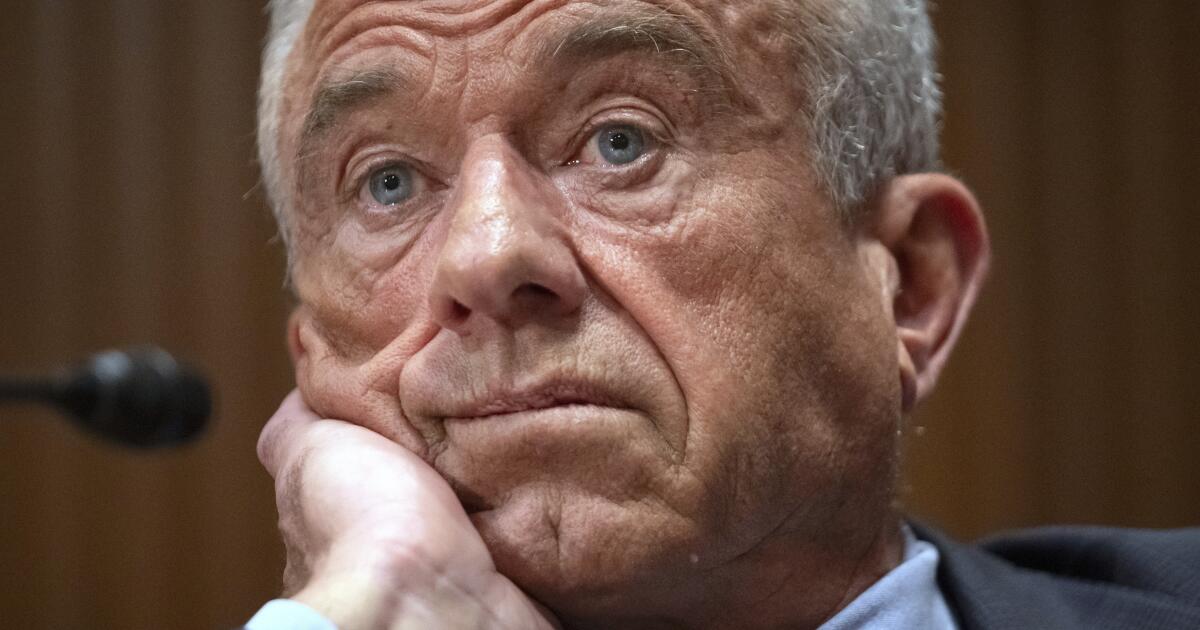
The conservative assault on child health starts with the anti-vaccine campaign and proceeds to cutbacks in nutrition assistance and narrowed access to healthcare.
In the old days, before accepted medical protocols came under partisan assault, infants typically received a vitamin K shot to enhance blood-clotting capability and a few drops of an antibiotic to stave off eye infections before leaving the hospital, followed by a thorough round of vaccines against life-threatening diseases.
Americans assumed that “whatever a family could afford, the country had already decided this child was worth protecting,” Robert B. Shpiner, a critical care expert at UCLA medical school, wrote recently. “I have seen children harmed by disease, poverty, by bad luck. I had not, until now, seen them harmed so methodically by their own government.”
Shpiner’s targets were the changes in healthcare policies instituted by the Trump administration generally and Health and Human Services Secretary Robert F. Kennedy Jr., as well as the mistrust in medical authority that Kennedy and his followers have helped to foment.
We’re going to be paying this bill for years to come, because the lack of proper nutrition has profound effects on learning and disability.
— Robert B. Shpiner, UCLA
As Shpiner wrote in the Guardian, the administration’s assault on child health begins with its anti-vaccination policies. In January, Kennedy’s agency reduced the list of recommended childhood immunizations to 11 from 17, removing shots for COVID-19, hepatitis and meningitis, among other diseases. The agency made the changes without the customary professional consultations, KFF has reported.
But that’s only the tip of the iceberg. “It’s just one thing after another,” Shpiner told me.
What triggered him into writing his Guardian essay, he says, was learning that congressional Republicans had advanced an agriculture appropriations bill that would cut the fruit and vegetable benefit for children in WIC, the supplemental nutritional program for women, infants and children to $10 a month from $26.
“That got me to looking at this as a sequence,” he says, starting with the reduction of child immunizations, followed by the proposed cuts in WIC and the cuts in food stamps enacted as part of the Republican budget bill that Trump signed one year ago Saturday (i.e., the Fourth of July, 2025).
“The image of us taking food away from kids and not giving them enough money to buy some apples and berries—the short-term response is outrage,” he says, “but the medium- and long-term effect is that we’re going to be paying this bill for years to come, because the lack of proper nutrition has profound effects on learning, and disability and anemia. A number of measures of health and success match with nutrition.”
At almost every stage of childhood development, he notes, programs aimed at preserving or enhancing children’s health have gone on the chopping block.
“A vaccine rule one week, a food program the next,” he wrote. “Each change arrives wrapped in a reasonable rationale: fiscal discipline, local control, parental choice. But arrange them in the order a child actually grows, and the rationales stop mattering.”
Judging from their rhetoric, one would think that Republicans would move heaven and earth to foster child immunizations, nutritional assistance and access to medical care.
In “Communion,” his recent book about his conversion to Catholicism, for example, Vice President JD Vance writes: “We want more children in our society because children are profoundly good — the greatest value add we can create.”
Yet the programmatic cutbacks advocated for and implemented by the Republican Congress and Trump give the lie to that sentiment. Let’s examine chapter and verse.
Measles is the canary in the coal mine for vaccination and public health, and at this moment, the canary is singing a doleful tune. The Centers for Disease Control and Prevention count 2,134 cases in the U.S. as of June 25. That’s poised to exceed the 2,288 cases in all of 2025, which was the worst outbreak since 1991.
There’s no question why this is happening. It’s because of a decline in measles vaccinations below the 95% generally considered to provide “herd immunity,” in which the disease is so rare that even unvaccinated individuals are protected from exposure.
Kennedy may not deserve all the blame for the immunization decline, but as pseudoscience debunker Steven Novella has pointed out, as secretary he has “done everything possible to undermine vaccine science and confidence in health institutions.”
Kennedy has paid lip service to the value of the MMR vaccine, which combines immunizations for measles, mumps and rubella. But he has claimed without evidence that the vaccine causes deaths “every year” and that the vaccine hasn’t been safety-tested, which isn’t so. He has asserted that it shouldn’t be subject to a government mandate. He also has promoted treatments for measles that aren’t known to be effective.
(The Department of Health and Human Services didn’t respond to my request for comment on the vaccine initiatives.)
As children grow, the crisis of malnutrition kicks in. The House GOP’s cuts to WIC are still only on the drawing board. But the Republican budget bill incorporated cuts to food stamps — the Supplemental Nutrition Assistance Program, or SNAP — that have driven some 4 million people off the program. In 13 states that have published data, according to the Center on Budget and Policy Priorities, child enrollment fell by more than 800,000, or 16%, between July 2025 and May of this year.
“This is where the nutrition cuts become a medical, not merely a moral, story,” Shpiner says. “Iron-deficiency anemia in infancy is associated with poorer cognitive, motor, and behavioral outcomes that persist more than 10 years after the deficiency itself has been corrected — the deficit does not fully reverse even with later treatment. Withdrawing produce and protein from WIC and SNAP at the peak window of brain growth is not a budget line that resets the following year; it is a developmental exposure with a long tail.”
The combination of reduced immunization and poor nutrition build on each other. “Unvaccinated kids are going to get sicker,” he told me. “If they’re malnourished, they’re going to get sicker. If their parents don’t get affordable care, they’re going to be strapped. It becomes a synergistic and multiplicative cascade.”
Indeed, the administration’s assault on Medicaid and the Affordable Care Act intensifies the damage. Enrollment in Medicaid and the Children’s Health Insurance Program, which is part of Medicaid, fell by 4.8 million people, or 6%, from March 2025 through March 2026, according to government data. The enrollment decline for children alone came to more than 1.9 million, or 5%.
White House spokesperson Kush Desai challenged the latter figure when I asked for comment. But it came from KFF, which sourced it to the government’s Centers for Medicare and Medicaid Services, or CMS.
“Nothing has been done to alter insurance or Medicaid coverage of any vaccination,” Desai told me by email, “and parents are encouraged to seek out the counsel of their pediatrician to make the best decisions for their children.”
The prospects are for further declines. That’s because new work requirements for enrollees in Medicaid expansion under the Affordable Care Act are almost certain to drive enrollment down, due to obstacles including paperwork burdens and administrative snafus, resulting in even some eligible enrollees losing their coverage.
(These problems became so pronounced in Arkansas, which implemented work requirements during the first Trump term, that a federal judge axed the program.)
The work rules enacted last year as part of the Republican budget bill aren’t scheduled to start until Jan. 1, but three states are starting early — Nebraska (May 1), Montana (Wednesday) and Iowa (Dec. 1). The impact on enrollment isn’t yet clear.
Whatever the effect of these changes, the public is going to know less about them than before. The reason is that the administration has shrunk the requirements for reports of immunization from states, changing the reports from mandated to voluntary. The affected data include childhood immunization rates against diphtheria, tetanus, pertussis, polio, measles, mumps and rubella, hepatitis, chicken pox and flu; and rates for 13 year olds and expectant mothers.
“While seemingly a small, technical change, the removal of vaccine reporting in Medicaid and CHIP may make it more difficult to monitor and understand vaccination trends for a large share of children in the U.S.,” KFF noted.
I asked the Department of Health and Human Services to explain the rationale for these changes, and specifically whether they were aimed at obscuring the effect of the narrowing of vaccine recommendations, but didn’t hear back.
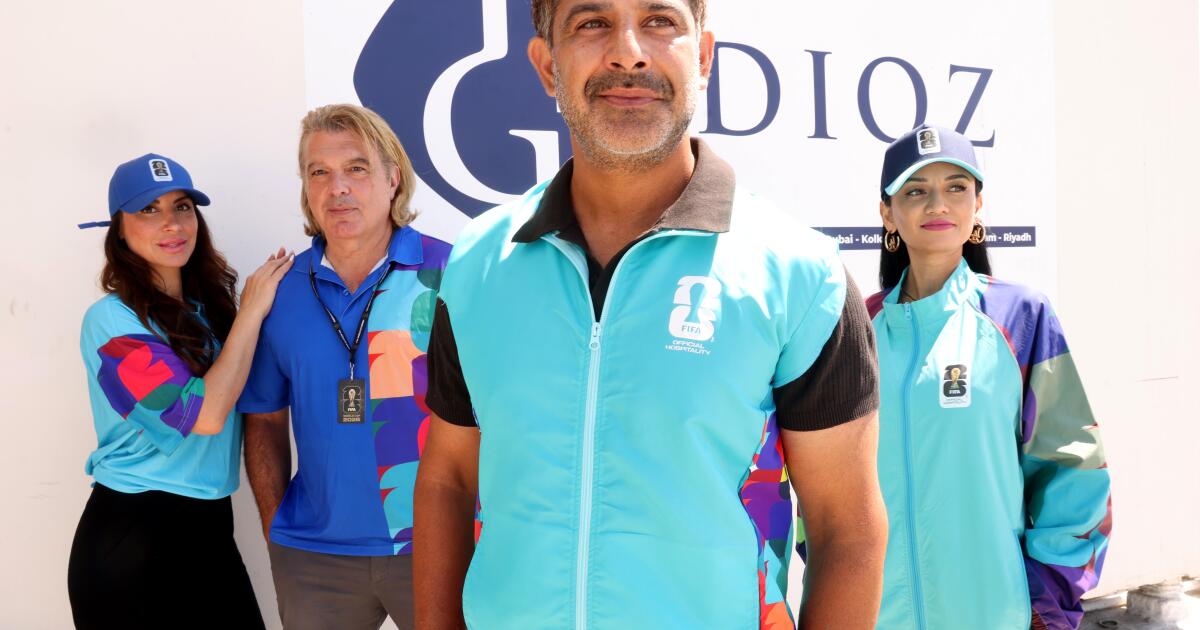
Johnny Beig may have played in a semi professional cricket league in Australia, but this summer he’s a big fan of soccer in the United States.
It’s not just because he’s rooting for the World Cup team, though.
FIFA emblems are featured on jerseys that were created by the Dioz Group and distributed for all employees at the 16 FIFA World Cup venues this summer.
(Genaro Molina / Los Angeles Times)
Last year, Beig’s Beverly Hills-based company, Dioz Group, won a $2.5 million contract with On Location, FIFA’s hospitality partner, to design, manufacture and distribute uniforms for all employees working at FIFA World Cup venues this summer.
These include the people welcoming attendees into stadiums, VIP lounge chefs, waiters and the flagbearers during the opening ceremony.
After a multi-step application process, including presentations of its planning and strategy, Dioz says it produced more than 50,000 clothing garments including suits, jackets, shirts and hats and delivered them to the 16 World Cup venues around the U.S., Canada and Mexico in June.
Thanks in part to the World Cup contract, the company’s revenue has reached $15 million so far this year, compared with $20 million last year, Beig said. He declined to disclose the company’s net income but said the business was profitable.
“We are working with larger names that we would have never imagined we would,” he said. “The FIFA World Cup is the pinnacle. Working with the largest sporting event in the world is what we’re very proud of. I don’t think it gets any bigger than that.”

Volunteers line up to prepare to display the Canadian flag before a World Cup round of 32 knock-out match between Canada and South Africa at SoFi Stadium on Sunday.
(Kelvin Kuo / Los Angeles Times)
Dioz is among the many small businesses across Los Angeles that are getting a boost from the global sporting event, said Kevin Klowden, a senior fellow at the Milken Institute.
The influx of hundreds of thousands of fans into the city has been a boon to hotels, transportation services and restaurants, in addition to those in the special events and logistics economy, Klowden said, calling the event the “equivalent of multiple Super Bowls.”
“The number of contracts that are there, it’s a big deal,” he said. “Given the fact that L.A.’s filming is only slowly recovering, having something like the World Cup is definitely a boost.”
Dioz was co-founded by Johnny, 44, and his brother Tony in 2006. The brothers were born in India and raised in Australia, where Johnny enjoyed a brief career as a semi professional cricket player.
He realized his future wasn’t as a professional athlete, but he wanted to stay connected to the sports world, so he began making uniforms for his cricket team in 2006.
He then got a referral to make uniforms for multiple teams in the area before starting an apparel company.
“I wanted to stick with something I was passionate about, which is sports,” he said.

Volunteers unravel the center field display before a World Cup round of 32 knock-out match between Canada and South Africa at SoFi Stadium on Sunday.
(Ronaldo Bolanos / Los Angeles Times)
In 2012, Beig moved to Los Angeles and established Dioz‘s Los Angeles headquarters to tap into the U.S. market. During the pandemic, the company started supplying medical apparel to hospitals and schools, and the business took off, with revenue doubling in 2020, Beig said.
Dioz now has over 150 employees, including 15 in L.A., and manufactures its apparel at factories in China, India, Bangladesh, Turkey and the Philippines. Tony runs an office in Dubai.
Before the World Cup, Dioz provided employee uniforms for events including Super Bowl LIX and Copa America, which may have given it a leg up on the FIFA contact.
Now, with a World Cup contract on their resume, Beig said he’s setting his sights on even bigger events.
“This gives us an edge over the next FIFA events worldwide as well, where we can showcase our skills and we can handle it,” Beig said. “So it gives us a good opportunity to work with sporting events like the UEFA Championship and Premier League.”
As companies get new business from the World Cup, Klowden said it’s important that they leverage their new position to continue that growth.
Companies that benefited from the World Cup might be in a position to bid on even bigger contracts, especially with the Olympics coming up in 2028, Klowden said.
“The really important part in any of these deals is that if a company ran something like this, then they are able to build off of that success,” Klowden said. “Let’s say you’re a company that did a big uniform order or a big food order, and the World Cup goes, and you invested in new manufacturing capacity, or you invested in new clothing machines, or whatever you do; suddenly you don’t have that market anymore, then you’ve just wasted all that money ramping up.”
-

 Kentucky5 minutes ago
What’s on the grill? Kentucky Wildcats share 4th of July plans
-

 Louisiana8 minutes ago
Louisiana grand jury’s role in legal proceedings explained
-

 Maine13 minutes ago
Huge brand bringing its iGaming app when Maine online casinos launch
-

 Maryland20 minutes ago
Gov Moore delivers patriotic Independence Day speech as Dan Cox focuses on Maryland issues
-

 Michigan23 minutes ago
3 dead after vehicle collides with semitruck on Interstate 94 in Wayne County, Michigan State Police say
-

 Massachusetts28 minutes ago
One dead in Cambridge shooting
-

 Minnesota35 minutes ago
One of two charged in Montevideo, Minnesota, drive-by shooting pleads guilty
-

 Mississippi38 minutes ago
10 Nicest Small Towns In Mississippi

