Business
Column: A Faulkner classic and Popeye enter the public domain while copyright only gets more confusing


Last year, it was Mickey Mouse. This year, Popeye the Sailor joins Mickey as a new entrant to the public domain — that is, shedding his core copyright protections on Jan. 1.
He’s merely the most familiar cultural artifact to enter the public domain on Wednesday. But as Jennifer Jenkins, co-director of Duke University’s Center for the Study of the Public Domain notes in her indispensable annual roster of newly public works (posted this year with co-director James Boyle), Popeye’s initial appearance in print is among thousands of culturally and artistically significant works to become copyright-free. That means they become available for anyone to copy, share and expand upon without paying their creators for rights.
This year’s treasure trove includes literary works originally published in 1929, meaning their 95-year copyrights expire on New Year’s Day. They include William Faulkner’s novel “The Sound and the Fury,” in which he began to perfect his literary style and his gloss on racial and social stratification in his native Mississippi; Ernest Hemingway’s “A Farewell to Arms”; and Virginia Woolf’s essay “A Room of One’s Own.”
Community theaters can screen the films. Youth orchestras can perform the music publicly, without paying licensing fees. Online repositories … can make works fully available online. This helps enable both access to and preservation of cultural materials that might otherwise be lost to history.
— Jennifer Jenkins, Duke University, on the value of the public domain
There are also Dashiell Hammett’s “The Maltese Falcon,” originally published as a serial in Black Mask magazine, and John Steinbeck’s first novel, “Cup of Gold.”
Among films, the haul includes the Marx Brothers’ first movie, “The Cocoanuts,” which was based on a George S. Kaufman Broadway musical and betrays its stagebound genesis in almost every scene; Alfred Hitchcock’s first sound film, “Blackmail,” and an early film adaptation of Edna Ferber’s “Show Boat” — a 1929 version of Ferber’s novel, not the musical version, which was filmed in 1936 and, more familiarly, in 1951.
Interpretations of copyright law haven’t been as divergent as they’ve become over the last year or two. The reason is AI, or at least the development of AI bots “trained” on copyrighted written, musical and artistic works. Numerous lawsuits brought by creators are making their way through the federal courts.
AI developers generally claim that their feeding copyrighted works into their bots’ databases falls within the “fair use” exception to copyright protection. The fair use doctrine, as the U.S. Copyright Office puts is, allows the use of “limited portions of a work including quotes, for purposes such as commentary, criticism, news reporting, and scholarly reports.”
Whether a particular use qualifies “is notoriously fact-specific,” Jenkins told me. “So it’s hard to shoot a straight arrow through all the cases,” in part because the judgment of whether a use is exempt from copyright depends on whether creators can show that the use caused harm to the market for their works.
“It’s a wild patchwork of cases,” Jenkins says, “but the central issue to all is the same, namely is it fair use to train your AI model on copyrighted content, but the specifics vary. Often I have something resembling a prediction of how fair use cases are going to come out, but really cannot predict which way these cases are going to go. It’s a moving target in copyright land.”
This isn’t the first time that technological change has roiled the copyright landscape. One precedent is the Google Books case, in which authors and publishers sued Google to block its effort to create a searchable database of written works by digitizing copyrighted works along with works in the public domain.
The ultimate settlement allows Google to digitize books for the database, but to display only limited “snippets” of copyright-protected works to users — enough to enable users to search for specific words or phrases, but not to access significant portions of the works.
Also entering the public domain this week, as Jenkins observes, are about a dozen Mickey Mouse films, including one in which he speaks his first words (“Hot dogs! Hot dogs!”) and wears his iconic white gloves. That depiction of Mickey is now copyright-free; the ur-Mickey depicted in the Walt Disney short “Steamboat Willie” entered the public domain on Jan. 1, 2024, but later depictions such as the white gloves were still subject to copyright restrictions based on when they first appeared on film.
Popeye first appeared as a peripheral character in January 1929 in E.C. Segar’s “Thimble Theatre” comic strip. He garnered such instant popularity that Segar eventually refashioned the strip around him. Some story elements, such as the role of spinach as a source of his superhuman strength, became part of his persona over subsequent years.
Popeye also gives us a window into how a character’s entry into the public domain doesn’t require subsequent exploitations to adhere to his or her original conception.
Los Angeles copyright attorney Aaron Moss observes in his own curtain-raising post about public domain day 2025 that several Popeye-inspired horror films, “including ‘Popeye the Slayer Man,’ set in an abandoned spinach cannery, and ‘Shiver Me Timbers,’ featuring a meteor that ‘transforms Popeye into an unstoppable killing machine,’” have already been announced.
Similarly, er, disrespectful treatments of Mickey Mouse and Winnie-the-Pooh (a member of the public domain class of 2022) have been produced or announced.
The copyright rules for music are particularly convoluted. “Fats” Waller songs including “Ain’t Misbehavin’” and “(What Did I Do to Be So) Black and Blue” are entering the public domain, which should help to augment Waller’s reputation as a jazz and Broadway innovator. So too are George Gershwin’s “An American in Paris” and the popular standards “Tiptoe Through the Tulips” (lyrics by Alfred Dubin, music by Joseph Burke), “Happy Days Are Here Again” (lyrics by Jack Yellen, music by Milton Ager) and “What Is This Thing Called Love?” by Cole Porter.
But as Jenkins notes, only the compositions — what appears on the sheet music — and not any particular recordings are entering the public domain. So the version of “Tiptoe” recorded by Tiny Tim, which made that artist a popular star in 1968, is still under copyright.
“Singin’ in the Rain,” which most people associate with the 1952 film musical of that name, is entering the public domain.
Fans of the Gene Kelly/Debbie Reynolds film may be unaware that it was conceived by Arthur Freed, then the head of MGM’s musical feature unit, as a vehicle to exploit the back catalog of songs he and composer Nacio Herb Brown had written in the 1920s and 1930s; of the 16 full-length and excerpted songs in the movie, all but two were original products of their collaboration or had words by Freed or music by Brown. “Moses Supposes” was written by others for the movie and “Make ‘Em Laugh,” by Freed and Brown, was acknowledged by Stanley Donen, who co-directed the firm with Kelly, to be a transparent rip-off of Cole Porter’s “Be a Clown.”
(My favorite backstage nugget about the movie’s production involves the physical torment that Reynolds, not a trained dancer, suffered at the hands of the perfectionist Kelly, which left her with bloodied feet after filming the “Good Morning” number. A close scrutiny of the scene reveals Reynolds continually glancing at the ground to make sure she was hitting her marks as she tried to keep in step with Kelly and co-star Donald O’Connor; anyway, no one can claim it doesn’t work perfectly.)
Sound recordings from 1924 are entering the public domain thanks to the 2018 Music Modernization Act. They include Gershwin’s recording of “Rhapsody in Blue” and Al Jolson’s recording of “California Here I Come.” But regular sound recordings made in 1929 are granted 100-year copyrights, so they won’t be available until 2030.
Another exception covers music made to accompany movies, which receive the same copyright terms as the films. Accordingly, Jenkins notes, the recorded version of “Singin’ in the Rain” heard in the film “The Hollywood Revue of 1929” goes royalty-free on Jan.1, but not the version sung by Kelly in the 1952 movie.
The annual flow of copyrighted works into the public domain underscores how the progressive lengthening of copyright protection is counter to the public interest—indeed, to the interests of creative artists. The initial U.S. copyright act, passed in 1790, provided for a term of 28 years including a 14-year renewal. In 1909, that was extended to 56 years including a 28-year renewal.
In 1976, the term was changed to the creator’s life plus 50 years. In 1998, Congress passed the Copyright Term Extension Act, which is known as the Sonny Bono Act after its chief promoter on Capitol Hill. That law extended the basic term to life plus 70 years; works for hire (in which a third party owns the rights to a creative work), pseudonymous and anonymous works were protected for 95 years from first publication or 120 years from creation, whichever is shorter.
Along the way, Congress extended copyright protection from written works to movies, recordings, performances and ultimately to almost all works, both published and unpublished.
Once a work enters the public domain, Jenkins observes, “community theaters can screen the films. Youth orchestras can perform the music publicly, without paying licensing fees. Online repositories such as the Internet Archive, HathiTrust, Google Books and the New York Public Library can make works fully available online. This helps enable both access to and preservation of cultural materials that might otherwise be lost to history.”
Indeed, as Jenkins and others have documented, overly long copyright terms often keep older works out of the mainstream. “Films have disintegrated because preservationists can’t digitize them,” Jenkins has written. “The works of historians and journalists are incomplete. Artists find their cultural heritage off-limits.”
The countervailing benefits are minimal. The artistic lobby — specifically corporate owners of copyrighted content — maintain that longer terms protect the income streams of content creators, producing an incentive to create. But the truth is that after the first few years of publication the commercial value of the vast majority of copyrighted works declines precipitously to almost nothing. The value that might arise from follow-on creations of public domain works remains locked away and the copyrighted works become forgotten.


The luxury shopping center in Pacific Palisades will reopen next month after more than $100 million in renovations forced by the January 2025 wildfire that devastated the Los Angeles neighborhood.
Palisades Village will reopen Aug. 15, owner Rick Caruso announced Wednesday. The outdoor center survived the blaze that destroyed homes and other businesses but needed refurbishment to eliminate contaminants that the fire could have spread.
Crews are putting finishing touches on mall buildings after tearing them down to the studs, treating the wood and rebuilding the walls, Caruso said.
“Everybody’s working, and stores are moving their products in,” he said. “It’s a really cool feeling that people have really locked arms and are working together.”
An electrician installs lighting for a restaurant at Rick Caruso’s Palisades Village on Thursday. The shopping center is scheduled to reopen mid-August.
(Myung J. Chun / Los Angeles Times)
Pacific Palisades resident Allison Polhill, who is rebuilding the home of 30 years that her family lost in the blaze, said she is “thrilled” at the prospect of returning to the mall she used to frequent. Its comeback is a boost for the community, she said.
“Every single step that we make to reopen our commercial corridors is going to bring more people back into the Palisades,” said Polhill, who expects to move back into her home at the end of August.
A total of 6,822 structures were destroyed in the Palisades fire, including more than 5,500 residences and 100 commercial businesses, according to the California Department of Forestry and Fire Protection.
Caruso previously attributed the mall’s survival to the hard work of private firefighters and the fire-resistant materials used in the mall’s construction.
The $200-million shopping and dining center opened in 2018 with a movie theater and a roster of upmarket tenants, including Erewhon, which may be the only grocer in the heart of the fire-ravaged neighborhood when it opens.
Caruso’s company was able to fill the mall with tenants despite the long shutdown.
Palisades Village is 99% leased, with the majority of tenants returning, said Jackie Levy, chief financial and revenue officer. Nearly one-third of the shops and restaurants are new to the property.

A firefighter carries a hose back to his rig while walking through a destroyed home from the Palisades fire in Pacific Palisades on Jan. 7, 2025.
(Genaro Molina / Los Angeles Times)
Last year, Pacific Palisades-based fashion designer Elyse Walker said she would reopen her eponymous store in Palisades Village after losing her 25-year flagship location on Antioch Street to the inferno.
Other neighborhood shops destroyed in the fire that are reopening at the mall include K Bakery and Loomey’s Toys, which caters to children up to age 12 and used to be across the street from Palisades Elementary Charter School.
“It’s been a journey and I’m excited because I wasn’t sure that there was going to be a place to come back to,” said toy store owner Amanda Rastegar. “Hopefully we can bring some of that magic back.”
Rastegar’s home in the Palisades survived but was damaged by the fire. The family returned about eight weeks ago. Her last memory of the fire was a burning supermarket.
“I just couldn’t wrap my brain around what was happening,” she said. “By the time I left, Gelson’s was on fire.”
Among the returning tenants is Angelini Ristorante & Bar. Well-known Los Angeles chef Gino Angelini said he will be in the kitchen next month for a return of the Italian restaurant.
“We won’t do a big celebrity open,” he said. “We want to have a very soft opening and see our customers come back.”

Construction takes place at Rick Caruso’s Palisades Village on Thursday. The shopping center is scheduled to reopen mid-August.
(Myung J. Chun / Los Angeles Times)
An elaborate celebration would not feel “correct for me,” Angelini said, because the devastation has been “very sad” for so many.
Other new tenants include local chef Nancy Silverton, who has agreed to move in with a new Italian steakhouse called Spacca Tutto. Women’s activewear retailer LESET will open its first West Coast location.
Caruso said he is optimistic that customers will return to the center, even though many Pacific Palisades residents are still dispersed. One tracking system estimated that about 30% of the Village’s customer base was impacted by the fire, he said.
“That means 70% did not get impacted, so there’s a lot of customers still left out there,” Caruso said. Historically, the center drew customers from as far away as Beverly Hills and Calabasas, as well as Malibu, Brentwood and Santa Monica.
He also hopes many will be inspired to visit the revived mall.
“I believe in the goodness of people and I believe that people are going to want to support the Palisades,” he said. “They’re going to want to be there and support the businesses that have had the courage and the heart to reopen.”

Walmart is rapidly expanding its network of electric vehicle chargers designed for customers to use while they shop.
The network could help fill gaps in EV infrastructure in states with greater need for chargers. Walmart, which has more than 5,000 locations in the U.S. and hundreds in California, says more than 90% of Americans live within 10 miles of one of its stores.
The chargers also offer an incentive for customers to choose Walmart — Walmart Plus members will receive a 10% discount off an average price of $0.46 per kilowatt-hour of energy at the company’s chargers.
Walmart chargers are already available at more than 75 locations in 17 states, with Texas boasting the most charging stations, followed by Florida and Arizona.
Matthew Nelson, Walmart’s director of energy policy, said last week on LinkedIn that the network will soon reach 29 states, including California.
“We are delivering on the promise of affordable, reliable and convenient charging,” Nelson said in his post.
According to Walmart’s website, six charging stations are coming to California soon, though the company did not offer a specific timeline.
The chargers will be installed at stores in Antelope, Brea, Fresno, Stockton, Suisun City and Vallejo.
Most charging sites in California will include eight to 16 fast-charging stalls, said Walmart spokesperson Kelsey Bohl.
The company first announced plans in April 2023 to install its own EV chargers at Walmart and Sam’s Club stores, with a goal of installing thousands of chargers by 2030. Partnering with ABB E-Mobility and Alpitronic, it added 25 new charging sites this past May and six more in June.
“Walmart is building a leading retail-integrated EV fast-charging network, focused on delivering an affordable, reliable and convenient charging experience where customers already shop,” Bohl said in an emailed statement. “Customers can charge while they shop, access stations through the Walmart app they already use, and benefit from affordable pricing.”
The charging stations already available include 612 individual charging stalls using 400-kilowatt chargers. Each stall has a dual charging cord with both Combined Charging System and North American Charging Standard connectors. The standard connectors, designed by Tesla, are smaller and lighter than the combined systems.
The primary way to pay for the chargers is through the Walmart app, but the company is also experimenting with built-in credit card readers to allow those without the app to use the stations.
Customers can check charger availability on the Walmart app. The company said the chargers will be available 24 hours a day.

Robotaxis could be turning into robocops.
A self-driving Waymo reported two teens to San Mateo, Calif., police on Monday after they were found drinking alcohol and shooting toy guns in the back of the vehicle.
According to a social media post from the San Mateo Police Department, officers detained two 15-year-olds after the Waymo they were riding in contacted the department and stopped in a parking lot until law enforcement arrived.
“Parents do you know where your teens are?” the San Mateo Police Department wrote on Facebook following the incident. “Waymo does!”
Officers removed both teens from the vehicle and determined they were using toy guns to shoot Orbeez out the windows. Orbeez are small, water-absorbing beads sold at toy stores.
“Toy guns, water guns, and BB guns all pose real dangers, especially to an untrained eye,” the Police Department said. “The simple handling of them can cause fear in [passersby].” “
A video posted on Facebook shows at least five officers and a police dog responding to the scene and approaching the Waymo with their weapons raised.
Waymo did not immediately respond to a request for comment.
Waymo vehicles have internal cameras and microphones that may be used in an emergency or to “promote safety and security,” according to Waymo’s online support page.
The cameras are also used to ensure the vehicles are clean and to help find lost items, according to the support page.
The company said it does not use facial recognition or other biometric identification technologies to identify individuals.
“In more urgent circumstances, support may access live video during a trip,” the Waymo page said.
The San Mateo Police Department’s Facebook post has garnered nearly 60 comments, with one user accusing Waymo of “snitching.”
“At least they got a designated driver?!” one user commented.
-
Business4 minutes ago
Fire-damaged Pacific Palisades shopping center sets reopening date
-
 Entertainment11 minutes ago
Rhea Seehorn celebrates her ‘Pluribus’ Emmy nomination as she waits to hear about Carol and the atom bomb
-

 Lifestyle14 minutes ago
Urban Jürgensen: Introducing Elite Watchmaking to New Audiences
-
 Politics19 minutes ago
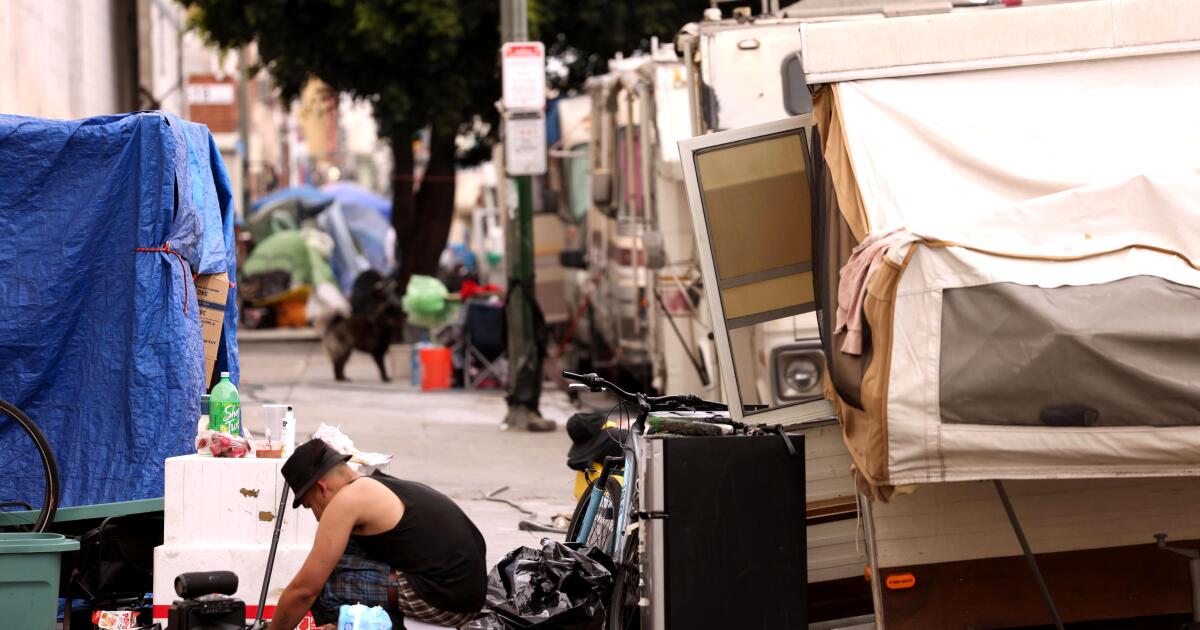
Commentary: On Skid Row, it’s been decades of frustration. Will the next mayor have a plan?
-
 Science26 minutes ago
What’s the deal with … coffee enemas?
-
 Sports29 minutes ago
LAPD weighs canceling academy classes to get more cops on streets for Olympics
-

 World41 minutes ago
Trump ordered to pay E Jean Carroll $5.8m after failed appeal
-
 News1 hour ago
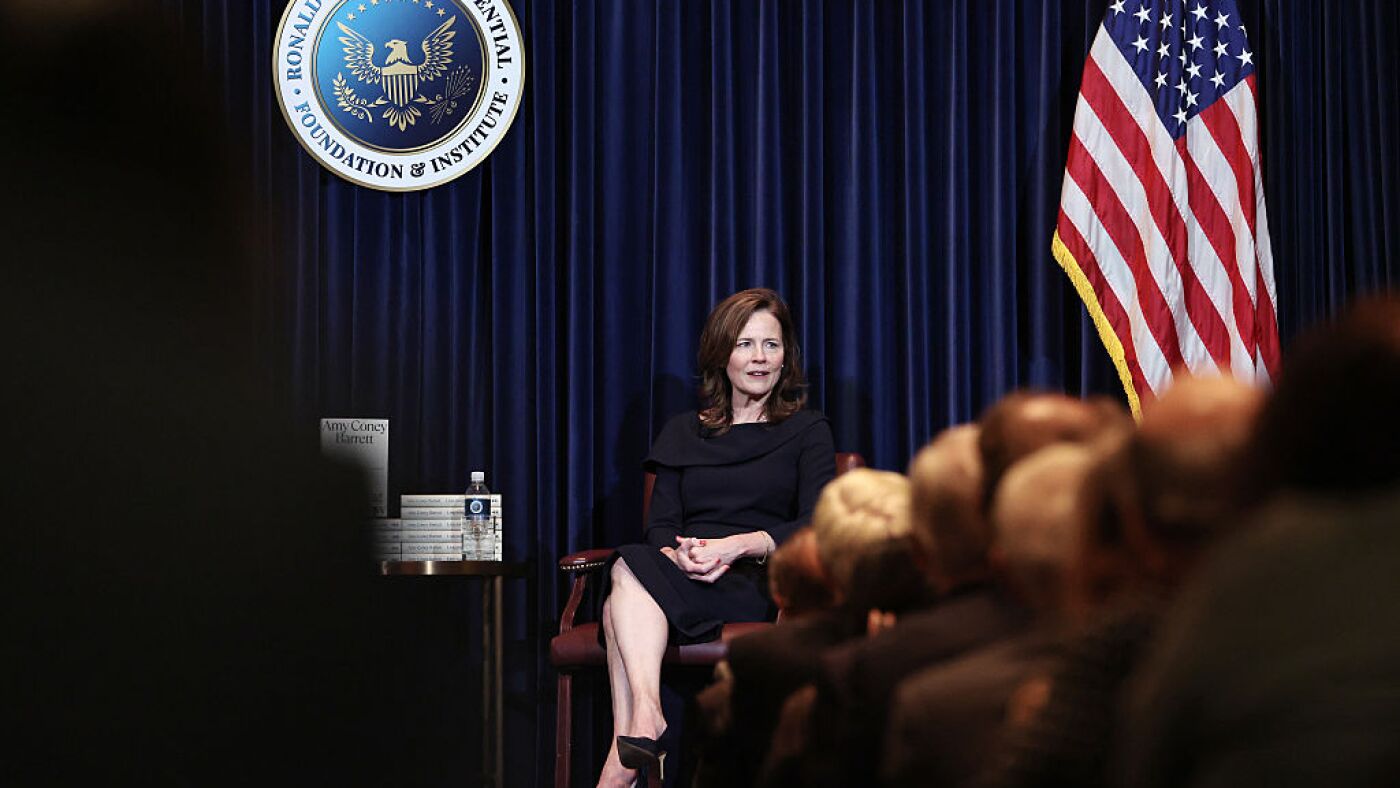
Supreme Court financial disclosures reveal how their books add to their income

