Entertainment
Review: Dour and dull, ‘The Death of Robin Hood’ steals our time to give to the gloom

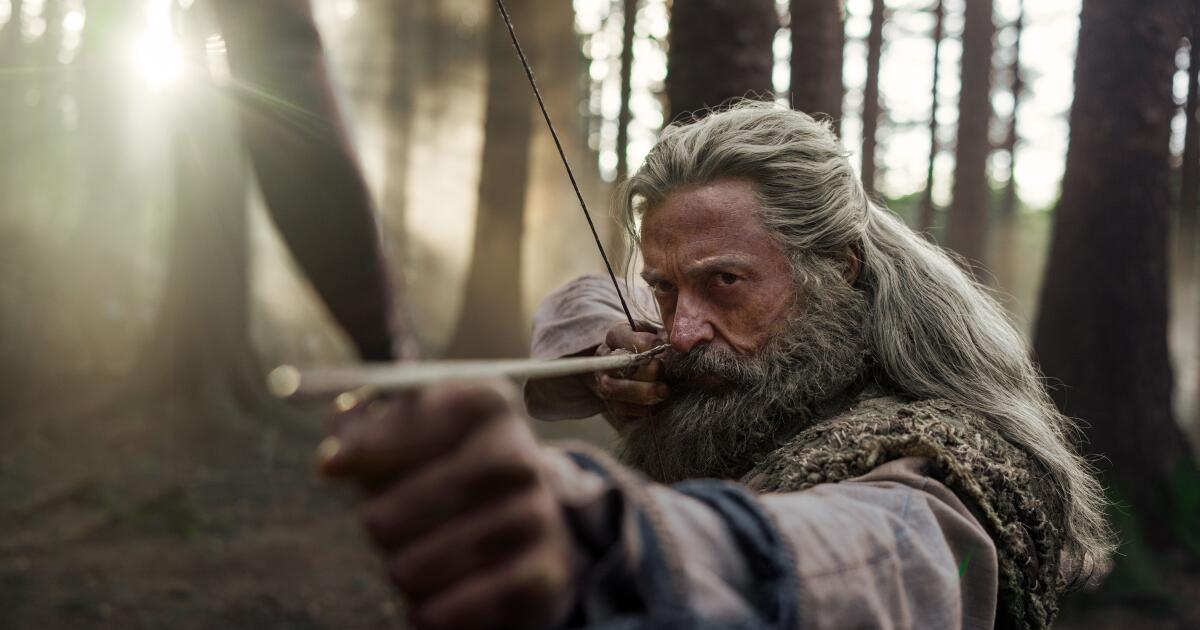
Over eons of mythmaking, the 13th century bandit Robin Hood has evolved from a scamp adored by King Henry VIII to a symbol of sticking it to the rich. He’s been called a thief, a benefactor, a commoner, a lord, a killer and a hero. During the Great Depression, Robin was a dashing champion of the people. At the height of the Red Scare, he was a Communist threat; then, in the ‘70s, a sexy cartoon fox. But never until Michael Sarnoski’s “The Death of Robin Hood,” which imagines the folk legend as a benumbed mass murderer, has this outlaw been duller than the rock piles he builds to bury his corpses.
Hugh Jackman plays Robin Hood in his final days, a loose retelling of a 500-year-old ballad, and seems to have ancient dirt creased into his wrinkles. Injuries and exhaustion have him aching to retire. Yet the family members of his casualties won’t let him quit. Out of duty to their bloodlines, these vengeful mourners — even the grandchildren of his victims — continue attempting to assassinate him even though he doesn’t remember, or care about, their beloved dead. Robin is enduring a nightmare version of a party at which every unfamiliar face huffily claims they’ve met you before. It’s relatable, except for the throat-slitting.
This savage, amoral and unfeeling Robin Hood has been written to invert everything modern fans like about him. He doesn’t wear green. He doesn’t sport a feather. He’s never loved a Maid Marian. He doesn’t even romp around a forest with a pack of merry men. Instead, he starts the film on a barren mountaintop, alone. (Similarly, Jim Ghedi’s transporting score has the sound of traditional ballads like “Silver Dagger” splintering apart mid-verse to reassemble as funeral hymns.)
From his gray hair to limping stride, Jackson’s Robin is so battered by decades of violence and outdoor camping that, at first glance, I thought his bare feet were a pair of alligator boots. Filmed in Northern Ireland, the landscapes are cold, green and formidable (if muted by too much mist). The first shot has a miserable grandeur: a frigid landscape, frozen berries and wind so strong it nearly blows a starving traveler sideways. Shortly after, cinematographer Pat Scola’s overhead view of a makeshift cemetery is a stunner.
Sarnoski has D.W. Griffith’s flair for visceral imagery. His favorite trick is to have us empathize with a close-up of a desperate, vulnerable character and then have Robin brutally mow them down. There’s even a scene of Robin crushing a bunny. You can hear the crunch.
“I robbed and killed for the joy of it, nothing more,” Robin grunts to strangers who hail him as the protector of the meek. Over the course of the running time, he’ll reconnect with Little John (Bill Skarsgård) and befriend a leper (Murray Bartlett), a traumatized young man (Noah Jupe), an angry little girl (Faith Delaney) and a kindly nun-slash-nurse (Jodie Comer) who is so blindingly clean that it’s distracting. He also visits a religious commune and witnesses actual generosity only to remain apathetic about repentance or emotional growth.
It’s a tedious spin on a Wolverine movie Jackman has already made, 2017’s “Logan,” in which his mythic anti-heroic X-Man fosters a ferocious moppet en route to the grave. Lately, I’ve come to prefer Jackman as a showman over a savage. (Many stars can scowl, few can tap dance.) But he looks the part — Jackman has a commendable willingness to recede inside himself — even though after the rousing opening, the script gives him almost nothing to do.
The screenplay’s dirge-like momentum is ironic as Sarnoski has set out to make a movie itself about storytelling. You can tell because of the multiple monologues that kick off with someone asking Robin if he’s ever heard that story about so-and-so and forcing the movie to halt while we listen.
From Robin’s experience, he thinks that “stories can make men do terrible things,” perhaps thinking of all those bereaved family members who were honor-bound to chase after him and get themselves killed. Violence metastasizes. In the medieval era, blood feuds carried on for generations; likewise, today’s wars are often rooted in centuries of pain. Robin doesn’t tell tall tales himself except once and when he does, you can understand why, but not why one listener in particular goes along with it.
But he does have an opinion on how to spin a good yarn. When Little John struggles to describe his dream girl, Robin instructs his protegee to sketch an image with words.
“She had red hair like —” Robin prompts in the manner of a stern third-grade teacher.
“Fresh blood!” Little John blurts.
A hyperactive psychopath, Skarsgård’s Little John is one of the movie’s rare treats. The other is the agonizingly good stunt coordination by Julian Spencer that makes men slide in the mud frantically trying to grab and snap each other’s fingers.
“The Death of Robin Hood’s” one big idea is compelling: History gets written and erased in real time. Characters rarely agree on what happened to whom and frankly, I’m still unsure if one of the father-daughter relationships in here is biological or just pretend. (The cast’s mush-mouthed accents don’t help.) Even today, a time where the slipperiness of facts is a known risk, sticky fables endure — pizza-parlor cabals, dog-eating immigrants, gerbils stuck wherever.
We still hail Robin Hood as an inspirational hero who stole from the rich to give to the poor, forgoing alternate versions in which Robin robs a monk, keeps the money, then kills a dozen men to cover up the crime. But during a week when the canted economy just created its first trillionaire, I can’t fathom why Sarnoski felt we needed this version of Robin Hood now. Disillusionment aside, what’s the point of a Robin Hood who insists on standing for nothing?
Sarnoski is a promising talent with two previous features on his resume: “Pig,” a feral $3-million thriller starring Nicolas Cage, and “A Quiet Place: Day One,” a smart franchise prequel. It’s understandable he wanted to split the difference and make a midsize indie that feels all his, to prove himself with the kind of solemn period picture that people take seriously. He’s earned the right to ask financiers and his building fan base for their trust.
But “The Death of Robin Hood” feels like a director thinking only of his ambitions and not whether he’s making a movie anyone wants to bother to see. The lesson is right there in the film: Audiences decide what gets remembered.
‘The Death of Robin Hood’
Rated: R, for strong bloody violence
Running time: 2 hours, 3 minutes
Playing: Opening Friday in wide release

Movie Reviews
Movie Review: ‘Leviticus’ makes a demon out of desire in an auspicious debut for Adrian Chiarella – Sentinel Colorado

What if the object of your desire was also the thing that’s trying to kill you? Not slowly irritating you to death for leaving the toilet seat up again. We mean actively trying to strangle you.
That’s the intriguing premise behind the horror-satire “Leviticus,” an auspicious feature film debut for writer-director Adrian Chiarella that’s both deeply scary and a queer revolt.
Named for the book of the Old Testament often used to justify homophobia, the movie explores the burgeoning relationship between two young men that is shattered when so-called “conversion therapy” — a scientifically discredited practice — unleashes a demon that stalks them. Some have called the movie “It Follows” meets “Heated Rivalry,” but that’s a disservice to Chiarella’s ambition.
The film centers on Naim (Joe Bird, the breakout star of A24’s “Talk to Me” )and Ryan (newcomer Stacy Clausen), who we watch fitfully, awkwardly fall for each other, slowly exploring their sexuality and stutter-stepping into their true selves. Wrestling turns to flirtation, which becomes longing and tenderness.
That doesn’t go over well in the small Australian town where the movie is set, a blue-collar community with belching smoke stacks, low-slung houses, barking dogs and a Christian pastor — with a “deliverance healer” — who prefers his flock much more heterosexual.
Chiarella is leaning not only into the notion that sexual desire makes you vulnerable, but also the harm that repressing who you are can do. In this case, the demon takes the form of your crush. It has weaponized lust.
“You shouldn’t be near me. I shouldn’t be near you, either,” one of the would-be lovers says to the other.
Chiarella starts his movie with a nod to Alfred Hitchcock — a shower scene worthy of “Psycho” — and nods to others in the genre, like “A Nightmare on Elm Street.” He can be a bit clunky with his images — a frog being eaten by a snake — but his pacing is flawless and his ramping up of terror is sure. “Leviticus” might be an indie film, but it’s got the blessing of Frank Ocean, who gave the filmmakers the right to use his song “Self Control.”
The monsters — in addition to the nasty one only the boys can see, of course — are the adults: the parents and caregivers and friends who turn on vulnerable, scared young men and make them scared of each other. Mom might kindly take some disliked olives off her son’s pizza, but she won’t accept him kissing another boy.
Chiarella’s pro-queer filmmaking extends to his ability to perfectly capture the fumbling ecstasy of new love, the fierce longing of stolen kisses and how scary it is to submit to a new partner. Kudos to Bird and Clausen for capturing that universal feeling.
With his film, Chiarella forms a triumvirate of young filmmakers making horror brilliant in summer 2026, alongside Curry Barker with “Obsession” and Kane Parsons’ “Backrooms.” The future of movies is in good hands.
“Leviticus,” a Neon release that’s in theaters Friday, is rated R by the Motion Picture Association for “bloody violent content, language, some sexual content and teen drug use.” Running time: 88 minutes. Three and a half stars out of four.
Related
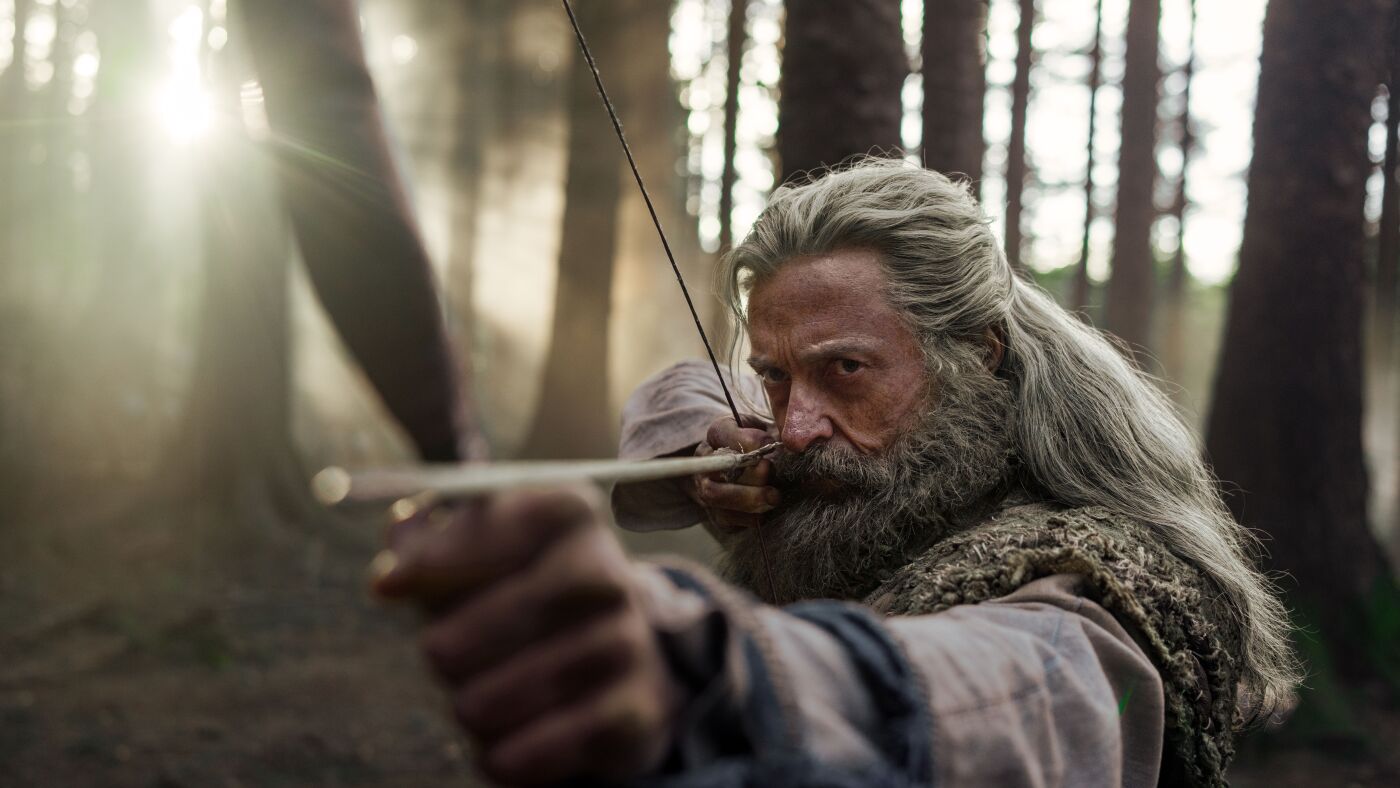
Hugh Jackman as Robin Hood.
A24
hide caption
toggle caption
A24
Gunmetal gray sky, barren muddy terrain, a half-starved child begging a wizened title character for a scrap of food moments before he slashes her throat. It’s hardly the opening you imagine for a film about a folk hero — especially one who robs the rich and gives to the poor. But then, The Death of Robin Hood is the brainchild of Michael Sarnoski (Pig, A Quiet Place: Day One), so maybe leave expectations in the lobby.
Sarnoski gives us Hugh Jackman’s battle-scarred, gray-bearded Robin as a tormented wretch, not the brash strapping outlaw of legend — alone, wracked by regret over the countless lives he’s ended or ruined. When we meet Robin in 1247 A.D., he seems pursued as much by his own guilt as by avenging relatives of the innocents he murdered in younger days (say, that half-starved but surreptitiously knife-clutching little girl).
So he tries to beg off when Little John (Bill Skarsgård, unrecognizable) approaches him with the promise of one more “adventure” — to rescue the wife John’s claimed after killing her husband, from the neighbors who then rescued her from John. Robin notes correctly that she’s not really John’s wife, yet he reluctantly brings his quiver, and an arm that can still shoot an arrow through a skull and out an eye socket at 50 paces.

He proves formidable, but not immortal. This “adventure” leaves him gravely wounded, dragged across forbidding terrain to a remote, cliff-top convent, where a prioress (Jodie Comer) with a curative touch and a marginally gentler way with a knife will attempt to bleed him back to health.
Sarnoski’s indie-realist approach to blood-letting — whether Pitt-ishly clinical, or Game of Thrones-esque in its brutality — is never less than arresting, and Jackman’s certainly up for the gore, extinguishing his torch in one opponent’s mouth and burying a hatchet in another’s back.
But it’s in the film’s later stages, where the character grapples with what his youthful righting of wrongs has cost both him and bystanders, that the actor and this medieval thriller find their emotional footing. Sarnoski is exploring the way we edit and augment the tales we tell about ourselves as we pass through the world, noting that hedges and embellishments will ultimately be laid bare.
If we live long enough, we’ll face a reckoning, a lesson Jackman’s delivered before as Logan, another troubled figure of legend. This film’s latter moments have a similarly eulogistic quality, augmented by Comer’s affecting turn as an accepting if anguished guardian at the hour when life ends, and myth takes flight.

Best new artist. Best vibes, hands down. Eva Longoria Award for Tiny Human, Huge Impact.
These were just a few of the categories presented at the 2026 Las Culturistas Culture Awards, which aired on Bravo and streamed Wednesday on Peacock and were held at the United Theater in L.A. last month. The show, co-hosted by Bowen Yang and Matt Rogers of the “Las Culturistas” podcast, honored some of the best moments in pop culture — and created some of its own, including a gay-tastic opening musical number performed by Yang and Rogers that paid homage to “Heated Rivalry” and a sexed-up Shrek — yes, your favorite green ogre — courtesy of “Hacks” co-creator and star Paul W. Downs.
Needless to say, it’s not your typical awards show. And winning isn’t the point, as Yang and Rogers told The Times earlier this month. “Presenting is just as good as winning, just as good as performing. But I think it’s weird that we have been so late to stumble on what the show really is, which is it’s a variety show,” Rogers said.
For anyone happy to take themselves a little less seriously, have some fun and potentially get a Cultch, as the golden statue is called (what is it exactly, we’re not really sure — RuPaul said he’d use it as a door stop), this awards show is for you. Here are some of our favorite moments from the show, which might be the best awards show on TV.
Music and dance performances by the co-hosts, Rachel Zegler and … Pikachu?
Rachel Zegler performs Addison Rae’s “Fame Is a Gun.”
(Monty Brinton / Bravo)
The show began with a rousing number featuring Yang and Rogers that was themed to one of the biggest TV shows of the past year, “Heated Rivalry.” It led into a performance of t.A.T.u.’s “All the Things She Said,” a record of the year nominee and the song that became a hit (again) thanks to a sexy club scene in the hockey-themed gay romance series, and it included vocals from another pair of gay icons, Malin Akerman and Brittany Snow of “The Hunting Wives.”
And yes, Rogers and Yang did attempt to enlist “Heated Rivalry” stars Connor Storrie and Hudson Williams, but the duo were out of town attending the 2026 Canadian Screen Awards, where the show broke records for most wins in a single year. But Akerman and Snow brought as much power to the moment, Yang said.
“That somehow felt like just as if not more important, to have those things live side by side,” he told us after the show. “We did our best to crudely represent this moment of ‘Heated Rivalry’ within the song, within us being a white gay man and an Asian gay man. And then bring Malin and Brittany in, to have these two be like companion pieces in the culture in the past year.”
But that was just the beginning. The show also featured performances by “Hacks” star Megan Stalter, who performed her single “Prettiest Girl in America,” and Mandy Moore, who sang “Only Hope,” her cover of the Switchfoot song. However, there were two performances that stole the show: Rachel Zegler’s “Evita”-inspired rendition of Addison Rae’s “Fame Is a Gun” and Yang and Rogers’ performance of the Pokémon theme song. One was an awe-inspiring and vocally perfect rendition of a pop song, the other a millennial dreamscape of Pokémon ephemera featuring the star of the animated show, Pikachu, dancing alongside Yang and Rogers as they sang the number. (Pikachu’s pronouns are it/that, according to Yang and Rogers, in case you were wondering.)
Zegler’s performance, Rogers said, was not only an early idea for the show, but one that felt meaningful despite the camp. The actor played the titular character in the West End revival of “Evita” and will reprise the role on Broadway next year.
“The only idea I had right away last year was I knew I wanted Rachel — and I told you this [turns to Yang] — in the style of Evita singing something,” he said. “Then we were at Coachella watching Addison Rae and she was doing ‘Fame Is a Gun’ and we were like, ‘It has to be this.’ We pitched it to Rachel, and she goes, ‘You’re not gonna believe this, but ‘Fame Is a Gun’ was No. 1 on my playlist when I was studying to play Eva Peron.’”
It was kismet.
Miss Piggy, cat marionettes and a very ripped Shrek

Miss Piggy, honored for her excellence in divahood, was among the childhood characters that made an appearance at the show.
(Monty Brinton / Bravo)
Pikachu wasn’t the only childhood character to make an appearance at the Culture Awards. The “grand dame diva of culture, divahood and porcine glamour” Miss Piggy, was honored at the show, where she showed up, naturally, in a pink dress and feather boa.
“She’s one of the most beloved pop culture figures of all time,” Yang said about her surprise appearance.
“It’s indisputable,” Rogers added.
We also got a performance of the “Meow-ionettes,” the feline troupe from the Bob Baker Marionettes, an L.A. institution, who accompanied Broadway star Ben Platt as he sang “Smelly Cat,” the song made famous by Lisa Kudrow’s Phoebe Buffay on “Friends.” (It was a lead-in to her receiving the lifetime of culture award.)
While those characters mostly stayed in, well, character, one appeared in a completely new light: Shrek. So you might remember Shrek as a big, green ogre, and while this Shrek was green, he was also extremely ripped and libidinous. Downs appeared as Shrek onstage to accept the award for the Shrek Award for Top Thing We Want to Do to That Green Guy, a category with very explicit nominees. Hints of a Shrek surprise appeared early on, when Miss Culturista Patti Harrison revealed she was pregnant, showing her sonogram with a green, Shrek-like fetus. It ended in Harrison telling Downs’ Shrek that it was his baby and they walked off the stage as a family. That’s one way to get a happily ever after.
‘War is Bravo for men’

Ziwe, left, looks on as Ciara Miller of “Summer House” accepts the trophy for the Rob Rausch Award for Excellence.
(Griffin Nagel / Bravo)
Who can actually enjoy escapist entertainment when every other day brings news alerts that trigger mental anguish? Bowen and Rogers acknowledged the dueling emotions at the start of the show by cheekily breaking down important current events for two camps: the people who don’t watch Bravo at all, and those who only watch Bravo. For the Bravo-agnostics, the hosts summarized the “Summer House” cheating scandal; meanwhile, Bravo obsessives were informed by Rogers: “Our country is at war.”
It prompted Yang to make the joke about one of the rules of culture: “War is Bravo for men.”
“Our show is trying to remind people that there’s a lot of fun and joy to be had,” Rogers told us. “We’re not dwelling, but also it would be unlike us and dishonest to ignore [what’s going on in the world]. It’s not a denial of the fact that we’re in this place, it’s an acknowledgment — but also an acknowledgment of everything else. It’s a night to say, we feel good.”
(Another rule of culture, in case you’re wondering? “Peacock is Netflix for the Olympics.”)
Imitation is flattery, honey!

Nominees for outfit of the year at this year’s Las Culturistas Culture Awards were re-created and modeled on stage by Lisa Rinna, seen here in a look made famous by horror villain Aunt Gladys in “Weapons.”
(Monty Brinton / Bravo)
Lisa Rinna knows how to gag an audience with her fashions — whether she’s peddling cozy duster cardigans on QVC or dressing in outré sets by conceptual designers like Jean Paul Gaultier, Christian Cowan or Maximilian Raynor. And she brought that dedication to Las Culturistas Culture Awards for the second consecutive year. She had attendees roaring with stunning transformations as she modeled the nominees for outfit of the year, which included her take on the extremely terrifying look of Aunt Gladys of “Weapons” (complete with an offset-styled wig, large vintage sunglasses and smeared lipstick); Jacob Elordi leaving an airport while wearing headphones, sunglasses and a stone-faced expression; Carolyn Bessette’s “argument chic” attire — oversized sweaters, a ponytail wig and white sneakers — during the much-publicized spat with John F. Kennedy Jr. in Battery Park; Billie Eilish as a visibly overwhelmed “One Less Lonely Girl” at Coachella, donning a black and purple track suit ensemble; and Jeff Probst for the last 50 seasons of “Survivor,” which boiled down to a blue button-up shirt and khakis (he won).
“She is so down to clown,” Rogers told us after the show. “And I truly mean clown because what she’s doing is clowning.”
Yang added: “She’s such a seasoned actor, performer. She knows entertainment. And she looked as hot as Jacob Elordi.” Rogers confessed he missed Rinna’s heightened turn as Bessette because he and Yang were talking to Lisa Kudrow backstage. But they at least got to witness a pop culture collision take place.
“Lisa Kudrow clocked who was on stage and she goes, ‘Oh my god, it’s Lisa F—ing Rinna?’” Yang recalled. “I was like, ‘This is heaven.’”
Rogers added: “Lisa Rinna as Carolyn Bessette comes off the stage and Lisa Kudrow turns to her and says, ‘We’ve known each other since our kids were 2!’” Rogers recalled. “And Lisa Rinna was like, ‘Yes, we have!’ We were just watching this interaction between the Lisas.”
Nods to Pride: Gay icons and allies

“The Hunting Wives” stars Brittany Snow and Malin Akerman, center, join Bowen Yang and Matt Rogers during the “Heated Rivalry”-inspired opening number.
(Griffin Nagel / Bravo)
The Culture Awards are not just inclusive, they’re unapologetically gay, from the categories to the nominees to the presenters. June is Pride Month after all, and we’d be remiss if we didn’t mention the timeliness of this show — hosted by a pair of gay men — and the awards bestowed upon LGBTQ+ icons and allies over the course of the night.
Among the winners this year were Hannah Einbinder for the all good either way award for bisexuality in media, RuPaul for the artist of the millennium award and Will Ferrell, who was awarded the titan of culture award. Upon accepting his award, he unfurled a Pride flag and declared that “gay pride is the most important thing to me.” Is Ferrell gay? No, but allies are always welcome. After all, he is Yang’s and Rogers’ boss.
‘And the award for best sauce goes to …’

“Hacks” co-creator and star Paul W. Downs appears on stage as a ripped Shrek during this year’s Las Culturistas Culture Awards.
(Monty Brinton / Bravo)
This year’s show was stuffed with a whopping 100 categories — and still, the ceremony managed to not be three hours-plus (take note, Oscars). It’s the only place where you can revel in the tight races of categories like most triggered, activated and dysregulated I was this year; best Disney hotel for intercourse, sex, or lovemaking; or best part of “WHERE IS MY HUSBAND!” song. About 30 previous categories returned, including the Allison Williams Cool Girl Award, which was given to “Summer House’s” Ciara Miller, who continues riding high following her messy and highly publicized breakup.
Maira’s favorite category: Record of the year would take the cake for me in terms of the showstopping performances, but in terms of category originality, I’ll have to go with the Fantasia Barrino Award for Vocal Oomph, which was presented by comedian Julio Torres, and went to the Bene Gesserit of “Dune.” I’m not even a “Dune” person, but I can appreciate the effort. Of the nominees, Charlotte screaming “NO!!!” at Mr. Big was my winner.
Yvonne’s favorite category: The Shrek Award for Top Thing We Want to Do to That Green Guy. Among the nominees is: “I get as close as possible to his lips without kissing him at a restaurant in public. Maximum romance, with everyone watching. He smells like onions.” The other contenders are NSFW, unfortunately, but that’s exactly what makes it so perfectly ridiculous. And to top it all off with Downs, and his insanely cut abs, slathered in green paint to accept the award as Shrek (while being revealed to be a baby daddy) elicited the sort of gasps last felt when “La La Land” was mistakenly awarded the best picture Oscar in 2017.
-

 Wisconsin5 minutes ago
President of Wisconsin’s largest mosque released from ICE custody
-

 West Virginia8 minutes ago
Community Catalyst Grant applications are open through West Virginia First Foundation through June 30 – WV MetroNews
-
 Wyoming13 minutes ago
250 Portraits self-portrait exhibition now on display throughout downtown Jackson
-

 Crypto20 minutes ago
Crypto’s Courtside Takeover: Digital Assets in Pro Tennis
-

 Finance23 minutes ago
Consumer confidence plunges among younger adults
-

 Fitness28 minutes ago
Kylie Minogue, 58, shares how she stays fit without a strict exercise routine – ‘I don’t really work out’
-

 Movie Reviews38 minutes ago
Movie Review: ‘Leviticus’ makes a demon out of desire in an auspicious debut for Adrian Chiarella – Sentinel Colorado
-

 World50 minutes ago
Video: A Small Election Could Change British Politics

