News
More than a quarter of private colleges are at risk of closing, a new projection shows

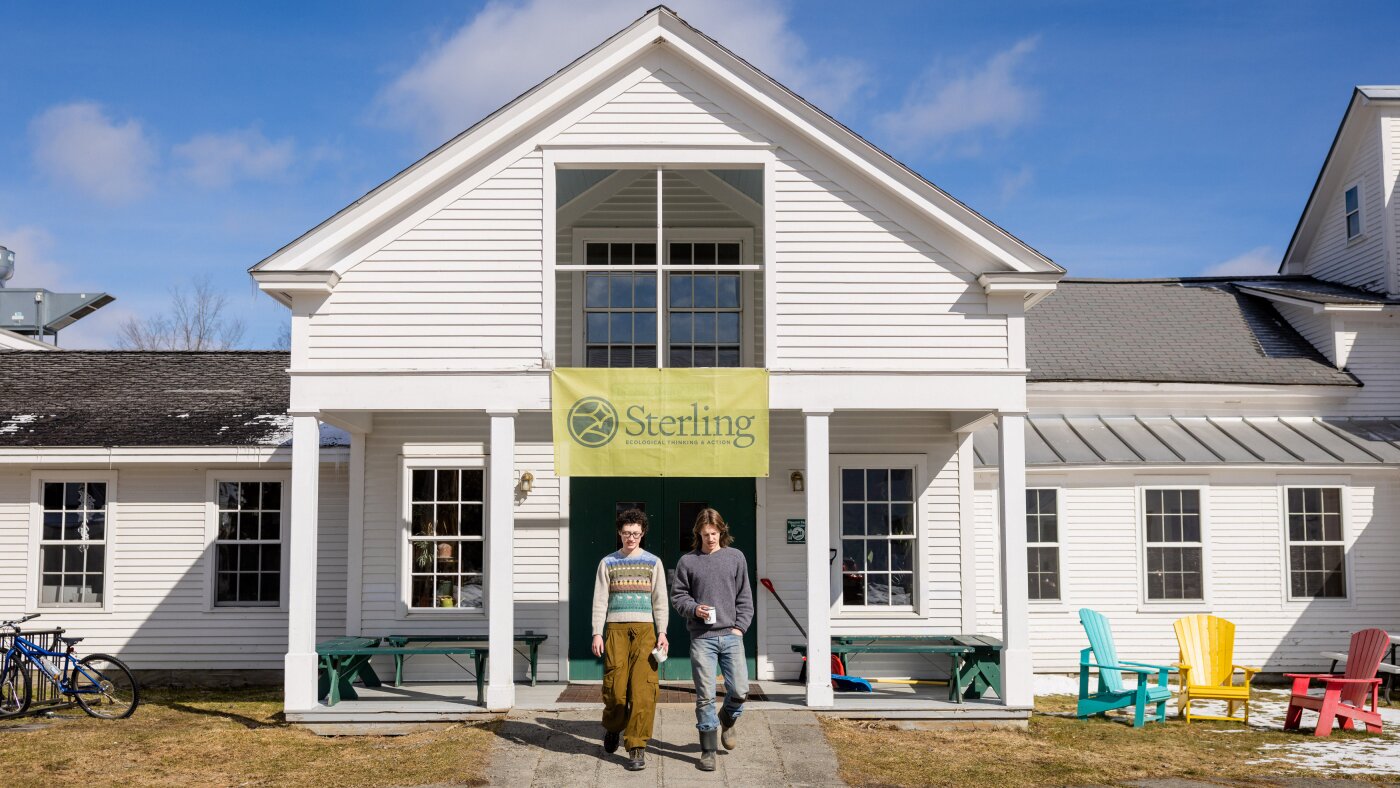
Izzy Johnson, left, and Jack Beatson are first-year students at Sterling College in Craftsbury Common, Vt. The college has announced that it will close at the end of this semester.
Oliver Parini for The Hechinger Report
hide caption
toggle caption
Oliver Parini for The Hechinger Report
CRAFTSBURY COMMON, Vt. — More than a dozen newborn lambs cavorted around a fenced-in yard beneath the scrutiny of their mothers and a few watchful students taking turns attending to them.
The lambs’ successful births have been a needed bright spot at tiny Sterling College, which uses a 130-acre farm to teach agriculture and other disciplines in a part of northeastern Vermont so isolated there’s no cell service and it’s rare to see a passing car.
LillyAnne Keeley, a senior, likes that remoteness. “We have a beautiful view,” said Keeley, in the barn where she’s come for her turn checking on the lambs. “There are beautiful sunsets here. I kind of take it for granted every day.”

She and her classmates have started taking such experiences less for granted now, since Sterling has announced that it will close in May at the end of this semester.
They’re not the last students around the country who will suffer such disruption. A new estimate projects that 442 of the nation’s 1,700 private, nonprofit four-year colleges and universities, with a combined 670,000 students, are at risk of closing or having to merge within the next 10 years.

LillyAnne Keely holds a newborn lamb in the barn at Sterling College, which focuses on agriculture and related disciplines.
Oliver Parini for The Hechinger Report
hide caption
toggle caption
Oliver Parini for The Hechinger Report
More than 120 institutions are at the very highest risk, according to the forecast by Huron Consulting Group, which helps clients in industries including higher education formulate business strategies. For its assessment, the company analyzed enrollment trends, tuition revenue, assets, debt, cash on hand and other measures.
Many are, like Sterling, small and rural. “Now that this might be gone, I just really worry about some students out there that are going to have less and less choices,” Keeley said.
It’s a crisis whose magnitude has been overshadowed by political and culture-war attacks on higher education and is propelled by the simple law of supply and demand after a long decline in the number of Americans who are going to college.
“We have too many seats. We have too many classrooms,” Peter Stokes, a managing director at Huron, said of U.S. colleges and universities. “So over the coming five to 10 years, this shakeout is going to take place.”
Sterling — the seventh private college in Vermont to close since 2016 — offers a rare glimpse into the human impact of this trend. That’s because it gave students a final semester to stay and complete their degrees or transfer, rather than locking the doors with hardly any notice, as many other colleges have done.
Fewer than half of students at colleges that close continue their educations, according to the most comprehensive study of the issue, produced by the State Higher Education Executive Officers Association, or SHEEO. Of those who do, many lose credits they’ve already earned and paid for, and fewer than half eventually earn degrees.
Twenty-year-old Izzy Johnson has already been buffeted by this. The college he originally wanted to attend closed the month before he graduated from high school. So he enrolled as a freshman in the fall at Sterling — only to learn a few months later that it would also close.

Student Lew Collet works on his tractor skills at Sterling.
Oliver Parini for The Hechinger Report
hide caption
toggle caption
Oliver Parini for The Hechinger Report
“Having to pick up everything and find a new place to settle down is really miserable,” said Johnson, who studies agricultural and food systems — the process by which food is produced and consumed — and is weighing where to go next.
Started in 1958 as a prep school for boys, the remote rural college was never very large. Its enrollment peaked at 120 and fell to about 40 students this year, spread around a few white clapboard buildings indistinguishable from the houses of the surrounding farm town of about 1,300 people.
Those numbers weren’t sustainable, even at one of the nation’s nine so-called “work colleges,” whose undergraduates combine work and learning. At Sterling, they do this by pitching in on the farm and in the dorms and kitchen, said the college’s president, Scott Thomas. Though financial documents show Sterling had been breaking even, margins were thin.
In its last semester, the campus appeared surprisingly upbeat. At a weekly community meeting, students, faculty and staff lugged tables to the edge of the dining hall and formed a circle to talk about routine business, including warnings of bears coming out of hibernation and a reminder to provide contact information so everyone could stay in touch after commencement in May.
Students have decided “that we’re just going to have a really good last semester and go out on a really positive note,” said Keeley. Like several of her classmates, she is cramming to earn the credits needed to graduate this spring. “And I feel like we’ve been really able to do that so far, but it’s still really sad.”
Most said they were drawn here precisely because of the college’s small size and far-flung location.
“I don’t think I would have done well at a big, traditional college,” said Jack Beatson, a first-year student from California. “I just sort of get freaked out in a big space like that.”
As more small colleges close, said Keeley, it’s getting harder for students to find this kind of an alternative to what she called “the larger, monotonous type of education.”
Impact on the community
People around town are equally concerned — not only for the loss of jobs and spending, but an end to the pipeline through which many graduates have stayed to work or start businesses of their own.
“We always joke that Sterling kids stick around. But it’s true, they do, and they contribute to the community,” said Liz Chadwick, who moved from New Jersey in 2013 to finish her bachelor’s degree at the college, where she now teaches food systems. “They build families here.”
Losing colleges like Sterling “leaves craters in the small rural communities that they have been a part of for, in some instances, decades or a century,” said Thomas.

Liz Chadwick came to Sterling College as a student and, like many alumni, settled in the area; she now teaches food systems at the college. Graduates “build families here,” she says.
Oliver Parini for The Hechinger Report
hide caption
toggle caption
Oliver Parini for The Hechinger Report
There are about 3,700 two- and four-year public and private degree-granting colleges and universities in the United States. That’s already down from a peak of 4,726 in 2012. Almost all that have closed since then were private, for-profit schools, which enjoyed a brief boom before crashing under the weight of consumer discontent and increased regulation.
Many converging reasons explain why private, nonprofit colleges and universities, too, are now under existential strain.
There are already 2.3 million fewer students than there were in 2010. A drop in the birthrate that began around the same time means there is about to be a further downward slide in the number of 18-year-olds through at least 2041.
Among the other factors:
- The proportion of high school graduates who go on to college is also down, from 70% in 2016 to 61% in 2023, the most recent year for which the figure is available.
- The number of visas issued for new full-tuition-paying international students coming to the United States plummeted by nearly 100,000 this year, or 36%.
- And looming caps on federal loans for graduate study, which take effect in July, threaten to reduce demand for yet another crucial revenue source.
While higher education institutions previously weathered short-lived declines in enrollment and increases in costs, today “every major revenue stream and expense category is under pressure at the same time,” the higher education consulting firm EAB warns in a new analysis.
Eighty-six percent of college and university leaders are worried about their schools’ long-term financial viability, according to a survey in December by the American Council on Education, the principal industry association. A fifth of college and university presidents say they’ve had serious discussions about merging with another university or college, a separate survey by Hanover Research and the industry news site Inside Higher Ed found.
Signs of strain are spreading
And nearly a third of private, nonprofit colleges and universities nationwide posted deficits in 2024, according to research by Robert Kelchen, director of the Department of Educational Leadership and Policy Studies at the University of Tennessee, Knoxville.
And it’s not just small schools that are affected.
Even public universities and colleges are facing deepening financial problems, reports the Fitch bond-rating agency, citing slowing economic growth and federal policy changes.
The University of Southern California has sent pink slips to more than 900 employees. Stanford University, Northwestern University, and Depaul University have also seen layoffs.
And, as part of what its president called a “broader strategy to strengthen GW’s long-term financial health,” George Washington University announced in March that it had sold a satellite science and technology campus in Virginia for what the student newspaper reported was $427 million.
Community colleges, too — which enroll nearly 5.6 million students — are suffering financial squeezes that leave them less able to adapt or respond to change, according to Daniel Greenstein, former chancellor of the Pennsylvania State System of Higher Education, who now tracks financial exposure in the industry.
In the case of community colleges, wrote Greenstein, “The risk is not a sudden collapse of the sector. The risk is a slow erosion of capacity in precisely the institutions on which communities rely most.”
Still, after two and a half decades in which the price of tuition has increased faster than inflation, for a payoff many consumers no longer think is worth the money, higher education often gets little sympathy for its predicament — and even less after years of political and culture war attacks on the ideological leanings of faculty and leadership.
“Free market wins!” quipped one commenter on social media, in response to Sterling College’s announcement that it would close. “They woked themselves right out of business,” wrote another. Added a third: “Now where will they teach all the 20 year olds to protest and whine?”
Among its students, however, Sterling elicits something increasingly rare among higher education institutions: gratitude.
“I’m so glad I got to spend at least a year here,” said first-year student Jack Beatson. “Just feeling like you’re really part of something, and other people depend on you — that’s very important to young people especially, and today especially.”
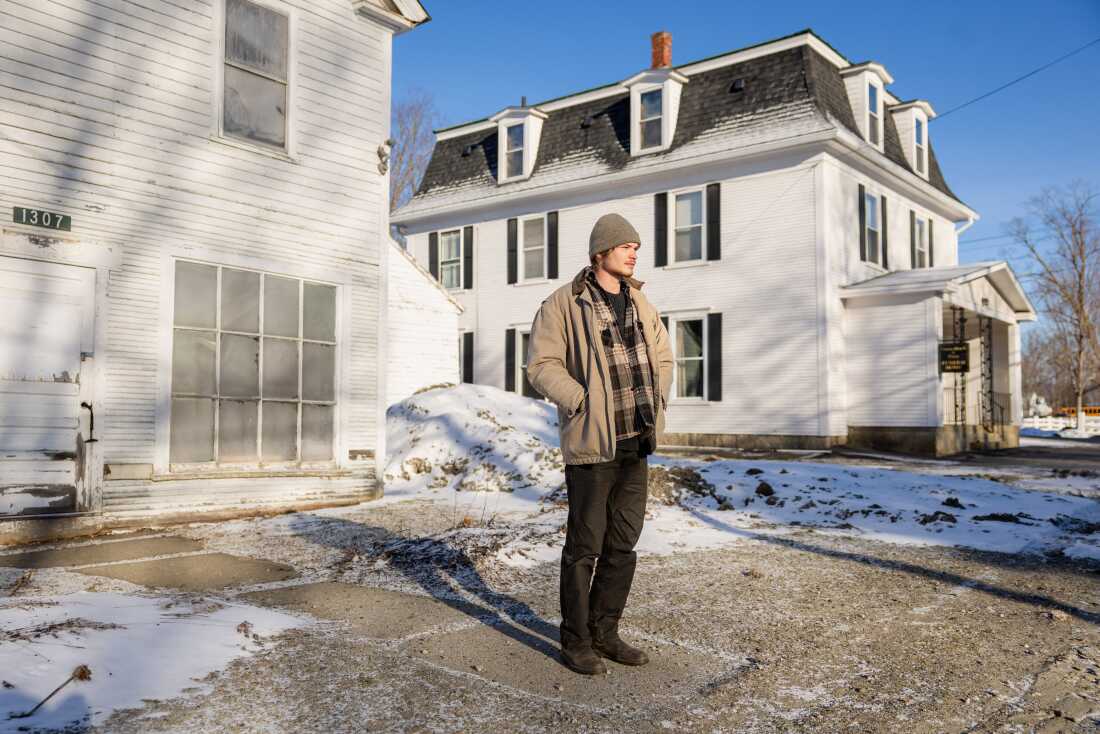
Samuel Stover goes to Sterling College, which his mother also attended. He likes the size of the small school, where he has teachers “who I feel like I really connect with on a deeper level than just, ‘I’m a student and I hand in papers.’”
Oliver Parini for The Hechinger Report
hide caption
toggle caption
Oliver Parini for The Hechinger Report
Beatson is transferring to another small college in upstate New York. But even after Sterling closes, he said, “We’ll all take this place with us, wherever we end up.”
This story was produced by The Hechinger Report, a nonprofit, independent news organization focused on inequality and innovation in education. Contact writer Jon Marcus at 212-678-7556, jmarcus@hechingerreport.org or jpm.82 on Signal.


Rep. Julia Letlow won the Republican primary runoff for Senate in Louisiana, NBC News projects, defeating state Treasurer John Fleming in another victory for President Donald Trump’s slate of preferred candidates.
Trump endorsed Letlow early in the race, which went to a runoff after none of the GOP candidates won a majority of the initial primary vote on May 16. Trump waded into the state in an effort to oust GOP Sen. Bill Cassidy, who voted to convict Trump on impeachment charges following the Jan. 6, 2021, Capitol riot.
See live runoff results here
Letlow was the top vote-getter in the first-round primary, winning 45%, followed by Fleming at 28%. Cassidy won just 25% and did not qualify for the runoff.
Letlow will be in a strong position to win in November in the solidly Republican state, which Trump carried by 22 points in 2024. Democrat Jamie Davis, a farmer, easily won the Democratic Senate nomination Saturday night.
Letlow has pledged to be a strong supporter of the president’s policies.
“I promise you this: When I get to the United States Senate, I will never back down from fighting for your America First agenda,” Letlow told the president during a telerally with Trump on Thursday night.
Letlow framed the race as the choice between “a real conservative fighter in the Senate, or whether we are going to send another career politician who does not want to save our country.” She touted her support for eliminating the Senate filibuster to help pass the Save America Act, a Trump-backed measure to overhaul U.S. election laws.
Fleming also tried to make the case that he was the staunchest Trump ally in the race, taking aim at Letlow’s past support for diversity, equity and inclusion policies and foreign aid. Letlow told NBC News earlier this year that she reversed her position on DEI when she “saw it for what it was” and has since been “fighting against it.”
But Trump’s backing helped boost Letlow, who also had help on the airwaves from allied super PAC.
She also touted endorsements from other top Louisiana Republicans, led by Gov. Jeff Landry. House Majority Leader Steve Scalise and Rep. Clay Higgins also backed Letlow.
Letlow is expected to join the Senate after serving nearly three terms in the House, where she also served on the powerful Appropriations Committee. She first came to Congress in 2021 after winning a special election following the death of her late husband. Luke Letlow, a former congressional aide who won a House election in 2020, died of Covid before he was sworn into office.
News
As Supreme Court expands Trump’s immigration power, experts warn of steeper U.S. population decline

President Trump holds up a bill funding immigration enforcement after signing it in the Oval Office of the White House, Wednesday, June 10, 2026, in Washington.
Julia Demaree Nikhinson/AP
hide caption
toggle caption
Julia Demaree Nikhinson/AP
Even before the Supreme Court ruled Thursday that President Trump has broad power to deport hundreds of thousands of migrants living legally in the U.S. under temporary protected status, David Bier feared the U.S. was slipping toward a demographic cliff.
“We’re destined to be there, in short order, there’s no question,” Bier said. “We’re already seeing a situation where most counties in the United States had more deaths than births.”
An expert on population and immigration at the libertarian Cato Institute, Bier believes the U.S. is beginning to look more like China, Italy and South Korea — nations that face rapid aging and population decline are seen as a crisis.

U.S. birthrates have been declining for decades. There are far too few children born each year to maintain a stable population.
Until last year, high rates of foreign immigration largely offset that trend. But for the first time since the 1930s, during the Great Depression, the U.S. now faces record low birthrates and low numbers of migrants at the same time.
“Our higher birthrates of a century ago are not coming back. There’s no way to have a sustainable fiscal and economic situation that doesn’t involve immigration,” Bier said.
Trump’s legal fight to end temporary protected status for hundreds of thousands of Haitians, Syrians and others living in the U.S. legally is only one part of a wider administration effort to squeeze immigration.
The Supreme Court also ruled this week that the administration has authority to block most asylum seekers from entering the country. Federal agents have also conducted raids in cities across the U.S., to accelerate deportations.
Last month, Trump issued an executive order that could make it harder for many migrants living in the U.S. without full legal status to use banking and financial services.
Many immigration opponents see these changes as progress. In a statement following this week’s Supreme Court decisions. A spokesman for the Federation for Immigration Reform said Trump should have full authority to direct who enters the U.S.
“Our immigration laws are written to be pro-enforcement, not anti-enforcement,” said FAIR’s Christopher Hajec.
But according to Cato’s Bier, Trump’s policies are already reshaping the demographics of communities, meaning there are fewer workers, consumers, taxpayers, and children in schools.
“If you’re not allowing immigration, you’re going to have [an aging and] a declining population and that creates all kinds of problems,” Bier said.
Economists say that without migrants, the number of young workers paying into Social Security will fall more rapidly; schools in many areas will close; and the number of young families having children will decline.
Census data already shows big changes to U.S. population
The immigration decline under Trump is dramatic. In 2024, roughly 2.7 million foreign migrants entered the U.S., according to the Census Bureau. This year, census experts predict that number could drop as low as 300,000. Some demographers believe the U.S. may be reaching a point where more migrants are leaving than entering.

Impacts of this massive shift on America’s wider population are already emerging. Studies by the Census Bureau, the Congressional Budget Office, and the Federal Reserve all point to a more rapidly aging national population under Trump.
Population growth in the U.S. fell by half in 2025 from the previous year, with five states losing population. Census data shows the total number of young Americans, those under age 25, is already falling nationwide.
William Frey, a demographer at the liberal-leaning Brookings Institution, described last week’s Supreme Court rulings as “alarming.” He believes without robust foreign immigration, more states will quickly see their populations stagnate or decline.
“Not just in big immigration states, but in places that have relatively small numbers of immigrants, you know, Iowa, Kansas, Nebraska — those states require immigrants to get any population growth,” Frey said.
Even before Trump’s policies curbed immigration, the U.S. population was expected to decline later this century. Experts say low immigration rates will cause that downward trend to happen much sooner.
According to Frey, the U.S. has time to reverse course. But he believes the Trump administration is committed to lowering both legal and illegal immigration over the long term, a policy he described as dangerous.
“This is as clear as the nose on your face,” he said. “You’ve got to have this growth in the younger population if you’re going to survive. Immigration is a key part of that going forward.”
“America’s doors are closed”

Stephen Miller, White House deputy chief of staff for policy, speaks with reports at the White House, Thursday, June 25, 2026, in Washington.
Jacquelyn Martin/AP
hide caption
toggle caption
Jacquelyn Martin/AP
The Trump administration sees this very differently, describing foreign migrants not as people who sustain state populations and economies, but as a social burden and a threat.
“America’s doors are closed fully to asylum seekers,” Stephen Miller, one of Trump’s top White House policy advisors, said on Thursday.
Speaking with reporters, Miller described the Supreme Court rulings as a victory and said ending birthright citizenship for the children of migrants born in the U.S. is the next step.
“This country doesn’t have a future if we don’t end birthright citizenship,” Miller said. Justices are expected to rule on birthright citizenship as early as next week.
This kind of opposition to both legal and illegal immigration is now widespread among conservatives, said Cato’s David Bier, who worked as a Republican congressional staffer on immigration policy.
He told NPR that when he talks to conservatives about the economic and demographic risks of closing the country’s doors to migrants, many answer with a cultural argument. “[They] would rather have a declining population of ‘true Americans’ than have an economy kept afloat by people who don’t share [their] values,” Bier said.
But if extremely low or zero-level immigration does become the new normal for the U.S., experts say it would swiftly remake the fabric of the country. The Census Bureau estimates that without robust migration in the coming years, total population loss by the end of this century could exceed 107 million people.

UTAH COUNTY, Utah (ABC4) — Utah County has declared a state of emergency.
According to an announcement from the Utah County Commissioner Skyler Beltran, the county is in a dire position due to the extensive wildfires in the area and high fire risk.
The announcement states that declaring the State of Emergency will allow the county to access additional resources, and notes there is no imminent threat to Utah County residents.
“We have utilized a tremendous amount of our resources (very early in the traditional fire season schedule) responding to the Iron Fire and continue to face ongoing recovery concerns,” the statement read. “This was even before the Maple Peak and Cherry fires, which have now merged and are moving toward the Iron Fire.”
The Iron Fire, which started last week, has burned over 40,000 acres. Around 22,830 of those acres were in Utah County. Reportedly, the county has limited resources available to help those who are evacuating from Juab County, including the 600 residents in the Town of Eureka.
Due to the influx in evacuees, the Utah County Commission says that more resources are necessary to help the evacuation shelters in Elberta, Utah. Additionally, due to the Iron Fire and other wildfires, Utah County is facing immense repair needs to avoid future flooding, loss of homes, and disruption to local economies and ecosystems.
There is “imminent threat” to public safety due to the damage.
The commission also asks the public to be vigilant when handling heavy equipment, using campfires or barbecues, and discharging fireworks, to avoid preventing fires.
Their statement added, “Our firefighters are exhausted, our resources are stretched thin and we are in a very vulnerable position.”
-

 Los Angeles, Ca2 minutes ago
6 members of suspected South American burglary crew arrested by Irvine police
-

 Detroit, MI22 minutes ago
Detroit Tigers seek split in home series vs Houston Astros on Sunday
-

 San Francisco, CA31 minutes ago
People’s Budget Coalition Claims Victory After San Francisco Budget Restores Most Proposed Service Cuts – Davis Vanguard
-

 Dallas, TX37 minutes ago
Dallas weather: June 28 morning forecast
-

 Miami, FL44 minutes ago
Where to watch Miami Marlins vs St. Louis Cardinals: TV channel, start time, streaming for June 28
-

 Boston, MA46 minutes ago
Police: Man killed in crash caused by wrong-way driver on I-93 in Boston – Boston News, Weather, Sports | WHDH 7News
-
Denver, CO52 minutes ago
Even without extension talks, Nikola Jokic has reiterated his desire to stay long-term in Denver
-

 Seattle, WA58 minutes ago
WEST. SEATTLE COYOTES: Three sightings

