Lifestyle
Riz Ahmed is his own worst critic. His new show ‘Bait’ explores that

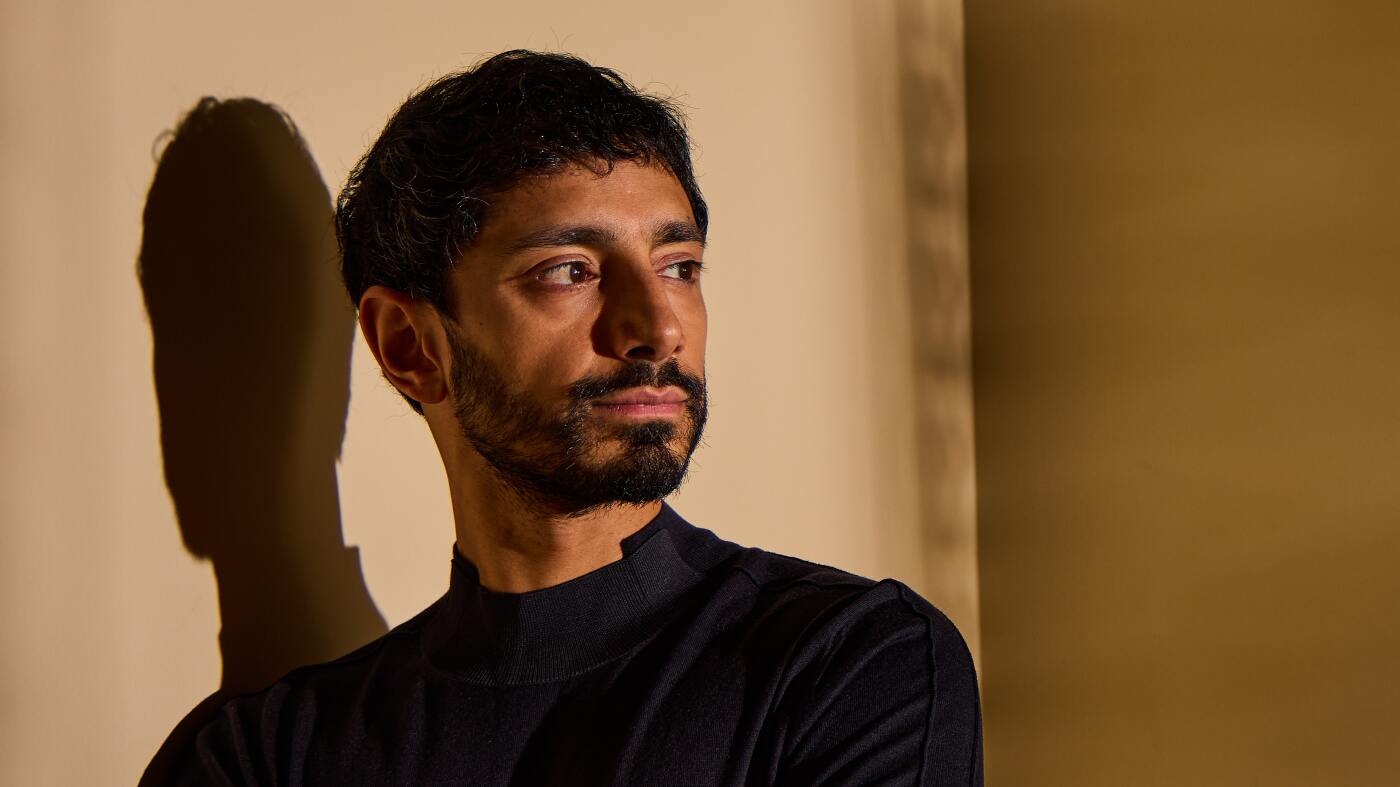
Riz Ahmed, shown here in December 2025, won an Academy Award in 2022 for his life action short film, The Long Goodbye.
Tristan Fewings/Getty Images
hide caption
toggle caption
Tristan Fewings/Getty Images
Actor Riz Ahmed admits to being his own worst critic.
“I remember waking up in the middle of the night, two years after I wrapped on [the 2016 series] The Night Of, and going to the mirror and redoing scenes that the whole world had already seen,” he says. “I’d already been handed awards for this performance, [but] I was like, no, I gotta get it right.”
That energy — what Ahmed refers to as “chasing acceptance and running away from your own inner critic” — runs through his new Prime Video series Bait. The series, which Ahmed wrote and stars in, focuses on a struggling British Pakistani actor named Shah who lands an audition to be the next James Bond. When word gets out, and the internet goes wild. Suddenly, Shah’s life starts to resemble the character he’s auditioning to play — except he’s chasing acceptance instead of a villain.

“[Showrunner Ben Karlin and I] felt, early on in the show, you needed to see just how mean Shah’s inner voice can be about him,” Ahmed says. “I think actually there’s a lot of Shah in all of us, more than we like to admit. … The gap between that public self and the messy vulnerability of our private selves is often huge.”
Ahmed says the show’s title has multiple layers and meanings. In British slang, “bait” refers to being blatant and attention-seeking. It can also refer to online trolling. In Arabic and Hebrew, it means home, while in Urdu, it’s a term for loyalty.
“Of course, there’s a big spy-thriller element to our show, and bait is something that is used as part of a trap,” Ahmed says. “So it’s a weird thing where only in retrospect we realize like, ‘oh my God, we accidentally stumbled on the perfect title for this that actually communicates the entire layer cake of this show.’ It is all those flavors and the word ‘bait’ means all those things.”
Interview highlights
On what James Bond represents in Bait
The show isn’t really about James Bond, but James Bond is a very important symbol because he is the ultimate symbol of success. As an actor he is the pinnacle of cinematic achievement. And yet for any of us, he’s this archetype of decisiveness, desirability, of being in control, being unflappable, of being invulnerable. And so I wanted the character of James Bond to serve as this symbol of aspiration, this unattainable kind of self that Shah is hunting down almost. And in chasing this symbol, is he abandoning himself? Is he abandoning where he’s from? Is he abandoning his family? Has he forgotten who he really is? …

I think that that’s something that we all kind of go through. We’re often pulled between the people we were and the people that we want to be. And actually the healthy equilibrium is probably somewhere in the middle. Probably that thing you want to, is like an attempt to escape yourself. And that thing that you were is maybe a version of yourself that you need to evolve out of.

Guz Khan and Riz Ahmed star in the Prime Video series Bait.
Prime Video
hide caption
toggle caption
Prime Video
On playing with different genres in Bait
We try and flip the series the whole time. There’s a spy-thriller episode, there’s romantic comedy, there’s kind of a surreal episode, there is one that’s almost like the Bond gala, like James Bond turns up at … [a] black-tie event and hijinks ensues. We’ve got that. We got all these different flavors and we’ve got an Eid episode as well. … We’re very deliberately trying to layer in and thread multiple different genres, because honestly, I feel like my life takes place in different genres. I feel that right now I’m here, lucky me, you know pretending to be all clever, talking to you guys on Fresh Air and I’m gonna walk outside and slip on a banana peel and fall flat on my face and suddenly I’m in a slapstick, you know?
We wanted to have that multiplicity, that tonal whiplash, because honestly that’s just what I enjoy and I felt like if I can make something that’s a full meal — that is a romance and a spy thriller and a family drama … but overall a comedy — then I could also just solve a very personal problem, which is me and my wife squabbling over what we’re going to watch.
On working with Patrick Stewart in Bait

I don’t want to give anything away. I guess I’ll just say that working with him showed me your art can kind of only be as big as your heart is, if that doesn’t sound too corny. Like, you have to have a capacity for such receptivity, humility, generosity, and empathy in order to kind of be an artist of that stature and at that level. … He was just such a pro and such a gentleman and I’ll really cherish that experience.
On discovering Hamlet as a British Pakistani teen
I am like many people. I felt like Shakespeare is the epitome of everything I’m on the outside of. It doesn’t belong to me. It’s stuffy. It is elitist. I got a government-assisted place to a private school where I felt like an outsider for many different reasons. And I was lucky enough to have an English teacher … who [was] a white, Jewish middle-aged man from a different place in the U.K. I thought we had nothing in common, but he spoke fluent Punjabi, and he brought me Hamlet and said, “This thing, this story, this character, it’s at the heart of the establishment that you feel so alienated from in many ways. But have a read of it? You might recognize yourself in this character.”

And I did, like millions of people have, right? Hamlet being a character who feels out of place. Hamlet himself feels like an outsider. He feels like he doesn’t belong, like no one understands. … And it was then, at the age of 17, that I very precociously had the idea that, “Man, I wanna make a movie of this one day.”
On starring in a new adaptation of Hamlet
Hamlet is a story and it’s character who is grieving the illusion that the world was ever a fair place. And I think that’s how we’re all feeling now. We’re all grieving and reeling from this realization that “OK, I knew the world is unfair, but now the shameless brazen unfairness of it is just kind of laid bare.” … The part that we were struggling to unlock is: How do you not make this feel just like a Shakespeare performance, and a poetry recital? How do you not make this feel like a kind of self-congratulatory, like “actor wants to take on the classic”?
It really took us meeting Aneil Karia, the director. It was after I collaborated with him on the short film, The Long Goodbye, for which he won an Oscar, that I was like, “Oh, I think we know how to do this. We need a director who’s worked a lot in rap music videos. We need a director who can render poetry in a very raw way and give us raw action in a poetic way.” … We had a long conversation about how this has to feel like music.
On how his background as an MC helped with the Shakespeare verse

One thing that [Shakespeare] played with all the time was rhythm. Rhythm, rhythm, rhythm. And so, in the same way that when I listen to some of my favorite rappers’ new songs, I don’t know what they say the first-time around, but I am totally wrapped. I’m totally leaning in, I’m engaged. I feel it emotionally. It’s the same way. Your first experience of this thing is supposed to be like music. You didn’t catch all of the words, but that word there felt weird enough to make you sit up. And what you’re supposed to do is receive an electric charge of rhythm and melody and musicality, just like rap music. But that’s not the actual experience of these plays. So I wish more people spoke about Shakespeare in that way. Because, to me, it is much more like music than it is an English class.
Ann Marie Baldonado and Nico Gonzalez-Wisler produced and edited this interview for broadcast. Bridget Bentz, Molly Seavy-Nesper and Beth Novey adapted it for the web.



Lifestyle
Vintage-obsessed millennial parents are driving L.A.’s booming kids’ clothing resale market

Kids’ vintage clothing sales are experiencing a remarkable boom at in-person markets and online, where prices for clothes for little ones have shot up on websites including Depop and Poshmark. Millennial parents are looking to outfit their kids in the clothes and TV and film characters they loved (or coveted) when they were kids.
The result? There’s a new generation of kiddos hitting the playground looking incredibly cool. Take Amari Case, a SoCal toddler who spent a Sunday afternoon this spring ambling around a vintage market in a West Hollywood warehouse clad in baggy jeans and a ’90s-era tee emblazoned with the “Dragon Ball Z” character Son Goku.
When she wasn’t scribbling on a Lorax coloring sheet, she’d been cruising around the market with her dad, Aaron Munoz Case, snapping up new pieces destined to make her the flyest kid at the preschool playground.
Neil Wright, from left, Kristine Nite Scalzo and Brandon Rosenblatt, co-founders of Elemeno Kids Vintage Market.
Showing off Amari’s new vintage satin L.A. Raiders jacket and tiny teal Grant Hill Detroit Pistons jersey, Munoz Case, who was also impeccably dressed, noted that while Amari went through a phase at about 18 months where she wanted to dress herself, eventually she gave up and went back to letting her dripped-out dad dictate her wardrobe.
Munoz Case found Amari’s first vintage piece at the Rose Bowl Flea Market and got the bug, going back every month to pick up something to add to his little’s wardrobe.
Trendspotters and researchers say Munoz Case isn’t alone in his quest. The market for kids’ vintage clothing has heated up precipitously over the last few years, perhaps hitting a boiling point in January when an Eeyore romper from the ’90s sold for over $3,000 on EBay. (It was new with tags, but one without tags still went for almost a grand about a month later.)
The thirst for tiny throwbacks is so popular that first-ever, all-kids market Elemeno — named after the “L-M-N-O” bit of “The Alphabet Song” and where Amari was toddling and shopping — drew 17 vendors and over 2,000 attendees over a single weekend in March. (There are plans for another Elemeno Kids Vintage Market pop-up later this year in New York, as well as plans to bring the event back to L.A. sometime next year.)

2

1. Cameron Scalzo, wearing a vintage McDonald’s T-shirt from the ‘90s, and mom Kristine Nite Scalzo. 2. Cameron Scalzo rocks an Avirex jacket from the ‘90s.
Eye Speak Vintage’s Kristine Nite Scalzo, who co-organized the event and is opening an all-kids vintage store in Pasadena this month, says she fell under the kids vintage spell in 2020 when she was pregnant with her son. She’d always been a vintage shopper for herself, so she knew she wanted to pass the passion down to the next generation. She started filling up her son’s closet, and soon enough, she found herself selling her other finds out of a bodega in her garage.
She has a by-appointment space in Pasadena now, where she draws everyone from Rihanna’s stylist to out-of-town moms who make a point to stop by on their way to Disneyland. “The community around kids vintage has really skyrocketed on Instagram over the past six years,” Scalzo says. “We want to know who we’re buying from. We want to know that we’re doing good with buying secondhand. And it’s a hobby for people that can turn into a possible business on the side. Because knowing there’s a big group that’s interested in vintage kids clothes, you can always pass an item [your kid outgrows] to someone else or resell it.”
Scalzo says some parents are out digging through bins at the Goodwill Outlet looking for the perfect piece, while others are content to pay up for, say, a ’90s Simpsons T-shirt or a mini-size Harley-Davidson jacket. Scouring the racks at the Elemeno market, most pieces cost $15 to $40, though there were special pieces pulled to the side in some booths with price tags that could make a parent’s eyes pop. (Think $275 for a set of well-worn Spider-Man overalls from the ’00s or $150 for a pair of Cross Colours denim shorts from the ’90s.)
In kids and adult vintage alike, mint condition is highly valued. No matter the era in which they were raised, kids tend to be messy. They get strawberry juice on their shirts or scuff up the knees on their Bugle Boy jeans. Vintage kids clothes that look pristine are more expensive, and while plain kids clothes do sell, items with characters on them or cool prints tend to draw more attention and dollars.
Brandon Rosenblatt, another of the Elemeno organizers, says he’s had his eye on a specific kids “Back to the Future” shirt for some time, but notes that it typically sells for about $1,000. He’s partial to McKids clothes for his daughter, from McDonald’s short-lived kids clothing brand, noting that he’s even snagged her a vintage official McDonald’s-themed aloha shirt from Hawaii, something he says he’s never seen anywhere else.
1

2

1. Siblings Amora and Milo Castilo wear vintage cowboy hats, jackets and chaps. 2. Thalia Castilo and her kids Amora and Milo.
Other collectors, he says, might be a little less obscure, leaning into mainstream characters such as Strawberry Shortcake or from ’80s and ’90s properties including “The Land Before Time” and “Rugrats.”
“A lot of millennials are having kids — like everyone who’s in their 30s and 40s — and they all want to put their kids in the same IP they grew up in,” Rosenblatt says.
“It’s the thrill of the hunt that gets everyone so excited,” Scalzo says. “Once you find that perfect nostalgic piece, you’re like ‘Holy s—,’ and you just want to chase that feeling again and again.”
Mia De La Rosa, a reseller who was at the Elemeno market, says that like Scalzo, she started buying kids vintage clothes when she was pregnant with her daughter, Liv, who’s 6 now, very into everything on PBS Kids and has a closet full of thrifted vintage garb covered in characters such as D.W., the annoying little sister from the ’90s show “Arthur.”
Everything Liv wears is “completely her style,” De La Rosa says. “She dresses herself every day and she gets compliments on what she’s wearing at school all the time.”
Other vintage-wearing kids — and in particular younger ones — might simply be sporting what their parents like or might just like the look of the shirt even if they don’t know what it’s advertising. (An 8-year-old boy at the Elemeno market, for instance, chose to wear a pristine T-shirt highlighting the ’90s Jim Carrey movie “The Mask” because it featured his favorite color: green.)
Derrick Broaster, a vintage enthusiast turned full-time reseller, says that while he chooses to put himself in clothes from the ’60s and ’70s, he outfits his two sons in clothes from the 2000s. (“How Bow Wow used to dress when he was a kid,” he says.)
Although his younger son tends to rebel against Broaster’s vintage picks, opting for whatever Spider-Man shoes happen to be in his eyeline, his older son has leaned in, letting his dad advise him on what vintage pieces could work and what would be the most stylish.
1

2

1. Julian, left, and Javier Gutierrez show off their vintage clothing. Javier says his mom always tells him to keep his vintage outfits clean. 2. Mom Priscilla Guzman, clockwise, Dad Javier Gutierrez and sons Julian and Javier Gutierrez enjoy the vibe of vintage clothing. Guzman says she’s been buying and selling kids’ vintage since her oldest son was born eight years ago.
Rosenblatt says a good portion of what vintage finds he sees in the market now has returned to the U.S. from places in Central America and South America or Asia where those pieces were likely sent decades ago after they were donated or given away.
“There’s a real underbelly of this vintage game with rag houses getting access to bulk product overseas and letting people sort through it,” he says. “There are companies now that rip through 20, 30 or 40,000 pieces of vintage clothing a week. It’s a really interesting ecosystem.”
For many kids vintage sellers, finding their stock is just as fun and interesting as getting it back into consumers’ hands. “Anywhere we can find clothes, we’re there,” says Matthew Carlos, owner of Long Gone Youth. He started selling vintage clothes 11 years ago, when he was 15, switched to kids vintage at 20 and has spent the last six years scouring flea markets, websites and swap meets.
“The kids market is definitely growing,” he says, “but I still feel like we haven’t even gotten close to where we can go. It’s just getting popular now, but the more events [like Elemeno] we can do, the more it’ll go mainstream.” Even now, some major brands like Gap and OshKosh B’gosh have recognized the interest in some of their styles from the ’80s and ’90s, moving to re-release the looks in limited runs.

Jackie and Frank Oropeza with daughter Rumi Mae shop at Elemeno Kids Vintage Market.
Kids resale is also leaning into streetwear culture. Rosenblatt, who worked in the streetwear industry, says that he’s noticed that a good portion of those interested in kids vintage — particularly, male shoppers — tend to be fans of streetwear brands like Supreme, Fear of God Essentials and Bape. At Elemeno, for instance, a good portion of the parents we saw pushing strollers were well-dressed dads seemingly on solo missions, something you don’t always see at kid-centric events.
“I just want my son to feel like I did as a kid,” said Justin Nguyen, while watching his toddler, Jayden, play with bubbles. “I want him to be happy, carefree and joyful, and I want to be able to spend time with him. My mom and dad were always working, even on the weekends. Now that I’m a dad, taking my son out on weekends to do stuff like this just seems like a blessing.”

Author Julia Elliott won for her short story collection Hellions.
Forrest Clonts/Tin House
hide caption
toggle caption
Forrest Clonts/Tin House
Writer Julia Elliott has won this year’s Carol Shields Prize for Fiction for her short story collection Hellions. The award honors work by women and nonbinary authors in the U.S. and Canada.
Elliott, who also authored the novel The New and Improved Romie Futch and the short story collection The Wilds, is known for blending elements of Southern gothic horror, surrealism and fairy tale. Hellions, published in 2025, includes stories set against backdrops like a plague-stricken medieval convent, a feminist art colony, and small Southern towns.
“This eerie, eclectic, genre-leaping collection takes no half-measures; every sentence of Hellions crackles or crawls,” wrote the prize jury in a statement. “Here, human folly moves against a backdrop of horror and magic … But for all its wildness, there is tremendous control.”
The prize, named after a Pulitzer Prize-winning novelist, awards $150,000 to one winner each year. Novels, short story collections, and graphic novels by women and nonbinary authors are eligible.
This year’s finalists included Quiara Alegría Hudes (The White Hot), Lee Lai (Cannon), Megha Majumdar (A Guardian and a Thief), and Sonya Walger (Lion). They will each receive $12,500.
The Carol Shields Prize went to writer Canisia Lubrin in 2025.
You can listen to actor Donna Lynne Champlin read Elliott’s story “Hellion” on the Death, Sex & Money podcast here.
-
Lifestyle3 minutes ago
We’re having a main character summer. Are you? : It’s Been a Minute
-

 Technology11 minutes ago
Microsoft AI chief Mustafa Suleyman says there are three labs that matter — and he wants Microsoft to be the fourth.
-

 World18 minutes ago
US ally Kuwait condemns ‘brutal and ongoing Iranian attacks’ after airport was hit
-

 Politics21 minutes ago
Spencer Pratt surges to runoff in LA mayor’s race after angry voters send message to Karen Bass
-

 Health26 minutes ago
One extra serving of processed meat a day linked to higher cancer risk
-

 Sports33 minutes ago
AJ Brown trade outcome: Dianna Russini paid a heavy price while Mike Vrabel emerged unscathed
-

 Technology36 minutes ago
Could your Samsung phone replace your passport?
-
 Business41 minutes ago
Rent-hike ban to protect fire victims ends despite gouging concerns

