Entertainment
Author Brian Doherty falls to his death; the libertarian is recalled as a champion of freedom


An acclaimed author and historian of the libertarian movement fell to his death last week, his employer confirmed.
The body of Brian Doherty, 57, senior editor of the libertarian magazine Reason, was found Thursday “after a fall” in the Battery Yates park portion of the Golden Gate National Recreation Area, the publication wrote.
The National Parks Service’s law enforcement agency confirmed it responded to an incident at Battery Yates on Thursday “involving a male visitor who reportedly fell from the cliffside into the water.”
“The individual was recovered and pronounced dead,” said Scott Carr, parks service spokesperson, in an email. “We do not have any further information to share at this time.”
The Golden Gate Bridge is seen from the Fort Baker Marina in the Golden Gate National Recreation Area in San Francisco. Doherty was found in the Battery Yates park portion of the recreation area.
(Los Angeles Times)
Doherty was the author of several books, with Reason saying his most notable work was the 2007 study “Radicals for Capitalism: A Freewheeling History of the Modern American Libertarian Movement.”
“Doherty has rescued libertarianism from its own obscurity,” the Wall Street Journal wrote of the work, “eloquently capturing the appeal of the ‘pure idea.’”
Libertarianism’s role in gun control and the courts was the subject of his works, and Doherty had no shortage of admirers.
Loren Dean, chair of the Libertarian Party of California, said it was Doherty’s work at Reason that brought him into the liberty movement.
“Brian Doherty was the best kind of libertarian: one who holds true to the principles of liberty as they are,” Dean said in an email. “He was a tireless champion of both gun rights and police reform who wrote books on both [former U.S. Rep.] Ron Paul and Burning Man; his work did not sit on either the ‘left’ or ‘right’ side of the authoritarian box, but delightfully outside that tired frame, where libertarian principles truly sing.”
Doherty began working at Reason in 1994, according to the publication’s obituary, left the company and returned in 2000 at the behest of Nick Gillespie, then editor in chief.
“What I liked most about Brian was his abiding interest in things happening on the margins of American culture, politics, and thought, and his deep appreciation for the prodigious bounty that markets deliver reliably and without moralizing,” Gillespie wrote in his farewell to Doherty, who had many opinion pieces published in The Times.
Far from just heady subjects, Doherty covered “both libertarian and whimsical” subcultures, according to the obituary, including New Hampshire’s Free State Project and the Seasteaders, a growing community of individuals dedicated to living on the seas.
The Seasteading Institute tweeted its condolences and noted the group had “appreciated his coverage of seasteading over the years.”
Doherty was a native of Queens, N.Y., majored in journalism at the University of Florida and joined the college’s libertarian group in 1987, according to Reason’s obituary.
He moved to Los Angeles in the mid-1990s and joined a group known as the Cacophony Society, a gang that “inspired or created phenomenon ranging from the novel/movie Fight Club to urban exploration, billboard alteration, the Yes Men, flash mobs, and ‘Santa Rampages,’” according to the obituary.
One of those projects translated into the formation of the annual Burning Man festival, the obituary stated. Doherty later chronicled the famed artsy, hippie-like festival in his book “This Is Burning Man.”
“Libertarians talk a lot about freedom and responsibility. Brian embodied both,” Reason Editor in Chief Katherine Mangu-Ward said in his obituary. “His weird, colorful life — filled with comics and festivals and music and books — was a model of life lived freely and openly.”



Starring: Marshall Williams, Richard Harmon and Alex Essoe
Directed by: James Kondelik
Rated: NR
Running Time: 108 minutes
Our Score: 1.5 out of 5 Stars
Survival horror is the ultimate guilty pleasure because you can amplify any life-or-death situation into the paranormal, horrific, thrilling, or cruelly dramatic extremes it finds itself in. So why doesn’t “Pitfall” come close to tickling “The Ritual,” “The Blair Witch Project,” or “Wolf Creek” vibes?
Woods and grief feel like a ritualistic trope at this point as “Pitfall” opens on Scott (Marshall Williams) and Ashley (Alex Essoe) mourning the death of their parents. For reasons that may or may not be revealed later, they join three friends on an ominous trip that quickly introduces the titular pitfall, a massive trap designed to kill prey.
The movie constantly battles convention with unpredictability. The problem is that at more than 100 minutes long, there’s plenty of time to sit around and wonder where the story is heading. If “Pitfall” moved with the frantic pace of a Tuesday afternoon soap opera on meth, maybe I’d be swept up in the chaos. Instead, I found myself waiting for reveals that felt more eye-rolling than shocking.
I really wanted to like “Pitfall” because of how invested it is in physical violence, emotional trauma, and psychological brutality. Unfortunately, the movie never convinced me it knew what to do with those ideas. By the time it arrives at its revelations and ultimate purpose, “Pitfall” feels less like a title and more like a review.

After eating a lot of fast food, some of it on roller coasters, YouTuber Allen Ferrell has been banned by Six Flags from all of its amusement parks nationwide. For life.
McDonald’s chicken nuggets were apparently an ultra-processed food item too far for the folks at Six Flags’ Cedar Point in Sandusky, Ohio.
“This guest has been banned from all Six Flags parks for life,” a Cedar Point spokesman explained in an email Thursday to Cleveland TV station WKYC. “Safety is a cornerstone of our business and we have zero tolerance for inappropriate and unsafe behavior.”
Zero tolerance for inappropriate behavior? Zero? Where’s the fun in that?
“Our ride safety policy strictly prohibits all loose articles on rides, including food which can become a choking hazard,” the spokesperson continued.
“I had no idea that eating a 10-piece chicken nugget on a roller coaster would be a national headline, but here we are,” Ferrell told Fox 8 News in Cleveland.
He said he gets the park’s point with the ban, even though he’s been going there since he was a kid and is a huge fan of the operation.
“I understand. And we kind of worked it out,” he told Fox 8 News. “They just don’t want other people getting hurt on the ride. But me personally, it was a really fun challenge.”
Ferrell’s shtick on social media is accepting challenges from his followers and then taping himself attempting to do what they propose. Eat a McDonald’s Big Mac inside a Burger King. Throw a plunger at a Target sign. Bowl blindfolded until he gets a strike.
“If anyone asks,” Ferrell tells one apparently bored ride operator in the video that documented this particular coaster crime, “I do not have chicken nuggets in my underwear.”
Ferrell decided to try the challenge on the park’s Millennium Force ride, a “looming giant amongst a park full of them,” a coaster that was “designed for the purpose of proving bigger is better.” A roller coaster that when it was created in 2000 “demanded an all-new category just to classify its one of a kind nature,” giving rise to the “giga-coaster.” According to Cedar Point, as all of this verbiage is, Millennium Force “shoots riders over hills, past lagoons and through tunnels, all at unthinkable speeds.”
The ride actually tops out at 93 mph, a speed often thought about on freeways in the Los Angeles area when traffic is going 8 mph. It’s quite thinkable to eat fast food in a car in L.A. But it turns out what was really unthinkable was Ferrell getting all 10 nuggets down the hatch before the Six Flags ride was over.
In the video, which had almost 800,000 views on YouTube as of Friday afternoon, he morphs from happy snacking dude to dude moaning in discomfort, struggling to shove nuggets in his mouth while unintentionally applying dipping sauce to his face via G-force.
“Oh, I failed,” Ferrell says, wiping off the face-sauce as the coaster pulls up to the platform and someone in line blurts, “Are those chicken nuggets?”
Turns out he snarfed seven of them, he confesses to the two guys in front of him in the coaster car. Ferrell said later that he was glad to be in the back row because it meant nobody behind him got sauced.
That said, watching the sweet-and-sour sauce flying in slow motion is actually quite amusing. But eating nuggets that have been in one’s underwear?
The perma-ban sounds like the least of his problems.
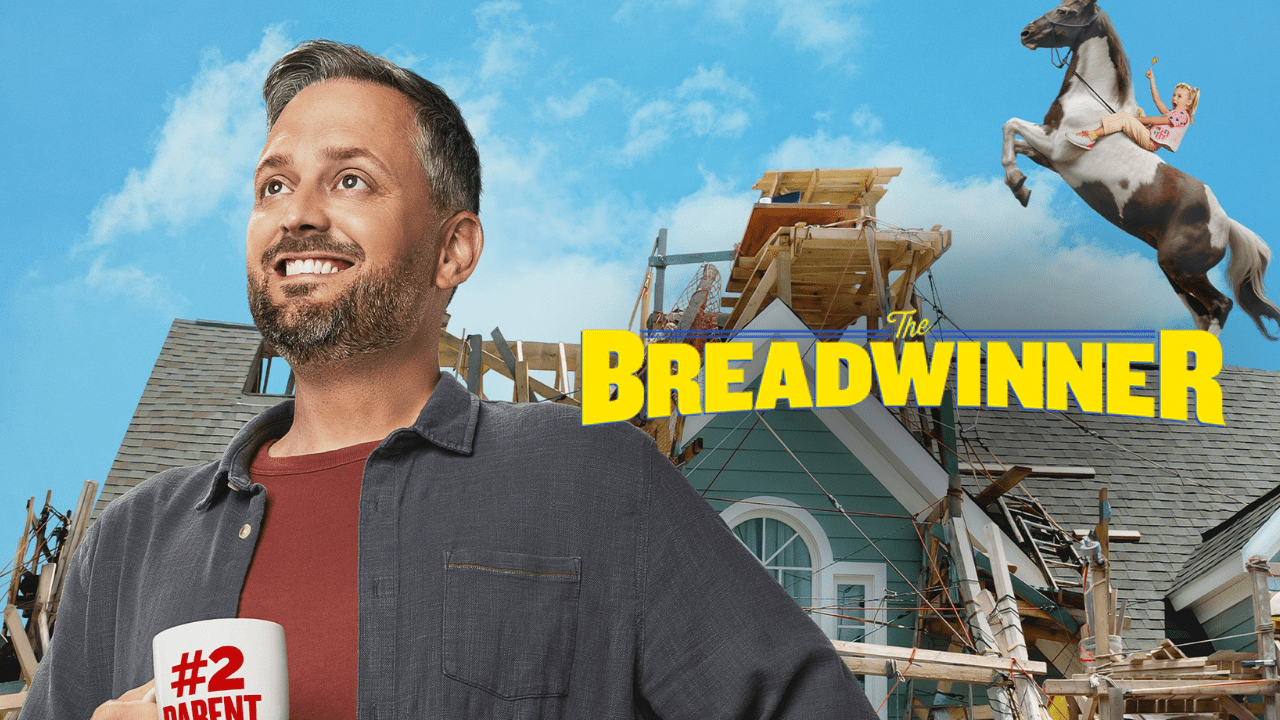
As a lowkey, throwback family drama, The Breadwinner is an amusing extension of comedian Nate Bargatze’s humor and vibe, providing some breezy entertainment and wholesome messages.
About the Film
The “dads are big dummies around the house” gag is far from a novel idea, but as a skilled comedian knows, it’s not always the subject that matters, but how you talk about it that makes or breaks the joke. Comic Nate Bargatze is as good as anyone at doing that, blending a dry and self-deprecating delivery with a refreshingly clean brand of comedy. His cinematic debut in The Breadwinner is exactly what might be expected. As a lowkey, throwback family drama, The Breadwinner is an amusing cinematic extension of comedian Nate Bargatze’s humor and vibe, providing some breezy entertainment and wholesome messages.
As one of the biggest and most influential comics in the world right now, the main draw in The Breadwinner is Nate Bargatze himself. Many Christians have latched onto him due to his trademark “clean comedy” that swims refreshingly upstream of the regular vulgarity and shock jock tendencies in the comedy world. For “clean comedy” to work, both the “clean” and the “comedy” need to be present. The Breadwinner mostly passes the test but does better at the first than the second. It is more a clean and wholesome drama than a hilarious comedy.
During an opening voiceover, Bargatze remarks, “This might sound a bit old fashioned….” He’s speaking about the traditional family dynamic of a husband “breadwinner” and the stay-at-home mom (a family structure the film eventually challenges for a more modern understanding). “Old fashioned” is also a good description of the film itself. The Breadwinner feels a bit like a Christian film made in the 1990s, or as if a sitcom like Full House had ever made a theatrical feature film. Whether this is a harsh criticism or a ringing endorsement may depend on the desires and expectations of the audience.
I suspect that “old fashioned” is exactly what many Christian audiences want. Not “old fashioned” as in “outdated”, but as a nostalgic throwback to a simpler time and to conservative values. Much of the film is exactly that, both a wholesome affirmation of family and a movie that is easily accessible for families. At the same time, some of the film’s messages may be a bit muddy or progressive for some viewers (see themes below).

To be “clean” is only part of the equation, and the absence of vulgarity doesn’t inevitably result in effective “comedy”. My biggest problem with The Breadwinner is that, despite featuring an often-hilarious comic, the movie just isn’t all that funny. This may partially be a matter of taste, and how much (or little) you jive with the comedic sensibilities of Bargatze himself. During the film’s closing credits, recordings of his various standup sets are shown, revealing how his jokes have been directly incorporated into the movie. It’s a fascinating glimpse into the adaption process of jokes from the stage into a film and highlights the synergy between the film and Bargatze’s comedy.
As an observational comic, Bargatze’s strength is in his ability to find hidden humor in the middle of relatable, everyday life (even more relatable to me, as the movie was filmed 10 minutes from my house). While some of the events in the film’s third act do elevate the spectacle and stakes (such as letting a horse loose to inside the house), many of the gags are built on relatable family experiences (keeping up with laundry, cooking, helping emotional children navigate the challenges of growing up ). Hearing Nate Bargatze do a comedy set and find humor in these mundane life experiences can be hilarious, but actually seeing those mundane experiences play out on screen is a bit more, well, mundane.

The Breadwinner is not necessarily boring, but it’s also not always all that exciting. There was no laughing out loud in my theater, and I can’t recall any standout moments that I’d be excited to revisit or to watch with someone else. Basically, all the funniest moments are featured in the movie’s marketing trailers, so how you feel about those is a gauge for how much you will enjoy the film.
Overall, The Breadwinner is fine as a film that will land well with its target audience. Still, I think it would be great as a sitcom show like a real-world Bluey. I genuinely cared about the family and would enjoy spending more time with them. The film’s lowkey stakes and everyday family life vibe would translate perfectly to the small screen while giving Bargatze an opportunity to showcase more comedic range than just a struggling “Mr. Mom”. Even so, fans of Bargatze and his brand of humor, or audiences just looking for some squeaky-clean family entertainment, may find exactly what they’re looking for here. It may not be a great film, but it’s a hard movie to dislike. The Breadwinner has plenty of heart and charm to be endearing and provides enough moderate chuckles to send audiences out of the theater with a smile.
On the Surface
For Consideration
On the Surface—(Profanity, Sexual content, violence, etc.).
Language: There are a few uses of “God.”
Violence: None.
Sexuality: There are a couple mild innuendos (for example, a roofer remarks that his ex-wife left him a review that “his tools don’t get the job done”).
Other: Frequent drug and alcohol abuse is shown.
Beneath The Surface
Engage The Film
Family Dynamics
The central theme in The Breadwinner is identity and where it’s found. Nate Wilcox (Nate Bargatze) finds his identity as the best car salesman at his dealership. He must determine where his purpose and self-worth come from when he’s required to stay at home with the kids while his wife, Katie (played by Mandy Moore), navigates a similarity drastic transition from stay-at-home mom to thriving businesswoman. Their children face similar challenges, struggling to not allow external factors (such as school spelling bee competitions and cute boys) to determine who they are. It’s a wholesome message, and one that works for any age demographic. The film ultimately suggests that identity must come from the love and unity of a family.

Where the message gets a bit muddy is in the nuances of how the film answers those questions. The film’s tagline is “Let the dad era begin.” The so-called “dad era” begins when Nate finally decides that instead of trying to follow mom’s hardline established family organizational system he instead needs to develop a new system that works for him. As a dad myself, the “dad era” is actually pretty great, requiring the children to take on more responsibly while emphasizing trust and partnership rather than a rigid top-down scheduling structure. Nate’s motivations are ultimately selfish (he lies and returns to work) but seeing him as a stay-at-home dad rather than a “poor substitute mom” is commendable. Unfortunately, the film seems to disagree, suggesting that the success of a stay-at-home dad is only in how closely they can mimic mom.
His wife slips effortlessly from stay-at-home mom to big-time business owner, while he is a bumbling disaster as a homemaker. It is seemingly easy to be a working dad and hard to be a domestic mom, falling into the trap of many Hollywood films that struggle to be pro-woman (good!) without also being anti-man (bad!). The Breadwinner doesn’t go quite that far. It’s not anti-man, but it fails to celebrate or show the strengths of dads and men. Even a few moments of Nate helping his wife with her own role reversal would have gone a long way to showcasing the complementary difference and strengths within the family.

-
 Politics11 minutes ago
Commentary: A second offering to Spencer Pratt, and 5 points about the L.A. mayor’s race
-
 Sports19 minutes ago
Alyssa and Gisele Thompson joined NWSL in high school. Their younger sister might be better
-

 World29 minutes ago
Confirmed Ebola cases nearly double in days as WHO chief visits DR Congo
-
 News56 minutes ago
Pride celebrations struggle as corporate sponsorships dry up
-

 Los Angeles, Ca2 hours ago
Man stabbed to death after violent dog attack on Hollywood Walk of Fame
-
Detroit, MI3 hours ago
Black Legacy Day to be celebrated May 30th in Detroit
-

 San Francisco, CA3 hours ago
A 1906 fire burned 200,000 books. More than a century later, one was returned | CNN
-

 Dallas, TX3 hours ago
Cowboys news: More moves that Dallas could make this offseason

