Crypto
How do geopolitical tensions affect cryptocurrency markets | News.az


Cryptocurrency markets are increasingly shaped not only by technology and finance but also by global geopolitical developments.
From armed conflicts and sanctions to trade disputes and energy shocks, geopolitical tensions now play a direct role in driving volatility, investor behavior, and long term narratives in the crypto space. This FAQ explainer examines how and why global instability influences digital assets, and what it means for investors and policymakers.
What are geopolitical tensions in the context of financial markets
Geopolitical tensions refer to conflicts, rivalries, and uncertainties between countries or regions that can disrupt economic stability. These include military conflicts, diplomatic crises, sanctions, trade wars, and political instability.
In traditional markets, such tensions often lead to volatility in stocks, commodities, and currencies. Increasingly, cryptocurrencies are also reacting to these developments, reflecting their growing integration into the global financial system.
Why do geopolitical events impact cryptocurrency markets
Geopolitical events affect investor confidence, capital flows, and economic expectations. When uncertainty rises, investors reassess risk and often reallocate assets.
Cryptocurrencies are sensitive to these shifts because they are still considered high risk assets. At the same time, they offer unique features such as decentralization and borderless transactions, which can make them attractive during certain types of crises.
As a result, geopolitical events can both boost and weaken crypto markets depending on the nature of the situation.
Is crypto considered a safe haven during geopolitical crises
The idea of cryptocurrencies as safe haven assets is complex and still evolving.
In theory, Bitcoin has characteristics similar to gold, including limited supply and independence from central banks. This has led some investors to treat it as a hedge against geopolitical instability.
In practice, however, crypto often behaves like a risk asset. During major global shocks, such as sudden escalations in conflict, investors may sell crypto alongside stocks to reduce exposure.
That said, in specific situations involving currency instability or restricted access to banking systems, cryptocurrencies can function as a practical alternative for storing and transferring value.
How do wars and military conflicts influence crypto prices
Military conflicts create uncertainty in global markets, affecting investor sentiment and economic expectations.
In the early stages of conflict, markets often react with sharp volatility. Crypto prices may drop as investors move to safer assets or cash. However, if the conflict leads to prolonged instability, crypto can benefit from increased demand as an alternative financial system.
Conflicts can also drive real world use cases for crypto. In some regions, individuals and organizations use digital assets to move funds across borders quickly when traditional systems are disrupted.
What is the effect of economic sanctions on crypto markets
Sanctions are a major geopolitical tool that can have direct implications for cryptocurrencies.
When countries or entities are cut off from global financial systems, they may turn to alternative channels, including crypto, to conduct transactions. This can increase demand for digital assets in affected regions.
At the same time, governments and regulators closely monitor such activity, leading to stricter rules and enforcement measures. This creates a balance between increased usage and increased regulatory pressure.
Sanctions can also impact global energy markets and currencies, indirectly influencing crypto prices.
Can crypto be used to bypass sanctions
There is ongoing debate about the extent to which cryptocurrencies can be used to bypass sanctions.
While crypto offers a degree of anonymity and decentralization, large scale transactions are still traceable on public blockchains. Authorities have developed tools to monitor suspicious activity and enforce compliance.
However, smaller scale usage and peer to peer transactions can still occur outside traditional oversight. This has raised concerns among regulators and contributed to increased scrutiny of the crypto sector.
How do energy markets and oil prices affect crypto
Geopolitical tensions often impact energy markets, particularly oil and gas prices. These changes can influence crypto markets in several ways.
Higher energy prices can increase inflation, which may drive interest in alternative assets like Bitcoin. At the same time, rising costs can reduce disposable income and limit retail investment in crypto.
Energy prices also directly affect crypto mining operations, especially for proof of work networks like Bitcoin. Higher electricity costs can reduce profitability for miners and influence network dynamics.
What is the relationship between crypto and traditional safe haven assets
Cryptocurrencies are often compared to traditional safe haven assets such as gold and government bonds.
During geopolitical crises, gold typically rises as investors seek stability. Crypto has sometimes followed this pattern but not consistently.
In many cases, crypto correlates more closely with equities, particularly technology stocks. This suggests that it is still viewed primarily as a growth oriented asset rather than a defensive one.
However, the correlation can shift over time, especially as the market matures.
How do currency crises influence crypto adoption
Currency instability is one of the strongest drivers of crypto adoption.
In countries experiencing high inflation or currency devaluation, individuals may turn to cryptocurrencies to preserve value. This is particularly evident in regions facing economic crises or strict capital controls.
Geopolitical tensions can trigger such conditions, increasing demand for digital assets as an alternative to local currencies.
This type of adoption is often practical rather than speculative, focusing on utility rather than investment returns.
What role do central banks and governments play
Governments and central banks respond to geopolitical tensions with policies that can affect crypto markets.
These include interest rate changes, capital controls, sanctions, and regulatory measures. Each of these actions can influence investor behavior and market dynamics.
In addition, many countries are exploring central bank digital currencies. These initiatives are partly driven by the desire to maintain control over financial systems in an increasingly digital and geopolitically complex world.
How do global trade tensions affect crypto
Trade disputes and tariffs can disrupt global supply chains and economic growth. This uncertainty can lead to volatility in financial markets, including crypto.
Investors may adjust their portfolios in response to changing economic conditions, affecting demand for digital assets.
Trade tensions can also influence currency values, which in turn impact crypto markets. For example, a weakening currency may drive local investors toward cryptocurrencies.
Does crypto benefit from financial system distrust
One of the core narratives behind crypto is its independence from traditional financial institutions.
During periods of geopolitical tension, trust in banks and governments can decline. This can increase interest in decentralized systems that operate outside traditional frameworks.
This narrative is particularly strong among certain investor groups and can contribute to increased demand during times of crisis.
What are the risks of relying on crypto during geopolitical instability
While crypto offers potential advantages, it also carries risks.
Price volatility can undermine its effectiveness as a stable store of value. Regulatory crackdowns can limit access or usage in certain regions.
Security risks, including hacks and fraud, remain concerns. In addition, technological barriers can make it difficult for some users to adopt crypto during crises.
These factors mean that crypto is not a universal solution to geopolitical challenges.
How are regulators responding to the geopolitical dimension of crypto
Regulators are increasingly aware of the intersection between crypto and geopolitics.
Efforts are underway to strengthen compliance requirements, improve monitoring of transactions, and prevent illicit use of digital assets.
International cooperation is also expanding, with governments sharing information and developing coordinated approaches to regulation.
These measures aim to balance innovation with security and stability.
What does this mean for investors
For investors, geopolitical awareness is becoming essential in understanding crypto markets.
Monitoring global developments can provide insights into potential market movements. However, predicting the exact impact of geopolitical events remains challenging.
Investors should consider diversification, risk management, and long term strategies rather than reacting to short term news.
Understanding the broader context can help in making more informed decisions.
How might the role of crypto evolve in future geopolitical crises
As the crypto market matures, its role in global finance is likely to expand.
In future crises, cryptocurrencies may become more integrated into financial responses, both as investment assets and as practical tools for transferring value.
At the same time, regulatory frameworks will continue to evolve, shaping how crypto is used and perceived.
The balance between decentralization and oversight will be a key factor in determining its future role.
Conclusion
Geopolitical tensions are now a central factor influencing cryptocurrency markets. They affect investor sentiment, economic conditions, and real world usage of digital assets.
While crypto can offer alternatives during periods of instability, it also remains highly volatile and sensitive to global developments.
Understanding the complex relationship between geopolitics and crypto is essential for navigating this rapidly evolving market. As global uncertainty continues, cryptocurrencies are likely to play an increasingly visible role in the financial landscape.
News.Az
By Faig Mahmudov



The stablecoin industry has spent years trying to prove one thing above all else: that blockchain-based money can move faster, cheaper and more efficiently than the financial infrastructure it hopes to replace.

Key Takeaways
- Certik launched a security platform to provide an “anti-virus” layer for agent ecosystems.
- Sector audits reveal high risks, but CertiK aims to protect marketplaces with 90.5% scanning precision.
- Finchip.ai is among platforms expanding integrations ahead of future consumer-facing scan updates.
The Security Challenge
Blockchain and AI security firm Certik, on May 27, unveiled a new security platform designed to evaluate risks in third-party artificial intelligence (AI) skills. Dubbed the “anti-virus for AI agents,” the release comes amid growing industry concern over the security of AI skill marketplaces.
Security researchers have warned that many of these skills are unvetted, can execute system-level actions and may contain hidden malicious behavior, creating a new software supply chain risk for the AI era. Security audits across the sector have identified risks ranging from credential harvesting and data exfiltration to fund-transfer manipulation and prompt-based override attacks.
Despite these concerns, AI skill marketplaces have expanded rapidly as agent ecosystems mature. However, unlike traditional app stores, most skills are sourced from public repositories with little or no review. Analysts say this creates opportunities for attackers to embed harmful instructions, trigger unauthorized data access or manipulate autonomous execution flows.
In a recent blog post, Certik said its skill scanner platform is designed specifically to evaluate risks that emerge during execution, including scenarios involving financial transactions or fund calls. The scanner produces a numerical score from 0 to 100, along with “pass,” “warn” or “fail” verdicts and categorized findings. According to the company, the system achieves up to 90.5% precision in identifying security risks.
“As AI agents become more deeply integrated into financial systems, enterprise workflows and everyday digital interactions, the security model around third-party skills becomes critically important,” said Ronghui Gu, Certik’s CEO and co-founder. “CertiK Skill Scanner was built to establish a standardized trust layer before execution, helping users and platforms identify hidden risks before sensitive data, assets or systems are exposed.”
Certik said AI skill marketplaces can integrate the scanner directly into publishing pipelines, automatically reviewing skills before they go live and displaying security verdicts to users. Enterprises can deploy the tool as part of internal compliance and risk-management workflows, while independent developers can use it to self-audit skills before publishing.
The company said future updates will allow everyday users to scan skills themselves before installation. The scanner has already been deployed in select Web3 AI agent infrastructure environments. Certik is also expanding integrations with additional platforms, including Finchip.ai.
“Trust is the prerequisite for any skill economy to function at scale,” said Gary Yang, incubation investor at Finchip.ai. “CertiK’s work on skill security verification is exactly what this ecosystem needs. It’s what makes Finchip’s mission of programmable skill ownership and distribution worth building.”
The launch follows Certik’s expansion into AI-focused security infrastructure. Earlier this year, the company introduced its AI Auditor initiative to address risks tied to autonomous systems and AI-driven execution environments.
“AI applications are moving toward increasingly autonomous execution, which creates a new category of security and trust challenges,” Gu said. “We believe security infrastructure for the AI era must function proactively, not reactively.”
Crypto
FBI Seizes Over $8 Billion In Cryptocurrency As Part Of The Largest Forfeiture In US Government History

The FBI seized over $8 billion in cryptocurrency, freed nearly 2,000 trafficked workers, and arrested nearly 300 people in a recent international operation.
As part of the operation, authorities shut down several “scam compounds” and crime organizations, including groups known as the Prince Group in Cambodia, Operation Sand Dollar in Dubai, and the Democratic Karen Benevolent Army in Myanmar.
“Scam compounds are modern-day criminal enterprises built to steal from Americans, launder money, and exploit trafficked workers,” FBI director Kash Patel wrote on X announcing the results of the operation.
Fox News reports that the U.S. The Democratic Karen Benevolent Army, an armed militia named after a region in Myanmar that is allegedly connected to the Chinese mob, faces sanctions imposed by the U.S. Treasury. The government has classified it as a transnational criminal organization.
Images from an operation in Thailand reveal that the FBI confiscated office supplies and thousands of smartphones.
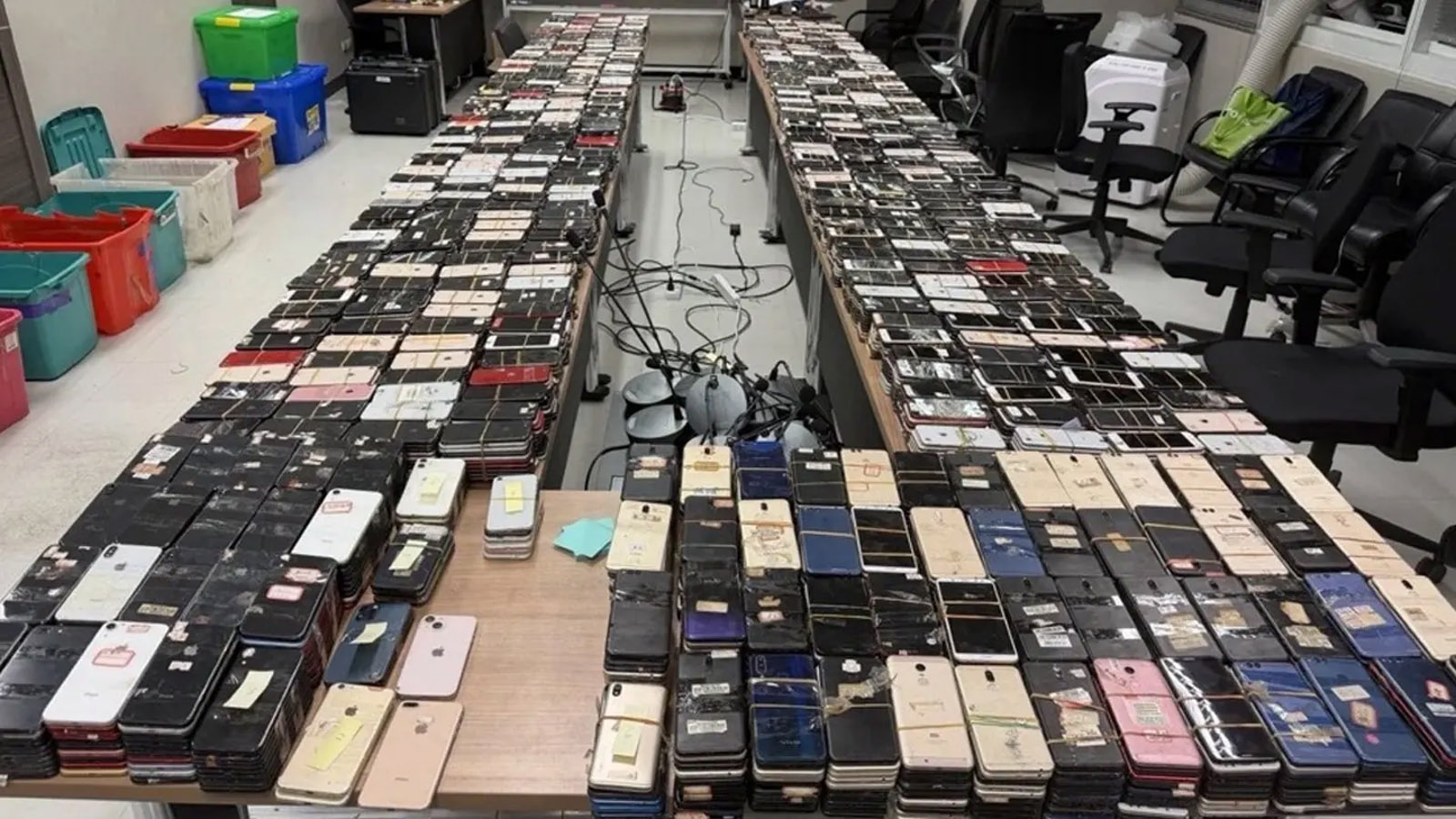
The FBI in Dubai will extradite six of the 275 individuals they and local police detained there to the United States to face federal charges, according to the FBI. The authorities raided nine “scam compounds” in Dubai, each allegedly generating $6 million in fraud proceeds annually.
Cryptocurrency scams in the US reached a record high in 2025
In April, an FBI report revealed that cryptocurrency scams in the U.S. reached a record high in 2025, with reported losses of almost $11.4 billion. According to the FBI, cyber-enabled crimes defrauded Americans of almost $21 billion in 2025, with the costliest complaints involving cryptocurrency and artificial intelligence (AI).
“The FBI’s 2025 Internet Crime Complaint Report highlights the ever-evolving tactics of internet scammers,” the FBI’s Baltimore office wrote on X. “From fake social media profiles to voice cloning and AI-generated content, cyber criminals are evolving.”
The Internet Crime Complaint Center (IC3) received over one million complaints in 2025, up from 859,532 in 2024. The most common complaints were about investment schemes, extortion, and phishing/spoofing.
-

 Milwaukee, WI3 minutes ago
What is treatment court? Milwaukee County celebrates graduates
-

 Atlanta, GA10 minutes ago
Atlanta airport unveils new South Parking Deck, adding more than 7,000 spaces
-

 Minneapolis, MN13 minutes ago
United flight from Chicago to Minneapolis diverted to Wisconsin due to unruly passenger: officials
-

 Indianapolis, IN18 minutes ago
Top seeded West Chester cruises to 12-3 win over University of Indianapolis in the Division II championship
-

 Pittsburg, PA25 minutes ago
Pittsburg man accused of hotel kidnapping, assault enters plea deal
-

 Augusta, GA28 minutes ago
Senate candidate Derek Dooley visits Lincolnton, Augusta
-

 Washington, D.C33 minutes ago
Man in critical condition after water rescue in Southwest DC
-

 Cleveland, OH40 minutes ago
Koby Altman Sounds Like Evan Mobley’s Future With Cavaliers Could Be in Question

