West
Washington Post closes sports department, cuts other sections as part of sweeping layoffs

NEWYou can now listen to Fox News articles!
The Washington Post announced widely expected, significant layoffs on Wednesday, with entire departments being shuttered in what the company is calling a “significant restructuring.”
On a webinar with Post employees who were asked to stay home, executive editor Matt Murray announced a significant headcount reduction. The Post is shuttering the sports desk in its current form, dialing back its international footprint, making Metro more “nimble and focused” and eliminating Books. A third of the company has been affected, Fox News Digital has learned.
“The Washington Post is taking a number of difficult but decisive actions today for our future, in what amounts to a significant restructuring across the company. These steps are designed to strengthen our footing and sharpen our focus on delivering the distinctive journalism that sets The Post apart and, most importantly, engages our customers,” a Washington Post spokesperson told Fox News Digital.
WASHINGTON POST STAFFERS FEELING ‘BETRAYED’ AS TURMOIL, LOOMING LAYOFFS ROCK BILLIONAIRE JEFF BEZOS’ NEWSROOM
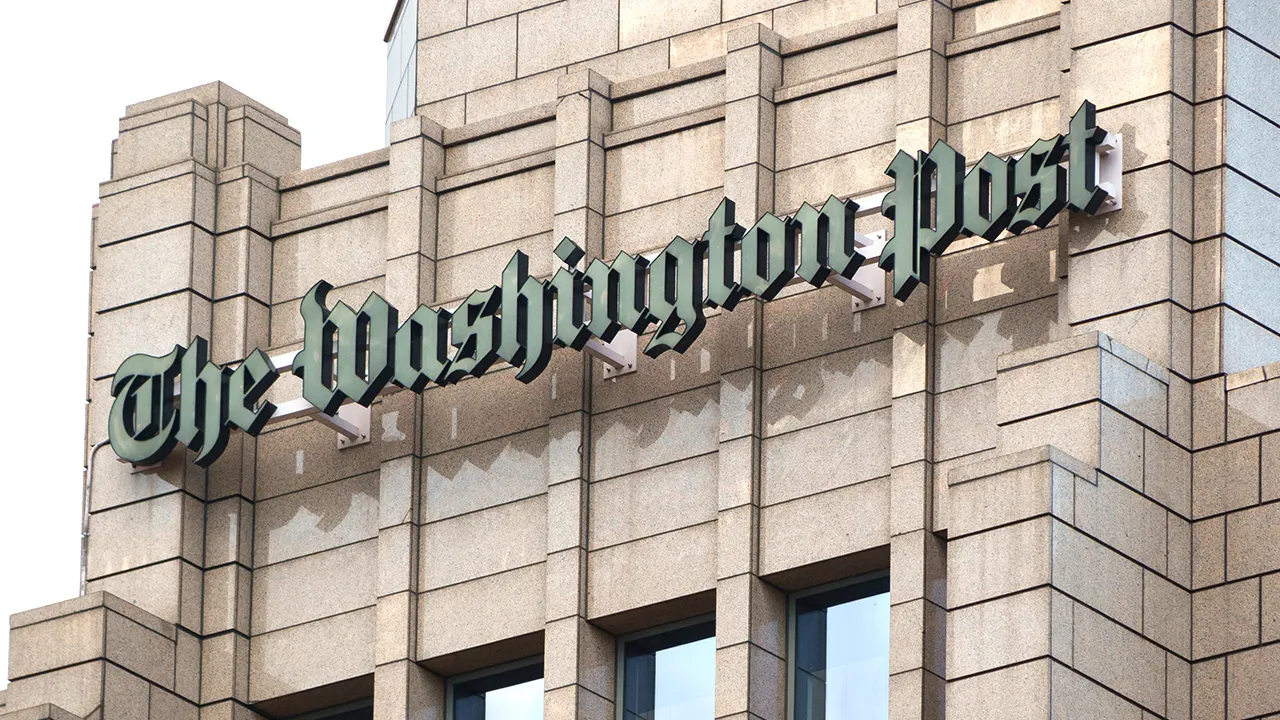
The Washington Post instructed employees to stay home on Wednesday and attend a Zoom webinar where significant layoffs were announced, and entire departments were shuttered. (Kevin Carter/Getty Images)
Going forward, the Washington Post will cover sports simply as a “cultural phenomenon.”
Impacted employees will receive an email about their fate. Staffers are “in shock,” despite knowing layoffs were expected for weeks.
“This is the end of the institution. They’ve lost the trust of the newsroom. Anyone who wasn’t laid off today will be looking for a new job,” a Washington Post insider told Fox News Digital.
Murray sent a memo to newsroom staffers following the Zoom.
“As we shared in our live stream earlier, the company is taking actions today to place The Washington Post on a stronger footing and better position us in this rapidly changing era of new technologies and evolving user habits,” Murray wrote in the memo obtained by Fox News Digital.
“These moves include substantial newsroom reductions impacting nearly all news departments,” Murray added. “For the immediate future, we will concentrate on areas that demonstrate authority, distinctiveness, and impact and that resonate with readers: politics, national affairs, people, power and trends; national security in DC and abroad; forces shaping the future including science, health, medicine, technology, climate, and business; journalism that empowers people to take action, from advice to wellness; revelatory investigations; and what’s capturing attention in culture, online, and in daily life.”
WASHINGTON POST STAFFERS PLEAD WITH BILLIONAIRE OWNER JEFF BEZOS TO SAVE THE PAPER AMID MAJOR LOOMING LAYOFFS
Washington Post executive editor Matt Murray. (Robert Miller/The Washington Post via Getty Images)
Murray said his team will meet with leaders in each department to review the impact on their teams.
“Today’s news is painful. These are difficult actions. We are proud of, and grateful for, the many valued colleagues whose talents and passion have contributed to The Post over many years,” Murray wrote.
“But we take them with clarity of purpose. The need has never been more urgent to reposition The Post. A more flexible, sustainable model will help us better navigate unprecedented volatility, competition, technological change, news-consumption habits, and cost pressure,” he added. “As you know, we have grappled with financial challenges for some time. They have affected us in multiple rounds of cost cuts and buyouts, along with periodic constraints on other kinds of spending.”
Murray said leadership “concluded that the company’s structure is too rooted in a different era, when we were a dominant, local print product” and the restructure will “help to secure our future in service of our journalistic mission and provide us stability moving forward.”
“We are far from alone in reevaluating our model or rethinking how we operate. The ecosystem of news and information, on- and off-platform, is changing radically. News consumers enjoy more variety, voices, platforms, and options than ever before. In just the last five years, multiple startups—and even individuals—have created meaningful products that draw attention and generate impact at low cost,” Murray wrote.
WASHINGTON POST CEO URGES STAFFERS WHO DON’T ‘FEEL ALIGNED’ WITH PAPER’S NEW DIRECTION TO TAKE BUYOUT
Billionaire Washington Post owner Jeff Bezos. (Getty Images)
Murray said the Post has already taken “long overdue steps toward reinvention,” including embedding audience strategy editors in every department.
“Today’s moves will put us in position to find and develop better ways to connect Post journalism to news consumers in the ways they want,” Murray wrote.
“This work is difficult, but it is essential. The Post is a necessary institution, and it must remain relevant,” he continued. “Our central purpose remains as it ever was: To produce riveting and distinct journalism of the highest caliber that breaks news, explains the world with authority and fairness, empowers people with knowledge, and helps them live better-informed lives.”
Washington Post staffers have been aggressively tweeting at billionaire owner Jeff Bezos, urging him to save the paper. A Washington Post insider pointed out that staffers were “leaving on their own accord,” even before the cuts were formally announced, citing three who recently fled to the Post’s top rival, The New York Times.
The Times announced Wednesday it had added 1.4 million digital-only subscribers in 2025, including about 450,000 in the last quarter of the year, and now has nearly 13 million total subscribers. It also reported more than $800 million in revenue for the fourth quarter of 2025.
After recent huge losses, Post leadership has been working for the past two years to get its financials in order with a goal of breaking even by the end of 2026. The headcount reduction is seen as a critical part of that plan.
As the webinar wrapped, The Washington Post Guild took to social media to announce a #SaveThePost rally that will take place on Thursday.
“These layoffs are not inevitable,” the Guild said. “A newsroom cannot be hollowed out without consequences for its credibility, reach and its future.”
Numerous, now-former Washington Post journalists have taken to social media to announce they’ve been let go, including Iran correspondent Yeganeh Torbati, New Delhi bureau chief Pranshu Verma, Cairo bureau chief Claire Parker, political features writer Jesus Rodriguez, book critic Ron Charles, Ukraine correspondent Lizzie Johnson, editor Missy Khamvongsa, arts reporter Sonia Rao, Virginia schools reporter Karina Elwood and international investigative correspondent Shibani Mahtani.
National culture writer Jada Yuan, who was let go, wrote that she “officially reached the crying stage of layoffs” and noted that some impacted employees have newborns and others are in war zones.
Former Washington Post publisher Don Graham called it a “bad day,” but suggested he has confidence in Murray’s leadership.
“I am sad that so many excellent reporters and editors—and old friends—are losing their jobs. My first concern is for them; I will do anything I can to help. I will have to learn a new way to read the paper, since I have started with the sports page since the late 1940’s. I will always want the Washington Post to succeed—and you should too. It makes a difference. The paper has another strong, stand-up editor in Matt Murray. And it still has a great staff,” Graham wrote on Facebook.
Read the full article from Here



CHEYENNE — Wyoming knows it has a huge housing problem.
Builders, city and county administrators, state officials, business and community leaders — it doesn’t matter which of them you ask, most will agree the state is short tens of thousands of homes.
Scott Hoversland, who heads up the Wyoming Community Development Authority, puts the number of homes the state needs somewhere between 28,000 to 38,000 by 2030 — roughly 2,070 to 3,680 homes annually to keep up with population growth and aging infrastructure.
On paper, Southeast Wyoming Builders Association’s Joe Killpack acknowledges that sounds like it should be a developer’s dream.
But the reality is a lot more complicated, Killpack told Cowboy State Daily. It’s a tangled knot of economics and investment risk, criss-crossed with infrastructure costs and policy decisions that make houses more costly and time-consuming to build.
“This is a macro problem, not a micro problem,” Killpack added. “It’s not like we’re going to be able to pinpoint one issue. There are several issues. We’re talking about labor costs. We’re talking about commodity costs. We’re talking about development costs.”
Those make homes too expensive for Wyoming’s middle class to afford.
The Middle Class Squeeze
If Wyoming’s housing crisis has a face, it’s the middle-class worker earning median wages.
Once, that would have signaled a solid, respectable income. Today, it increasingly falls short as wages continue to lose ground against persistent inflation.
In Wyoming, median household income was $75,500 in 2024, 7.4% below the U.S. median.
Year over year, incomes rose just 1.3% while inflation climbed 2.9% — a clear decline in real purchasing power for the typical Wyoming family.
Over the long term, the trend remains problematic.
Wages have stayed relatively flat since at least 2010, according to U.S. Census Bureau data. For much of that time, inflation was modest, hovering between 1% and 2%. But that changed in 2021, when it surged 4.2%, before peaking at 9.1% in June 2022 — the highest level since 1981.
The result has been a widening gap between what workers earn and what it costs to live.
Regardless of the causes, the stark reality is wages have not kept pace with living expenses for most Wyomingites.
That marks a fundamental shift for the state’s middle class.
Median incomes that once reliably supported homeownership — a cornerstone of financial stability for many families — no longer stretch as far. Increasingly, the workers who power local economies are priced out of the communities they serve.
The strain shows up in everyday decisions. Longer commutes. Delayed home purchases. And, in some cases, leaving the state altogether.
Wyoming loses roughly 70% of its residents by the time they reach age 30, state officials have said. Housing costs are frequently cited as a key factor in that outmigration, which has led to a statewide hiring crunch.

The Math Problem
The problem, as Killpack sees it, isn’t that developers can’t see the demand. It’s that the basic math of putting up homes, especially ones that regular families can afford, no longer works.
On the cost side, labor, commodities, tariffs and fuel have all climbed, pushing construction budgets higher even before projects hit city hall for approval.
After that, fees and regulations are adding as much as $10,000 to the cost of homes, along with code changes like thicker exterior walls or new sprinkler requirements.
“Every time a new code is adopted the costs go up,” he said. “We’re doing these new codes to protect the health and the safety of our people who are living in these homes, which, hey, I can’t disagree with. But that doesn’t mean that costs go down. They only go up.”
Codes requiring particular types of insulation, for example, have meant using two-by-six-inch lumber in exterior walls, which adds to the cost versus a two-by-four.
“In Laramie, we have to do a draft stop in the basement,” he said. “So most are doing sprinkler systems and everybody thinks that’s wonderful, right? Because it truly is. If there’s a fire, it’s great. It’ll stop a fire. But the costs still go up, every single time.”
Meanwhile, waiting times for permit approvals stretch to as long as 18 months or more. In some cases, during which time interest rates, prices, and demand are all shifting.
“I’m involved in a project right now where we were going to build some apartments,” he said. “And this project originally started three years ago. They have had to stop, because the market changed.”

What The Median Buys V. What Developers Can Build
The gap comes into sharp focus when median income is translated into buying power.
A median salary of $75,500 supports up to $2,097 for a monthly mortgage, assuming a borrower with minimal debt and strong credit. On a 30-year fixed mortgage rate of 6.47%, that maximum mortgage payment tracks back to a maximum loan amount of $332,842.
Homes in the low $300,000 range no longer pencil out for developers, Killpack said.
“A single-family home under $400,000 is almost impossible,” he said.
Builder margins, he added, are much lower than people think.
“Most people think it’s like 15, 20%,” he said. “It’s actually very minimal. I mean, you’re anywhere between 3-6% and that’s it.”
Which means developers themselves don’t have much wiggle room when it comes to their budgets.
Given that kind of margin, when you look at a city like Cheyenne where 5,000 homes are needed, the kind of investment it takes doesn’t feel like it’s worth the risk, Killpack said.
“(Let’s) talk about building 1,250 homes in a year in Cheyenne just to meet the minimum of what we’re projecting,” he said. “And let’s just say $400,000 homes … you’d need a $500 million investment annually.”
For that kind of money, Killpack said developers look at what’s known as the absorption rate, which measures how fast homes sell in a given market. They’re asking themselves where they can get the fastest return on investment.
Wyoming’s absorption rate needs to be higher to attract investment, Killpack said.
Now, developers can find many markets with both less risk and faster absorption rates, like those in Texas, Utah, and the Denver metro area, all of which have larger populations to spread risk around.
Wyoming’s lack of population, Killpack added, has many investors turning up their noses at Wyoming projects, deeming them too risky.
That doesn’t mean no one wants to invest in Wyoming, Killpack added.
“But it takes more than just people in Wyoming to make Wyoming grow,” he said. “Capital that’s being infused into our economy doesn’t only come from our local regional banks. It comes from other people, too, and they have to be willing to invest in Wyoming.”

Boom-Towns With Nowhere To Live
On paper, the city of Douglas seems like the classic Wyoming success story.
Oil and gas jobs form the bedrock of its economy, but more than 300 businesses in health care, education and retail round things out. Hotels are packed with energy workers — the kind of activity that ought to be pumping money into every cash register in town.
But there’s a catch.
“Our population is 6,512 based on our community snapshot, and 50% of our workers live in the city,” Interim City Administrator Michele Carter told Cowboy State Daily. “About 42% live in Casper. So, we have about half our workforce living in Douglas, just under half.”
The rest are headed to Casper or other areas around Douglas, like Glenrock.
The reason, Carter said, is directly related to a lack of affordable housing.
“A lot of our housing that has been built over the last few years is in that $400,000 to $500,000 range,” she said. “Which doesn’t fit your local businesses, your teachers, your nurses who are coming in to fill those spots in our school district and our hospital here.”
Many of the oil and gas workers who do live in Douglas, meanwhile, are staying in campers and at the fairgrounds because of a lack of rental properties.
Fixing that has proven difficult, Carter said.
Development costs, which include building out new sewer and water services, exceed what most people can afford to pay.
It’s taken a $5.7 million grant for water and sewer lines to help get things moving on a 30-acre site on the edge of town that will include a 94-apartment complex, plus several acres of single-family housing and new commercial space.
“The grant is really to put the infrastructure in,” Carter said. “Developers couldn’t make the numbers work if they have to eat all of those water, sewer and utility costs on top of everything else.”
Even with a grant, no one is pretending this is a silver bullet that will fix everything.
The apartments and homes the development unlocks will also take years to build, and the demand from mid-level workers is already far ahead of what’s on the drawing board.
Douglas isn’t Alone
Infrastructure is a significant barrier for communities across the Cowboy State, Hoversland told Cowboy State Daily, but it’s particularly acute for communities with fewer than 5,000 people.
Water lines, sewer, roads and power are required before even a single house can be built in a new area. For small towns with a thin tax base, fronting the money for that is typically next to impossible.
“Some of the bigger cities, Casper and Cheyenne especially, have more items they can do and have infrastructure built out,” he said. “But our cities under 5,000 population in Wyoming, that doesn’t give the numbers to draw developers in.
“So, infrastructure funding is another one of those things that I think is a big holdup. It really restricts a lot of developers coming in, because they have to pay for the infrastructure to say 25-to-50-home development, and that’s a lot of upfront cost and a lot of risk on the developer.”

Experiments Underway In Wyoming
Wyoming isn’t alone in facing such problems.
Nationally, the Harvard University State of the Nation’s Housing report released Thursday shows that construction is down across the nation amid rising costs and an ever-widening gap between what median households can afford and what median homes cost.
There’s a growing wave of state and local experiments on the ground — ranging from tax abatements, zoning changes, and new financing tools — all aimed at getting more units on the ground across the nation.
Wyoming is part of the melting pot of state ideas.
Hoversland points to a statewide housing strategic action plan that has 27 items that may help, including fast-track permitting, infrastructure funding tools, and support for manufactured and prefabricated homes, as well as tweaks to how federal housing dollars are used to stretch them further.
Jason Mincer, executive director of Wyoming Neighbors for Housing, is pushing public-private partnerships, community land trusts, and even a state-level investment fund to help shoulder upfront risk for workforce housing, along with streamlined approvals to cut months off project timelines.
Communities like Cheyenne, meanwhile, are rewriting their own rule books, streamlining zoning codes and getting rid of standards that may have been nice to have once upon a time, but don’t really impact safety and add significantly to costs.
Cheyenne has even created a “cottage lot” development option that lets builders cluster very small homes closer together with shared open space, which has already attracted some developers.
All of those ideas help at the margins. But Wyoming has to find ways to make it routine, rather than remarkable, to build homes in the price ranges that teachers, nurses, and sheriff’s deputies can afford.
Otherwise, nothing changes with the overriding trend where a large number of Wyoming households are maxed out in the low $300,000 range, and builders can’t drop below $400,000.
Until that gap can be routinely bridged, builders will remain cautious, and the state will continue to lose many of its young people to areas where the wages are a better match to prevailing home prices.
Renée Jean can be reached at renee@cowboystatedaily.com.

The San Francisco Giants have been around for more than 125 years. It’s hard to find something they haven’t done before.
It’s not quite as hard to find something they haven’t done since the team moved from New York to San Francisco before the 1958 season. But, on Saturday, the Giants managed it.
San Francisco lost to the Miami Marlins, 6-3, in the sloppiest game the Giants have played this season. That sloppiness was defined by two things. San Francisco pitchers hit four batters. San Francisco fielders committed four errors.
Per Justice delos Santos of the San Jose Mercury-News (subscription required), the Giants had never done that since they moved from New York. It was just the third time in franchise history, dating back to 1883 that the franchise had ever done that.
What Happened in Miami?
Rafael Devers committed a fielding error, which was his fifth of the season. Pitcher Trevor McDonald committed his second error of the season on a missed catch. Catcher Eric Haase had it worse. He had two errors, one on catcher’s interference and another on a throw.
As for hitting batters, McDonald dominated there. He hit three of them — Kyle Stowers, Leo Jimenez and Esteury Ruiz. Matt Gage also hit Jimenez.
Much of that action came in the fourth inning, when the Giants gave up four runs in game in which they were tied with the Marlins. Ruiz was hit by a pitch, stole second and then went to third on Haase’s throwing error. He scored on a single by Jakob Marsee.
Otto Lopez singled and that ended the day for McDonald, who took the loss. Gage walked Stowers to load the bases. Gage then got Xavier Edwards to ground into a double play, which scored a run but got the Giants two outs. It didn’t help.
Heriberto Herandez homered off Gage, making it 6-2. Gage allowed a single to Owen Caissie and then hit Jimenez with a pitch before San Francisco went to JT Brubaker. He got the final out, inducing a flyout by Joe Mack.
Only four of the six runs the Giants gave up were earned.
Now 14 games under .500, the Giants (31-45) will return home after Sunday’s finale with the Marlins and get a day off. After that, San Francisco renews its rivalry with the Athletics from Tuesday-Thursday, followed by a three-game series with the NL East-leading Atlanta Braves.
San Francisco is moving toward July and likely determining which players it wants to put on the trade market to either trim payroll or arrange its roster to try and turn things around in 2027.
Follow

At least seven people were injured in three crashes across Denver between Saturday night and Sunday morning, police said.
The Denver Police Department reported the first crash at 11:20 p.m. Saturday. Two people were injured in a two-car crash near West Colfax Avenue and Kalamath Street, on the edge of Denver’s Lincoln Park and Auraria neighborhoods, police said.
One person was injured in a separate crash involving a motorcycle in the 1200 block of Broadway in Denver’s Capitol Hill neighborhood, according to a post from the police department at 1:19 a.m. Sunday.
Paramedics then took four people to the hospital after a two-car crash near Yosemite Street and East 12th Avenue in Denver’s East Colfax neighborhood, police wrote on social media at 3:26 a.m. Sunday.
Additional information about the crashes, including the causes, was not immediately available on Sunday.
This is a developing story and may be updated.
Sign up to get crime news sent straight to your inbox each day.
-

 Wisconsin2 minutes ago
Who is Diane Hendricks, Wisconsin’s richest woman?
-

 West Virginia9 minutes ago
Flynn Planetarium showcases wonders of the universe
-

 Wyoming12 minutes ago
Why A Shortfall Of More Than 20,000 Homes Isn’t Enough To Get Wyoming Building
-

 Crypto17 minutes ago
Commentary: Crypto bill is bad for small businesses
-

 Finance18 minutes ago
Hong Kong to roll out measures boosting offshore yuan trading in July
-

 Fitness24 minutes ago
“Don’t be a lone wolf, that’s my number one life hack”—Peloton instructor and ultra runner Susie Chan shares her weekly fitness routine and tips to get started
-

 Movie Reviews32 minutes ago
Film reviews: ‘Toy Story 5’ and ‘The Death of Robin Hood’
-

 World42 minutes ago
‘Criminal Minds’ Star Paget Brewster Tells TV Journalist to ‘Work at a Shelter’ After Mixed Review, Sparking Outrage From Other Critics

