Northeast
Martha Moxley case: Kennedy cousin points to ‘bold-faced lies,’ missing evidence in murder probe

NEWYou can now listen to Fox News articles!
The Kennedy cousin formerly at the center of the notorious case involving the death of Martha Moxley, the daughter of an affluent Connecticut family, has broken his silence to reveal new loose ends and theories regarding the decades-long mystery.
Michael Skakel, cousin of Robert F. Kennedy Jr., spent 11 years behind bars for the 1975 murder of Martha Moxley. In 2013, Skakel walked out of prison as a free man and later saw his conviction vacated in a move that further deepened the mystery of who Moxley’s true killer is.
In the final episode of NBC News’ podcast, “Dead Certain: The Martha Moxley Murder,” several possible suspects and additional evidence were spotlighted, though loose ends regarding the unresolved case still remain, according to Connecticut Insider.
MARTHA MOXLEY CASE: KENNEDY COUSIN BREAKS SILENCE ON TROUBLED UPBRINGING, ARREST WARRANT IN MURDER MYSTERY
“Being Michael Skakel has been a blessing and a curse. I’ve met some proudly great people in this world,” Michael Skakel said on the podcast.
“At the same time, because of what this trial and this case did to me, people only know what they know. They only know what that box in their living room tells them. And most of it has been bold-faced lies.”
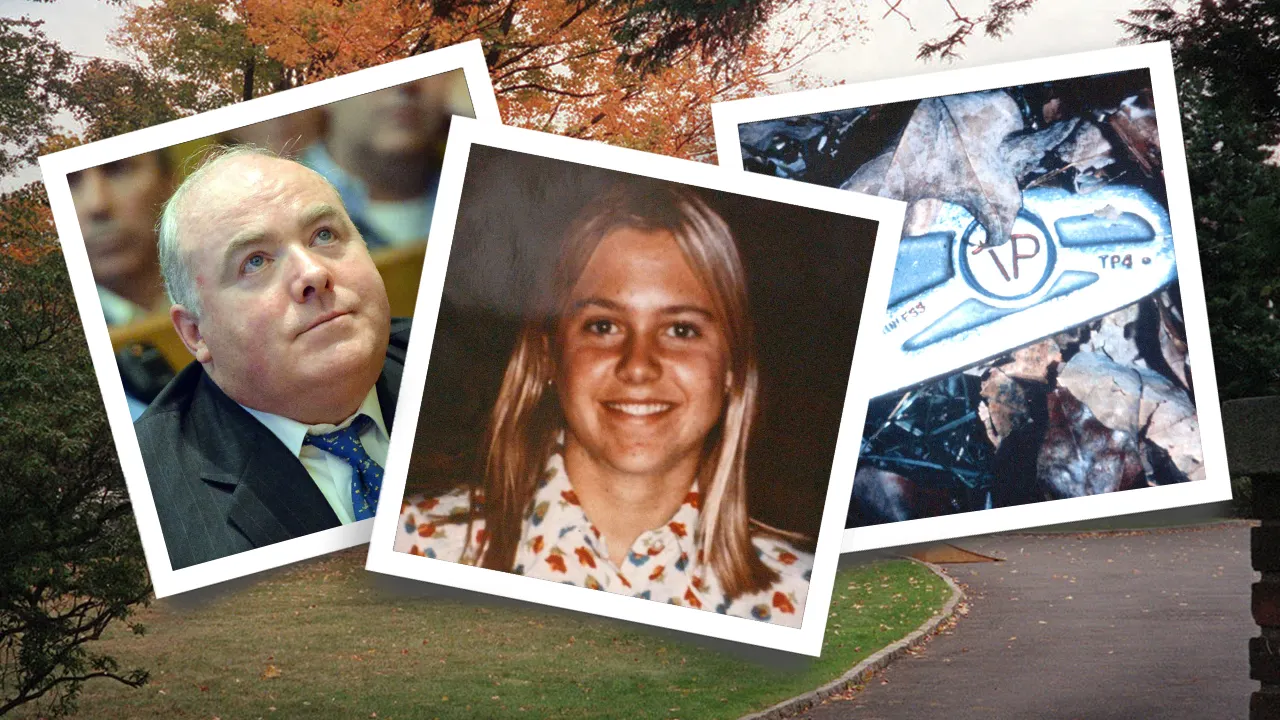
Kennedy relative Michael Skakel gets into a car after walking out of a Stamford, Conn., courthouse in November 2013 after his murder conviction in the death of Martha Moxley was vacated when a judge ruled he did not receive adequate representation in his 2002 trial. (Spencer Platt/Getty Images)
The episode reportedly highlighted a stain found in the Moxley family’s TV room by Theresa Tirado, a maid at the household, one day after the 15-year-old girl was murdered outside of her Greenwich home Oct. 30, 1975.
In Tirado’s account to police at the time, she noticed that Martha Moxley’s brother John’s bed was empty and his door was open the morning of the murder, but she had not yet been told the teenager was missing. At 9 a.m., Tirado reportedly heard a loud crash in the house and witnessed John Moxley and a friend, John Harvey, watching television about 15 minutes later.
At around 11 a.m., Tirado told investigators, the two boys went outside right around the same time she heard another loud crash inside the house. The pair then returned to the house briefly before leaving, Connecticut Insider reported.
When Tirado later went into the TV room, she noticed smear marks that were believed to be blood. However, she reportedly wiped up the marks, not realizing what it potentially was.
KENNEDY COUSIN TIED TO MARTHA MOXLEY CASE BREAKS SILENCE 50 YEARS LATER AS MURDER REMAINS UNSOLVED
Martha Moxley when she was 14 years old (Erik Freeland/Corbis via Getty Images)
John Moxley later corroborated Tirado’s account regarding his and Harvey’s whereabouts, though he told investigators he did not hear any crashes coming from inside the house, the outlet reported. He suggested the smear marks could have been a food stain.
However, the potential blood stain was reportedly included in a pretrial memo by attorney Linda Kenney Baden but was never looked into by Skakel’s attorney, Mickey Sherman.
The podcast also noted that Tirado died in 2012.
Additionally, the outlet reported that John Moxley was the fourth individual mentioned in the Sutton Report in the 1990s, with investigators noting that “a few unresolved points still demand clarification and examination.”
KENNEDY COUSIN MICHAEL SKAKEL SAYS COPS WITHHELD EVIDENCE IN 1975 MARTHA MOXLEY MURDER PROBE
The Moxley residence in the Bellehaven section of Greenwich, Conn., in 1975. (MediaNews Group/Boston Herald via Getty Images)
Initially, Michael Skakel, Tommy Skakel and tutor Ken Littleton were profiled in the report regarding Moxley’s murder.
One of the points of note regarding John Moxley was reportedly his statement that he returned home around 11 p.m. on Oct. 30 and was awoken by his mother at 3:30 a.m. the next morning to help look for his missing sister.
In 2002, John Moxley testified that he only spent about 15 minutes searching for Martha Moxley, which contradicted his statements to police that he had spent 2½ hours outside and did not return home until 6 a.m., when he then fell asleep on the sofa in the TV room, the outlet reported.
Harvey later claimed John Moxley called him the morning of the teen’s disappearance to help search for her, and the pair searched a pile of brush near the house, a move the Sutton Report reportedly noted was strange. However, the report also pointed out that had the two boys checked the family’s yard, they likely would not have located Martha Moxley’s body.
AMANDA KNOX FIRES BACK AT MATT DAMON OVER CANCEL CULTURE JAIL TIME COMMENTS
Martha Moxley at 13 with her father, David Moxley (Erik Freeland/Corbis via Getty Images)
John Moxley reportedly said he only became aware of his sister’s death after his football coach mentioned to him at practice that something happened at his house.
The Sutton team later determined John Moxley was not the murderer, with Robert F. Kennedy agreeing with investigators in his book, “Framed: Why Michael Skakel Spent Over a Decade in Prison for a Murder He Didn’t Commit.”
Additionally, the podcast reportedly pointed to the Skakel household’s handyman and gardener, Franz Wittine, as another guest at the home on “Mischief Night.”
Michael Skakel, who was 15 years old at the time of the murder, reportedly revealed Wittine, a regular resident at the house, was the only person who said there were no golf clubs found on the Skakel house lawn despite others saying there were. In a 1991 interview with investigators, Wittine reportedly said he had no memory of saying that.
Martha Moxley was found beaten and stabbed to death by a golf club in the yard of her family’s home on “Mischief Night.”
WATCH FRAMED: THE AMANDA KNOX STORY ON FOX NATION
One year after the murder, Wittine reportedly resigned from his position with the Skakel family and passed a polygraph test in 1991.
Wittine died in 1997.
The podcast pointed out various loose ends involving the investigation, including the lack of forensic evidence in the case, Connecticut Insider reported.
FOLLOW THE FOX TRUE CRIME TEAM ON X
Swabs taken from Martha Moxley’s groin area in an effort to rule out sexual assault were never introduced as evidence in the trial and were considered lost until a NBC News’ production team reached out to a Connecticut forensics team, which confirmed the evidence remained in state custody.
The samples were later sent for testing in 2018 and were reportedly determined to only contain Martha Moxley’s DNA.
SIGN UP TO GET TRUE CRIME NEWSLETTER
A photo from the trial evidence showing a close-up of the golf club head. (Pool Photo/Getty Images)
Additionally, Cissy Ix reportedly recalled a conversation with Rush Skakel Sr., in which he claimed that his son, Michael, allegedly confided in him that he may have killed Martha Moxley.
However, Michael Skakel was ultimately cleared by Dr. Stanley Lesse after being given sodium pentothal in an attempt to give him mental clarity regarding the situation. Michael Skakel said he felt unsure about things after attending the infamous Elan School.
SEND US A TIP HERE
Additionally, a friend of the Skakels reportedly told investigators that both boys were with him at Sursum Corda Oct. 30, 1975. However, the account directly conflicted with reports that Tommy Skakel had not traveled with his family that evening.
The series wrapped up with Amanda Knox, an American woman falsely accused of her roommate’s 2007 murder in Italy, weighing in on the mentality of “guilty until proven innocent” in criminal cases, according to Connecticut Insider.
LIKE WHAT YOU’RE READING? FIND MORE ON THE TRUE CRIME HUB
Knox was initially convicted of murder in 2009 and saw her conviction overturned by an Italian court in 2011.
Knox reportedly went on to describe how people have told her to “be a little less visible” after her conviction was overturned and described how the concept of “single victim fallacy” can harm individuals in situations where public perception suggests there is only one victim in a situation.
CLICK HERE TO DOWNLOAD THE FOX NEWS APP
Michael Skakel’s conviction was ultimately vacated by the Connecticut Supreme Court May 4, 2018, with prosecutors later deciding to not seek a second trial for Skakel on the murder charge.
With Skakel being absolved of all charges, the mystery surrounding the decades-old murder of Martha Moxley continues to plague her family and community, with no true promise that the case will ever be solved.
Read the full article from Here



WETHERSFIELD, Conn. (WFSB) – A tractor trailer’s diesel fuel saddle tank ruptured on I-91 north between exits 25 and 27, state police said.
Approximately 25 to 30 gallons of fuel was released to the road surface, according to the state Department of Energy and Environmental Protection. No ground soil or waterways were involved, DEEP said.
The two right lanes were closed, according to the state Department of Transportation.
No other vehicles were involved and no injuries were reported, state police said.
Wethersfield Fire Department solidified the diesel fuel on the ground surface with Speedy Dry, DEEP said. An environmental cleanup contractor was en route for cleanup.
Copyright 2026 WFSB. All rights reserved.

Scott A. Harrison, Ed.D., M.B.A., is a senior advisor at The Harrison Group, a consultancy based in Yarmouth.
Maine has long valued local control in education. That tradition reflects an important belief that communities should have a strong voice in shaping their schools. But local control should not prevent us from asking a harder question: Are there core functions that could be delivered more effectively through a single statewide framework?
One of the most important is educator evaluation and professional growth. Maine law already recognizes the importance of this work. Under Title 20-A, Chapter 508 (Educator Effectiveness), districts must implement performance evaluation and professional
growth systems that evaluate educators, assign effectiveness ratings and support
professional growth.
The law further requires superintendents to use those ratings to inform key human capital decisions, including recruitment, hiring, induction, mentoring, professional development, compensation, assignment and dismissal. In short, educator evaluation is not intended to be a compliance exercise. It is intended to be a primary lever for the continual improvement of teaching and learning.
In 2012, LD 1858 sought to advance that vision by giving districts broad flexibility to design their own systems. Districts could choose instructional frameworks, establish measures of effectiveness and determine how evaluators would be trained and calibrated. The goal was to balance local autonomy with professional accountability.
More than a decade later, however, the evidence suggests that flexibility alone has not produced consistent results.
My research involving 130 educators across four Maine school districts found only modest perceptions of performance evaluation and professional growth systems’ effectiveness.
On a four-point scale, average ratings ranged from 2.48 to 2.99. While educators generally agreed that districts provide individualized growth plans and can differentiate levels of instructional effectiveness, they rated several critical implementation areas notably lower, including instructional coaching, evaluator training, feedback quality, evaluator calibration and the use of evaluation data to inform professional learning and personnel decisions.
Although the sample was relatively small, the findings closely mirror what I have observed while working with predominantly rural Maine districts over the past decade.
The qualitative findings were equally revealing. Teachers and administrators described systems that are often cumbersome, inconsistently implemented and difficult to sustain. Educators reported spending significant time developing goals and documenting evidence, while administrators acknowledged that competing priorities frequently reduce evaluation to a compliance exercise rather than a meaningful opportunity for growth.
Participants cited insufficient training, inconsistent expectations, limited coaching support and weak connections between evaluation results and professional learning. Perhaps most significant, though not surprising given the realities of today’s schools, the primary obstacle appears to be not commitment, but capacity — the time, expertise and tools required to implement these complex systems with fidelity.
Designing and sustaining high-quality evaluation systems requires expertise in instructional leadership, observation and feedback, adult learning, professional development, data use and evaluator calibration. While some districts have built this capacity, many — particularly smaller and rural systems — have not. Even where expertise exists, time remains a major barrier.
Effective evaluation depends on regular observation, coaching, feedback and calibration. Yet for principals balancing instructional leadership with the daily demands of running a school, carrying out these responsibilities consistently can be extraordinarily difficult.
As a result, Maine has effectively asked more than 250 districts to independently build and maintain highly complex educator effectiveness systems. The outcome is predictable: uneven quality and implementation, and variable impact on teaching and learning.
This raises an important policy question: Should every district continue to design, train, calibrate and maintain its own evaluation system, or would educators and students be better served by a common statewide framework supported by regional and state expertise?
A statewide approach would not eliminate local control. Districts would continue to make decisions about hiring, staffing, curriculum, budgeting and school improvement priorities. Instead, the state would provide shared infrastructure: a common instructional and evaluation framework, validated tools, evaluator training, calibration supports, professional learning resources and implementation assistance.
The benefits extend beyond evaluation. A common framework would create stronger alignment across Maine’s educator pipeline. Colleges and universities could align coursework, clinical experiences and assessments to the exact same standards used in schools while sharing responsibility for educator success beyond initial placement.
Preparation programs, districts and the state would become partners in a continuous system of educator development, creating mutual accountability for results and a stronger return on Maine’s investment in teacher preparation.
Such alignment matters. As systems thinker Peter Senge observed, people working within the same system tend to produce similar results. If we want more consistent outcomes for students, we must pay closer attention to the systems shaping educator practice.
A statewide approach would not eliminate local control. Districts would continue to make decisions about hiring, staffing, curriculum, budgeting and school improvement priorities.
A common framework would establish a shared language and clearer expectations throughout the career continuum. It would also make continuous improvement easier. Rather than asking hundreds of districts to independently revise complex systems, the state could evaluate implementation, refine practices, share lessons learned and respond to emerging research. Educators have experienced too many short-lived initiatives that consume considerable time and effort before fading away.
A coherent statewide system would provide greater stability and more meaningful long-term improvement. The question is not whether local control matters. It does. The question is whether every district should be expected to independently build and sustain complex systems that require specialized expertise, significant resources and ongoing refinement.
If Maine is serious about improving outcomes for students, it should rethink which functions are best managed locally and which are better supported through statewide infrastructure. Educator effectiveness is one example. There are likely others.
In a previous op-ed here, I argued that Maine should reconsider whether teacher compensation is best negotiated district by district. The same question applies here. When critical human capital systems are essential to student success, a coherent statewide framework may be better positioned to advance equity, efficiency and effectiveness while preserving local decision-making where it matters most.
The goal is not less local control, but a smarter balance between local autonomy and statewide support — one that strengthens schools and improves outcomes for every student, regardless of geography.
Massachusetts
Fisherman reels in white shark off Massachusetts, then snags the hook from its toothy mouth

BILLERICA, Mass. (AP) — Elliot Sudal didn’t need a bigger boat, but he did need to find a way to get a hook out of a shark’s mouth.
Sudal, a veteran angler and boat captain, reeled in the nearly nine-foot shark — also commonly known as a great white shark or a great white — on June 7 on Nantucket. White sharks are a protected species in the U.S. and must be released immediately when accidentally caught.
That presents a nasty problem for a fisherman because the white shark is a formidable apex predator best known for the 1975 movie Jaws, in which Roy Scheider utters the famous line “You’re gonna need a bigger boat” upon seeing the big fish. Sudal, who caught the shark while fishing from shore, decided to use his encounter to demonstrate how to respond to such a situation.
Sudal posted a video of himself removing the hook to his social media accounts. In the video, Sudal climbs onto the back of the shark, secures the fish in the surf, and removes the hook from its mouth. By the end of the short video, the shark is back in the water.
White sharks typically have about 300 teeth arranged into five rows, so speed was key.
“Hooks out and back on her way in 15 seconds, not sure how to do it better,” Sudal wrote in an Instagram post that included a video of the shark release.
Sudal is no stranger to sharks, and has caught and tagged hundreds of them over the years. He said in a social media post that this month’s encounter with a white shark was the first time he has ever caught one of them in more than a decade of the work.
Sudal’s practices have sometimes attracted the attention of the National Oceanic and Atmospheric Association, such as in 2017, when the agency investigated his handling of a smalltooth sawfish, an endangered species, in Florida. The agency said in 2018 that it sent Sudal a letter “informing him of the Endangered Species Act issues and the safe handling protocol for sawfish.”
White sharks are not listed under the federal Endangered Species Act, but are subject to special federal protections. The International Union for Conservation of Nature considers them vulnerable globally.
Sightings of white sharks off New England have ticked up in recent years, and some scientists have pinned that to the greater availability of the seals that they prey on. Dangerous encounters between white sharks and humans are extremely rare, and only a few dozen fatal white shark bites on people have ever been recorded.
___
Whittle reported from Portland, Maine.
Copyright 2026 The Associated Press. All rights reserved.
-

 Cleveland, OH5 minutes ago
Cleveland police arrest suspect in involuntary manslaughter investigation, find fentanyl and PCP
-

 Austin, TX7 minutes ago
Austin community celebrates ‘Black Artists Matter’ mural before removal
-

 Alabama12 minutes ago
Two Alabama bridges rank among longest in U.S. Have you crossed them?
-

 Alaska20 minutes ago
Pilot dies in small plane crash southeast of Cordova
-

 Arizona22 minutes ago
Arizona’s Rugged Wilderness Area Has Gorgeous Mountain Trails And Scenic Camping Spots – Islands
-

 Arkansas27 minutes ago
Tulsa downs Northwest Arkansas | Northwest Arkansas Democrat-Gazette
-

 California35 minutes ago
California man arrested for alleged lewd acts, exploitation involving juveniles
-

 Colorado37 minutes ago
Colorado neighbors lament likely closure of Roxborough library; $22 million regional library breaks ground nearby

