Milwaukee, WI
Was It Wrong For The Milwaukee Brewers To Trade Freddy Peralta?


The question everyone asks when a trade like this happens is pretty simple: Was this the right move for the team?
Some deals cut a little deeper, and this one definitely feels like one of those.
But this is how the Milwaukee Brewers operate, regardless of whether you agree with the strategy. On Wednesday, the Crew traded ace right-hander Freddy Peralta. They sent him and an expendable piece, right-hander Tobias Myers, to the New York Mets for two of their top-five prospects: infielder-outfielder Jett Williams and right-handed starter Brandon Sproat.
One of the first negative reactions I saw on social media was something from a national baseball writer to the effect of “The Brewers, not the Dodgers, are ruining baseball because they can’t afford $8 million.”
That is certainly a take. Very wrong, but certainly a take.
The Brewers were more than willing to pay Peralta $8 million for 2026. The reason behind the trade is what comes after 2026. No, I’m not talking about whatever happens related to a lockout or strike or anything related to the collective bargaining agreement.
Instead, it has to do with Peralta’s future. He will be a free agent following the 2026 World Series. Peralta enters his age-30 season in a prime position to cash in. After a team-friendly five-year, $15.5 million contract extension that then became a seven-year, $31.6 million deal with two club options that bought out two free-agent years, Peralta is due a payday. He has earned it. Remember that Peralta came to the Brewers as one of three wild cards as they dealt first baseman Adam Lind to the Seattle Mariners following the 2015 season. Peralta hadn’t played any higher than the complex league in Arizona at that point and was 19 years old when he joined the Crew.
In the 10 years since, Peralta has been a self-made pitcher. Sure, the Brewers gave him all the tools they could, but it was Peralta who put in the work and rose from obscurity to MLB All-Star and Cy Young Award contender. And the Brewers reaped the benefits of that and took advantage of the salary-suppression system MLB employs to get more value out of their investment in Peralta. No longer is he Fastball Freddy, the youngster who could only throw a variety of fastballs. Now he features three offspeed pitches in a changeup, slider, and curveball to go along with a four-seam fastball.
Since his stunning 13-strikeout MLB debut on that Mother’s Day in Colorado in 2018, Peralta has been an integral part of the Brewers’ success. Since joining the rotation full-time at the beginning of the 2021 season, Peralta has been a rock in the rotation, even if he wasn’t spectacular for most of that. He started 139 of 141 games with a FIP of 3.65, an ERA of 3.30, and an ERA+ of 126. That ERA+ means Peralta was 26% above the average MLB pitcher. That number was certainly boosted by his 2025 performance, where he posted a 154 ERA+ and finished fifth in NL Cy Young Award voting.
The Brewers’ philosophy of baseball business is not to overpay. They don’t want to hand out exorbitant salaries that could weigh down their roster at the back end. The Brewers are approaching that situation with Christian Yelich, who has three more years at about $24 million each before a mutual option at $20 million for 2029 (those are usually declined). Peralta will certainly clear what Yelich, technically the Crew’s highest-paid player*, is making, perhaps even approach $30 million a year. It is his market value at this moment. The Brewers would have given Peralta a qualifying offer (probably around $23 million for 2027), which he would have declined and netted the Brewers one single draft pick.
That was the situation Brandon Woodruff was in this offseason. Woodruff accepted the qualifying offer and returned on a $22.025 million contract for 2026. That is on top of the $10 million mutual option buyout the Crew paid Woodruff instead of a $20 million contract. So Woodruff is really making $32.025 million this season* (thus the mythical highest-paid Brewers player).
Could the Brewers afford Peralta’s $8 million for 2026? Of course. That was never in question. But the Brewers, like they did with closer Josh Hader, starter Corbin Burnes, and closer Devin Williams, sold high on the player in question. Burnes netted shortstop Joey Ortiz, left-hander DL Hall, and a draft pick that resulted in first baseman Blake Burke from the Baltimore Orioles. Williams brought back third baseman Caleb Durbin and left-handed starter Nestor Cortes.
Hall hasn’t panned out yet, and Cortes flamed out due to injury. Ortiz and Durbin are the starting left side of the infield. Time will tell on Jett Williams and Sproat, but their pedigree is higher than that of the others acquired in those other two deals. This is how the Brewers churn their talent. This is part of the secret sauce they have used to win three straight NL Central titles.
I am on record as saying Peralta was the perfect player for the Brewers to invest in. He epitomizes what they do, taking a ball of clay and molding it into something useful.
But I also understand the Brewers’ philosophy and agree with it to a certain extent. Players should get paid what they are worth, and teams also have the right not to make a bad investment. Hader cashed in. Devin Williams got his payday. So did Burnes, who then got hurt. Peralta, barring the unforeseen, will get his next offseason.
Just not from the Brewers, who sold Peralta at his peak and now instead have two good prospects, bolstering an already-burgeoning farm system.
Was this the right move for the team?
Yes, it was.



RACINE — Members of Racine’s Greek community are processing the news of Giannis Antetokounmpo’s trade from the Milwaukee Bucks — and the timing hits especially hard, just days before Greek Fest at Kimissis Greek Orthodox Church.
Tents are going up in the parking lot, rides are being assembled, and the kitchen is already busy with preparations for the annual celebration of Greek culture in Racine. But amid the excitement, the news of Giannis Antetokounmpo’s trade from the Milwaukee Bucks is on the minds of some church members.
Joyce Muffoletto, secretary at Kimissis tid Theotokou Greek Orthodox Church in Racine, said the news took some of the joy out of her Tuesday.
Watch: Racine’s Greek community discusses what Giannis meant to them:
Racine’s Greek community reflects on Giannis’ celebration of Greek culture
“Yeah, that puts a damper on everything,” Muffoletto said.
Giannis, who was born and raised in Athens, Greece, earned the nickname “the Greek Freak” during his time with the Bucks. For Muffoletto, his Greek heritage made her a fan.
“Oh, of course,” she said with a laugh.
TMJ4
“I’m a pretty reserved, quiet person, but my husband had to go to a different level in the house because I’d be screaming at the TV when he was playing, you know, I’d be like, ‘Giannis! Giannis!’” Muffoletto said.
While Muffoletto made it to multiple Greek night games with the Bucks, she said what she will miss most goes beyond Giannis’s performance on the court.
“It’ll be hard to replace him. And more than him the player, kind of, him the person,” said Muffoletto, referring to the impact Giannis had on the Milwaukee community.
Church member Mary Luccas said she is not a big basketball fan, but she holds Giannis in high regard for the values he represents.
“We will be sad to lose that, but he set a really good foundation going forward,” Luccas said. “And he will be doing the same thing wherever he goes, because it’s just the quality of person that he is.”
TMJ4

Luccas said Giannis and his family have embodied Greek values throughout his time in Wisconsin.
“Family centered. Philoxenia. The friendship, the love. The doors are open. They welcome everybody,” Luccas said.
“He embraces the Greek culture, like we embrace the Greek culture. And he celebrates Greece and his Greek culture,” Luccas said. “So wherever he is, it will be a celebration of his Greek heritage.”
And while the loyalty to the Bucks remains, Muffoletto acknowledged the bittersweet reality.
“I’ll be loyal, but it’s a bit of a loss,” Muffoletto said.
Racine’s Greek Fest runs Friday through Sunday at 1335 S. Green Bay Road.
This story was reported on-air by a journalist and has been converted to this platform with the assistance of AI. Our editorial team verifies all reporting on all platforms for fairness and accuracy.
Let’s talk:
Hey there! At TMJ4 News, we’re all about listening to our audience and tackling the stuff that really matters to you. Got a story idea, tip, or just want to chat about this piece? Hit us up using the form below. For more ways to get in touch, head over to tmj4.com/tips.
It’s about time to watch on your time. Stream local news and weather 24/7 by searching for “TMJ4” on your device.
Available for download on Roku, Apple TV, Amazon Fire TV, and more.
Report a typo or error // Submit a news tip

MILWAUKEE — Fans in Milwaukee are waking up to the news that Giannis Antetokounmpo has been traded, ending a 13-year run with the Bucks that included a championship in 2021.
The news of the trade broke late last night, and fans have mixed emotions about the move.
Before the trade happened, TMJ4 spoke with fans in Milwaukee about what they wanted to see happen.
Some fans were focused on what the Bucks could get in return.
Alonna Johnson
“If he gets traded, we get like some valuable pieces for him at least. I don’t want Bam Adebayo. I want Tyler Herro because he’s from Milwaukee so you know he’s a hooper they can keep bound,” Khorey said.
Others acknowledged Antetokounmpo’s impact even without following the sport closely.
Alonna Johnson
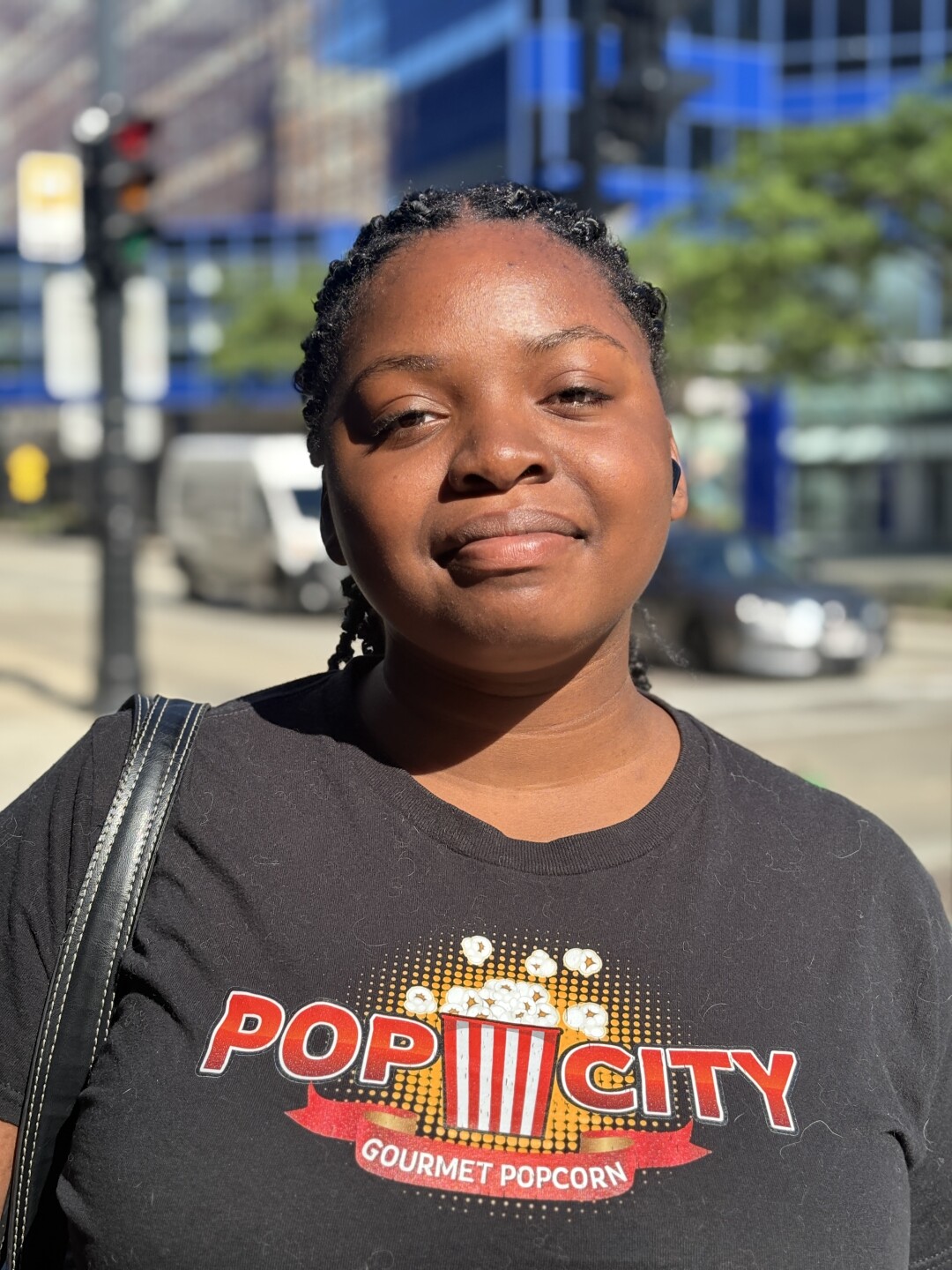
“I’m not a basketball fan myself but I know who Giannis is. And that says someone whose background is theater. We got a championship from him,” Halana said.
A mural created in honor of Antetokounmpo’s achievements on and off the court now stands as a reminder of his legacy in the city.
For those who predicted Antetokounmpo could be traded — they were correct.
Alonna Johnson

“I don’t like to see him get traded. I don’t like that. But the franchise is not big enough. Giannis needs to move in another direction,” Scheila said.
Not everyone was ready to accept the change.

Alonna Johnson
“Not saying that there’s anything wrong with anybody else, but Giannis is like the Bucks. So I would prefer if he didn’t because it’s just going to be weird. And then it’s like, who can follow in those big old footsteps,” Nariah said.
We’ll continue to bring you updates on the trade on-air and online.
This story was reported on-air by a journalist and has been converted to this platform with the assistance of AI. Our editorial team verifies all reporting on all platforms for fairness and accuracy.
Let’s talk:
Hey there! At TMJ4 News, we’re all about listening to our audience and tackling the stuff that really matters to you. Got a story idea, tip, or just want to chat about this piece? Hit us up using the form below. For more ways to get in touch, head over to tmj4.com/tips.
It’s about time to watch on your time. Stream local news and weather 24/7 by searching for “TMJ4” on your device.
Available for download on Roku, Apple TV, Amazon Fire TV, and more.
Report a typo or error // Submit a news tip
-

 Washington7 minutes ago
Parsing Trump’s claims about Washington’s reflecting pool
-

 Wisconsin10 minutes ago
How Decelise Champion’s early arrival impacts Wisconsin volleyball
-

 West Virginia15 minutes ago
WV Celtic Festival and Highland Games
-

 Wyoming22 minutes ago
Largest Car Collections In Wyoming Is Up For Auction
-

 Crypto25 minutes ago
Enlivex token gets Gate listing, widening access to its $1.14B treasury asset
-

 Finance30 minutes ago
Protecting Bolivia’s forest watersheds with sustainable finance
-

 Fitness37 minutes ago
Alexandra Daddario, 40, relies on this underrated crunch upgrade for strong abs – here’s how to do it properly
-

 Movie Reviews52 minutes ago
Movie Review – In the Hand of Dante (2025)

