Connect with us

Midwest

Appeals court hands Trump administration ‘victory’ in Minnesota ICE force restrictions case

Published

on

Appeals court hands Trump administration ‘victory’ in Minnesota ICE force restrictions case
NEWYou can now listen to Fox News articles!

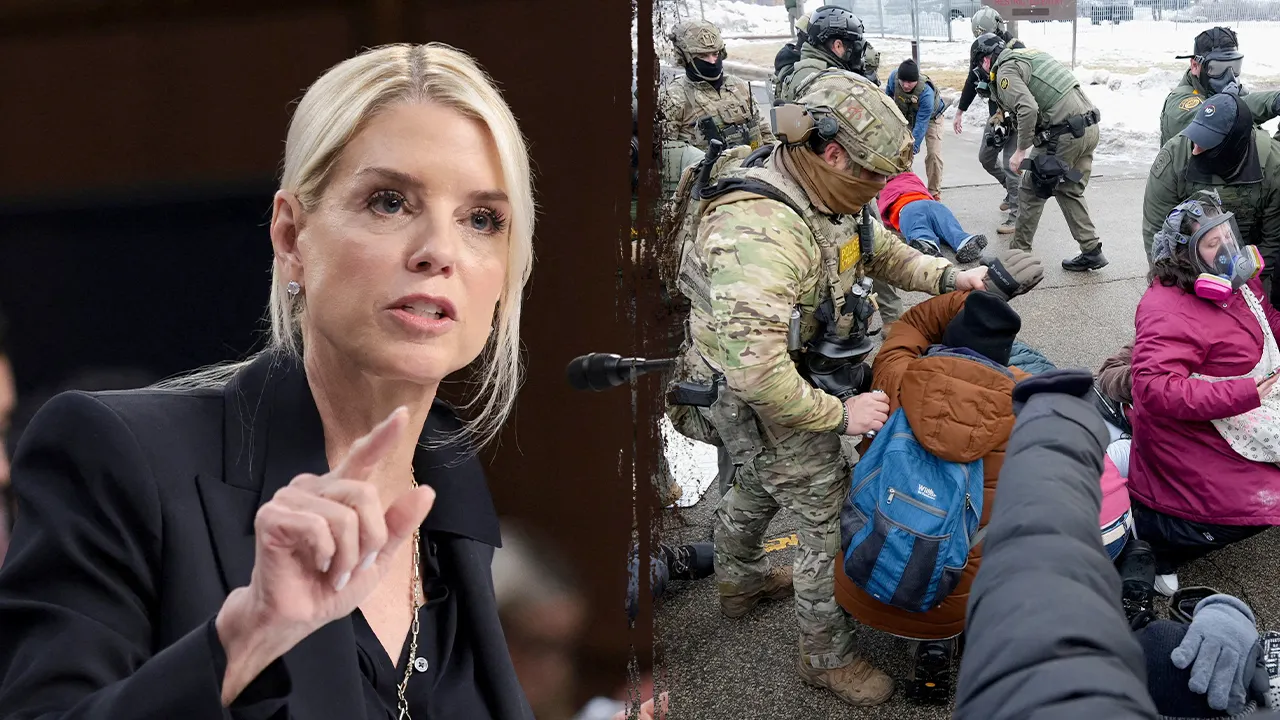
A federal appeals court on Wednesday temporarily lifted restrictions on Immigration and Customs Enforcement (ICE) agents’ use of force against protesters in Minnesota, handing a short-term win to President Donald Trump’s administration as it challenges a lower-court ruling.

The 8th Circuit U.S. Court of Appeals issued an unsigned order placing an administrative stay on limits imposed by a district judge after protesters filed suit. The move pauses those restrictions while the appeals court considers the government’s request to block the injunction during the appeal.

The ruling comes as federal immigration enforcement tactics face growing legal scrutiny nationwide.

Attorney General Pam Bondi praised the court’s decision, calling it a “victory.”

Advertisement

FEDERAL PROSECUTORS OPEN INVESTIGATION INTO WALZ, FREY OVER ALLEGED IMPEDING OF LAW ENFORCEMENT

“A liberal judge in Minnesota tried to handcuff ICE agents who are enforcing the Nation’s immigration laws and responding to obstructive and violent interference from agitators,” Bondi said on X. “The 8th Circuit just granted an administrative stay HALTING these restrictions, which were designed to undermine federal law enforcement.

“This DOJ will protect federal law enforcement agents from criminals in the streets AND activist judges in the courtroom.”

The Associated Press reported that ICE is operating under an internal memo asserting broader authority to use force during arrests, including entering homes with administrative warrants rather than warrants signed by a judge.

DOJ LAUNCHES CIVIL RIGHTS INVESTIGATION AFTER MINNESOTA AGITATORS STORM CHURCH

Advertisement

The 8th Circuit U.S. Court of Appeals issued an unsigned order placing an administrative stay on force limits imposed by a district judge amid anti-ICE protests in Minnesota. (Jamie Vera/Fox News)

In a Jan. 16 ruling, U.S. District Judge Kate Menendez issued the preliminary injunction at the center of the appeal, siding with protesters and legal observers who sued the Department of Homeland Security (DHS) and ICE over their treatment during immigration enforcement operations.

ACTING ICE DIRECTOR DEFENDS AGENCY’S FOCUS ON TARGETING CRIMINAL ILLEGAL ALIENS, DETAILS THREAT TO AGENTS

Protests, along with ICE activity monitoring, have emerged after Operation Metro Surge. (Jamie Vera/Fox News)

Menendez found the plaintiffs were likely to succeed on claims that federal agents violated their First and Fourth Amendment rights during protests and observation of ICE activity tied to Operation Metro Surge in the Twin Cities.

Advertisement

The judge cited a pattern of confrontations in which ICE agents allegedly used pepper spray, pointed weapons, made arrests and conducted traffic stops against individuals who were peacefully observing or protesting immigration enforcement.

CLICK HERE TO DOWNLOAD THE FOX NEWS APP

Menendez’s ruling temporarily barred agents from using force or making arrests against peaceful protesters and observers absent probable cause, prompting the Trump administration to seek emergency relief from the 8th Circuit. The decision on Wednesday put a pause on those restrictions as the appeal moves forward.

The Associated Press contributed to this report.

Advertisement

Read the full article from Here

North Dakota

Wisconsin basketball wing announces transfer portal destination

Published

on

Wisconsin basketball wing announces transfer portal destination


Former Wisconsin Badgers men’s basketball wing Jack Robison announced he’d be transferring to North Dakota State University.

The Bison landed the 6-foot-6 forward who still has two years of eligibility remaining.

The 2026 Summit League Champions finished the 2025-26 season 27-8 overall as they suffered a 92-67 defeat in the NCAA Tournament to No. 3 Michigan State.

With only two seniors on their roster a year ago, NDSU is looking to pick up right where they left off. Robison didn’t have a ton of playing time in his two-year career with the Badgers, but his 30 appearances helped him get his feet wet.

Advertisement

Robison averaged 1.8 minutes per game in 2025-26, which was up from the 1.2 he averaged as a freshman. Not only were his minutes up, but he appeared in four more games as he was beginning to catch Greg Gard’s attention.

The Badgers have a ton of turnover heading into 2026-27, but Robison was the first to announce where he’d be heading. Wisconsin still awaits John Blackwell’s decision to see if he’s staying in the Big Ten or not, but Badgers fans at least know where they can follow Robison’s career for potentially his final two collegiate seasons.

Contact/Follow @TheBadgersWire on X (formerly Twitter) and like our page on Facebook to follow ongoing coverage of Wisconsin Badgers news, notes and opinion.


Source link

Advertisement
Continue Reading

Ohio

Philanthropist E. Roe Stamps to deliver Ohio State’s spring commencement address

Published

on

Philanthropist E. Roe Stamps to deliver Ohio State’s spring commencement address


Philanthropist and private investor E. Roe Stamps IV will deliver this year’s spring commencement address at The Ohio State University.

Beginning at noon at Ohio Stadium on Sunday, May 10, the commencement ceremony will feature the conferral of roughly 12,000 diplomas. 

Stamps is best known as the co-founder of the Boston-based private equity and venture capital firm Summit Partners and the Stamps Scholars Program, a charitable initiative that provides scholarships to students at over three dozen universities worldwide. At Ohio State, around 50 students each year receive scholarships through the affiliated Stamps Eminence Scholarship Program.

Advertisement

“We look forward to welcoming Roe Stamps to our university to share words of wisdom with the Class of 2026,” said President Ravi V. Bellamkonda. “Roe is a champion for the transformative power of higher education, and he has been an extraordinary partner in building a tradition of excellence at Ohio State. His lessons on service and creating impact will be of great value to our graduates as they prepare to take their next steps.”

“It is a true honor to deliver the 2026 commencement address to The Ohio State University’s graduating class,” Stamps said. “Ohio State is an extraordinary institution, and through the Stamps Scholars partnership with the university, our family has had the privilege of getting to know many remarkable Buckeye students. I look forward to being on campus and celebrating alongside the graduates as they mark this important milestone and begin the next chapter of their journeys.”

Stamps holds degrees in industrial engineering from Georgia Tech University and an MBA from Harvard. Following early career experiences in venture capital in Chicago and Boston, he co-founded Summit Partners with Steve Woodsum in 1984, working as a managing director before transferring daily operations to several partners in 2001. Summit Partners currently has $44 billion in assets under management and has invested in over 550 companies.

Stamps is also passionate about investing in education and communities. Beyond the Stamps Scholars Program, he is a trustee emeritus of the Georgia Tech Foundation. He also supports a variety of charities in the Miami region where he resides, including the University of Miami, Make-A-Wish Foundation of Southern Florida and Miami Lighthouse for the Blind.

In addition to delivering his address, Stamps will receive an honorary Doctor of Public Service degree at the commencement ceremony in recognition of his dedication to advancing educational opportunities and his other philanthropic contributions.

Advertisement

Tahlman Krumm Jr. and Edgar Lampert will receive the university’s Distinguished Service Award.

';


Source link

Advertisement
Continue Reading

South Dakota

Gov. Larry Rhoden outlines policy priorities as early voting approaches in South Dakota

Published

on

Gov. Larry Rhoden outlines policy priorities as early voting approaches in South Dakota


Gov. Larry Rhoden began his political career as a school board member. He then served as a state legislator and as Lieutenant Governor in the Kristi Noem administration.

Rhoden is one of four Republicans vying for the state’s top elected office. He stopped by the SDPB studios in Sioux Falls to lay out his policy priorities. He spoke to SDPB’s Lori Walsh.

Rhoden is one of four Republicans on the primary ballot. Early voting begins on April 17. The primary election is June 2.

Watch the full Republican primary debate online.

Advertisement

A transcript of the interview follows:

LARRY RHODEN

It’s pretty simple. You know, I’ve said that my goals, my priorities, my pillars are to keep South Dakota strong, safe, free and open for opportunity. That’s more than just soundbites. That’s how we work.

I’ve got a great team around me. I’ve got the lieutenant governor in the studio with me right now. That’s a big part of my administration — putting the right people on the bus with me.

We’ve accomplished a great deal in the last 15 months. If people choose to give me another four years, it will be more of that.

Advertisement

We will just work to get things done. Bring businesses to South Dakota, strengthen the businesses we have, remain a low regulation state. The first seven months after session last year, I was on my Open for Opportunities tour, and learned a great deal about what we’ve got going for us. We learned a great deal on how to expand on what we’ve already accomplished in the state. And we will continue to follow that track.

LORI WALSH

You were lieutenant governor When Kristi Noem was governor during the pandemic. So when you’re on the Open for Opportunties tour post-pandemic, when you’re governor, you’re getting to see some business leaders who have also been through the pandemic and are not only reflecting on what happened in their business during that time, but looking to the future.

What did you learn about the crisis leadership during the pandemic from those business owners a few years later?

LARRY RHODEN

Advertisement

Yeah, that’s a fascinating question, and it was really interesting to me because we were touring businesses that had moved here post-pandemic. And because of the way South Dakota — the Noem/Rhoden administration —handled keeping our state open, that was the incentive for a lot of new business to move here.

So there was a mix of (new businesses) and a mix of old businesses that have been here for generations. It really gave me a kind of a new perspective on how much we have going for the state and also how much we take for granted.

I learned a great deal just by listening to the people. I told a few stories of policies that we learned about during that those tours that we went on to address at the federal level and found relief for businesses just by bringing them to … the Trump administration was just taking, control, and so we found that pretty valuable … to take things we learned from the business owners and actually implement change because of it.

LORI WALSH

It was an unprecedented time. Was there anything that you look back on five or six years later that you think, “We should have done that too. Or, we should have done that instead.”

Advertisement

LARRY RHODEN

You know, not really. When I look back on that, I mean, when we were going through it, it’s hard, it’s really hard to describe what it was like. And Tony (Venhuizen) was chief of staff for Kristi Noem at that time. So he was a big part of that. And, I think he would agree, just the unknown going through that.

What I’ve said, looking back, was that there were 49 governors who were making decisions based in fear, and one governor that was making decisions based on fact and then standing her ground.

But that wasn’t easy. Because some of the talking heads were trying to convince us that we were going to kill half our population if we made the wrong decisions. You kind of lay awake at night wondering if you were making the right decisions and, in history, looking back, she made the right decisions.

We made the right decisions.

Advertisement

LORI WALSH

And lot of people did die, thousands of South Dakotans died. And that’s something to reflect on too. How do you think about those lives today?

LARRY RHODEN

Well, obviously every life is precious. And you can never make light or discount the loss of life. But the statistics prove that we weren’t any worse off than we would have (been) if we would have closed our state down like other states had.

So I think the statistics bear out that we made the right decisions. We came through Covid in a lot better shape from the education perspective and from the disruption in our children’s lives. You know, our kids got back into the class or got back on track with their education a lot faster than they did in many other states.

Advertisement

LORI WALSH

One of the things I think I’m getting at is the weight of leadership. The role of governor can be a place to have big ideas and think about legacy and even power and influence. But it is also very consequential.

And you’ve been through that. And if people elect you, you’ll have another natural disaster, for example, or another crisis for South Dakotans.

How do you show up for your neighbors as governor?

LARRY RHODEN

Advertisement

Well, you know, for me, I’ve lived it. I grew up on a ranch in western South Dakota, and that’s just the way we live our lives.

When we had winter storm Atlas, we showed up for the neighbors and we took on the responsibility for others and helped our neighbors, looked out for them. And we learned that through Covid.

I’ve learned even last year as governor that there is a lot of weight on your shoulders. I surrounded myself with people that are like-minded, that are people of integrity and they’re wise and they give good counsel.

But the decision’s mine.

I think growing up on a ranch and running a ranch or running your own business also provides the background for making those decisions and a foundation for making decisions.

Advertisement

And we’ve accomplished some pretty significant things in the last year, especially with the legislature that we had acquired. There were a lot of, like I’ve said, a lot of new members and a lot of, you know, just disarray.

But, one of the cornerstones of my administration was civility. And I think that more than anything probably gives me a leg up on the other candidates, because I’ve had a lot of experience at dealing with legislators and people in different leadership positions all the way back to my military career.

My wife reminded me that when I was in basic training, I was the chosen trainee leader of my basic company in basic training. And, all that is part of who I am as far as learning about leadership.

And one of the primary advantages of being a good leader is knowing how to work with people and build relationships.

I think that’s what we saw in our legislature. I was a lot more hands on and a lot more proactive than other governors. I was on the third floor talking to legislators having them to my office to visit about their concerns. I think that’s what we need in the state is a leader that will lead by example and promote civility.

Advertisement

LORI WALSH

You mentioned surrounding yourself with like-minded people who can give you wise counsel.

In what ways do you surround yourself with people who don’t think like you, who might have a different idea about what freedom or safety means than you?

In what ways do you listen to them?

LARRY RHODEN

Advertisement

Well, you know, that’s also an interesting question. And, you know, in my team, there are a lot of, a lot of differing views, and they come at it from different perspectives based on their life experience.

When I say like-minded, I’m talking about people with the core values that are like mine, you know, people of integrity and, and people that are focused on policy.

And I’ve said this many times to my team that we were going to focus on policy. Policy. Good policy makes good politics for the most part, and good politics does not necessarily make good policy.

And so, you know, that’s, that’s primary to the decisions we make is focusing on the policy of the issues.

That gets to be a lot more difficult, especially when even in the last few weeks and months, every decision I make is held under that microscope of whether or not it’s political or not.

Advertisement

That’s come up in just the last few days and some of the events I went to. I’ve been challenged by some of the other candidates whether it was politically motivated.

That’s rather irritating to me because it’s not true. I know in my heart of hearts that it’s not true, that that I am focused on doing my job.

And just because three other guys want my job doesn’t mean I’m going to stop doing mine. I’m going to continue with what I just said — focusing on policy and making wise decisions for the betterment of South Dakota. Dealing with the politics is secondary to that.

LORI WALSH

So for people who don’t know, one of those things is your use of the Future Fund and $2 million to Western Dakota Tech to bring a gunsmithing program. Some of your competitors …

Advertisement

LARRY RHODEN
It was actually 4 million.

LORI WALSH
Four million. Thank you. Four million dollars for a gunsmithing program. Help separate that because they’re saying that’s politics. You were using your platform to say: Look at me. I’m doing this thing.

You’re saying that’s good policy. Tell us why that’s a good policy to use the Future Fund in that way, to bring this program to Western Dakota Tech.

LARRY RHODEN

Certainly. Well, I said this the other day when that first came up: I can’t think of anything more sound than using Future Fund dollars to bring an industry like that, a gunsmithing school, to Western Dakota Tech.

Advertisement

We’re using that to pay for the equipment and other things to get that class from Colorado into South Dakota in Rapid City, where we have a statewide … the gun industry, firearms industry, has gotten bigger and bigger.

And so it’s a perfect fit for South Dakota, and it’s a perfect fit for Future Funds. Because that’s what they’re designed to do so we can help bolster our economic future for our state.

And so if you’re planting those kind of seeds in an industry that’s already blooming in South Dakota, that’s, I think, just common sense.

LORI WALSH

Is there a demand for gunsmiths? Like there’s a demand for plumbers, electricians, for example?

Advertisement

LARRY RHODEN

Absolutely. And, especially out in in the Rapid City area, in Sturgis. in Sturgis, the entire industrial part, I think, is probably, three fourths of the businesses in their industrial park are gun-related. They have the old Dakota Arms. It’s now … I can’t think of the name offhand. There are a number of gun businesses in the Sturgis area, ammunition producers in the Rapid City area. So, absolutely.

Not to mention the fact that we opened the Pete Lien and Sons shooting complex just a few months ago, and we’ve already had over 30,000, visits to that gun range so far. And that’s just in the last few months. And that’s more than we expected in the first year.

So, that was created, that part of that shooting complex because of our Second Amendment … you know, we’re the most Second Amendment friendly state in the nation. And we have a lot of gun enthusiasts. And by all means, I think there’s a huge demand for gunsmiths in South Dakota.

LORI WALSH

Advertisement

After July 1st, new legislation from this legislative session will change how the governor can use Future Fund dollars. With the decisions that you’ve made, with the Rapid City National Defense Area and with the gunsmithing program, will those match the requirements that you’ll be under on August 1st for example?

You see what I’m asking?

LARRY RHODEN

I do. I understand thoroughly. And the (answer) is absolutely.

But let’s be clear, after July 1st, they won’t change. What that statute did, you know, there was concern over some of the ways that Future Funds were used in the past, prior to my administration. And, so we wanted to clear that air early on in session.

Advertisement

And so I issued an executive order, basically saying this is my view and what my blueprint is going to look like for determining the appropriate uses for Future Funds. I issued that and the legislators looked at that, said, well, would you support this if this was in statute?

Well, absolutely. Yeah. If it’s the same criteria that I spelled out as what I’m going to self-regulate with as far as appropriate uses for Future Funds. And so that’s what they basically put in statute. And so there was no change, practically speaking, from the way I was already doing business and the way I’d committed to do business with the use of the Future Funds.

LORI WALSH

What’s your vision for South Dakota in the future? I know “strong, safe and free.” But say more about what we’ll look like 50 years from now. What are you laying the groundwork for?

LARRY RHODEN

Advertisement

You know, we have we’ve already taken steps that indicate what my vision for the state is.
Ag will always be king in South Dakota. We have such a vast amount of ground. And so we’ve developed that, but beyond that, we’ve also focused on value-added agriculture, and we’ve gained leaps and bounds in that. And we’ve gained leaps and bounds in expanding our economic potential through trade, foreign trade in the last three years.

And I’ve been a big part of that. And Tony’s been a big part of that. He’s now leading trade missions. And I was as lieutenant governor. We just laid out in the last State of the State address that the next big industry in South Dakota would be national defense. And that’s an extension of that vision.

And if you’re looking at big picture, big ideas, big ideas that fit South Dakota, well, nothing fills a bill, I think, better than national defense being our next big industry in South Dakota.

Food security is national security. So as a starting point, we own the bone on food security in South Dakota.

And, beyond that — industry. Ellsworth Air Force Base and the addition of the B-21 bombers that are coming, we already have that industry. That’s starting to blossom on its own, but we’re going to be a lot more coordinated in that. I just announced the South Dakota Defense Institute. And that’s another part of that vision. To get that going and to jumpstart that.

Advertisement

LORI WALSH

Connecting with that — and I don’t think I’m going out on a limb here — we’ve also seen a lot of South Dakotans say they didn’t want a pipeline cutting through their land. They didn’t want their kids to see their data centers as far as the eye can see from the bus window on the way to school in Deuel County, in Piedmont and in Meade County, they don’t want their kids breathing air from limestone mines.

This is also a state where people want to walk the land, swim in the rivers and lakes, breathe the clean air. What are you doing to protect the land, the scenery of South Dakota?

LARRY RHODEN

I think we’ve struck a great balance there. I look at what the Black Hills looked like when I was a kid and Whitewood Creek, think how far we’ve come in protecting our natural resources and, and even in the way we’ve applied government.

Advertisement

You know, there was some concern about combining the Department of Ag with the Department of Environment and Natural Resources. But what we’ve seen, and what I’ve said all along — and I think I’ve been vindicated on that — is that our ag producers, especially these generationally owned farms and ranches, which are 90 plus percent of our ag operations, nobody has a more vested interest in protecting our natural resources than the generational farmers and ranchers that have taken care of that land forever.

We continue to be vigilant about guarding our natural resources, but I think we’ve struck a pretty good balance.

LORI WALSH

As we wrap up here, I’m wondering if there’s an issue you wanted to talk about yet, or if you just wanted to address voters who maybe still don’t know your name about who you are?

LARRY RHODEN

Advertisement

Well, I’m. I’m Larry Roden, born and raised on a ranch in western South Dakota. I think if I talked about things that people might not know about me, that maybe set me apart, there’s a few things that set me apart.

I’m the only candidate that’s served the nation in the armed forces. I was in the National Guard for six years.

And I have a long history of military service in my family. That makes a difference. I think I look at things differently, and even the service to my nation, I think, set me up for a better perspective on running a state. I’m the only candidate that’s made my living off the land in agriculture.

And I think that’s also important. And I’m a generational South Dakotan. My grandparents on both sides of my family were homesteaders out in the area that I live now. And so I’ve grown up with a heart of service. And I’ve served the state, I’ve served my community, I’ve served the nation.

I think that sets me up better than most of the other candidates. And I’ve done the job and I’ve proven by results. Everybody else has plans. I’ve demonstrated the results of building coalitions and getting the job done.

Advertisement


Source link

Continue Reading

Trending

