


The Brewers were rained out last night! I hope you’ll forgive that instead of rewriting an entire new game discussion, I’m just going to (mostly) copy and paste what I wrote before yesterday’s game, because both teams are using the same lineups they announced last night.
Northeast
‘Long Island Lolita’ survivor Mary Jo Buttafuoco says bullet in her head ‘will get me eventually’

NEWYou can now listen to Fox News articles!
Mary Jo Buttafuoco was shot in the head on the front porch of her home by her husband’s 17-year-old mistress, Amy Fisher, who was later dubbed the “Long Island Lolita.”
Nearly 34 years after her husband’s affair almost turned fatal, the suburban mom at the center of the scandal is telling her story in the Lifetime biopic “I Am Mary Jo Buttafuoco,” starring Chloe Lanier as her younger self.
“I’m as recovered as I’m going to get,” Buttafuoco, now 70 and a grandmother, told Fox News Digital. “I still have the effects of this bullet. I’ve always said that people who get shot don’t heal from bullet wounds. You can break a leg, fall, scrape your knee and it heals. When you get shot, a bullet tears through wherever it goes, and it causes permanent damage.”
ELIZABETH SMART BLASTS GHISLAINE MAXWELL’S ‘COUNTRY CLUB’ PRISON TREATMENT: ‘MAKES ME SICK’
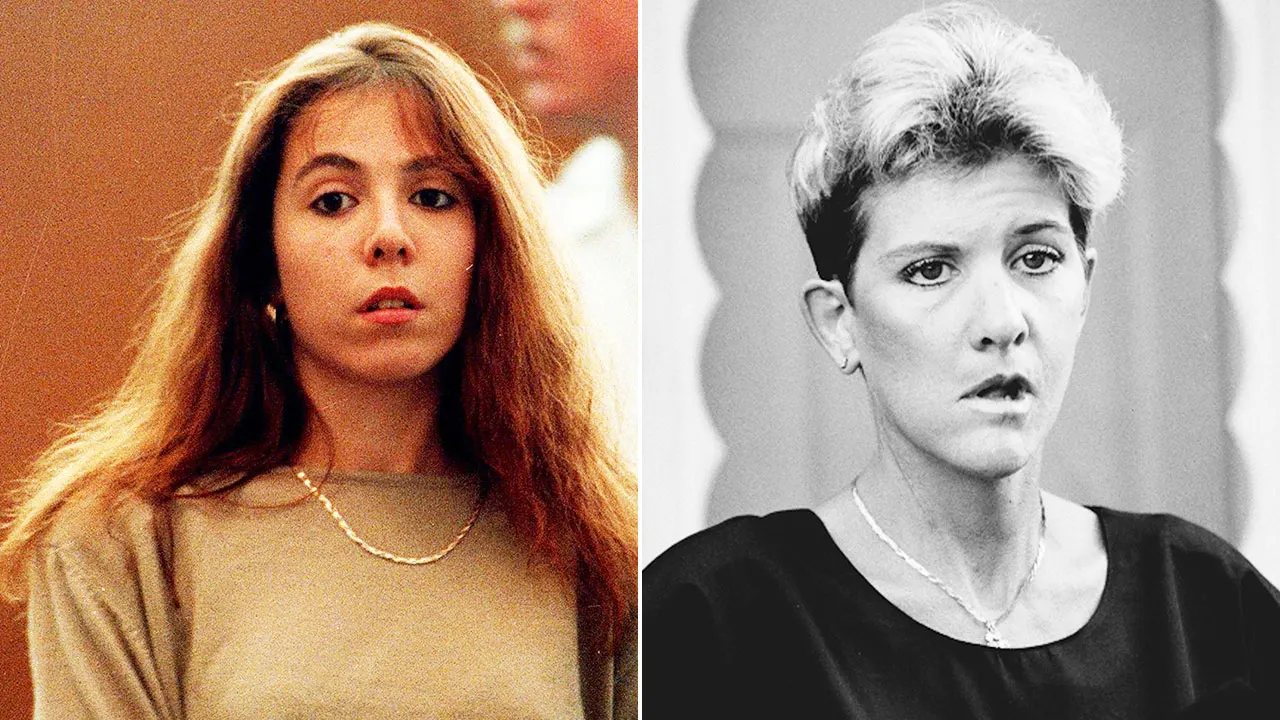
Mary Jo Buttafuoco, right, who survived being shot by “Long Island Lolita” Amy Fisher, left, is narrating her story in a new biopic, “I Am Mary Jo Buttafuoco.” (Dick Yarwood/Newsday RM via Getty Images; Dennis Caruso/NY Daily News Archive via Getty Images)
“I have permanent damage that will never heal,” she shared. “I’ve lost hearing in my right ear. I have facial paralysis and problems with my esophagus. I have only one carotid artery, so I face vascular issues that will be with me for the rest of my life.”
“I’ve always said this bullet will get me eventually,” she reflected. “But I’ve been very blessed that it’s let me hang on this long.”
Mary Jo Buttafuoco points to her bullet wound at her lawyer’s office. (Dennis Caruso/NY Daily News Archive via Getty Images)
The morning of May 19, 1992, started like any other Tuesday, she recalled. After sending her two children off to school, the Massapequa, New York, mother — then 37 — was preparing to paint in the backyard when a knock at the door changed everything.
WATCH: MARY JO BUTTAFUOCO TELLS ALL ABOUT THE AMY FISHER SCANDAL
Fisher, then a high school student, arrived holding a Complete Auto Body T-shirt from the shop where Buttafuoco’s husband, auto body mechanic Joey Buttafuoco, worked. Introducing herself as “Anne Marie,” Fisher claimed to be 19 and said the shirt was proof that the 36-year-old man was having a sexual relationship with her 16-year-old sister.
As Buttafuoco turned to call Joey, Fisher pulled out a .25-caliber handgun, fired a single shot and fled.
Amy Fisher, 17, from Merrick, Long Island, is arrested for the attempted murder of Mary Jo Buttafuoco. (Paul DeMaria/NY Daily News Archive via Getty Images)
“In the blink of an eye, the life I had ended when she came to my door,” Buttafuoco said. “I was nearly murdered in front of my own house — my safe place.”
This undated photo shows Mary Jo Buttafuoco and her daughter Jessica outside their home after the shooting. (Bill Turnbull/NY Daily News Archive via Getty Images)
Buttafuoco miraculously survived the attack. After eight hours of emergency surgery, doctors determined the bullet was too dangerous to remove. It had broken her jaw, traveled deep into her skull and lodged at the base of her brain, just above her spinal column.
Once she regained consciousness, Buttafuoco gave police a description of her attacker, though her husband vehemently denied any wrongdoing.
Joey Buttafuoco stands on the steps of his home in Massapequa, New York, on Sept. 25, 1992. (Marianne Barcellona/Getty Images)
Detectives arrested Fisher two days later — on May 21, 1992. After confronting her with phone records, witness descriptions and inconsistencies in her story, Fisher eventually confessed.
FOLLOW THE FOX TRUE CRIME TEAM ON X
Amy Fisher’s mugshot. (Kypros/Getty Images)
The case quickly became a national media circus that dominated headlines for months.
“It was awful,” said Buttafuoco. “They made fun of me on ‘Saturday Night Live.’ One of the actresses had her face all distorted — that was supposed to be funny. I thought, ‘My God, I look like this because I got shot. I was almost murdered.’
Joey and Mary Jo Buttafuoco outside their Long Island home. (John Roca/NY Daily News Archive via Getty Images)
“It became a joke. Maybe because I stood up, walked and talked, people thought, ‘Oh, she’s OK. Everything’s fine.’ But it wasn’t fine. It was mortifying. The name ‘Buttafuoco’ got dragged through the mud. It became a punchline.”
Chloe Lanier stars as Mary Jo Buttafuoco in Lifetime’s “I Am Mary Jo Buttafuoco.” (Lifetime)
Fisher pleaded guilty to first-degree assault and was sentenced to five to 15 years in prison. She served seven years before being released in 1999.
Buttafuoco remained with Joey for seven years after the shooting.
Amy Fisher sits in Nassau County Court in Mineola, New York. (Dick Yarwood/Newsday RM via Getty Images)
“First of all, I almost died,” she explained. “I was in no shape to say, ‘Get out.’ I was very sick for a long time. I had two little kids who were traumatized that their mom was almost murdered outside their home. And Joey lied easily and smoothly. He swore on the lives of our children that he had nothing sexual to do with Amy — that she was just a customer who misunderstood him. He had his story, and he stuck to it. And I believed him.”
SIGN UP TO GET THE TRUE CRIME NEWSLETTER
Mary Jo Buttafuoco stayed married to Joey Buttafuoco for seven years after the shooting. (Getty Images)
“I was on a lot of medication — a lot of pills that altered my thinking,” she admitted.
Looking back, Buttafuoco said she has wondered whether she suffered from symptoms of Stockholm syndrome.
Joey Buttafuoco stands near some of the bullet holes in the front window of his family’s auto body shop in Baldwin, New York, on June 24, 1994. The Complete Auto Body Shop was hit by about 30 bullets, police said. (Dick Yarwood/Newsday RM via Getty Images)
“I have been with Joey since I was 17,” she said. “Before I got shot, I’d been with him for 20 years. I realize now that he was a good talker — a schmoozer. He was personable, and everybody liked Joey in the neighborhood. He was everyone’s friend, with this over-the-top personality people were drawn to.”
Mary Jo Buttafuoco grew up with Joey Buttafuoco. They were married from 1977 to 2003. (Marianne Barcellona/Getty Images)
“Whenever I asked, ‘Why did this girl shoot me?’ he’d say, ‘She must have thought that because I was nice to her and fixed her car, she could have me. She must have misunderstood me.’ That’s what he would tell me — and it made sense at the time.”
“He was such a good liar,” Buttafuoco continued. “I would ask him a hundred times why. He never flinched — he’d just look at me and say, ‘I don’t know why she did this.’ He was my captor, and I listened to him. I believed him.”
Mary Jo Buttafuoco entered the Betty Ford Center to address her addiction to prescription drugs. (Rick Maiman/Sygma via Getty Images)
Buttafuoco turned to prescription medication to numb her pain and quiet her thoughts. Privately, she struggled with depression. She knew she needed help.
GET REAL-TIME UPDATES DIRECTLY ON THE TRUE CRIME HUB
Mary Jo Buttafuoco and her husband, Joey, are seen here heading to court. Date unknown. Buttafuoco told Fox News Digital that she was privately struggling with depression and an addiction to painkillers. (Rick Maiman/Sygma via Getty Images)
“There wasn’t an aha moment,” she said. “I was sick and tired of being sick and tired. Time was passing, and I wanted to set an example for my children — that mom can go through this, and it’ll be OK. They never saw me wiped out or drugged out. But I took pills to maintain, just to exist. They thought mom was fine, but when they’d go off to school or with friends, I would collapse in my room. I never wanted them to see me like that.”
“I became an addict,” Buttafuoco continued. “Back then, they gave me every pill I asked for. Nobody says no to a woman with a bullet in her head who says, ‘I’m in pain.’ They were handing that stuff out like candy — and I took it.”
Amy Fisher was released from prison in 1999. (Willie Anderson/NY Daily News Archive via Getty Images)
Buttafuoco entered the Betty Ford Center for addiction treatment, a decision she said “saved my life.” She later filed for divorce in 2003.
Mary Jo Buttafuoco filed for divorce in 2003. (James Leynse/Corbis via Getty Images)
“I remember they said, ‘Mary Jo, this terrible thing happened to you, and it’s awful, but you have so much anger and hate inside you. It’s not allowing you to heal.’ They opened my eyes. When I got sober, I realized I couldn’t stay in this anymore. I had to move on.”
Fisher, now 51, pursued a brief career in adult entertainment before leaving the industry in 2011, according to People magazine.
Mary Jo Buttafuoco’s case was the subject of several films over the years, including the 1993 made-for-TV movie “The Amy Fisher Story” starring Drew Barrymore. (ABC Photo Archives/Disney General Entertainment Content via Getty Images)
After Fisher’s conviction, Joey was indicted on multiple counts of statutory rape, sodomy and endangering the welfare of a child, People reported. He initially pleaded not guilty but later admitted to having sex with Fisher when she was 16. He served four months in jail.
CLICK HERE TO DOWNLOAD THE FOX NEWS APP
Amy Fisher attends Exxxotica New York on Sept. 25, 2009, in Edison, New Jersey. (Joe Kohen/Getty Images)
Fox News Digital reached out to Fisher and Joey, 69, for comment.
“What I’ve learned over the years is that Amy Fisher is a narcissist — and narcissists don’t change,” Buttafuoco said. “It’s always been about her. She doesn’t care one iota about what she’s done. It’s also inexcusable for any adult man to take advantage of a teenager. In that sense, she was a victim, but it doesn’t excuse what she did afterward.”
Today, Mary Jo Buttafuoco lives with her daughter in California. (JB Lacroix/WireImage/Getty Images)
Today, Buttafuoco lives in California with her daughter and remains close to her son. After extensive facial reconstruction surgery, she can smile again.
Mary Jo Buttafuoco, second left, with the cast of “I Am Mary Jo Buttafuoco.” (Lifetime)
“My head is half hollow,” she said. “If you’ve ever been on Novocaine, that’s what it feels like every day. I have no feeling on the right side of my face, but I’ve adapted to it. I made it. I’m a survivor — and I’m proud of myself for that.”
Lifetime’s “I Am Mary Jo Buttafuoco” is available for streaming
Read the full article from Here

Pittsburg, PA
Game Discussion (Let’s Try This Again): Milwaukee Brewers (59-34) @ Pittsburgh Pirates (47-47)

However, there are two new pieces of information today. The first is minor, and that’s that Garrett Stallings has been spotted in Pittsburgh and is presumably the 27th man for today’s doubleheader (he should be available in the nightcap). The second is more troubling: Kyle Harrison has been placed on the 15-day injured list with forearm tightness, with Robert Gasser getting recalled to replace him on the roster.
Harrison himself has reiterated what he said a couple of days ago: that he’s not too worried. Plus, a 15-day stint on the IL right now isn’t the worst thing in the world — 15 days from July 9 means he could be eligible to return after missing only six games on the other side of the All-Star break, and he wasn’t going to pitch this weekend anyway. It sounds like the Brewers already had some sort of plan in this respect:
Hopefully, this is just a precautionary short stint for Harrison. The Brewers have proved remarkably flexible when it comes to replacing their injured starters this season, but if Harrison is lost for a longer period, it would be a real blow.
In any case, today’s game starts at 11:05 a.m., and we’ll see you for some morning baseball! The rest of the preview, as written last night, is below.
It’s the start of the last series before the All-Star break (weather permitting) and the Brewers are in Pittsburgh to wrap things up with a three-game set with the Pirates. Brandon Sproat takes the mound for the Brewers, while first-time All-Star Braxton Ashcraft will pitch for the Pirates.
Before we get to tonight’s starters, we’ve got a transaction to tell you about. Since time is, as they say, a flat circle, the Brewers have signed Bryse Wilson to a major league deal. To make room for him, they’ve sent Drew Rom to Triple-A Nashville and they’ve designated Easton McGee for assignment.
Wilson pitched for the Brewers in 2023 and 2024, serving mostly as a long-relief, semi-mop-up option. In 2023 he had quite a nice year: in 53 outings, Wilson pitched to a 2.58 ERA and went 6-0. He struggled more in 2024, but he pitched over 100 innings in a swingman role and was slightly above league average via ERA+. However, in both seasons, Wilson vastly outperformed his peripheral numbers, and since leaving the Brewers, things have been a struggle. He made 20 appearances for the White Sox in 2025 and had a 6.65 ERA in 47 1/3 innings; in three big-league appearances in 2026 (two with the Cubs, one with the Phillies), he’s allowed seven runs, all earned, in 9 2/3 innings. Wilson’s role with the Brewers, for however long it lasts (likely not long), will surely be similar to what it was when he last pitched for them in 2024: mop-up duty. (For those who are optimists, Wilson is generally good at not walking guys, but he doesn’t really strike them out, either, and over the last couple of seasons he has been eminently hittable, with about 12.5 hits per nine innings.)
Back to tonight’s action. Sproat will look to get into the break on a high note. Sproat’s last outing was a mixture of good and bad: he was not pitching well, needed 92 pitches, and allowed eight baserunners to get through just four innings pitched. But the good news is that he was mostly able to work his way out of trouble, too, and he somehow allowed just one run in those four innings, a game which Milwaukee eventually won 3-2 against the Diamondbacks. It was an encouraging sign of maturation that he didn’t just implode when things weren’t going well. Since the beginning of June, Sproat has a very solid 3.30 ERA in 30 innings pitched, and the team is 5-1 in his starts, a stark contrast to his 6.24 ERA and 5-6 team record prior to last month.
Ashcraft has been quite good for Pittsburgh, as evidenced by his status as an All-Star injury replacement. He’s just 26 and in his second season, and he’s done nothing but pitch well since his debut in late May of last season. This year, Ashcraft is 9-3 with a 3.24 ERA (134 ERA+) and even better 3.16 FIP. He’s got sterling peripherals (10.1 K/9, 2.1 BB/9) and is a hard thrower who plays a curveball and sinker off a four-seamer that sits around 97 mph. The curveball, especially, is one of the better ones in the league.
The Brewers continue to rotate through their position players as they reach the end of this 18-games-in-17-days stretch. Christian Yelich is back in the leadoff spot, while the outfield goes Luis Lara, Garrett Mitchell, and Sal Frelick from left to right. William Contreras is behind the plate, while the infield is Joey Ortiz, Cooper Pratt, Brice Turang, and Jake Bauers.
After last night’s rainout, first pitch has been scheduled for 11:05 a.m. CT, with game two coming either at 3:05 p.m. or one hour after the end of game one, if that’s later than 3:05.
Connecticut
I moved from Connecticut to the South chasing a cheaper, simpler life. It wasn’t at all what I expected, so I moved back.

This as-told-to essay is based on a conversation with Sandra Bonola, 56, who moved from Connecticut to Charleston, South Carolina, in 2021, then to Beaufort, South Carolina, in 2023, before deciding the South wasn’t right for her. The conversation has been edited for length and clarity.
I am a native New Englander, born and raised in Connecticut. In late 2021, I started thinking seriously about moving. I’m an empty nester, and thanks to my remote job, I can work from anywhere in the country.
I was drawn to the South because people talked about it as if it were the promised land. The stories made it seem like it had better weather, cheaper homes, and a more affordable cost of living. I bought into that and told myself, “If I move to the South, I can have an easier life, and it won’t be as expensive.”
I decided to move to Charleston, South Carolina. I figured that there, I’d be outside more, near the beach, have a lower cost of living, and have access to the coast. I was also hoping for that small-town vibe and Southern charm.
I packed up the 2,500-square-foot Colonial I had lived in for 20 years and moved. I got rid of a lot of things I no longer needed and put the rest into storage.
I was really hopeful Charleston would be right for me. But about four months after moving there, I realized that almost everything I had hoped for was turning out to be the opposite.
I tested the waters in Charleston first
In Charleston, I stayed in a friend’s apartment and paid rent month to month while I decided whether I wanted to buy a home there. I’m grateful for that setup because it gave me a trial period. In those four months, I learned a lot about Charleston — and about what I actually wanted.
One of the first things I noticed was that everybody seemed to be moving there. The city was crowded, and navigating the downtown area was always challenging. Its streets were also full of traffic — it would take me up to an hour to try to get to downtown Charleston from John’s Island.
The city was also more expensive than I expected. I was somewhat insulated from housing costs because I was renting from my friend, but food, entertainment, and taxes were all much higher than I had anticipated.

Jeff Greenberg/Universal Images Group via Getty Images
The Southern charm I was hoping for also didn’t feel as I expected. Charleston has a big “going out” culture, much of which seems to revolve around where to eat or drink. That’s not really my thing. For me, the city lacked some of the creative flavor I was looking for.
The climate was another big factor. Everyone knows New England can have brutal winters, and I don’t like shoveling snow, so I was eager to get away from that. But after moving South, I realized I had traded brutal winters for brutal summers. It was just so hot.
At first, I thought I just needed time to adjust. But the more I explored Charleston, the more I realized the lifestyle I had imagined didn’t match my reality.
I was getting annoyed, then frustrated, and then I was done.
I tried the South again, but it still wasn’t for me
I didn’t feel like I had anything to lose, so I moved back to Connecticut in 2022. Instead of feeling defeated, I actually felt grateful that I had given Charleston a shot.
For a while, I rented a month-to-month beach house in Connecticut while I looked for a home to buy. But the homebuying search in New England felt bleak. I was trying to downsize, but even the smaller homes came with big-home prices. It made me feel like I might never find what I was looking for.
After house hunting for 14 months in Connecticut, I really wanted to put down roots. The idea of moving to a quieter, more affordable small town was still appealing. So in July 2023, I decided to try the South again — this time in Beaufort, South Carolina, a small town I had explored while living in Charleston.
There, I was able to purchase a beautiful three-bedroom ranch home for $425,000. It was a new build in a planned community.
The house checked a lot of boxes. It was beautiful, new, and far more affordable than what I could have bought in Connecticut. But I still didn’t feel at home in Beaufort.
Affordability is important, but you also need community
In Beaufort, it was so hot that I rarely saw or interacted with my neighbors. People would say hello and then quickly go back inside. I kept thinking, “How am I ever going to socialize here?”
I joke that I’m an OG remote worker because I started working remotely in 2008. Remote work gives you some social interaction, but you still need to get outside and make real connections with people.
I tried to put myself in situations where I could meet people. I looked for yoga classes, local events, and other activities I could join. But what I found was that many people had moved there for family or moved with a spouse, and they mostly kept to themselves.
It lacked the kind of community connection I was used to seeing in the Northeast. I kept trying to make those connections and stay open to it, but it just kept falling flat.
I tell people this story, and sometimes they understand it, and sometimes they don’t. But I knew I was done one morning when I woke up, looked at the ceiling fan in my bedroom, and thought, “I really hate that fan, and I’m losing hope for my life.”
I didn’t appreciate Connecticut’s beauty until I moved back
In 2024, I moved back to Connecticut. Right now, I’m living on the coast in an apartment inside a refurbished Civil War-era hospital. I’m on one of the top floors, so I can see the boats and the water.
I’m still searching for a home and making offers with more confidence. Home prices are high here, but prices down South are creeping up, too.
I’ve started thinking about owning in Connecticut more as an investment in both my future and my happiness. I’ve set a budget of about $800,000 for a home, though some of the homes I’ve been interested in have been closer to $650,000.
I’m seeing possibilities I didn’t see before, and that’s exciting.
Kate Stoupas/Getty Images
Being back in Connecticut has been eye-opening. I don’t think I fully appreciated its beauty until I had something to compare it to.
There’s so much opportunity here. I love the energy and the people. I’ve been taking advantage of the location, too, doing things like hopping on a train to New York to see a show or making more of an effort to connect with friends.
When I think about whether I’d move somewhere else again, I keep coming back to something a photographer once told me in Massachusetts. He had lived in Bali with his family, and I remember asking, “You lived in Bali? Why would you come to Massachusetts?”
I’ll never forget what he told me. He said, “I can go anywhere in the world from an airport, but you really have to realize the ground beneath your feet is beautiful if you choose to see it that way.”
That stayed with me. It changed the way I think about Connecticut and made me realize I needed to take the blinders off. There was beauty right at my feet — I just needed to see it.

Almost exactly one year ago, Graham Platner, who has no political experience, was cherry-picked by out-of-state political activists.
According to a person familiar with the campaign, Daniel Moraff and Leanne Fan, who have made a name for themselves by recruiting populist candidates across the country, traveled to Maine and rented a house near Platner’s home in Sullivan to convince him to run for the US Senate. Throughout the process, Moraff became Platner’s “right-hand man”, the person described, speaking on condition of anonymity for fear of backlash.
But homing in on Platner as a newcomer to oust long-serving Republican Susan Collins came at a cost. The Wall Street Journal recently reported that Moraff asked for an expedited, cheaper background check to be completed in a matter of days. The firm Moraff and his team contracted with also did not do a candidate interview or questionnaire, per the Journal’s report.
The fallout of those decisions happened on a colossal scale. In a midterm year with record spending across the country, the Democratic party had come to pin its hopes on Platner to help clinch Senate control with his meteoric campaign and ability to unite independent and progressive voters alike with a clear, anti-establishment message.
Controversies ensued, bringing with them straight-to-camera videos of Platner explaining and denying various scandals. Finally, an allegation that broke the dam this week: a woman he dated accusing him of sexual assault, of drunkenly forcing her to have sex with him after coming to her house uninvited. Asked in an interview on CNN whether Platner raped her, the woman, Jenny Racicot, replied: “By definition, yes, absolutely.”
His support collapsed. Platner waited days as calls grew for him to withdraw. Then on Wednesday, he released an 11-minute video announcing the end of his campaign that left Maine voters scrambling and betrayed, and the country wondering: how did this happen?
“It feels like some of the first rules of politics may have been broken here,” said Andrew Feldman, a national progressive strategist. “We were seeing rookie mistake after rookie mistake, and now we find ourselves in this situation.”
David Farmer, a Democratic strategist based in Maine, said the vetting process for Platner was tantamount to “malpractice”.
“I’ve had to have these conversations with candidates in the past – where you sit down and you ask them really tough questions,” Farmer said. “What drugs have you used? Have you ever had an affair? You ever cheated on your wife? You ever cheated on anybody? It’s really uncomfortable and probing, and a miserable event for everybody involved.”
The person familiar with the campaign said that Moraff and Fan “fell in love with an aesthetic without knowing the state” that ultimately did a “disservice” to Maine’s working-class voters.
Platner’s campaign did not respond to the Guardian’s request for comment on the methods used to check the former nominee’s background.
A rising star and an early redemption arc
Platner’s early campaign days – after he announced his run in August of last year – saw a rare rush of grassroots excitement as he criss-crossed the state for town halls, with backing from Bernie Sanders and an ad produced by Zohran Mamdani’s 27-year-old media strategist, Morris Katz.
An oyster farmer and marines veteran, Platner issued plain-spoken warnings that Maine’s working class had been hollowed out – healthcare was unaffordable, young people couldn’t buy homes – and said he’d survived only because of the veterans’ benefits he receives from being “blown up” too many times in combat. His searing indictment of the political establishment matched the anti-Washington mood and anger many Democrats felt toward their party’s leaders.
“His tone, his look, his voice, his message captured a frustration with Washington, a frustration with economic injustice,” Farmer noted.
Democratic leaders had someone else in mind: the 78-year-old term‑limited governor Janet Mills. But Mills hadn’t yet announced her run. In the meantime, 41-year-old Platner positioned himself as the gruff local businessman hardened by tours in Iraq and Afghanistan, pushing for generational change. Once Mills entered, he quickly framed her as emblematic of the status quo, arguing that a Chuck Schumer‑backed candidate would mirror Collins‑style “fake moderation”.
The Democratic establishment was skeptical of Platner from the outset, concerned that he brought too much baggage to the race against a seasoned incumbent. But progressives say the party is also to blame for pushing Mills as an alternative. If she had been elected, Mills would have been the oldest freshman in Senate history.
Platner brushed off his earlier scandals: Reddit posts from 2013 to 2021 where – among other things – he called white rural Americans “stupid” and “racist”, questioned why “Black people didn’t tip” and said sexual‑assault survivors should “take some responsibility … and not get so fucked up”. While apologetic, he characterized the posts as side-effects of severe PTSD and disillusionment from combat.
He tried to get ahead of more controversy by revealing a covered-up skull-and-crossbones tattoo that resembled a Totenkopf, a symbol known for its use by the Nazi SS. Platner said it came from a night drinking with military buddies in Croatia 18 years earlier. “I’m not a secret Nazi,” he told the Pod Saves America hosts.
Platner and his allies in Congress argued the uproar was overblown. At the time, Platner told the Guardian that Mainers related to his struggle and didn’t see the posts or tattoo as disqualifying. Many voters also said they could look past his mistakes and viewed his redemption arc as genuine. “If what the voters wanted were people who were grown in vats and had never done or said anything that they might regret their entire lives, we’d have a very different country,” Moraff told the Journal in May.
But inside his campaign, cracks had started to appear. In October, Platner’s political director, Genevieve McDonald, and his finance director both left his team. The latter, Ronald Holmes III, said his “professional standards” no longer “fully aligned with those of the campaign”. McDonald said Platner’s failure to fully disclose the extent of his Reddit posts led to her departure. She went on to question whether Platner really didn’t know the meaning of his tattoo.
Bracing for the worst
There was lingering concern among Maine locals and political operatives that more would come out about Platner’s past. One voter at a town hall in April asked him – point‑blank – if there were examples of sexual misconduct in past relationships that could emerge and endanger his chances. Another said that she was extremely wary about how untested Platner was.
Ultimately, his star continued to outshine the septuagenarian governor’s lackluster campaign. Mills, citing dwindling financial resources, eventually dropped out of the race, giving Platner a glidepath to the nomination.
And then – 10 days before the Democratic primary – reports revealed that Platner’s wife, Amy Gertner, had confided in McDonald about sexually explicit messages he’d sent outside their marriage, disclosures she made in an attempt to get ahead of any opposition research.
In extraordinary fashion, Platner was summoned to Washington DC to answer lawmakers’ questions about the latest controversy. Shortly after the meeting, the New York Times reported that previous partners described “unsettling” and “toxic” behavior. One of the women, Lyndsey Fifield, a conservative operative who dated Platner from 2013 to 2015, alleged he frequently grabbed her by the shoulders, once yanked her out of a taxi by her wrist, and during one argument twisted her arm behind her back, shoved her into a bedroom and held the door shut until she was “calm”. Fifield also cast doubt on Platner’s claim that he was unaware that his tattoo was a Nazi symbol, telling the Times that he referred to it as “my Totenkopf”.
Platner rejected Fifield’s claims and branded them as “politically motivated”.
While some voters were deterred, Platner still ended up clinching more than 70% of the vote in the primary. National Democrats, however, were left to grapple with a catch‑22: what would be an insurmountable scandal? And would it be worse than if Collins, who had helped overturn Roe v Wade and backed several key Trump policies, was re‑elected to a sixth term?
“It’s like a frog being in a pot of boiling water. If you raise the temperature slowly, you don’t know it’s boiling until it’s too late,” said Farmer.
The final straw
When Politico published their story on Monday, outlining Jenny Racicot’s claims that Platner raped her nearly five years ago, the condemnation came hard and fast. Endorsements evaporated and calls for Platner to withdraw were immediate. As he denied the allegations in a lo-fi self tape, it became clear this would be the red line for those who had stood by him until this point.
“The messenger was not the right person to match the inspiring message,” said Adam Green, executive director of the Progressive Change Campaign Committee. “It is really unfortunate for the overall project of trying to challenge corporate power and shake up a broken political system.”
It would be another two days before Platner published another video announcing his decision to end his campaign, claiming the allegations against him were part of a coordinated political attack.
Troy Jackson, who campaigned alongside Platner while running for the Democratic nomination in the Maine gubernatorial race, and is now one of several candidates running to replace him, told MS Now: “Graham told me point-blank that there was nothing in his past that I had to worry about. And he lied to me. And he lied to a lot of us.”
Now, as Democrats battle with the feeling of deja vu from Joe Biden’s withdrawal from the 2024 presidential race, it’s left some unnerved about whether the Maine Senate race is still winnable. “It’s so upsetting because it feels like we’ve been completely bamboozled by a candidate that so many people believe in,” said Feldman.
-

 San Diego, CA3 minutes ago
So you want to create a hummingbird habitat? Here’s how.
-

 Milwaukee, WI10 minutes ago
Milwaukee dives into the Global Swimmable Cities Alliance
-

 Atlanta, GA12 minutes ago
Atlanta Starting Lineup: July 2026 (NASCAR O’Reilly Series) – Racing News
-

 Minneapolis, MN18 minutes ago
Former Obama press aide accused of stealing cash, credit cards, from Minneapolis coworkers to buy kratom
-

 Indianapolis, IN25 minutes ago
Woman killed in downtown Indianapolis hit-and-run crash
-

 Pittsburg, PA27 minutes ago
Game Discussion (Let’s Try This Again): Milwaukee Brewers (59-34) @ Pittsburgh Pirates (47-47)
-

 Augusta, GA32 minutes ago
8 school district cops lose certifications over cheating scandal
-

 Washington, D.C40 minutes ago
D.C. police investigating fatal Saturday morning stabbing in Columbia Heights

