Illinois
Neuqua Valley’s Mason Martin commits to Illinois

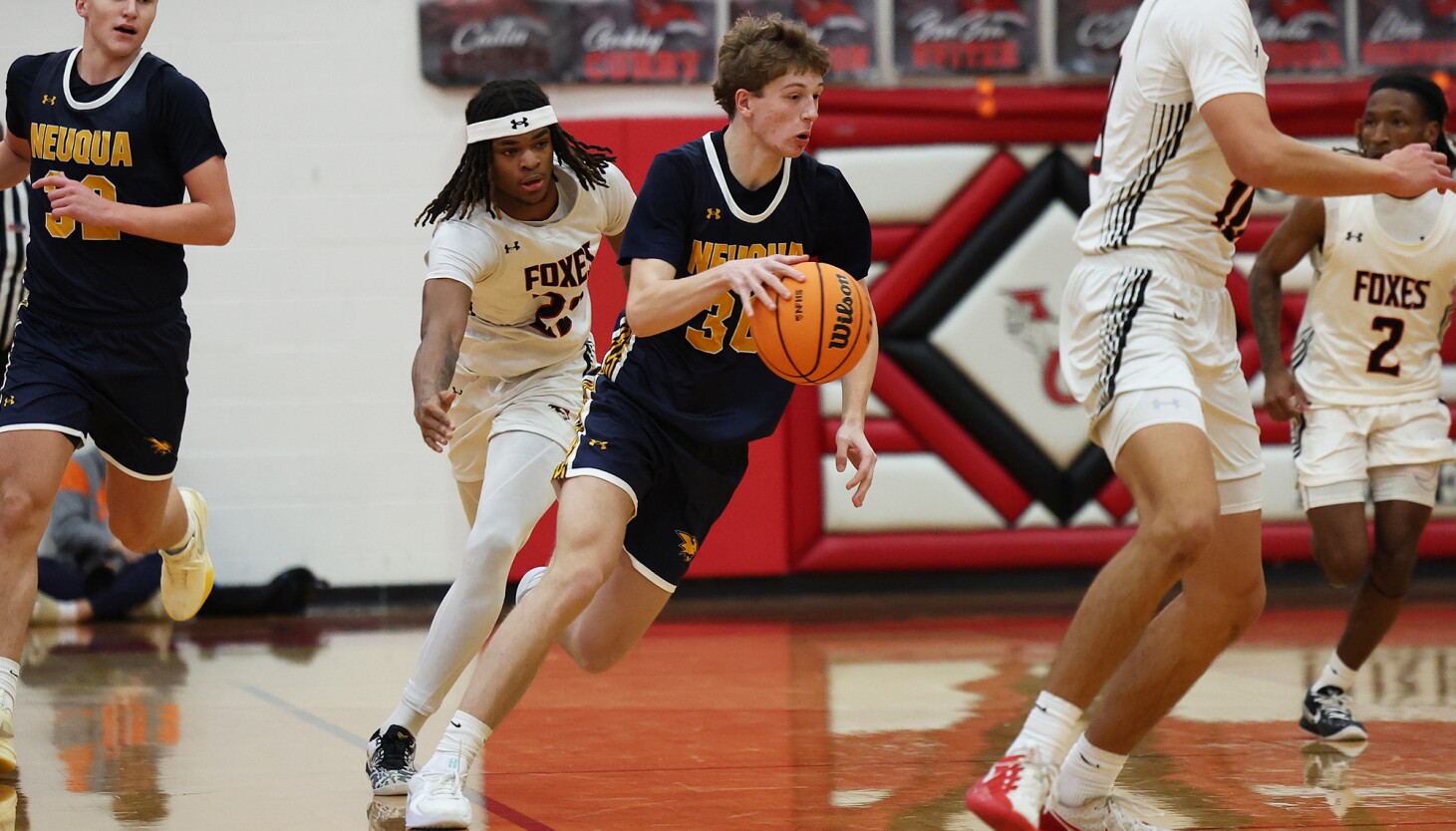
There is a growing adage now in recruiting of high school players that scholarship offers don’t quite mean what they used to.
Illinois’ offer to Neuqua Valley’s Mason Martin last month certainly meant a lot.
When a teen-aged kid ignites the interest of his “dream school” and the coaching staff’s pursuit is strong and rapid, the recruitment becomes legit and can go quickly.
In six months Martin went from a complete unknown to a Big Ten-bound player as the 6-5 junior ended his recruitment early, committing to Illinois.
“All of it is super surreal,” Martin said of the whirlwind recruitment. “I’m super grateful and thankful for all of it. Six months ago none of this was happening. Now I’m committed and locked in. I’m still kind of trying to process it all.”
Martin was only going to be kept under wraps for so long.
When you are able shoot the basketball with the range and efficiency that Martin does, you’re eventually going to be found and coveted.
Martin proved he was a Division I prospect over the spring and summer, both with his travel team, Breakaway, and his high school team during the June “live” periods. But the start of his junior season has been an absolute explosion, generating higher-level college interest.
Martin is putting up just over 19 points a game for a team that is 16-1 and ranked No. 9 while playing with one of the state’s elite players, sophomore Cole Kelly. The shooting, which is Martin’s calling card, has been exemplary. He’s already buried 62 three-pointers on the season on 146 attempts.
While that’s an ultra-impressive 42 percent for a high-volume shooter, it’s also about how he gets his shot off. Martin does so effortlessly and with a quick release.
Martin hit 11 three-pointers while scoring a career high 41 against West Aurora in the season opener. He averaged 23 points a game in helping Neuqua to the DeKalb Holiday Tournament title, including 34 points and eight threes in the championship.
Illinois pounced quickly on a player who has established himself as the state’s premier shooter. Martin will help any college program with his ability to space the floor.
“The relationship they built with me mattered,” Martin said.
Illinois came to several games, practices and open gyms. Martin said he felt genuine support and love while talking to all the coaches on the staff.
“I love everything about the program — the facilities, the coaching staff, the culture they have developed with their whole team, whether it’s on or off the court,” Martin said. “It’s one I wanted to be a part of and keep helping build.”
The recruitment and the decision came quickly. But Martin already had his eye on Illinois. He says when you combine the success of the program, the location and his own perception of the school, it became an easy decision.
“It’s really kind of my dream school coming into it,” Martin said. “And they’re a top 15 program in the country, a prestigious program that’s pretty close to home. That’s why I decided to do it so early, because I know it’s the right spot for me. I know I made the right decision.”
Martin says he’s already started a discussion with his high-profile, high-in-demand teammate Kelly about joining him in Champaign.
“We have definitely talked about it, but it’s mostly just making jokes about it right now,” Martin said with a laugh. “But I definitely have already started. He’s my favorite teammate I’ve ever played with, so being able to do that at the next level would be super fun.”


Average per acre returns to soybean production have exceeded those for corn production in 10 out of the 13 crop years from 2013 to 2025. The opposite was true over the prior 13 crops years from 2000 to 2012. Acreage trends in Illinois indicate farmers are responding to the shift in relative profitability by planting a smaller percentage of their acres to corn.
Corn versus Soybean Returns in Illinois
Figure 1 shows average corn minus soybean returns for central Illinois grain farms with high-productivity farmland enrolled in Illinois FBFM from 2000 to 2025, with projections for 2026 based on the latest Illinois crop budgets (see farmdoc daily from May 19, 2026).
From 2000 to 2012, average per acre returns to corn production exceeded returns to soybeans in 10 years with an average advantage for corn of $59 per acre. The latter half of this period includes the years of high returns and farm incomes during the biofuel boom resulting from the Renewable Fuel Standard.
The large increases in use of corn for ethanol production largely came to an end by 2013. Since 2013, average returns to soybeans have exceeded those for corn. Soybean returns exceeded corn returns in 10 out of the 13 years from 2013 to 2025, with an average advantage for soybeans of $53 per acre. The 2013 to 2025 period has been characterized by lower returns due to low commodity price levels relative to production costs, which have increased consistently through time. Exceptions include the 2020 to 2022 crop years when a significant amount of ad hoc assistance was provided in response to the pandemic (2020), and corn and soybean prices saw significant increases (2021 and 2022) due in part to supply chain issues associated with the pandemic and the start of the Russia-Ukraine War. The largest return advantage for soybeans in the last 25 years occurred in 2023 when average soybean returns exceeded corn returns by $237 per acre. Notably, average farmer returns to both corn and soybeans were negative in 2023 but the average loss for soybeans was less than that for corn acres.
Acreage Allocation Trends
Figure 2 shows the percentage of total tillable acres planted to corn by grain farms enrolled in FBFM in the northern (upper panel), central (middle panel), and southern (lower panel) regions of Illinois from 2003 to 2024. The percentage of acres planted to corn has trended down slightly in all three regions over the past 12-15 years, a period which corresponds with the greater relative returns to soybean acres. This indicates a response from farmers in adjusting their crop rotation decisions to the shift in relative profitability.

Historically, a higher percentage of acres have been planted to corn in northern Illinois. This is due to continuous corn rotations being more common in the northern region of the state, which can be linked to greater feed demand from beef and dairy operations in that region of Illinois among other factors. Corn and soybeans are by far the primary crops planted over the past 25 years in both northern and central Illinois, with both typically accounting for 95% or more of total planted acreage. Thus, reductions (increases) in corn acreage are typically offset by corresponding increases (reductions) in soybean acres. The proportion of corn acres in northern Illinois has dropped back under 60% in recent crop years after exceeding that level from 2007 to 2018 with a peak of just over 69% in 2011. The share of corn acres in central Illinois has dropped down to around 50%, trending down from a peak of nearly 60% in the 2007 crop year.
Southern Illinois has historically had the smallest percentage of acres planted to corn. While planted on a small percentage of total acres, wheat more commonly enters farmers’ crop rotations in southern Illinois, often with wheat followed by double-crop soybeans. The percentage of corn acres has trended down from around 47% in 2012 to around 40% in 2024.
Discussion
The shift towards higher returns to soybeans over the last 13 crop years can be linked to a number of factors.
- Since the 2012 drought, both corn and soybean yield performance has, on average, been relatively good across Illinois. Average soybean yields in particular have been strong, exceeding trend levels in all years but 2019. Anecdotal evidence suggests that farmers are improving management decisions and practices on soybean acres, moving to earlier planting dates and adopting new technologies such as seed treatments which can improve yields particularly in stressful conditions (see the Illinois Soybean Management Guide for more information).
- Except for the three-year period from 2020 to 2022, market returns have been relatively poor for corn and soybean producers since 2013. The non-land costs to produce soybeans are smaller than those for corn. Fertilizer costs have been volatile and machinery costs have been on the rise, particularly since the pandemic and 2020 crop year – both of which are lower for soybeans than for corn.
- While trade policies over the past decade have negatively impacted export markets for U.S. agricultural commodities, and in particular for U.S. soybeans, trade aid payments have helped to partially offset those losses.
- The RFS was a rising tide that tended to lift all boats in the form of higher commodity prices in the latter half of the 2000s. The initial impact of U.S. biofuel policy was arguably more beneficial to corn, but over time the role of biodiesel has increased resulting in greater demand for feedstocks, primarily soybean oil (see farmdoc daily from April 12, 2024). The share of acreage planted to corn in Illinois rose to meet the increase in demand for ethanol and has declined back to levels similar to the early 2000s. In contrast, the share of acres planted to soybeans declined and then increased as relative returns have shifted.
- The planting flexibility provision of the 1996 farm bill has provided farmers a better ability to respond to return conditions through acreage adjustments (see farmdoc daily article from March 3, 2025).
A key question is whether returns will continue to favor soybeans over corn for grain farms in Illinois and across the Midwest. If so, will producers continue to shift towards more soybean acres in their crop rotations? This would imply some farmers moving to planting soybeans to the same land in consecutive years (i.e. soybeans on soybeans). Agronomists tend to advise against planting multiple years of soybeans in a row due to concerns over disease, weed, and other pest pressures and the potential for the development of pest resistance to existing tools (Illinois Soybean Management Guide). However, research is being done on continuous soybean rotations in the Midwest (see here for an example of a recent study in Iowa).
Over the next few months we plan to provide a short series of articles which take a closer look at the shift in relative profitability of corn versus soybeans over the past 25 years. These will include more analysis of the factors that have contributed to the shift and whether we should expect the trend to continue.
Acknowledgments
The authors would like to acknowledge that data used in this study comes from Illinois Farm Business Farm Management (FBFM) Association. Without their cooperation, information as comprehensive and accurate as this would not be available for educational purposes. FBFM, which consists of 4,900 plus farmers and 80 plus professional field staff, is a not-for-profit organization available to all farm operators in Illinois. FBFM field staff provide on-farm counsel with recordkeeping, farm financial management, business entity planning and income tax management. For more information, please contact the State FBFM Office located at the University of Illinois Department of Agricultural and Consumer Economics at 217-333-8346 or visit the FBFM website at www.fbfm.org.
References
Gerveni, M., T. Hubbs and S. Irwin. “FAME Biodiesel, Renewable Diesel, and Biomass-Based Diesel Feedstock Trends over 2011-2023.” farmdoc daily (14):71, Department of Agricultural and Consumer Economics, University of Illinois at Urbana-Champaign, April 12, 2024.
Illinois Soybean Management Guide, 2025. University of Illinois Extension.
Paulson, N., G. Schnitkey, C. Zulauf and B. Zwilling. “Spring Revision to 2026 Illinois Crop Budgets.” farmdoc daily (16):88, Department of Agricultural and Consumer Economics, University of Illinois at Urbana-Champaign, May 19, 2026.
Zulauf, C., J. Coppess, G. Schnitkey and N. Paulson. “US Corn, Soybean, and Wheat Acres in the Planting Flexibility Era.” farmdoc daily (15):40, Department of Agricultural and Consumer Economics, University of Illinois at Urbana-Champaign, March 3, 2025.
Illinois
Unincorporated Bensenville residents say ‘nightmare’ rat infestation threatens their health, safety

UNINCORP. BENSENVILLE, Ill. (WLS) — People living in a neighborhood in unincorporated Bensenville say a rat infestation is a threat to their health and safety.
Those in the White Pines neighborhood say they know the source of the problem, but they feel like elected officials are not doing enough to help them.
ABC7 Chicago is now streaming 24/7. Click here to watch
Multiple homeowners say the issue goes back at least two years. They believe one particular property is ground zero and that there have been no significant measures to eliminate what they are calling a rat infestation.
“It’s just a nightmare right now,” said White Pines resident Jim Brill.
Brill says for two years, he and his neighbors have dealt with rats running around their property.
“It’s impacting every house that surrounds that house. The rats come out when we put our trash cans out. They literally swarm out of the yard, that house’s yard, go in our trash cans,” Brill said.
Another neighbor says his home security picked up the rodents after they tripped the camera’s motion sensors, sharing at least a dozen videos with ABC7 showing them scurrying around the side of his house.
And pictures show multiple rats on the windowsills on the home that neighbors believe is the root of the issue.
“We have to, you know, take huge measures to maintain our property, and we’ve done that, but when your neighbor isn’t doing that, and then creating housing for these vermin, right, that carry disease, and can, you know, be troublesome and problematic, it’s quite frustrating,” said White Pines resident Kristin Henri.
Henri says her parents have lived there for more than 50 years, never with a rat problem, until 2024. She says the rats are a hazard to their health and safety.
“We’ve had rats on our property, running through in broad daylight, so it’s unnerving. I can’t let my dog out. I worry about my neighbor’s child across the street, who’s a toddler,” Henri said.
Henri and Brill say living in an unincorporated part of Bensenville has complicated matters. At this point, they believe it is in the county’s hands, but still the problem persists.
“We contacted the county. They keep telling us they’re going to take care of the problem, and they don’t,” Brill said.
“We need somebody to help eliminate this. It’s not fair to us. We maintain our properties, and we want to live in a safe environment,” Henri said.
The DuPage County Building and Zoning Staff told ABC7 they been working on this problem since 2024.
They are working with the owner of a single property to clean the home’s interior.
Once that’s done, the county says, it will have an exterminator come in and set traps in the area.
Copyright © 2026 WLS-TV. All Rights Reserved.

Sightings of a fireball were reported across Illinois and at least eight other states on Monday night.
The American Meteor Society received nearly 200 reports of a fireball seen over Illinois, Indiana, Kentucky, New York, Ohio, and Wisconsin around 10 p.m.
Some of the reports out of Illinois came from Chicago, Aurora, Carpentersville, Warrenville, Addison, Waukegan, Oak Lawn, Shorewood Westchester, and Glen Ellyn. There were also reports from Indiana, including Valparaiso and Fort Wayne.
There was also a report out of Ontario, Canada.
Home camera footage, posted by the American Meteor Society, shows a flash across the sky in Michigan about an hour Northwest of Detroit.
-

 Michigan9 seconds ago
Gotion wants Michigan township to pay the $23.7M it owes in incentives
-

 Massachusetts7 minutes ago
French-Mediterranean Eatery Charts Opening In Boston
-

 Minnesota10 minutes ago
Dennis Peterson
-

 Mississippi15 minutes ago
MHSAA private schools will have enrollment multiplier starting in 2027-28 season
-

 Missouri22 minutes ago
Water Safety Tips from Missouri State Highway Patrol – Ozark Radio News
-
 Montana25 minutes ago
Forstag secures democratic nomination for Western Montana Congressional District
-

 Nebraska30 minutes ago
Three-Time Nebraska State Champion Eje Kim Sends Commitment to Yale for 2027
-

 Nevada37 minutes ago
Country artist Caleb Montgomery performing at State Fair of Nevada

