


Updated June 3, 2026 09:14AM
West Virginia
Priority Checklist: West Virginia House begins work on Jobs First agenda


- House Finance Committee Vice Chairman Clay Riley, left, explains House Bill 4007, relating to the state industrial access road program, during a Thursday morning committee meeting. (Photo by Steven Allen Adams)
-

- State Senate Assistant Majority Leader Patricia Rucker answers questions during a Senate Health and Human Resources Committee meeting Thursday afternoon about Senate Bill 42, which would allow for over-the-counter ivermectin sales. (Photo courtesy of WV Legislative Photography)
House Finance Committee Vice Chairman Clay Riley, left, explains House Bill 4007, relating to the state industrial access road program, during a Thursday morning committee meeting. (Photo by Steven Allen Adams)
CHARLESTON — Making good on a pledge last month to focus on improving economic development in West Virginia, several House of Delegates committees began taking up bills as part of the House’s “Jobs First – Opportunity Everywhere” agenda.
In December, the Republican House caucus released its “Jobs First – Opportunity Everywhere” agenda, a legislative roadmap designed to stimulate statewide growth by focusing on modernizing education to prepare a skilled workforce, fostering a competitive business climate through deregulation, and ensuring responsible, long-term infrastructure development.
The House Finance Committee held its first committee hearing on House Bill 4007, relating to the state industrial access road program. The bill, introduced by Del. David McCormick, R-Monongalia, proposes updates to the Industrial Access Road Fund to better align with modern construction costs and economic development goals.
HB 4007 would double the annual funding for the Industrial Access Road Fund from $3 million to $6 million while increasing the maximum grant for a single county project from $400,000 to $800,000. The Industrial Access Road Fund, managed by the state Department of Transportation, was first created in 1999.
The bill also incorporates the West Virginia Business Ready Sites Program into the fund’s eligibility and introduces a 90-day deadline for the Division of Highways to respond to project requests.
State Senate Assistant Majority Leader Patricia Rucker answers questions during a Senate Health and Human Resources Committee meeting Thursday afternoon about Senate Bill 42, which would allow for over-the-counter ivermectin sales. (Photo courtesy of WV Legislative Photography)
House Finance Committee Vice Chairman Clay Riley, R-Harrison, said that these adjustments account for 26 years of inflation and will eliminate the need for multi-year funding cycles that previously delayed construction.
“This fits into our Jobs First – Opportunity Everywhere agenda,” said Riley, a co-sponsor of HB 4007. “Over the past five years, they have expended on an average of about $4 million per year … Because of the limits that were in the previous code, they’ve had to allocate multiple years of commitment to projects in order to build them.
“We looked at the construction inflation cost between 1999 and 2025 and essentially equated the increase from $400,000 to $800,000, which is in direct correlation to the construction increase over the past 26 years,” Riley continued. “And we took the $3 million total to $6 million, which is a direct correlation. And because there was an additional program that has come into play years ago with the certified sites, we added that as also a component.”
The Industrial Access Road Fund receives three-fourths of 1% of state tax collections that are otherwise dedicated to the State Road Fund, up to its statutory cap. HB 4007 doubles the fund’s cap, which would result in an additional $3 million being shifted annually from the State Road Fund to the Industrial Access Road Fund.
HB 4007 was one of several bills on committee agendas in the House on Thursday. Others include House Bill 4005, clarifying the categories of employment which are prohibited or authorized for persons in West Virginia who are under the age of 18 and to clarify youth apprenticeships prohibited or authorized in such categories of employment; House Bill 4006, aimed at fostering the growth of the state’s aerospace industry in West Virginia; and House Bill 4008, aimed at expanding the state’s inventory of industrial sites.
Under the House’s committee process put into place last year, bills are explained in a committee hearing on day one. On a separate day, the bill goes through markup, discussion, and vote.
On the other side of the State Capitol Building, a Senate committee moved its first bills. The Senate Health and Human Resources recommended Senate Bill 42, authorizing the over-the-counter sale of ivermectin, a prescription drug used to treat people for parasites, lice, and certain skin conditions. The bill now heads to the Senate Judiciary Committee.
Prescribed for both humans and animals, the drug became popular during the COVID-19 pandemic, though the U.S. Food and Drug Administration has not approved ivermectin for COVID treatments. Claims that the drug can also treat certain kinds of cancer are also unfounded.
SB 42 would permit pharmacists in West Virginia to sell ivermectin for human consumption without a prescription. Pharmacists would be required to give customers FDA-approved information sheets, though no professional medical consultation would be mandatory.
The bill would provide legal protections to pharmacists and medical providers to shield them from civil liability or professional disciplinary actions when acting in good faith. The West Virginia Board of Pharmacy would be required to draft specific rules to oversee the implementation of these new protocols.
State Senate Assistant Majority Leader Patricia Rucker, R-Jefferson, is the lead sponsor of SB 42. She said five states have also passed bills allowing for over-the-counter ivermectin sales.
“Just like many other drugs are made over the counter when they have very few side effects and are generally safe, ivermectin is one of those drugs,” Rucker said. “The risk of side effects and abuse is small and minor, but it’s possible with every drug. You can abuse Tylenol. You can overtake Tylenol. There are people who have destroyed their stomach by taking too many over-the-counter medications.
“It is absolutely the responsibility of the individuals and the pharmacists, and I do believe that pharmacists have a very good knowledge of what it is that they are not only dispensing,” Rucker continued. “They’re there to educate the consumer when the consumer requests any drugs, whether it is with a prescription or without a prescription.”
While the bill was recommended on voice vote, there was some questioning of the need for the bill and concerns raised.
“If someone doesn’t know what dose of ivermectin or how much to take, yes, there is … significant toxicities,” said state Sen. Tom Takubo, R-Kanawha, a doctor in Charleston. “It would be nice if there would be some safeguard or some limit that we’re going to say at least, hey, you can’t take more than the max dose for some other illness or something, just so that somebody that thinks they’re treating something doesn’t hurt themselves.”
“I do think there are some risks to a bill like this,” said Senate Assistant Minority Leader Joey Garcia, D-Marion. “I’d hate to see somebody hurt when, if they did want to take a drug like this, all they would have to do is take another step and consult with a doctor about it. The fact that five or six other states have done this … doesn’t mean it’s the right thing to do.”
State Sen. T. Kevan Bartlett, R-Kanawha, was in the hospital with COVID-19 during the early days of the pandemic before the vaccines were available, including spending five weeks on life support. He said he never felt comfortable taking the first COVID vaccines at the end of 2020, but he did take ivermectin.
“My wife and I both have had COVID since our initial experience there in the fall of 2020. And both times I took ivermectin in the early days of my diagnosis,” Bartlett said. “Now, I acknowledge it may have been the equivalent of turning my hat left, but I know that my symptoms and my wife’s symptoms diminished significantly within 24 to 48 hours of taking it.”
The Senate Health Committee also recommended to the full Senate a committee substitute for Senate Bill 231, relating to value-based payment requirements, for passage. SB 231 would transition the state’s addiction recovery system from traditional fee-for-service model to a value-based payment structure, rewarding healthcare providers who achieve specific, measurable patient outcomes rather than those who provide a high volume of services.
Steven Allen Adams can be reached at sadams@newsandsentinel.com


Explore the peaks and valleys of the Allegheny Range on two wheels
(Photo: Pocahontas County)
Some places are just made for biking. Start with just-right rolling terrain, add diverse riding surfaces from singletrack to country roads, and top it all off with epic scenery. That’s Pocahontas County, West Virginia, home to the rolling Allegheny Mountains and shady trails of the Monongahela National Forest and rightfully known as Nature’s Mountain Playground. It’s a place with accessible outdoor adventure for all ages and vibrant mountain towns that ground the experience in welcoming rural communities. And when you explore from the seat of a bike, you’ll go at the perfect pace for taking it all in, with long-distance rail trails, scenic highways, and world-class mountain biking terrain to guide your way.

Ride the Rails
A day of cycling along Pocahontas County’s river trails is one of the most immersive ways to experience the quiet splendor of the Alleghenies. Get a taste along the iconic Greenbrier River Trail, which meanders alongside its namesake waterway for 78 miles through lush forests and thriving wildlife habitats. Go the full distance or take it in sections. With a grade of less than 1% throughout, the trail is accessible to most riders—gravel and mountain bikes or e-bikes are recommended—while unique features like its 37 bridge crossings and two 400-plus-foot tunnels make it more than just a simple river ride. The same can be said of the 22-mile West Fork Trail, a remote route that offers plenty of opportunities for hiking and fishing side quests. E-bikes are not permitted on this trail since it’s within the Monongahela National Forest.
Pocahontas County Trails
Sample the Singletrack
Beginner, expert, or somewhere in between? No matter where you are on the mountain biking spectrum, Pocahontas County has trails for you. Novice riders can experience a truly unique outing at the Green Bank Observatory, home to the world’s largest steerable radio telescope, along with 15-plus miles of beginner and intermediate trails. If you’re looking to progress your skills, head to the Mower Basin Trail System, a haven of beginner and intermediate riding where shady singletrack opens to rolling meadows and panoramic views along 12-plus miles of stacked loop trails. Mower Basin is also a conservation success story—once cleared for strip mining, the area is now a budding home for both red spruce trees and outdoor recreation.
Mower Basin Trails
Meanwhile, the downhill mecca of Snowshoe Mountain Resort plays host to nearly 40 trails and 1,500 vertical feet of lift-serviced riding, offering everything from easy freeride trails to technical descents and park-focused features. Known as one of the East’s best mountain bike parks, Snowshoe also offers access to its own backcountry trail system.
Snowshoe Mountain Resort Trails
Country Roads
When it comes to road riding, the jewel of Pocahontas County is the Highland Scenic Highway. This 43-mile National Scenic Byway is the kind of road that cyclists dream of. This low-traffic route climbs from 2,325 feet to more than 4,500, delivering challenging terrain and expansive views of some of the most remote reaches of the Allegheny Range along the way.

And while all cycling is great in Nature’s Mountain Playground, gravel riders are especially spoiled. That’s because the Mon Forest Towns Partnership has put together an extensive collection of gravel routes throughout the Monongahela National Forest, with 60-plus rides ranging from casual day adventures to serious multiday bikepacking trips. An overnight or all-day ride in Pocahontas County is an ideal way to experience one of the country’s most rugged and remote landscapes, fittingly curated by those who call it home.
Pocahontas County Convention & Visitors Bureau (PCCVB), located in West Virginia, promotes Nature’s Mountain Playground, where unspoiled landscapes, rich heritage, and year-round outdoor recreation create meaningful visitor experiences. Through strategic marketing and partnerships, PCCVB supports sustainable tourism that strengthens local communities while preserving the region’s natural beauty and cultural legacy.

CHARLESTON, W.Va. (WSAZ) – West Virginia Virtual Academy celebrated its second graduating class Tuesday at the Clay Center.
The ceremony featured a keynote speech and performance from West Virginia native and season six winner of America’s Got Talent’ Landau Eugene Murphy Jr., where he set out to inspire the class.
The class graduated 140 students, with eight earning a Promise Scholarship and 26 intending to attend college in the fall.
The academy’s director Doug Cipoletti said the virtual learning is about more than sitting behind a screen.
“Then we provide this [ceremony] where kids can actually come together and meet one another and build those relationships,” Cipoletti said. “So yes, we’re a virtual school, but there’s a lot more to it than just being behind a computer and I think that really shows today.”
West Virginia Virtual Academy is a K-12 school.
Copyright 2026 WSAZ. All rights reserved.
West Virginia
West Virginia Democrats have an open competition at the top of the state party – WV MetroNews

West Virginia Democrats have a competition for leader of the state party.
Teresa Toriseva, who currently serves as first vice chair of the West Virginia Democratic Party, says she is running for the top spot currently held by Mike Pushkin, who also serves as a state delegate from Charleston.
“This is not a civil war within the Democratic Party. On the contrary, the party is quite unified in message and in mission. And that’s what I found as I’ve been campaigning to run for chair, and I’ve never believed it to be more true,” Toriseva said on MetroNews Midday. “It’s an exciting time for what is a growing, robust opposition party.”
But, “There has been a call for us to prepare for the future better and differently than the past and one of those things that I’m going to be focusing on is building relationships with coalition members from groups that think like us, groups that want to work together with us, from labor to women’s groups to organizing groups that are on the ground doing the work, bringing messages to voters.”
Toriseva is a Wheeling attorney who ran in 2024 for state attorney general, losing in the general election.
Democrats, which used to be the dominant political party in West Virginia, now have almost 327,000 registered voters in the state, about 27% of the overall number of registered voters.
The Republican Party has more than 521,000 registered voters, about 43% of the total number.
Toriseva says Democrats have had a successful period of candidate recruitment that can serve as a base for revitalization.
“Democrats are back, and does that mean we’re going to look like we did a decade ago? No, it’s a new party, and we’re moving forward in a new way, but the future is going to look very different than the past,” she said.
Democrats, under the direction of their own bylaws and state code, are having an organizational meeting at 3 p.m. Saturday in Charleston. The meeting’s focus will be on the election of officers. The meeting will be broadcast to the public via wvdemocrats.com/live
Toriseva has worked alongside Pushkin as one of the top officers of the party for the past several years.
“It’s either have an election now or anoint the incumbent for four more years, and so I do think that elections are healthy, that competitive elections are a sign of a growing and robust party and I don’t think that it’s any indication of a civil war,” Toriseva said.
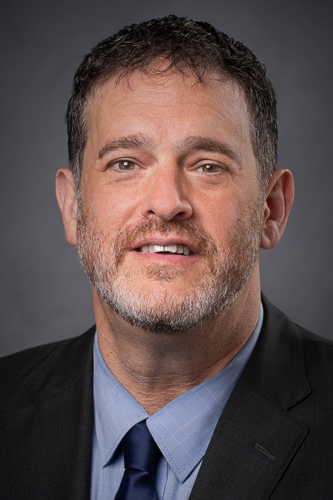
Pushkin, in response, agreed that anyone is entitled to run for chair and make their case to the members of the executive committee.
And he said the resurgence of the West Virginia Democratic Party has been the result of the hard work of county committees, labor organizations, women’s clubs, Young Democrats, grassroots activists, candidates and countless volunteers across the state.
“What leadership does deserve credit for is creating a plan, bringing people together around that plan, and providing the tools and support necessary to execute it. Our record-breaking candidate recruitment effort did not happen by accident,” Pushkin said.
He said party leaders developed an organizing strategy, held weekly recruitment calls, engaged county leaders and allied organizations, launched the first large-scale candidate recruitment texting program in party history and raised funds to cover filing fees for candidates willing to step forward and put their names on the ballot.
“The question before us now is not who gets credit. The question is whether we continue building on that momentum or allow ourselves to become distracted by internal disagreements while Republicans remain deeply divided,” Pushkin said.
“My focus remains exactly where it has always been: bringing Democrats together, supporting our candidates and taking the fight to Republicans every single day.”
-

 Maryland50 seconds ago
Man found dead in South Carolina after shooting ex-girlfriend in Maryland
-

 Michigan6 minutes ago
Gotion wants Michigan township to pay the $23.7M it owes in incentives
-

 Massachusetts13 minutes ago
French-Mediterranean Eatery Charts Opening In Boston
-

 Minnesota16 minutes ago
Dennis Peterson
-

 Mississippi21 minutes ago
MHSAA private schools will have enrollment multiplier starting in 2027-28 season
-

 Missouri28 minutes ago
Water Safety Tips from Missouri State Highway Patrol – Ozark Radio News
-
 Montana31 minutes ago
Forstag secures democratic nomination for Western Montana Congressional District
-

 Nebraska36 minutes ago
Three-Time Nebraska State Champion Eje Kim Sends Commitment to Yale for 2027

