Lifestyle
Washington National Opera leaves Kennedy Center, joining slew of artist exits


A view of the John F. Kennedy Center for the Performing Arts, which the current board is calling the Trump Kennedy Center, in Washington, DC, on Dec. 26, 2025.
Brendan Smialowski / AFP via Getty Images
hide caption
toggle caption
Brendan Smialowski / AFP via Getty Images
The Washington National Opera is leaving the John F. Kennedy Center for the Performing Arts, its home since 1971.
Friday’s news, shared with NPR in a statement via email from the opera company, comes in response to new policies which the 70-year-old performing arts group said strain its financial model.
The Washington National Opera stressed the “amicability” of its decision to end its longtime residency at the Kennedy Center. But it said the center’s new business model, which requires productions to be fully-funded in advance, is incompatible with the usual mix of ticket sales, grants and donations that cannot all be secured ahead.
“Opera companies typically cover only 30-60% of costs through ticket sales, with the remainder from grants and donations that cannot be secured years ahead when productions must be planned,” the statement said.
The company added the model also does not accommodate its artistic mission, which aims to balance popular works such as West Side Story, slated for May 2026, with more obscure and experimental operas, such as the little-known Scott Joplin work, Treemonisha, scheduled for March. “Revenue from major productions traditionally subsidizes smaller, innovative works,” the statement said.
Artistic director Francesca Zambello, who has led the company for 14 seasons, shared her regrets in a statement with NPR, while also looking to the future.
“I am deeply saddened to leave the Kennedy Center,” Zambello said. “In the coming years, as we explore new venues and new ways of performing, Washington National Opera remains committed to its mission and artistic vision. Our repertory will continue to include diverse offerings, from monumental classics to more contemporary works, presented in bold visual productions with first-class musical values.”
In addition to a continued presence for now on the Kennedy Center website, the opera company launched its new independent website within a few hours of its announcement.
“After careful consideration, we have made the difficult decision to part ways with the Washington National Opera due to a financially challenging relationship,” the Kennedy Center wrote in an email to NPR on Friday. “We believe this represents the best path forward for both organizations and enables us to make responsible choices that support the financial stability and long-term future of the Trump Kennedy Center.”
On social media, Kennedy Center executive director Richard Grenell said it was the center’s decision to sever ties with the opera company — and not the other way around.
“The Trump Kennedy Center has made the decision to end the EXCLUSIVE partnership with the Washington Opera so that we can have the flexibility and funds to bring in operas from around the world and across the U.S.” Grenell said. “Having an EXCLUSIVE relationship has been extremely expensive and limiting in choice and variety.”
Grenell reposted his message on Saturday after he was alerted that his X.com account had been hacked and the original message had been removed.
President Donald Trump was named chairman of the Kennedy Center’s board in February 2025. His name was added to the Kennedy Center in December following a vote by the Trump-appointed members of its board. Since the power of the venue’s board to rename the center is currently in dispute, NPR continues to refer to the Kennedy Center using its legal name.
A string of exits
The Washington National Opera’s departure is the latest and perhaps most significant in a string of artist exits from the cultural institution since Trump took over the institution.
Backlash from ticket-buyers, slated performers, and certain board members—including Shonda Rhimes—was swift.
Artists are continuing to cancel performances. But one of the first to do so was a touring production of the musical Hamilton. In a statement on X in March 2025, producer Jeffrey Seller said he opposed the Trump administration’s ousting of many Democratic board members.
“The recent purge by the Trump Administration of both professional staff and performing arts events at or originally produced by the Kennedy Center flies in the face of everything this national center represents,” wrote Seller.
Actress and writer Issa Rae followed suit with a post on Instagram, cancelling her sold-out March performance.
A slew of additional artists and performance companies canceled after the board’s vote to rename the center “The Donald J. Trump and The John F. Kennedy Memorial Center for the Performing Arts.” Congress has not yet authorized the name change.
Grenell has responded to many cancellations on social media, condemning the artists. After Banjo player Béla Fleck canceled his performance because he said the center had become “political,” Grenell wrote on X, “You just made it political and caved to the woke mob who wants you to perform for only Lefties.
“This mob pressuring you will never be happy until you only play for Democrats. The Trump Kennedy Center believes all people are welcome—Democrats and Republicans and people uninterested in politics. We want performers who aren’t political—who simply love entertaining everyone regardless of who they voted for.”
Find a running list of these cancellations below.
Sonia De Los Santos
On Jan. 8, singer-songwriter Sonia De Los Santos announced on Instagram that she was canceling her upcoming February concert at the Kennedy Center. “As an artist,” wrote De Los Santos, “I treasure the freedom to create and share my music, and for many years I have used this privilege to uplift the stories of immigrants in this country.”
De Los Santos, who was nominated for a Latin Grammy for best children’s album in 2018, stated that “I do not feel that the current climate at this beloved venue represents a welcoming space for myself, my band, or our audience.”

Béla Fleck performs onstage during the 67th Annual Grammy Awards Premiere Ceremony at Peacock Theater on Feb. 2, 2025 in Los Angeles.
Leon Bennett/Getty Images for The Recording Academy
hide caption
toggle caption
Leon Bennett/Getty Images for The Recording Academy
Béla Fleck

Performing at the Kennedy Center “has become charged and political, at an institution where the focus should be on the music,” wrote American banjo player Béla Fleck about his scheduled appearance with the National Symphony Orchestra in an official statement posted to Instagram on Jan. 7. “I have withdrawn from my upcoming performance with the NSO at The Kennedy Center,” he wrote. “I look forward to playing with the NSO another time in the future when we can together share and celebrate art.”
The 18-time Grammy winner has performed at the Kennedy Center in the past.
Stephen Schwartz
The composer and lyricist for the beloved musicals Wicked, Godspell and Pippin was expected to host a gala fundraiser for the Washington National Opera in May 2026. On Jan. 2, Schwartz announced his withdrawal. According to NBC News, Schwartz reflected that the Kennedy Center was “founded to be a political home for free artistic expression for artists of all nationalities and ideologies.” Today, he said, making an appearance “has now become an ideological statement.”
Richard Grenell quickly responded to Schwartz’s withdrawal, calling it a “bogus” report in a statement posted on X and saying reporters were plagiarizing a “fake @RollingStone story.” Schwartz was “never signed,” Grenell wrote.
Reports from NBC and other outlets, including Variety, have refuted this claim, publishing screenshots showing that Schwartz was promoted on the Kennedy Center’s website prior to his cancellation.

Stephen Schwartz attends the 2025 Songwriters Hall Of Fame Induction Ceremony at Marriott Marquis Times Square on Jun. 12, 2025 in New York City.
Theo Wargo/Getty Images for Songwriters Hall Of Fame
hide caption
toggle caption
Theo Wargo/Getty Images for Songwriters Hall Of Fame
The Cookers
The seven-piece band of veteran jazz musicians announced shortly before Dec. 31 that they would not perform at the Kennedy Center for “A Jazz New Year’s Eve:”
“We know this news is disappointing,” reads the statement on their website. “We are not turning away from our audience, and do want to make sure that when we do return to the bandstand, the room is able to celebrate the full presence of the music and everyone in it. Our hope is that this moment will leave space for reflection, not resentment.”
The statement went on to say, “We remain committed to playing music that reaches across divisions rather than deepening them.”
Chuck Redd
The American jazz drummer and longtime host of the Kennedy Center’s annual Christmas Jazz Jam chose to cancel his 2025 appearance when he “saw the name change on the Kennedy Center website and then hours later on the building,” according to a statement sent to the Associated Press.

On Dec. 27, the Kennedy Center announced its plan to file a $1 million lawsuit against Redd. “Any artist canceling their show at the Trump Kennedy Center over political differences isn’t courageous or principled—they are selfish, intolerant, and have failed to meet the basic duty of a public artist: to perform for all people,” said Kennedy Center spokesperson Roma Daravi.
In a letter shared with NPR, Richard Grenell condemned Redd: “Regrettably, your action surrenders to the sad bullying tactics employed by certain elements on the left, who have sought to intimidate artists into boycotting performances at our national cultural center.”
Doug Varone and Dancers
“The renaming for me has kind of pushed me off a cliff,” said choreographer Doug Varone on Dec. 31, when he spoke with NPR’s Morning Edition. Varone, who was set to showcase members of his Doug Varone and Dancers company at the Kennedy Center in April 2026, pulled the performance.
John F. Kennedy, for whom the Kennedy Center was established as a living memorial, “believed in the arts as kind of the beating heart of our nation,” said Varone.
“I believe that the level of artistry has dropped drastically since the administration change, and the employees that were responsible for the quality of the work at the center have all been let go.”
After canceling, the company started a crowdfunding campaign to help offset its financial loss. It raised over $42,000, exceeding its $40,000 goal.
Magpie
In a statement posted to Facebook on Jan. 5, Greg Artzner of the American folk duo Magpie announced the decision to pull their Feb. 28 concert, set to play on the Kennedy Center’s Millennium Stage.
“There isn’t really anything defensible” about Trump, said the statement from Artzner and Magpie’s Terry Leonino. Although they had planned an evening of songs with messages of unity and hope, “We are personally and philosophically in agreement with the belief underlying the growing boycott,” they said. “The stand being taken by fellow artists we respect and admire has created a moral picket line. We stand with them in solidarity.”
An update on Jan. 9 said that Magpie would now be performing a longer version of that concert on Feb. 21 at Seekers Church in Washington, D.C., now called, “The Traveling John F. Kennedy Center for the Performing Arts Restoration Roadshow.”
Kristy Lee
Folk singer Kristy Lee canceled her Jan. 14 Kennedy Center performance due to “recent efforts to impose political branding on the Center,” according to a statement posted on her website.
“Public arts spaces should be free from political influence,” Lee said in her statement. “I step back out of respect for artistic freedom and the Kennedy Center’s founding mission, not in opposition to its staff, artists, or audience.”
On Jan. 14, Lee plans to host a live-streamed concert instead, titled “Showing Up: From the Kennedy Center to the Couch.”
Low Cut Connie
Philadelphia rock and roll band Low Cut Connie pulled their concert, set for February 2025, “Upon learning that this institution that has run non-partisan for 54 years is now chaired by President Trump himself and his regime,” according to a statement posted on their Facebook page.
“Maybe my career will suffer from this decision,” wrote band frontman Adam Weiner, “but my soul will be the better for it.”
Rhiannon Giddens

In Feb. 2025, folk singer Rhiannon Giddens announced her departure from the Kennedy Center lineup in a social media statement. “I cannot in good conscience play at The Kennedy with the recent programming changes forced on the institution by this new board,” wrote Giddens.
Giddens transferred her May 11 concert, “Old-Time Revue,” to The Anthem concert hall, also in Washington, D.C.
Balún
The Puerto Rican band, based in Brooklyn in New York City, canceled their Kennedy Center performance, which had been set for Feb. 27, 2025.
According to a statement posted to Balún’s Instagram account, “recent events made it clear that the space no longer aligns with our values. Our safety, integrity, and commitment to justice come first.”

Issa Rae attends HBO’s final season premiere of “Insecure” at Kenneth Hahn Park on Oct. 21, 2021 in Los Angeles, California.
Kevin Winter/Getty Images
hide caption
toggle caption
Kevin Winter/Getty Images
Issa Rae

“Thank you so much for selling out the Kennedy Center for ‘An Evening With [Me],’” wrote Issa Rae, the acclaimed star and creator of HBO’s Insecure, on her Instagram stories page in Feb. 2025. “Unfortunately, due to what I believe to be an infringement on the values of an institution that has faithfully celebrated artists of all backgrounds through all mediums, I’ve decided to cancel my appearance at this venue.”
“Hamilton”
In March 2025, Hamilton producer Jeffrey Seller announced on X that the Tony-award winning musical phenomenon would no longer run as scheduled at the Kennedy Center. According to the statement, the decision was made both for political and for business reasons. Not only was there “a new spirit of partisanship,” the statement read in part, but “it would be “financially and personally devastating to the employees of Hamilton if the new leadership of the Kennedy Center suddenly canceled or re-negotiated our engagement. The actions of the new Chairman of the Board in recent weeks demonstrate that contracts and previous agreements simply cannot be trusted.”

The Kennedy Center was swift to respond to Hamilton‘s cancellation. On X in a now-deleted post, Richard Grenell accused Hamilton star and creator Lin Manuel-Miranda of being “intolerant of people who don’t agree with him politically,” and stated that the decision was “a publicity stunt that will backfire.”
In the months since the show’s cancellation at the Center, Hamilton has continued to sell out theaters on Broadway and in venues nationwide who host its North American touring company.
U.S. Marine Band
The U.S. Marine Band announced in February 2025 that the Marine Band would not perform in the Equity Arc Wind Symphony event, a collaboration between Marine Band members and selected high school musicians.
The U.S. Marine Band, known also as “The President’s Own” was founded by an Act of Congress in 1798, making it the country’s oldest professional music organization.
Composer Kevin Charoensri, whose music had been scheduled to be performed by the band at the event, stated in a Facebook post that Diversity, Equity, and Inclusion (DEI) orders resulted in the cancellation of the Equity Arc concert:
“It has come to my attention that the program, one based on equity and diversity of voices, is no longer supported at the federal level under this administration,” Charoensri wrote. “It was for this reason that the program and performance were canceled.”

The U.S. Marine marching band performs in the 120th Tournament of Roses Parade January 1, 2009 in Pasadena, California.
Alberto E. Rodriguez/Getty Images
hide caption
toggle caption
Alberto E. Rodriguez/Getty Images
Jennifer Vanasco edited this story.



Can you say no to a friend’s wedding?
Getty Images/Getty images
hide caption
toggle caption
Getty Images/Getty images
Are we spending too much on other people’s weddings?
Going to a friend’s weddings can be so fun and meaningful… but it can also really hurt your wallet. A survey by LendingTree found that 31% of people who had been to a wedding in the past five years had accrued debt to attend. So what’s driving up the cost of weddings for guests? And what makes it so hard to say no to these expenses?
Brittany breaks it down with Allyson Rees, senior analyst at trend forecasting firm WGSN, and Annie Joy Williams, assistant editor at The Atlantic.
This episode was produced by Liam McBain, with additional support from Corey Antonio Rose. It was edited by Neena Pathak. Our Supervising Producer is Cher Vincent. Our Executive Producer is Barton Girdwood. Our VP of Programming is Yolanda Sangweni.

After the eight-day-long fire in a 500,000-square-foot Boyle Heights warehouse, eastern Los Angeles residents are contending with putrid smells, soot and potentially hazardous airborne chemicals after heavy plumes of smoke spread throughout the city. But those who grow food in nearby neighborhoods may also be wondering: How will the fires affect the plants and produce in my garden?
The Boyle Heights warehouse, owned by Lineage — a global temperature-controlled storage facility operator — housed 85 million pounds of frozen food and other products. In the days since the fire, local emergency visits for smoke inhalation and throat pain spiked while agencies still scramble to measure the amount of PM 2.5 — harmful fine particles — and heavy metals, like lead and arsenic, in the air.
According to researchers, any toxic airborne chemicals would likely stem from the charred foam insulation, metal exterior, burned solar panels and any lithium batteries that might have been present inside the warehouse.
After a fire, heavy metal particles can spread through ash and smoke over gardens and inhibit growth, said Olukayode Jegede, an agricultural toxicologist and assistant professor at UC Davis. Since the warehouse fire is so recent and cleanup has just begun, Jegede said the precise impact on gardens can’t be measured until comprehensive soil tests are conducted in the area.
While the L.A. city government hasn’t announced plans for soil testing, the Contaminant Level Evaluation and Analysis for Neighborhoods project at USC is offering free contaminant testing for Boyle Heights and East L.A. residents. Residents can collect soil samples and deliver them to Boyle Heights City Hall and other locations for an evaluation of lead, arsenic, chromium and mercury levels.
The good news is produce, plants and roots can still be preserved. According to Jegede, many of the soil tests conducted last year in the Altadena area after the Eaton fire showed that gardens and poultry were not as contaminated as one might expect.
“Quite a number of the soils we tested [in Altadena] were not really contaminated,” Jegede said. “We weren’t seeing many soils with concerning elevated levels of metal, so gardeners should not be too alarmed when these things happen.”
Nevertheless, there are several measures that gardeners can take to keep themselves, their children, plants and produce safe from potentially harmful contaminants stemming from the fire. Researchers, gardening experts and horticulturists offered some guidance on the handling, recultivation and cleanup that can keep you and your garden in good health.
How do I remove ash and contaminants from my garden?
Altadena horticulturist Leigh Adams said Boyle Heights plants and produce already live in a difficult environment, surrounded by industrial warehouses that spread contaminants daily.
“That area has been used industrially for 100 years, and the soil is impacted by many, many, many things,” Adams said. “Low-income neighborhoods and gardens usually don’t have a lot of resistance against dominant manufacturing.”
This means that the contamination of gardens in eastern L.A. won’t be as catastrophic as compared with those in Altadena, a more suburban environment, Adams said. But fallen ash still poses major health risks if ingested or inhaled.
An advisory from University of California Agricultural and Natural Resources last year recommended suiting up in an N95/KN95 mask, long sleeves, pants, close-toed shoes and gloves before attempting to deal with ash in the garden to limit exposure to potentially toxic contaminants. The advisory added that individuals should make sure all of this gear is cleaned thoroughly before bringing it back inside.
Once in the proper gear, Adams recommends removing the top two inches of topsoil from gardens, where the highest concentration of contaminants will settle after a fire. Using a plastic bag to collect the soil and disposing of it in the garbage — not green yard waste bins — will help to reduce the spread of airborne chemicals.
Gardeners with raised beds are advised to remove approximately six inches of soil, because excess ash can raise the pH level and prevent nutrients from soaking into the soil bed.
After this, watering the garden gently but plentifully will help to promote soil health and get rid of most of the ash present on plant leaves and stems. Adams said replacing the top two inches of soil with store-bought mulch or straw will help to contain any remaining ash and prevent it from spreading any further.
Experts say to avoid using leaf blowers if ash is present in the garden because they can send particles airborne. Doing so will increase the likelihood of heavy metal particles, which can carry lung irritants and carcinogens, being spread and inhaled.
A Boyle Heights resident keep a watchful eye on the fire at the 5,000-square-foot commercial building, which stores 85 million pounds of frozen food.
(Genaro Molina / Los Angeles Times)
Is it safe for me to eat produce from my garden?
Several studies, including one from the UC Cooperative Extension of Sonoma County, have shown that consuming produce in a fire-affected area poses minimal health risks.
Jegede said most root vegetables like potatoes and carrots, along with any fruit that has an outer layer, can be washed to remove potential contaminants, even if they were covered in ash. Peeling the outer layer of your produce can also help to reduce potential risks, he said.
Lettuce and other leafy foods with multiple layers pose a higher risk of contamination, but with a vigorous wash and peeling the outer layers, even the greens can be saved. The County of Los Angeles Department of Public Health recommends soaking leafy produce and fuzzy fruits like peaches in a 10% white vinegar and 90% water mixture.
Jegede said if the leaves or fruit are too delicate to wash or ash is still visible, it would be best to dispose of the produce.
How can I tell if my soil is contaminated?
After ridding your garden of visible ash, you might wonder how to tell if your plants will still thrive in the soil.
At-home soil tests that measure for alkaline, fertility and pH levels are widely available and can be purchased for $15 to $100 (for more detailed results) online. But Jegede said these tests can’t tell the full story of soil health.
Comprehensive soil testing is “something you can’t do properly at home,” Jegede said. “In labs, we are testing for metals like lithium and zinc, stuff that an at-home test will not show … If it comes to the point that you’re worried about your soil, I would just send it out to a lab.”
Wallace Laboratories in El Segundo, Babcock Laboratories in Riverside, Waypoint Analytical in Anaheim and other labs offer more detailed soil tests that measure heavy metal particles in addition to other fertility factors. Prices at Wallace Laboratories can range from $115 to $295 for a complete compost test.
The soil below two inches should be unharmed, Adams said, so long as new compost is set and plants are watered plentifully, which will promote natural biological cycles.
“What you’re doing is capping the soil, so that moisture stays in there, and instead of being dirt, it’s a living system called soil,” Adams said. “The more carbon we can get into our soil, the better.”
What can I do to help my soil recover?
For the last 12 years, Adams has been working with Metabolic Studio, a Los Angeles-based art and research hub focused on environmentalism, on methods for bioremediation, the practice of using additional fungi, plants and compost to decontaminate ash and break down contaminants.
Adams said straw, mushrooms, corn, rye and sunflowers are great bioremediators that can help to repair damage to soils. She said certain samples she’s worked on with Metabolic Studio have gone from testing at high heavy metal levels to nearly contaminant-free.
But for a more immediate fix, wash your produce, water your plants and have a little patience during ash cleanups. Your garden should look better in no time, Adams and Jegede said.

Inde Navarrette and Michael Johnston in Obsession.
Focus Features
hide caption
toggle caption
Focus Features
Two big horror films, Obsession and Backrooms, just smashed all box office expectations. So much of their success has been driven by Gen Z, which is now the biggest moviegoing demographic. But what makes a movie a Gen Z movie? Today we’re bringing you an episode of NPR’s It’s Been a Minute. Host Brittany Luse talks about this trend with Sam Adams and Reanna Cruz.
If you want to hear more about these movies, check out these episodes:
In ‘Obsession,’ love hurts. It really, really, really hurts.
‘Backrooms’ brings YouTube horror to the big screen
Zendaya brings ‘The Drama,’ we bring the spoilers
Connect with Pop Culture Happy Hour:
Letterboxd / Facebook
Our weekly newsletter
Support Pop Culture Happy Hour+
-
 San Diego, CA48 seconds ago
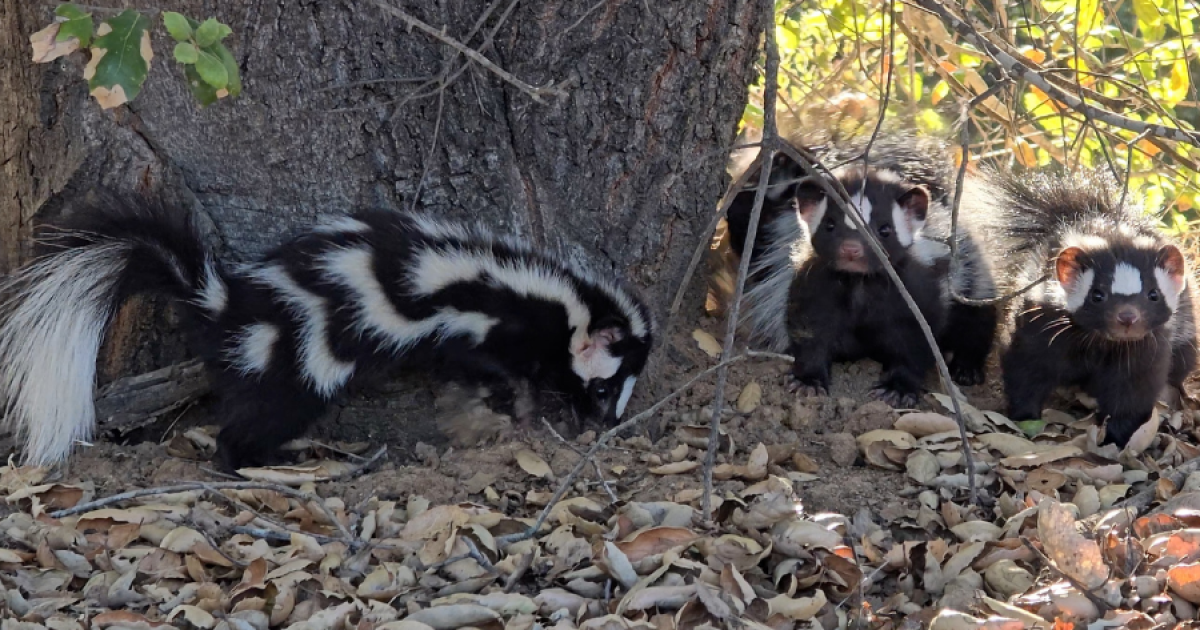
San Diego Humane Society Releases 4 rare western spotted skunks into the wild
-
Milwaukee, WI6 minutes ago
Former Judge Hannah Dugan fined $5,000, won’t serve prison time, judge rules
-

 Atlanta, GA13 minutes ago
Jermaine Dupri sues Sony Music over alleged $18 million royalty dispute involving So So Def artists
-

 Minneapolis, MN16 minutes ago
Traffic shift starts Wednesday on I-394 in Minneapolis
-

 Indianapolis, IN21 minutes ago
DC BLOX cuts building from data center plans near Irvington, makes environmental pledges
-

 Pittsburg, PA28 minutes ago
Wegmans to start building store in Cranberry this month
-

 Augusta, GA31 minutes ago
Augusta, GA Has a Shortage of Homes for Middle-Income Earners
-

 Washington, D.C36 minutes ago
Reflecting Pool being drained – again – as Trump administration tries once more to fix DC landmark – WTOP News

