Wisconsin
Wisconsin football adds in-state JUCO transfer linebacker from Iowa Central


The University of Wisconsin football program dipped into the junior-college ranks for its second transfer portal addition of the offseason, adding a player who’s coming back home to play for the Badgers.
Linebacker Taylor Schaefer, a JUCO standout with deep Wisconsin roots, has announced he’s joining the Badgers for the 2026 season. The expectation is that he’ll have two years of collegiate eligibility remaining.
“Coming Home,” Schaefer wrote.

If the name sounds familiar, it should. Schaefer grew up in Sturgeon Bay, played his high school ball at Southern Door, and built the kind of reputation locally that usually ends with someone wearing Wisconsin colors.
It just took a few detours along the way for that moment to arrive.
Schaefer’s journey reads like the kind of story coaches love to retell on signing day. He wasn’t a national recruit out of high school. He didn’t have a mountain of Power Four offers waiting for him back then, and he didn’t land in the Big Ten conference on his first try. Instead, Schaefer carved out his path to Wisconsin the hard way: first redshirting at Minnesota Duluth, then grinding through developmental reps, and finally transferring to Iowa Central Community College to see if he could push his trajectory upward.
For taking the JUCO route, the return was about as good as it gets.
At Iowa Central, Schaefer didn’t just blend into a roster full of hungry players. He stood out. Over his JUCO career, he piled up 146 tackles, 70 solo stops, 15.0 tackles for loss, and seven sacks in 22 games, including a breakout 2025 season where Schaefer finished with 97 total tackles, 10.0 TFLs, and five sacks in just 10 games for the Tritons. Those numbers don’t happen by accident. They happen because of his motor. The instincts are real, and the physical tools match what the Badgers’ defensive scheme demands.
That production turned him into one of the most widely pursued defensive players in the JUCO ranks who was available in the portal. Schaefer quickly drew heavy interest, picking up scholarship offers from Arkansas, Kentucky, Iowa State, Nebraska, Purdue, Minnesota, and Colorado, among others, a far cry from the attention he received out of high school.
Programs were calling because they saw a linebacker with Big Ten measurables, proven productivity, and frame versatility at 6-foot-4 and around 240 pounds. He moved well enough to play multiple spots and had enough length and power to fit inside or bump out based on the front.
But for all the regional and national interest, the pull of Madison never really faded. Wisconsin was the dream when he was younger. Once the Badgers got Schaefer on campus for his official visit, the conversations in meeting rooms, the coaching staff’s demeanor, and the opportunity to come in and compete for snaps made the decision easier to see coming.
From Wisconsin’s perspective, the fit makes plenty of sense.
There’s no denying that, on paper, inside linebacker is one of the more talent-rich position groups returning in 2026, with Christian Alliegro, Mason Posa, and Cooper Catalano all positioned to play meaningful snaps again. But depth charts aren’t static, especially in Fickell’s program, and you’re always one injury away from seeing your rotation stretched past your comfort level.
Schaefer arrives as a player who can compete immediately while still offering developmental upside across multiple linebacker roles. He’s long enough to play in space, strong enough to play inside, and athletic enough to push for sub-package work potentially.
This is also the profile Wisconsin wanted in the portal: older, proven, physically ready, equipped for Big Ten football, and wired to embrace competition. He won’t be handed anything, and he doesn’t expect to be. But Schaefer gives the Badgers something their linebacker corps needed: an experienced, versatile defender who plays fast and tackles well.
His path to Madison may have detoured through the Division II ranks and JUCO ball, but there’s nothing accidental about how he got here. The progression has been steady: a redshirt year, a season Schaefer worked his way into the mix, followed by a breakout season, and now a Big Ten opportunity as a result. That’s a three-year arc that says as much about his trajectory as any camp evaluation or high-school film ever could.
This is also the kind of roster-building move that matters for Wisconsin in this particular offseason. You don’t retool a defense solely through high-school recruiting anymore. That’s not possible. Every program now has to explore every avenue, whether that’s the portal, lower-division standouts, or anything else that can bring in proven production and experience. In a win-now college football landscape, those traits matter more than ever.
The hope is that adding a player like Schaefer gives Wisconsin exactly that. He’s ready to compete and ready to continue pushing the room.
For the Badgers, it’s a nice early win in the portal cycle, the type that keeps the roster balanced and the depth chart insulated from attrition. And for Schaefer, it’s a homecoming that’s been years in the making.
Wisconsin still has more work to do when the Division I transfer portal opens on January 2. But adding Schaefer gives the defense another talented piece, another physical presence, and a competitor wired the way Luke Fickell prefers. It’s the kind of move that doesn’t grab national headlines, but often ends up mattering most when the pads come on.
We appreciate you taking the time to read our work at BadgerNotes.com. Your support means the world to us and has helped us become a leading independent source for Wisconsin Badgers coverage.
You can also follow Site Publisher Dillon Graff at @DillonGraff on X.


Just east of the Capital City Trail crossing at the Yahara River, a nondescript warehouse rises on Madison’s west side. Its blank exterior offers no hint of what’s inside, and even the interior is not set up for glass cases and museum spotlights.
But its more than 180,000-square-feet of climate-controlled space contains the largest collection of North American history outside of the Library of Congress.
In all, the Wisconsin Historical Society holds 3.8 million print publications, 25,000 maps, 3 million images, 125,000 cubic feet of archival material and 750,000 historic and archaeological objects. Most are stored in the State Archive Preservation Facility, including the original Milwaukee Brewers Racing Sausages, one of the country’s first weather maps, traditional Ho‑Chunk baskets and comedian Chris Farley’s football jersey from Edgewood High School.
It’s a largely unknown, certainly underappreciated, Wisconsin treasure.
The archives are managed by the Wisconsin Department of Administration and operate in partnership with the Wisconsin Historical Society, Wisconsin Department of Veterans Affairs and University of Wisconsin-Madison.
Typically, history is presented in a carefully curated way – edited in a textbook, displayed behind a rope, maybe protected under glass. But the archives are an uncurated mix, and in many ways a more accurate reflection of the jumble that is human life than the single storyline we try to make it out to be.
Here, history feels human and unfinished. Every box, aisle and rack holds items that come to life when someone pulls them out and shares their story.
“Without the stories, the passion behind them, the experiences of individuals, it’s just a desk or a chair, but it’s the stories that are there,” said Nick Hoffman, chief creative officer with the Wisconsin Historical Society.
Preserving film history at 40°F
As the heavy doors to the “cold room” on the second floor swing open, chilled air spills out. The room’s temperature holds at 40 degrees Fahrenheit with 35% relative humidity – the ideal balance to protect film and videotape.
More than 44,000 film cans sit packed inside, and despite Madison’s distance from entertainment hubs like Los Angeles and New York, this is one of the world’s leading collections of film and television history.
More than 300 manuscript collections include materials from figures such as Michael and Kirk Douglas, Agnes Moorehead, Rod Serling and Edith Head. The shelves hold Mary Tyler Moore’s full archive, materials from early talk show host Faye Emerson, and footage of the McCarthy hearings later used in a documentary by Emile de Antonio.
The oldest film in the archives − “The Lumberjack,” a 16-minute silent film shot in Wausau − dates back to 1914.
Many donors have no ties to Wisconsin. What binds the archive isn’t geography so much as the pull to preserve a legacy.
“It’s often about an individual,” said Jill Sterrett, chief collections officer.
History written in ink on paper
One of the country’s oldest newspaper collections resides on the third floor, including a July 10, 1776, edition of The Pennsylvania Gazette, with one of the earliest printings of the Declaration of Independence, as well as Frederick Douglass’ 1850s newspaper, and the Cherokee Phoenix, the first newspaper published in a Native language.
The archives has the ability to bring people down to the individual level, then zoom out to show how an individual connects to a huge moment in U.S. history, Hoffman said. “That’s the scale that we have here,” he said.
In the early 1960s, for example, the Historical Society began collecting material from civil rights groups and activists, becoming a leading center for studying the American civil rights movement. Today, the archives hold hundreds of thousands of documents and recordings from the Highlander Research and Education Center in Tennessee. Highlander trained activists like Rosa Parks to organize and educate people, especially on voting rights.
That training partly shaped Parks’ refusal to give up her bus seat to a white man, which sparked the Montgomery Bus Boycott, said senior archivist Lee Grady.
One of the earliest weather maps by Milwaukee scientist Increase Lapham is also in the collections. Lapham made the map in 1868, reconstructing a storm from a decade earlier to show how weather patterns could be tracked. The map served as a proof-of-concept, Grady said, which helped prompt Congress to establish the National Weather Service in 1870.
The archives also have an ongoing, little-known interaction with the public. Grady said the Historical Society fields about 16,000 questions a year, mostly by email, on topics like land records, divorce filings, even whether a house is haunted. Family history requests are the most common, he said.
Racing Sausages, Freedom Desks, tribal baskets share space
About 100,000 objects share space in a cavernous room on the fourth floor.
The original, 7-foot-tall Milwaukee Brewers Racing Sausages tower around the first corner. Made with foam and rubber cement, they are being restored by the Historical Society before they go on display in the new Wisconsin History Center, which is scheduled to open in 2028.
Directly above the Racing Sausages sit “Freedom Day” school desks from Milwaukee. During Milwaukee’s 1964 “Freedom Day” boycotts, thousands of students left segregated public schools to attend alternative Freedom Schools in local churches.
Also on display are materials from the March on Milwaukee – the 200 consecutive nights of marching to protest segregated housing, led by the NAACP Youth Council and advised by the Rev. James Groppi.
Wedged in the middle of a nearby clothing rack is a bowling shirt from Earlene Fuller, a legendary Milwaukee bowler who became known for designing custom shirts, many featuring kente cloth and other African-inspired patterns. She broke down racial barriers in the sport, and was the first Black woman to bowl a perfect 300 game.
There’s also Rosie the Riveter coveralls made in Beloit and Jane Kaczmarek’s “Lucky Aide” smock from Malcolm in the Middle.
“These are telling the stories of everyday efforts to win World War II, to the stories that make us laugh,” said Leo Landis, director of curatorial services.
More aisles open up at the push of a button. Each aisle is arranged by when its contents were donated, a densely packed uncurated cross-section of memorabilia.
One aisle holds West Allis–born speed skater Dan Jansen’s Levi’s velour Olympic warm-up jacket from 1984.
A couple of aisles down are Ho-Chunk baskets, some that date back to the 1800s, weaving together more than a century of tradition.
Ancient canoes sit alongside the Oscar Mayer Wienermobile
Downstairs, in one of the unassuming basement rooms, it’s hard to know where to look first.
The tightly packed space holds the original Oscar Mayer Wienermobile as well as a Culver’s sign from one of the first franchises, made from a repurposed Ford dealership sign.
There’s also a Packers helmet-shaped ice shanty built by Bill Casper of Sturgeon for Tomorrow, a nonprofit that promotes sturgeon conservation and celebrates Lake Winnebago’s ice-fishing culture.
But one of the most striking displays underscores how history is still being written.
Two dugout canoes raised from Lake Mendota sit soaking in a chemical bath. Discovered in 2018 and 2022, they have been dated to roughly 1,200 and 3,000 years old.
For the past year and a half, the canoes have been treated with polyethylene glycol, a resin that slowly fills the cells of the waterlogged wood. In about six months, Sterrett said, the canoes will be shipped to Texas A&M to be freeze-dried in a giant chamber, drawing out the water while letting the resin holding its shape.
Sterrett said the canoes, along with others found in Wisconsin lakes, are reshaping what people know about the region’s past climate and how people lived on and with the water.
Authority, access, audience engagement
The Historical Society is no longer just collecting items. It is rethinking ownership, renegotiating who defines history, and in some cases returning pieces and material.
That shift is visible in the “repatriation room,” where desks and shelves made from Menominee Forest wood help ground the consultations between the Historical Society and tribal nations on returning cultural items. Repatriation has expanded in recent decades, moving beyond compliance toward collaboration.
More broadly, archivists are rethinking access and engaging different audiences.
The state archives already operates an inter-archival loan system across University of Wisconsin schools. The Historical Society now is working to move records, such as family and land documents, closer to the communities they are tied to.
Anyone can access materials at the Wisconsin Historical Society headquarters on Library Mall on the UW-Madison campus. But the State Archive Preservation Facility is generally closed to the public, with tours offered just twice a year and some items coming out only for special events. When the Wisconsin History Center opens in early 2028, many items from the archives will be on rotating display.
As the leaders of this repository look to the future, they are convinced interest in history hasn’t waned. The key is letting people know what Wisconsin has, and making it available in a way that makes the most of it.
And as always, sharing all those great stories behind the archives.
As Sterrett said, “The risks of not sharing are far greater.”
New history center will increase access to archives
The new history center, slated to open in early 2028, will provide unprecedented access to the objects, entertainment and print products housed within the archives.
The Wisconsin Historical Society broke ground on its new $160.5 million center in 2025. The five-story, 100,000-square-foot building on Capitol Square in Madison will more than double the exhibition space of the previous history center.
When it opens, the center is expected to welcome 260,000 visitors each year. It will feature three core galleries, a rotating community gallery, rooftop terrace, café as well as educational spaces.
Caitlin Looby covers the Great Lakes and the environment for the Milwaukee Journal Sentinel. Contact: clooby@gannett.com. Follow her on social media @caitlooby.
Caitlin is an Outrider Fellow whose reporting also receives support from the Brico Fund, Fund for Lake Michigan, Barbara K. Frank, and individual contributions to the Journal Sentinel Community-Funded Journalism Project. Journal Sentinel editors maintain full editorial control over all content. To support this work, visit jsonline.com/support. Checks can be addressed to Local Media Foundation (memo: “JS Community Journalism”) and mailed to P.O. Box 85015, Chicago, IL 60689.
This fundraising effort is made possible through our partnership with Local Media Foundation, a verified 501(c)3 nonprofit organization (tax ID #36-4427750) and EnMotive Company, LLC, a subsidiary of USA TODAY Co., Inc. USA TODAY Co., Inc. is the parent company of this publication.
The JS Community-Funded Journalism Project is made possible through our partnership with Local Media Foundation, tax ID #36-4427750, a Section 501(c)(3) charitable trust affiliated with Local Media Association, and EnMotive, LLC, a subsidiary of USA TODAY Co., Inc. USA TODAY Co., Inc. is the parent company of this publication.

Manuel Franco claims his $768 million Powerball jackpot
Manuel Franco, 24, of West Allis was revealed Tuesday as the winner of the $768.4 million Powerball jackpot.
Mark Hoffman, Milwaukee Journal Sentinel
The Wisconsin Lottery offers multiple draw games for those aiming to win big.
Here’s a look at June 2, 2026, results for each game:
Winning Mega Millions numbers from June 2 drawing
15-26-43-48-60, Mega Ball: 12
Check Mega Millions payouts and previous drawings here.
Winning Pick 3 numbers from June 2 drawing
Midday: 0-7-8
Evening: 8-5-8
Check Pick 3 payouts and previous drawings here.
Winning Pick 4 numbers from June 2 drawing
Midday: 7-9-8-3
Evening: 4-4-7-5
Check Pick 4 payouts and previous drawings here.
Winning All or Nothing numbers from June 2 drawing
Midday: 01-02-03-05-06-10-11-13-16-21-22
Evening: 02-05-06-09-10-14-16-18-19-20-21
Check All or Nothing payouts and previous drawings here.
Winning Badger 5 numbers from June 2 drawing
06-13-26-28-30
Check Badger 5 payouts and previous drawings here.
Winning SuperCash numbers from June 2 drawing
10-14-15-18-34-38, Doubler: N
Check SuperCash payouts and previous drawings here.
Feeling lucky? Explore the latest lottery news & results
Are you a winner? Here’s how to claim your lottery prize
- Prizes up to $599: Can be claimed at any Wisconsin Lottery retailer.
- Prizes from $600 to $199,999: Can be claimed in person at a Lottery Office. By mail, send the signed ticket and a completed claim form available on the Wisconsin Lottery claim page to: Prizes, PO Box 777 Madison, WI 53774.
- Prizes of $200,000 or more: Must be claimed in person at the Madison Lottery office. Call the Lottery office prior to your visit: 608-261-4916.
Can Wisconsin lottery winners remain anonymous?
No, according to the Wisconsin Lottery. Due to the state’s open records laws, the lottery must, upon request, release the name and city of the winner. Other information about the winner is released only with the winner’s consent.
When are the Wisconsin Lottery drawings held?
- Powerball: 9:59 p.m. CT on Monday, Wednesday, and Saturday.
- Mega Millions: 10:00 p.m. CT on Tuesday and Friday.
- Super Cash: 9:00 p.m. CT daily.
- Pick 3 (Day): 1:30 p.m. CT daily.
- Pick 3 (Evening): 9:00 p.m. CT daily.
- Pick 4 (Day): 1:30 p.m. CT daily.
- Pick 4 (Evening): 9:00 p.m. CT daily.
- All or Nothing (Day): 1:30 p.m. CT daily.
- All or Nothing (Evening): 9 p.m. CT daily.
- Megabucks: 9:00 p.m. CT on Wednesday and Saturday.
- Badger 5: 9:00 p.m. CT daily.
That lucky feeling: Peek at the past week’s winning numbers.
Feeling lucky? WI man wins $768 million Powerball jackpot **
WI Lottery history: Top 10 Powerball and Mega Million jackpots
This results page was generated automatically using information from TinBu and a template written and reviewed by a Wisconsin editor. You can send feedback using this form.

How to milk a cow as seen at the Wisconsin State Fair
There’s more to milking a cow than you might think. In this archived video at the Wisconsin State Fair, a Journal Sentinel reporter gave it a try.
Milwaukee Journal Sentinel files
Wisconsin Republicans had a field day when the state Democratic Party celebrated the start of National Dairy Month with a post featuring male cattle that don’t produce milk.
The Democratic Party of Wisconsin initially posted a “Happy Dairy Month” graphic on Facebook, Instagram and X showing two brown and white cattle with horns and no visible udders.
The party later posted a corrected version, featuring two black-and-white spotted Holstein cows. T-bone steaks with halos and wings floated above them – presumably, where the male cattle had gone.
“We regret that our Dairy Month tweet contained an error. We have ‘taken care’ of the issue, if you catch our drift,” the party wrote June 1.
Side note: Many dairy cattle, including females, naturally have horns. In most cases, they’re removed to prevent injuries to farmers and cattle themselves. But udders are visible only on female cattle, a.k.a. cows.
Tom Tiffany, the leading Republican candidate for governor, jumped on the mistake, posting a video touting his experience growing up on a Wisconsin dairy farm.
Tiffany and other Republicans also criticized Democrats for celebrating the start of Pride Month, which recognizes LGBTQ+ communities and begins June 1 alongside National Dairy Month.
“I regret to inform [Wisconsin Democrats] that you cannot milk a bull. But considering they think men can get pregnant, I guess thinking you can milk a bull tracks too,” Tiffany wrote on X.
Tiffany also said June 1 that, if elected governor, he would no longer fly the Pride flag over the state Capitol in June – a practice started by Democratic Gov. Tony Evers in 2019.
Evers also celebrated June Dairy Month with a video message, in part criticizing President Donald Trump’s tariff policies and cuts to federal programs supporting farmers.
Wisconsin is home to about 5,000 dairy farms – more than any other state – and has about 1.27 million cows. National Dairy Month originally started in 1937 as National Milk Month.
Hope Karnopp can be reached at HKarnopp@usatodayco.com.
-

 World6 minutes ago
Trump expands Cuba sanctions beyond US companies in major crackdown on foreign enablers
-

 Politics9 minutes ago
Bessent flips script on Dem senator with reminder about his son’s past ties to Epstein
-

 Health21 minutes ago
New ways to prevent flu revealed in ‘accidental’ lab breakthrough, study finds
-

 Sports24 minutes ago
Russell Wilson announces retirement from NFL after 14 seasons
-

 Technology29 minutes ago
Dark web monitoring: does it put your data at risk?
-
 Business36 minutes ago
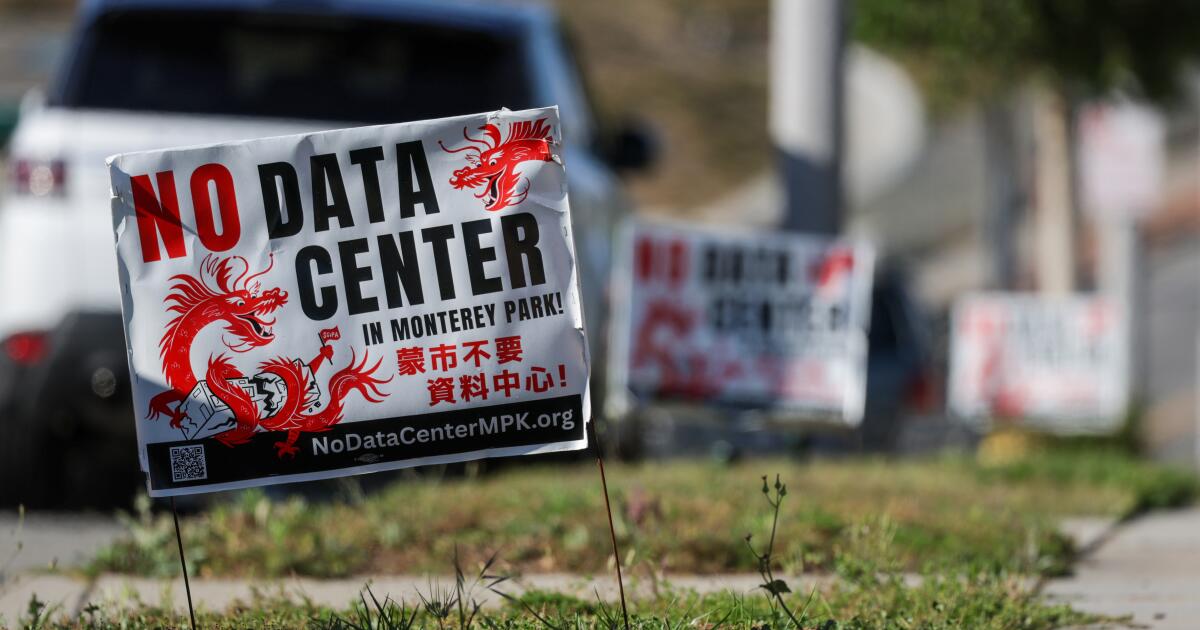
In a first for the country, voters in Monterey Park ban data centers
-
 Entertainment39 minutes ago
Review: Muscling past a flat script, a big-screen ‘Masters of the Universe’ embraces its own silliness
-
 Politics51 minutes ago
Hilton and Becerra lead California’s unsettled governor’s race; Steyer faces elimination

