Science
Cal Fire approach to SoCal’s wildfire crisis could make things worse, court says

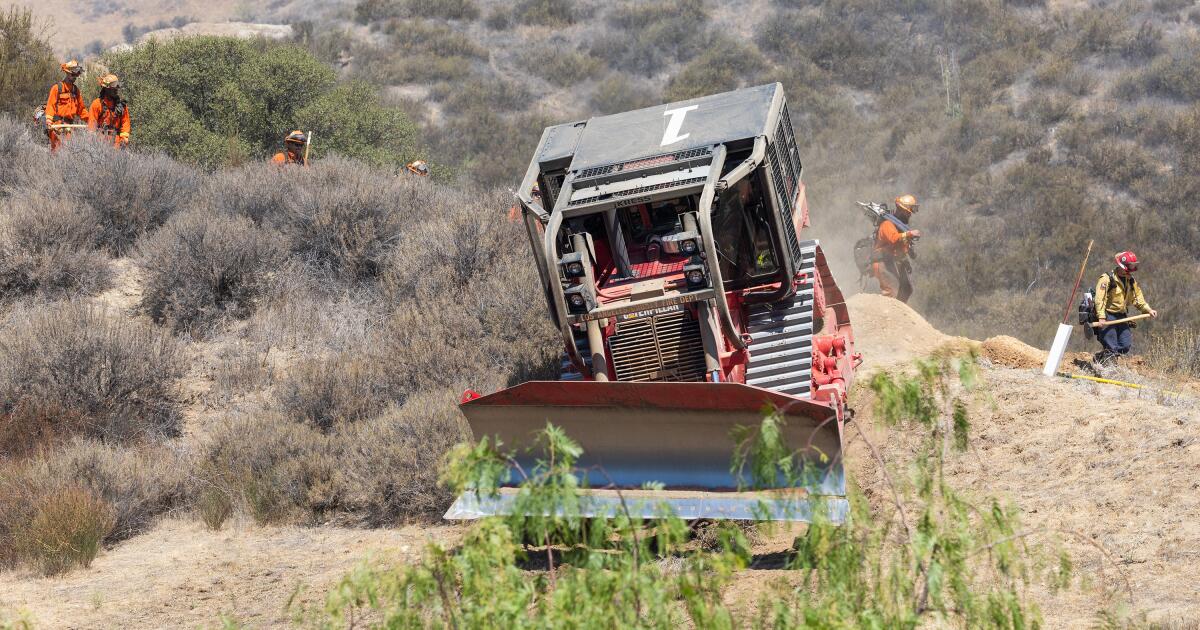
In a case that calls into question plant clearing techniques that have become fundamental to the California Department of Forestry and Fire Protection, or Cal Fire, the San Diego Superior Court has ordered the agency to amend a program to reduce wildfire risk across the state because it could make things worse.
The years-long legal action filed by the California Chaparral Institute and Endangered Habitats League against the Board of Forestry and Fire Protection within Cal Fire, highlights deep rifts between ecologists’ and firefighters’ approaches to solving California’s wildfire crisis.
Richard Halsey, director of the California Chaparral Institute, was elated. “Chaparral and sage scrub is more than 10% of the state,” he said.
“Despite all the rhetoric about how we love biodiversity, you’re going to wipe out where most of the biodiversity is in the state,” and in the process make the landscape more flammable, Halsey said of the Cal Fire plan.
For the record:
3:38 p.m. Nov. 25, 2025A previous version of this story incorrectly identified the Cal Fire program in dispute. It is the California Vegetation Treatment Program, not the Vegetation Management Program.
Cal Fire’s Vegetation Treatment Program aims to use prescribed fire plus tree and brush cutting to reduce the risk of a wildfire igniting, exploding out of control and jeopardizing lives and property. In doing so, the agency also tries to nurture the biodiversity of native species and protect clean water and soil health.
“The California Vegetation Treatment Program is one critical tool of many to address the state’s catastrophic wildfire crisis,” Tony Andersen, executive officer of the Board of Forestry and Fire Protection, said in a statement. “We appreciate the months of collaborative work spent with the Chaparral Institute, Endangered Habitats League, and others to find interim solutions that address their feedback.”
Crews clear a firebreak during the July 2023 Victor blaze in Santa Clarita.
(Jason Armond / Los Angeles Times)
In California’s conifer forests, this often looks like thinning an unnaturally high density of trees and brush that fuel exceptionally severe fire.
But in Southern California, much of the wildlands are home to chaparral ecosystems of shrubs, oak trees, native grasses and flowers, and the typical approach is to cut fuel breaks: long strips along ridgelines and roadways devoid of all vegetation that can stop creeping ground fires in their tracks and give firefighters safe access to battle wind-driven blazes that can easily jump.
Severe and frequent wildfires are already causing some areas with trees to become chaparral and some areas of chaparral to become just flammable grasses. The legal action claimed that Cal Fire’s chaparral firebreaks can cause this “type conversion.”
When native chaparral is cleared from a landscape, whether by a wildfire or through a vegetation management project, it’s often not native plants that grow back, but instead opportunistic fast-growing invasive grasses.
Cal Fire argued that its program addressed this in its environmental impact review. But the California Chaparral Institute and Endangered Habitats League said the department did not take into account that these invasive grasses are much more flammable than the native species it is cutting down — meaning it could increase fire risk.
The Vegetation TreatmentProgram guides real work on the ground. So far this year it has completed more than 5,400 acres of work on 26 projects. About 13% of the work was in shrublands, like chaparral.
The ecology organizations filed the petition in 2020, and in 2023 the San Diego Superior Court ruled for Cal Fire. The organizations appealed, and, in May 2025, California’s 4th District Court of Appeal reversed the trial court and ordered it to determine how to remedy the problem.
On Nov. 14, the lower court ordered Cal Fire to address the potential for type conversion to worsen wildfire risk and until it does so, barred individual projects in the Vegetation Treatment Program from relying on the program’s blanket environmental review to comply with the California Environmental Quality Act.
The order does not apply to new fuel break projects that already have a plan to prevent flammable grasses from growing, nor to maintaining existing fuel breaks. Projects on forestlands and grasslands may also continue unimpeded, as may projects on land that has already lost its trees or chaparral to type conversion.
Ecologists and fire officials ultimately have the same goals: reduce devastating wildfires and protect native biodiversity. After all, fire can wipe out thousands of acres of native ecosystem — and the non-native ecosystems that plague the region can much more easily ignite.
But ecologists tend to favor solutions preserving native ecosystems (such as programs focused on reducing the chance of fire starting in the first place), whereas fire officials tend to gravitate toward solutions that view plants as “fuel” for a potential fire (such as cutting away vegetation to create fuel breaks).
Fire officials argue fuel breaks give crews a much needed strategic advantage when they’re working to protect communities. However, some ecologists question whether breaks even help in ember-driven fires and whether fire departments actually staff fuel breaks during an emergency.
These differences came into full focus as fire departments and land managers in the Santa Monica Mountains began a project to build a network of fuel breaks throughout the region in September, thanks to an expedited approval process created by Gov. Gavin Newsom and funding from the $10-billion climate bond that California voters approved last November.
As the board updates the program, “we’re taking stock of what’s working and boosting progress,” Andersen said. The board is working to find opportunities to “balance environmental and ecological protection with keeping communities and people safe. We can do both and the program is working to show how.”


The first five months of 2026 in Southern California have been the smoggiest — with the highest number of unhealtful air days — in more than a decade, according to statewide air monitoring.
So far this year, the South Coast air basin, which includes Los Angeles, Orange, Riverside and San Bernardino counties, has seen 39 days when the concentration of lung-irritating ozone (commonly known as smog) exceeded the federal standard, according to preliminary state air quality data.
That’s even worse than the infamously hot and hazy 2017, when Greater Los Angeles had 36 unhealthful air days by June 4 and ultimately saw 145.
Many of the roughly 18 million people who live in the air basin have been subjected to unhealthful levels of ozone, a highly corrosive gas that triggers asthma attacks and a wide range of respiratory illnesses. This has taken many by surprise since successive days of smog more commonly happen in summer, when heat waves and intense sunlight convert man-made pollution into ozone.
“If we have this many violations by this time, this could be a really awful year for air quality,” said Adrian Martinez, director of Earthjustice’s Right to Zero campaign, an initiative calling for the transition away from fossil fuels. “We’re already the worst place in the country for summertime smog pollution. So it could be one of the worst years in one of the worst places in the country.”
The pollution has been especially severe in valleys. On April 18, an air monitor in Reseda in the San Fernando Valley measured the second highest spike in hourly ozone levels in the last decade.
Greater Los Angeles has seen more high-smog days so far in 2026 than any other year in the past decade.
(Courtesy of South Coast Air Quality Management District)
The South Coast Air Quality Management District says the high ozone levels are due to early heat waves. Officials said they were not aware of any increase in the pollutants — most of them from different kinds of exhaust — that lead to ozone formation.
Local temperatures have been well above normal, climbing into the mid-80s and high 90s between January and April, breaking several daily high temperature records, according to the National Weather Service.
March in particular was the warmest on record in California. Riverside had an unprecedented 13 days of temperatures above 90 degrees, the weather service said.
“It was really that heat wave — conditions we typically see in July or August, we saw them in March,” said Sarah Rees, deputy executive officer of the air district. “That put us ahead of the curve in terms of how much ozone we got.”
Air district officials urged residents to monitor pollution levels on the agency’s website and mobile app, and spend only limited time outdoors when smog levels are high.
“People generally know when there’s a wildfire, because you see the smoke and smell it,” said Scott Epstein, the air district’s manager of planning and rules. “Then, it’s like, I’ve got to take precautions. Ozone, you can’t really tell.”
Southern California has been particularly susceptible to smog formation because of its millions of gas-powered cars releasing tons of tailpipe emissions each day. The region’s sunshine acts as a catalyst for smog formation. Then the mountains trap this pollution over densely populated communities.
For nearly half a century, state and local air regulators have made rules designed to alleviate this pollution, enacting the nation’s first tailpipe emission standards in 1966 and requiring catalytic converters in 1975.
Smog-forming pollution has been dramatically reduced over the last two decades, but the region still does not meet federal air quality standards for ozone.
At an air district meeting Friday in Diamond Bar, the governing board held a moment of silence for William Burke, a former longtime chair. During his tenure, the agency enacted nearly 270 rules that are credited with reducing smog-forming pollution by hundreds of tons per day. Burke, who also founded the Los Angeles Marathon, died in May at 87.
“Those are just emission reductions,” air district Chair Michael Cacciotti said at the Friday meeting. “But what it doesn’t tell you is how many kids, families, seniors were prevented from going to the hospital from an asthma attack, didn’t get cancer or other respiratory problems.”
Several residents from the Inland Empire, which suffers some of the worst smog pollution, expressed their appreciation for the air district’s efforts. But they also stressed the need for more progress.
“I’m old enough to remember growing up in the ‘70s and ‘80s … and not being able to see the mountains for weeks and months at a time,” said Erik Morden, one of several residents who spoke at the meeting.” I know things have improved, and I want to thank all of you for all the hard work that you’re doing. But there’s a lot of invisible stuff that you don’t see, that’s still out there — a lot of particulates in the ozone and chemicals that are causing a lot of problems.”
Martinez, the Earthjustice attorney, said the abnormally early outbreak of smog should be a wake-up call to government regulators that there’s work to be done, including offering more incentives to help residents and businesses transition to zero-emission appliances.
“We shouldn’t over-complicate it. We’ve got a lot of heat, we’ve got a lot of pollution,” Martinez said. “Our contention is, this agency can’t control the weather. But the one thing it can control is the pollution.”

Federal agricultural inspectors detected a case of New World screwworm larvae — maggots that burrow into the flesh of living animals and sometimes humans — on a 3-week-old calf in south Texas, near the U.S.-Mexico border. Officials anticipated the arrival of screwworm in the United States and say they’re prepared to contain it.
New World screwworm, also known as Cochliomyia hominivorax, is starkly different from the average maggot that feeds on decaying organic matter such as garbage, rotting food or dead animals, said Tom Talbot, veterinarian and member of the California Cattlemen’s Assn.
That’s because a screwworm larva “attacks living flesh,” Talbot said.
On Thursday, the U.S. Department of Agriculture confirmed the detection of New World screwworm in the umbilical area of a bovine in Zavala County, Texas, more than 60 miles from the northern Mexico border.
As of Friday morning, there have been no additional cases of infected animals reported.
Screwworm is endemic in South America and parts of the Caribbean, according to the Centers for Disease Control and Prevention. However, the parasitic fly has been steadily moving north from Central America to Mexico since 2023.
The USDA says it has actively monitored the fly’s movement. Last month, the USDA was aware of more than 200 active screwworm infestation cases in the border states of Nuevo León and Tamaulipas, according to Mexico’s Secretary of Agriculture and Rural Development dashboard. There are currently more than 2,000 active cases throughout Mexico.
It was believed that the New World screwworm would enter the U.S. in 2025, “however, thanks to the hard work across the entire Trump administration and our industry, state, and local partners, we were able to buy time for this moment,” said Dudley Hoskins, undersecretary for Marketing and Regulatory Programs for the USDA, in a statement.
The potential economic impact of New World screwworm on the cattle industry due to import restrictions, reduced productivity and animal loss is substantial, said Sally DeNotta, director of the University of Florida’s Equine Performance Laboratory.
Last year, 175 key agricultural organizations signed a letter urging additional federal funding for screwworm-control measures, emphasizing USDA estimates that a New World screwworm outbreak in the U.S. could cost producers $4.3 billion annually and cause economic losses of more than $10.6 billion across the southern United States.
“While the fly does not survive at temperatures at or below freezing, infected animals could carry the parasite northward and spread infection during the summer months, and the temperate climate of Southern California could certainly support year-round New World screwworm populations,” DeNotta said.
Talbot said from the federal to the local level, everyone in the ranching community has been talking about the arrival of screwworm and how to combat it.
“My expectation is that there will be a minimal number of cases of [New World screwworm] in California,” he said.
That’s because there are several stations on the border in Southern California, he said, that are collecting data, monitoring for any incidents of the parasitic fly and trapping them.
Talbot says he’s confident that the proactive measures on behalf of the federal government will mitigate the screwworm’s reach and therefore not impact the beef supply locally or nationally.
How screwworm infection spreads
Female screwworm flies are attracted to the smell of wounds — that can be as small as a tick bite — and body openings such as the nose, eyes, ears and mouth where they can lay eggs, according to the CDC.
A female screwworm fly can lay 200 to 300 eggs at a time and may lay up to 3,000 eggs during her 10 to 30-day lifespan.
When the eggs hatch into maggots, the maggots eat live tissue, causing a worsening, often painful and foul-smelling wound, according to the CDC.
Screwworm has hit the United States before
There was a screwworm outbreak in the southwestern region of the United States in 1965 that prompted Mexican and U.S. livestock producers to sign a declaration to establish a joint program for the eradication of the screwworm from the states on either side of the Mexico-U.S. border, according to the National Agricultural Library.
By 1966, the United States had eradicated screwworms, but livestock remained vulnerable to reinfestation from screwworms migrating from Mexico.
Eradication was possible through the sterile insect technique, which uses gamma radiation to irradiate screwworm pupae and create sterile male flies.
The U.S. Department of Agriculture’s Animal and Plant Health Inspection Service maintains a screwworm pupae sterilization facility in North America and is currently building a new center in southern Texas.
When produced and released in large numbers, sterile male flies mate with wild female flies, which then lay unfertilized eggs, according to the USDA.
“Since female screwworm flies normally mate only once, the population progressively reduces and is, ultimately, eradicated,” according to USDA officials.
Last year, the Trump administration cut thousands of grants and programs from the U.S. Agency for International Development, which includes U.S.-funded animal disease monitoring projects operated by the United Nations Food and Agriculture Organization, Argi-Pulse Communications reported. Among the slashed programs were some dedicated to monitoring and containing New World screwworm in Central America.
Today, screwworm infestations aren’t a regular occurrence in the U.S., but cases have occurred in travelers returning from areas where the flies are present, according to the CDC.
Can infected animals be treated?
Infected wounds are cleaned and debrided to remove any screwworm larvae, after which the animal is treated with an approved insecticide, DeNotta said.
Last month, the U.S. Food and Drug Administration issued an emergency use authorization for several insecticides known to be effective against screwworm.
There are approved systemic and topical options for a variety of species, including cattle, horses, small ruminants, cats and dogs, DeNotta said.
“Multiple days of treatment are often required, and antibiotics and analgesics may also be administered to treat secondary infection and control pain,” she said.
If left untreated, the tissue destruction caused by flesh-eating larvae can be extensive and severe, often resulting in debilitation and eventual death of the host, DeNotta said.
“Animals that survive may suffer weight loss, poor growth and reduced productivity as a result of pain and discomfort,” she said.
Screwworm can infect humans
Human infection is rare, DeNotta said, but it can happen.
Humans are at risk of being infected by screwworms if they travel to an area where the flies are present, such as South America and the Caribbean, according to the CDC.
CDC officials said your risk of screwworm infection increases when you:
- Spend a lot of time outdoors during the day, especially if sleeping or unable to keep the flies at bay.
- Have any open wounds. A small break in the skin, including from a scratch, insect bite or recent surgery, may attract screwworm flies.
- Have a medical condition that causes bleeding or open sores, such as from skin or sinus cancer, or from treatments that can create breaks in the skin.
- Live, work or spend an extended amount of time with or near, livestock or other warm-blooded animals in areas where screwworm flies are present.
The symptoms humans experience when infected by screwworm
The following are symptoms of screwworm according to the CDC:
- Feeling maggots move or seeing maggots within a skin wound, sore or body opening.
- Painful skin wounds or sores that worsen within a few days.
- Foul-smelling odor from the site of the infestation.
- Bleeding from open sores.
Bacteria can also infect wounds where screwworm maggots are present and may cause an infection that can lead to symptoms like fever or chills.
To treat a screwworm infection, DeNotta said, people undergo the same combination of wound debridement and insecticides used in animals.

California researchers are leading a nationwide effort to find out why some Asian American communities have high rates of certain cancers.
It comes as health experts see rising rates of lung cancer among Asian American women who have never smoked and increasing rates of early-onset breast cancer.
“Asian Americans are actually the first racial and ethnic group for whom cancer is the leading cause of death,” said Scarlett Gomez, a cancer epidemiologist at UC San Francisco and a lead on the project.
UCSF joins researchers from UC Irvine, UC Davis, Cedars-Sinai and Temple University in launching a $12.5 million National Cancer Institute-funded study called the ASPIRE Cohort, that will follow 20,000 Asian Americans over time. Researchers say it’s the first large-scale longitudinal cancer study focused on Asian Americans.
Lung cancer incidence has declined across much of the United States as smoking rates have fallen. However, researchers have observed a slight increase among Asian Americans, despite relatively low smoking rates, particularly among women. More than half of Asian American women diagnosed with lung cancer are nonsmokers, they say.
Many existing studies of lung cancer risk among nonsmokers have been conducted in Asia, where exposure patterns can differ significantly from those in the United States, said Iona Cheng, a molecular epidemiologist at UCSF and also a lead on the project.
Researchers know that outdoor air pollution, secondhand smoke and cooking oil fumes can contribute to lung cancer risk. But it’s not clear if these explain disease patterns among Asian Americans in the United States.
Rising rates of breast cancer among Asian American women are also driving the push.
“Early onset breast cancer” — diagnosed before age 50 — “is going up the fastest among Asian Americans,” Gomez said. Recent data show rates among Asian Americans, Native Hawaiians and Pacific Islanders are approaching those of non-Hispanic white women, she said. Cancer experts don’t know why.
One of the central goals of the ASPIRE study is to move beyond treating Asian Americans as a single category. The term can include people with roots in dozens of countries from Sri Lanka to China’s border with Russia to Pacific islands, with completely different exposure patterns and cuisines.
“When we separate and look at all the distinct Asian ethnicities, we see a wide variation,” Cheng said.
Filipino women have a higher incidence of thyroid cancer, and stomach cancer has been more common among some Korean and Japanese people. Combining all Asian Americans into one category can make those differences impossible to detect.
The study also seeks to address longstanding gaps in representation. Although Asian Americans make up nearly 8% of the U.S. population, they have historically received little research funding.
Existing cancer studies have also often included too few Asian Americans to draw meaningful conclusions about specific ethnic groups, researchers said. Salma Shariff-Marco, a social and behavioral scientist at UCSF and also a lead on the projects, aid that has made it hard to show the need for more targeted research. The ASPIRE cohort, she said, is designed to show the variation by including a broader range of ethnic groups and more contemporary exposures than previous work.
-

 Oklahoma4 minutes ago
Pedestrian killed in early morning crash on I-235 in Oklahoma City
-

 Oregon11 minutes ago
Texas Baseball Cruises Past Oregon, Moves One Win Away From Omaha
-

 Pennsylvania14 minutes ago
Half of child deaths left unreviewed in Pa. since 2020 as counties struggle with ‘unfunded mandate’
-

 Rhode Island19 minutes ago
How did La Salle win another state title? Having an ace up its sleeve.
-

 South-Carolina26 minutes ago
Countdown to kickoff prediction series: South Carolina gets off to fast start in 2026
-
South Dakota29 minutes ago
SD Lottery Powerball, Lotto America winning numbers for June 6, 2026
-

 Tennessee41 minutes ago
Tennessee Lottery Results for June 7, 2026
-

 Washington44 minutes ago
Capitol adventures: NTCC explores Washington, D.C.

