Hawaii
Let These Oceanfront Resorts Convince You to Book That Hawaii Vacation


In 2012, Oracle co-founder Larry Ellison acquired 98% of Lānaʻi, a rural island off Maui known for its rural, upcountry vibe (there’s only about 30 miles of paved roads) and its two Four Seasons–operated hotels: the 213-room Four Seasons Lānaʻi and the 96-room, wellness-focused Sensei Lānaʻi. The latter, created in partnership with Ellison’s own hospitality brand, Sensei, is powered by the cutting-edge research of renowned oncologist and professor Dr. David Agus, whose philosophy centers on three pillars: Move, Rest, and Nourish. Surrounded by pine-covered mountains and blending Hawaiian and Japanese design influences, this adults-only retreat is conceived as a distraction-free sanctuary—a place to disappear for a few days and focus wholly on your health. “I stayed at both Four Seasons’ properties when I visited Lanai a few years ago; my time at both, but especially at Sensei, felt like a reverie,” shopping director Talia Abbas shares. “An oasis in every sense of the word, you feel the weight of the world lifted off your shoulders surrounded by the lush greenery and the serene mountain air.”
The experience begins with a biomarker session, a body-composition analysis, and a one-on-one consultation with a nutritionist. Additional tech-driven assessments may follow, from thermal body scans to pinpoint inflammation to HRV monitoring for a closer look into a guest’s physiological state. “The consultation took place in one of the privates hales, and was followed up by a massage targeting the inflammation, and a soak in the private onsen pool,” Abbas shares. “I’ve never felt more relaxed.” The “Move” component can take many forms: horseback riding through cook-pine forests, aerial yoga, tackling obstacles in the outdoor adventure park, or simply wandering the resort’s vast sculpture garden, dotted with large-scale works by artists like Fernando Botero and Jaume Plensa. Yet for many guests, the highlight is the spa. Ten standalone spa hales are each outfitted with ofuro soaking tubs, infrared saunas, and outdoor onsen pools—inviting hours of relaxation post-treatment day and night.



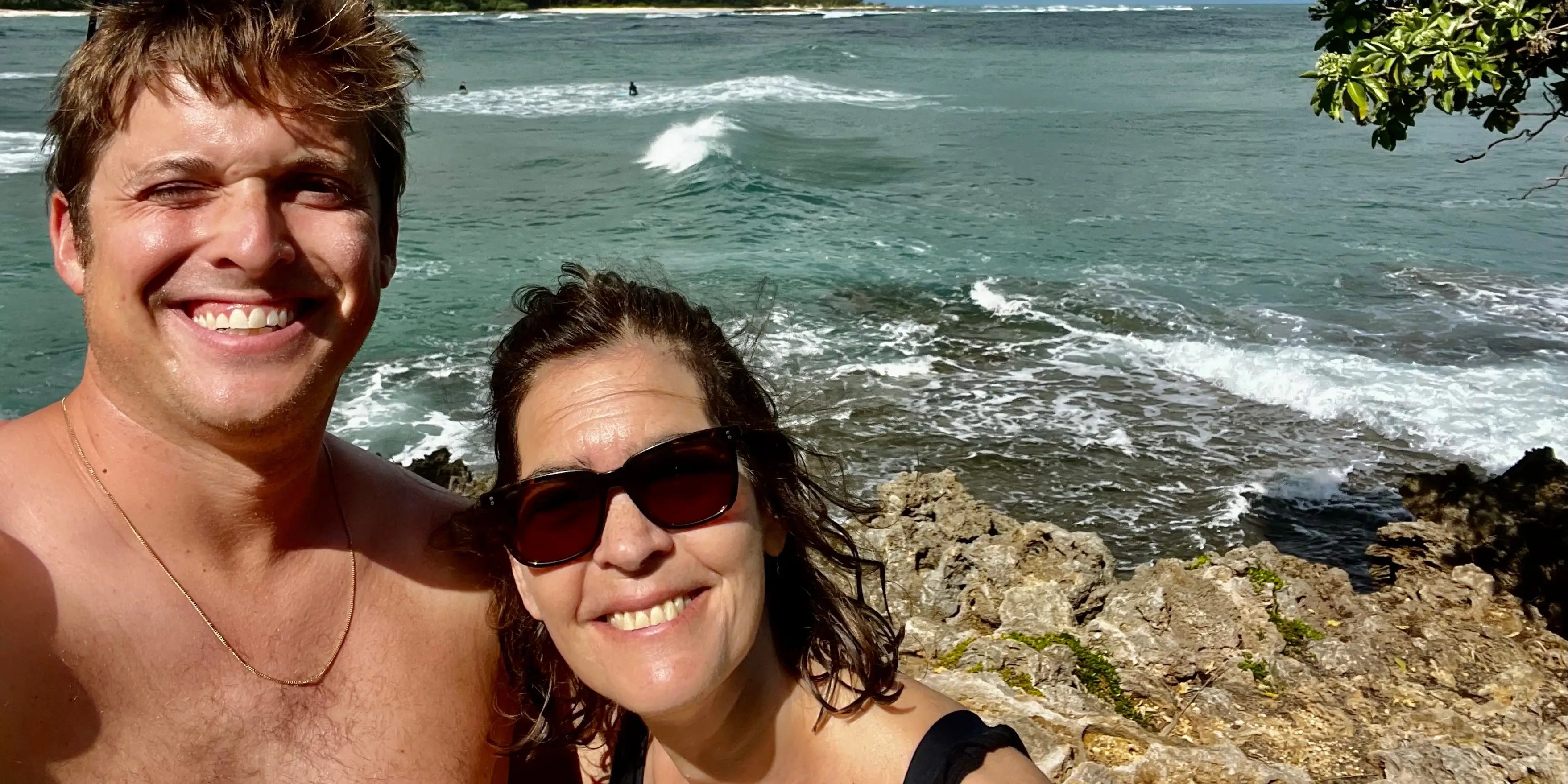
I live in New York City. My 30-year-old son, Alec, lives across the country in Southern California. When I visit, I respect that he has his own busy, adult life. While I’d like nothing more than to spend every minute with him, I’m proud of his independence and try not to monopolize his time.
Alec has a roommate and no space for an overnight guest. When I’m on his home turf, I stay in a hotel or with a friend.
When he comes to NYC for the holidays, his schedule is packed. Plus, with the entire family under one roof, it can be tough to carve out one-on-one time.
I don’t feel shut out of Alec’s life, but I do miss spending quality time with him, so I floated the idea of a mother-son vacation.
He set a few ground rules before we started planning
Alec was vocal that for our getaway to work, we’d need to approach it as equals. This may sound deceptively simple, but it took lots of self-control on my part.
Little kids and I pair like milk and cookies. I did my graduate studies in early childhood education and taught preschool for years. Parenting young kids is never easy, but it felt instinctive. It grew harder as my children grew older.
Alec is my firstborn, and my parental grip was tightest around him. When he was a teenager, he told me I didn’t understand that teens needed autonomy. At the time, he was correct, but over the years, I’ve worked hard to pacify my bossy instincts.
This time, I would welcome his voice in planning our vacation.
Alec brought up another rule: that part of being equal should include sharing expenses. I gifted Alec his airline ticket using miles, and we split additional expenses.
Choosing a destination
Alec had four days off work over Memorial Day Weekend. I advocated for a location that wasn’t too hot, as I had suffered a bout of heatstroke in Greece last summer. A yoga class nearby would be a bonus.
Alec made a case for Hawaii. He’d never been, but its laidback reputation appealed to him. He said he wanted to destress at a resort and eat poke every day.
Hawaii is special to me. I first visited when I was a kid, spending a summer at my aunt and uncle’s home in Waianae on Oahu. The idea of sharing Hawaii with Alec was exciting.
From a practical point of view, Hawaii made sense. There are numerous nonstop flights from LAX, Alec’s home airport. I was going to be in Denver for work, so I was already heading in a westerly direction.
Courtesy of Allison Tibaldi

Each of the Hawaiian Islands has its own flavor. We had lots of options and weren’t quite sure how to narrow them down.
Alec is a fan of the television cooking show “Top Chef.” During his online research, he learned that former contestant Sheldon Simeon was scheduled to be the visiting chef at the Ritz-Carlton O’ahu, Turtle Bay on the island’s North Shore on the Saturday night of our trip.
The Hawaiian-born chef would be preparing a multi-course dinner using island-grown ingredients. I’m all about exploring local culture through food, so it seemed like a jackpot for both of us.
After we booked the dinner, we figured it made sense to stay at the Ritz-Carlton.
Balancing time together and separately was key
Another boundary we set for our vacation was balancing time together with time apart.
Each morning, Alec surfed, and I swam laps in the pool. I signed up for a lei-making workshop while he attended a tennis clinic.
In a perfect world, we would have reserved individual rooms; however, we shared a room for economic reasons.
We were still able to maintain boundaries and give each other privacy as our room had a comfortable ocean-view patio, perfect for reading and relaxing.
Meaningful conversations are what stand out
Time together sparked the meaningful conversations and connection I had longed for.
On May 24, I mentioned that it was my beloved dad’s heavenly birthday. Alec shared tender memories of his grandpa and told me that my dad had been a father figure for him, too, teaching him lessons that continue to impact his life. It made me teary.
We also had an intelligent discussion on income inequality. Alec overheard a group of vacationing doctors and a group of vacationing teachers chatting in the Jacuzzi. He said the doctors worked very long hours without complaint, while the teachers complained nonstop about their overwhelming workload. This led to a conversation between Alec and me about teachers being underpaid and undervalued.
As a former teacher, I found that my son’s thinking about socio-economic issues that hit so close to home really resonated with me.
Our mother-son vacation brought us closer
Our mother-son vacation was a success. Alec ate plenty of poke. I got to practice yoga. Together, we swam in the Pacific, walked trails surrounded by gardenias, and enjoyed a delectable Hawaiian dinner.
As much as I loved our activities, it’s the memories of our personal and poignant conversations that are etched in my heart.
I can’t wait to travel with Alec again.

HONOLULU (HawaiiNewsNow) – A state senator is challenging the Department of Land and Natural Resources’ (DLNR) decision to extend the deadline for the Puuhonua O Waianae (POW) encampment at Waianae Boat Harbor.
It comes as state and community leaders continue efforts to relocate residents to a permanent site.
The deadline was originally set for the end of June and has been pushed to Oct. 16.
State Sen. Samantha DeCorte said the extension marks the third delay in the relocation process since the original notice to vacate was issued last year. The initial deadline was Nov. 27, 2025, followed by extensions to April 30 and June 25 before the most recent extension.
DeCorte criticized the repeated delays during a press conference on Saturday.
“We are calling on DLNR Acting Chair Ryan Kanakaole, members of Puuhonua O Waianae, and the governor’s office to do what they said they would do. Complete the transition, honor the commitment, and bring this process to a close. After 20 years, another extension is not the solution,” DeCorte said.
She added concerns remain around public safety near the harbor, including reports of vandalism involving fishing equipment and conditions she says affect families and students traveling through the area.
“Fishermen have dealt with vandalism (and) theft of their equipment. Public safety concerns have persisted, and kids have to walk past unsafe conditions just to get to school.”
DLNR said the extension is intended to provide additional time for the relocation of the POW community to a nearly 20-acre site in Waianae Valley, while construction continues at the mauka housing development.
Kanakaole said in an email sent to DeCorte Friday that POW requested a deadline extension to vacate by the end of November, and the department, along with the governor’s office, reached an agreement on the October move-out deadline.
“DLNR, POW, and the Governor’s Office worked through what remains to be completed and established a reasonable timeline tied to actual relocation, cleanup, and closure activities and to provide for the most orderly and voluntary transition, which will ultimately lead to a solution that will last,” Kanakaole’s email said in part.
He added that more than 100 people remain at the site and POW leaders said that number should substantially reduce over the next several weeks, “potentially by nearly half within the next month.”
Read Kanakaole’s full email to DeCorte here.
The agency said it is coordinating with community leaders to ensure residents can relocate safely and to support cleanup and transition efforts at the harbor.
The relocation site has been part of a long-term plan tied to the late community leader Twinkle Borge, who envisioned moving families from the harbor into permanent housing.
Community leaders with Puuhonua O Waianae said the process remains complex and cannot be completed immediately.
Kala Paishon, a community leader with the encampment, said some residents are still unable to move because housing units at the new site are not yet complete. He also said limited transportation and volunteer support make moving difficult for some families.
“We do have some people that volunteer their time to help our people move. We’re limited on our vehicles, but we do what we got to do to move the people up there,” Paishon said.
He added that many residents have deep ties to the harbor after years of living there.
“Some people have been here 10-plus years,” Paishon said. “This is the memory they have, and this is where they felt like home.”
Paishon also said crews are working to gradually transition residents while maintaining cleanup efforts at the site.
“We’re making sure everybody moves up there safely… at the same time, we’re still cleaning up our opala down here.”
DLNR said it continues to work with community leaders and the governor’s office to move the relocation process forward in the coming months.
Copyright 2026 Hawaii News Now. All rights reserved.
Hawaii
Office of Hawaiian Affairs Responds to Senate Bill Involving Pōhakuloa – Big Island Video News

(BIVN) – The Office of Hawaiian Affairs (OHA) says it is in alignment with provisions in the Fiscal Year 2027 National Defense Authorization Act dealing with military-leased lands in Hawaiʻi, including the Pōhakuloa Training Area.
In a news release, OHA said it is encouraged by the bill’s “clear movement away from condemnation and toward negotiated solutions” for the approximately 19,700 acres of state lands at Pōhakuloa, and 450 acres at Kahuku. “The process outlined is consistent with OHA’s long-standing position opposing condemnation – whether forcible or ‘friendly’ – and insisting that lands held in public trust remain in the public trust and continue benefiting Native Hawaiians and future generations of Hawaiʻi’s people.”
The U.S. Senate Armed Services Committee recently passed the Fiscal Year 2027 National Defense Authorization Act, or NDAA. The bill is expected to advance to the full United States Senate for consideration by the end of July 2026, OHA says.
In a June 12th news release, U.S. Senator Mazie Hirono (D, Hawaiʻi) said she voted against the NDAA. Hirono is a senior member of the Senate Armed Services Committee (SASC) and Ranking Member of the Readiness and Management Support Subcommittee.
“I’m proud to have secured numerous provisions in the Senate’s FY27 NDAA that invest in military readiness, Hawaii, the Indo-Pacific Region, and our servicemembers and their families, while also holding the Army accountable on the military training land lease negotiations,” Hirono stated at the time. “However, I could not in good conscience vote to advance a bill that paves the way for an up to 40% increase in year-over-year Department of Defense spending, especially as this administration wages an illegal war in Iran with no plan or end in sight.”
Hirono said the bill “directs the Secretary of the Army to seek from the State of Hawaii, on terms acceptable to both the Army and the State, a renewal of expiring training land leases. As part of this, requires the Army to expeditiously resubmit their Environmental Impact Statements (EISs) for the leased lands and address deficiencies identified by the Hawaii Board of Land and Natural Resources.”
OHA noted Section 2864 of the NDAA also requires a report to Congress on the steps and proposals taken to advance lease renewals, within 60 days from the NDAA’s enactment.
“The Senate Armed Services Committee’s action reflects meaningful progress in acknowledging Hawaiʻi’s unique legal and cultural context,” stated OHA chair Kaialiʻi Kahele. “The removal of condemnation as an option and the requirement for renewed environmental review are consistent with what OHA has long advocated – that these lands must not be permanently alienated and that Hawaiʻi’s concerns must be fully addressed in good faith. Congress appears willing to respect Hawaiʻi’s laws and institutions. The opportunity before us now is to fully embrace the responsibilities and authorities those laws entrust to us. OHA will continue to ensure Native Hawaiian rights and public trust responsibilities remain central to any future decisions.”
OHA has been holding high-level meetings in Washington, D.C. concerning the military lease renewals.

OHA says it is also actively moving forward with a comprehensive Ka Paʻakai Analysis for Pōhakuloa Training Area. “The Board of Trustees has already approved a Permitted Interaction Group allocation of $60,000 to support this work, and OHA is finalizing a memorandum of understanding with DLNR to complete the work,” the Office stated. The analysis “will help create a more complete record of the cultural, historical, and community connections to these lands, providing decision makers with information necessary to evaluate potential impacts, identify appropriate protections, and fulfill their responsibilities under Hawaiʻi law.”
From the OHA news release:
OHA also notes that the NDAA contemplates the pursuit of future lease arrangements pursuant to Section 2667 of Title 10, United States Code. As discussions continue regarding potential lease terms, community benefit commitments, land-back and lease-back models, and other components of any future agreement, OHA believes those arrangements must remain consistent with Hawaiʻi’s environmental laws and public trust obligations. Any benefits derived from renewed use of these lands should reinforce the purposes of the public trust, protect traditional and customary Native Hawaiian practices, honor the history and significance of these lands, and preserve the value they were intended to provide for Native Hawaiian beneficiaries and future generations of Hawaiʻi’s people.
-

 Florida24 seconds ago
8 Best Small Towns On Florida’s Emerald Coast For A Crowd-Free Summer
-

 Idaho5 minutes ago
Renewing a Sanctuary for Salmon and People
-

 Georgia5 minutes ago
Georgia football trying to flip Grayson CB recruit
-
Hawaii12 minutes ago
I took my 30-year-old son on a vacation to Hawaii. We had to set ground rules first.
-

 Illinois20 minutes ago
Lake County detectives rescue girl from man they say drove to Illinois from Georgia to meet her
-

 Indiana27 minutes ago
US Education Department Oks Indiana Waiver To ‘Streamline’ Education Spending
-

 Iowa30 minutes ago
Emmy-winning TV anchor gets choked up as he quits job and journalism — and slams his station live on air
-
 Kansas35 minutes ago
Kansas City Symphony and Michelle Cann Perform Uplifting Concert Featuring a Variety of American Styles and Voices. – KC STUDIO


