World
US champions Lebanon's response to Hezbollah disarmament, hints at Abraham Accords opportunity


NEWYou can now listen to Fox News articles!
The U.S. envoy to Lebanon championed a response issued by Beirut on Monday to a proposal by Washington that detailed the complete disarmament of the Iran-backed terrorist group Hezbollah in exchange for the withdrawal of Israeli troops from its southern region.
Envoy Thomas Barrack told reporters he was “unbelievably satisfied” with Beirut’s timely response to a June 19 proposal that called for the disarmament of Hezbollah within a four-month timeframe.
“What the government gave us was something spectacular in a very short period of time,” Barrack said following a meeting with Lebanese President Joseph Aoun, who took the top job in January. “I’m unbelievably satisfied with the response.”
Lebanese President Joseph Aoun, right, meets with U.S. Ambassador to Turkey and Special Envoy to Syria Tom Barrack, in Baabda, east of Beirut, Monday, July 7, 2025. (Lebanese Presidency press office via AP)
TRUMP PRESSURES ISRAEL TO END GAZA CONFLICT AS HE EYES ABRAHAM ACCORDS EXPANSION
The news comes as negotiators are also working to end Israel’s war against Hamas in the Gaza Strip after Jerusalem saw itself facing four fronts just last fall with a war on its southern border against Hamas, back-and-forth missile strikes with Iran as well as with the Houthis in Yemen, and a campaign that unfolded in Lebanon.
A truce was struck in Lebanon following a sophisticated pager bombing that targeted hundreds of Hezbollah members across the country in September.
Hezbollah largely retreated from Lebanon’s southern region and has reportedly relinquished some arms.
But reporting by Reuters on Monday also suggested that Hezbollah may be unwilling to relinquish all its arms and the details of the U.S.-Lebanon agreement that would see the disarmament of the terrorist network remain unknown.
Israeli troops have remained in parts of southern Lebanon to counter what it argues is a continued threat posed by the terrorist network to Israeli communities that live on the northern border, and skirmishes have continued.
Barrack, who also serves as U.S. ambassador to Turkey and special envoy for Syria, said he believes that, ultimately, Lebanon and Israel share the same goal – peace.
An IDF soldier near anti-tank missiles that belong to the terror group Hezbollah in southern Lebanon. (IDF)
AFTER SETBACK TO IRAN’S NUCLEAR PROGRAM, TRUMP EXPECTED TO LEVERAGE MILITARY SUPPORT IN NETANYAHU MEETING
“The Israelis do not want war with Lebanon,” he said. “Both countries are trying to give the same thing – the notion of a stand-down agreement, of the cessation of hostilities, and a road to peace.”
Barrack also suggested that the Trump administration may look to add Lebanon to the list of nations that have normalized ties with Israel under the Abraham Accords – a chief policy of Trump’s during his first administration and one which he has once again made a top priority.
Fox News Digital could not confirm whether Beirut is yet interested in that level of diplomacy with its southern neighbor.
But Barrack also suggested that Syria has already begun “dialogue” with Israel.
“The dialogue has started between Syria and Israel, just as the dialogue needs to be reinvented by Lebanon,” he said. “If you don’t want change, it’s no problem. The rest of the region is moving at Mach speed and you will be left behind.”
Mourners react during the funeral of Hezbollah member Hassan Ghassan Hijazi, who was killed by an Israeli strike in Tayr Debba, in southern Lebanon, Jan. 11, 2025. (Courtney Bonneau/Middle East Images/AFP via Getty Images)
The comments come one week after Israeli Minister of Foreign Affairs Gideon Sa’ar said Jerusalem “is interested in expanding the Abraham Accords circle of peace and normalization.
“We have an interest in adding countries, such as Syria and Lebanon, our neighbors, to the circle of peace and normalization – while safeguarding Israel’s essential and security interests,” he added, though much of the normalization efforts would depend on Israel ending its war in the Gaza Strip.
Reuters contributed to this report.


Hegseth’s visit to Guantanamo Bay, Cuba, comes as the Trump administration increases pressure against Cuba’s government.
Published On 10 Jun 2026
Secretary of Defense Pete Hegseth has warned that Cuba could invite confrontation with the United States if it seeks to bolster its military capabilities with new purchases.
Wednesday’s comments come as US President Donald Trump continues to threaten possible military intervention on the Caribbean island.
list of 3 itemsend of listRecommended Stories
“It would be unwise of the government of Cuba to try to procure or get access to the types of weapons that could reach this base or the American homeland,” Hegseth said during a visit to the US military base at Guantanamo Bay, Cuba.
“They would be inviting the kind of confrontation not only do they not want but they could not stand. No country on Earth can match the capabilities of the United States of America.”
Hegseth did not offer specifics about the type of military weaponry Cuba might seek.
But his remarks follow a May report in the news outlet Axios stating that the country had acquired more than 300 military drones that could potentially be used against US forces.
Cuba sits roughly 140 kilometres, or 90 miles, from the southern tip of Florida, and the island’s communist leadership has long had a tense relationship with the US government.
Since the Axios report was released, Cuba has reiterated that it is not a threat to the US. It has also underscored that it has the right to defend itself, and it accused the US of “fabricating pretexts” and “creating and spreading falsehoods” to justify “potential aggression”.
Still, friction has increased between the two countries since Trump returned to office in 2025.
Following an attack on January 3 to abduct Venezuelan President Nicolas Maduro, Trump has threatened to take military action elsewhere in Latin America, including in Cuba.
He has also imposed a de facto energy blockade on Cuba, threatening tariffs against any country that supplies the island with oil. The resulting fuel shortages have caused energy blackouts across the country, as well as scarcities of other basic supplies.
Earlier this week, Volker Turk, the United Nations high commissioner for human rights, slammed the US restrictions as having an outsized impact on the most vulnerable members of Cuban society.
“Children are dying because doctors lack access to essential medical supplies and medicines,” he said. “This is unacceptable.”
But there are lingering concerns that the US may seek to escalate tensions with Cuba.
Since last year, the US has been increasing its military presence in the Caribbean Sea. In May, it deployed an aircraft carrier, the USS Nimitz, to the region, as well.
The US has repeatedly described Cuba as an “unusual and extraordinary threat” to its national security, and reports have emerged that Trump is seeking regime change on the island.
Hegseth’s arrival in Guantanamo Bay follows a visit last month from General Francis Donovan, the leader of the US Southern Command, which oversees military action in Latin America.
During Wednesday’s visit, Hegseth said the US is seeking a positive relationship with Cuba and implied change was imminent.
“Soon, we could be a friend of the leadership of the government of Cuba,” he said.
But he did not rule out the possibility of military action.
“For now, let’s see what happens. But the Department of War will give the commander-in-chief every single option he needs within that contingency,” Hegseth said.
“What happens with the future of Cuba is in the hands of … the president of the United States and the leadership of Cuba.”

By Kim Barker, Whitney Shefte, Michael Anthony Adams, Oleksandra Mykolyshyn, Sutton Raphael and Rebecca Suner
June 10, 2026

NEWYou can now listen to Fox News articles!
The Islamic Republic of Iran has accelerated its executions of dissidents and activists, with the true number of victims likely obscured by the regime’s internet censorship and blackout.
Ever since the January uprisings against the regime, Tehran has enforced a bloody clampdown against its opponents.
The Iran Human Rights Society has documented 784 executions so far in 2026. A representative from the organization told Fox News Digital that “these figures indicate a rapidly accelerating trend in executions since March,” and explained that “in particular, the execution of political prisoners has reached a level not seen in the past 37 years.”
‘KILLING OFF THE COUNTRY’: IRAN EXECUTES DOZENS, ARRESTS 4,000+ IN WAR CRACKDOWN
A woman lays down flowers for victims of executions in Iran during a rally in Paris, France, on May 13, 2025. (Siavosh Hosseini/SOPA Images/LightRocket via Getty Images)
A State Department official told Fox News Digital that “we are aware of disturbing reports about the recent surge in executions in Iran.” The official noted that “we strongly condemn the Iranian regime’s use of executions to punish people for exercising basic human rights, including Iranians peacefully protesting for a better life.”
The official said that “for decades, Iranians have been subjected to torture and sham trials resulting in executions and severe punishments, often with coerced confessions as the only evidence presented against them.”
According to information provided to Fox News Digital by the Secretariat of the National Council of Resistance of Iran (NCRI) on June 4, the Islamic Republic of Iran executed at least 18 prisoners between May 31 and June 1. These included 12 prisoners hanged on May 31, and an additional six prisoners executed on June 1, one of whom was said to be “hanged in public with utmost brutality.”
IRAN REGIME USES WAR TO MASK ‘BRUTAL’ EXECUTION SURGE AGAINST POLITICAL OPPONENTS
The NCRI has counted a total of 32 executions between March 19 and June 1. These included eight members of Iranian dissident organization People’s Mojahedin Organization of Iran (PMOE/MEK) and 24 participants in Iran’s January 2026 protests.
In documents provided to Fox News Digital, the NCRI said on June 7 that there was “an imminent risk of execution” for five political prisoners in the Sheiban Prison in Ahvaz, four of whom were sentenced to death because they were charged with being members of PMOI/MEK.
Maryam Rajavi, President-elect of the NCRI, posted on X a call for “urgent action” from the U.N. “to prevent the execution.”
Days earlier on June 2, following two other executions against January protesters, Rajavi said on X that the “clerical regime has committed another horrific crime in Iran.” She called on the U.N. Security Council and European Union “to decisively condemn these criminal executions and take effective action to stop the killing of political prisoners and protesters in Iran.”
The Iran Human Rights Society echoed NCRI’s account of 18 recent executions between May 31 and June 1. Their representative explained that despite the internet blackout, they receive reports from “a network of prison sources, prisoners’ families, lawyers, and local contacts” and explained that “all reports are reviewed and cross-checked through multiple independent sources before publication.” Though they say “internet restrictions make documentation more difficult,” they stated they “continue to receive, verify, and document information.”
IRAN GOES DARK AS REGIME UNLEASHES FORCE, CYBER TOOLS TO CRUSH PROTESTS
A hanging rope seen displayed during the rally in Paris, France on May 13, 2025. (Siavosh Hosseini/SOPA Images/LightRocket via Getty Images)
Alp Toker, the director of NetBlocks, a global internet monitor, told Fox News Digital that “internet connectivity in Iran is largely restored but the service that is available remains limited compared to the state of things before the protests and the war this year. For most users, in practice, that means international access is slow with indications of throttling and there’s also increased filtering, particularly targeting messaging apps.
“It’s been in this limbo state since the restoration with no significant change for better or worse,” he said.
However, the Iran Human Rights Society representative noted that the actual number of executions is “almost certainly” higher than the figure they have captured. “The ruling authorities in Iran frequently carry out executions in secret and do not publicly announce many of them,” the representative explained. Additionally, the representative added that “a significant number of executions, particularly in remote areas or locations with limited access to information, may remain undocumented or reach us only after a considerable delay.”
CLICK HERE TO DOWNLOAD THE FOX NEWS APP
The representative also noted that the quantity of executions the Iran Human Rights Society documents “has consistently been lower than the actual number carried out.”
The United Nations Special Rapporteur on the situation of human rights in the Islamic Republic of Iran, Dr. Mai Sato, did not respond to Fox News Digital’s request for comment on the increased executions in Iran.
On June 20th, up to 100,000 Iranian expats from both sides of the Atlantic are expected to hold a major rally in Paris to urge an end to the executions. More than 100 lawmakers, officials, former heads of state and ministers are also expected to join, according to the NCRI.
-

 Health3 minutes ago
Americans born after 1970 face higher death rates from several major causes in middle age
-

 Sports8 minutes ago
Tracking America’s World Cup journey: How and when to watch the US Men’s National Team
-

 Technology15 minutes ago
Texas mom jailed over dirty water Facebook post
-
 Business18 minutes ago
Rivian begins deliveries of cheaper electric vehicles
-
 Entertainment23 minutes ago
Glen Walker is returning to broadcast news, months after being cut from KTLA
-
 Lifestyle30 minutes ago
A new L.A. Times feature: Now you can save our expert recs for your next adventure
-
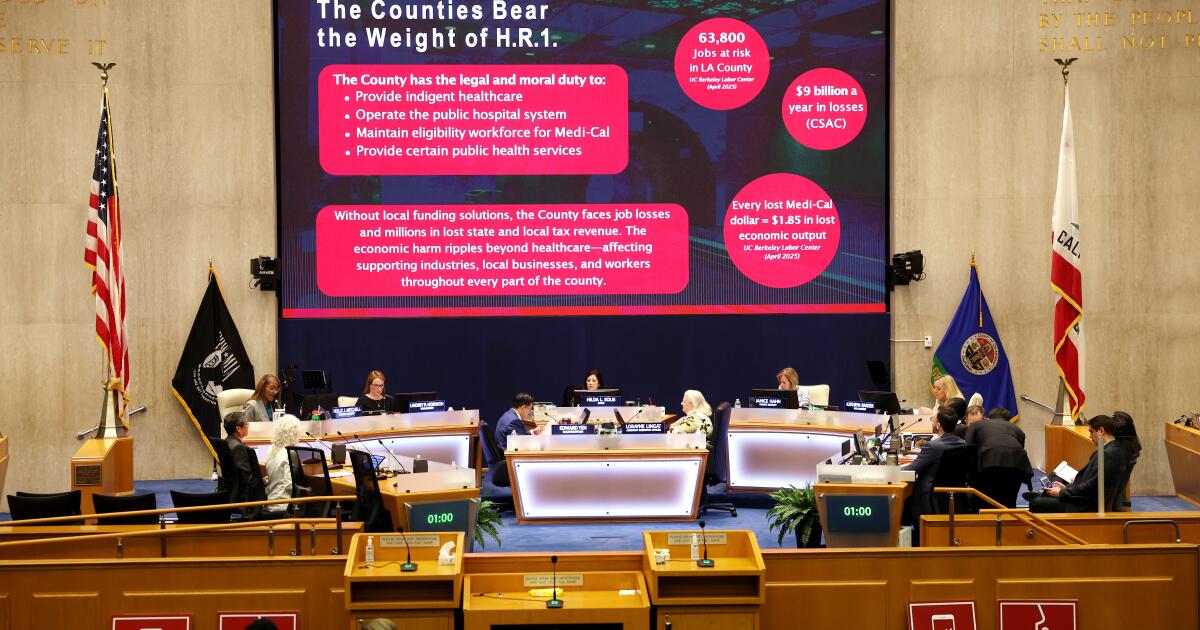 Politics33 minutes ago
Supporters cheer new L.A. County healthcare sales tax: ‘It’s a lifesaver’
-
 Science38 minutes ago
Why new dads shouldn’t panic about low testosterone

